Three of these were bought at Half Price Books locations in the Dallas Metroplex, and two replace slightly less attractive copies.
Delany, Samuel R. Babel-17. Ace, 1966. First edition paperback original, a Fine copy, though with slight age darkening to the pages. Nebula Award winner and Hugo nominee. Currey, page 139. Replaces a slightly less attractive copy. Bought for $5 at Recycled Books in Denton.
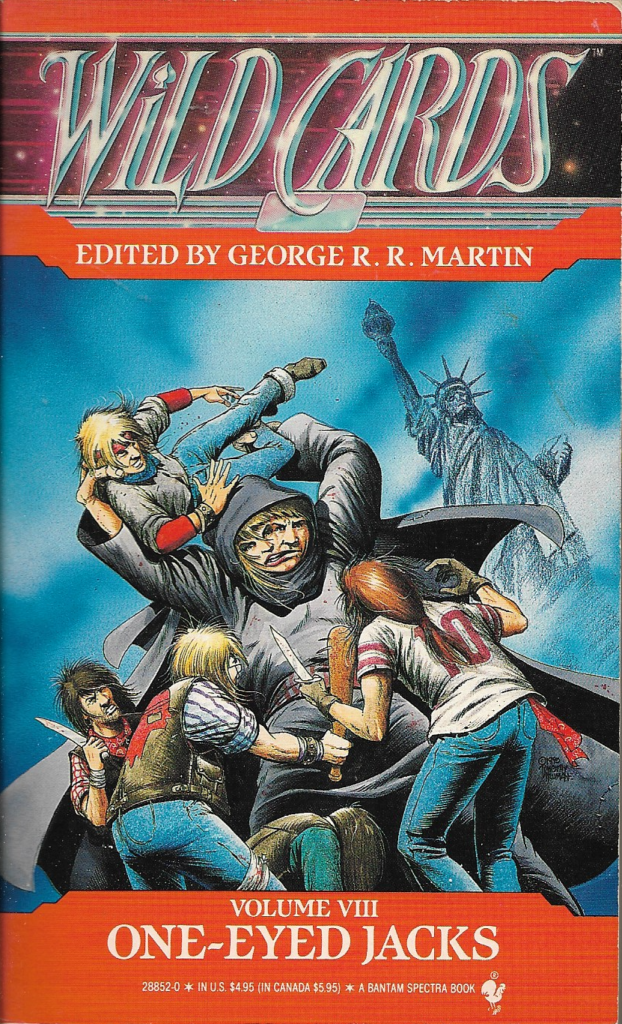
Martin, George R. R. Wild Cards VIII: One-Eyed Jacks. Bantam Spectra, 1991. First edition paperback original, a Near Fine copy with mild spine creasing and a trace of wear at points. This completes my Wild Cards paperback collection. Bought for $2.49.
Moore, Ward. Caduceus Wild. Pinnacle Books, 1978. First edition paperback original, a Near Fine- copy with one tiny spine crease near front join, bookstore stamp inside, slight rubbing to rear cover, trace of magic marker left over price on front cover (Bestine took care of the rest), and touch of edgewear. Moore’s last novel. Replaces a slightly less attractive copy. Bought for $1.99.
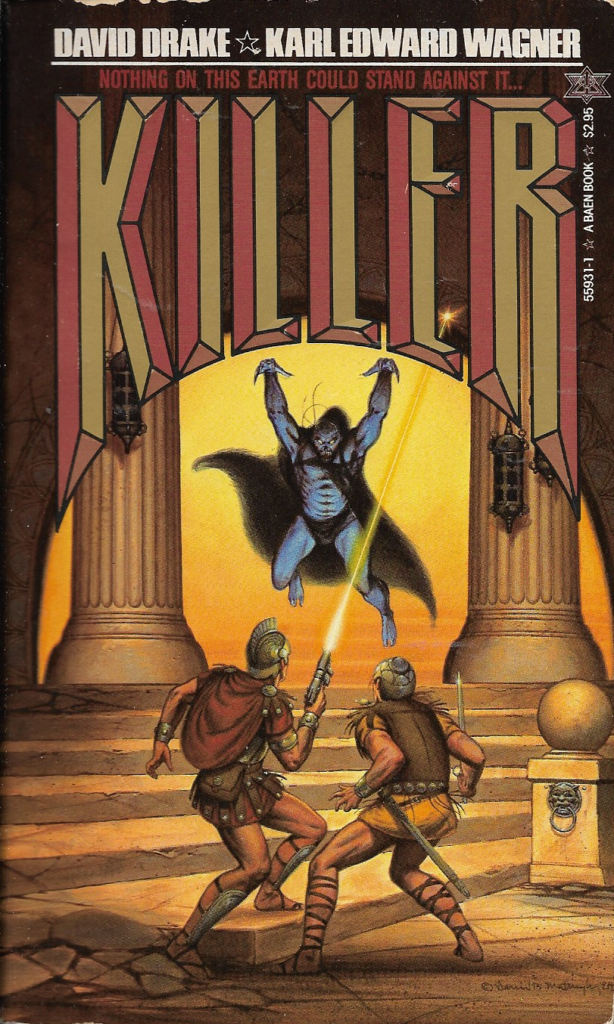
Wagner, Karl Edward, and David drake. Killer. Baen Books, 1985. First edition paperback original, a Near Fine- copy with slight spine creasing, edgewear, and foxing to insider covers. Hunting an alien killer in ancient Rome. Bought for $1.49.
This is the last of the books picked up on the Thanksgiving trip to the Metroplex.
All these were found at various Half Price Books stores in the Dallas Metroplex.
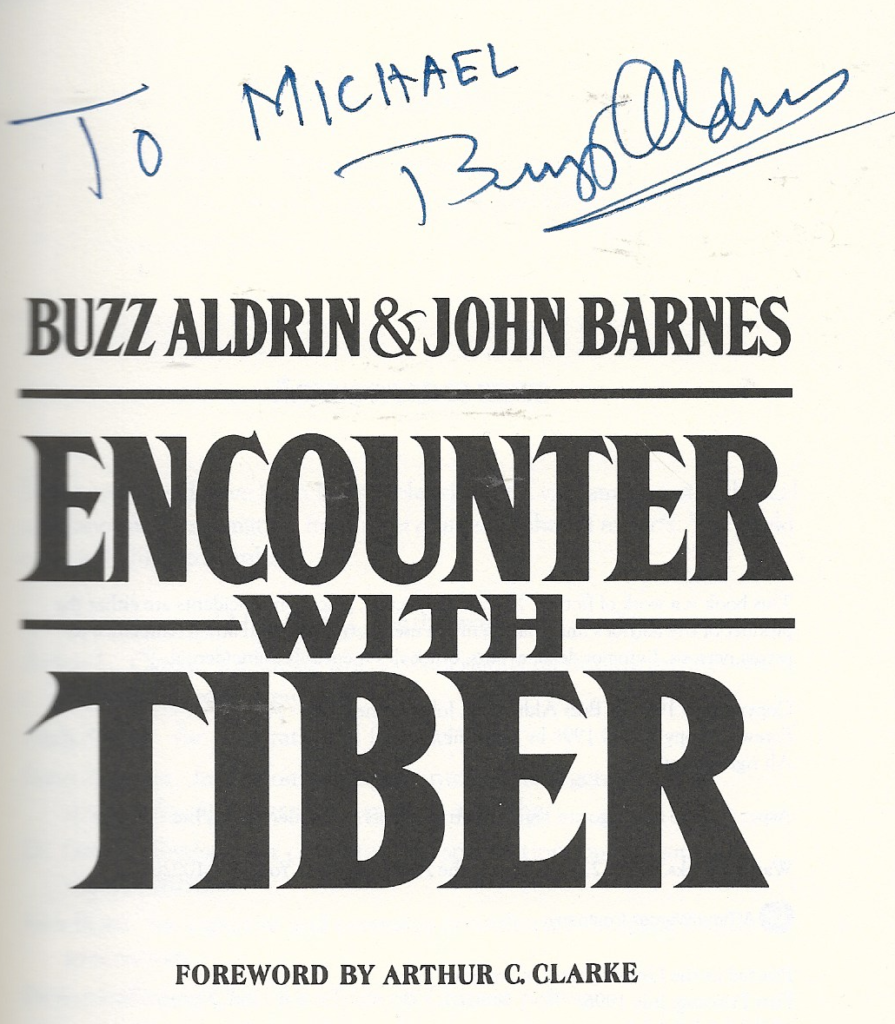
Aldrin, Buzz, and John Barnes. Encounter With Tiber. Warner Books, 1996. First edition hardback, a Fine copy in a Fine dust jacket, inscribed by Aldrin: “To Michael,/Buzz Aldrin.” Pretty sure Barnes did the overwhelming majority of the writing, but it’s pretty cool to own a book signed by a guy who walked on the moon. Bought for $7.99.
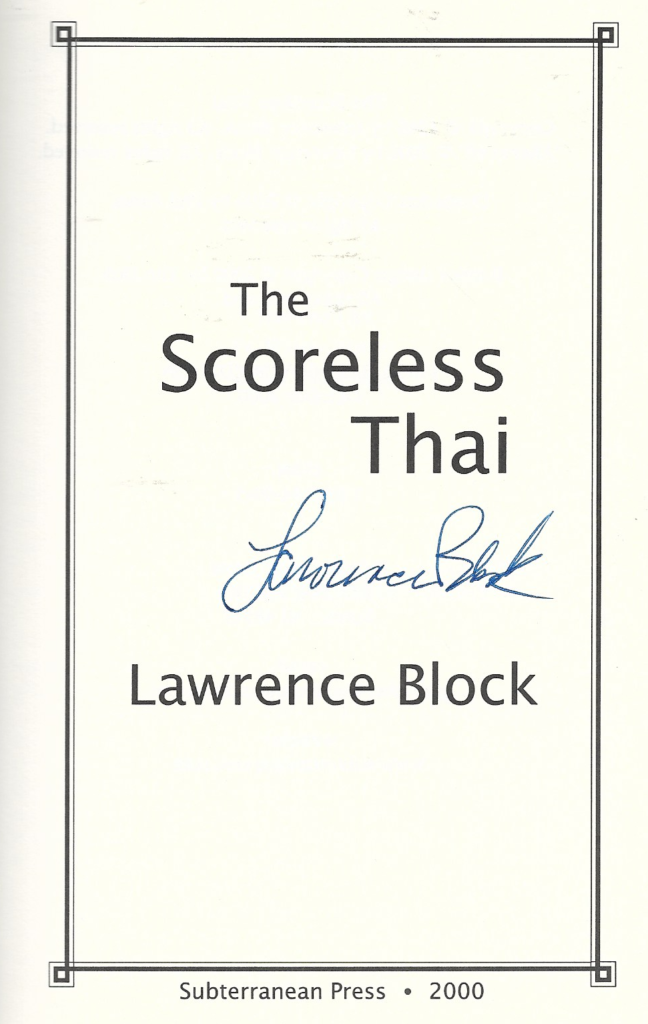
Block, Lawrence. The Scoreless Thai. Subterranean Press, 2000. First hardback edition (previously published in a 1970s PBO), a trade edition, a Fine copy in a Fine dust jacket, signed by Block. Novella. Bought for $10, 1/3rd of publication price, and the trade edition wasn’t issued signed by Block.
Block, Lawrence. Tanner’s Tiger. Subterranean Press, 2001. First hardback edition (previously published as a 1968 paperback original), a Fine copy in a Fine dust jacket, signed by Block. Tanner novel. Bought for $10, 1/3rd of publication price, and the trade edition wasn’t issued signed by Block.
Chabon, Michael. Summerland. Hyperion, 2002. First edition hardback, a Fine- copy in a Fine- dust jacket with slight bumping at head and heel, signed by Chabon. Bought for $9.99, which, oddly enough, seems to be about market. After he won the Hugo and Nebula for the excellent The Yiddish Policeman’s Union, I though Chabon books were going to head steadily upward in value; the exact opposite seems to have happened. It looks like every single one of Chabon’s novels except The Amazing Adventures of Kavalier & Clay can be found in signed first edition hardbacks at or less than cover price. I can’t figure it out, as all three of the Chabon books I’ve read (The Yiddish Policeman’s Union, The Amazing Adventures of Kavalier & Clay, and Gentlemen of the Road) were excellent.
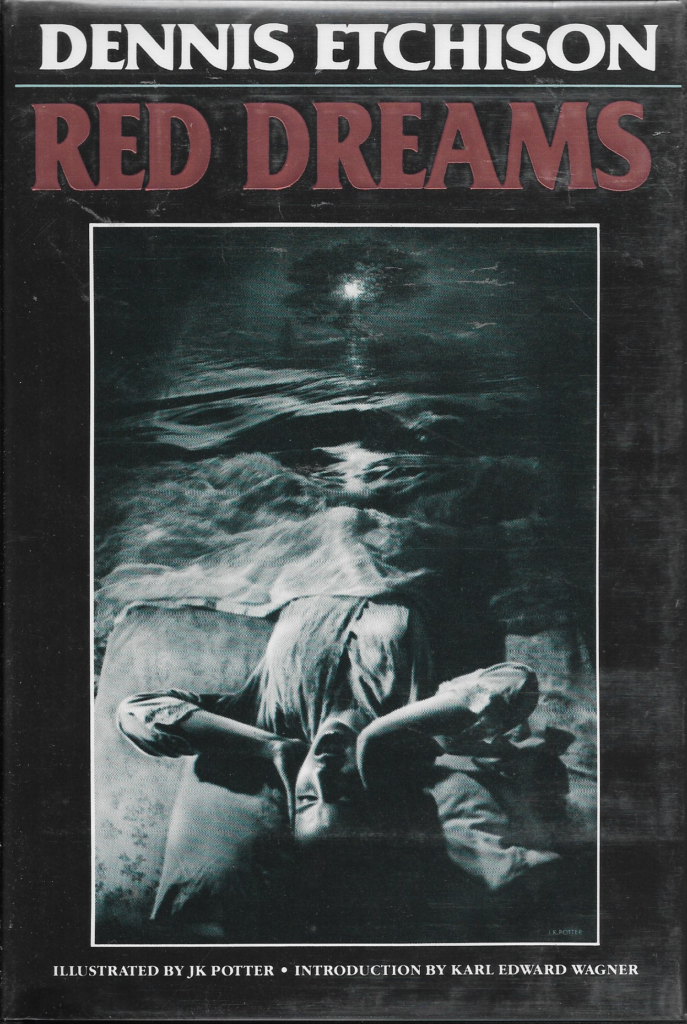
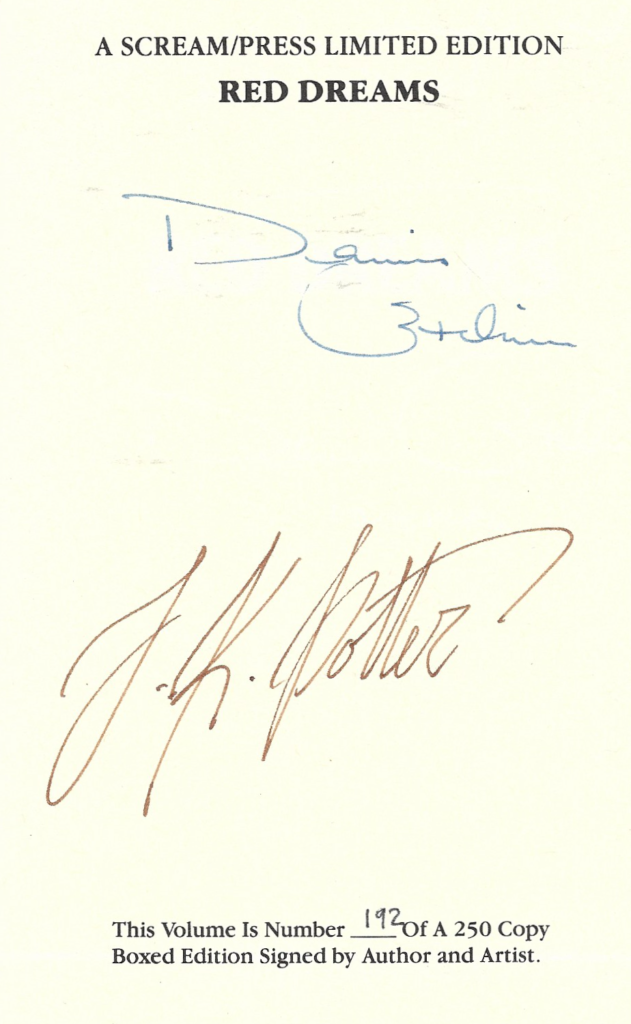
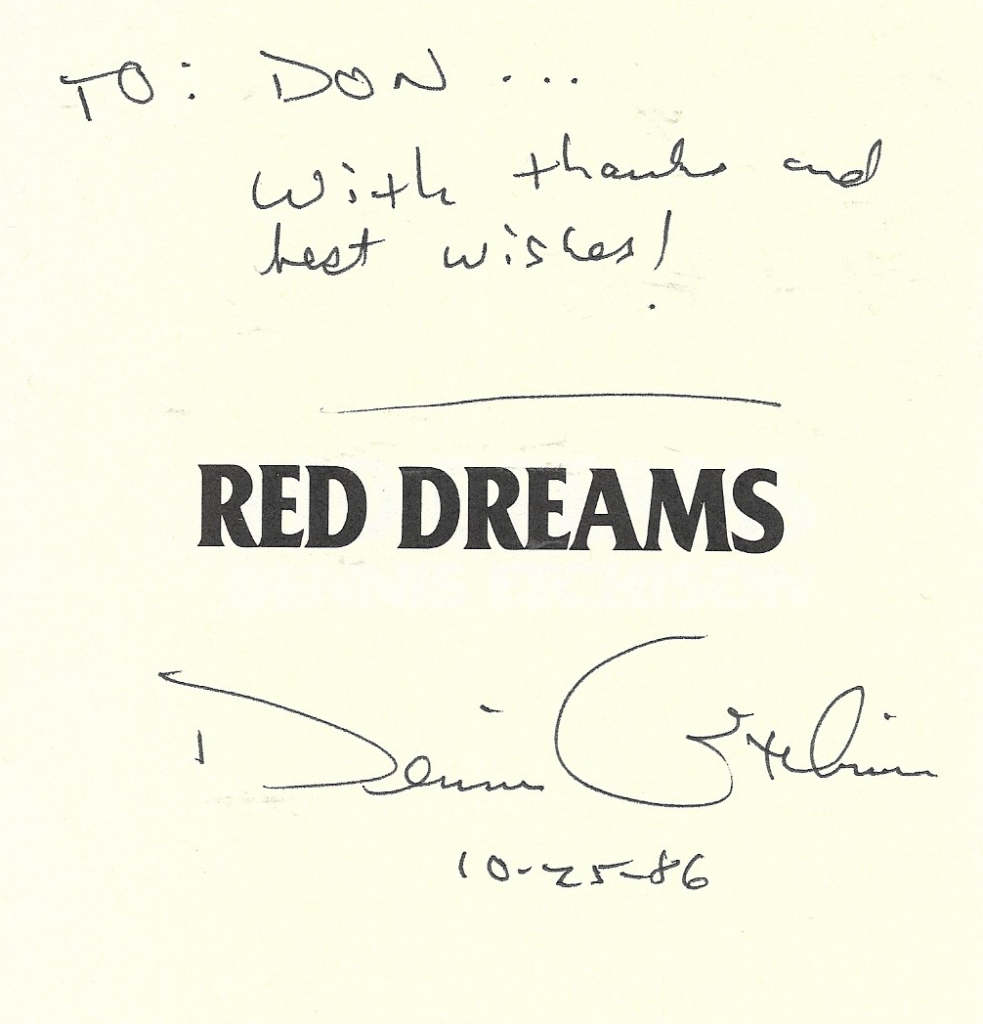
Etchison, Dennis. Red Dreams. Scream/Press, 1984. First edition hardback, #192 of 250 numbered hardbacks signed by Etichson and artist J.K. Potter, a Fine copy in a Fine, Mylar-protected dust jacket and a Fine- slipcase with a trace of haze rubbing, and additionally signed by Etchison. The second short story collection by this acclaimed horror writer. The third publication of Scream/Press. Chalker/Owings, page 335. Supplements a trade copy. Bought for $30.
(Surface wear is on the dust jacket protector.)
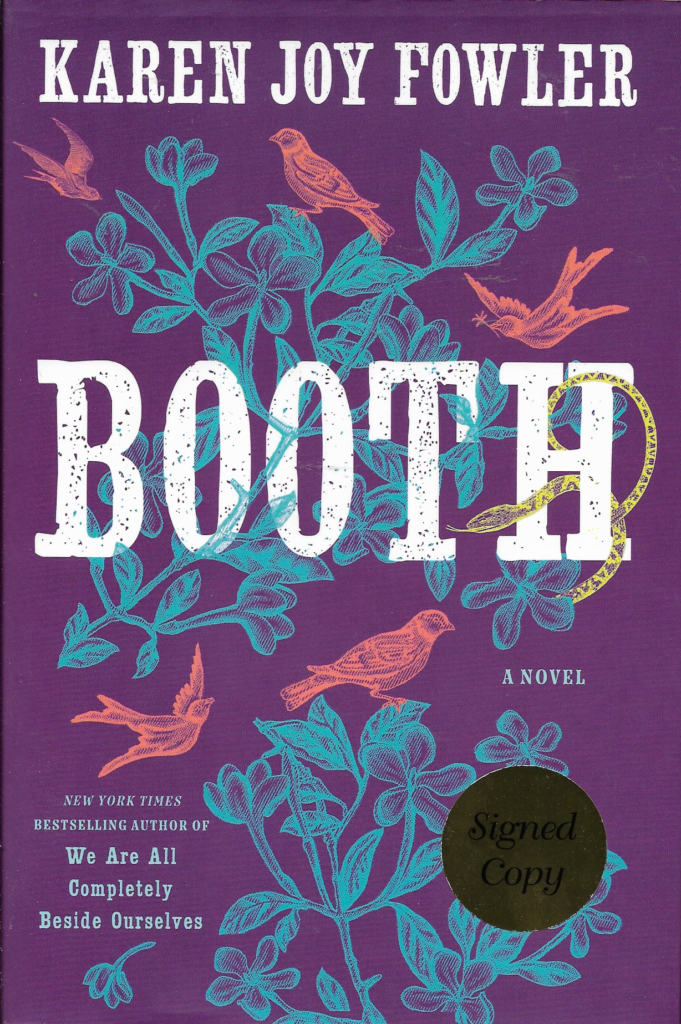
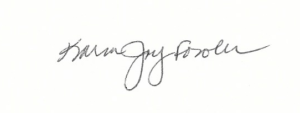
Fowler, Karen Joy. Booth. Putnam, 2022. First edition hardback, a Fine copy in a Fine- dust jacket with just a trace of edgewear, the signed publisher’s variant with a “Signed Copy” sticker on the cover and a page signed by Fowler bound in. Novel of the theatrical Booth family (including presidential assassin John Wilkes Booth) in early 19th century America. Bought for $13.99.
Found at various Half Price Books locations across the Dallas-Fort Worth Metroplex, the Book Celler in Temple, and Recycled Books in Denton.
Anonymous. In the Future. Arno Press, 1974. First edition hardback thus, a reprint of a book originally published in 1867, a Fine- copy with slight bumps at points, sans dust jacket, as issued. Bought for $7.99.
Not to be confused with the David Byrne piece of the same name:
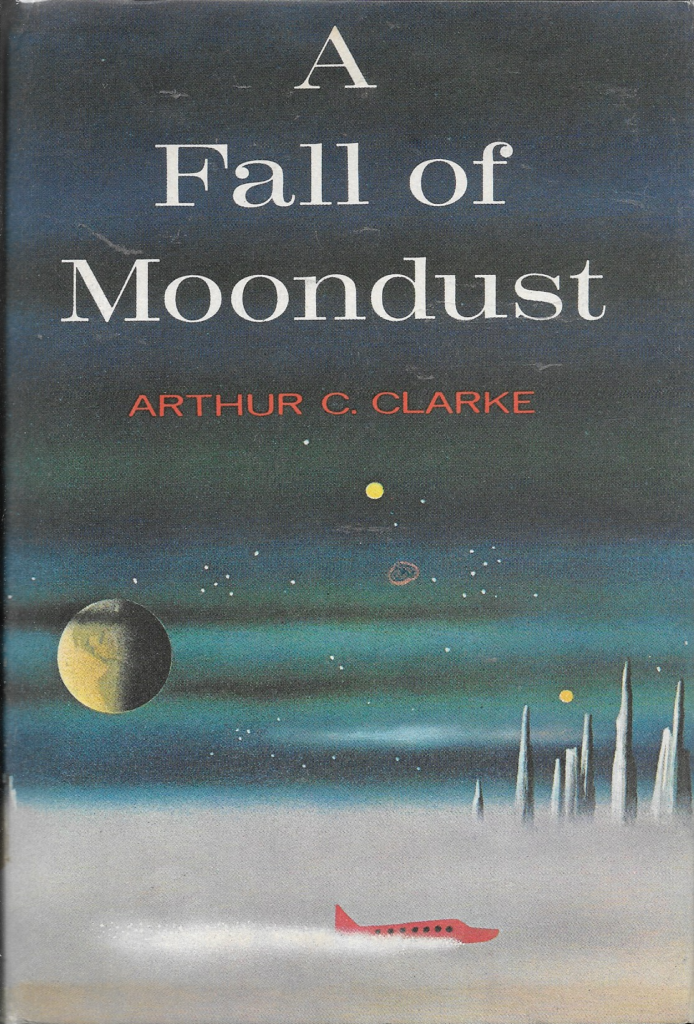
Clarke, Arthur C. A Fall of Moondust. Harcourt, Brace and World, 1961. First edition hardback, an Ex-Library copy with the usual flaws, including stamps, pocket removal, tape to boards, etc, but with a much better than usual dust jacket, with a couple of short closed tears on flap edges, a small sticker ghost on spine, and slight protector discoloration to edges; call it a G/NF Ex-Lib copy. Currey, page 114. Replaces a less attractive Ex-Library copy. Bought for $20.
Erickson, Steve, Our Ecstatic Days. Simon & Schuster, 2005. First edition hardback, a Fine copy in a Fine, Mylar-protected dust jacket. Bought at Recycled Books in Denton for $6.80.
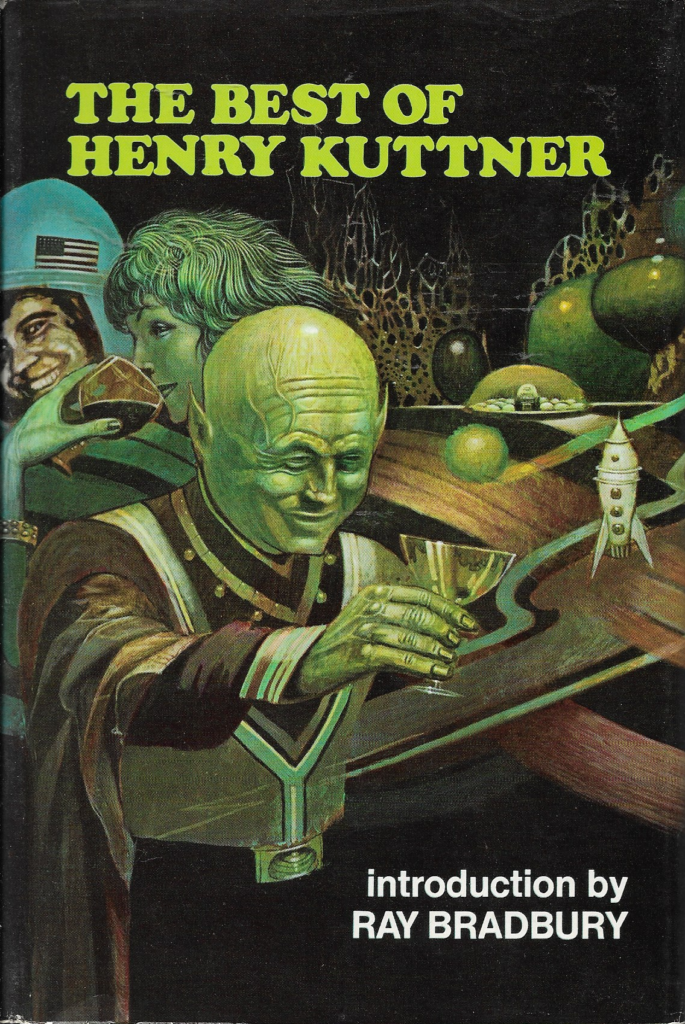
Kuttner, Henry. The Best of Henry Kuttner. Nelson Doubleday (SFBC), 1975. First edition hardback (code “01 R” on page 335, as per Currey), a Fine- copy with trace of bumping at points in a Fine- dust jacket with slight edgewear and small fold to tip of bottom front flap. Introduction by ray Bradbury. Currey, page 291. Bought for $6 at the Book Cellar in Temple.
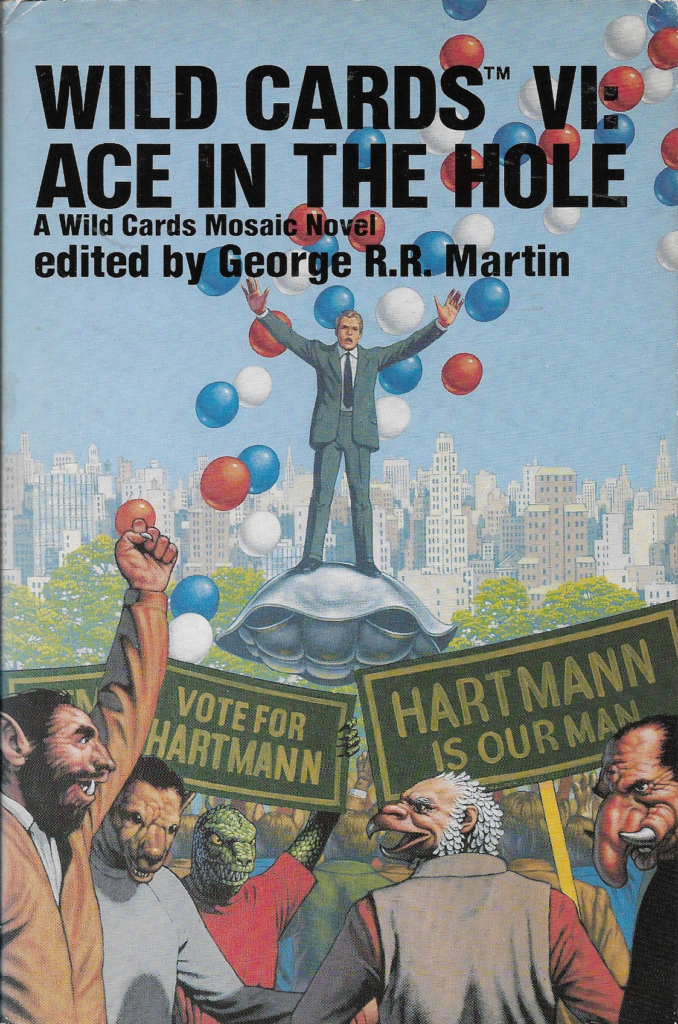
Martin, George R. R., editor. Wild Cards VI: Ace in the Hole. Bantam Books/SFBC, 1989. First hardback edition, the SFBC book club edition, preceded by the PBO, a Fine- copy with bumping at head, heel and top points, in a Near Fine+ dust jacket with slight bumping at head, heel and top points, a couple of phantom creases across rear cover, and slight edgewear. Bought for $6 at the Book Cellar in Temple.
Matheson. Richard. Duel: Terror Stories By Richard Matheson. Tor, 2003. First edition hardback, a Fine- with slight bend at heel copy in a Fine- dust jacket with a slight wrinkle at rear bottom. Supplements a trade paperback edition. Bought for $12.99.
Vance, Jack. The Space Pirate. Toby Press, 1953. First edition trade paperback original (no statement of printing, as per Currey), a Fine- copy with a bare trace of dust oiling age darkening to rear cover, plus the usual age darkening to pages; all but perfect, and far and away the nicest copy I’ve seen. Vance’s second novel. Hewett, A2. Cunningham, B.75.a. Currey, page 500. Supplements a signed but less attractive copy. Bought for $12 from Recycled Books in Denton.
Four books, three from the publisher, three signed.
Shiner, Lewis. More Collected Stories. Subterranean Press, 2023. First edition perfect bound chapbook, a Fine copy, in publisher’s plastic bag. Six stories Lew has published since Subterranean’s Collected Stories for him. Bought from the publisher.
Swanwick, Michael. Winter Songs. Dragonstairs Press, 2022 (not offered for sale until 2023). First edition chapbook original, #37 of 115 copies, a Fine copy. I will have copies of this available in the next Lame Excuse Books catalog.
Whitehead, Henry S. (Thomas Tessier, editor). A Little Orange Book of Voodoo Tales. Borderlands Press, 2023. First edition hardback, #462 of 500 numbered copies signed by the editor, a Fine copy, sans dust jacket, as issued. Five stories, two of which (“Jumbee” and “West India Lights”) were the title stories of his two Arkham House collections. Weirdly, this book has about 130 pages of text, then another 30 numbered but blank pages at the back. I have copies of this available through Lame Excuse Books.
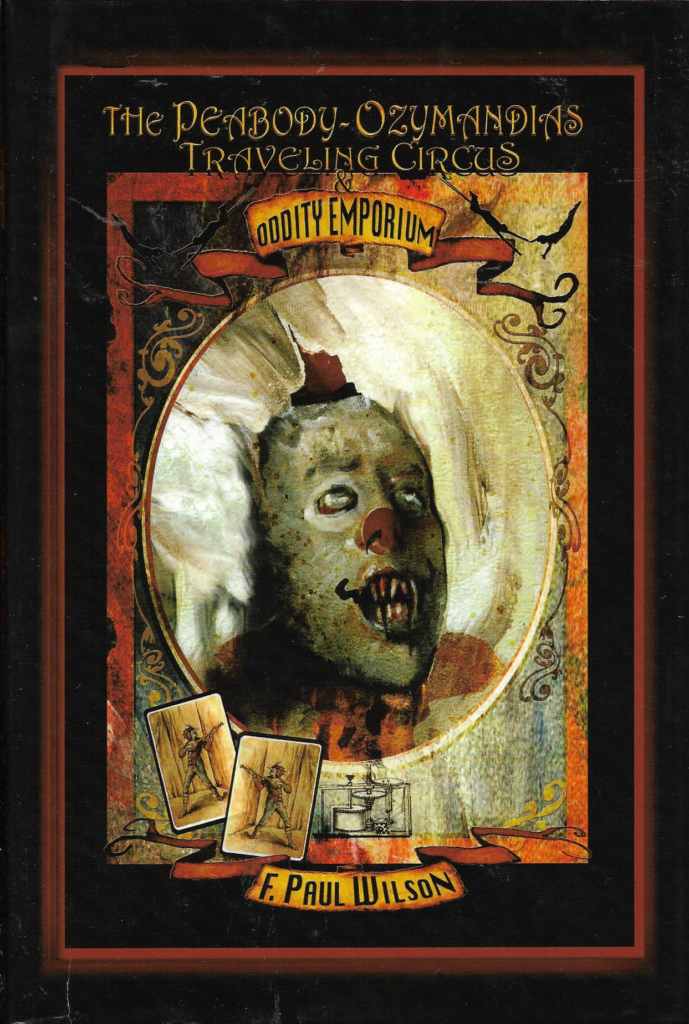
Wilson, F. Paul. The Peabody-Ozymandias Traveling Circus & Oddity Emporium. Necessary Evil Press, 2007. First edition hardback, a Fine copy in a Fine- dust jacket with a 3/4″ closed tear to bottom front near spine. Bought for $30 from a Half Price Books location in the Metroplex.
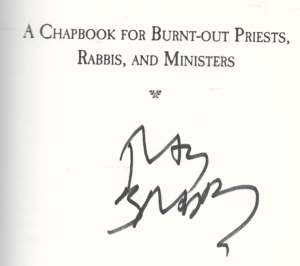
Bradbury, Ray. A Chapbook for Burnt-Out Priests, Rabbis and Ministers. Cemetery Dance, 2001. First edition trade hardback, a Fine copy in a Fine dust jacket, signed by Bradbury. Bought off eBay for $21.50. Replaces an unsigned copy and supplements a slipcased signed/limited edition copy.
King, Stephen, Richard Chizmar, and Stewart O’Nan. A Face in the Crowd b/w The Longest December. Cemetery Dance, 2023. First hardback edition and first edition thus (with King and O’Nan’s “A Face in the Crowd” previously only available in a eBook edition, and Chizmar’s “The Longest December” stating “Expanded Version,” but ISFDB doesn’t show a previous edition), a Fine copy in a Fine dust jacket. Two novellas. Bought off eBay for $20 plus shipping.
All of these were Half Price Books finds, all firsts, and all but the Sagan and Wong came from Austin stores. The Sagan and Wong came from Dallas Metroplex area stores, but I pulled them into this post because they go in bookcases I’m reorganizing.
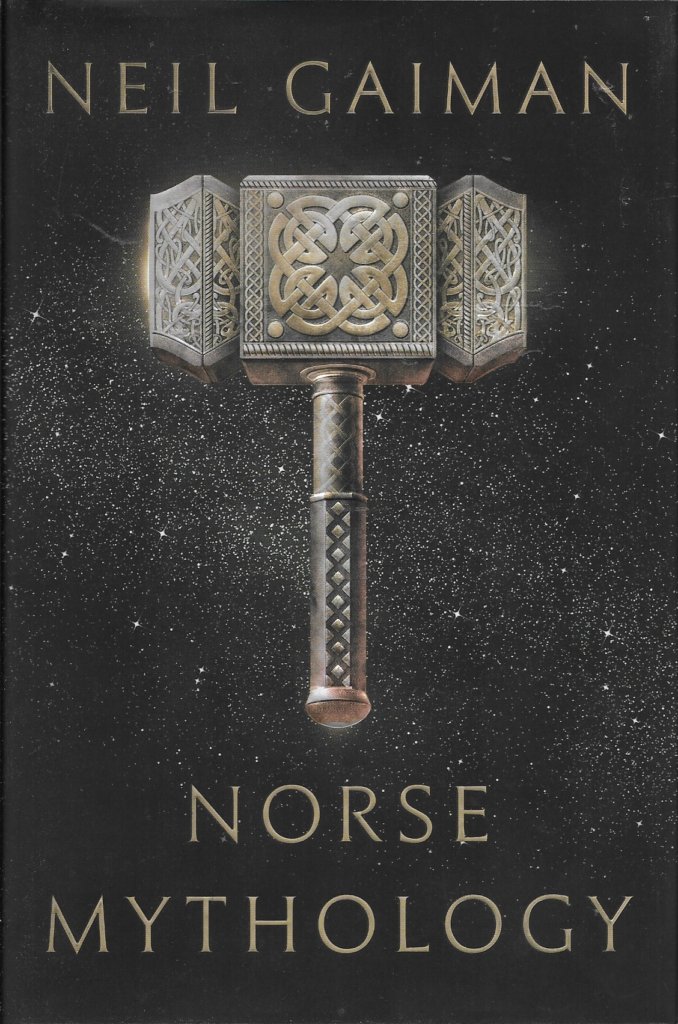
Gaiman, Neil. Norse Mythology. W. W. Norton, 2017. First edition hardback, a Fine copy in a Fine dust jacket. Bought for $12.99.
Robinson, Kim. New York 2040. Orbit, 2017. First edition hardback, a Fine- copy in a Fine- dust jacket with slight bumping at head and a trace of edgewear. Bought for $9.99.
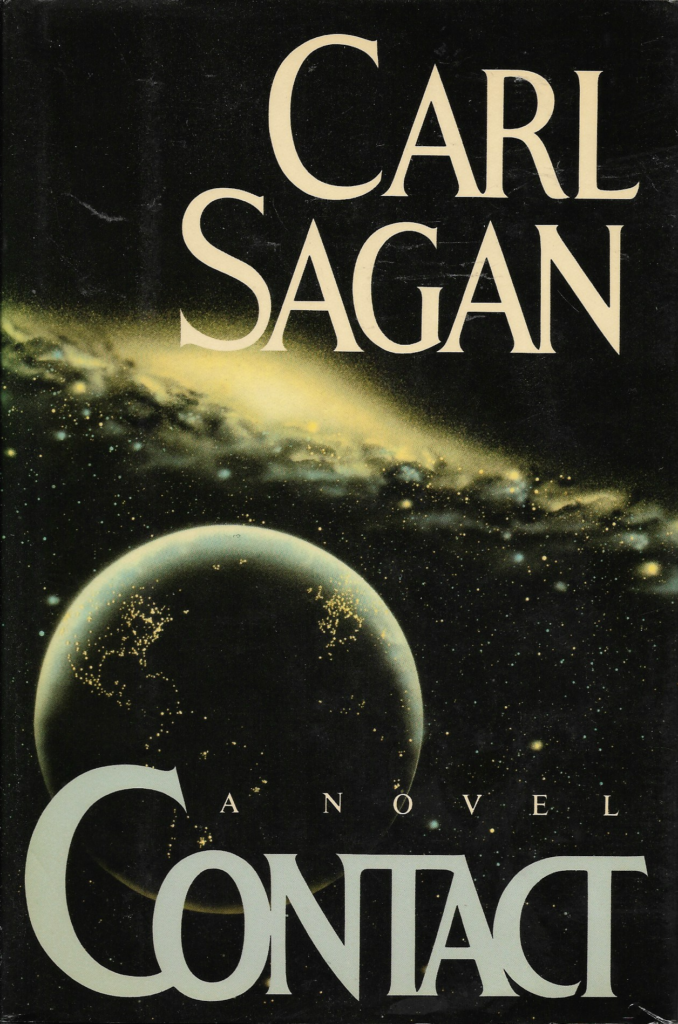
Sagan, Carl. Contact. Simon and Schuster, 1985. First edition hardback, a Fine- copy with slight bumping at head, slight dust soiling to outer page block, and slight bunting of points, in a Fine- dust jacket with slight bumping at head, slight wear at points, and a trace of staining to blind side. Sagan’s only novel, and the basis of the 1997 film. Bought for $8.49.
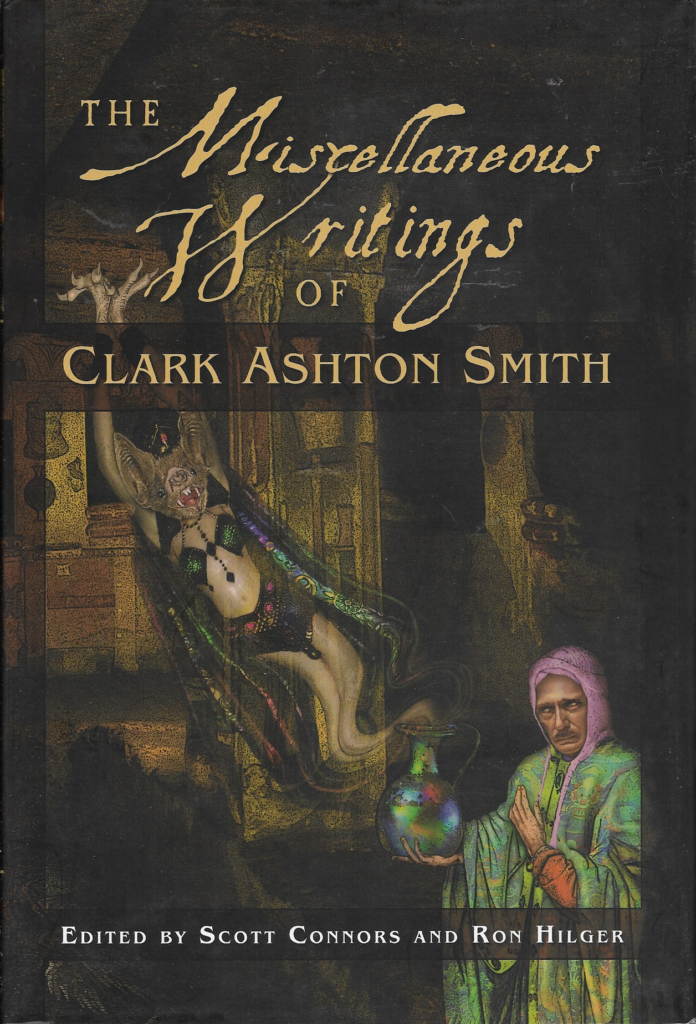
Smith, Clark Ashton (Scott Connors and Ron Hilger, editors). The Miscellaneous Writings of Clark Ashton Smith. Night Sahde Books, 2011. First edition hardback, a Fine copy in a Fine dust jacket. I already had the five volume collected fantasies, but somehow never picked this one up, perhaps because Night Shade was so horrible at fulfillment. Bought for $14.99.
Wong, David (pseudonym of Jason Pargin). Futuristic Violence and Fancy Suits. St. Martin’s, 2015. First edition hardback, a Fine copy in a Fine- dust jacket with one tiny wrinkle at heel and a trace of wear at top points. Bought for $13.49.
Unusually for Half Price Books, three of these titles had aftermarket labels over the UPC code that needed a fair amount of Bestine and elbow grease to remove…
Four more items for the Lansdale collection, three by Joe R. Hisownself, one an anthology he’s in.
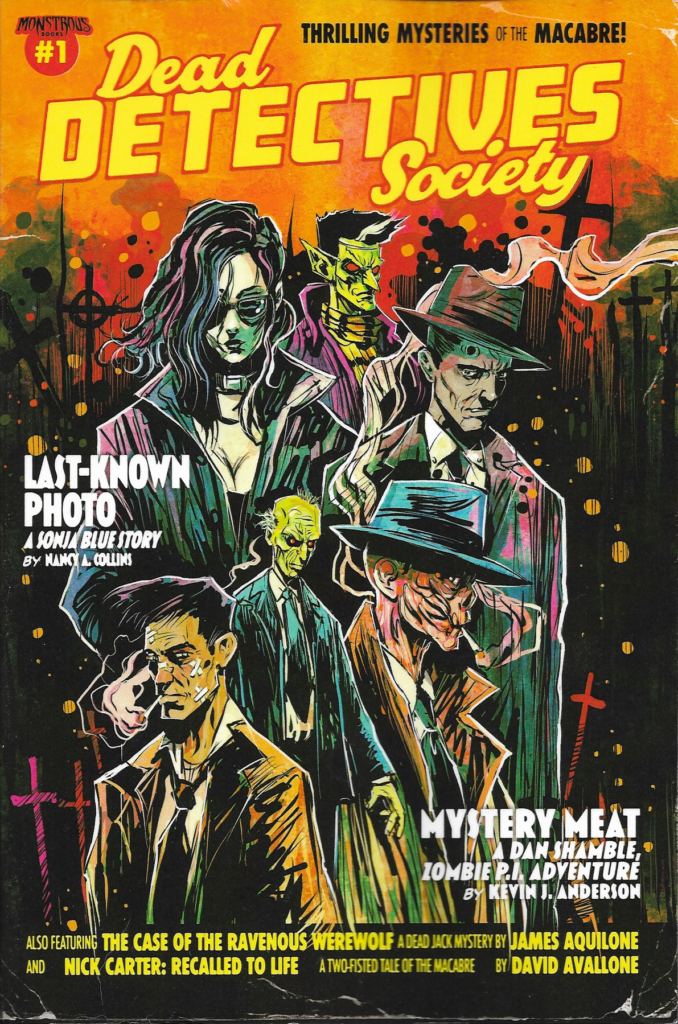
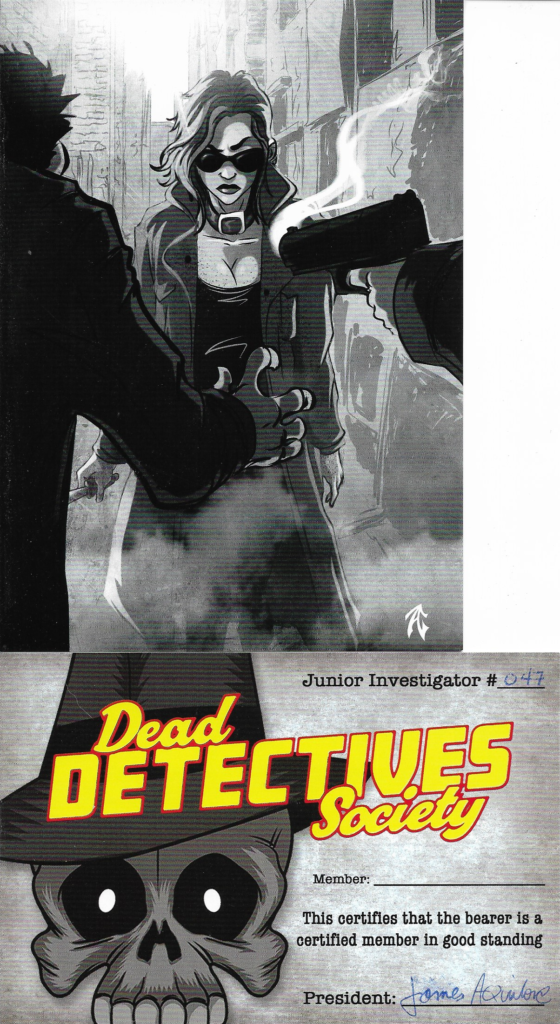
Aquilone, James, editor. Dead Detectives Society. Monsterous Books, 2023. First edition trade paperback original, a Fine copy, with extras bag including three cardstock illustrations and a Dead Detective’s Society Membership card. Includes stories by Joe and Kasey Lansdale, Nancy Collins, Kevin J. Anderson, etc. Bought off Kickstarter for $32.
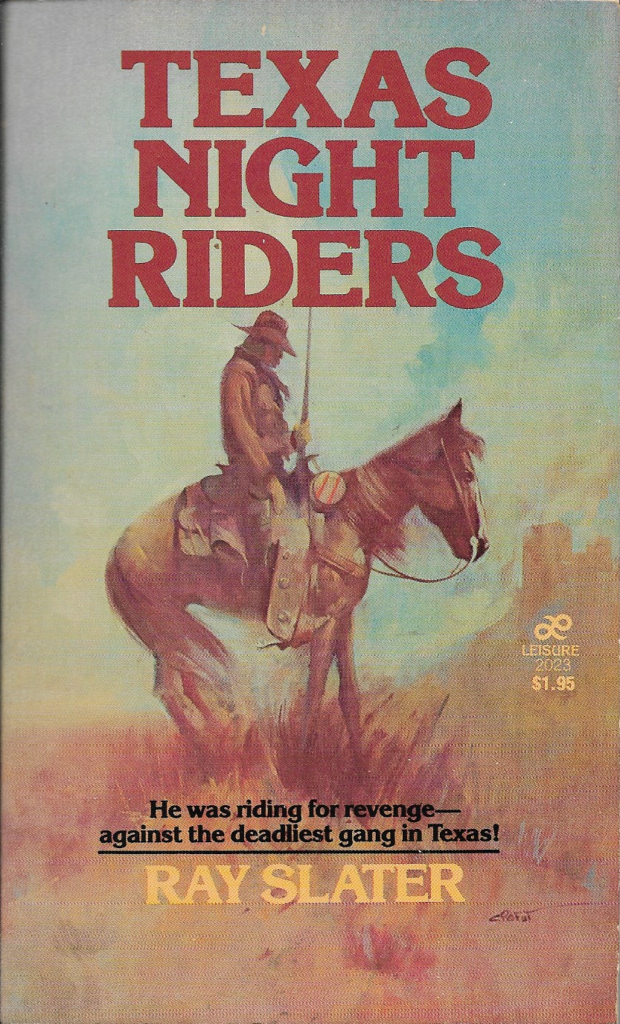
Lansdale, Joe R. (as Ray Slater). Texas Night Riders. leisure, 1983. First edition paperback original, a Fine- copy with tiny loss at very tip of top rear outer corner and some foxing to inside covers, otherwise tight, square and apparently unread. This is far and away the best copy I’ve ever seen. Supplements a less attractive copy of the PBO inscribed to me, the Chivers Press large print (and first hardback edition) inscribed to me, and both the lettered and numbered editions of the Subterranean signed/limited edition. Isajenko, A003.a. Bought for $40 from Half Price Books.
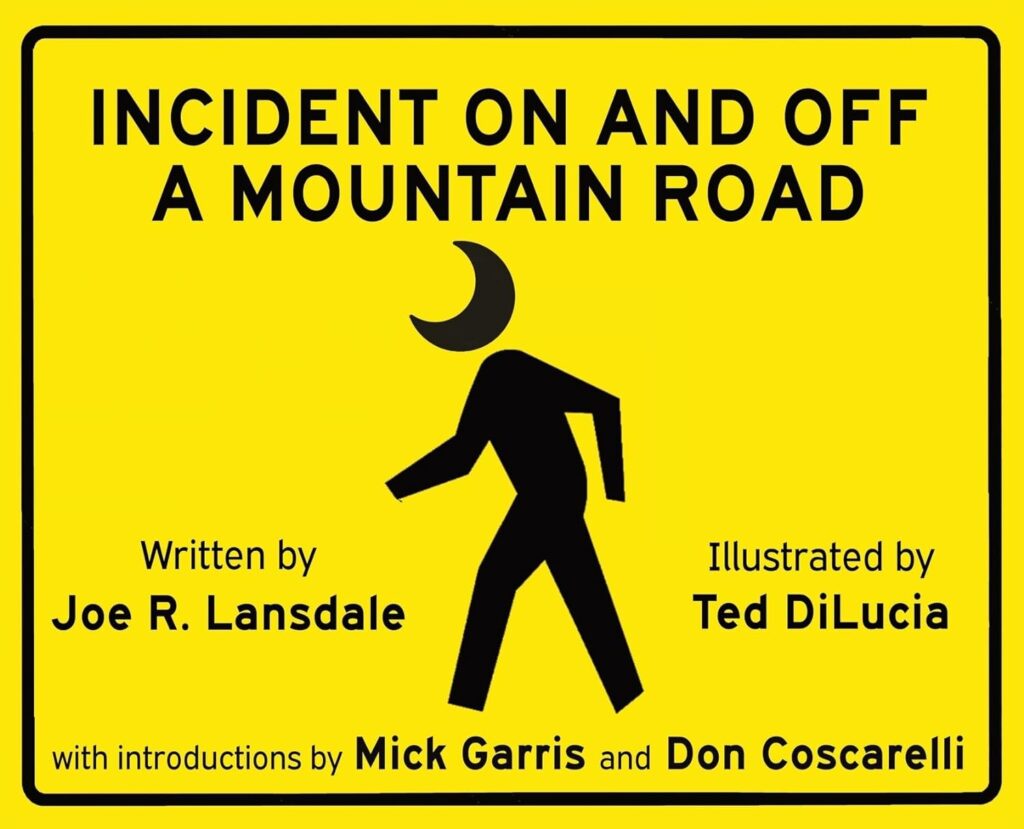
Lansdale, Joe R. (illustrated by Ted DiLucia). Incident On and Off a Mountain Road. Crystal Lake Publishing, 2023. First edition hardback (“10 9 8 7 6 5 4 3 2 1” numberline), a Fine copy in decorated boards, sans dust jacket, as issued. Illustrated version of the dark suspense novelette originally published in Night Visions 8 and later adapted as an episode of the Showtime Masters of Horror TV anthology series. Amazon seems to be the main fulfillment avenue for this book, so I provided an Amazon link above.
Lansdale, Joe R. and Keith Lansdale. Prisoner of Violence. Dark Regions Press, 2023. First edition hardback, a Fine copy in decorated boards, sans dust jacket, as issued, into which I’ve laid a signature plate by Joe and Keith Lansdale. Graphic novel that was announced several years ago, but only recently came out. I have copies of this available through Lame Excuse Books.
All these were bought at various Half Price Books locations, the Delany in Austin and the other three in various stores in the Dallas Metroplex.
(Bradbury, Ray) Eller, Jonathan R. Becoming Ray Bradbury. University of Illinois Press, 2011. First edition hardback, a Fine- copy in a Fine- dust jacket with slight bumping at head, heel and points. Biography of Bradbury that made use of his personal notes and correspondence. Bought for $17.49.
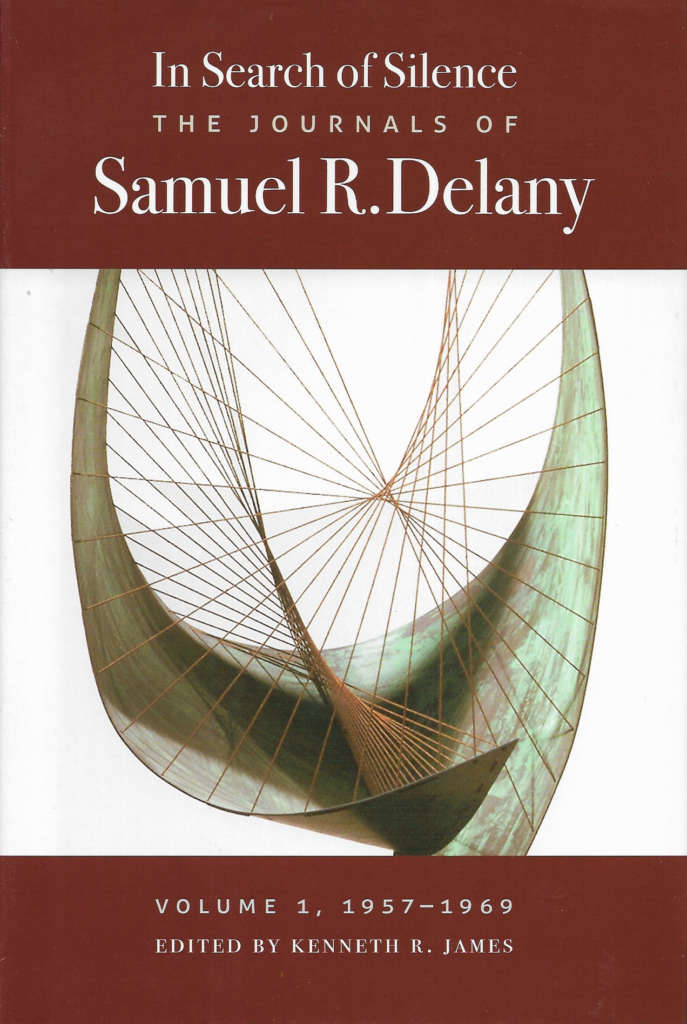
Delany, Samuel R. (edited by Kenneth R. James). In Search of Silence: The Journals of Samuel R. Delany Volume 1, 1957-1969. Wesleyan University Press, 2017. First edition hardback (“5 4 3 2 1” numberline), a Fine copy in a Fine dust jacket. Selections from Delany’s journals when he was first making his mark on the SF field. Bought for $9.95.
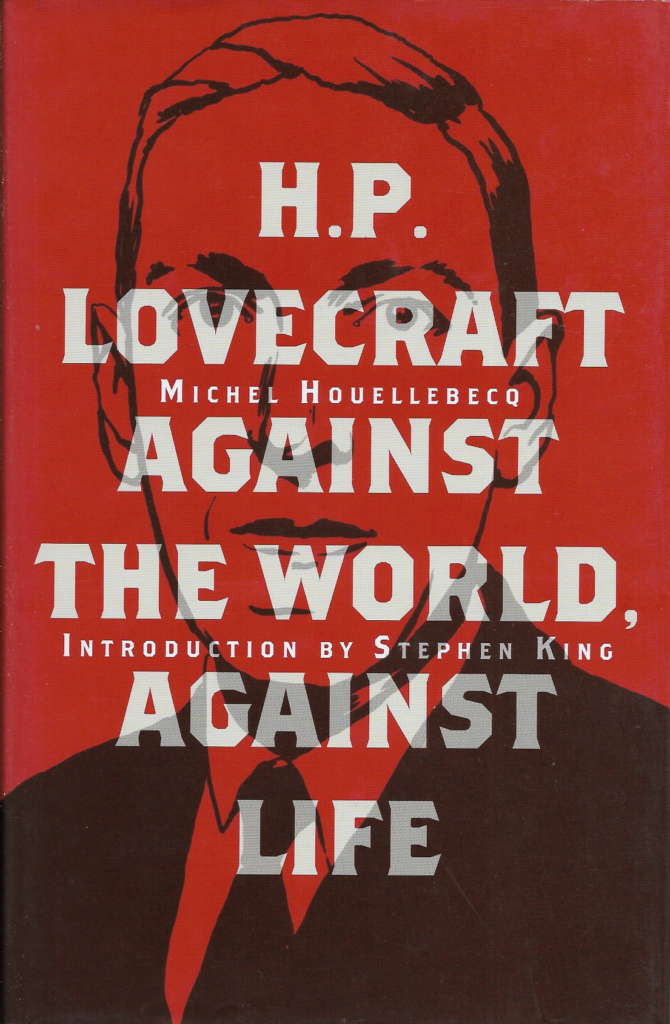
(Lovecraft, H. P.) Houllebecq, Michel. H. P. Lovecraft: Against the World, Against Life. Cernunnos, 2019. First edition hardback, a Fine copy in a Fine dust jacket. Critical analysis of Lovecraft and his work by the French writer and critic. Introduction by Stephen King. Bought for $9.95.
Shatner, William (with Chris Kresski). Star Trek Memories. HarperCollins, 1993. First edition hardback, limited issue, one of 4,500 signed, numbered copies, a Fine copy in a Fine slipcase, sans dust jacket, as issued, still in shrinkwrap. Non-fiction memoir of his time on the original Star Trek TV series. Bought for $65, less than cover price and less than a fourth of what it lists for these days.
I have one copy of the Delany available through Lame Excuse Books.
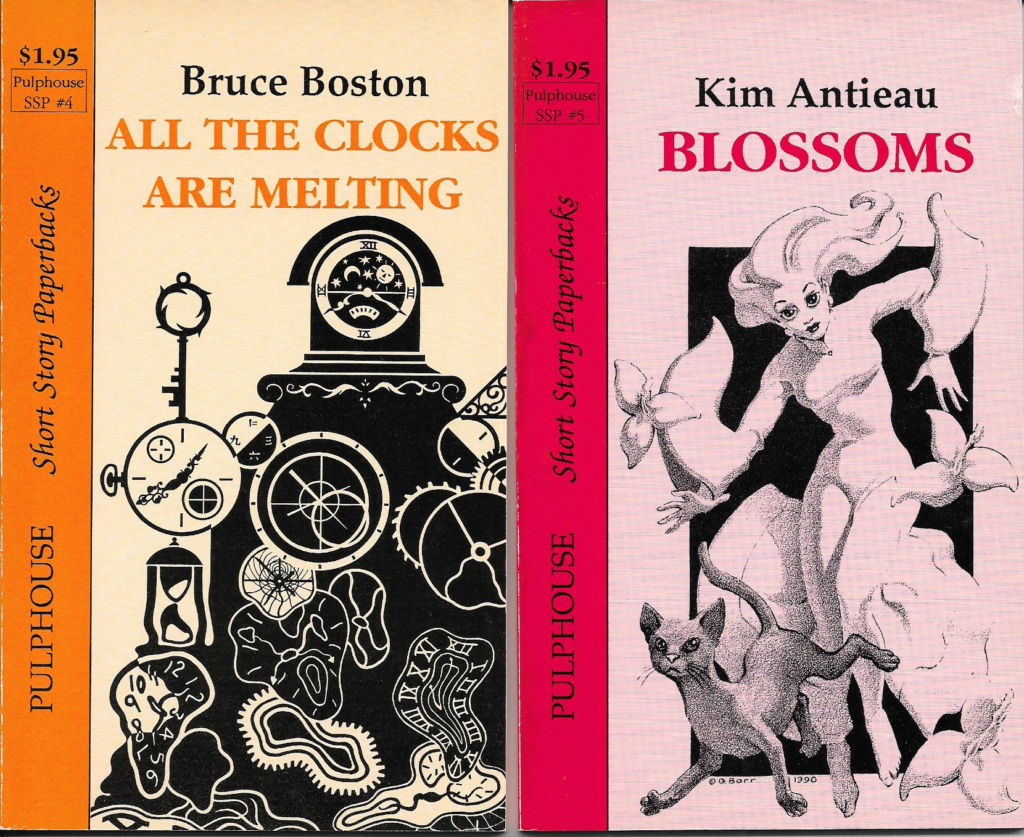
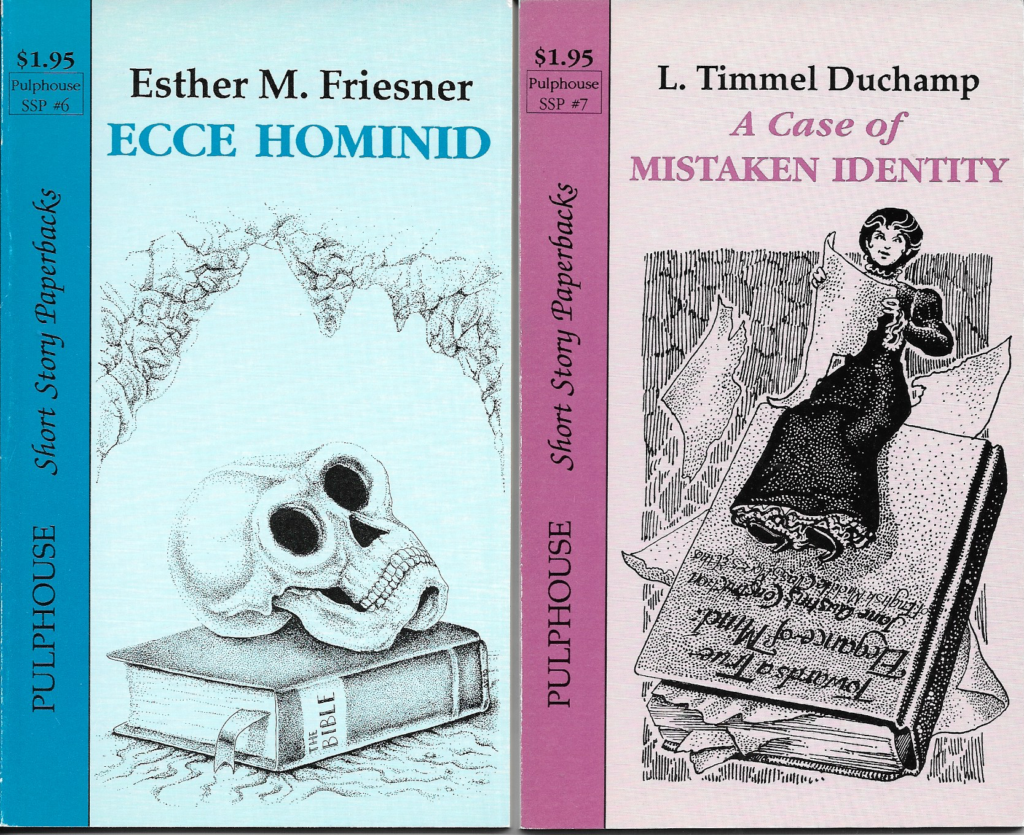
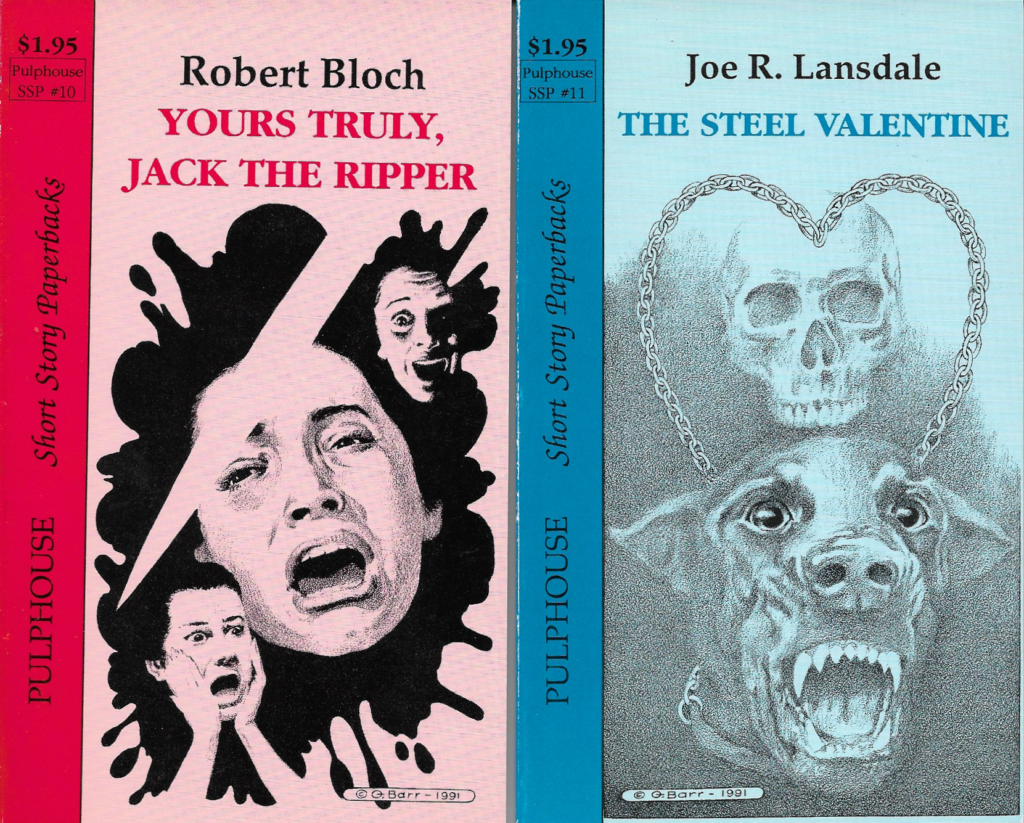
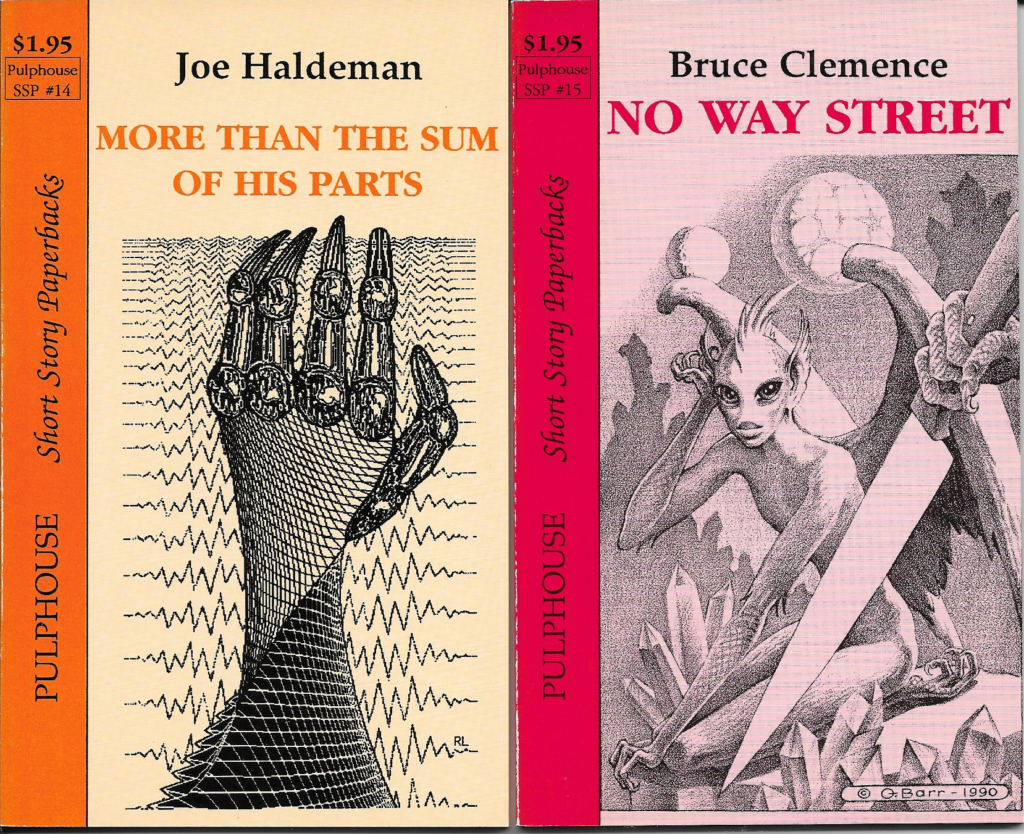
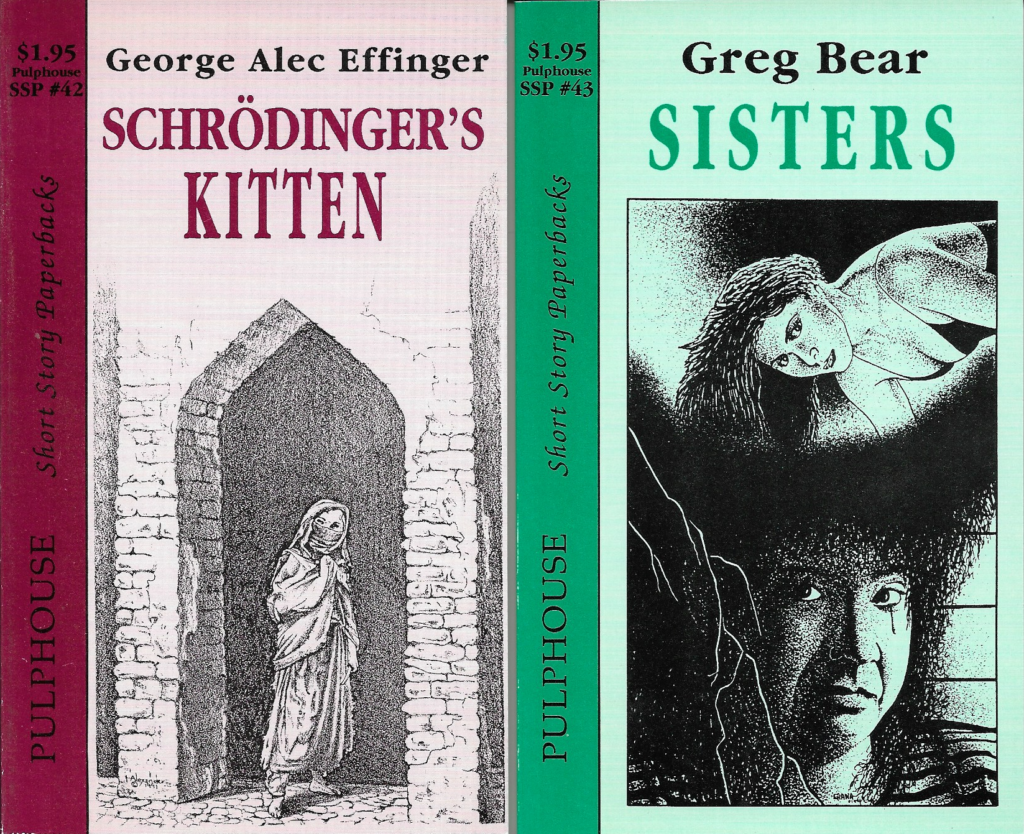
When Pulphouse first unveiled the short story paperback, I remember thinking “That’s stupid.” For all they bragged about “buying a single story for $1.95,” you could buy an entire issue of Asimov’s (with 5-10 times as much content) for $2.50. And, indeed, they were not swift sellers. Though a few of these (the Wolfe, the Lansdales, etc.) became slightly collectable over the years. (And a few of the companion Short Story hardbacks even more so.)
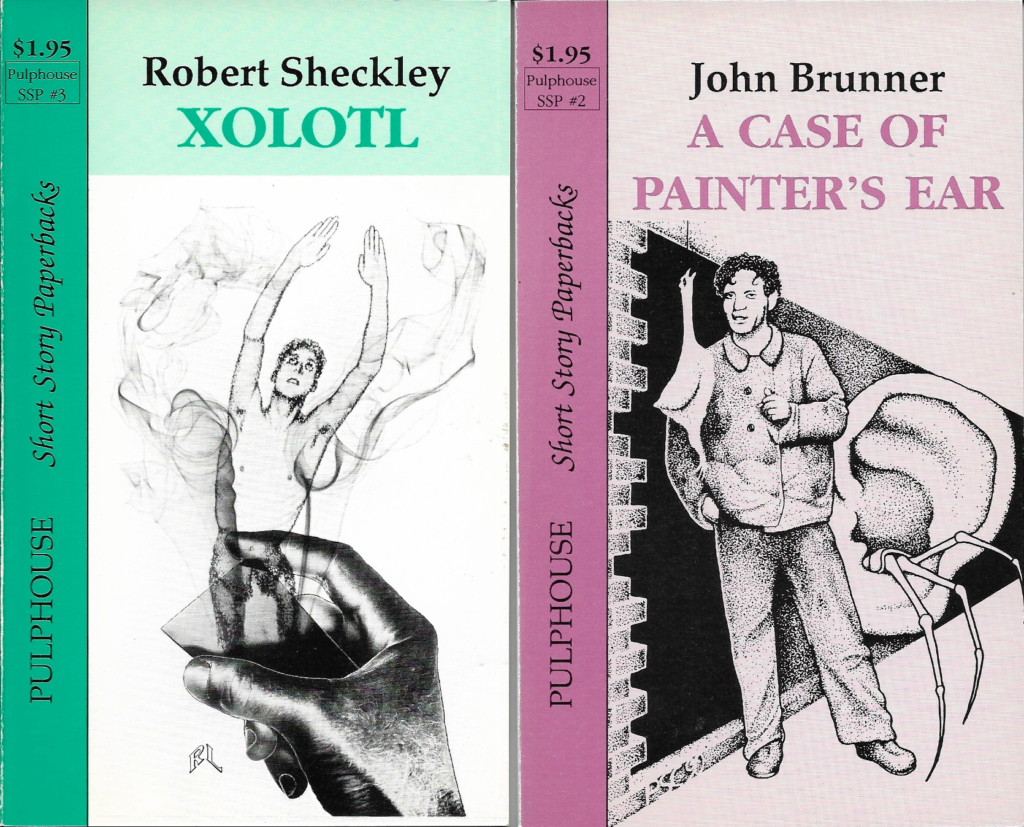
Almost all of these are paperback originals thus (though some of these have previously shown up as the title stories in collections, like Bloch’s Yours Truly, Jack the Rapper or Zelazny’s The Doors of His Face, The Lamps of His Mouth), though exceptions (like Blaylock’s Paper Dragons) are noted. Some of the early ones (“Loser’s Night,” “Xolotl”) are the first publication anywhere, but most of the stories have appeared somewhere previously. Unlike most Library Addition entries, these will be listed by series order rather than alphabetical by author.
All of these are Fine copies unless otherwise noted.
“Author, J.Q.” Issue Zero. Pulphouse, 1991. Issue #0, a binding dummy for the entire run of the series, with bank pages. Would never have bought this on it’s own, but since I was buying the entire thing I got this too. This one has a tiny bit of edgewear on rear spine join.
Bishop, Michael. The Quickening. Pulphouse, 1991. Issue #12.
Zelazny, Roger. The Doors of His Face, The Lamps of His Mouth. Pulphouse, 1991. Issue #13. Not to be confused with the short story collection of the same name. I needed this for my Zelazny collection.
Haldeman, Joe. More Than The Sum of His Parts. Pulphouse, 1991. Issue #14.
Clemence, Bruce No Way Street. Pulphouse, 1991. Issue #15. Guy had this, and a story in Synergy 3, and that was it…
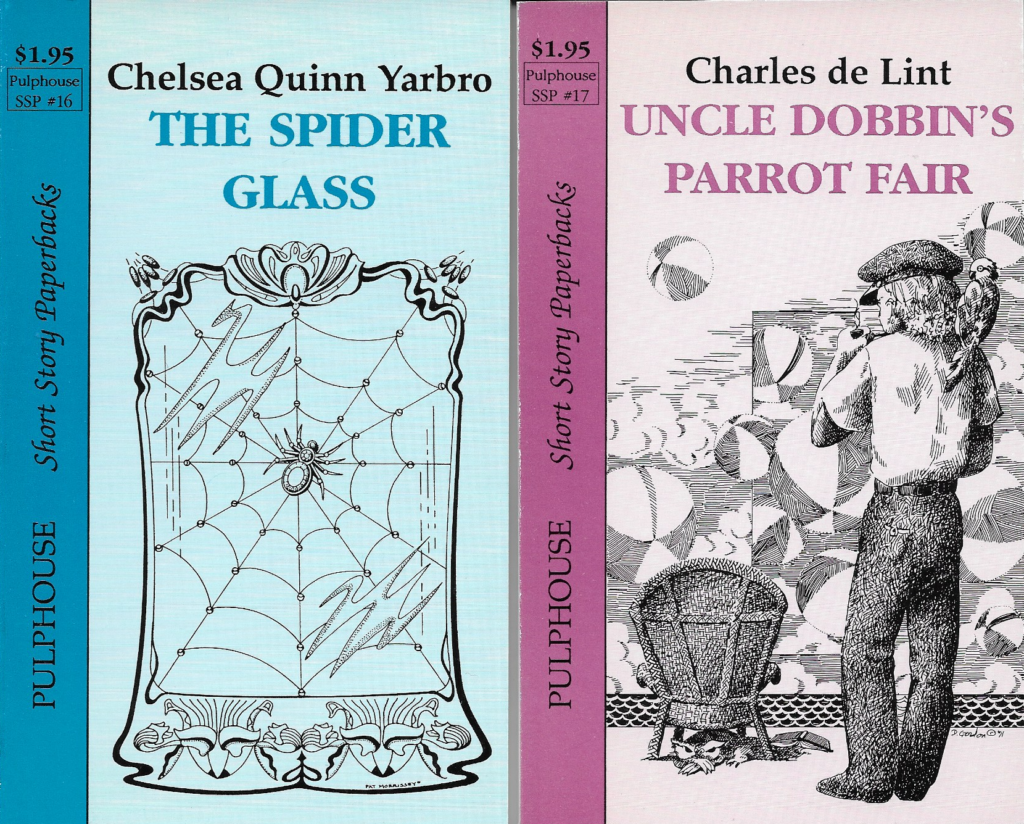
Yarbro, Chelsea Quinn. The Spider Glass. Pulphouse, 1991. Issue #16.
de Lint, Charles. Uncle Dobbin’s Parrot Fair. Pulphouse, 1991. Issue #17. One of the harder titles to find.
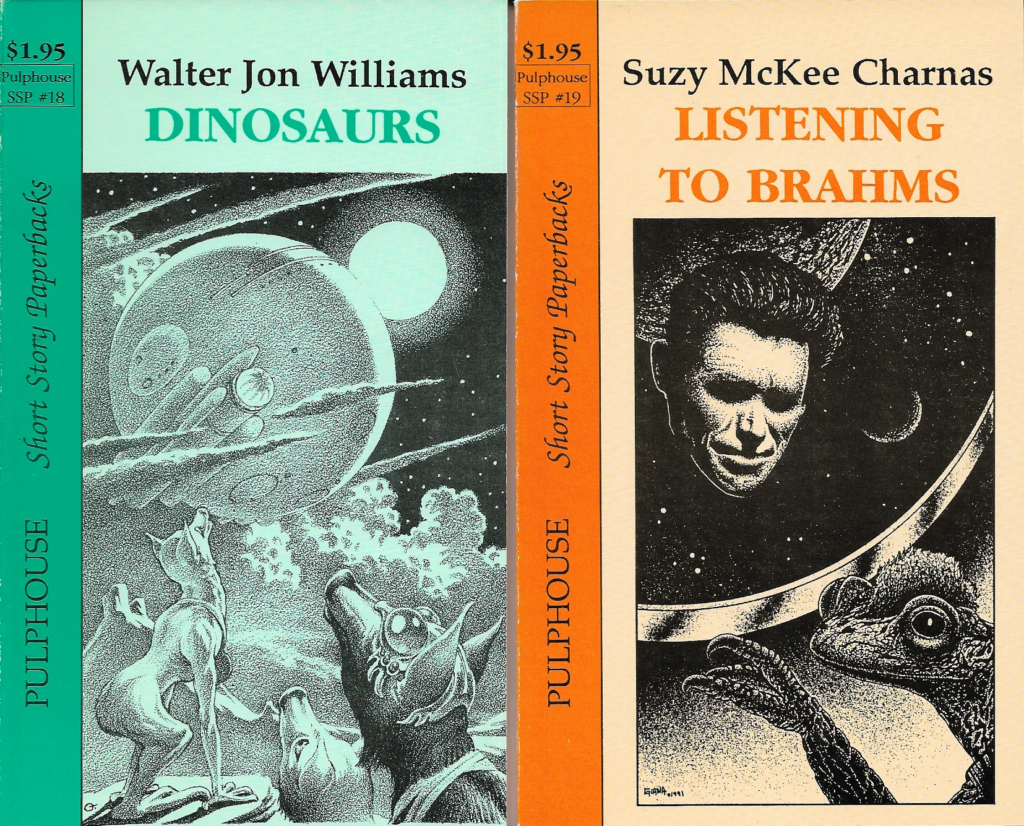
Williams, Walter Jon. Dinosaurs. Pulphouse, 1991. Issue #18.
Charnes, Suzy McKee. Listening to Brahms. Pulphouse, 1991. Issue #19.
Robinson, Kim Stanley. Black Air. Pulphouse, 1991. Issue #20.
Etchison, Dennis. The Dark Country. Pulphouse, 1991. Issue #21. Not to be confused with the short story collection of the same name.
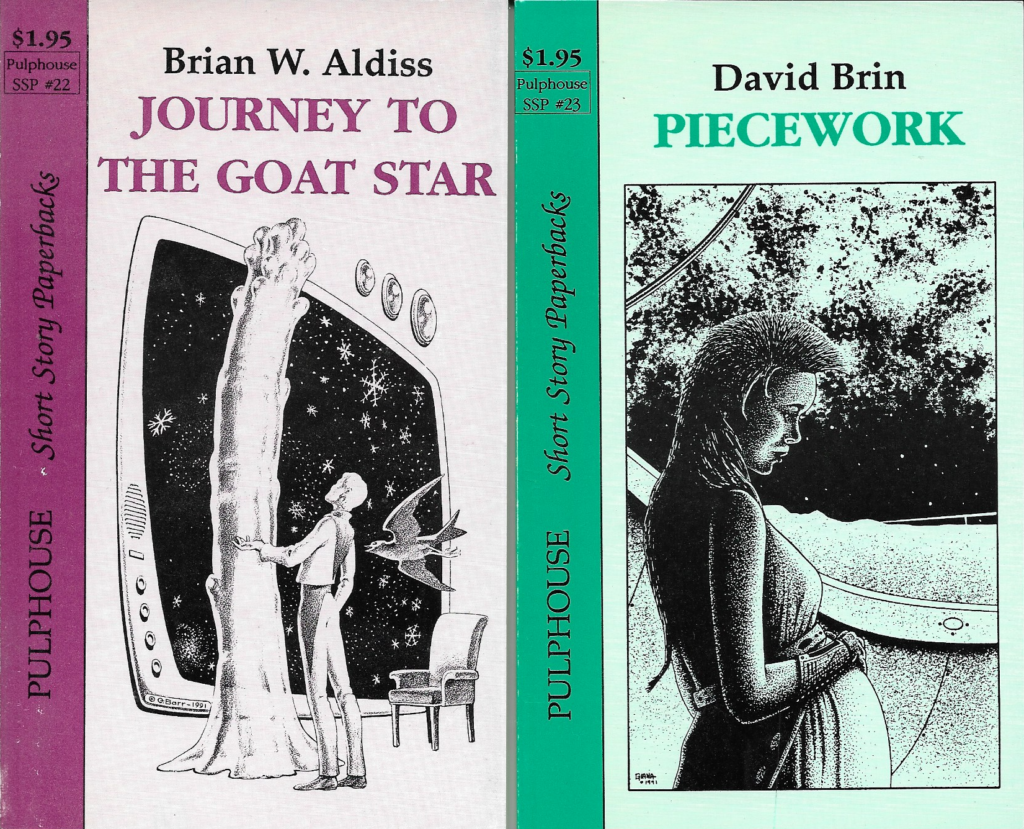
Aldiss, Brian W. Journey to the Goat Star. Pulphouse, 1991. Issue #22. Tiny bit of rubbing along spine.
Wagner, Karl Edward. Where the Summer Ends. Pulphouse, 1991. Issue #31.
Lee, Tanith. Into Gold. Pulphouse, 1991. Issue #32.Tiny rub on spine.
Willis, Connie. Daisy, in the Sun. Pulphouse, 1991. Issue #33. Tiny rub on spine.
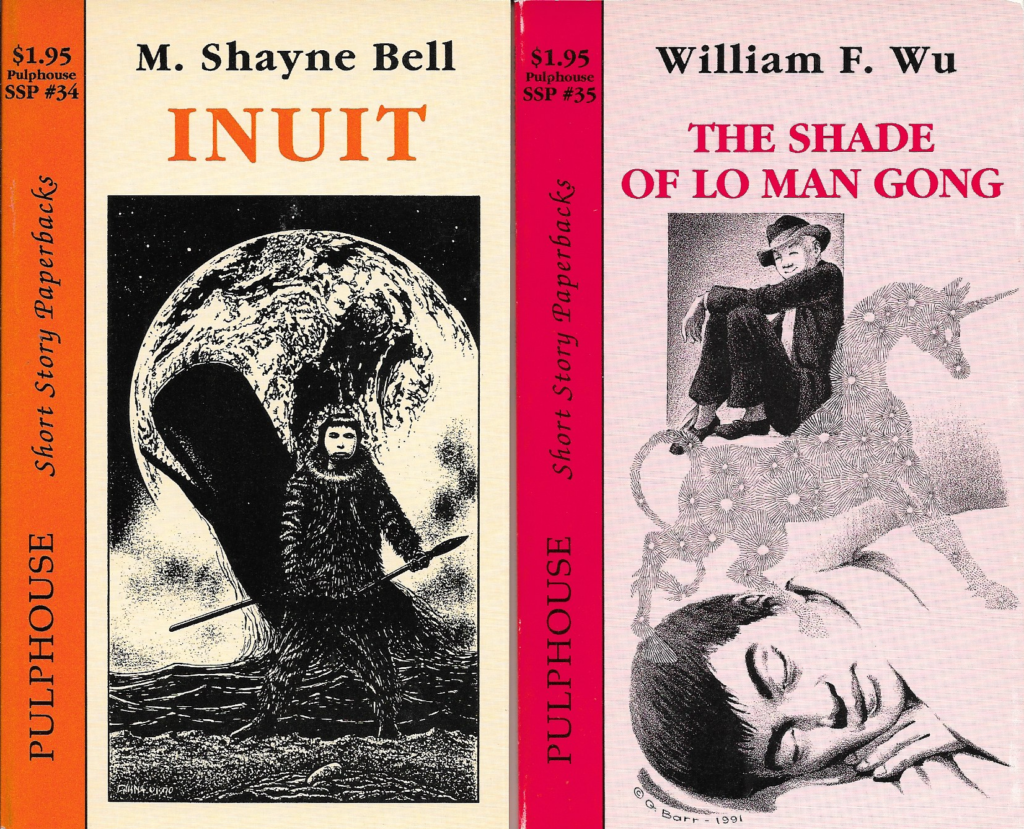
Bell, M. Shayne. Inuit. Pulphouse, 1991. Issue #34.
Wilson, F. Paul. The Shade of Lo Man Gong. Pulphouse, 1991. Issue #35.
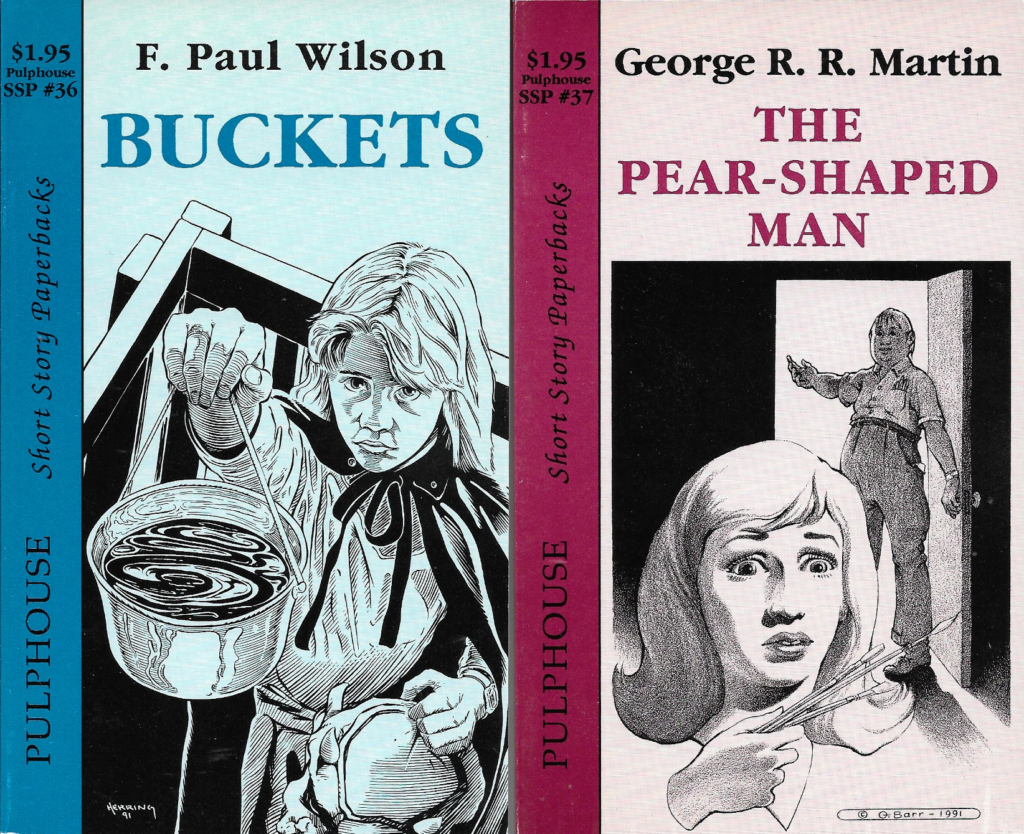
Wilson, F. Paul. Buckets. Pulphouse, 1991. Issue #36.
Martin, George R. R. The Pear-Shaped Man. Pulphouse, 1991. Issue #37.
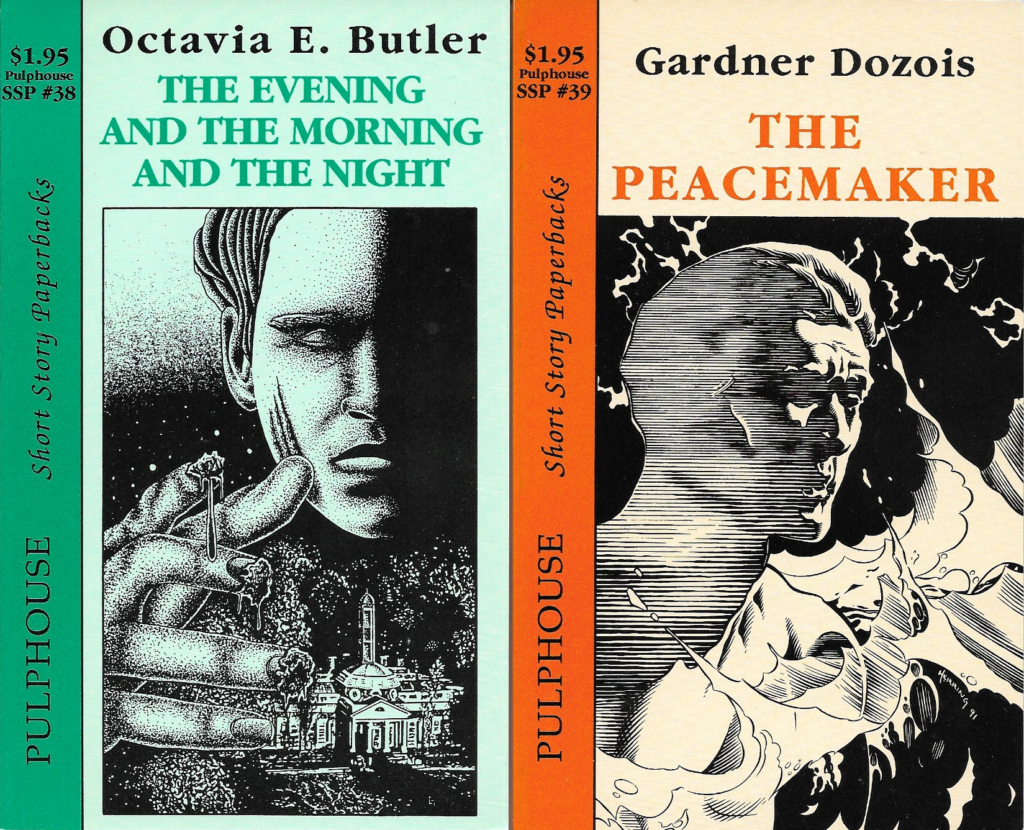
Butler, Octavia. The Evening and the Morning and the Night. Pulphouse, 1991. Issue #38. Holy moley, the prices on this online are crazy. The prices for the signed hardback I can at least sort of understand, since Butler died young, but the prices for unsigned copies like this are still crazy. I had no idea.
Dozois, Gardner. The Peacemaker. Pulphouse, 1991. Issue #39. Supplements a copy of the Short Story Hardback edition.
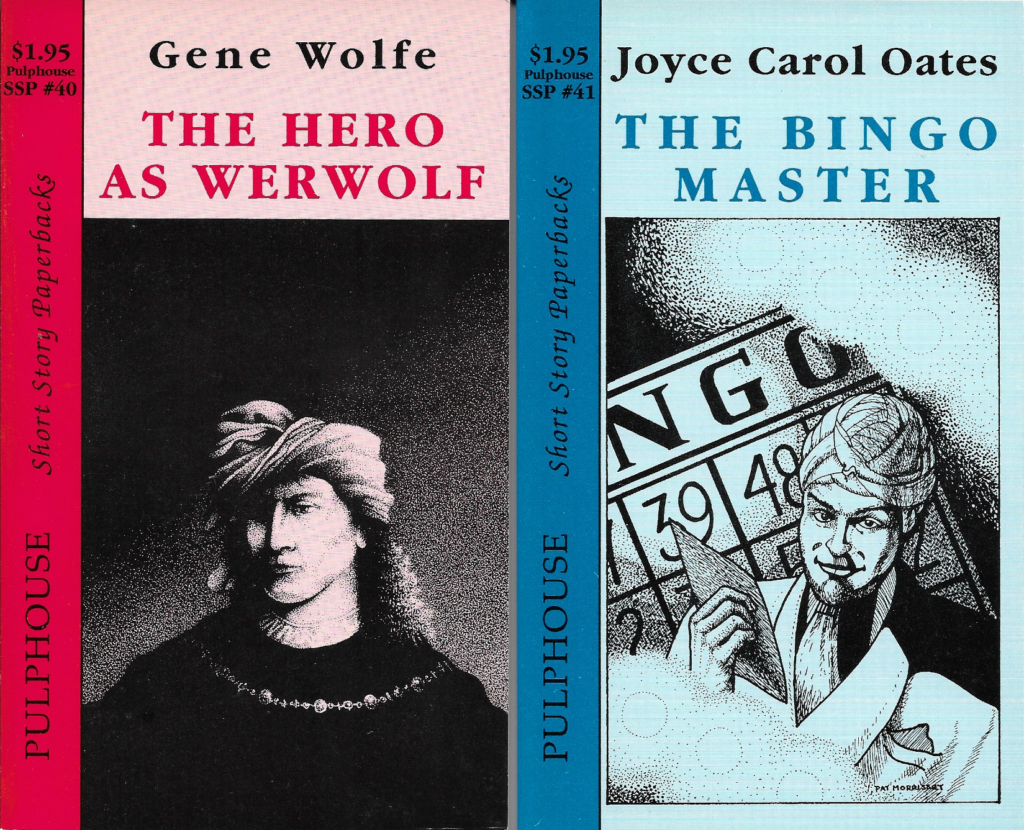
Wolfe, Gene. The Hero as Werewolf. Pulphouse, 1991. Issue #40. This is one I did actually need, and I still need the hardback version. Also, this is the last one from 1991. Pulphouse put out 40 of these in 1991. This is called “channel stuffing.” I wasn’t dealing books at the time, but I’m pretty sure SF/F/H dealers were not thrilled at this tsunami of small press books of dubious sales-worthiness.
Oates, Joyce Carol. The Bingo Master. Pulphouse, 1992. Issue #41.
Holder, Nancy. The Ghosts of Tivoli. Pulphouse, 1992. Issue #44.
Brin, David. Dr. Pak’s Preschoool. Pulphouse, 1992. Issue #45. Supplements a copy of the Cheap Street edition (which precedes).
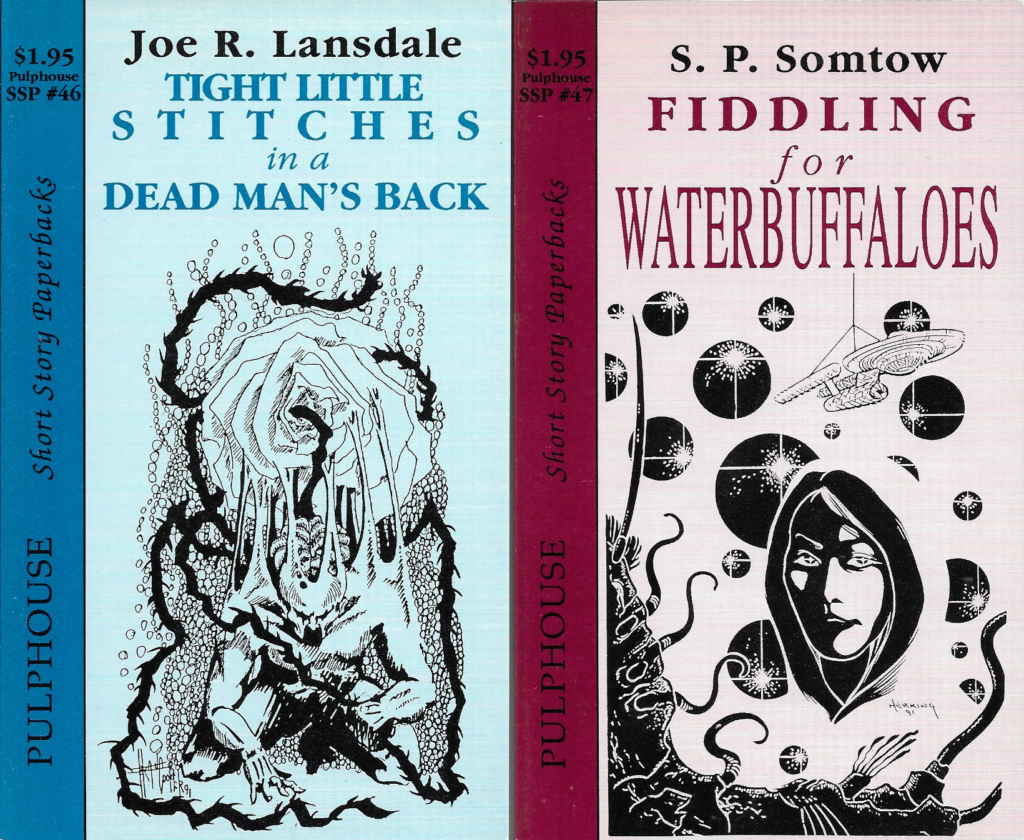
Lansdale, Joe R. Tight Little Stitches in a Dead Man’s Back. Pulphouse, 1992. Issue #46. Isajanko, The World Lansdalean C03.a.i. Supplements a copy of the Short Story hardback version.
Somtow, S. P. Fiddling for Waterbuffaloes. Pulphouse, 1992. Issue #47.
Murphy, Pat. Rachel in Love. Pulphouse, 1992. Issue #48.
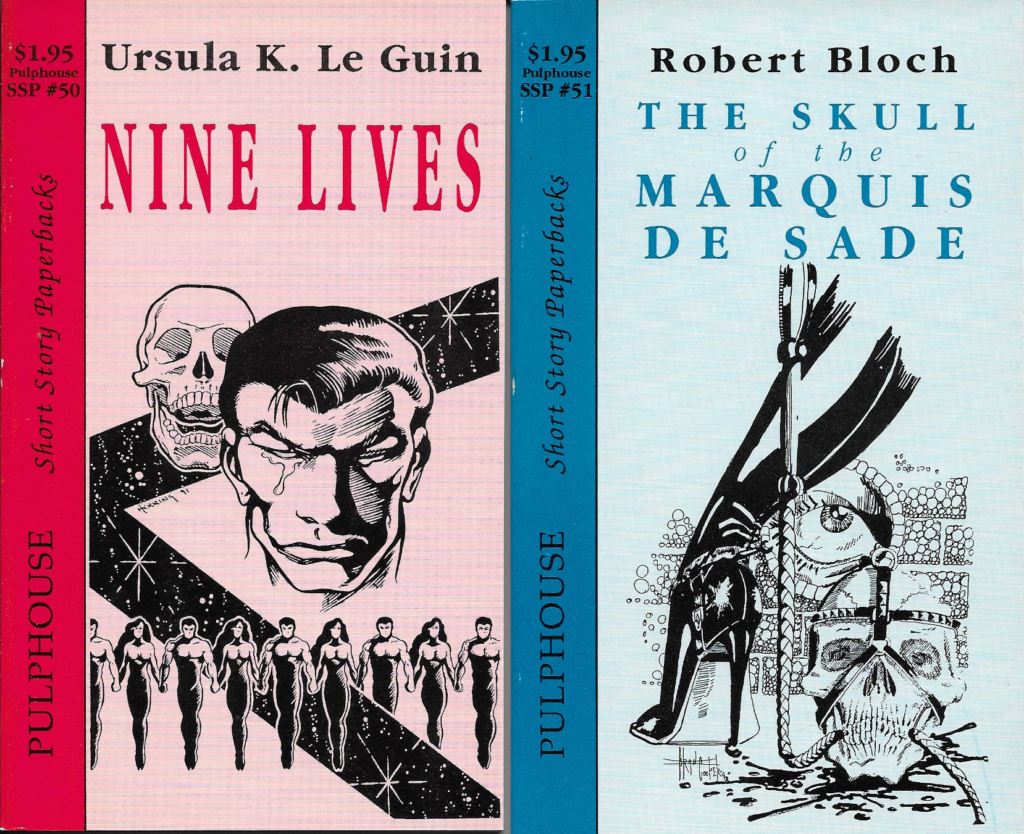
Le Guin, Ursula K. Nine Lives. Pulphouse, 1992. Issue #50.
Bloch, Robert. The Skull of the Marquis de Sade. Pulphouse, 1992. Issue #51.
de Lint, Charles. Merlin Dreams in the Mondream Wood. Pulphouse, 1992. Issue #52.
Kress, Nancy. The Price of Oranges. Pulphouse, 1992. Issue #53.
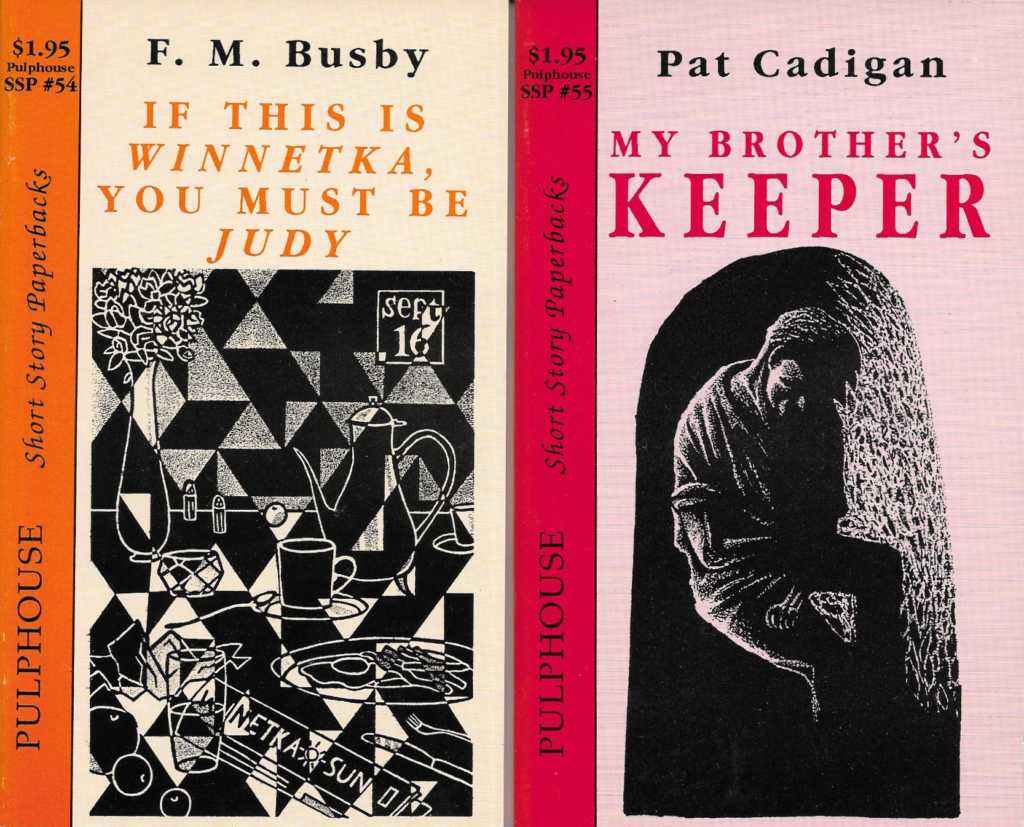
Busby, F.M. If This Is Winnetka, You Must be Judy. Pulphouse, 1992. Issue #54.
Cadigan, Pat. My Brother’s Keeper. Pulphouse, 1992. Issue #55.
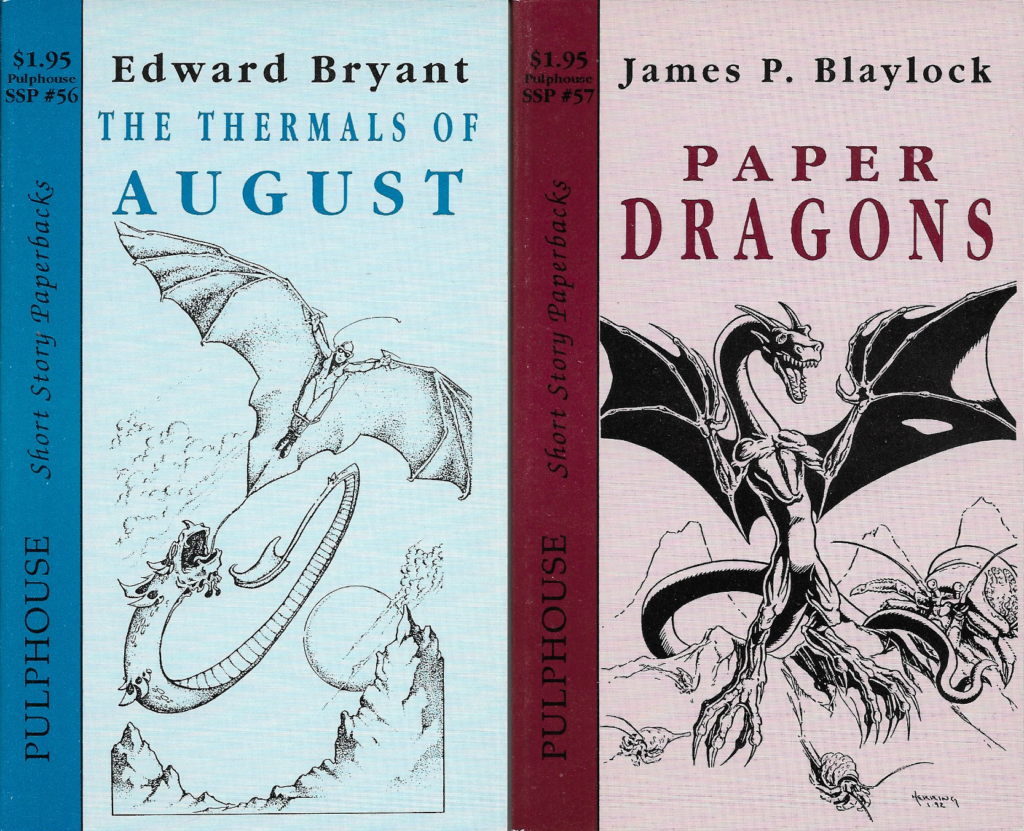
Bryant, Edward. The Thermals of August. Pulphouse, 1992. Issue #56.
Blaylock, James P. Paper Dragons. Pulphouse, 1992. Issue #57. A few small rubs along spine. Supplements a copy of the Axolotl Press hardback (which precedes).
Resnick, Mike. Kirinyaga. Pulphouse, 1992. Issue #58. Kelleghan, Mike Resnick: An Annotated Bibliography and Guide to His Work A39.
Sloca, Sue Ellen. Candles on the Pond. Pulphouse, 1992. Issue #59. As far as I can tell, this is her only publication anywhere.
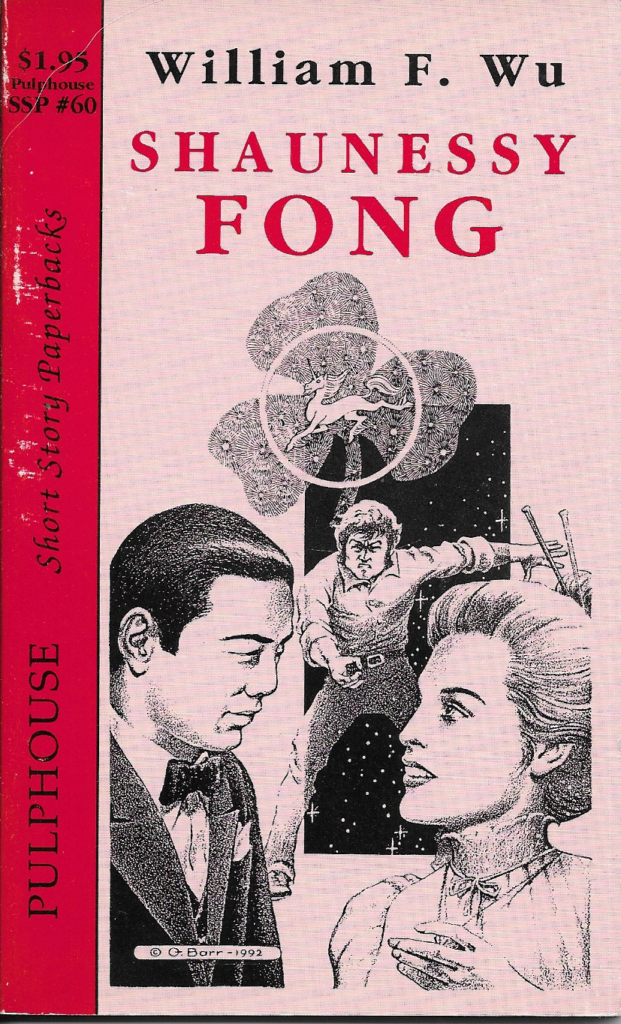
Wu, William F. Shaunessy Fong. Pulphouse, 1992. Issue #60. Has some slight rubbing along front near spine. Last in the Short Story Paperbacks series.
Reference: Jack Chalker and Mark Owings, The Science-Fantasy Publishers: A Critical and Bibliographic History, 2002, page 719 (numbers 1 through 10), page 721 (numbers 11-20), pages 722 (numbers 21-30). This is what Chalker had to say about the Short Story paperback line:
In January, 1991, Pulphouse continued its expansion with the Short Story Paperbacks and the selected Short Story Hardbacks, although we’re still only half- convinced that these are in any sense legitimate books. What they were, though, was what seemed to be a quick way to make money, and if people bought them, fine. They brought the whole operation as of the start of 1991 at a whopping 80+ titles a year. It should be noted that the paperbacks series was supposed to be originals and reprints, but became, after the initial ones, primarily reprints, a move that, while understandable, seemed to us to take away the one good reason why most people might buy them.
Money held by SF/F/H collectors is a finite commodity, and Pulphouse in the early 1990s seemed to treat it as a limitless resource. If you’re publishing books by Lansdale, Zelazny, Wagner, De Lint, etc., that’s a license to print a little money. But Antieau, Clemence, Caraker? Not so much. Why they thought collectors were going to shell out money for such items is a mystery.
You may have noticed that Joel Hodgson and MST3K gang are having a new kickstarter for the next season (for values of “kickstarter” that include “not on the Kickstarter platform”). There are five days left and they are only 38% of the way to the first goal of $4.8 million, which will be six features and six shorts.
This one? Not so much. Despite announcing that Plan 9 from Outer Space will be among the riffed films.
Donor fatigue? The Biden Recession? Not doing enough promotion? Not enough boost from a non-Kickstarter platform? Disgruntlement over how long it took people to get their promised rewards from the last campaign?
I think it may be some combination of all the above.
Maybe the usual Turkey Day festivities will kick it into higher gear. But if they don’t, this may be the first MST3K fundraising effort to fail.