Archive for the ‘Science Fiction’ Category
Tuesday, March 28th, 2023
Since I already had a significant number of titles in the series, I decided to build out a complete collection of Borderlands Little Books. These come from two sources: 1.) Direct dealer purchases from the publisher, and 2.) A lot of 15 titles, including the Gaiman title (the most difficult one I still lacked) for $886.
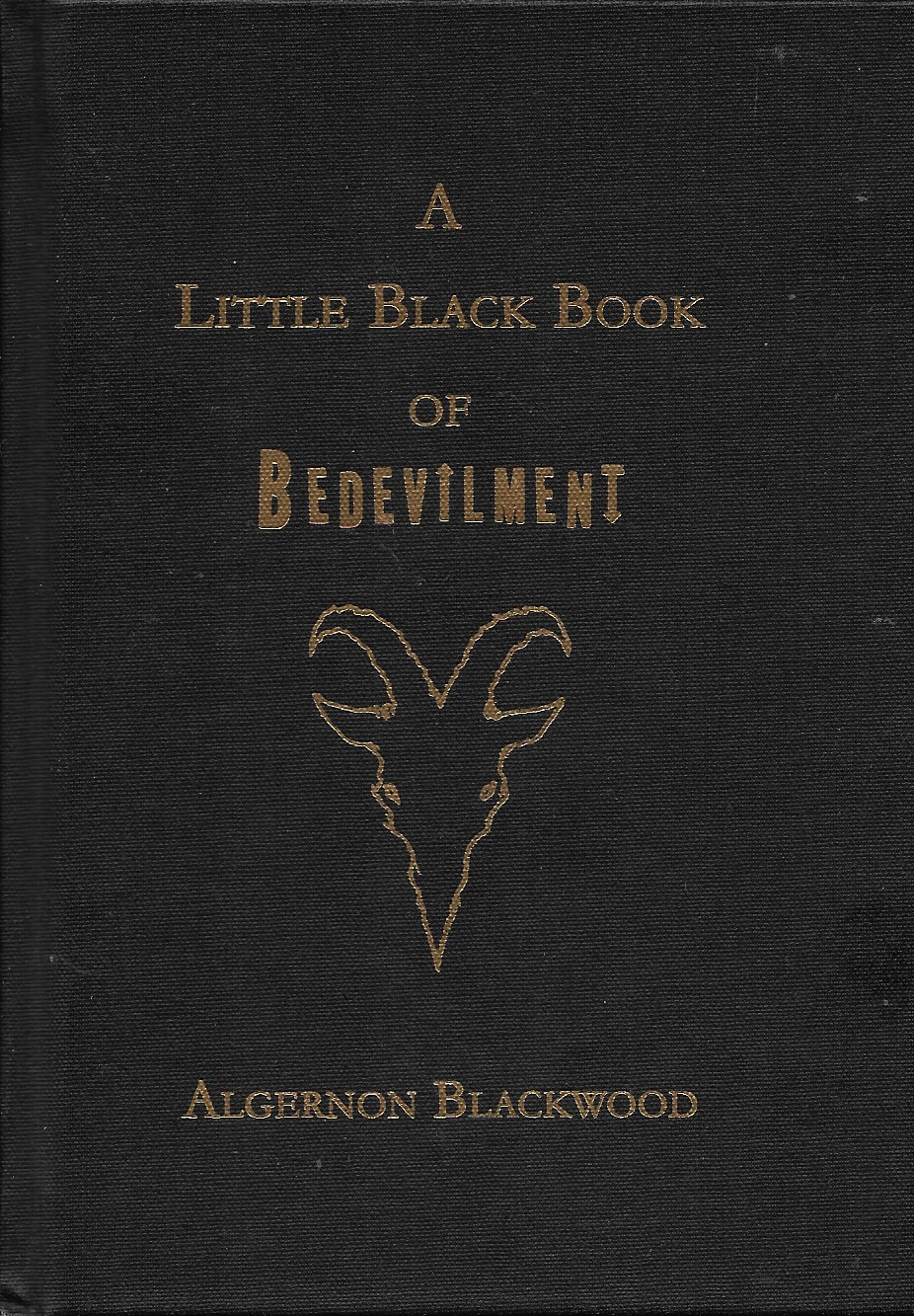
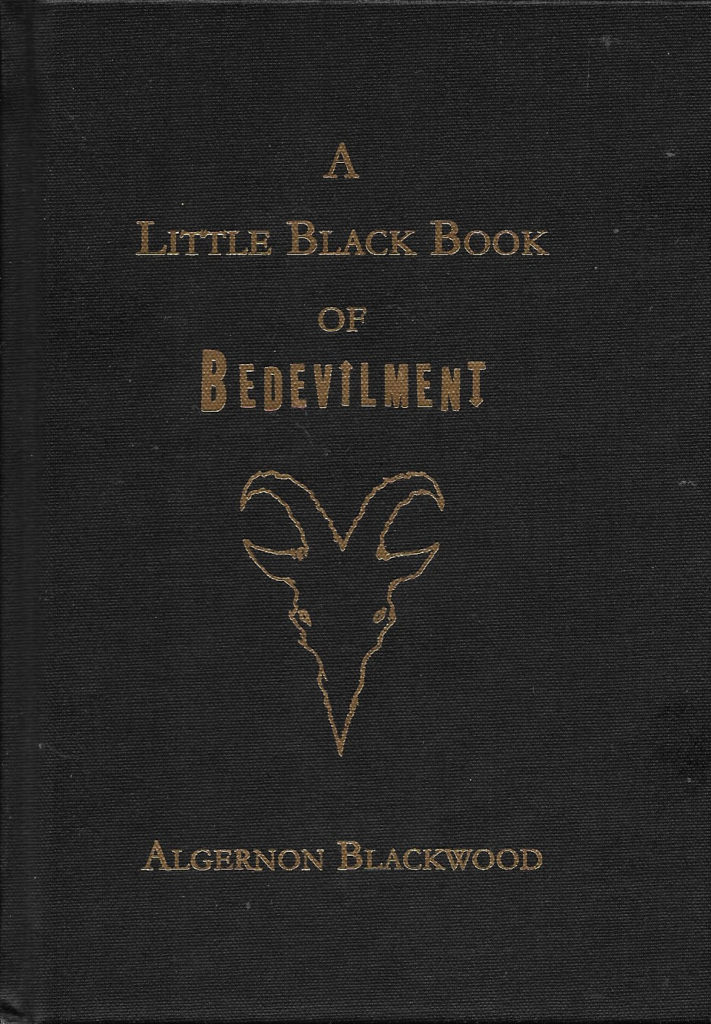
Blackwood, Algernon (Mark Sieber, editor). A Little Black Book of Bedevilment. Borderlands Press, 2022. First edition hardback, #462 of 500 copies signed by the editor, a Fine copy. Bought from the publisher at the usual discount. I will have copies of this available in the next Lame Excuse Books catalog.
DeChancie, John. A Little Gray Book of Alien Stories. Borderlands Press, 2004. First edition hardback, #168 of 500 signed, numbered copies, a Fine copy. Bought as part of the 15 book lot.

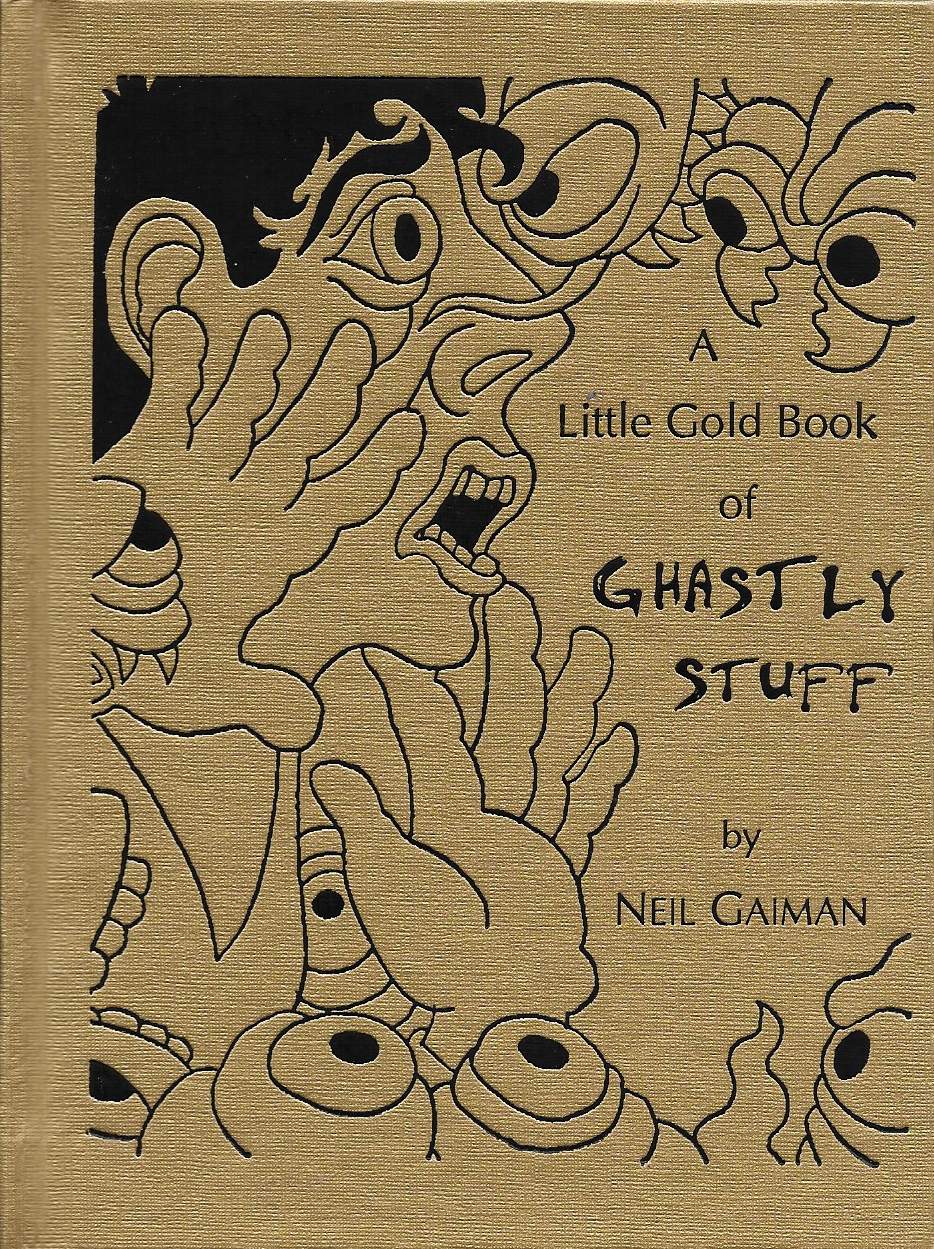
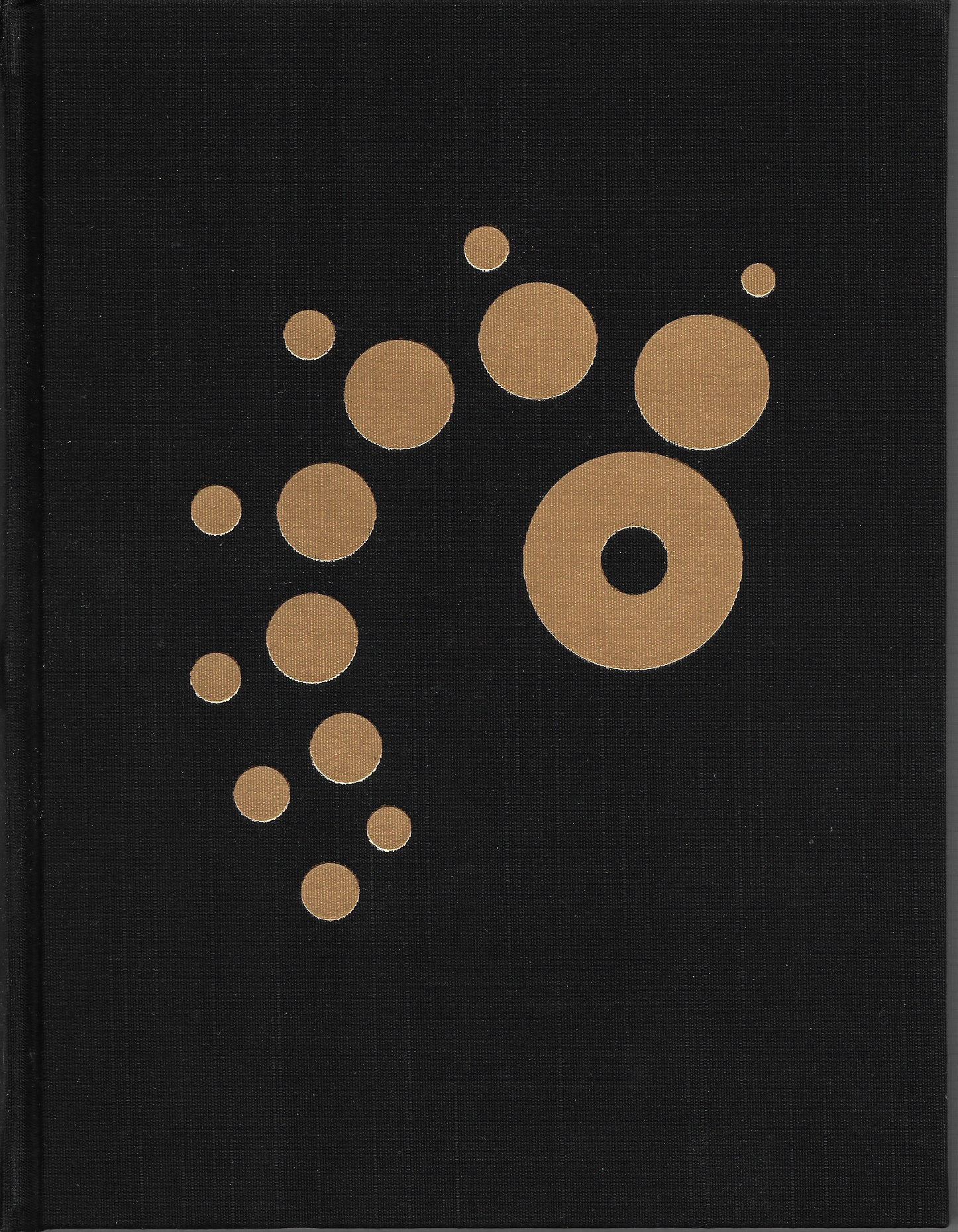
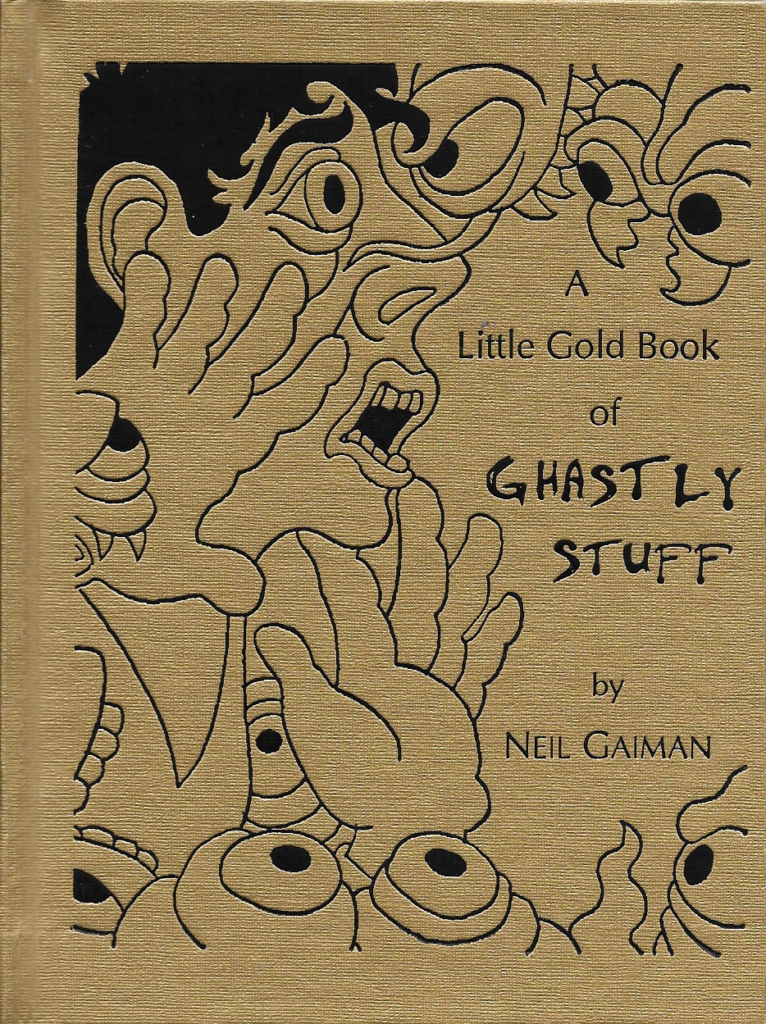
Gaiman, Neil. A Little Gold Book of Ghastly Stuff. Borderlands Press, 2011. First edition hardback, #168 of 500 signed, numbered copies, a Fine copy, sans dust jacket, as issued. Mixture of fiction, non-fiction, essays, speeches, poetry, etc. Cool cover illustration by Gahan Wilson. Probably the hardest of the Little Book series to find (followed by the Lansdale, Ligotti and Malerman volumes). Bought as part of the 15 book lot.
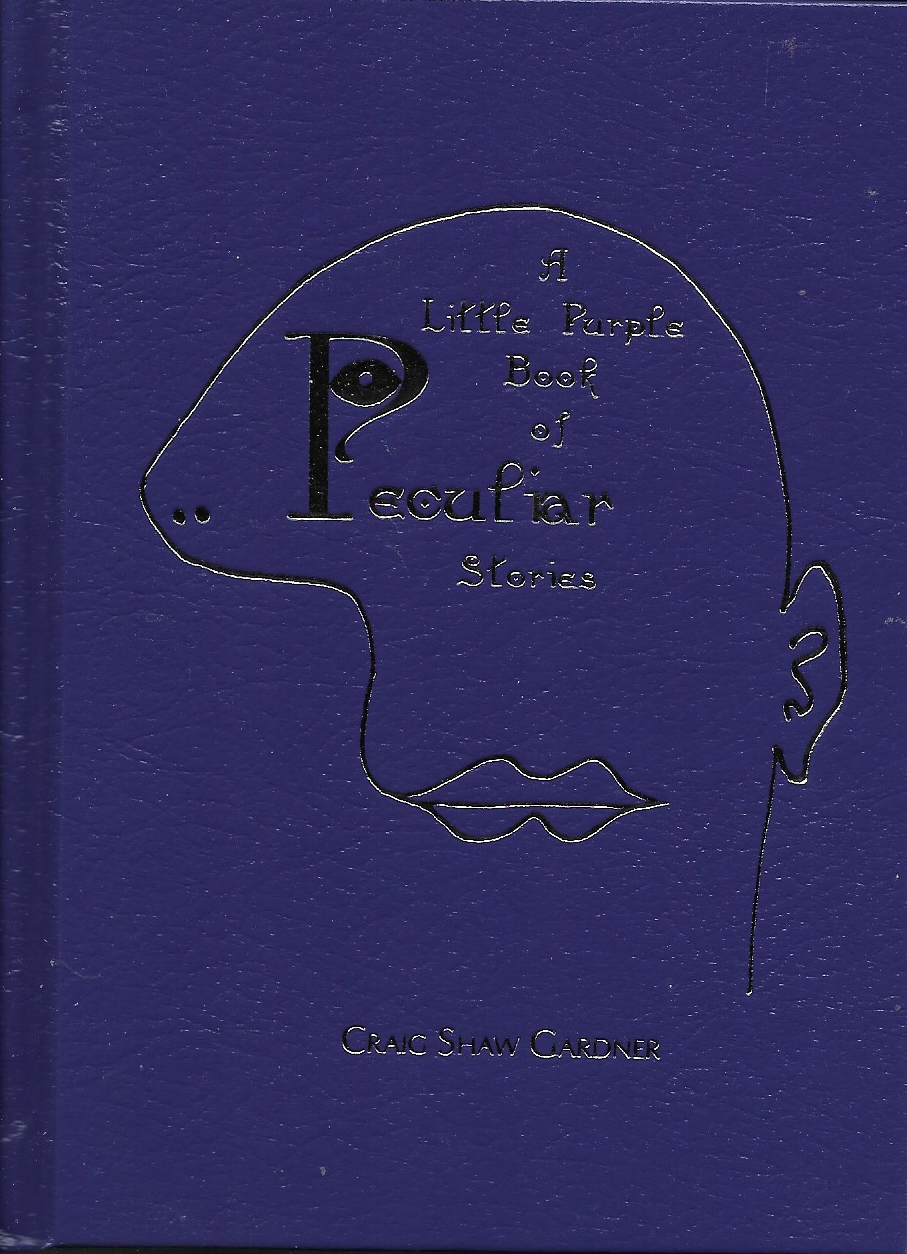
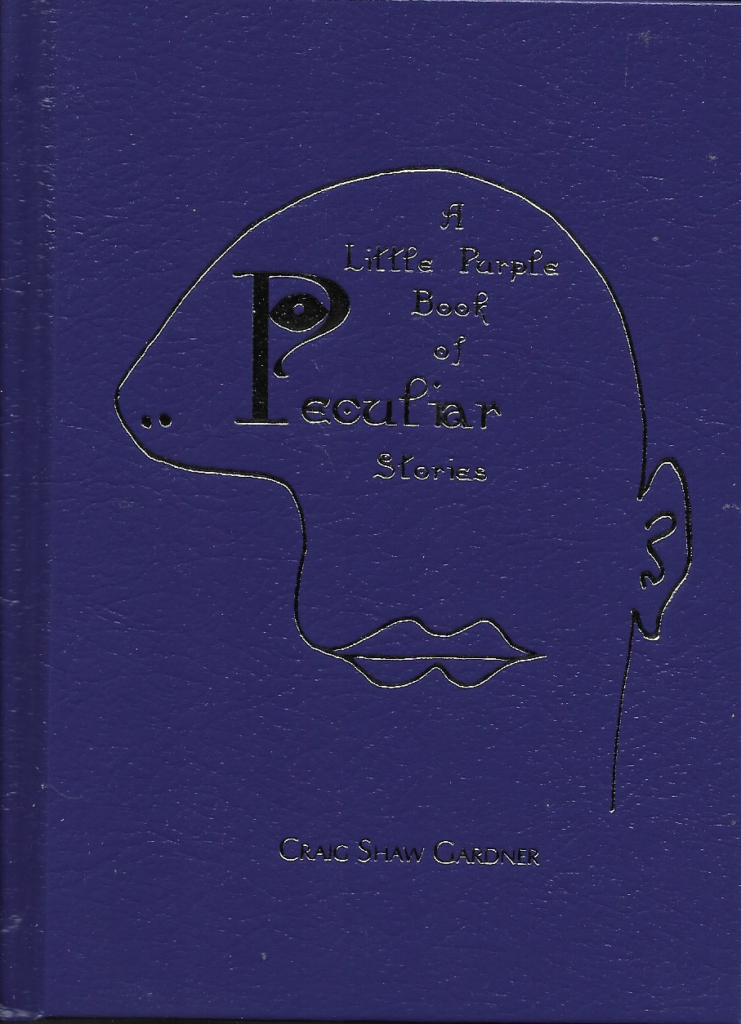
Gardner, Craig Shaw. A Little Purple Book of Peculiar Stories. Borderlands Press, 2004. First edition hardback, #168 of 500 signed, numbered copies, a Fine copy, sans dust jacket, as issued. Bought as part of the 15 book lot.
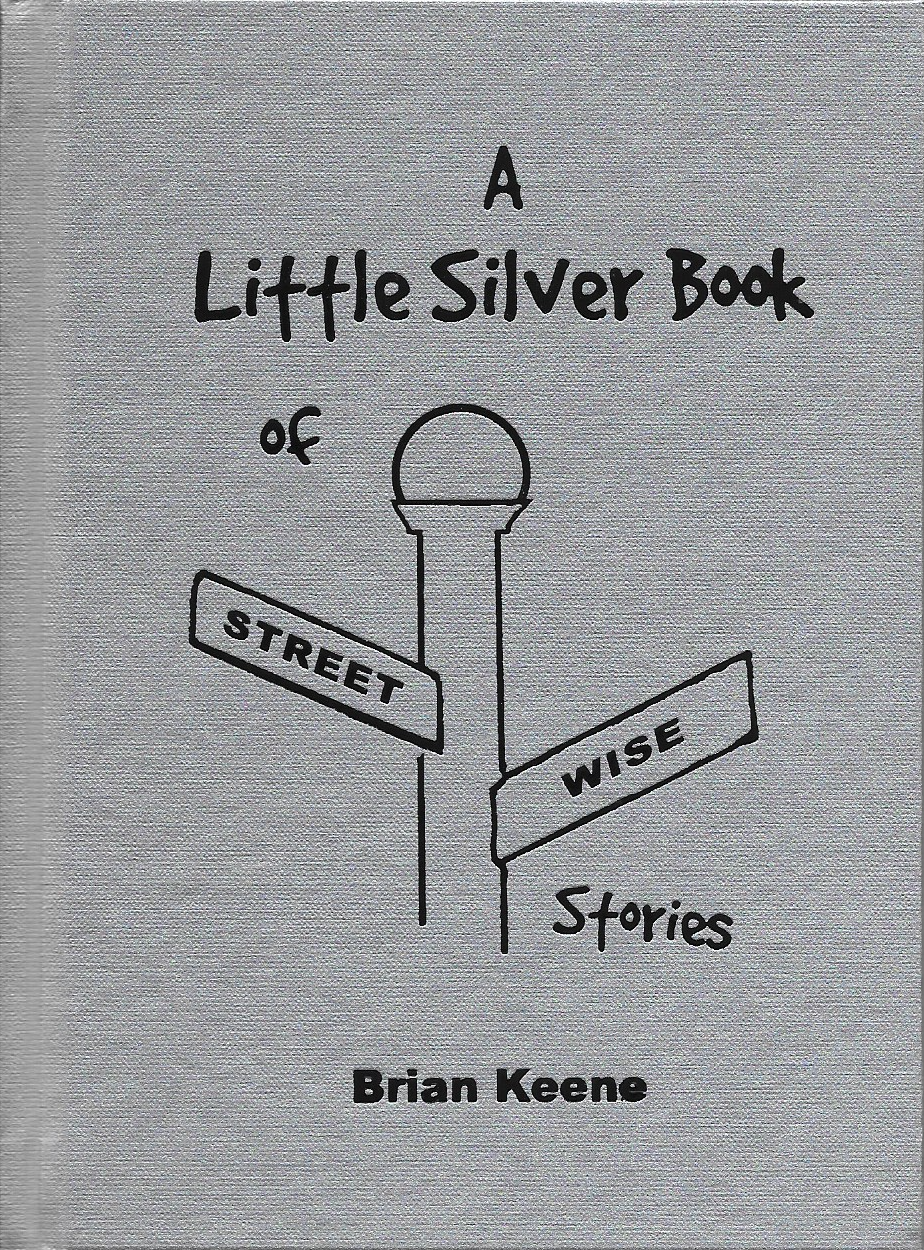
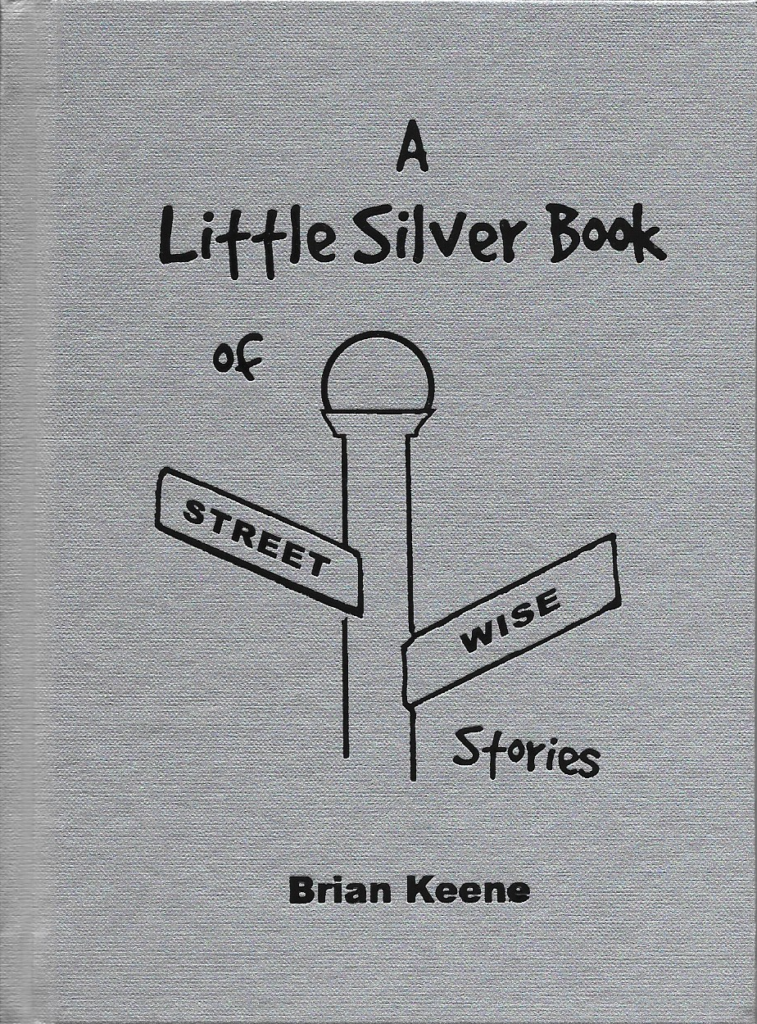
Keene, Brian. A Little Silver Book of Street Wise Stories. Borderlands Press, 2008. First edition hardback, #168 of 500 signed, numbered copies, a Fine copy, sans dust jacket, as issued. Bought as part of the 15 book lot.
Tags:Algernon Blackwood, Books, Borderlands Press, Brian Keene, Craig Shaw Gardner, Fantasy, Horror, John DeChancie, Little Books, Neil Gaiman, Science Fiction, small press publishers
Posted in Books, Fantasy, Horror, Science Fiction | No Comments »
Thursday, March 16th, 2023
Given how much I spend on books, I spend comparatively little on original artwork. But every now and then I chance across something that appeals to me at an attractive price, and that’s the case here.
This is Vincent Di Fate’s Avenger:

Bought from an online auction for $480 (including premium), which I think is an excellent price for an original Di Fate painting. (The auction house had the image for the painting upside down!)
I contacted Di Fate, and he said this was done for a trading card series. If it’s the series I’m thinking of, I don’t think it was used.
Tags:art, Science Fiction, Vincent Di Fate
Posted in Science Fiction | No Comments »
Sunday, March 5th, 2023
Really enjoyed this when I read this a while back, and I tracked down a nice affordable first.
Russell, Eric Frank. Wasp. Avalon Books, 1957. First edition hardback, a Fine- copy with a tiny bit of bend at head and heel in a Fine- dust jacket with one 1/2″ closed tear are top rear head, and tiny bit of wrinkling on bottom front edge near heel, and just the barest traces of dust soiling to an otherwise bright white dust jacket. Military SF adventure novel of a spy sent to a hostile alien planet to bring down the government through psychological and guerilla warfare, like a wasp crashing a car by attacking the driver. Bought from a notable UK dealer for £200 plus shipping.

Tags:Avalon Books, Books, Eric Frank Russell, Science Fiction
Posted in Books, Science Fiction, technology | No Comments »
Wednesday, March 1st, 2023
I mostly have a complete Bear collection, but I lacked a few of the recent titles:
Bear, Greg Killing Titan. Orbit, 2015. First edition hardback, a Fine copy in a Fine dust jacket, signed by Bear. Second book in the military SF trilogy started with War Dogs, which I just read. Bought for $18 from a fellow Biblio dealer.
Tags:Books, Greg Bear, Science Fiction
Posted in Books, Science Fiction | No Comments »
Tuesday, February 28th, 2023
Three signed, limited Ray Bradbury editions from different sources:
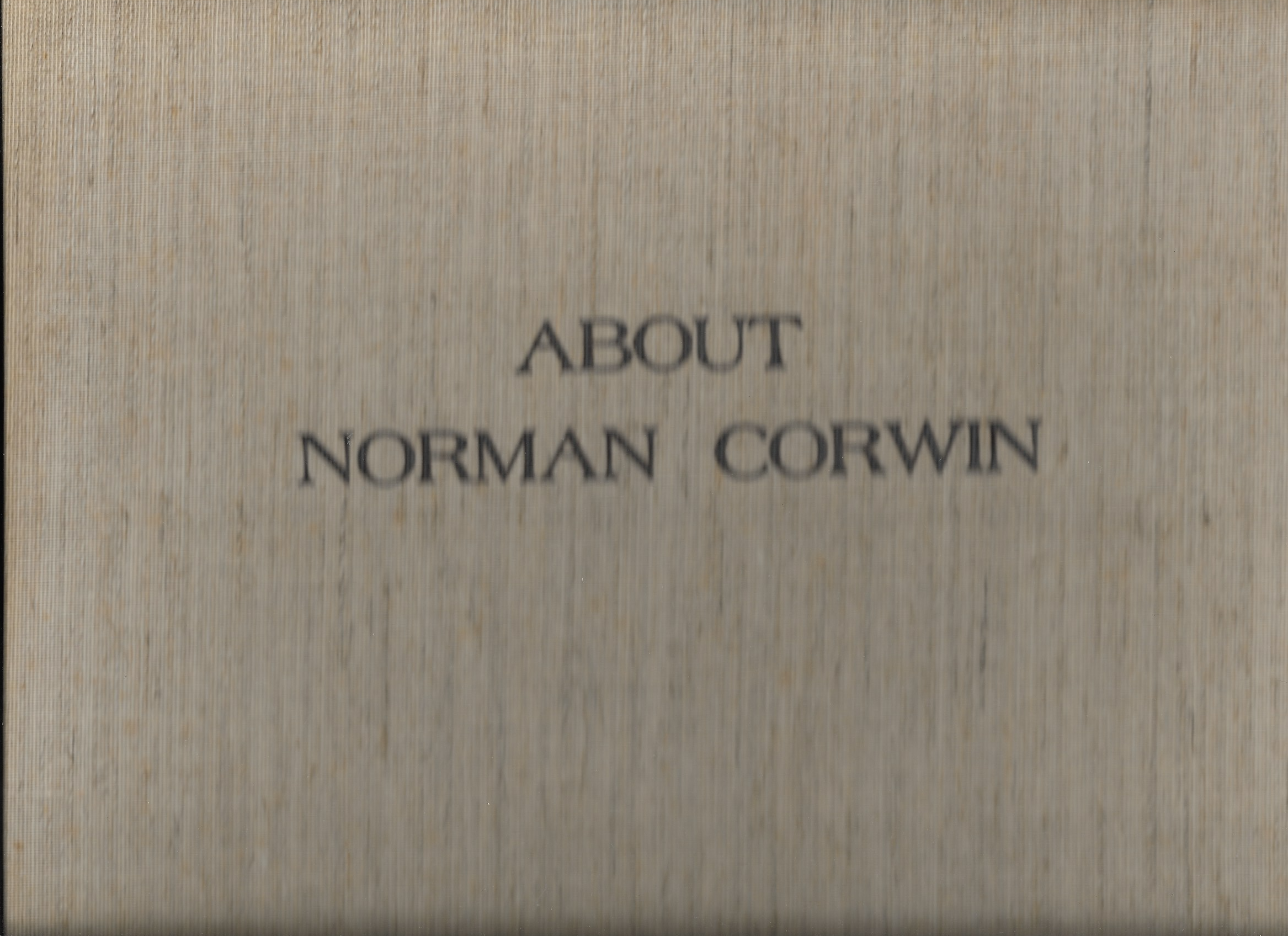
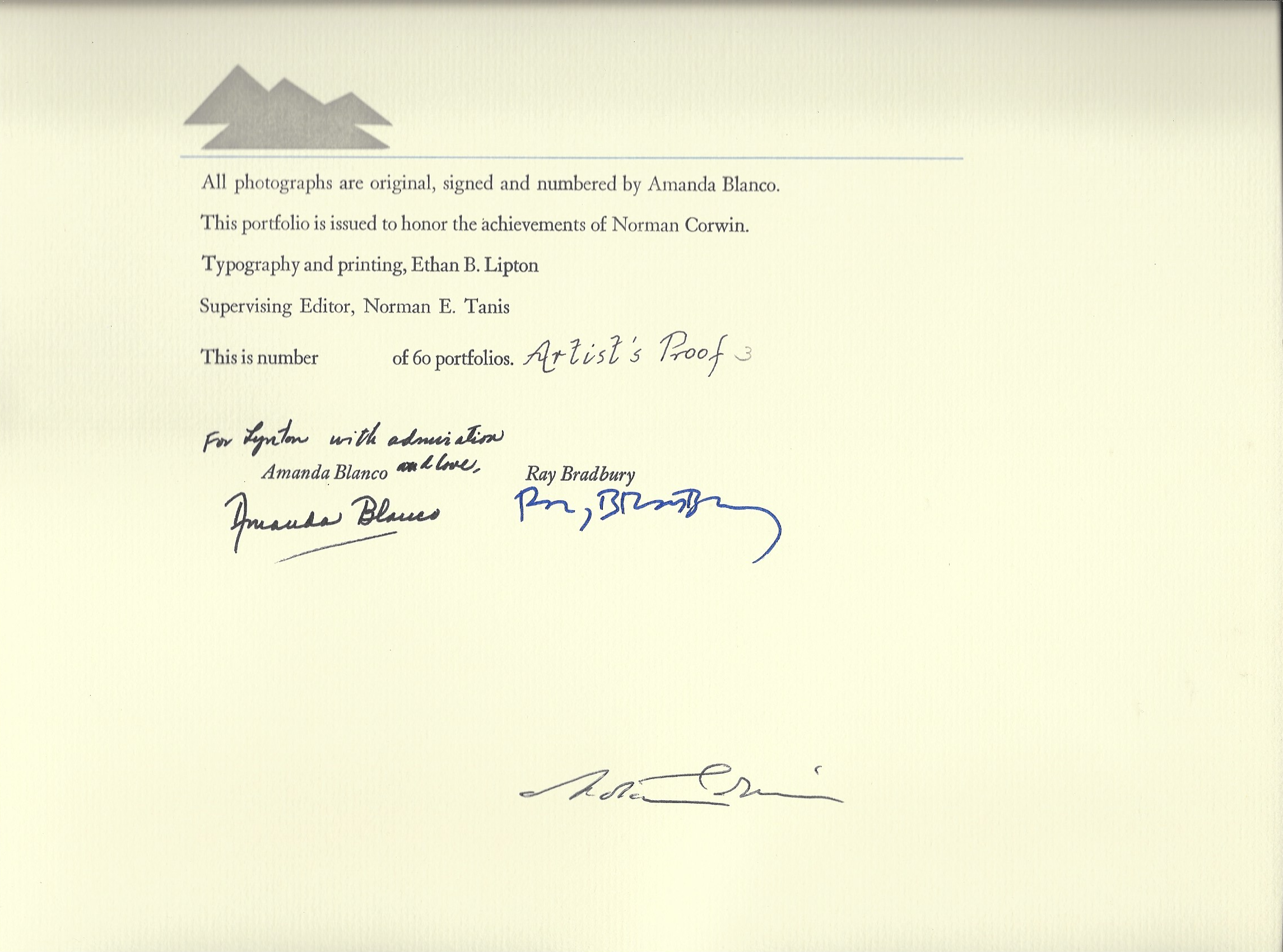
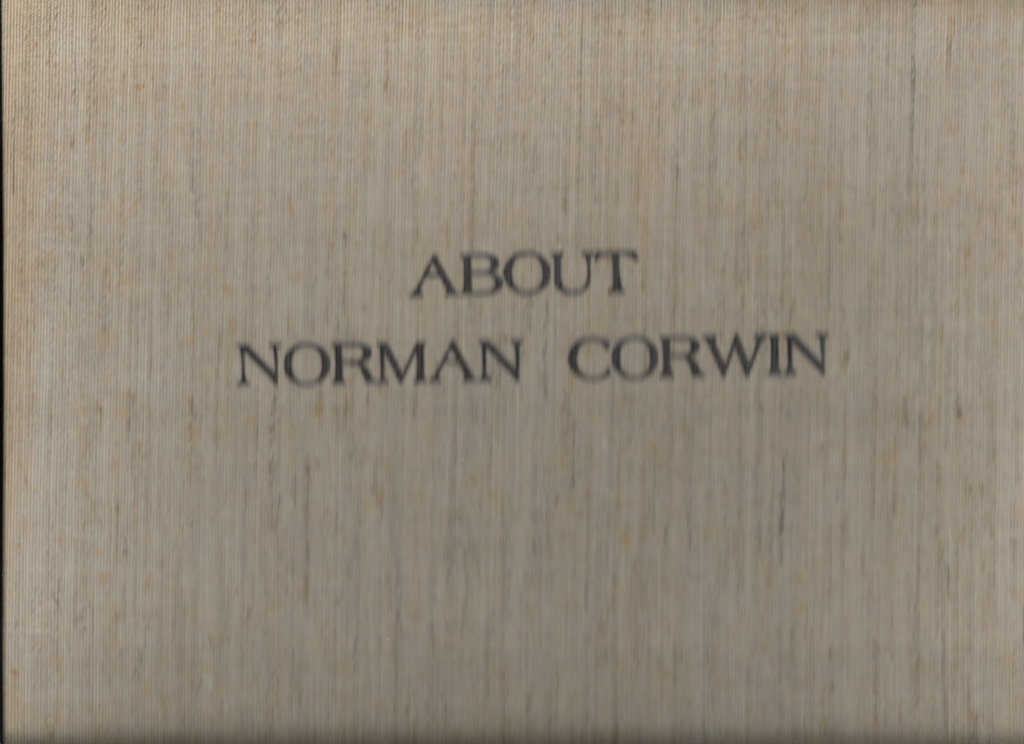
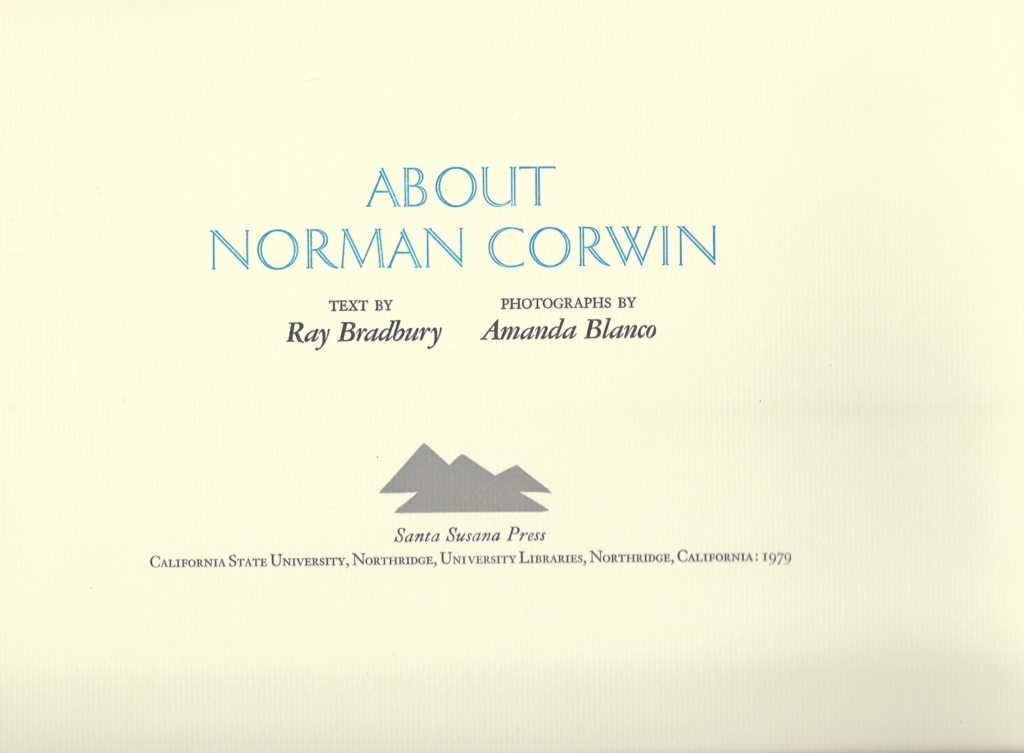
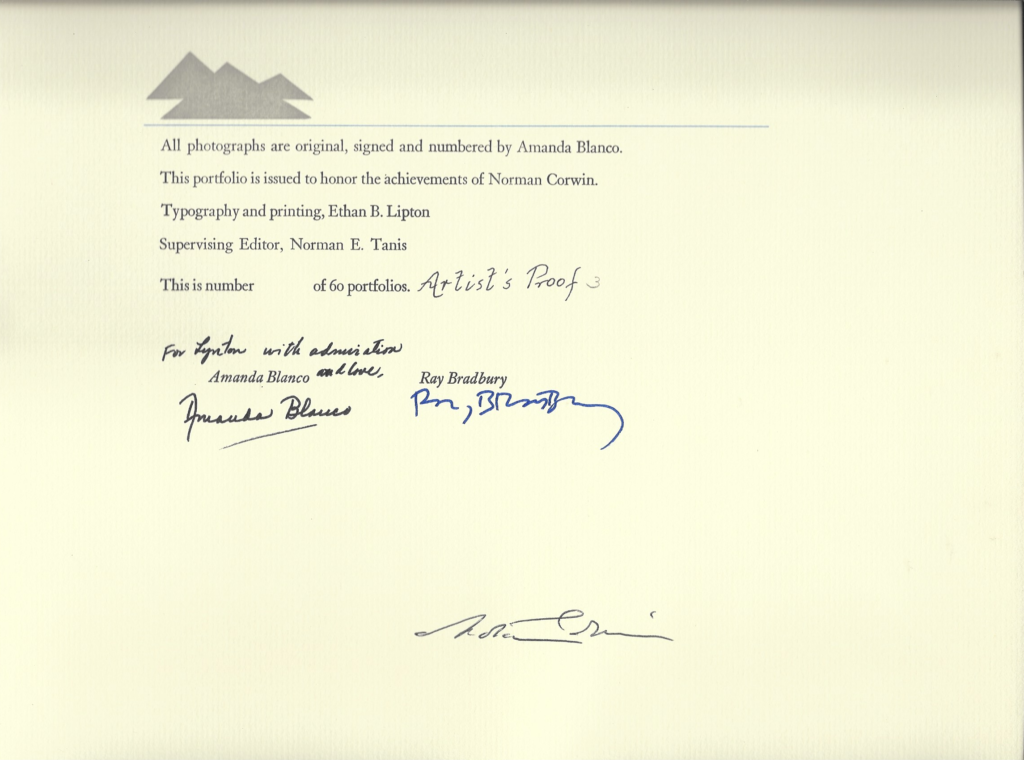
Bradbury, Ray (text) and Amanda Blanco (photographs). About Norman Corwin. Santa Susana Press, 1979. First edition traycased portfolio, an “artist’s proof” copy of 60 signed, numbered sets, a Fine- copy (there seem to be a couple of drops of moisture staining to the back of the signature page) in a Fine- traycase with a few small spots of staining to the inner right edge (though the case itself has a bit of an odd outward slant to the top and bottom edges). Loose printed cardstock pages, including a multi-page essay celebrating radio essayist Norman Corwin by Bradbury followed by 11 photographs of Corwin by Blanco. An odd, oversized item, and one that doesn’t fit entirely on my scanner, so either the bottom or top is chopped off. Bought for $250 off eBay after a touch of haggling.
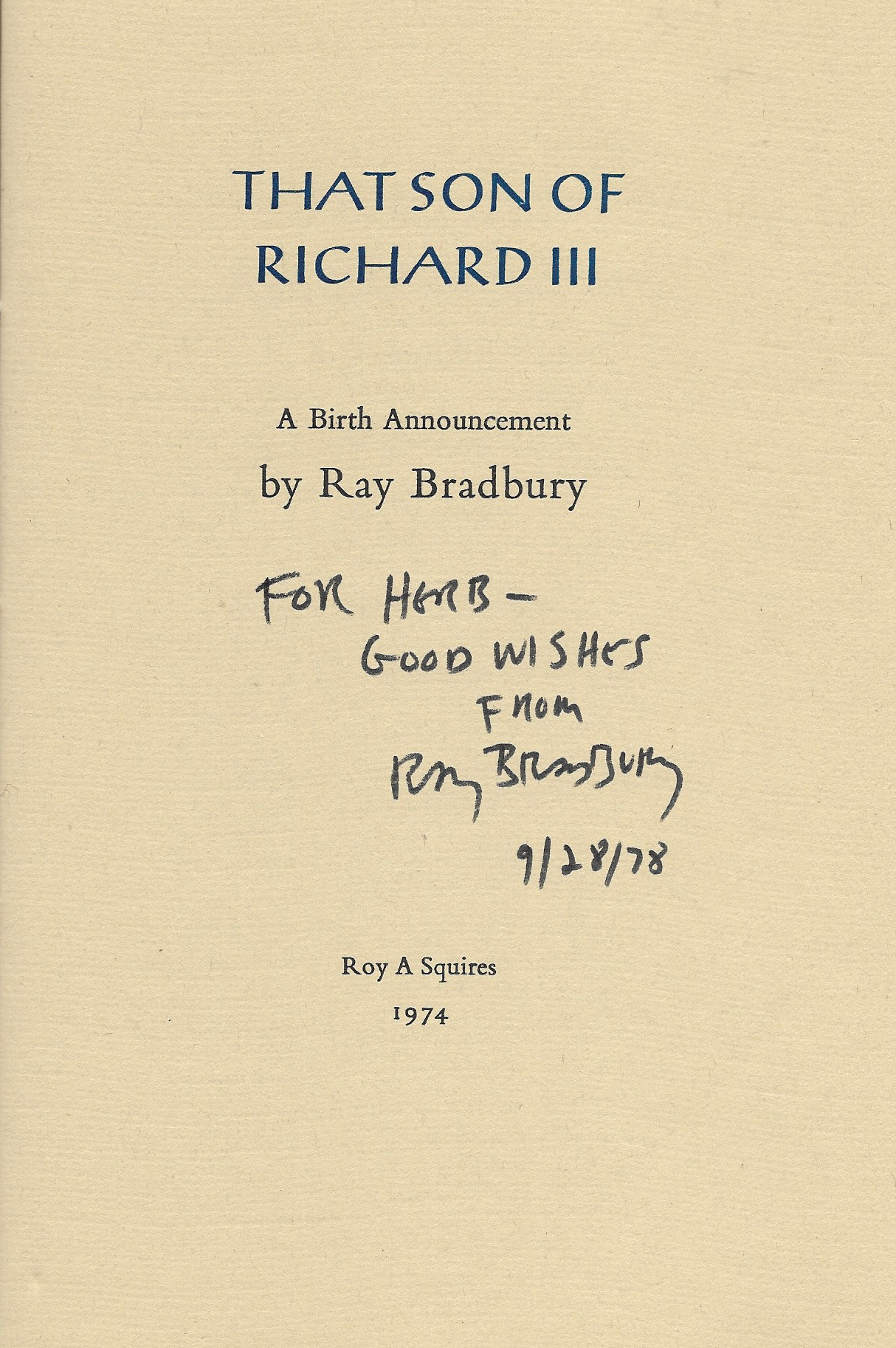
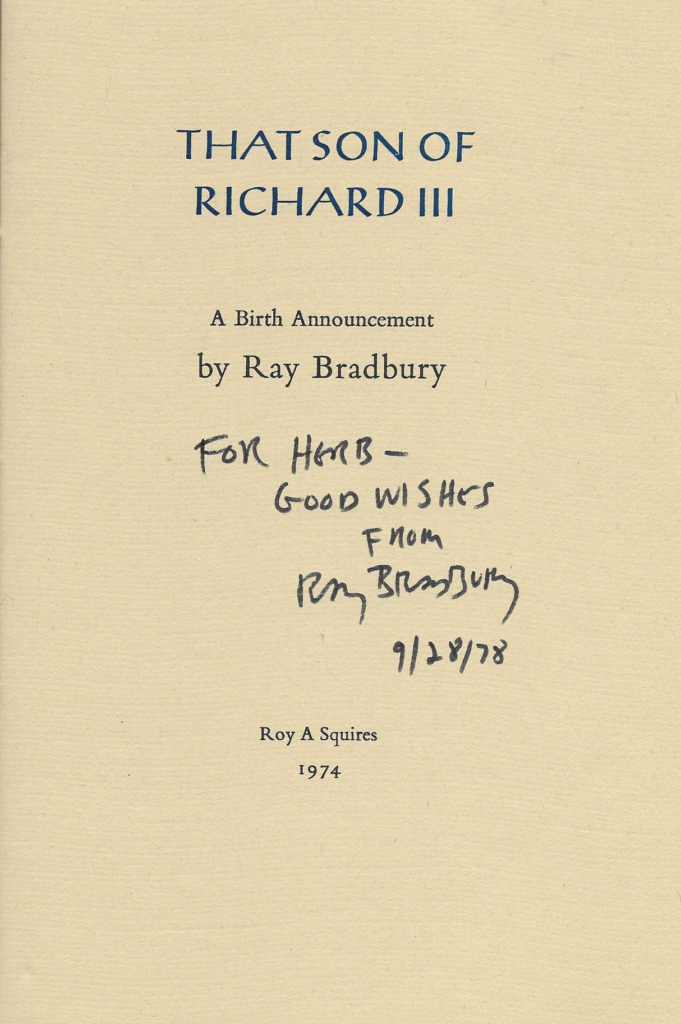
Bradbury, Ray. That Son of Richard III: A Birth Announcement. Roy A. Squires, 1974. First edition chapbook original, #332 of 400 numbered copies, a Fine copy in a Fine cloth traycase, inscribed by Bradbury to Lord John Press publisher Herb Yellen: “For Herb -/Good wishes/From/Ray Bradbury/ 9/28/28.” As Yellen later published several Bradbury chapbooks himself, this is an interesting association copy. According to Chalker/Owings, Squires only did 30 traycases, of which 25 were offered to buyers of the “Autograph Edition” (which this is not). Supplements an unsigned copy. Chalker/Owings, page 589. Bought from a PBA Galleries auction for $75 plus shipping and handling.

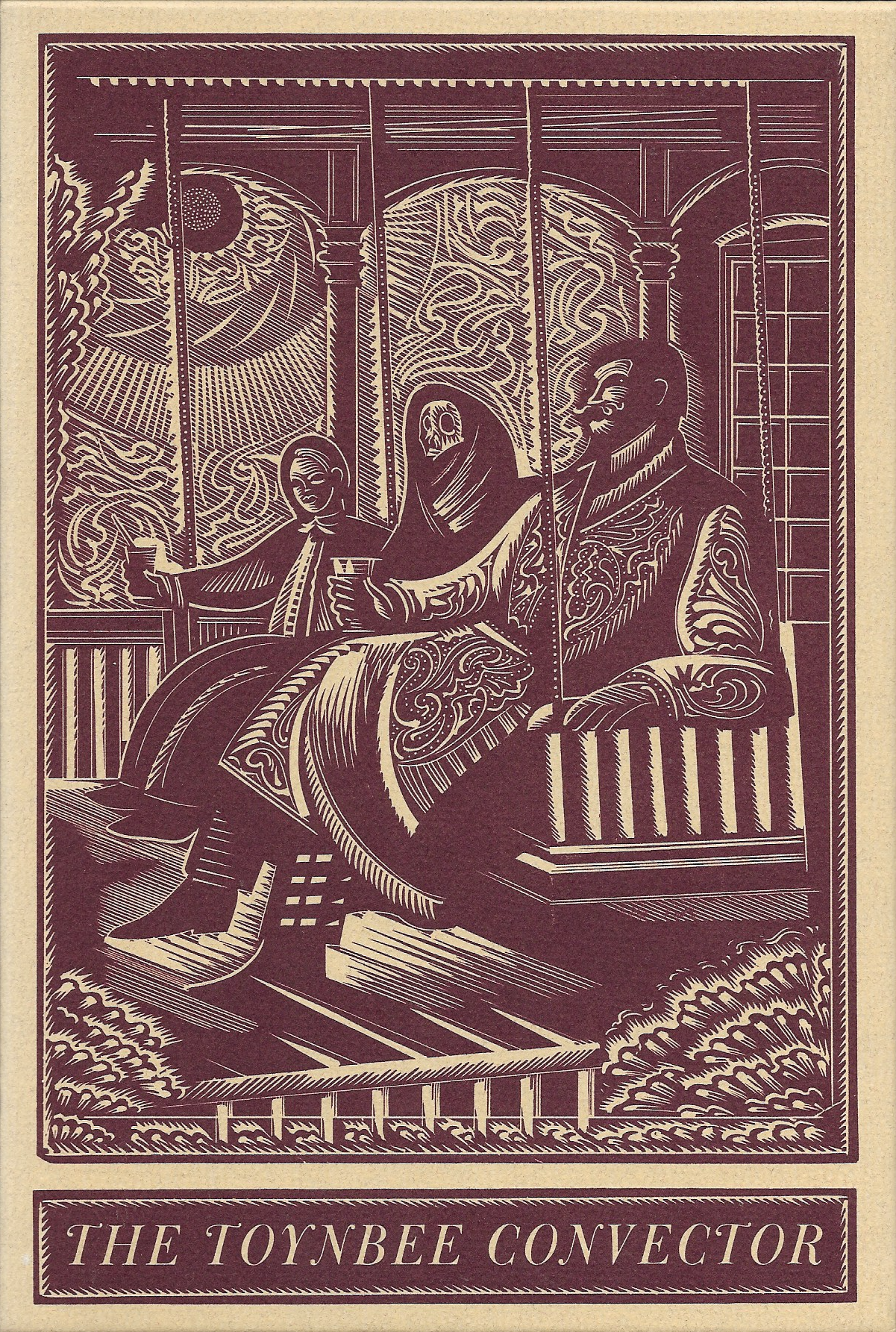
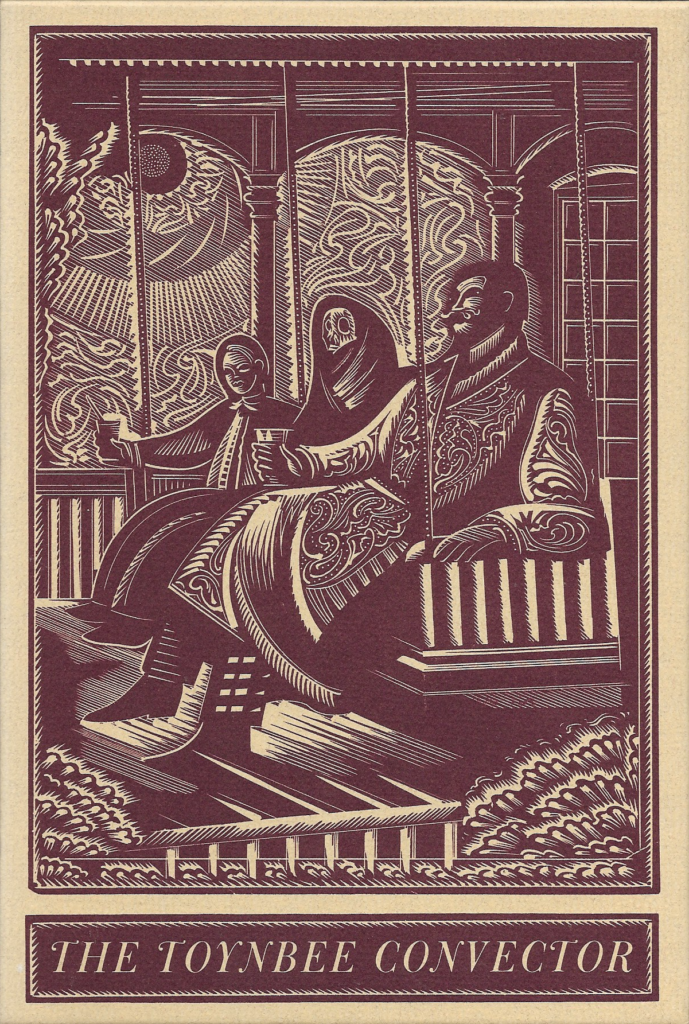
Bradbury, Ray. The Toynbee Convector. Knopf, 1988. First edition hardback, #36 of 350 signed, numbered copies, “printed on special paper and specially bound,” a Fine copy in a Mylar protector and a Fine slipcase, sans dust jacket, as issued. This version is not in the Locus database, but ISFDB says they came out the same month. Most limited editions from mainstream publishers are fairly unimpressive, but this is actually quite a nice production, with patterned boards and an attractive slipcase. Bought for $110.49 off eBay, a considerable discount off the original offering price of $150 (which must have seemed plenty pricey in 1988).

Tags:Associational Copy, Books, Fantasy, Herb Yellen, Lord John Press, Ray Bradbury, Roy A. Squires, Santa Susana Press, Science Fiction
Posted in Books, Fantasy, Science Fiction | No Comments »
Monday, February 20th, 2023
It’s that time of the year again, where I compile every book I bought last year into one long post.
Adams, Richard. Watership Down. Macmillian, 1972. First American edition hardback, a Very Good copy with name marked out in black marker on front free endpaper, spine slightly worn, and slight staining at top edge, in a Very Good- dust jacket with one pinhead puncture to spine in “w,” small closed punctures along rear bottom spine join, a few pinhead dots of black staining to rear cover, shallow chipping at head, and age darkening to spine; slightly rough, but the page block is nice and square, and the UK first generally lists for well over a grand. Pringle, Modern Fantasy 51. Moorcock, Epic Pooh, pages [12-13-ish; the pages are unnumbered] (Mike is not a fan). Bought for $9.99.
Anderson, Poul and Gordon R. Dickson. Star Prince Charlie. Putnam’s, 1975. First edition hardback (no statement of printing on copyright page, as per Currey), a Fine copy in a Fine first state (slash between names on spine barely visible) dust jacket. Currey, page 13.
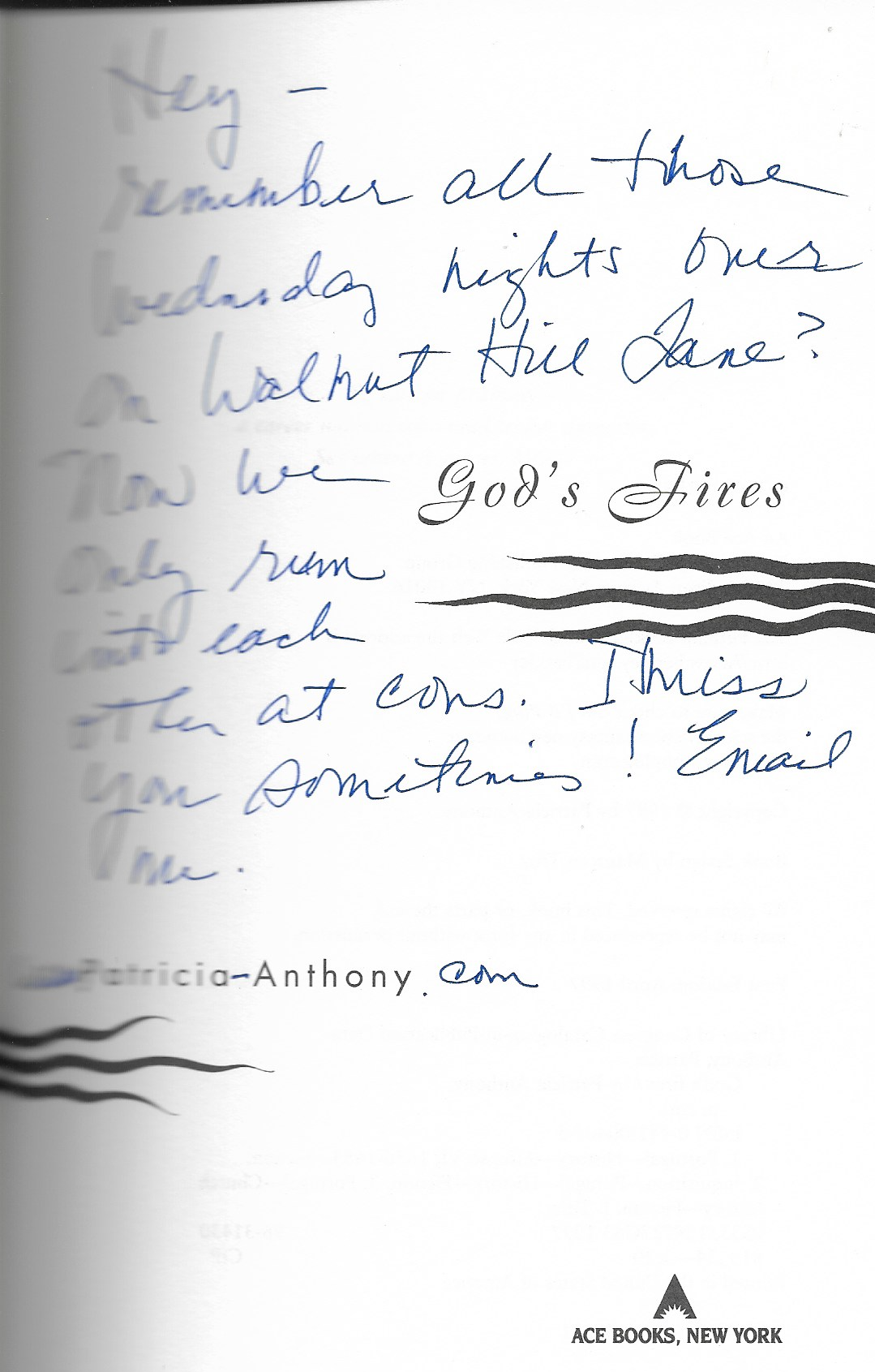
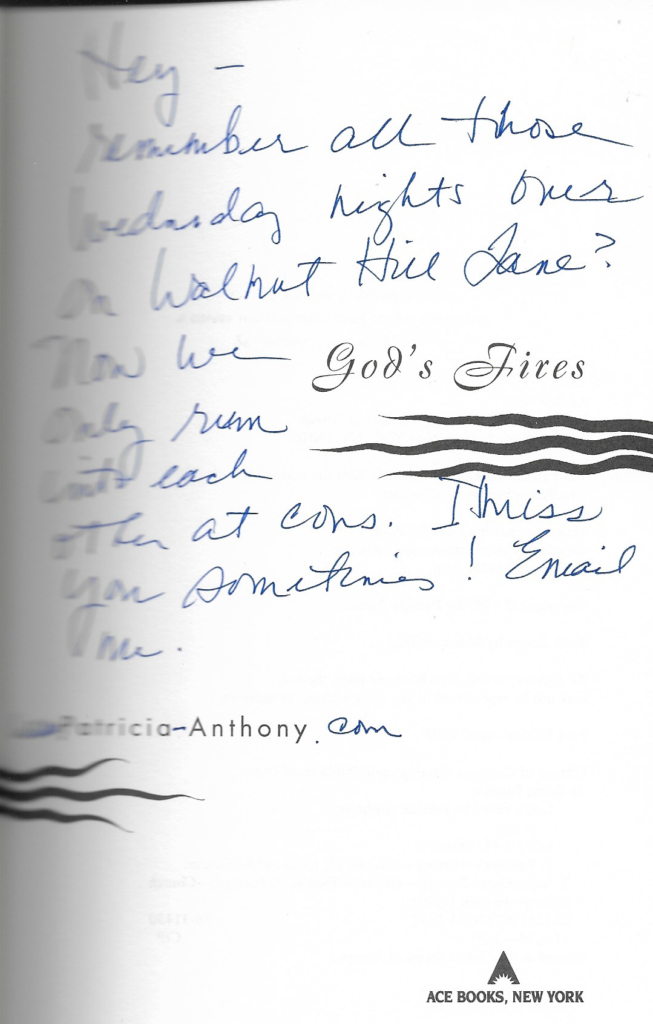
Anthony, Patricia. Gods Fires. Ace Books, 1997. First edition hardback, a Fine copy in a Fine dust jacket, inscribed by Anthony: “Hey-/Remember all those Wednesday nights over/on Walhat Hill, Jane?/Now we/only run/into each/other at cons. I miss/you sometimes! Email/me.” Then she’s altered her printed name to read “www.Patricia-Anthony.com”. Anthony died in 2013 and that domain is no longer active. Possibly an associational copy. Replaces an unsigned copy.
Bear, Greg. The Unfinished Land. Houghton Mifflin Harcourt, 2021. First edition hardback, a Fine copy in a Fine dust jacket, signed by Bear, with a thank you note and several laminated bookmarks from the seller laid in. Bought for $49.95 from an eBay seller. My obituary for Bear can be found here.
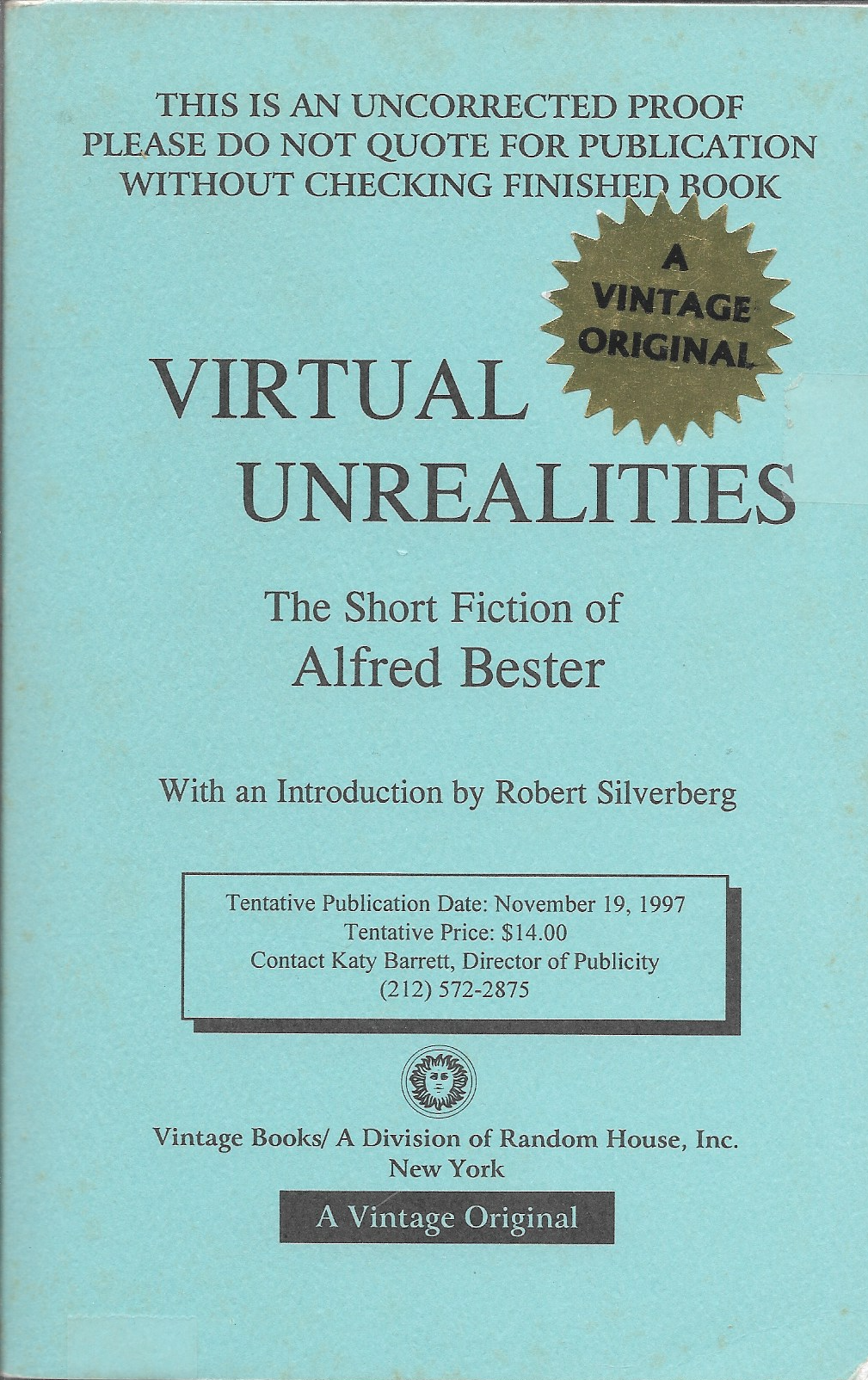
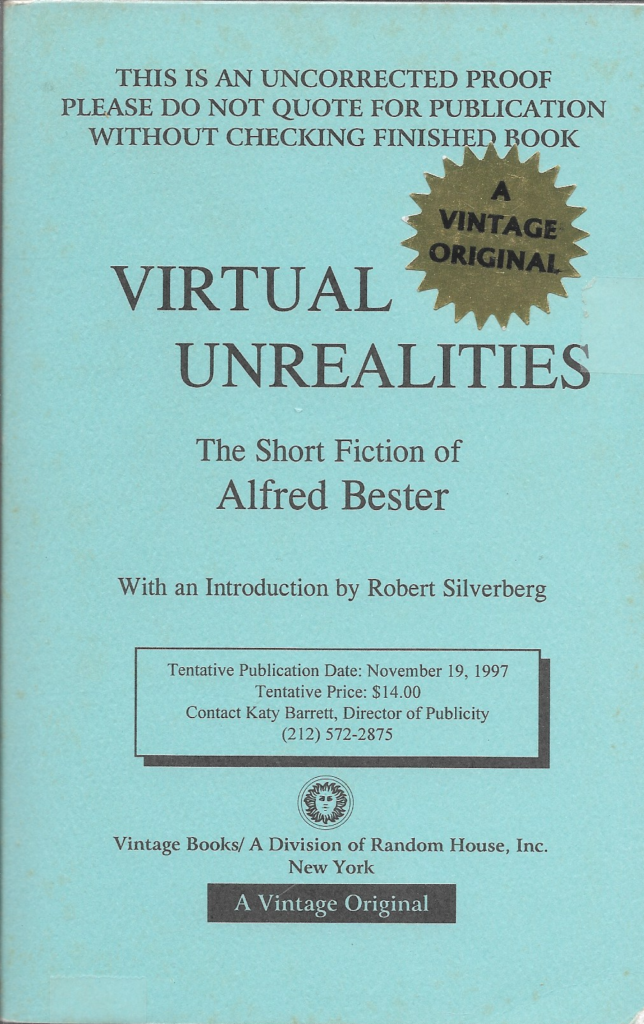
Bester, Alfred. Virtual Unrealities: The Short Fiction of Alfred Bester. Vintage/Random House, 1997. First edition proof, trade paperback format, a Fine- copy with a tiny chip to tip of bottom front corner, gold “A Vintage Original” sticker on front cover and accompanying review page. Supplements a copy of the trade paperback original. Bought off eBay for $10.97.
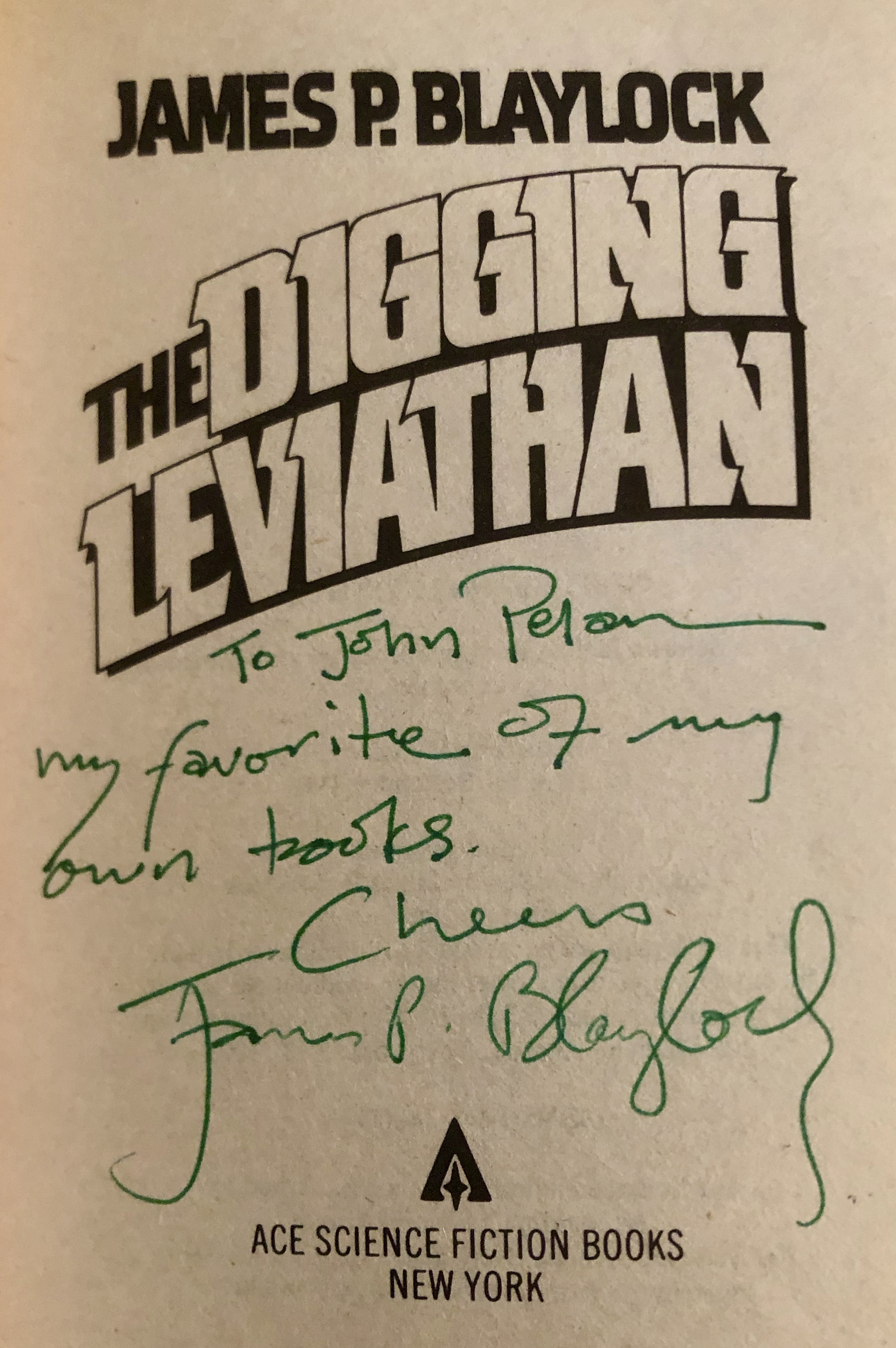
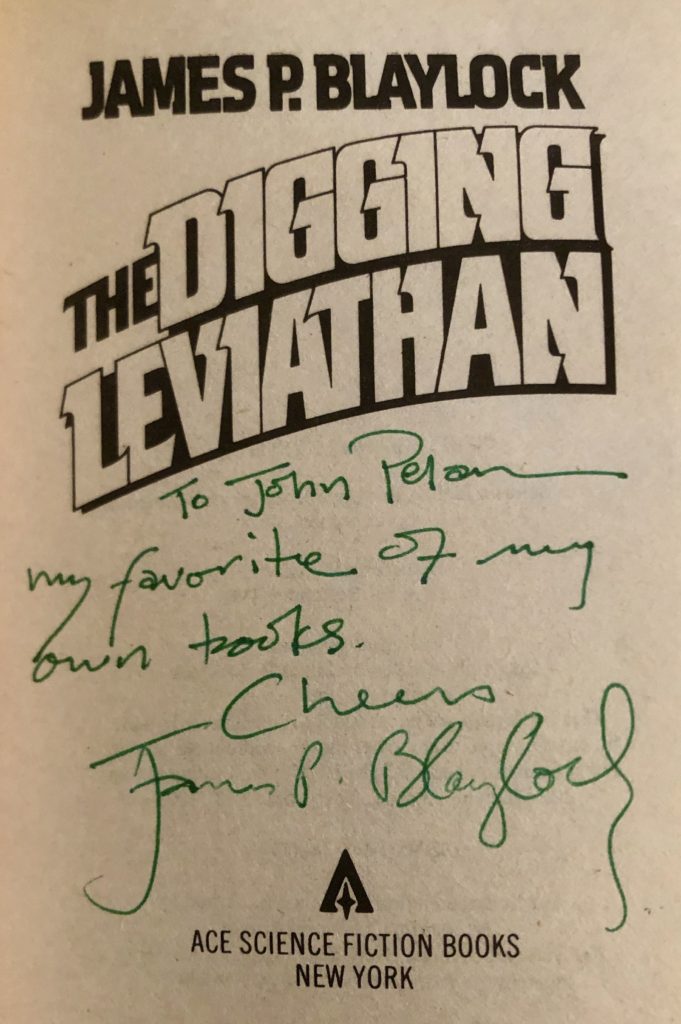
Blaylock, James P. The Digging Leviathan. Ace, 1984. First edition paperback original, a Fine- copy with a tiny flake from the bottom front corner tip, inscribed by Blaylock: “To John Pelan,/the favorite of my/own books./Cheers/James P. Blaylock.” Replaces an unsigned copy and supplements an inscribed first of the Morrigan hardback. Bought for $5.
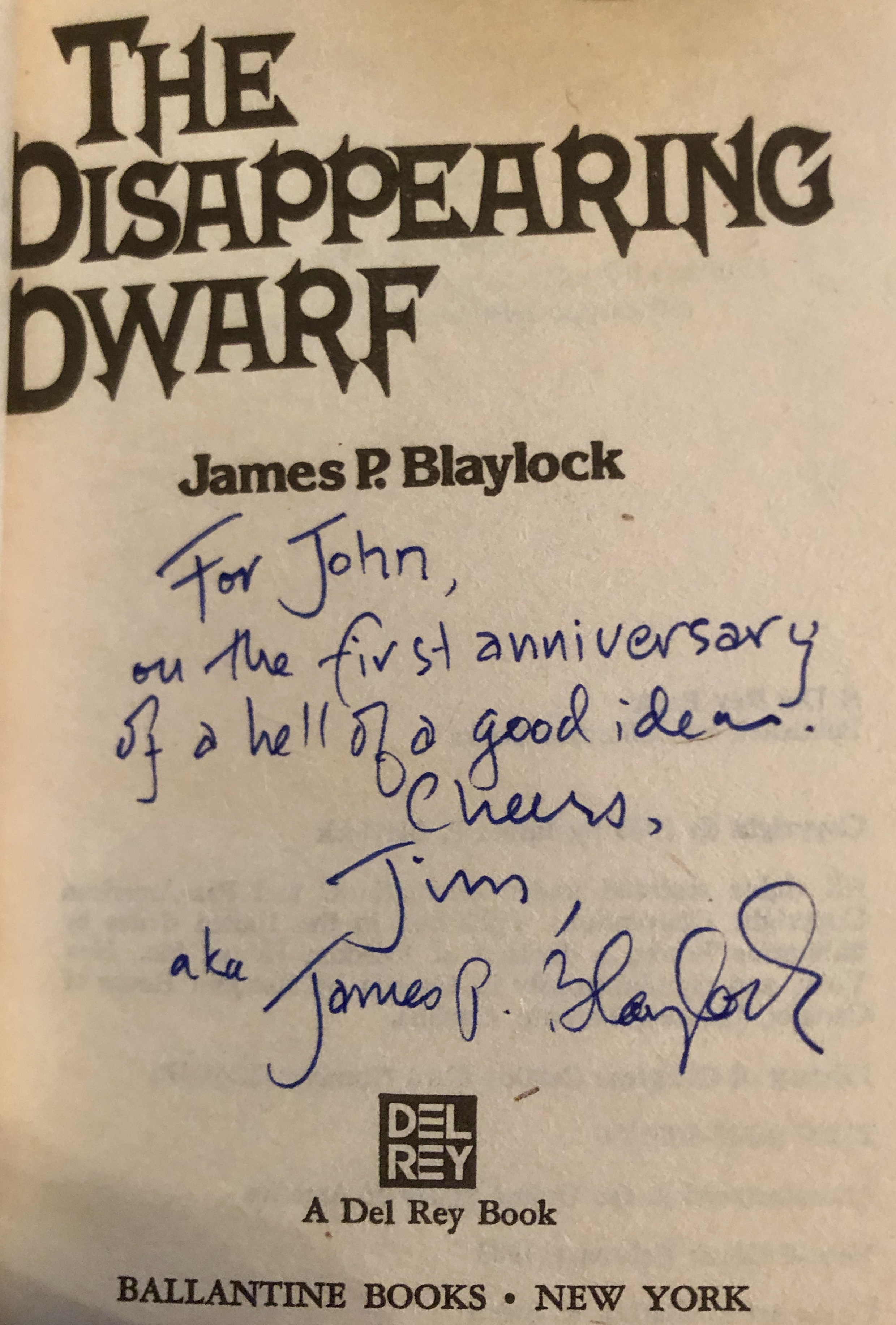
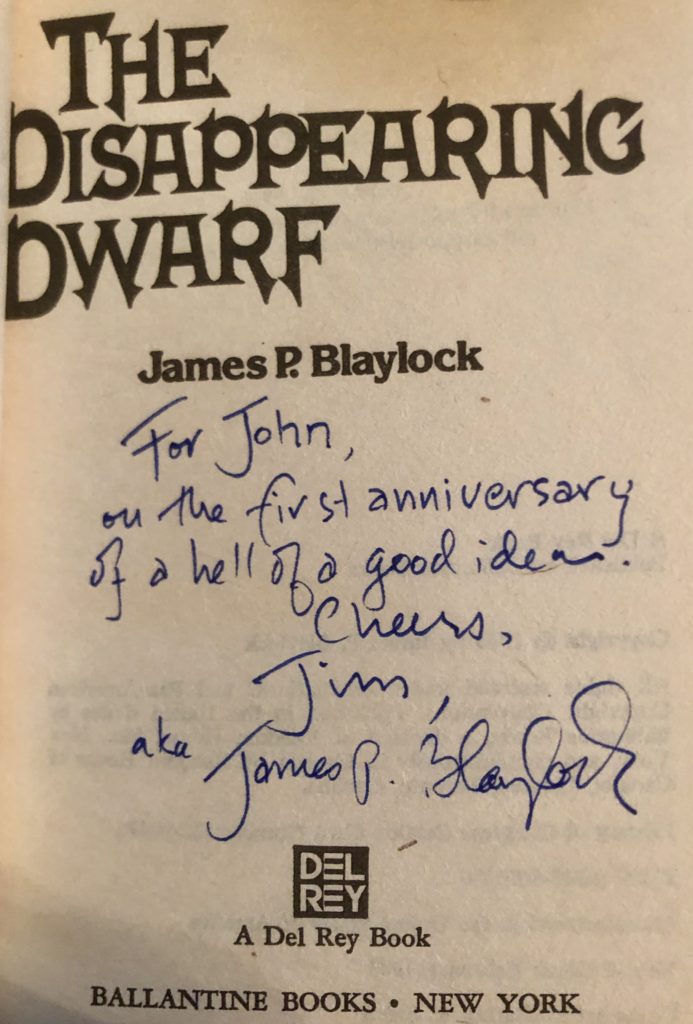
Blaylock, James P. The Disappearing Dwarf. Del Rey, 1983. First edition paperback original, a Fine- copy with edgewear and flake chips to outer rear corners, inscribed by Blaylock: “To John,/on the first anniversary/of a hell of a good idea./Cheers,/Jim,/aka James P. Blaylock.” Sequel to The Elfin Ship. Replaces an unsigned copy. Bought for $5.
Blaylock, James P. The Elfin Ship. Del Rey, 1983. First edition paperback original, a Near Fine- copy with slight spine creasing, inscribed by Blaylock: “To John Pelan,/My first book, but/not a bad one, I/hope./Best wishes/James P. Blaylock. Bought for $5.
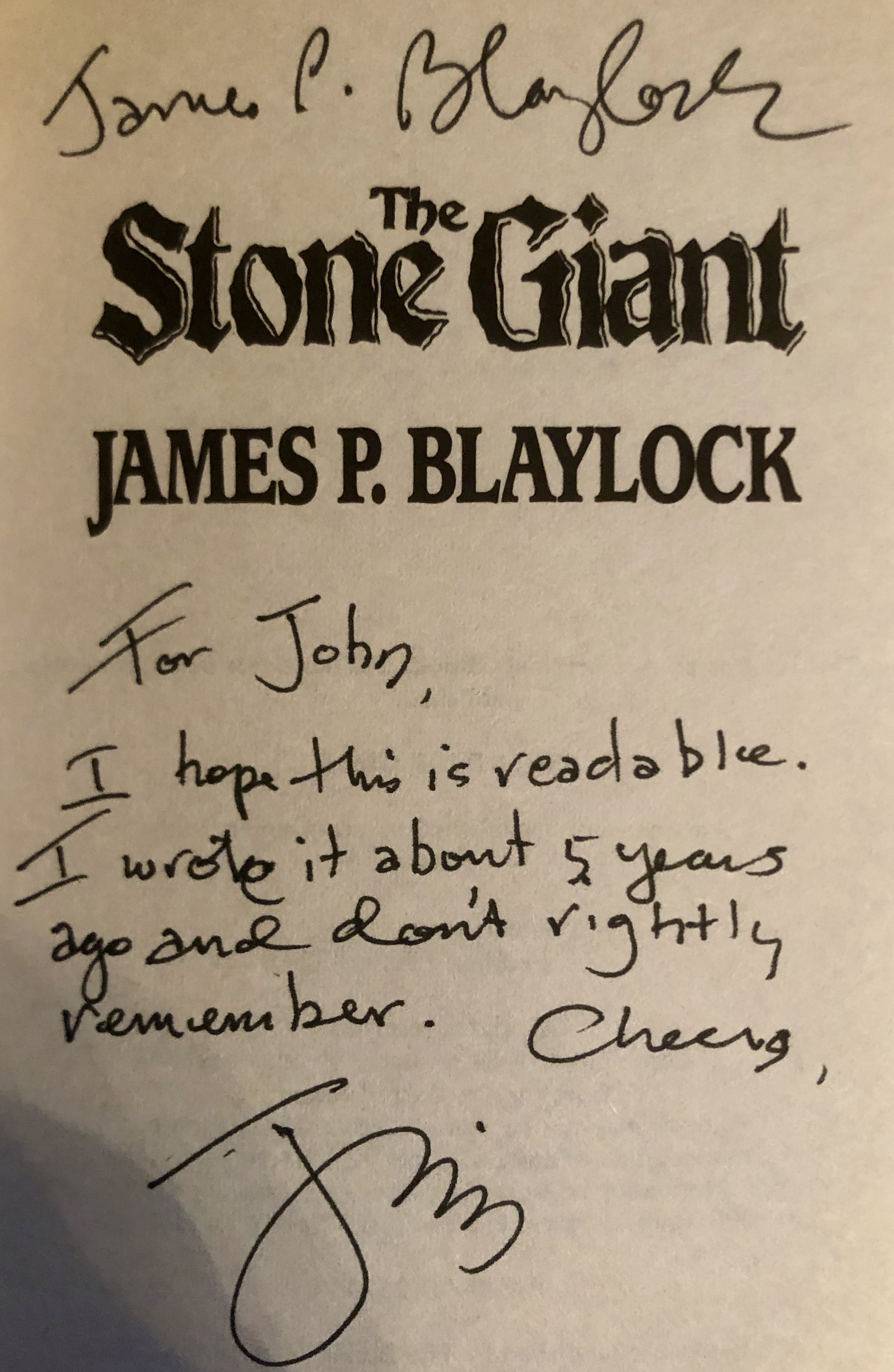
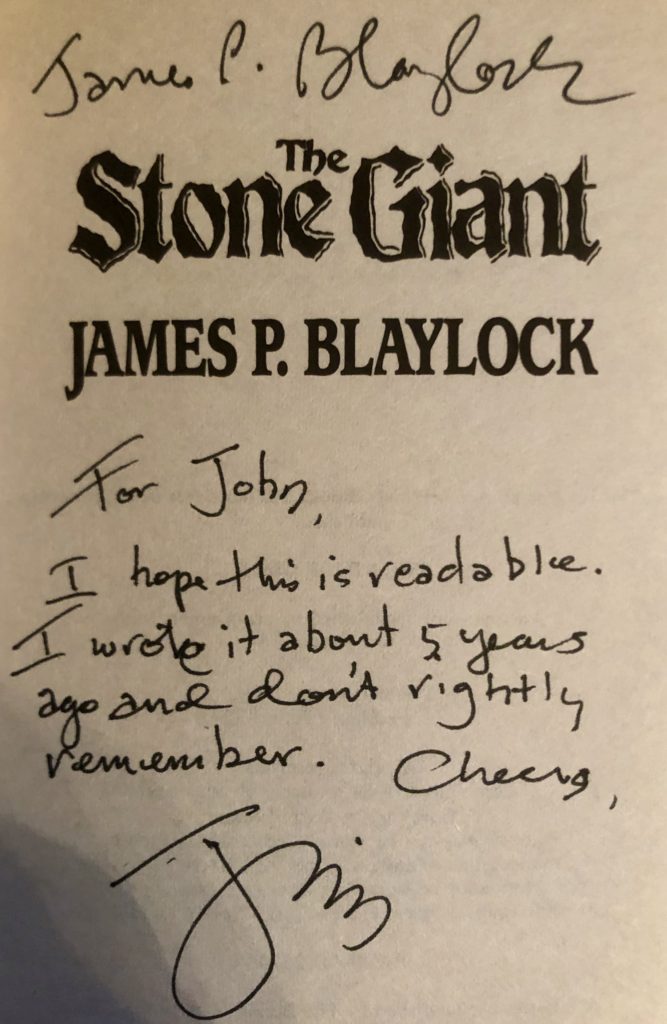
Blaylock, James P. The Stone Giant. Ace, 1989. First edition paperback original, a Fine copy with the barest trace of edgewear. Inscribed by Blaylock: “James P. Blaylock/For John,/I hope this is readable./I write it about 5 years/ago and don’t rightly/remember./Cheers/Jim.” Sequel to The Disappearing Dwarf. Replaces an unsigned copy. Bought for $5.
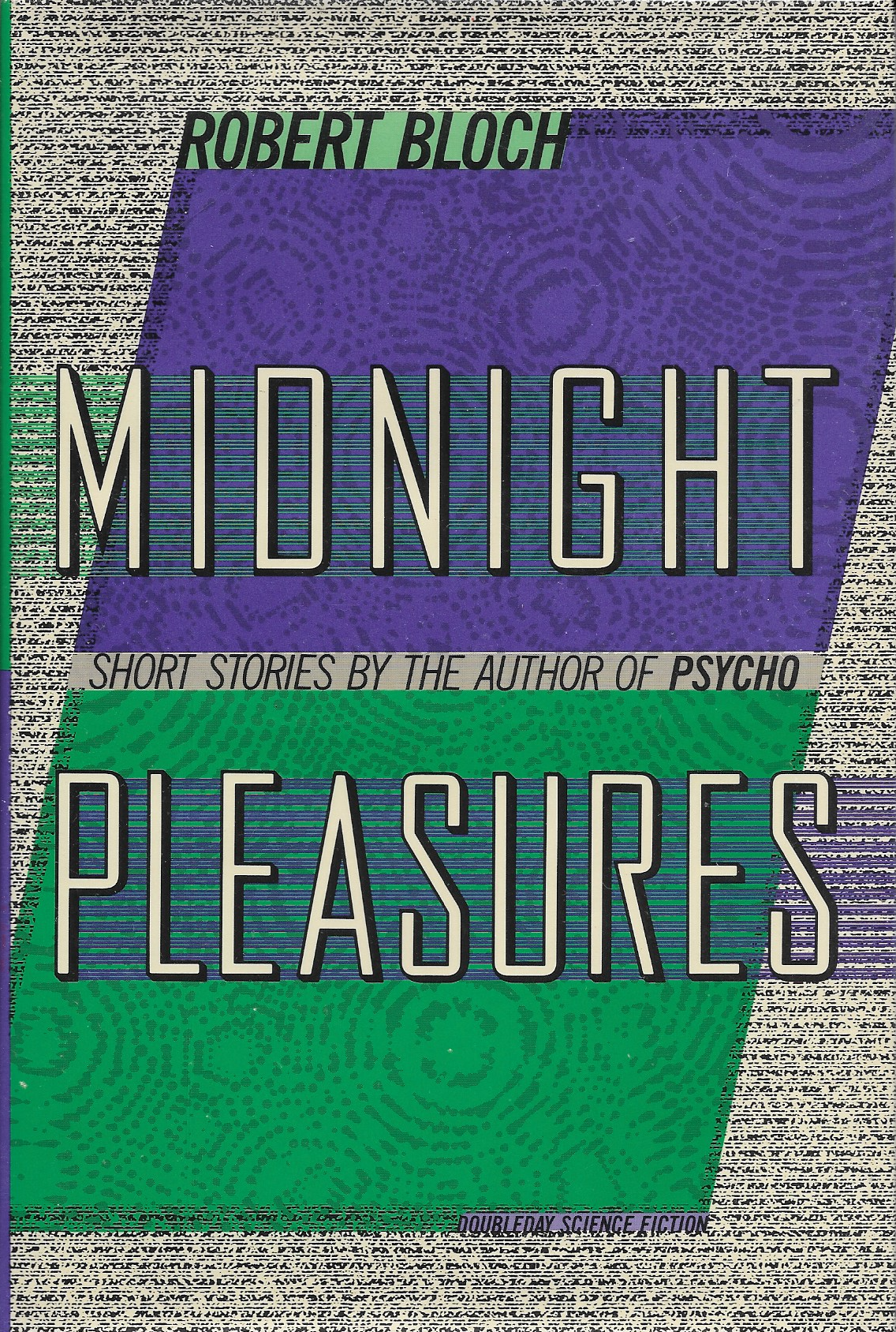
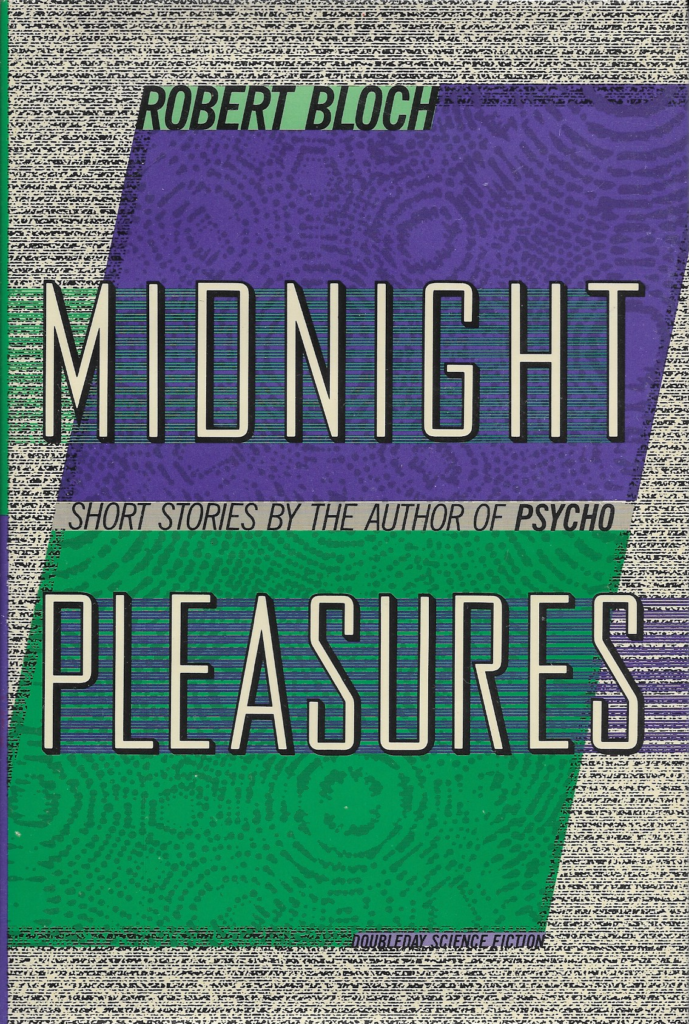
Bloch, Robert. Midnight Pleasures. Doubleday, 1987. First edition hardback, a Fine copy in a Fine dust jacket, inscribed by Bloch: “Yours Truly, Robert Bloch!” Short story collection.
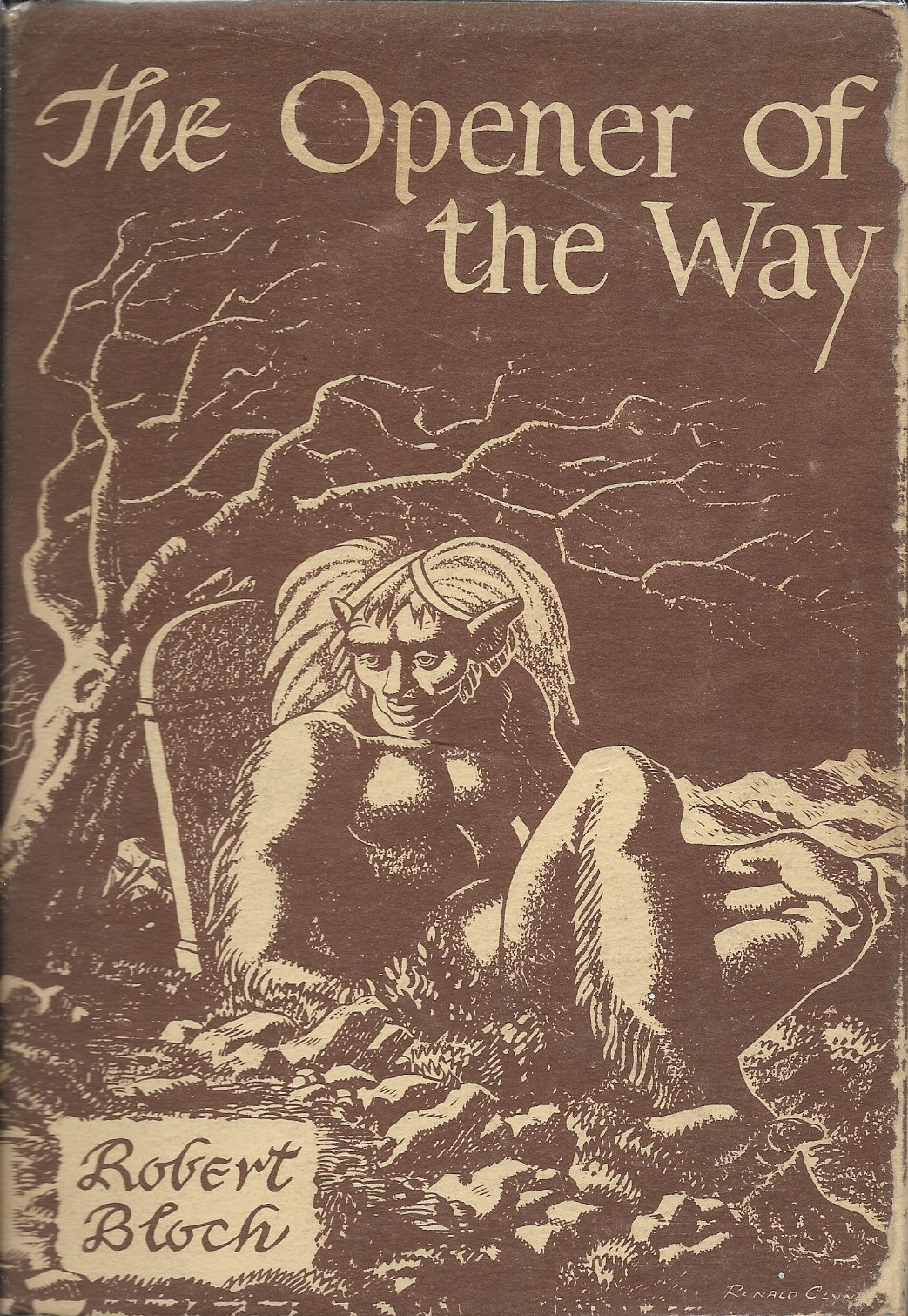
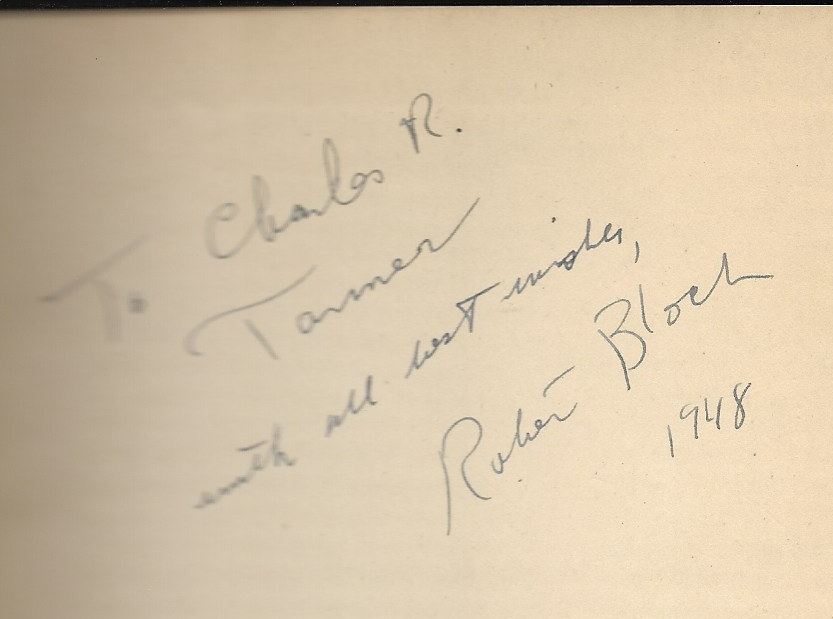
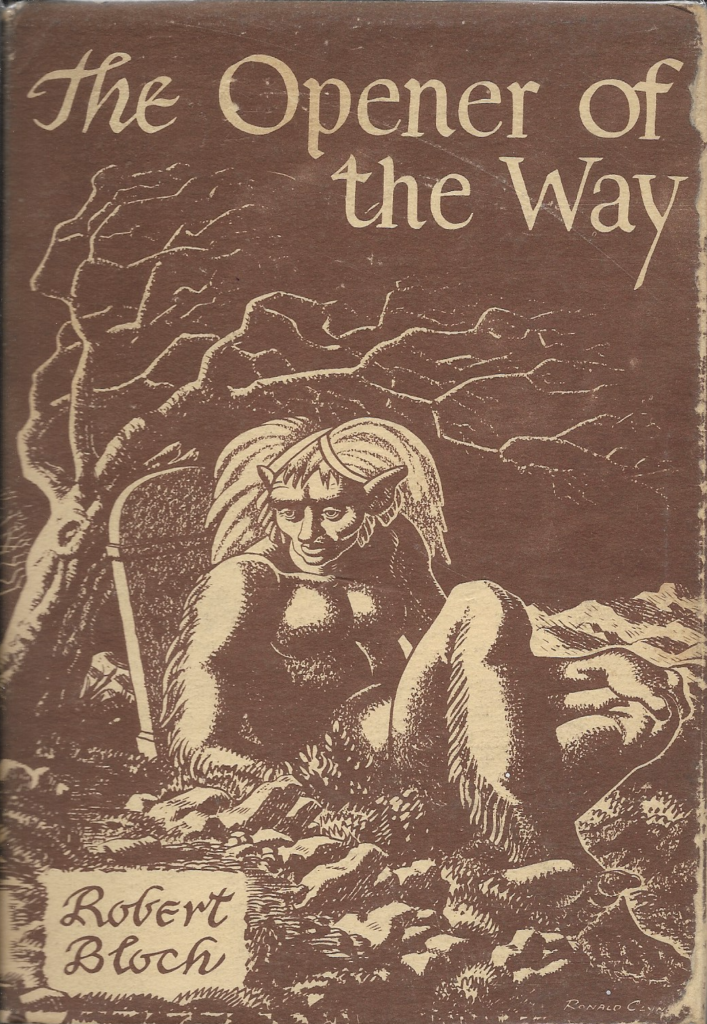
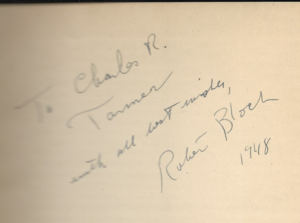
Bloch, Robert. The Opener of the Way. Arkham House, 1945. First edition hardback, a Near Fine+ copy with slight bumping at head and heel, slight wear in letters of spine, bookstore sticker to bottom of inner front cover, and a few touches of wear to boards, in a Near Fine- dust jacket with abrasion rub down right front fold edge, slight wear at head, slight loss at points, and slight dust soiling to rear cover, with auction sticker laid in, inscribed by Bloch: “To Charles R./Tanner with best wishes,/Robert Bloch, 1948.” What the people doing the Heritage description didn’t note (and possibly didn’t know) was that Charles R. Tanner was a fellow contemporary pulp writer (both had work in Amazing Stories), most famously of “Tumithak of the Corridors,” which appeared in Isaac Asimov’s Before the Golden Age. Flanagan, Robert Bloch: A Bio-Bibliography, page 49. Joshi, Sixty Years of Arkham House 10. Currey, page 46. Derleth, Thirty Years of Arkham House 10. Jaffery, Horrors and Unpleasantries 10. Nielsen, Arkham House Books: A Collector’s Guide 10 (also #23 on the Most Valuable list). Locke, Spectrum of Fantasy, page 36. Bleiler, Guide to Supernatural Fiction, 209. Chalker/Owings, pages 22-23. Kemp, The Anthem Series, page 299-300. (For an association copy signed to Robert Bloch, see this.)
Bloch, Robert. Out Of My Head. NESFA Press, 1986. First edition hardback, #371 of 800 hardback copies, a Fine copy in a Fine dust jacket, signed by Bloch. Chalker/Owings, page 303. Replaces an equally perfect unsigned copy in my collection.
Bloch, Robert. Psycho II. Whispers Press, 1982. First edition hardback, #516 of 750 signed, numbered copies, a Fine copy in a Fine dust jacket and a Fine slipcase. Supposedly very different than the movie of the same name. Supplements a trade edition. Chalker/Owings, page 476.
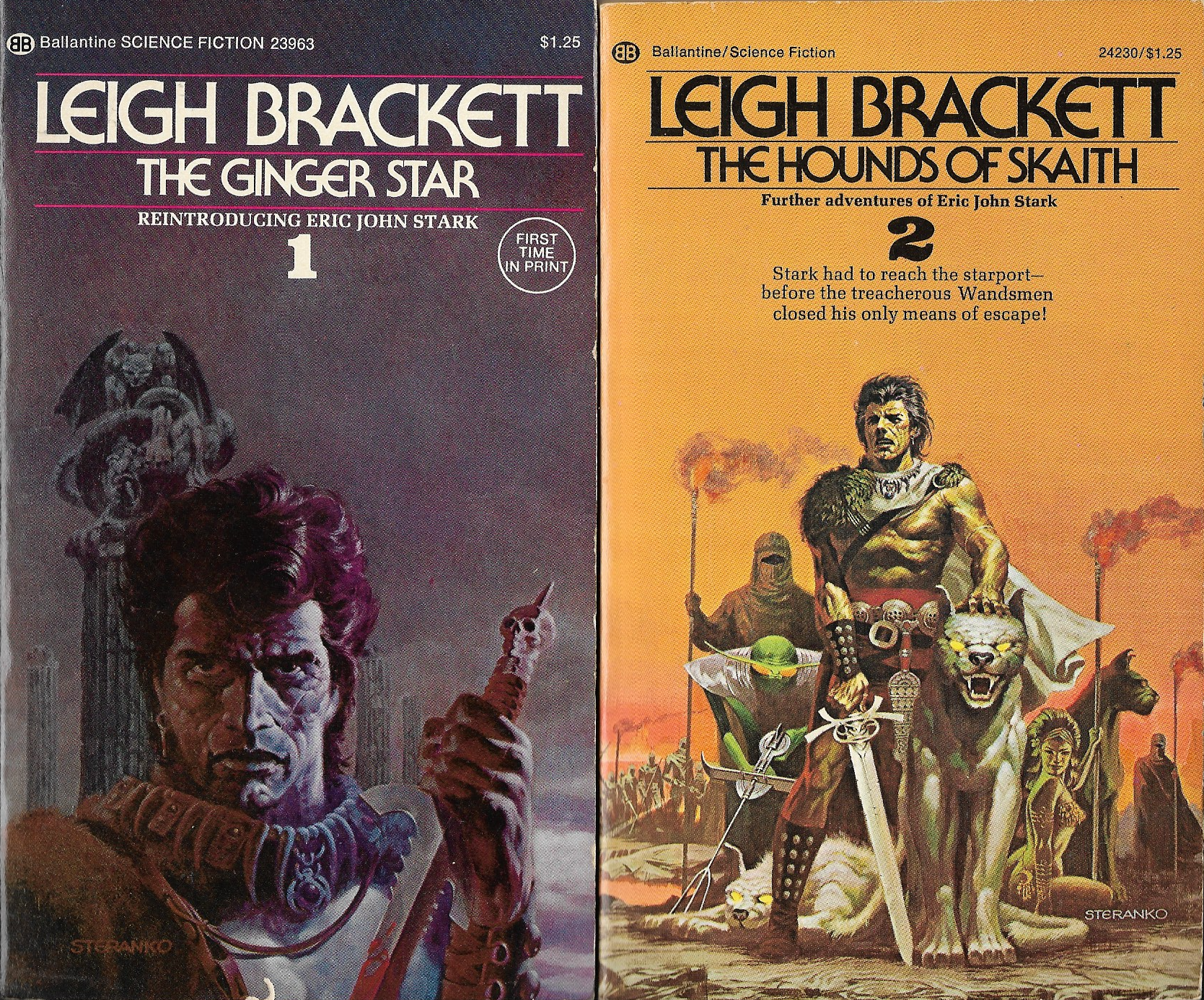
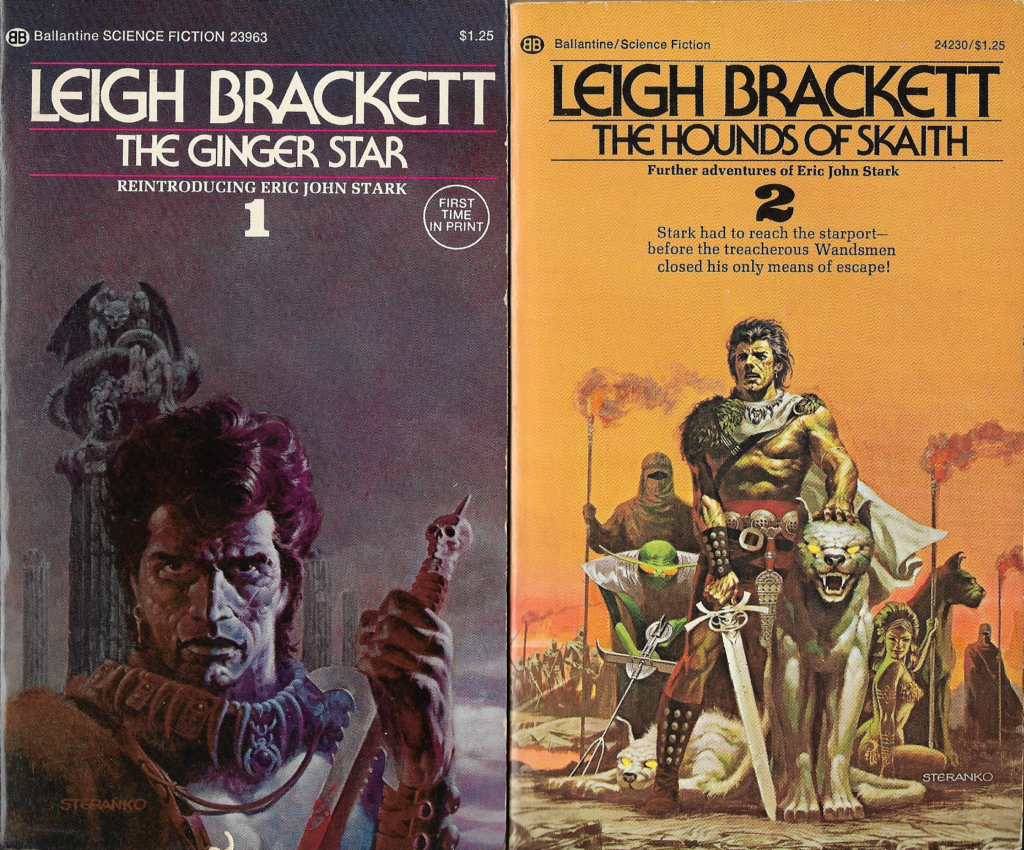
Brackett, Leigh. The Ginger Star. Ballantine Books, 1974. First edition paperback original, a Fine- copy with slight wear at heel, edges and points, otherwise a tight, square copy. Currey, page 52. Bought for $2.
Brackett, Leigh. The Hounds of Skaith. Ballantine Books, 1974. First edition paperback original, a Near Fine+ copy with slight bumping to bottom corner and a trace of edgewear, otherwise a tight, square copy. Currey, page 52. Bought for $2.
Bradbury, Ray. Dawn to Dusk: Cautionary Travels. Gauntlet, 2011. First edition hardback, #67 of 500 signed, numbered copies, a Fine copy in a Fine dust jacket. Somehow missed this when it came out, maybe because I was dealing with one of my periodic bouts of unemployment. Bought for $76 off eBay.
Bradbury, Ray. Farewell Summer. Morrow, 2006. First edition hardback, a Fine copy in a Fine dust jacket with “National Book Award Distinguished Contribution to American Letters” sticker (presumably as issued; he was awarded it in 2000), signed by Bradbury. Sequel to Dandelion Wine.
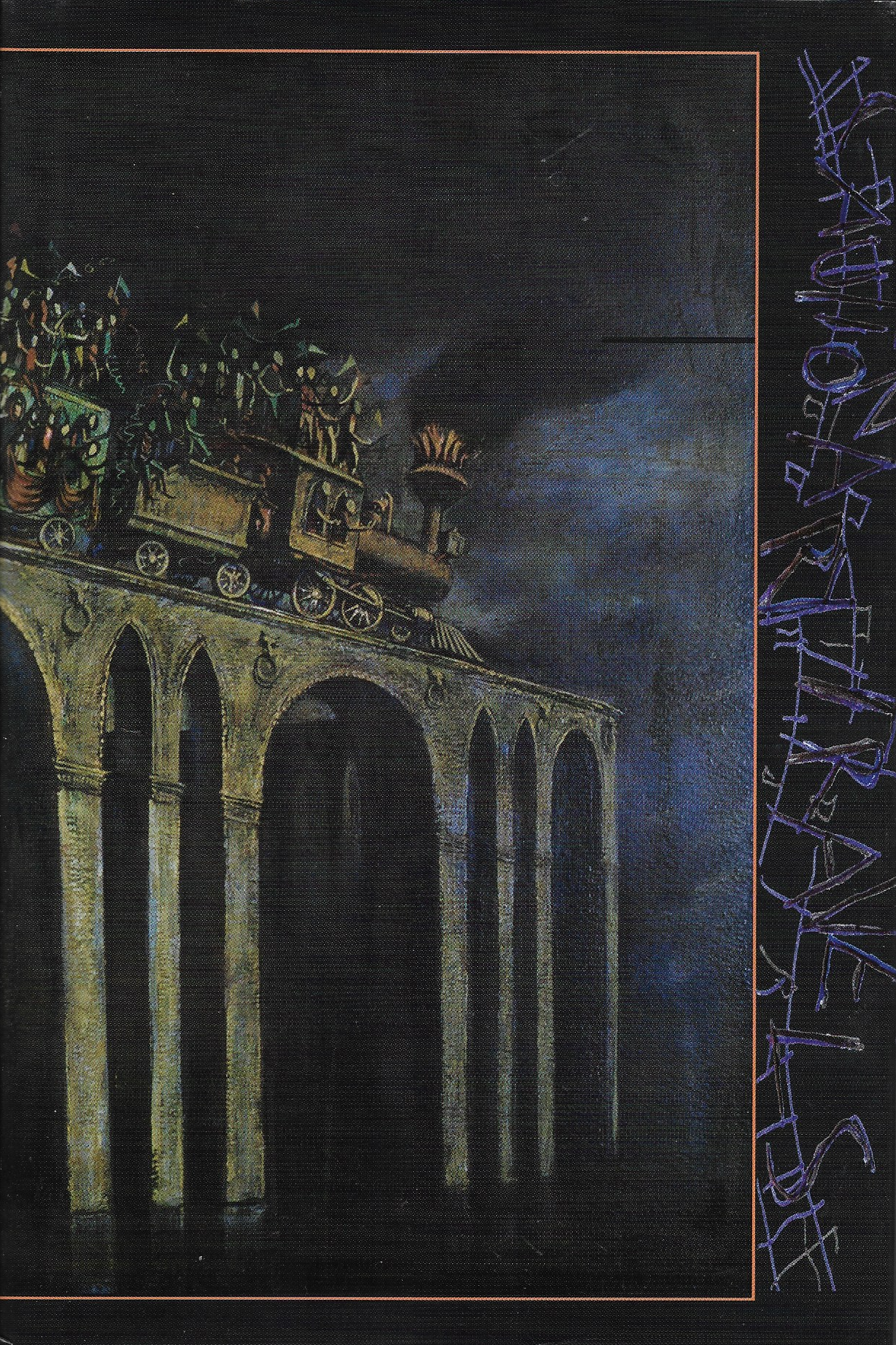
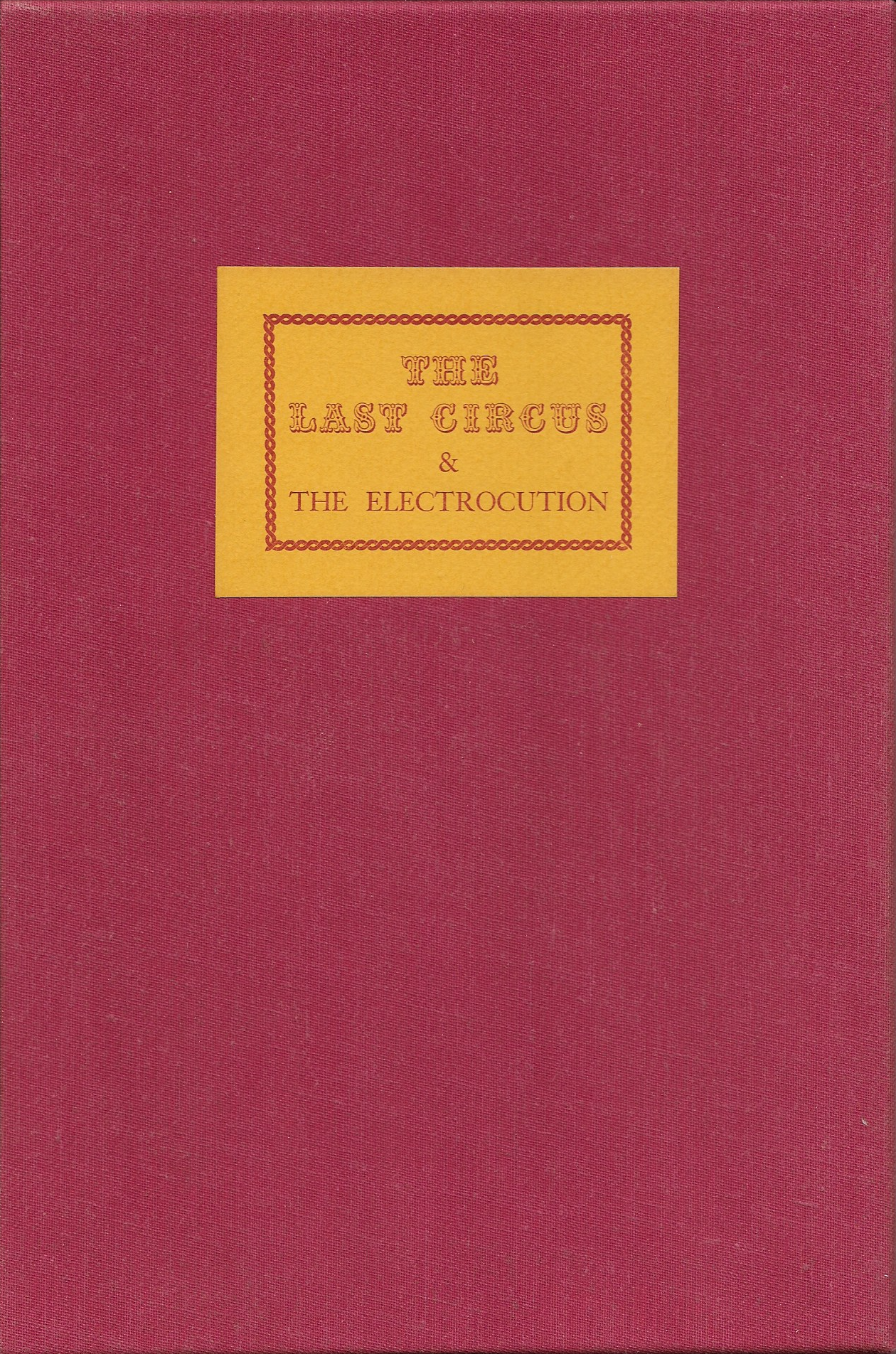
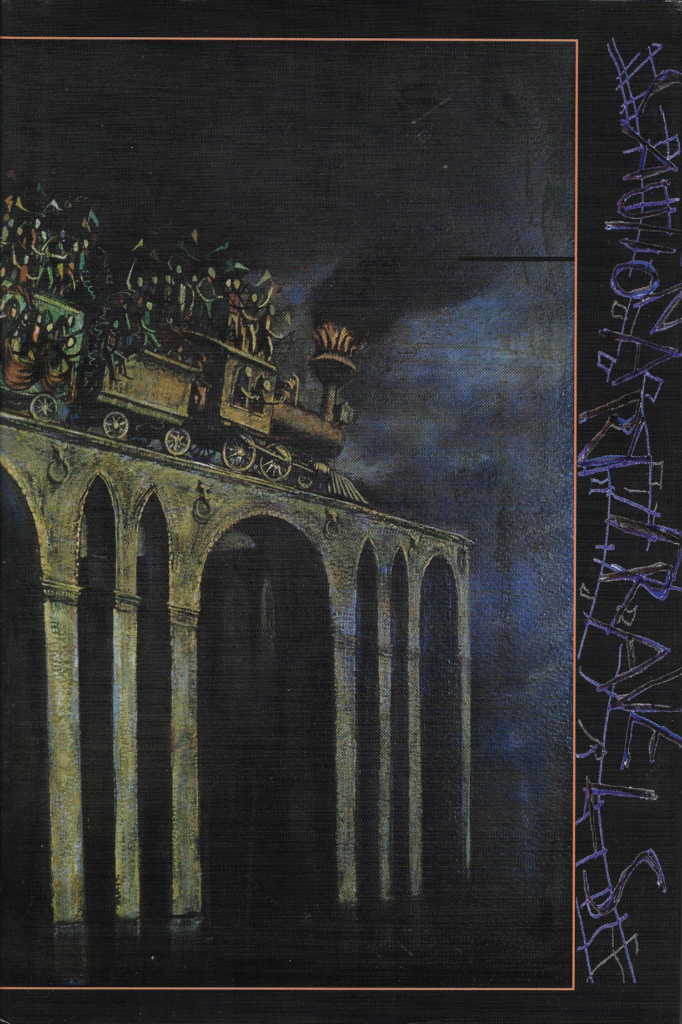
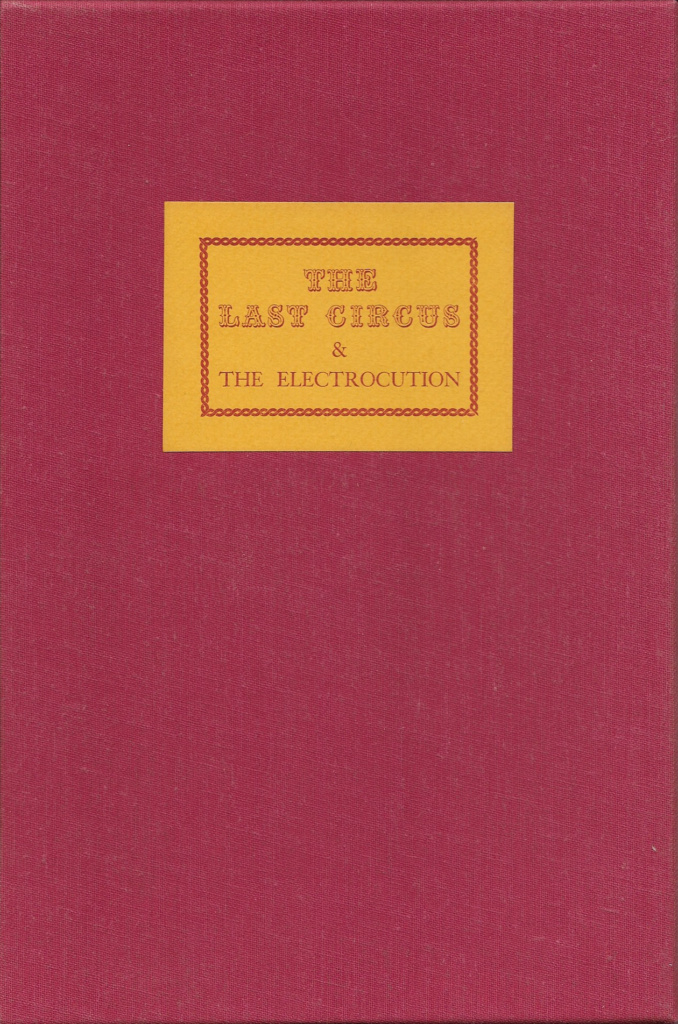
Bradbury, Ray. The Last Circus & The Electrocution. Lord John Press, 1980. First edition hardback, #105 of 300 copies signed by Bradbury and introduction author William F. Nolan, a Fine copy in a Fine slipcase, sans dust jacket, as issued. Two stories, an introduction by Nolan and an afterword by Bradbury. Supplements a signed trade copy.
Bradbury, Ray. The Machineries of Joy. Simon & Schuster, 1964. First edition hardback, a Near Fine copy with previous owner’s name, city, and date to FFE, corners slightly bumped, slight bend at head and heel, and slight wear along bottom board edges, in a Very Good+ dust jacket with 3/16″ triangular chip at head join, slight edgewear at head and heel, bit of wrinkling to top edge, a few small, closed tears, a tiny bit of loss at points, and a few slight spots of dust soiling, signed and dated (“12/12/86”) by Bradbury. Short story collection. Nolan, The Ray Bradbury Companion, pages 148-150. Weist, Bradbury: An Illustrated Life, page 72. Currey, page 56.

Bradbury, Ray. One For The Road. Morrow, 2002. First edition hardback, a Fine copy in a Fine dust jacket, signed by Bradbury. Short story collection, including a smattering of older stories.
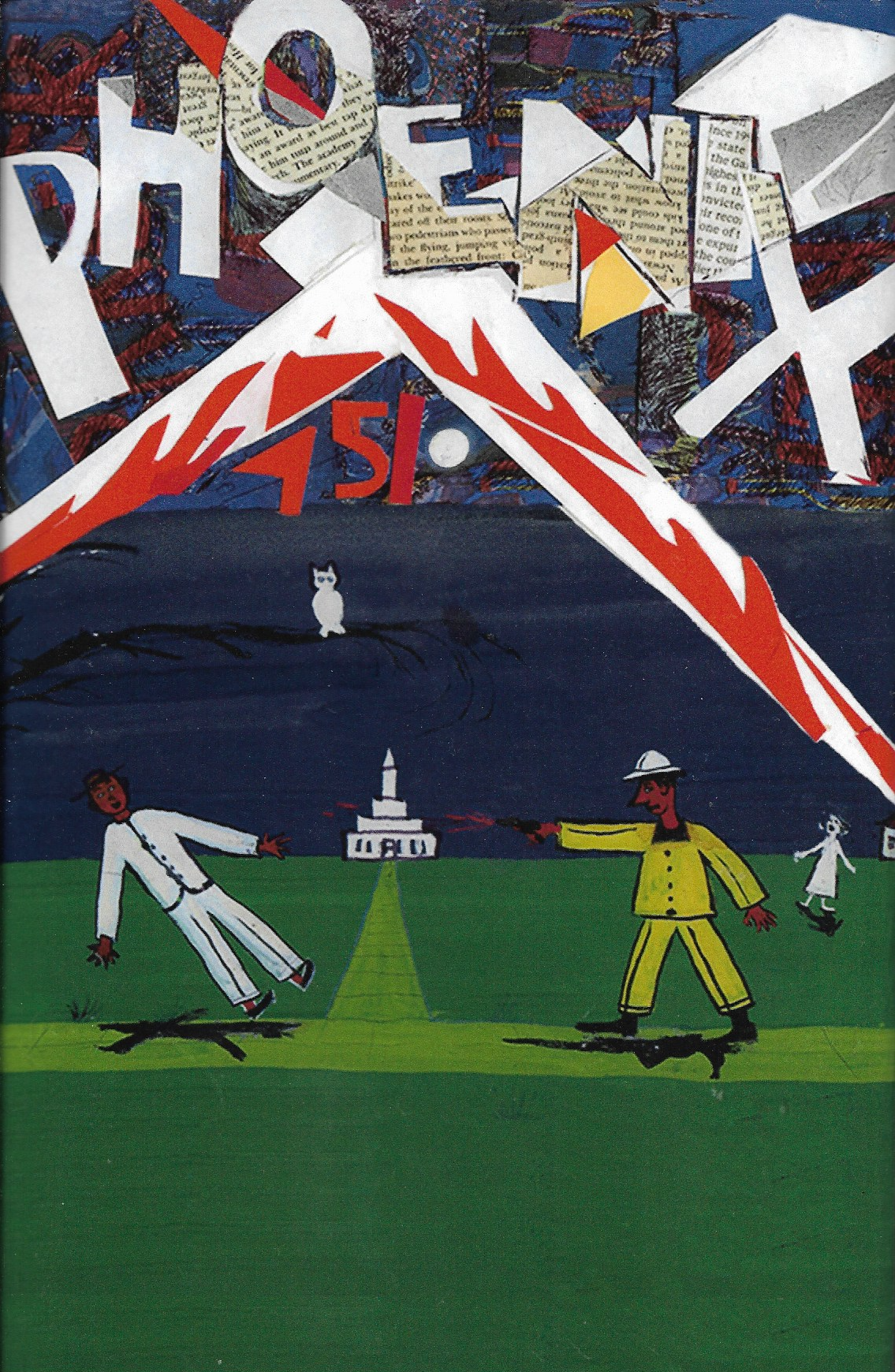
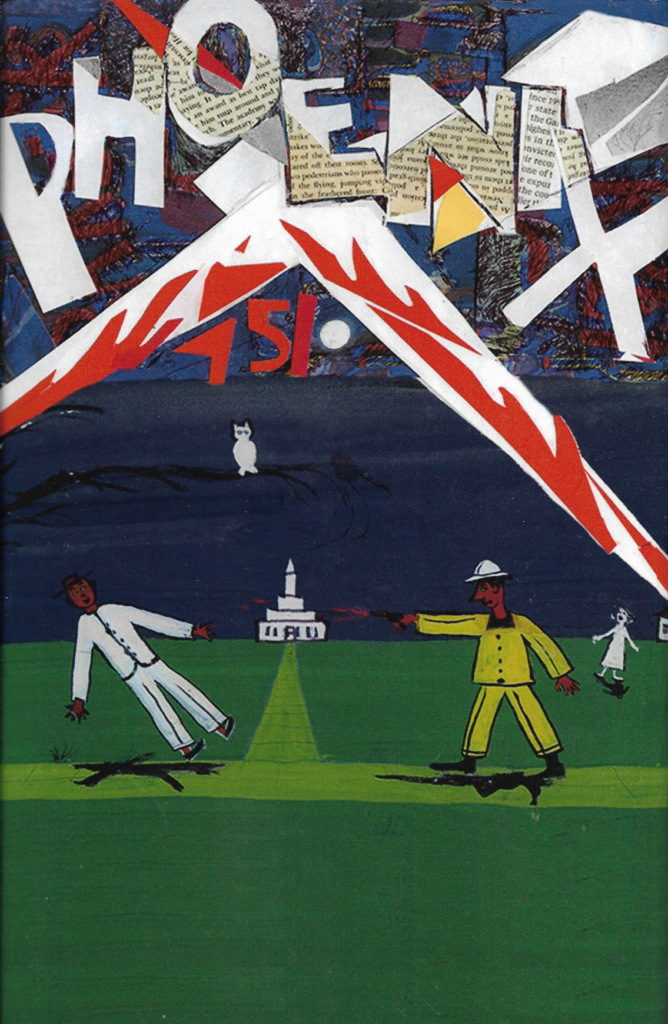
Bradbury, Ray. Phoenix 451. Gauntlet Press, 2022. First edition hardback, one of 350 unsigned copies, a Fine copy in a Fine dust jacket. Huge 833-page collection. “We are proud to be publishing five versions of Fahrenheit-451 he wrote beginning in 1955.” Plus a whole lot more, including color plates, play texts, ancillary material, etc. Bought from the publisher. I will have copies of this available in the next Lame Excuse Books catalog, which I intend to mail out Friday.
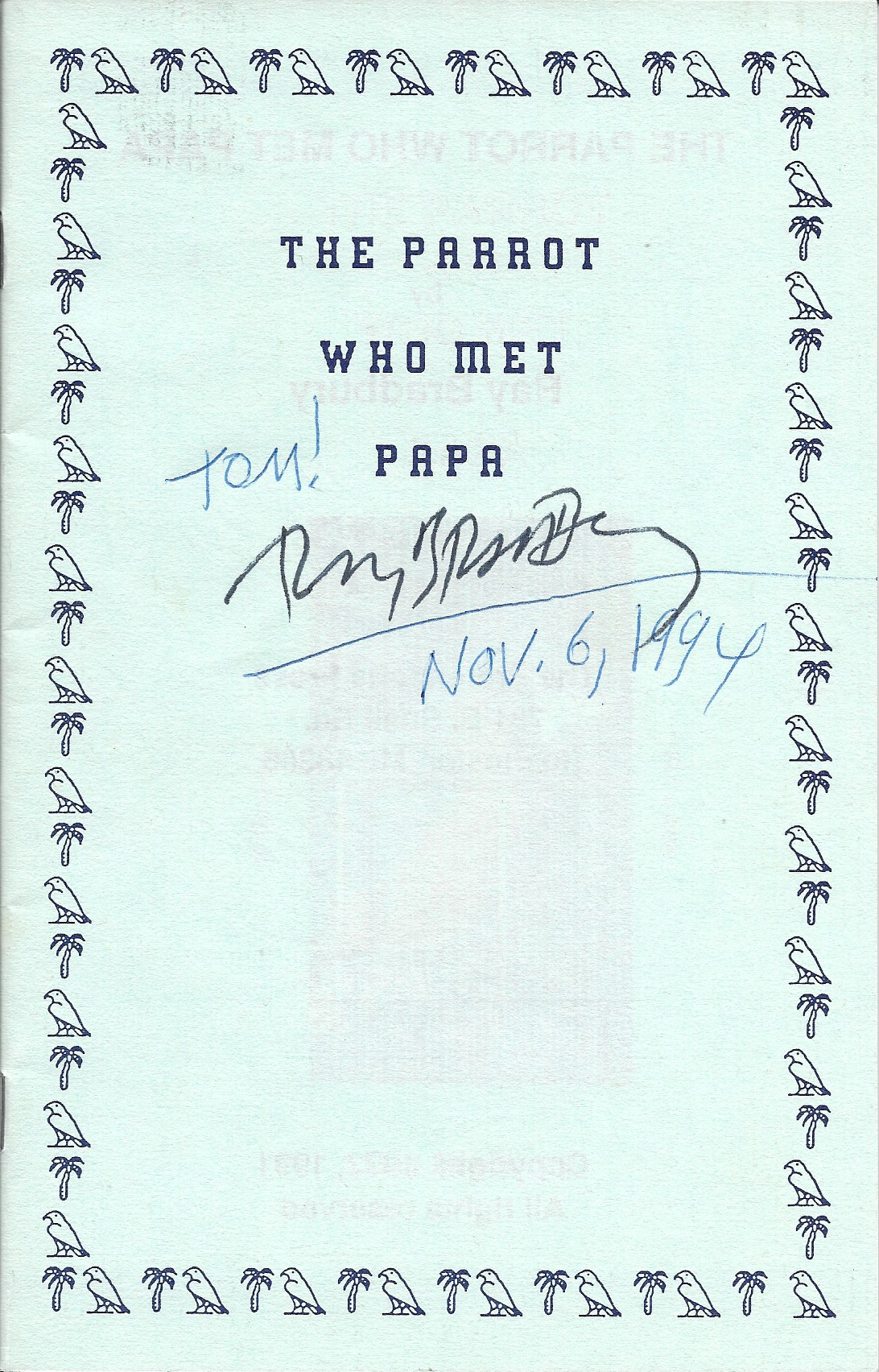
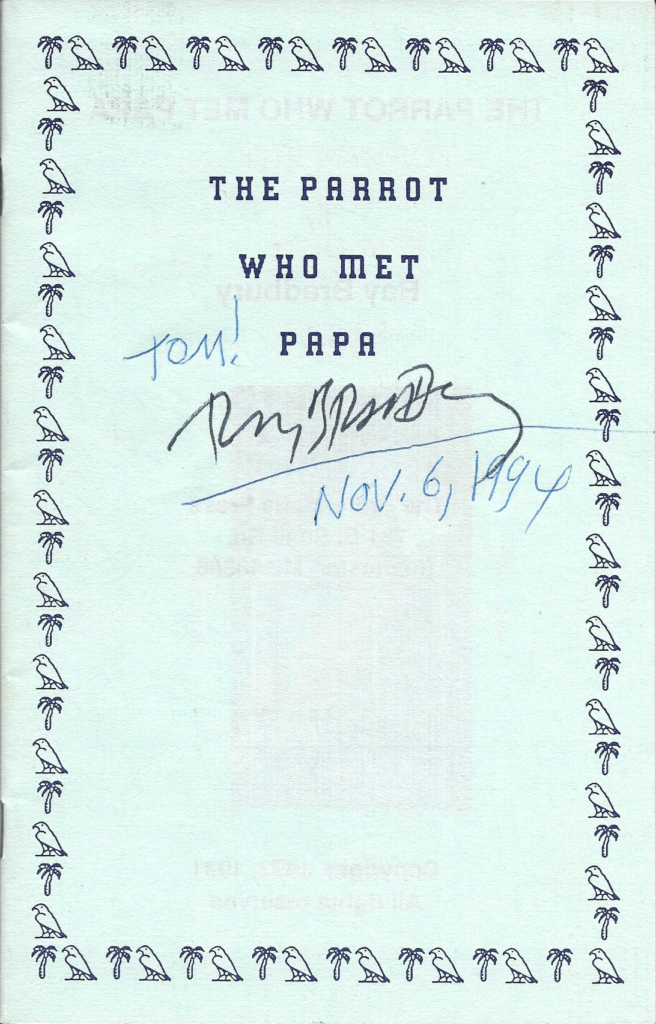
Bradbury, Ray. The Parrot Who Met Papa b/w David Aronovitz’s The Parrot Who Met Papa (concluded). The Pretentious Press, 1991. First edition chapbook original, a Fine copy, signed by Bradbury, then subsequently inscribed “Tom! Nov. 6, 1994.” Just about all these Pretentious Press chapbooks are hard to find and pricey. Bought from an online dealer for $150.
Bradbury, Ray. The Tonybee Convector. Knopf, 1988. First edition hardback, a Fine copy in a Fine dust jacket, inscribed by Bradbury: “Joe Anne &/Lee/Ray Bradbury/Dec. 10/1988.” Replaces an unsigned copy.
Bradbury, Ray. When Elephants Last In The Dooryard Bloomed. Knopf, 1973. First edition hardback, a Fine- copy with slight bend at head and heel, in a Near Fine, price-clipped dust jacket, signed and dated (“12/12/86”). Supplements a later printing.
(Bradbury, Ray) Sam Weller. Listen to the Echoes: The Ray Bradbury Interviews. Stopsmling Books, 2010. First edition trade paperback original (simultaneous with a small hardback run), a Fine copy, signed by Bradbury. Collection of interviews Weller did with Bradbury, plus a previously unpublished Paris Review interview. Bought for $40 from an online bookseller.
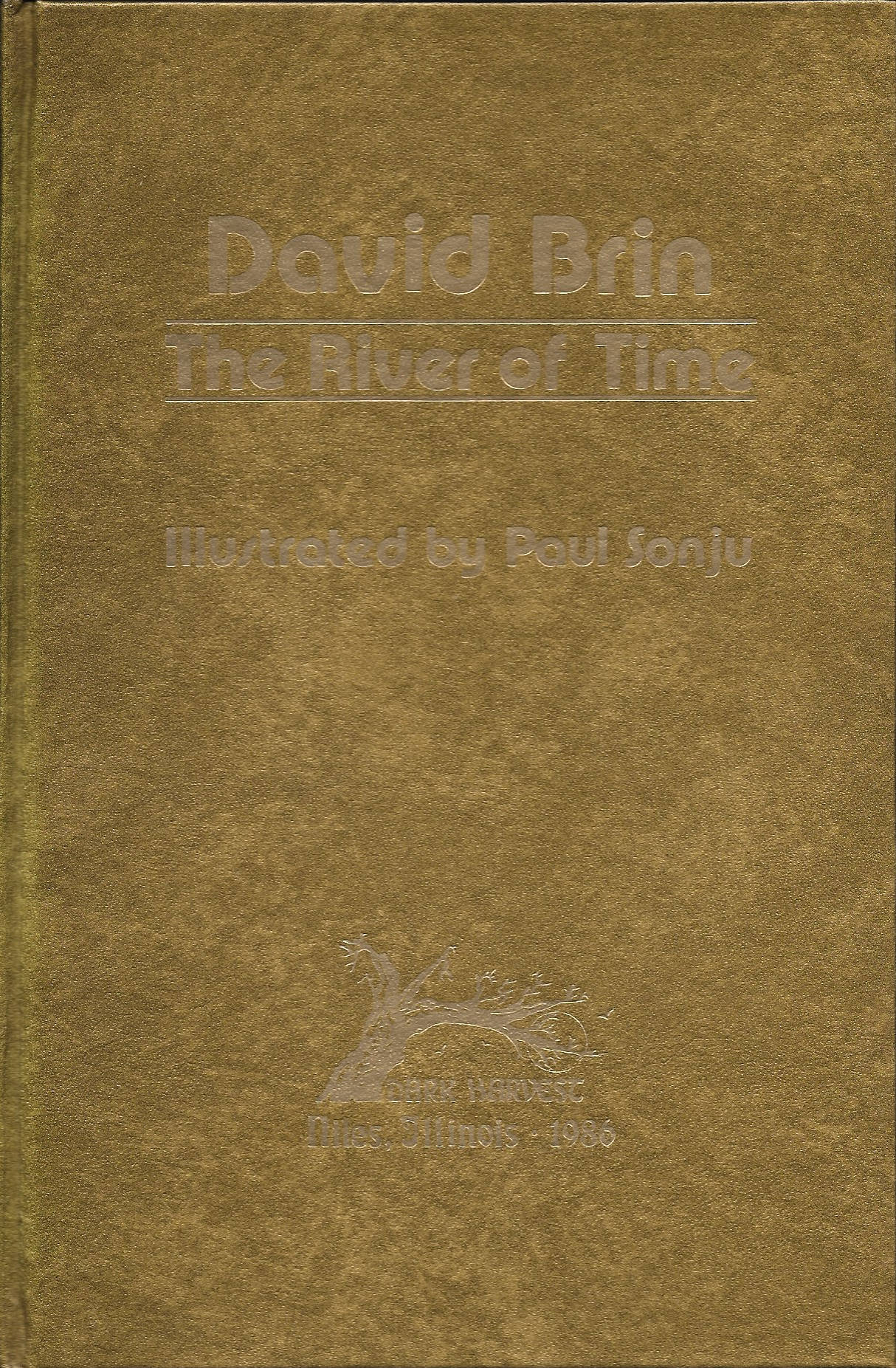
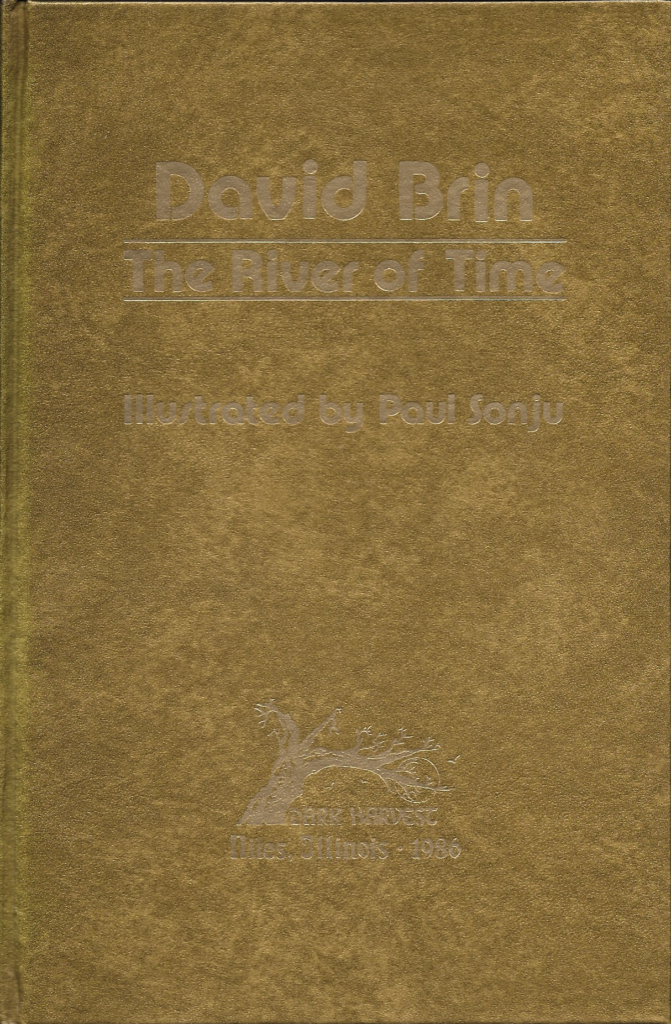
Brin, David. The River of Time. Dark Harvest, 1986. First edition hardback, copy “Q” of 52 signed, lettered copies, a Fine copy (maybe Fine- with the spine of the gold biding showing a slight greenish tinge) in a Fine wooden “slipcrate,” sans dust jacket, as issued. Short story collection. Chalker/Owings, page 119. A lot of the Dark Harvest slipcrate editions were leather or imitation leather, but I have no idea what to call this goldish binding. This is the fourth Dark Harvest slipcrate edition I’ve bought, after George R. R. Martin’s Portraits of His Children, Joe R. Lansdale’s The Nightrunners, and Chet Williamson’s Dreamthorpe. Bought from a UK dealer for £50, which works out to less than the original $100 list price.
Brunner, John. The Productions of Time. Signet, 1967. First paperback original, a Fine- copy with slight darkening to pages and a trace of edgewear to points. 1967 Nebula nominee for Best Novella. De Bolt, The Happening Worlds of John Brunner page 203. Currey, page 72 (he says the text was “badly edited” without Brunner’s approval). Bought for $2.99.
(Burroughs, William S.) Morgan, Ted. Literary Outlaw: The Life and Time of William S. Burroughs. Henry Holt, 1988. First edition hardback, a Fine copy in a Fine- dust jacket with slight haze rubbing. Reportedly one of the best biographies of Burroughs. Shoaf, Collecting William S. Burroughs in Print: A Checklist, IV.42. Bought for $7.99 at Half Price Books.
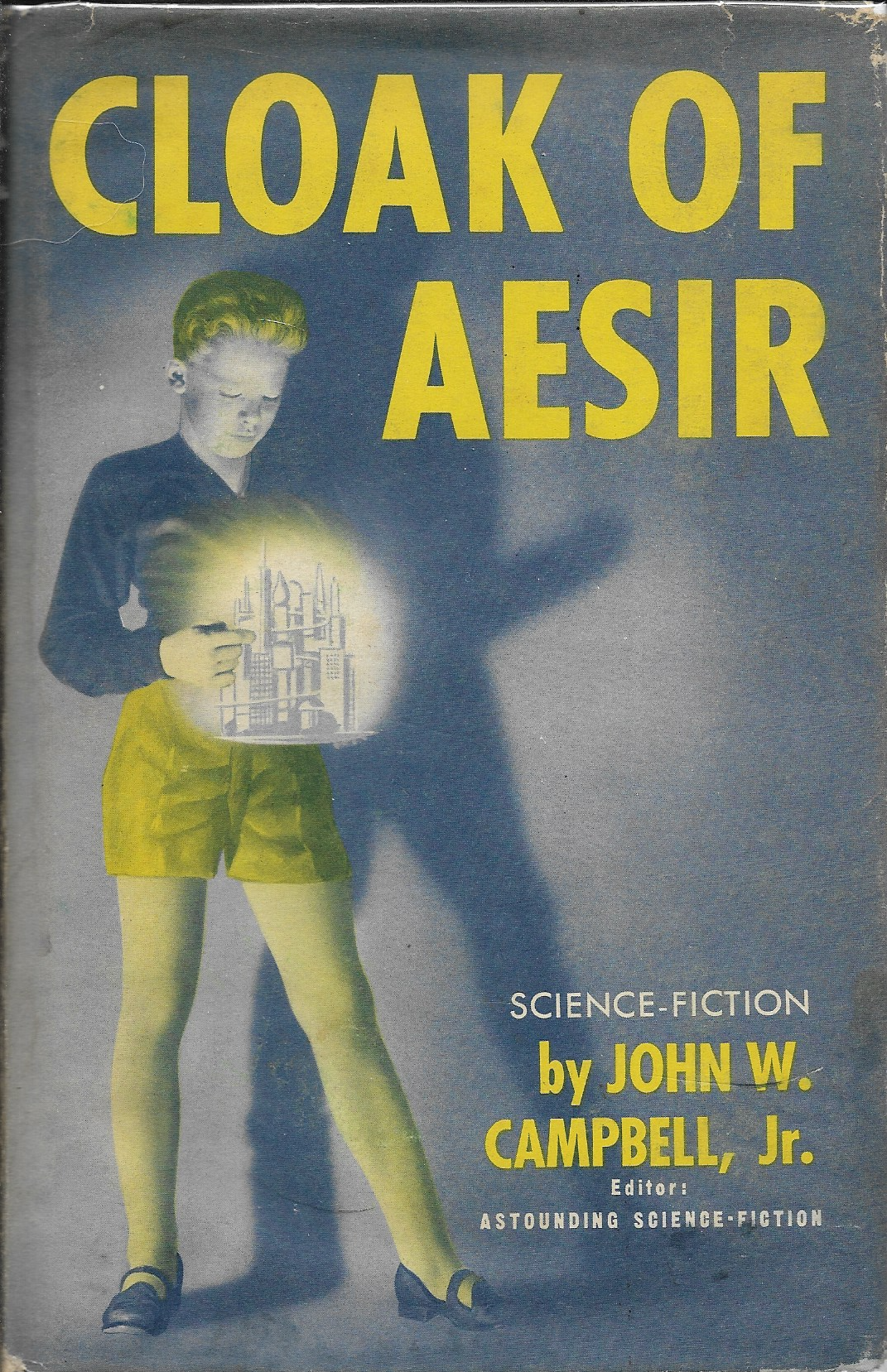
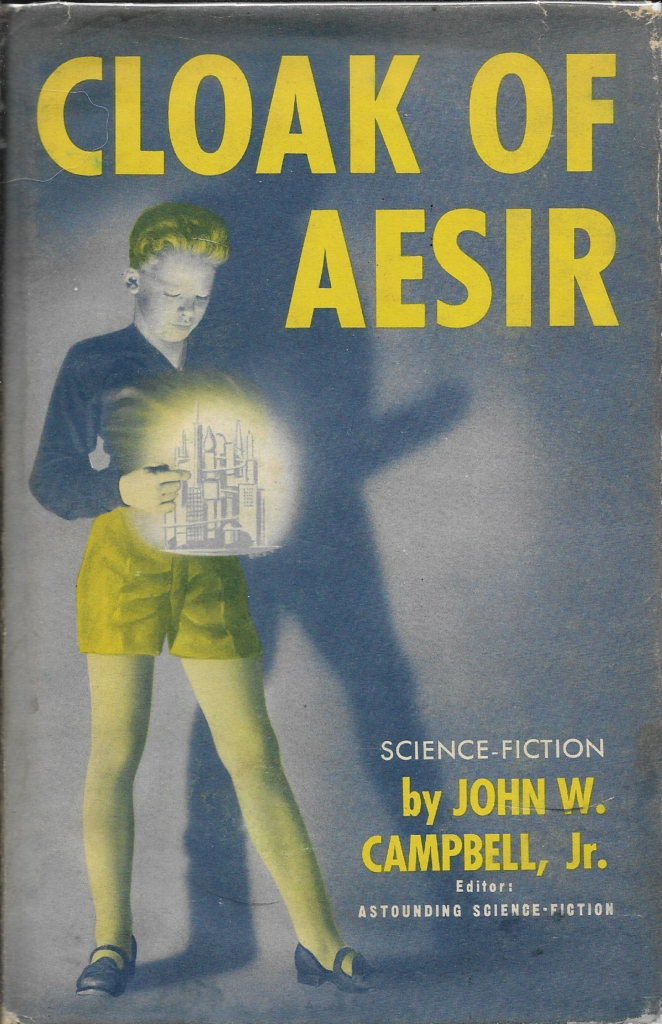
Campbell, John W. Cloak of Aesir. Shasta Publisher, 1952. First edition hardback, a Near Fine- copy with 2″ x 3/4″ light black staining to back rear cover (appears to be moisture staining from the cover dye), with a tiny bit of transfer to the very bottom outer tips of last few pages as well, with a few slightly light spots to boards, slight bumping at head and heel, and slight foxing along gutters, in a Very Good- dust jacket with light staining down spine, spots of light staining across back cover, shallow edge chipping at head, heel and points, signed by Campbell. Stories written under his Don A. Stuart pen name. Currey, page 97. Locke, Spectrum of Fantasy, page 46. Chalker Ownings, page 398. Kemp, The Anthem Series, page 166. Supplements an unsigned copy. Bought for £36.
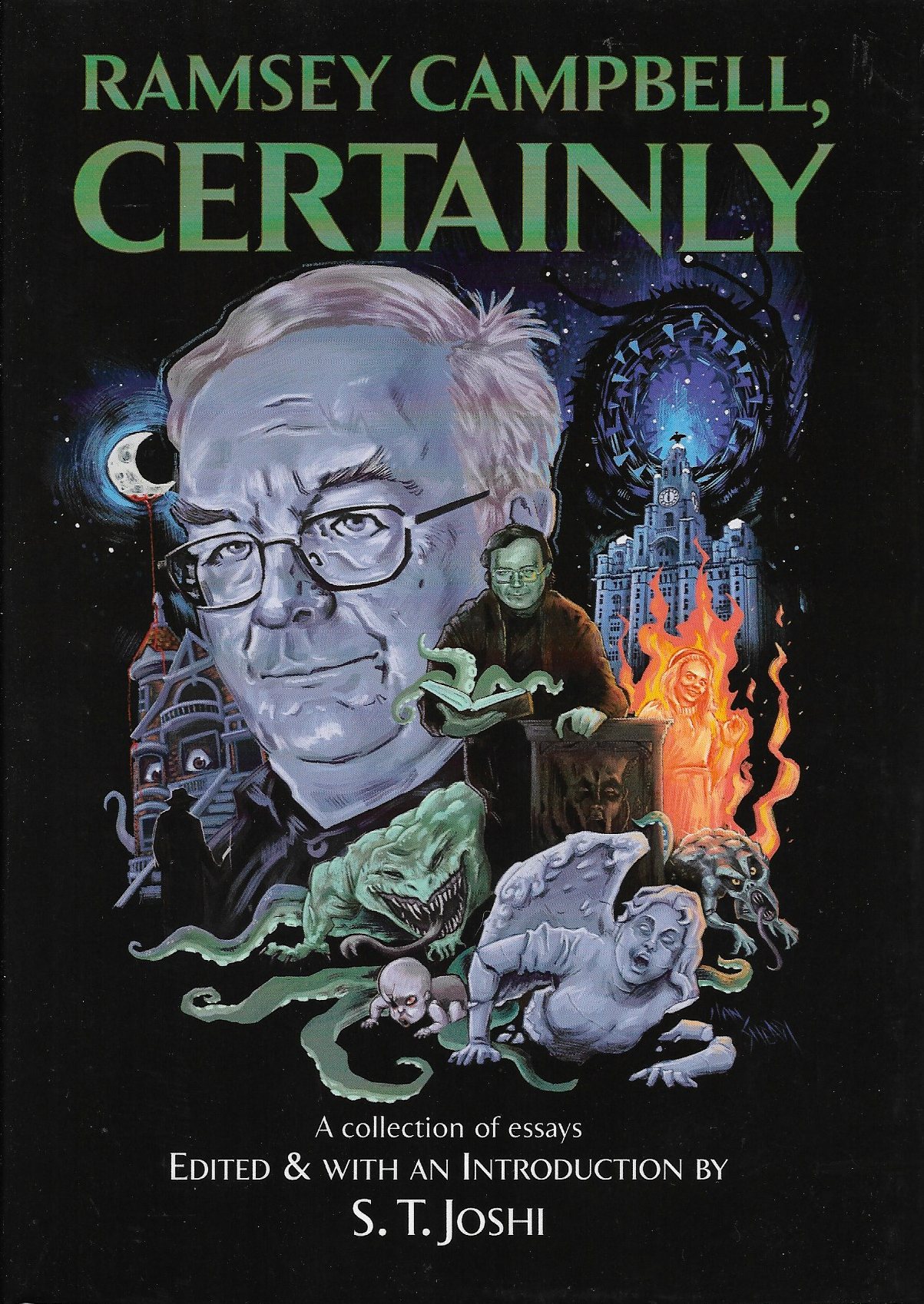
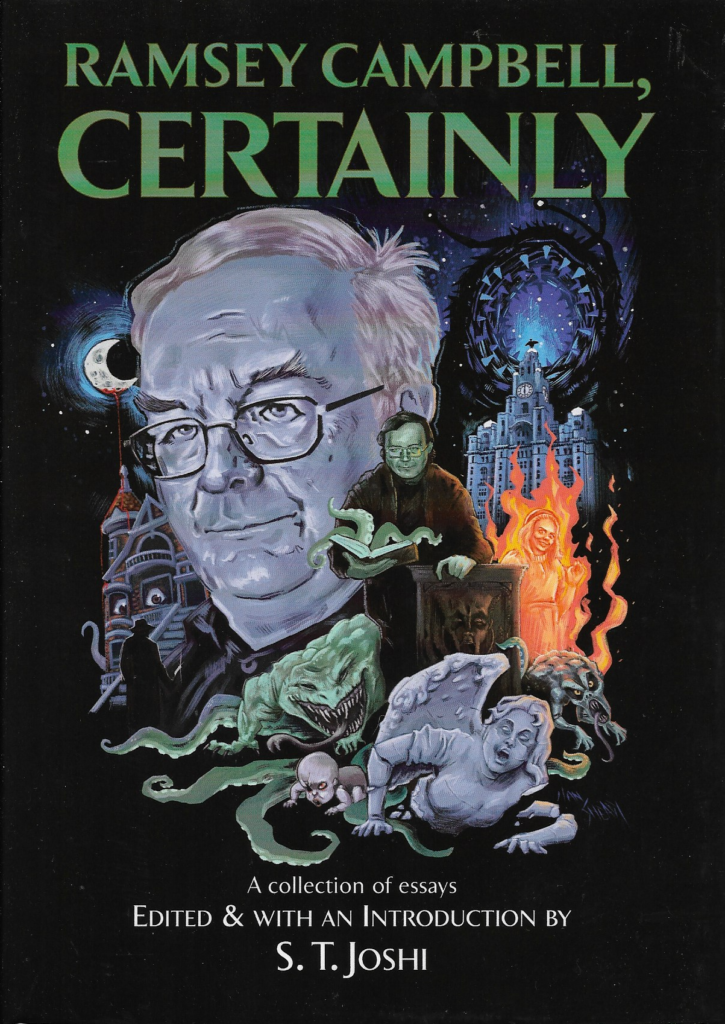
Campbell, Ramsey (S. T. Joshi, editor). Certainly: Essays and Reviews, 2002-2017. PS Publishing, 2021. First edition hardback, #168 of 200 signed, numbered copies in slipcase, a Fine copy in a Fine dust jacket. Companion volume to Probably, which I also have. Bought from the publisher for £20. I will have one copy for sale in the next Lame Excuse Books catalog (probably May or June).
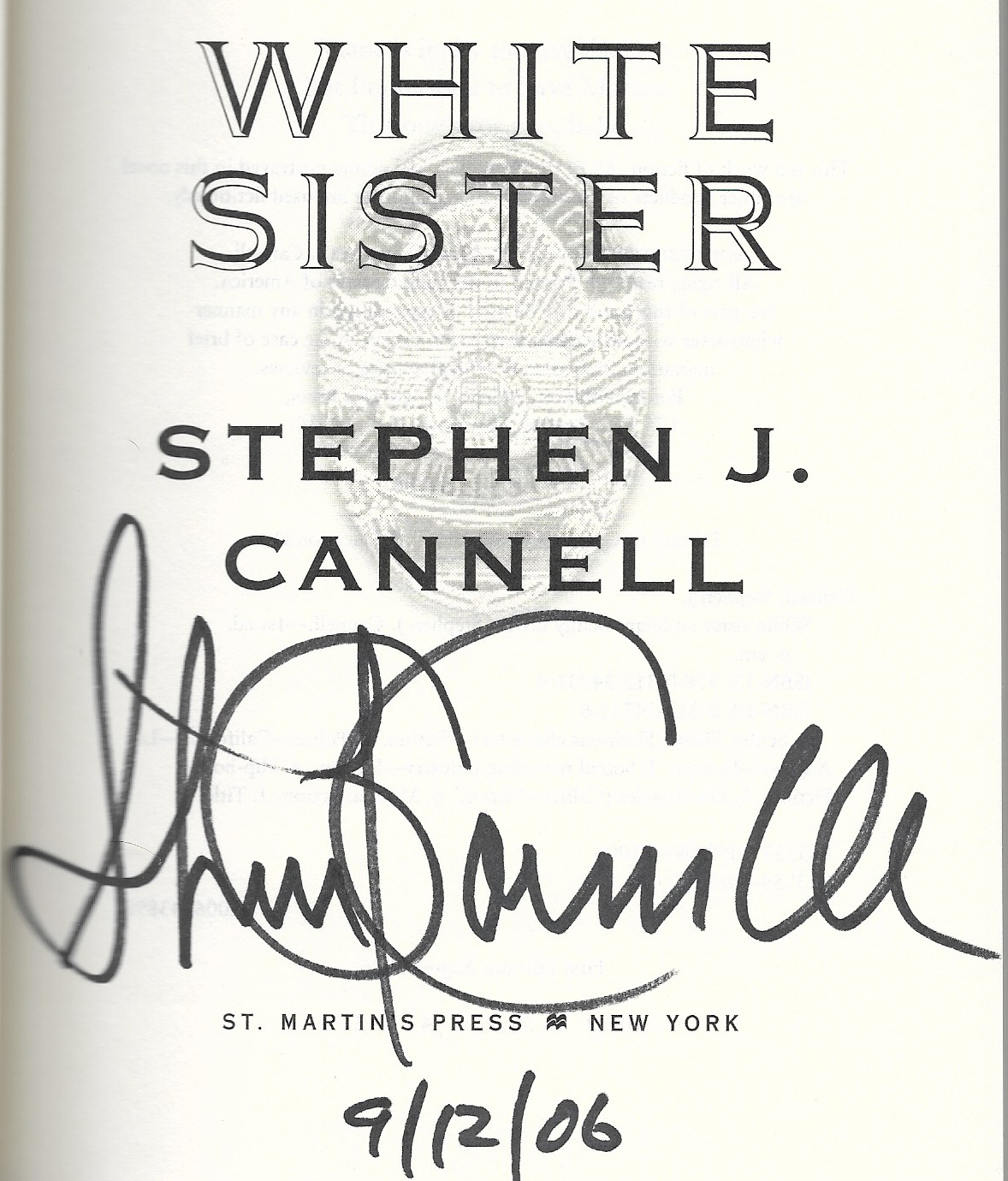
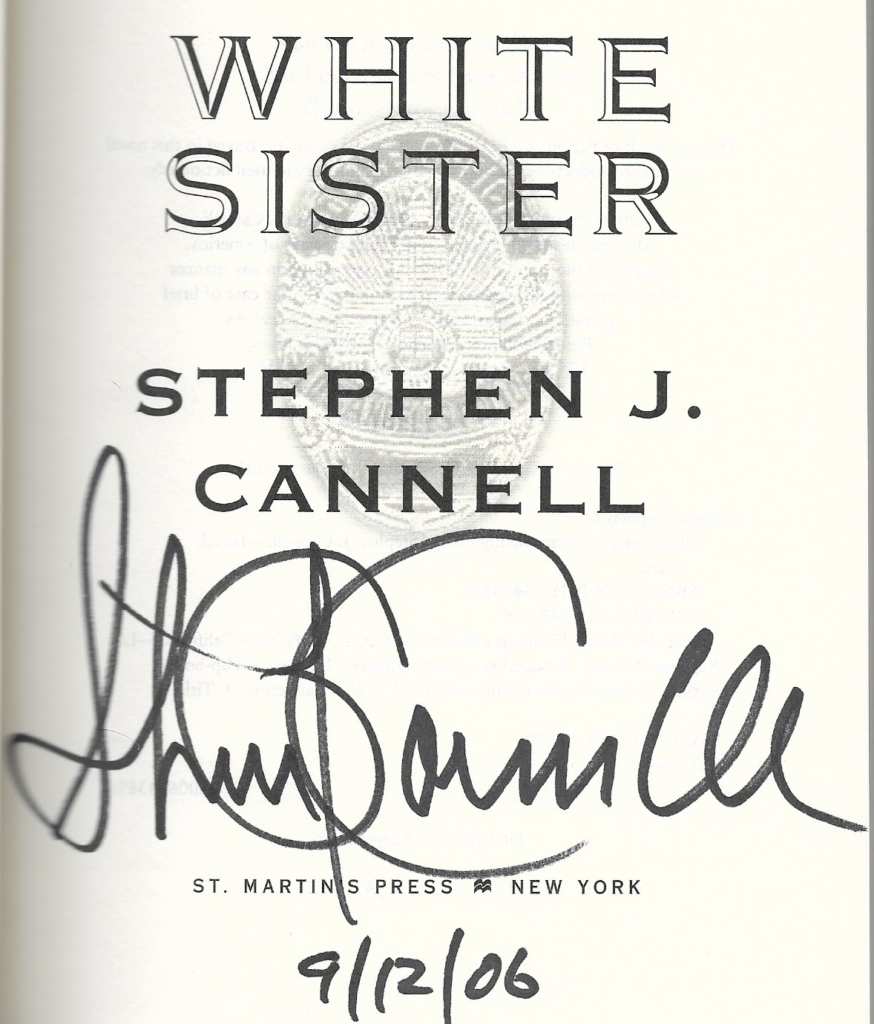
Cannell, Stephen J. White Sister. St. Martin’s Press, 2006. First edition hardback, a Fine copy in a Fine dust jacket, signed and dated (“9/12/06”) by Cannell. Bought off the Internet for $5.

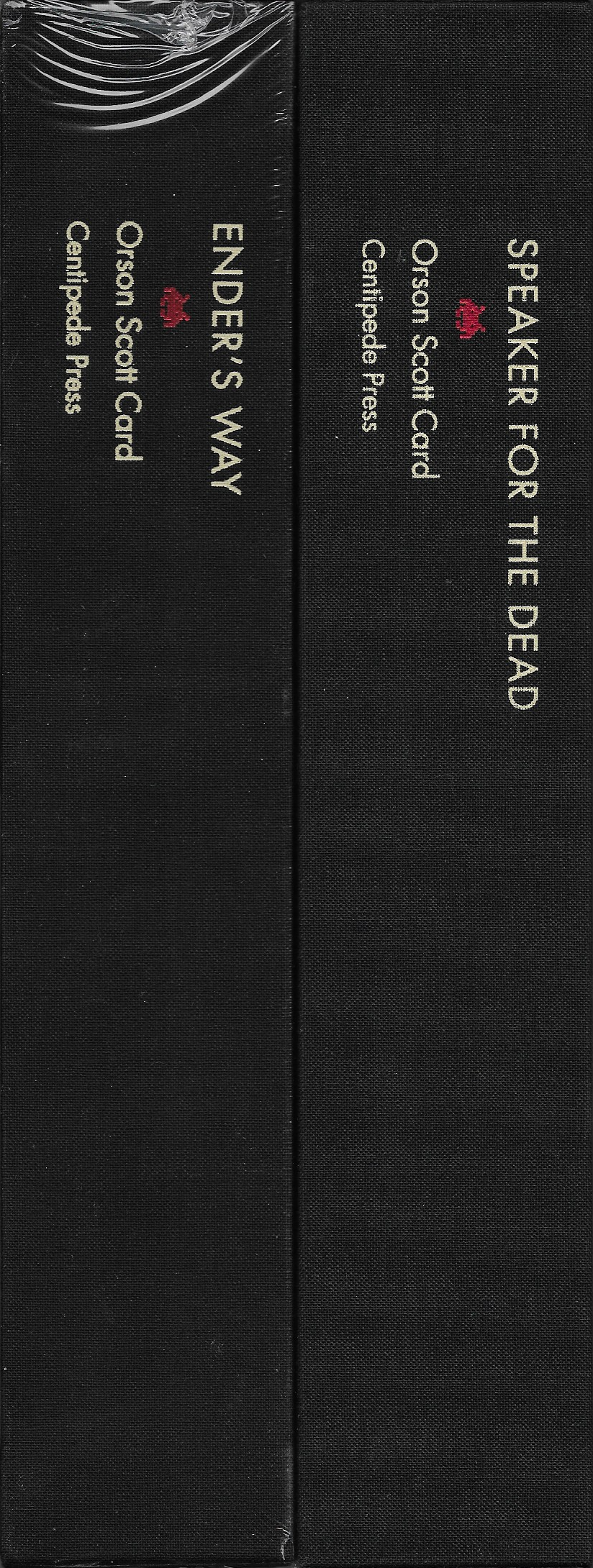
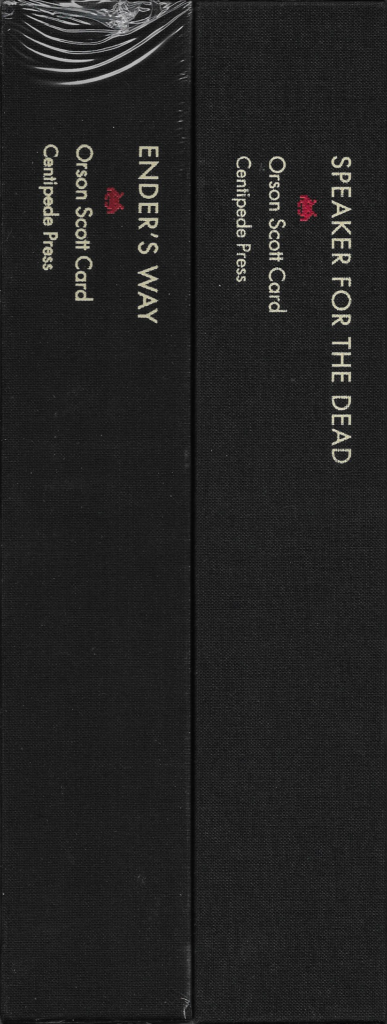
Card, Orson Scott. Ender’s Way. Centipede Press, 2021. First edition, #156 of 300 signed, numbered copies, a Fine copy in a Fine dust jacket and Fine two-piece capped cloth slipcase, still in shrinkwrap. With:
Card, Orson Scott. Speaker for the Dead. Centipede Press, 2020. First edition thus, #156 of 300 signed, numbered copies, a Fine copy in a Fine dust jacket and Fine two-piece capped cloth slipcase. Hugo and Nebula winner for best novel. Both books bought for $400 off eBay, a significant discount off the original cover price for both ($250 for Ender’s Way and $295 for Speaker for the Dead.
Carter, Lin. Dreams from R’lyeh. Arkham House, 1975. First edition hardback, a Fine- copy with bumping at head and heel in a Near Fine- dust jacket with wear at head, heel and points, and dust soiling to rear cover, mostly along fold edge. Poetry collection. In terms of desirability, this one is way, way down the list of Arkhams that took forever to sell out, down there with Gary Myer’s In the House of the Worm and those very later novels from people nobody ever heard of. Honestly, I was sort of surprised to discover that I hadn’t already picked up a cheap copy somewhere along the line. Joshi, Sixty Years of Arkham House 133. Jaffery, Horrors and Unpleasantries 137. Nielsen, Arkham House Books 139.
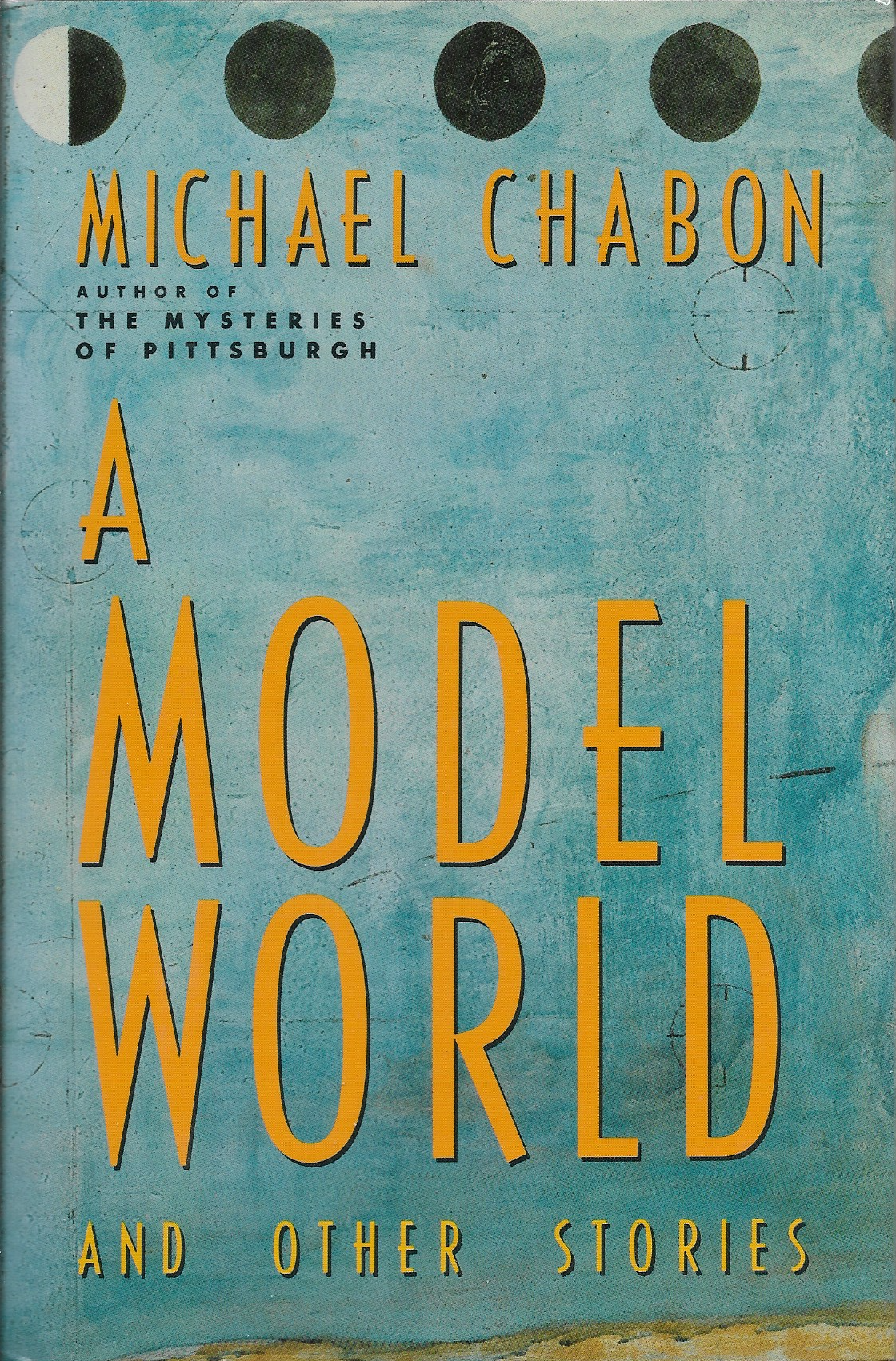
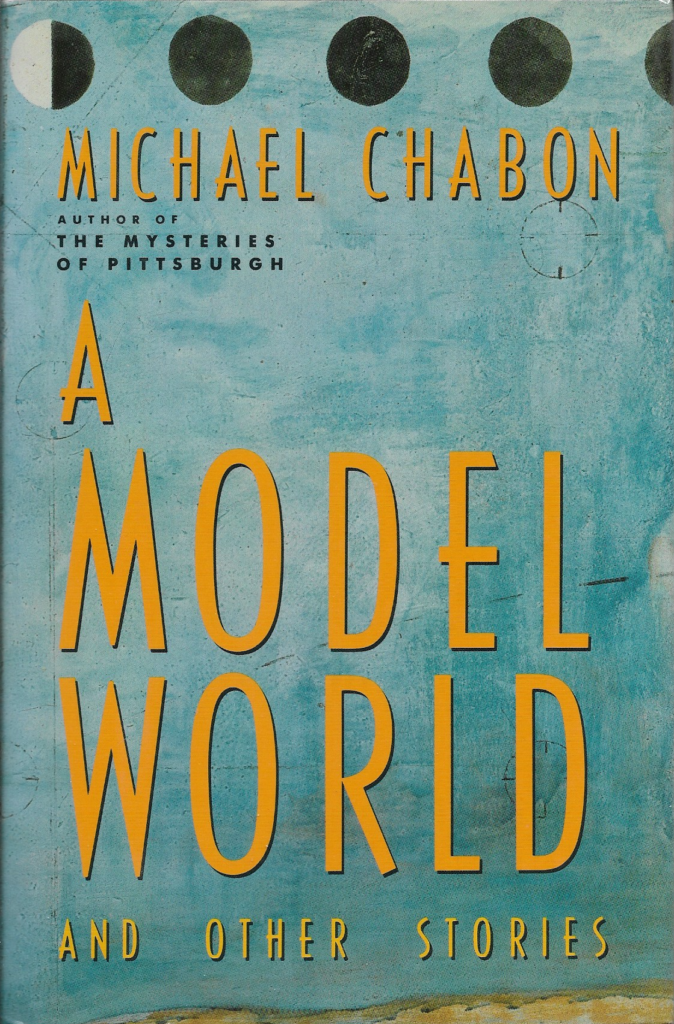
Chabon, Michael. A Model World and Other Stories. Morrow, 1991. First edition hardback, a Fine copy in a Fine dust jacket, signed by Chabon, with review slip laid in. Short story collection, and Chabon’s second book. Bought for $10.
Chabon, Michael, editor. McSweeney’s Enchanted Chamber of Astonishing Stories. Vintage Books, 2004. First edition trade paperback original, a Fine copy. Anthology with stories by Stephen King, Peter Straub, Margaret Atwood, etc. Companion to McSweeny’s/Chabon’s Thrilling Tales volume, which I also have. Bought for $7 from Recycled Books.
Chambers, Robert W. (Lisa Morton, editor). A Little Yellow Book of Carcosa and Kings. Borderlands Press, 2022. First edition hardback, #462 of 500 copies signed by Morton, a Fine copy, sans dust, as issued. Four linked horror tales, all reprinted from The King in Yellow, all set in a then-future United States. Now sold out from the publisher. I have one copy of this still available through Lame Excuse Books.

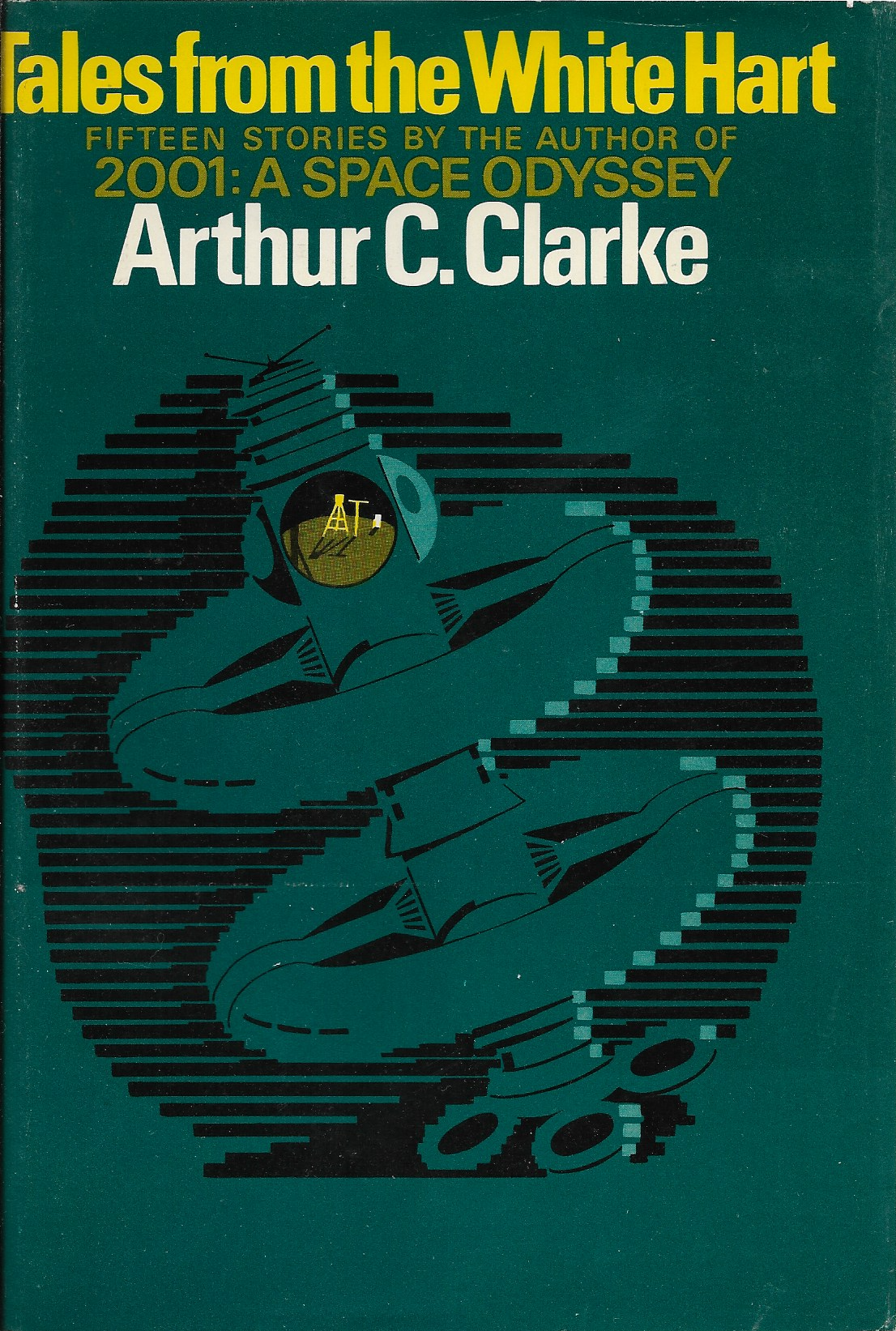
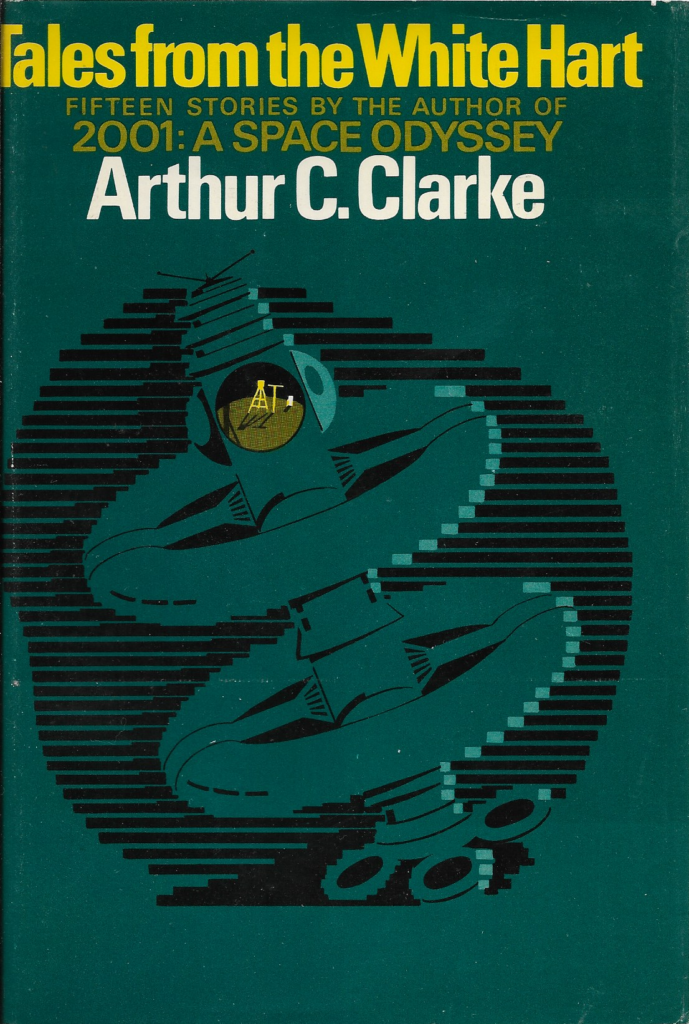
Clarke, Arthur C. Tales From The White Hart. Harcourt, Brace & World, 1970. First hardback edition (no statement of printing on copyright page, as per Currey), a Near Fine+ copy with what appears to be a 1″ slight sticker pull inside front cover and tarnishing to “o” in “from” gold metal colored lettering on spine, in a Fine- dust jacket with just a trace of edgewear at heel. A collection of “club stories,” sort of the English version of the American tall tale. Currey, page 115. Bought for $40.
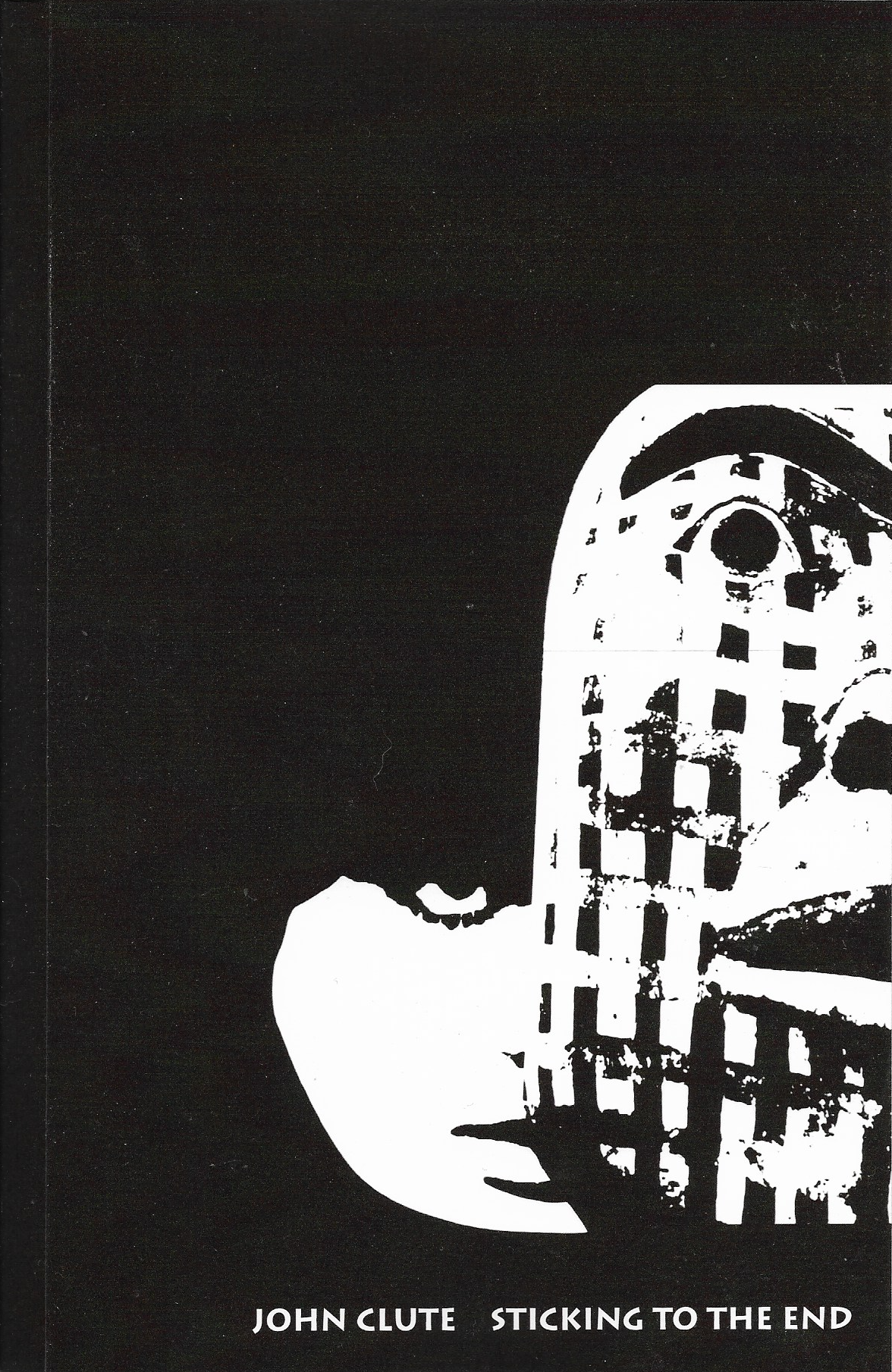
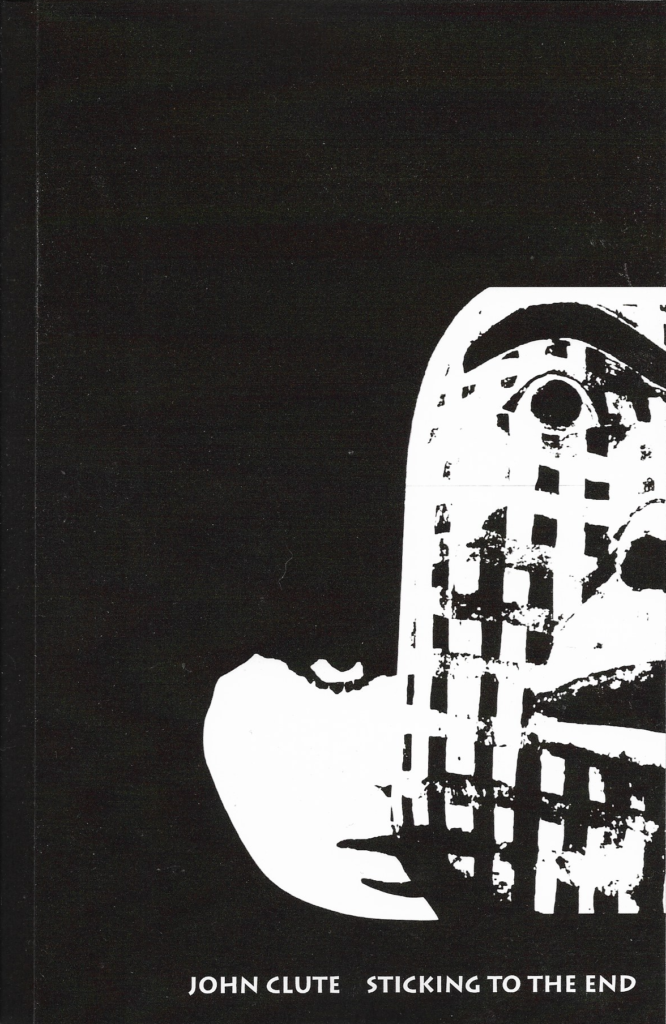
Clute, John. Sticking To the End. Beccon, 2022. First edition trade paperback original, a Fine- copy with a bump at head. Collection of reviews, essays, etc. Supposedly both Beccon and Clute’s last book. Bought from the publisher at the usual discount. I will have copies available in the next Lame Excuse Books catalog.
Coldiron, Katherine. Midnight Movie Monographs: Plan 9 From Outer Space. PS Publishing/Electric Dreamhouse, 2021. First edition hardback, #209 of 300 copies with a signed faux movie ticket laid in (along with a “Watch Bad Movies/Make Good Art” sticker), a Fine copy in decorated boards and a Fine dust jacket. A book-length study of Ed Wood’s infamous magnum opus of the same name, widely hailed (or derided) as the worst movie ever made, as featured in the Tim Burton film Ed Wood. Bought from the publisher at the usual discount. I have copies of this available though Lame Excuse Books.
Dann, Jack. Masters of Science Fiction: Jack Dann. Centipede Press, 2022. First edition hardback, #251 of 500 signed, numbered copies, a Fine copy in a Fine dust jacket. A very attractive volume, as are the other books in this series.

Davidson, Avram. Beer! Beer! Beer! Or All The Seas With Oysters Publishing (OATSWOP), 2021. First edition print-on-demand trade paperback (the only print edition offered), a Fine copy. An original prohibition tale unearthed by the Davidson estate and offered through Amazon, which is the only place it’s available.
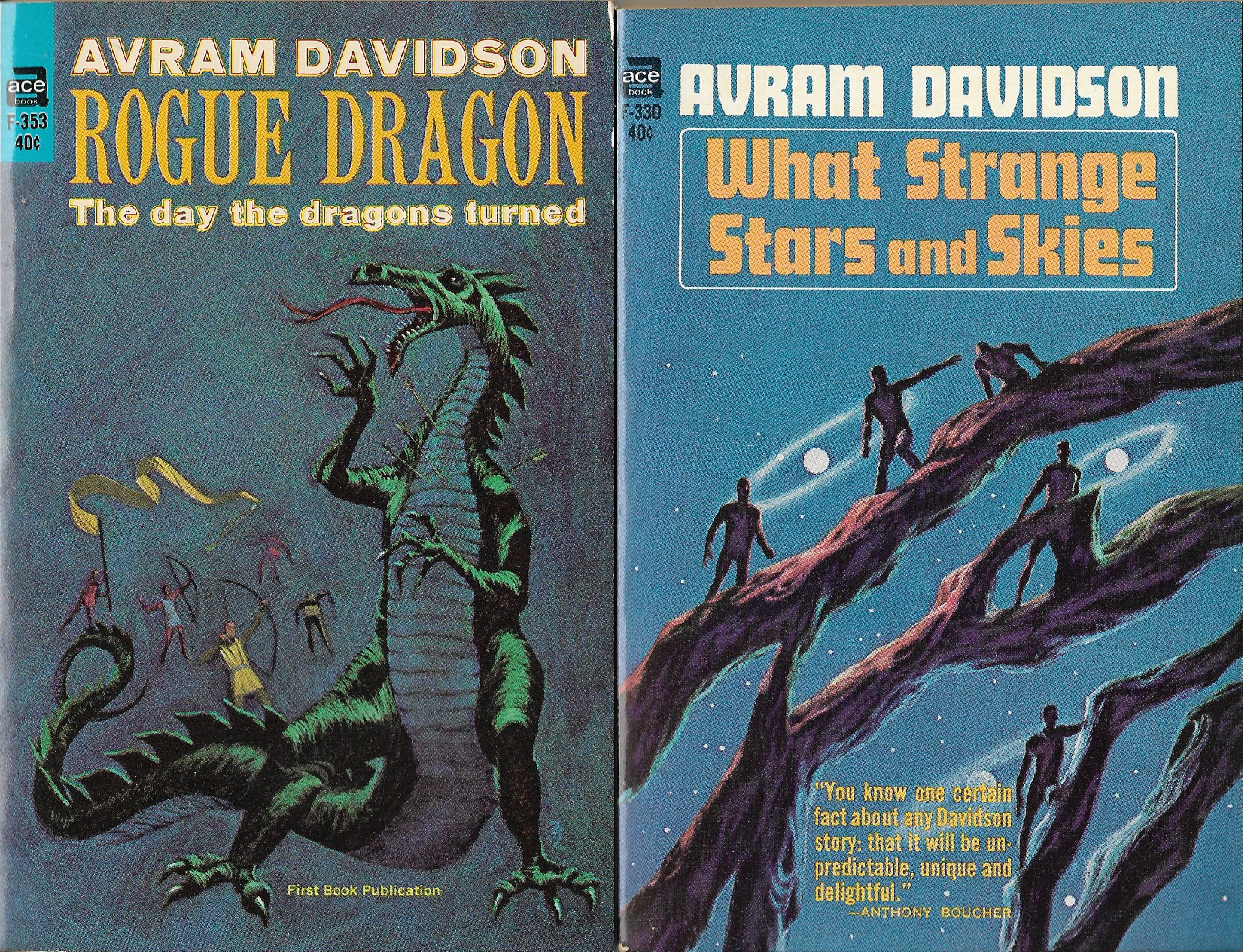
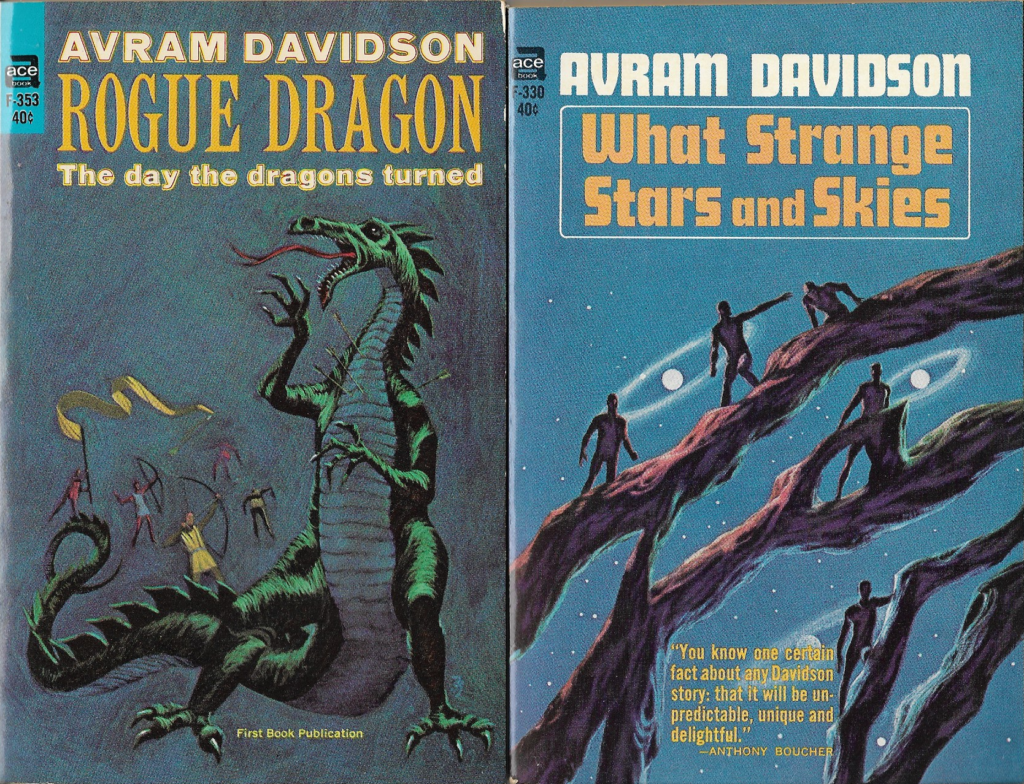
Davidson, Avram. Rogue Dragon. Ace, 1965. First edition paperback original (no statement of printing and 40¢ cover price, as per Currey), a Fine- copy with just a trace of edgewear at top outer point, but tight and square with bright white portions of cover. Currey, page 131. Replaces a slightly less attractive copy. Bought from Half Price Books for $5.
Davidson, Avram. What Strange Stars and Skies. Ace, 1965. First edition paperback original (no statement of printing and 40¢ cover price, as per Currey), a Fine- copy with a tiny crease across the Ace logo at head, otherwise tight and square. Currey, page 131. Replaces a slightly less attractive copy. Bought for $3.
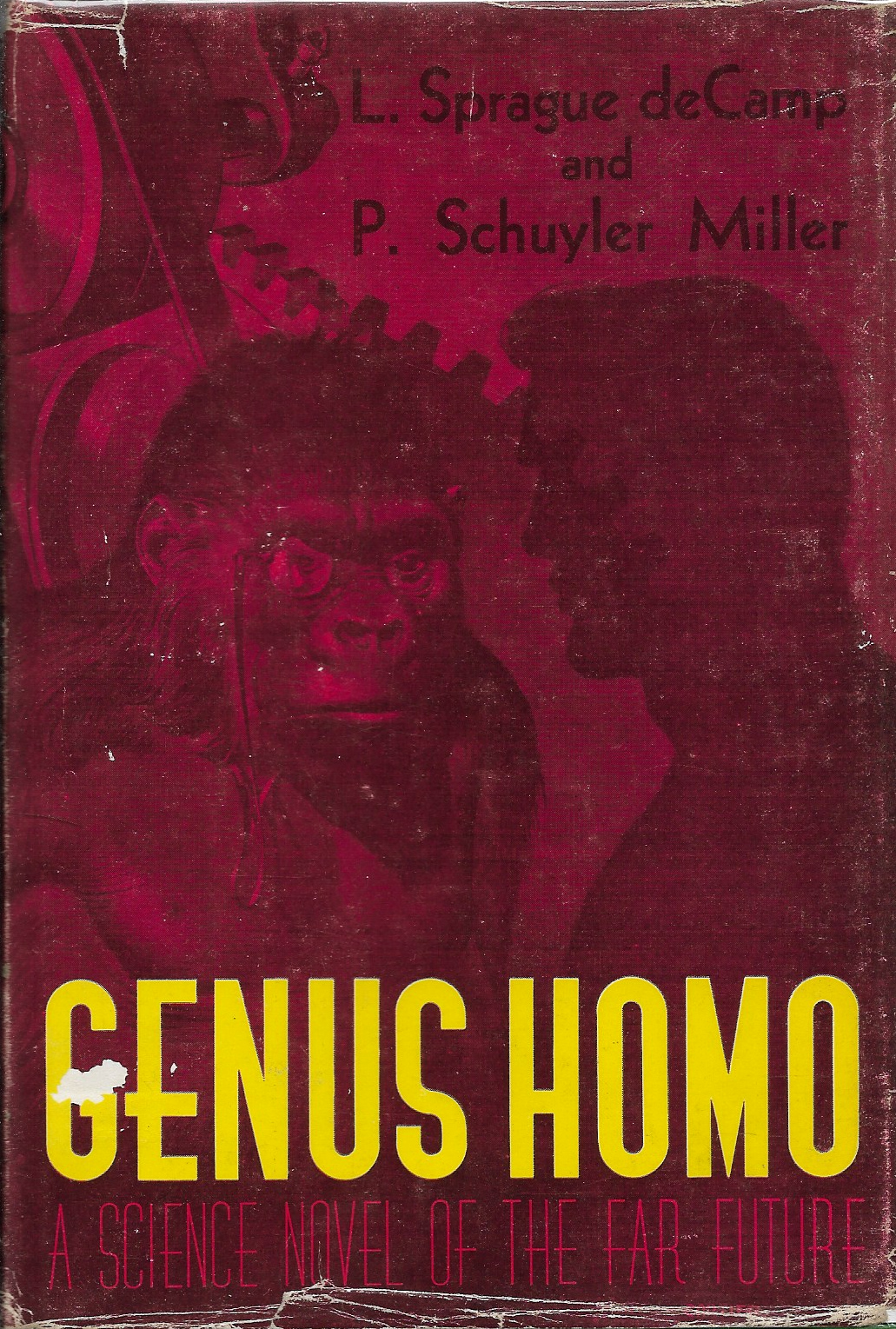
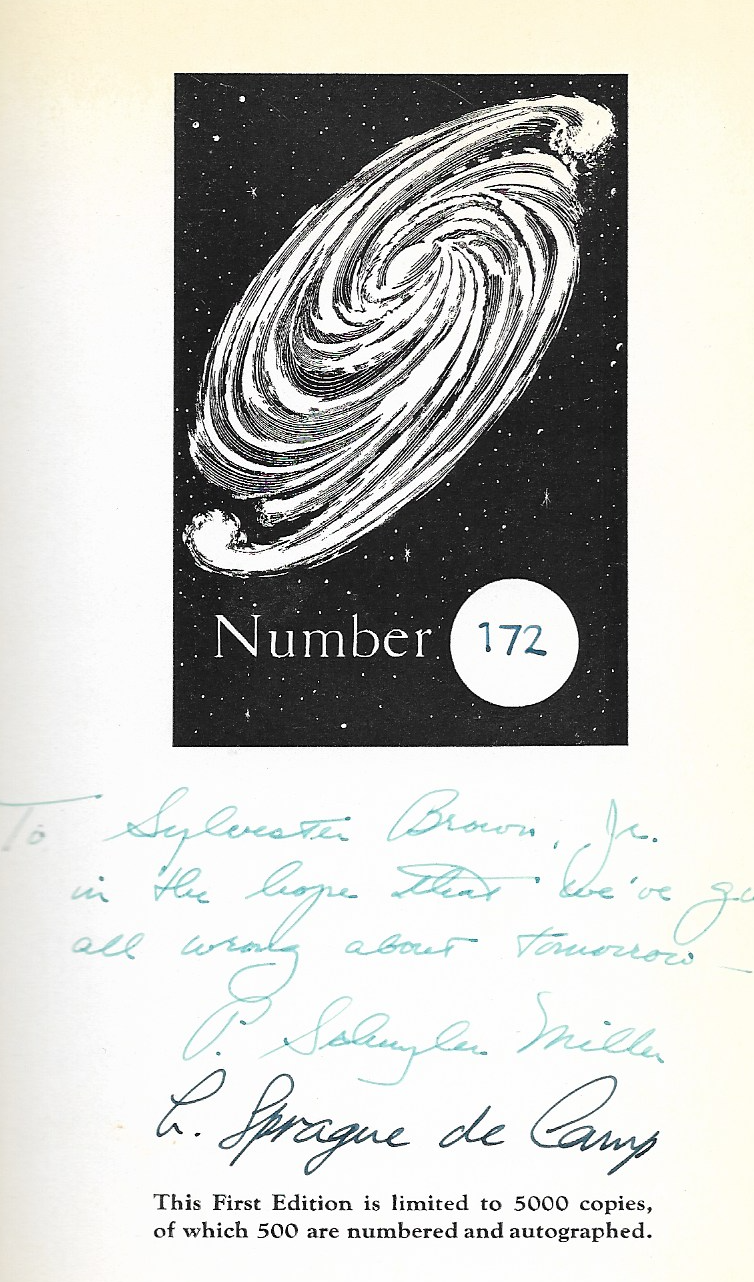
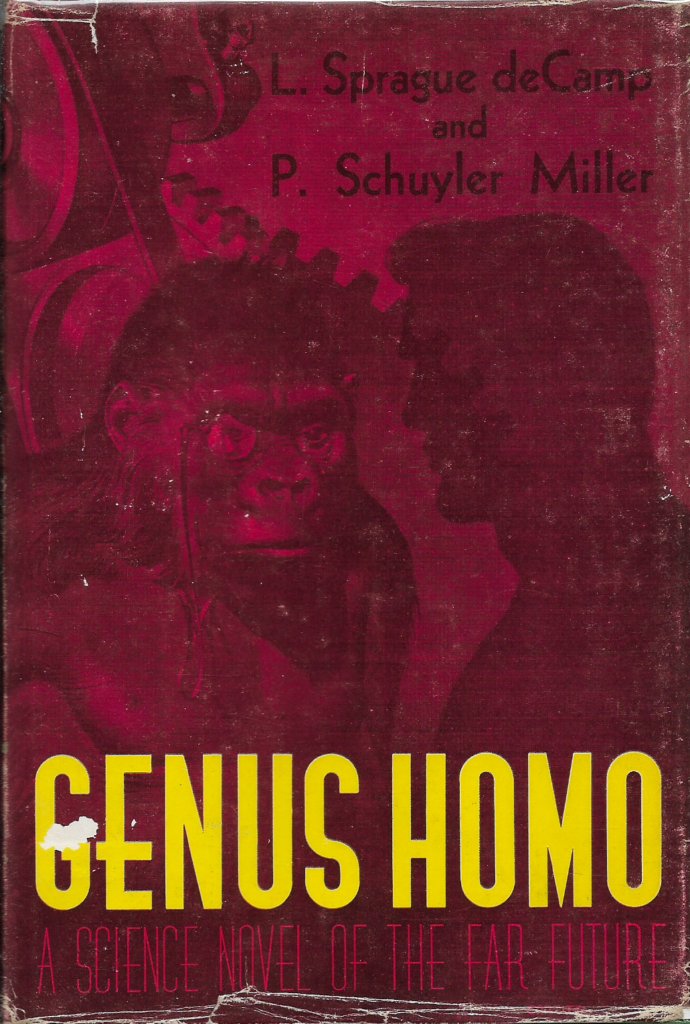
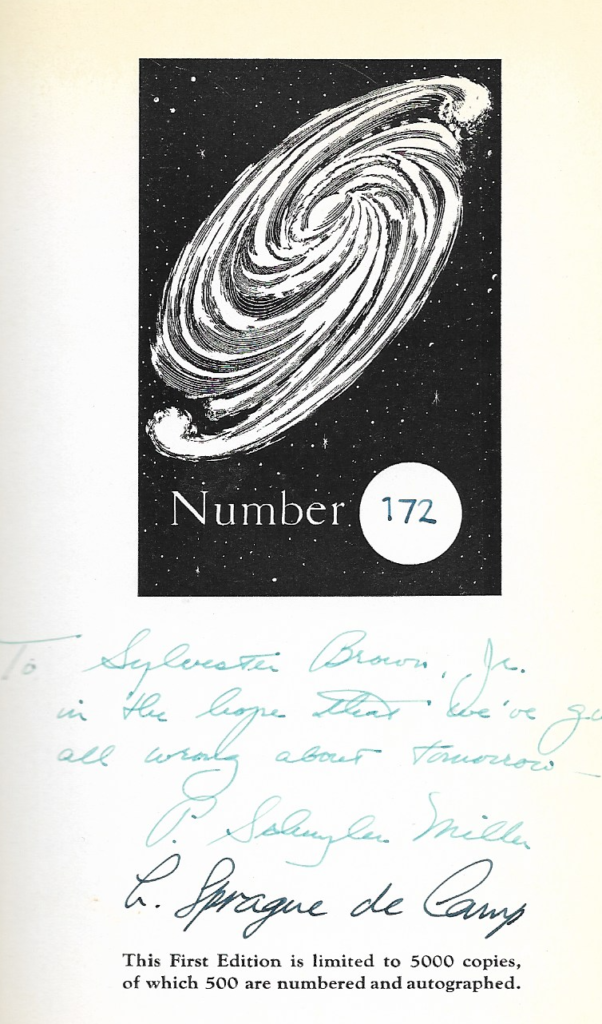
de Camp, L. Sprague and P. Schuyler Miller. Genus Homo. Fantasy Press, 1950. First edition hardback, first state (Currey A) binding of green cloth lettered in gold, #172 of 500 numbered copies signed by both authors, further inscribed by Miller “To Sylvester Brown, Jr./in the hope that we’ve guessed/all wrong about tomorrow,” a Near Fine- copy with non-authorial judgement of the book written in a neat hand on the inside front cover (hidden by dj flap), gold spine lettering slightly rubbed and bumping at heel, and trace of foxing to inside covers and end-papers, in a Very Good+ dust jacket with closed tear creases to the bottom 1/4″ to 1/8″ of the front bottom edge, smaller closed tear and creasing at heed, quarter-sized abrasion to front cover affecting G in “Genus,” edgewear at heel, slight dust soiling to white back cover, and a few other touches of rubbing (slightly exaggerated in scan). Sleeper awakes sort of novel about a busload of humans awakening in a far future world ruled by evolved primates (thirteen years before Pierre Boulle’s La Planète des singes). I had several de Camp signatures already, but not one for Miller. Currey, page 133. Chalker Owings, page 160. Kemp, The Anthem Series, page 32. Bought for £45.
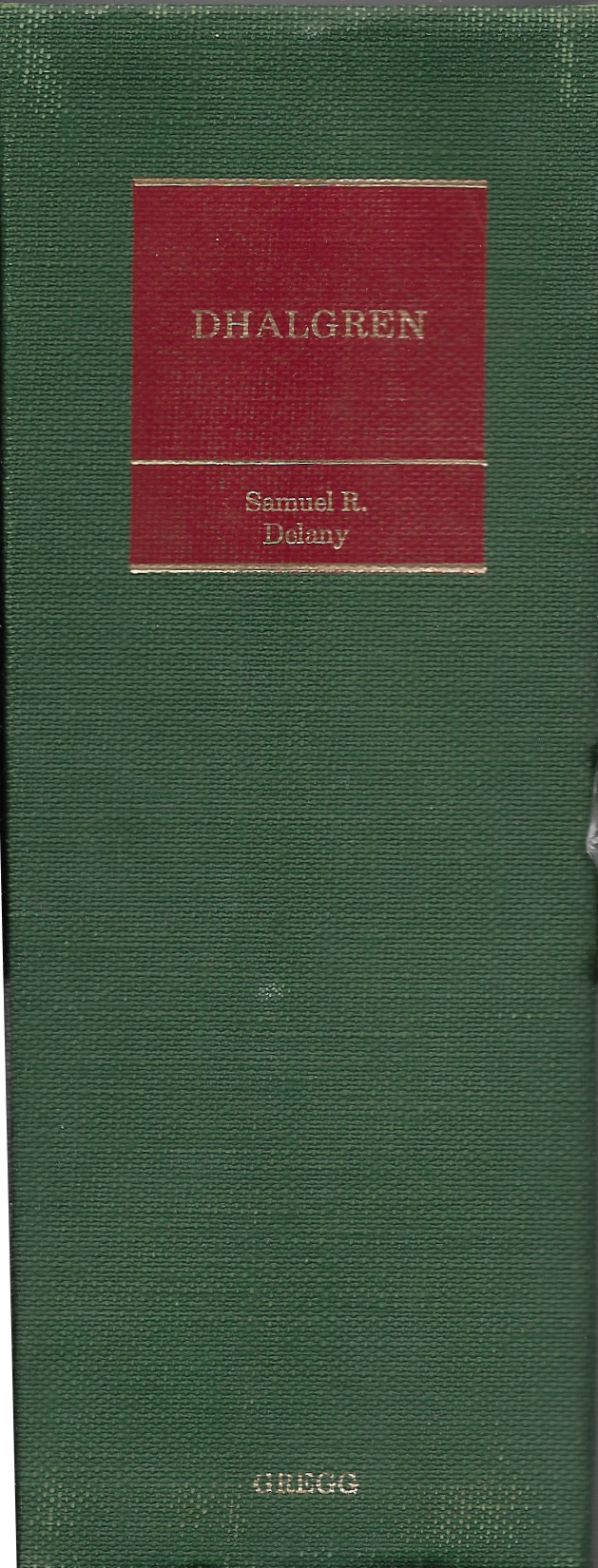
Delany, Samuel R. Dhalgren. Gregg Press, 1977. First hardback edition (and first edition thus, containing textual differences), a Near Fine- copy with spine just starting to crease, a few of spots of light rubbing to the spine, light dust spotting to top and side page block edges, six small, neat red page numbers from the introduction written inside the front cover, and a few small annotations in the same red in the introduction itself, sans dust jacket, as issued. It’s hard to overstate just how massively wide this book is, over 1,000 pages with the lengthy introduction, easily the widest book Gregg Press ever published, and one of the hardest Gregg Press titles to find period (reportedly only 350 copies were published), probably only behind Dick’s Dr. Bloodmoney and possibly the two Locus volumes. L. W. Currey was already asking $300 for a copy in 1989, and they don’t tend to come on the market much. Though far from my own favorite of Delany’s work, it is probably the very hardest of his books to find. K. Leslie Steiner, “Some remarks on Reading Dhalgren,” pages 57-92 in Delany’s The Straits of Messina. Weedman, Samuel R. Delany, pages 61-69. McEvoy, Samuel R. Delany, pages 97-120. Barron, Anatomy of Wonder 4, 4-127. Magill, Survey of Science Fiction Literature, pages 533-538. (“Dhalgren marks the nadir of pessimism in science fiction’s tradition of social criticism.”) Currey, page 139. Bought for $300 from someone selling off their book collection.
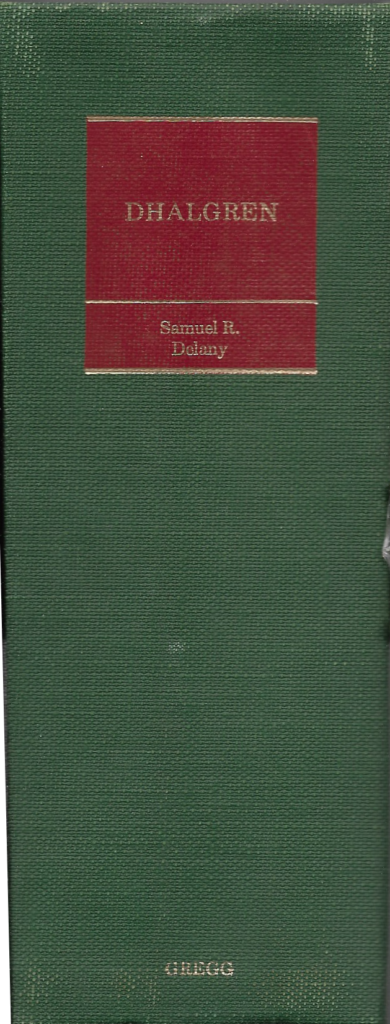
(Note: Ignore the blotches on the middle right part of the image, which is just the edge of another book I used to prop Dhalgren up on the scanner so I could scan the spine. And ignore the left side taper at the bottom.)
Delany, Samuel R. The Fall of the Towers. Gregg Press, 1977. First hardback edition, a Fine- copy with a tiny bit of bumping to top outer edge, sans dust jacket, as issued. Omnibus volume that includes Captives of the Flame (AKA Out of the Dead City), The Towers of Toron, and City of a Thousand Suns. McEvoy, Samuel R. Delany, pages 28-44. K. Leslie Steiner, “Ruins/Foundations, or The Fall of the Towers Twenty Years After,” pages 99-154 in Delany’s The Straits of Messina. Currey, page 140. Bought from a UK dealer for £67.50.
Derleth, August, and Mark Schorer. Colonel Markesan and Less Pleasant People. Arkham House, 1966. First edition hardback, a Fine copy in a Fine- dust jacket with a few touches of light dust staining to rear, the largest about dime-sized near the top where the back jacket copy begins. Story collection. Replaces a slightly less attractive copy. Joshi, Sixty Years of Arkham House 87. Derleth, Thirty Years of Arkham House 87. Nielsen, Arkham House Books 93. Bleiler, Guide to Supernatural Fiction 530.

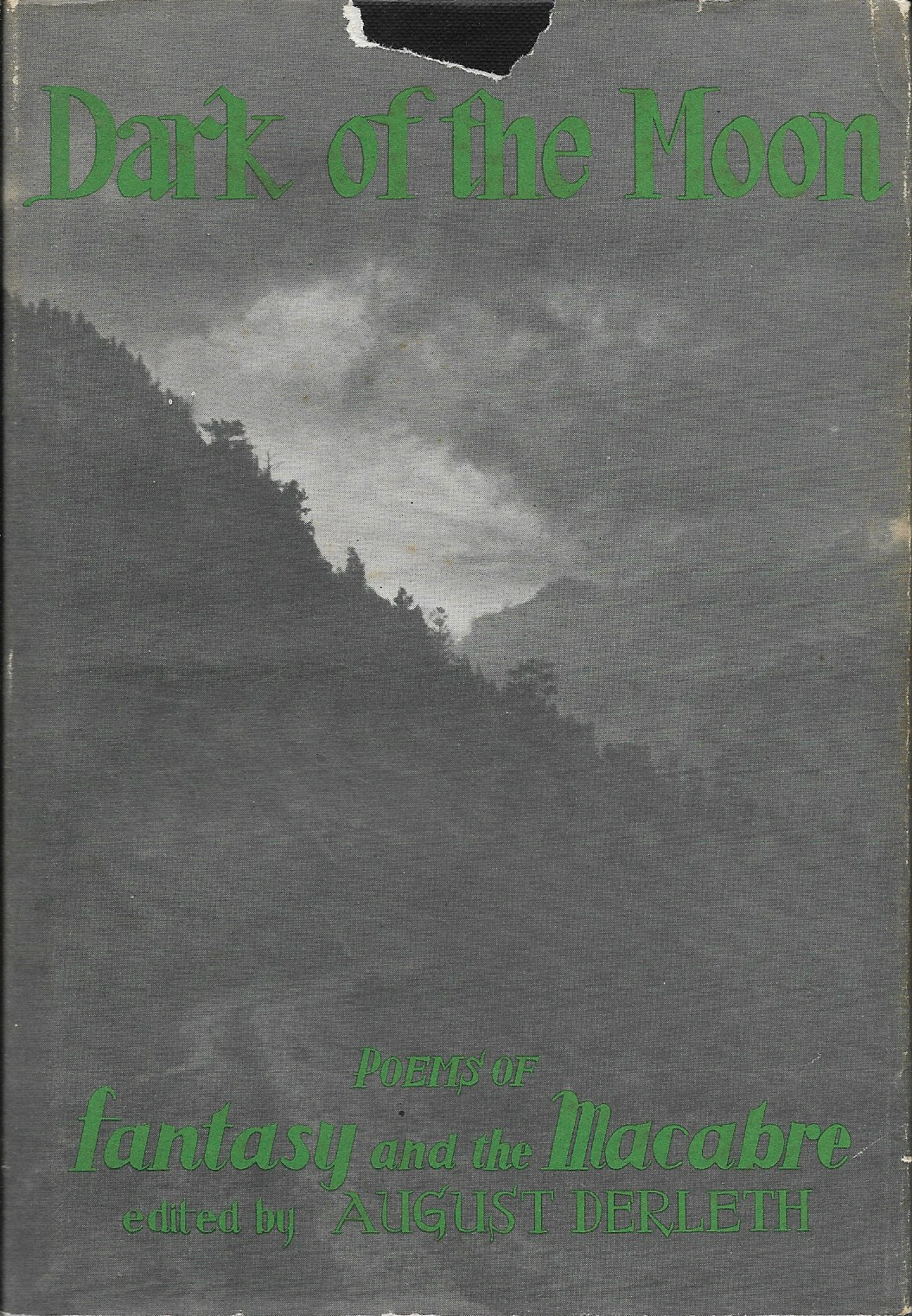
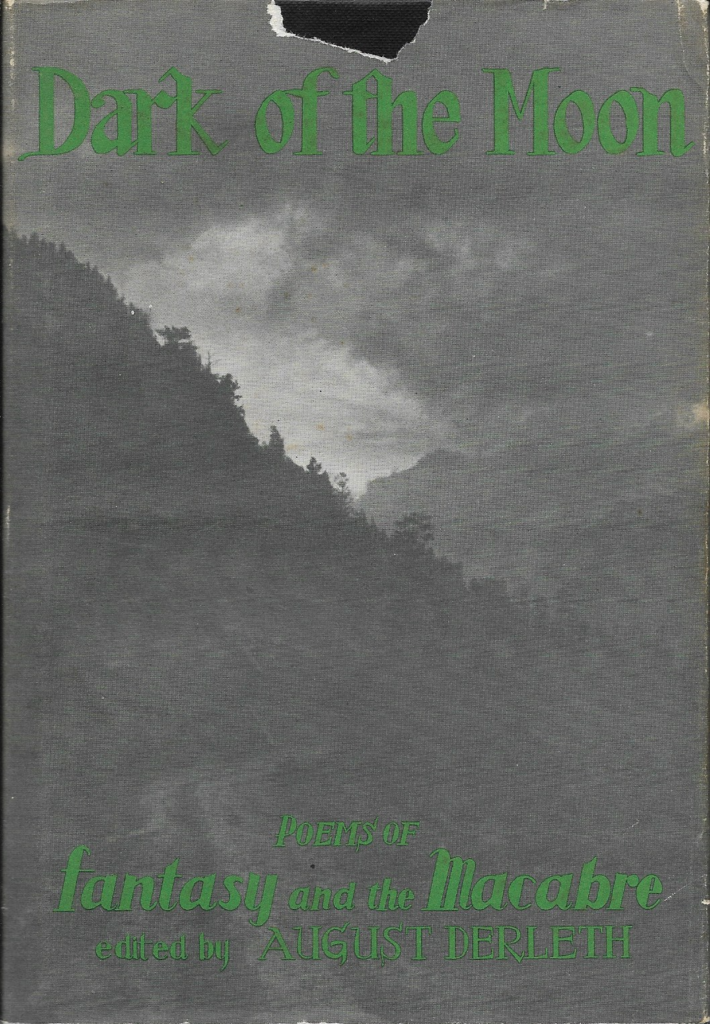
Derleth, August, editor. Dark of the Moon: Poems of Fantasy and the Macabre. Arkham House, 1947. First edition hardback, a Near Fine copy with bumping to top corners, slight bumping at head and heel, and a trace of foxing to interior gutters, in a Very Good- first state (green) dust jacket with a 1″ x 1/2″ chip to top front cover, notable bump and creasing to top rear corner trace of dust soiling to perimeter of rear dust jacket slight loss at bottom rear corner, a light, thin 1″ abrasion scratch to spine just above “Arkham House,” a bit of general wear, and slight blind-side foxing; a nice copy in a flawed dust jacket. “A pioneering and well-nigh definitive anthology of weird poetry from the entire range of English and American literature…” – Joshi, Sixty Years of Arkham House 23. Derleth, Thirty Years of Arkham House 23. Jaffery, Horrors and Unpleasantries 26. Nielsen, Arkham House Books 24 (and 34th on his list of most valuable Arkham House books). Derleth, 100 Books By August Derleth 46. Bleiler, Checklist of Fantastic Fiction (1948), page 98. Bleiler, Checklist of Fantastic Fiction (1978), page 60.
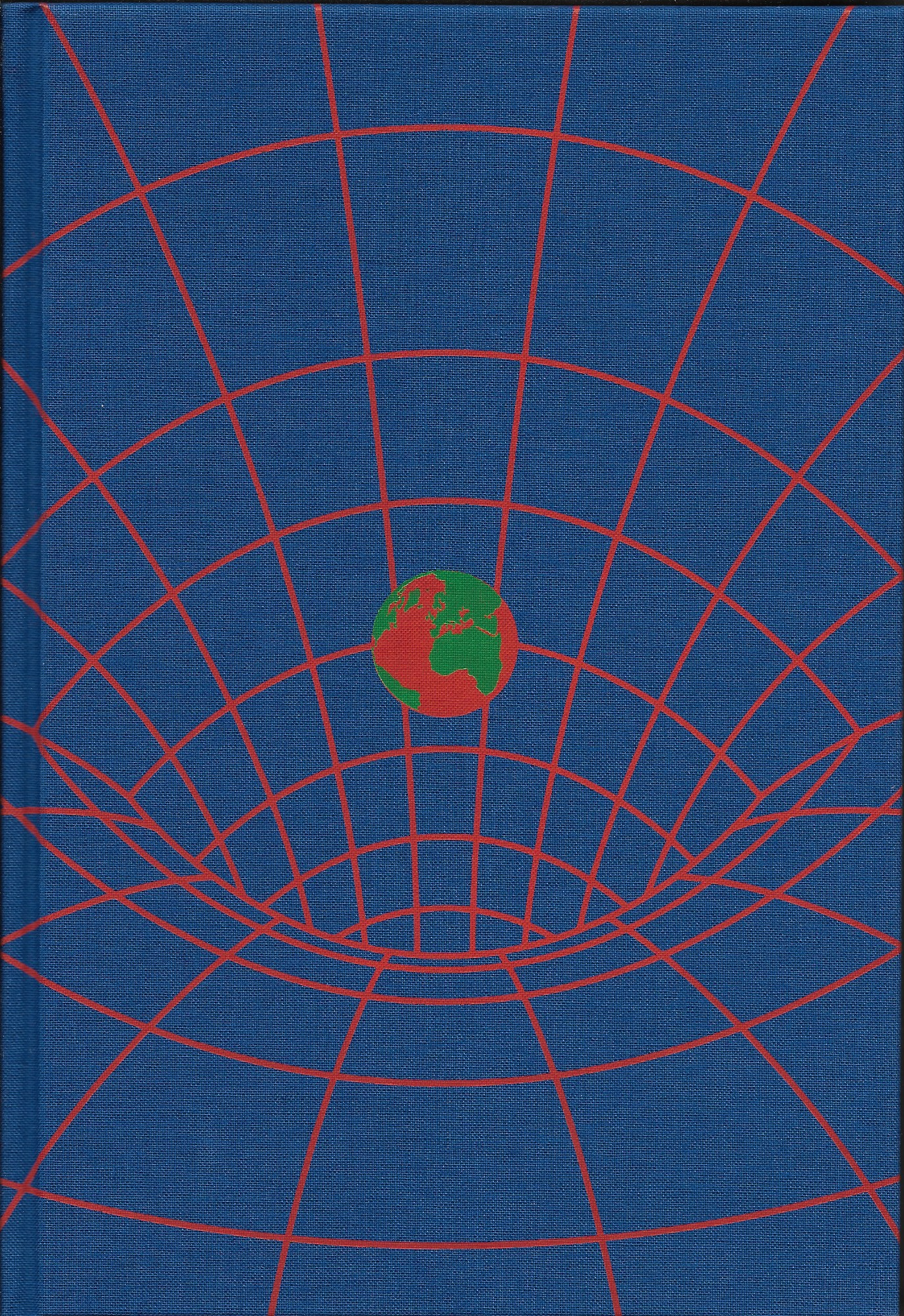
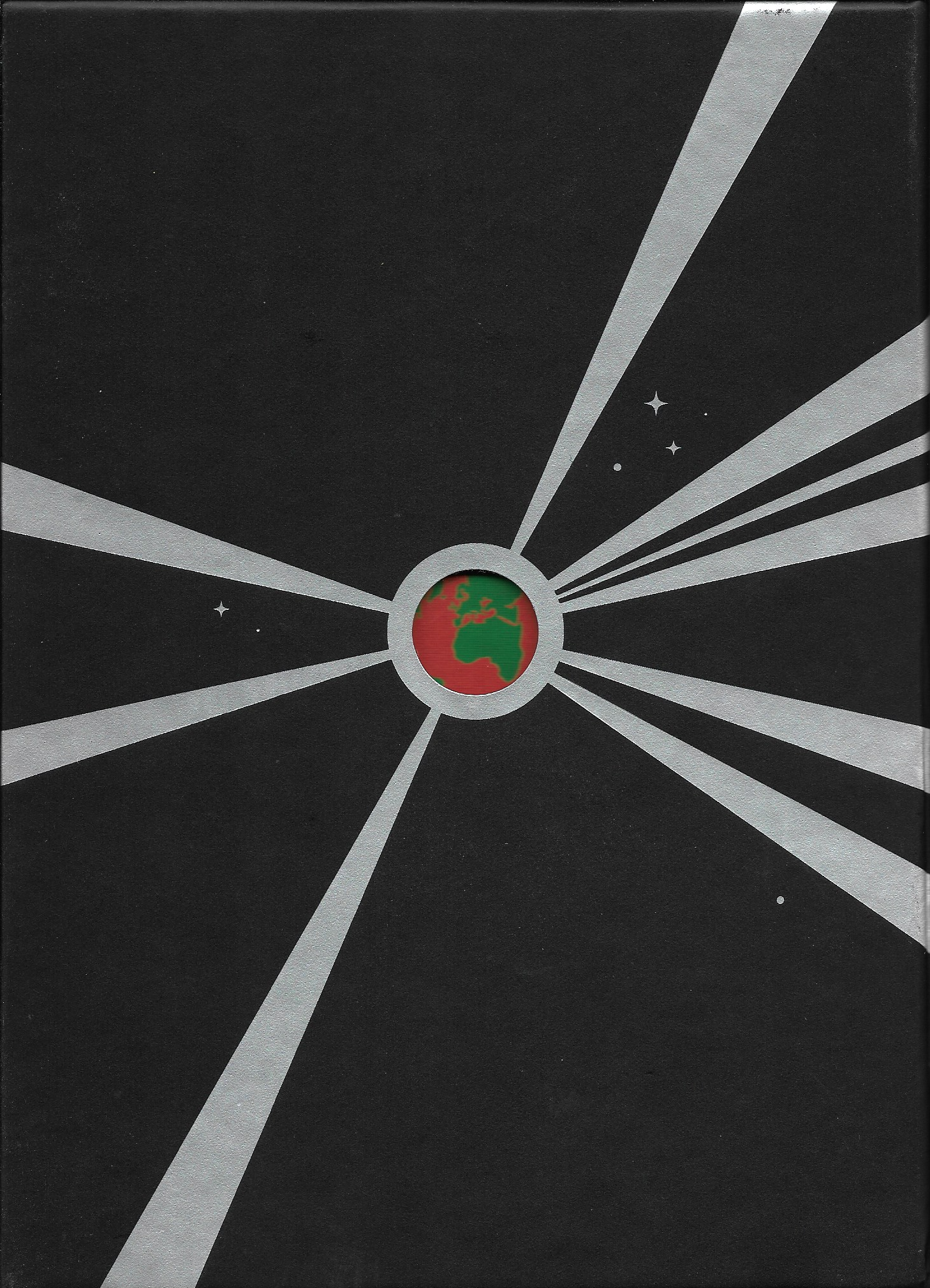
Dick, Philip K. Selected Short Stories. The Folio Society, 2022. First edition hardback (“First Printing 2022”), a Fine copy in decorated boards and a decorated, die-cut slipcase that even sports a full-color illustration printed inside the slipcase, sans dust jacket, as issued. The pageblock edges even include a dye-pattern image of two eyes (appropriate to Dick’s frequent theme of paranoia). Plus a Jonathan Lethem introduction and a full-color illustration for each story from 24 different artists (including Dave McKean). It’s a very attractive package.
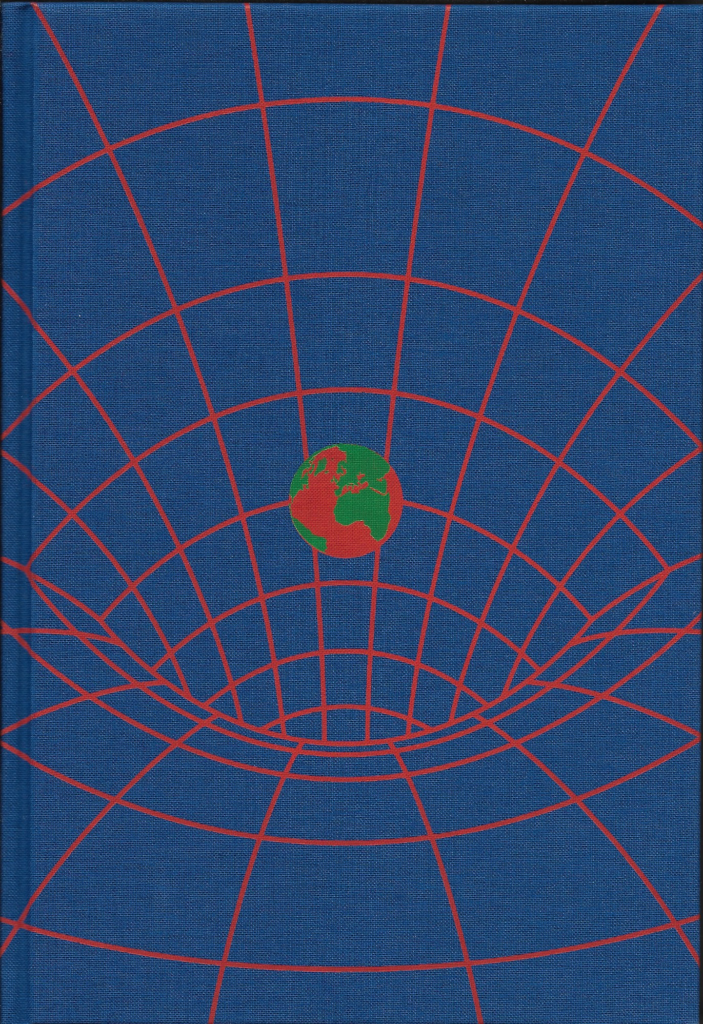
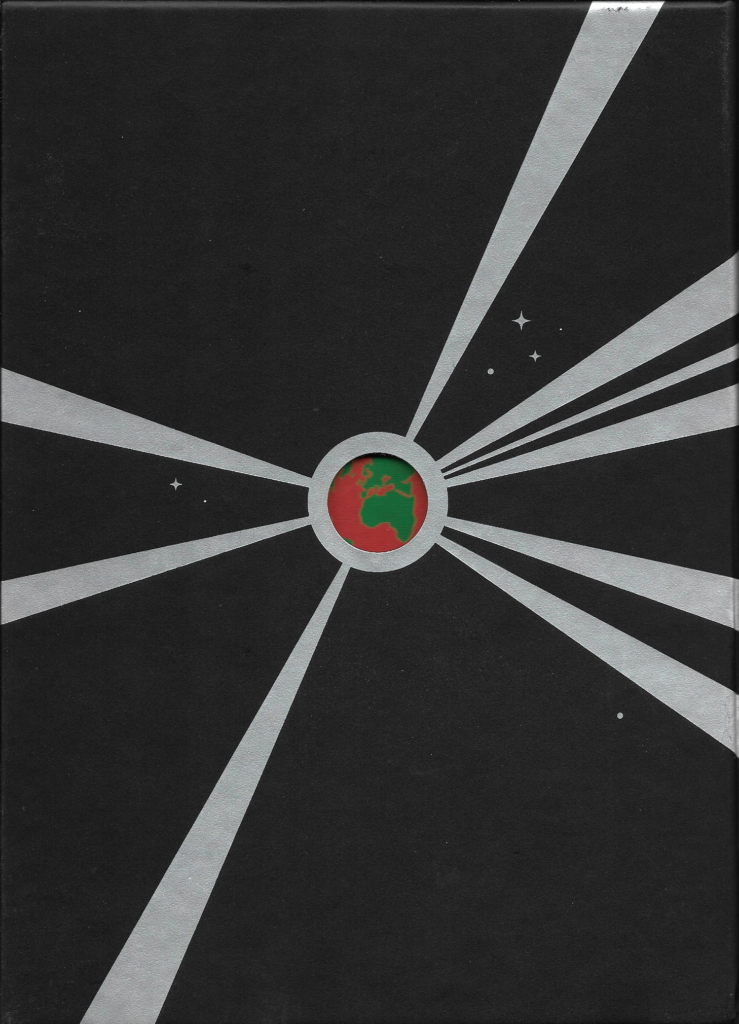

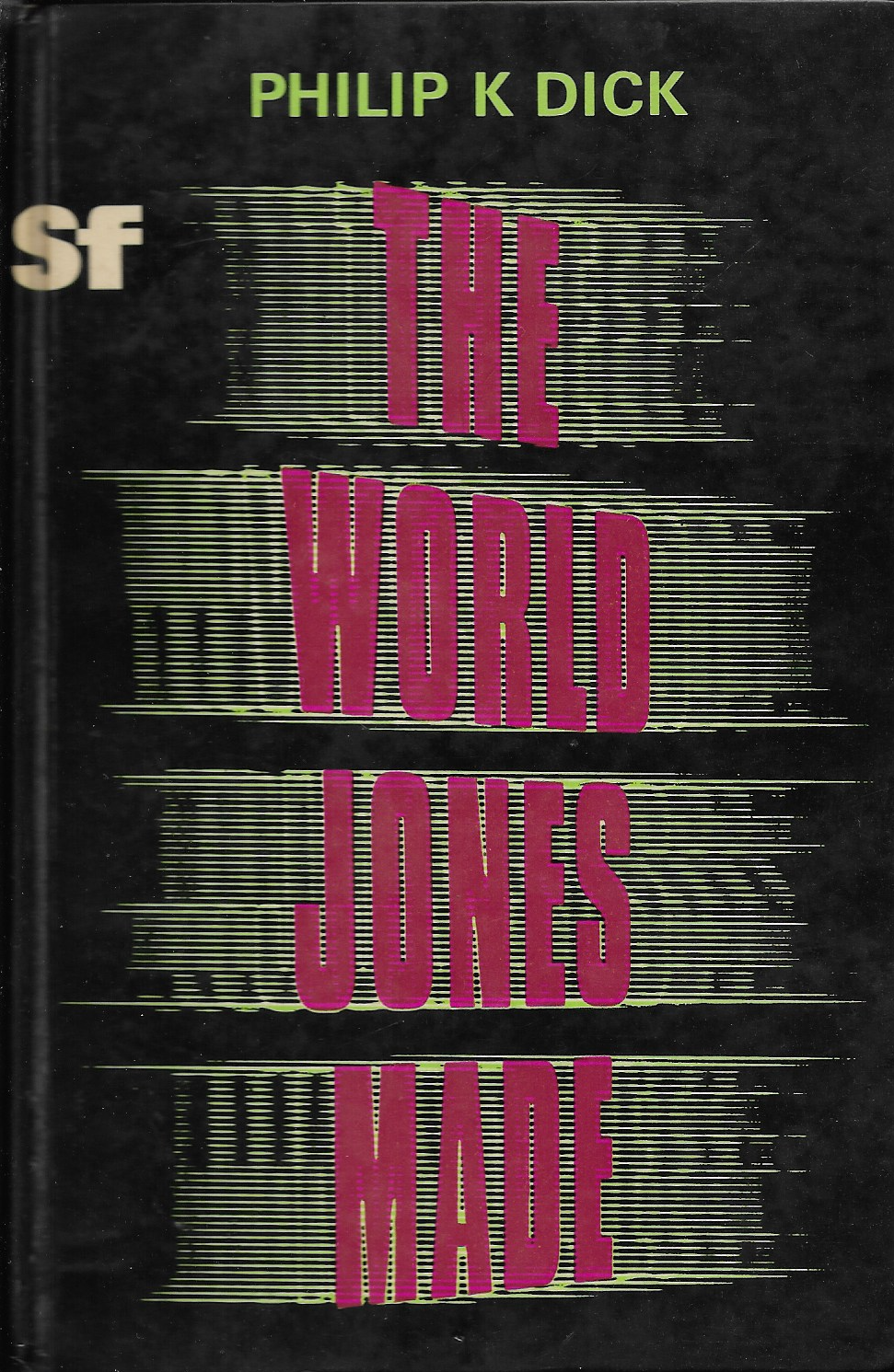
Dick, Philip K. The World Jones Made. Sidgwick & Jackson, 1968. First hardback editionb, an Ex-Library copy on which the dust jacket has been plasticized to the boards, with the front flap pasted onto the rear free endpaper, with library stamps, and slight age-darkening to pages; call it a Very Good Ex-Lib copy. Dick’s second published novel, originally published as half of an Ace Double. Probably the second hardest UK Dick hardback first to find (after The Penultimate Truth, which I already have), and it usually lists for several grand. Levack, 48g. Wintz & Hyde, Precious Artifacts, SF30.8. Currey, page 159. Bought from a UK book dealer for £327.
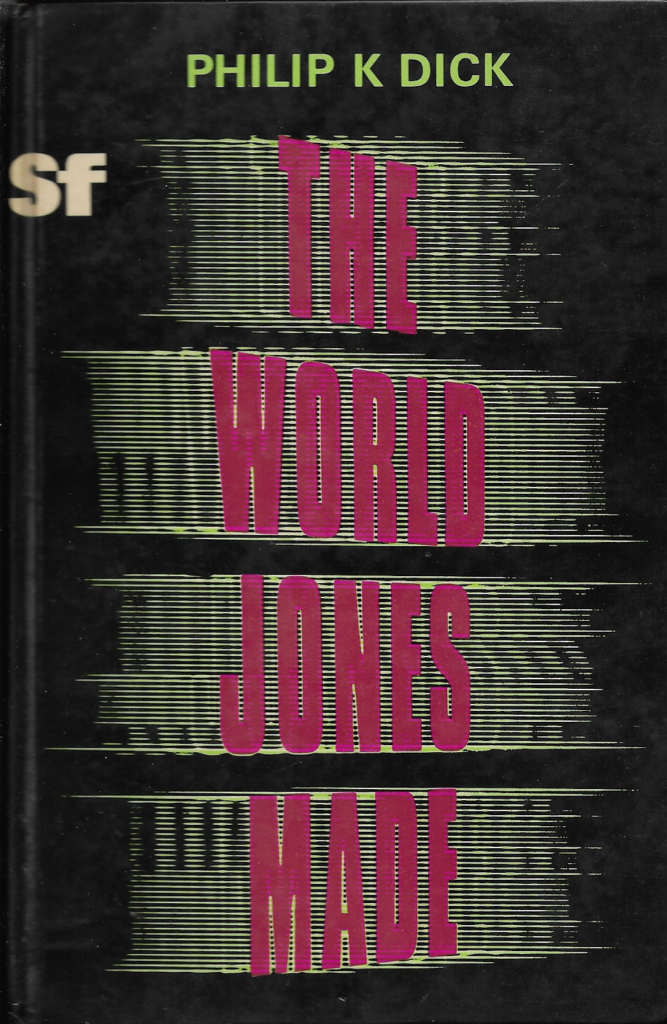
(Dick, Philip K.) R.D. Mullin, Istvan Csicsery Rosney, Jr., Arthur B. Evans and veronica Hollinger, editors. On Philip K. Dick: 40 Articleas from Science-Fiction Studies. SF-TH, Inc., 1992. First edition hardback, a Fine copy in a Fine dust jacket. Collection of critical essays on Dick from a wide variety of authors (Kim Stanley Robinson, Gregg Rickman, Stainislaw Lem, etc.). I was unaware that there was a hardback of this until it showed up in the catalog. Supplements a trade paperback copy. Bought for £112.50.

Di Filippo, Paul. Aeota. PS Publishing, 2019. First edition hardback, trade edition, a Fine copy in a Fine dust jacket. Supplements a signed, limited edition. Bought for £5. I have one copy of this available though Lame Excuse Books.
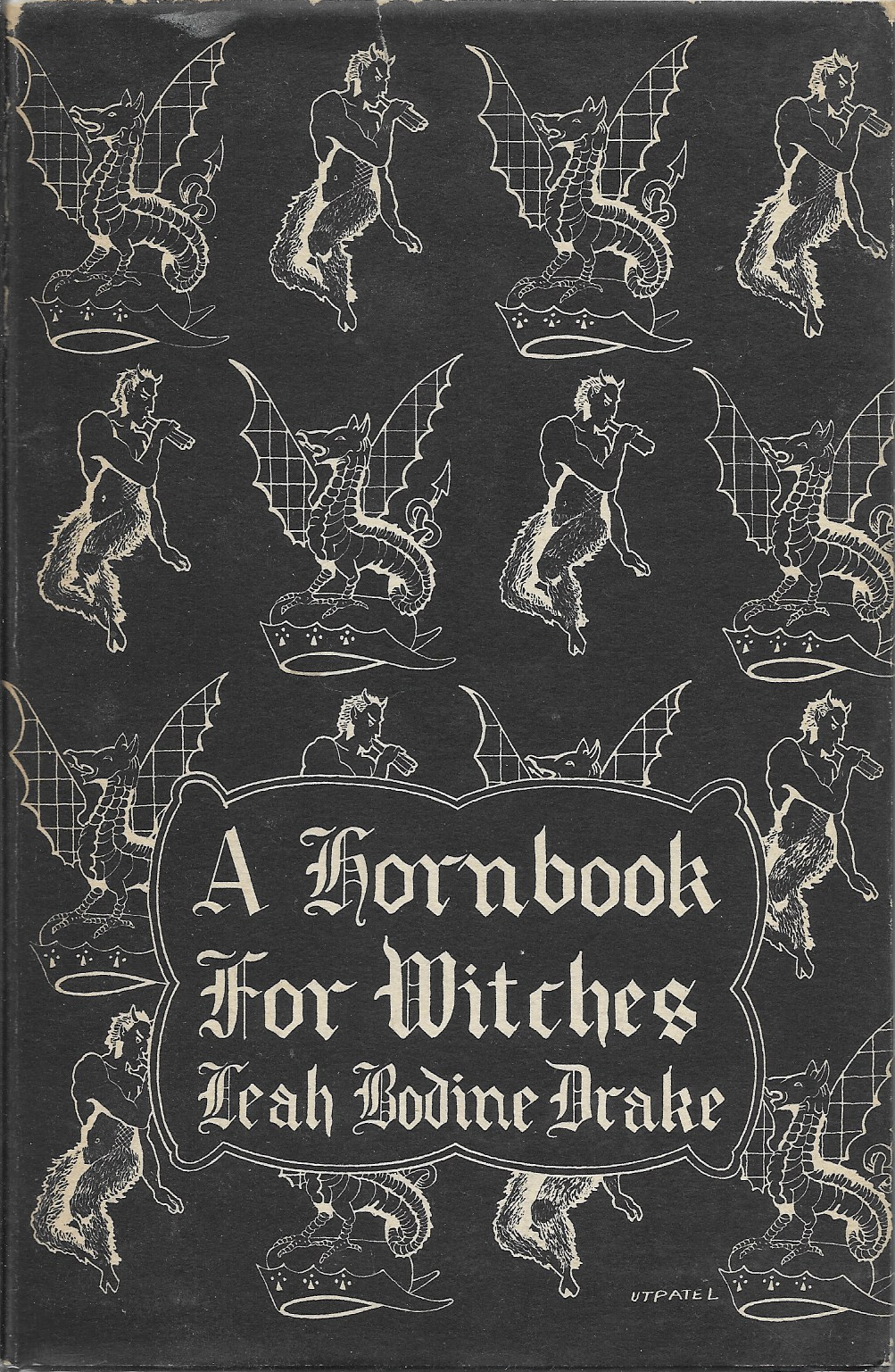
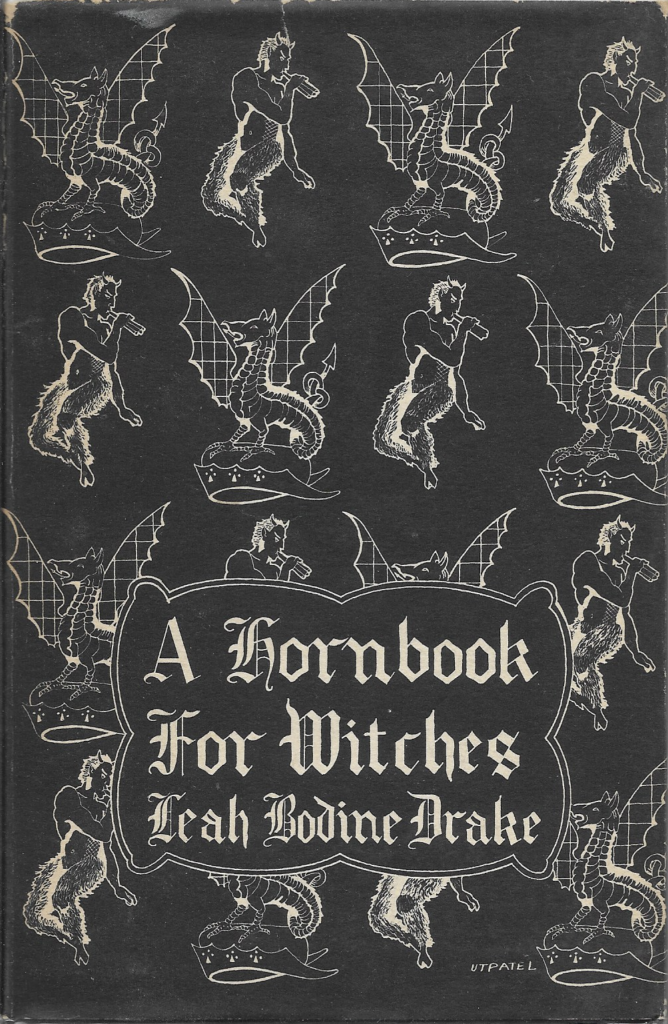
Drake, Leah Bodine. A Hornbook for Witches. Arkham House, 1950. First edition hardback, a Near Fine copy with foxing to gutters and under flaps, slight bumping at heel (and unlike most Arkham (and U.S.) books, the printing on the book is 180° off what you would expect, running up the spine rather than down, so from bottom to top it reads “Drake • A HORNBOOK FOR WITCHES • Arkham House”), and a very slight bit of wear to Arkham’s usual Black Novelex boards, in a Near Fine- dust jacket with shallow 1/16″ chipping at head, heel and points, and age darkening to spine; a fairly nice copy. One of the rarest Arkham House books, with only 553 copies printed, and Jaffrey states that Drake took “about 300 copies” for her own distribution. Derleth, Thirty Years of Arkham House, 43. Joshi, Sixty Years of Arkham House, 43. Jaffery, Horrors and Unpleasantries, 40 (“There are few copies around, and copies are really hard to come by”). Nielsen, Arkham House Books, 44 (and #5 on his list of “The Thirty-Five Most Valuable Arkham House Books”). Locke, A Spectrum of Fantasy Three, page 29. Kemp, The Anthem Series, pages 334 (“Scarcest Arkham House title of all.”), which also notes an audiobook edition of the title narrated by Vincent Price (though evidently only including four of the poems here). Bought from a fellow Biblio dealer for $832.
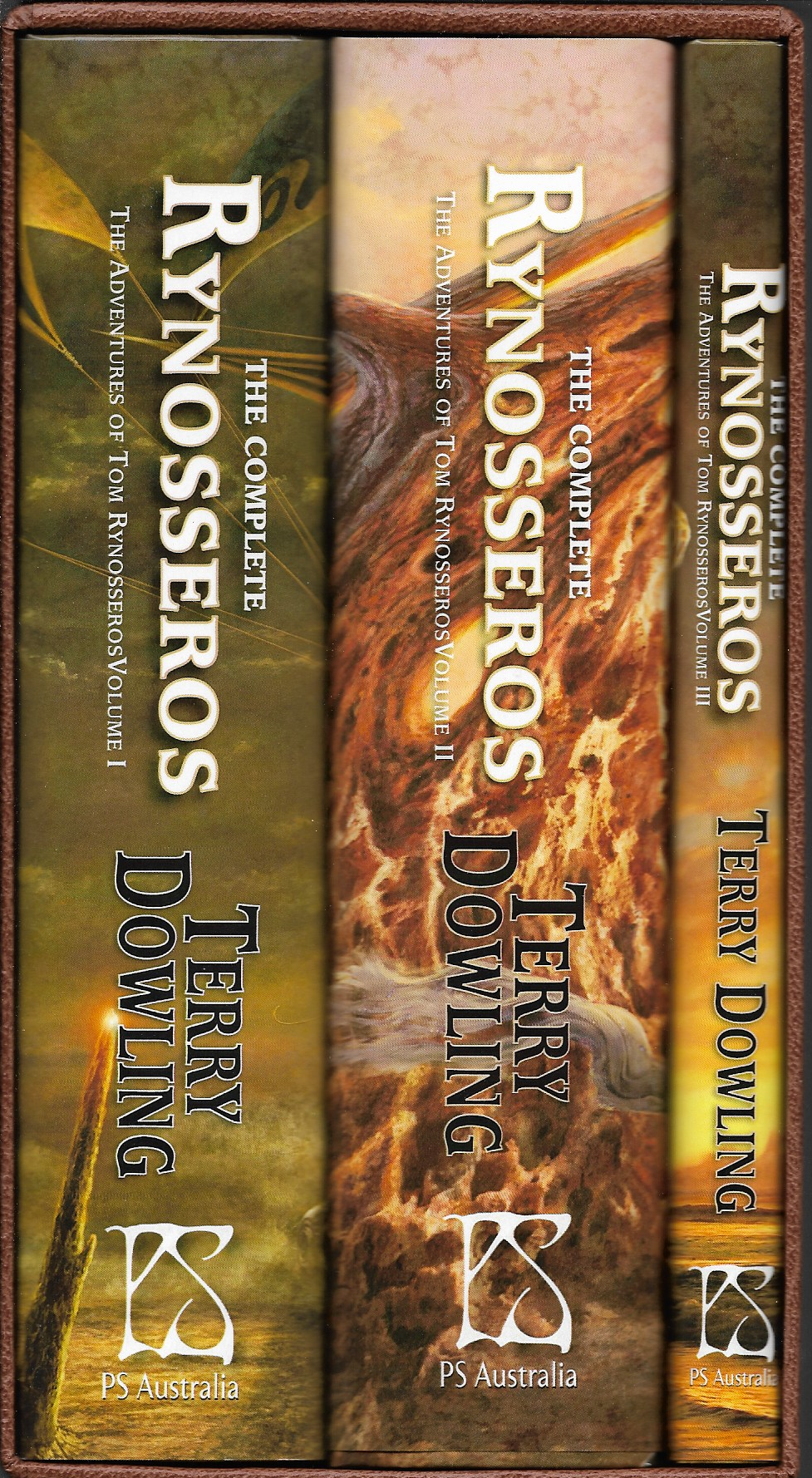
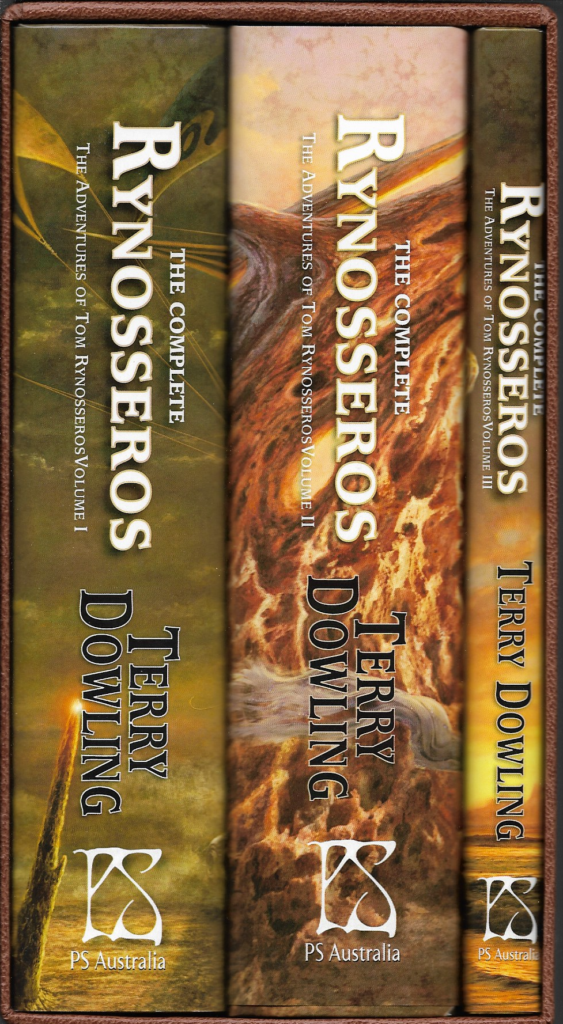
Dowling, Terry. The Complete Rynosseros (Volumes I, II and III). PS Publishing, 2020. First edition hardback, a PC copy of 300 signed, numbered sets, all Fine copies in decorated boards and Fine dust jackets and a Fine slipcase. All Dowling’s Tom Rynosseros stories. An attractive production with Nick Stathopoulos art. Volume III features Dowling discussing the origins and developments of every story. Volume I even has an introduction by Jack Vance! Bought for £60 for the set, a considerable discount from the £150 offering price.
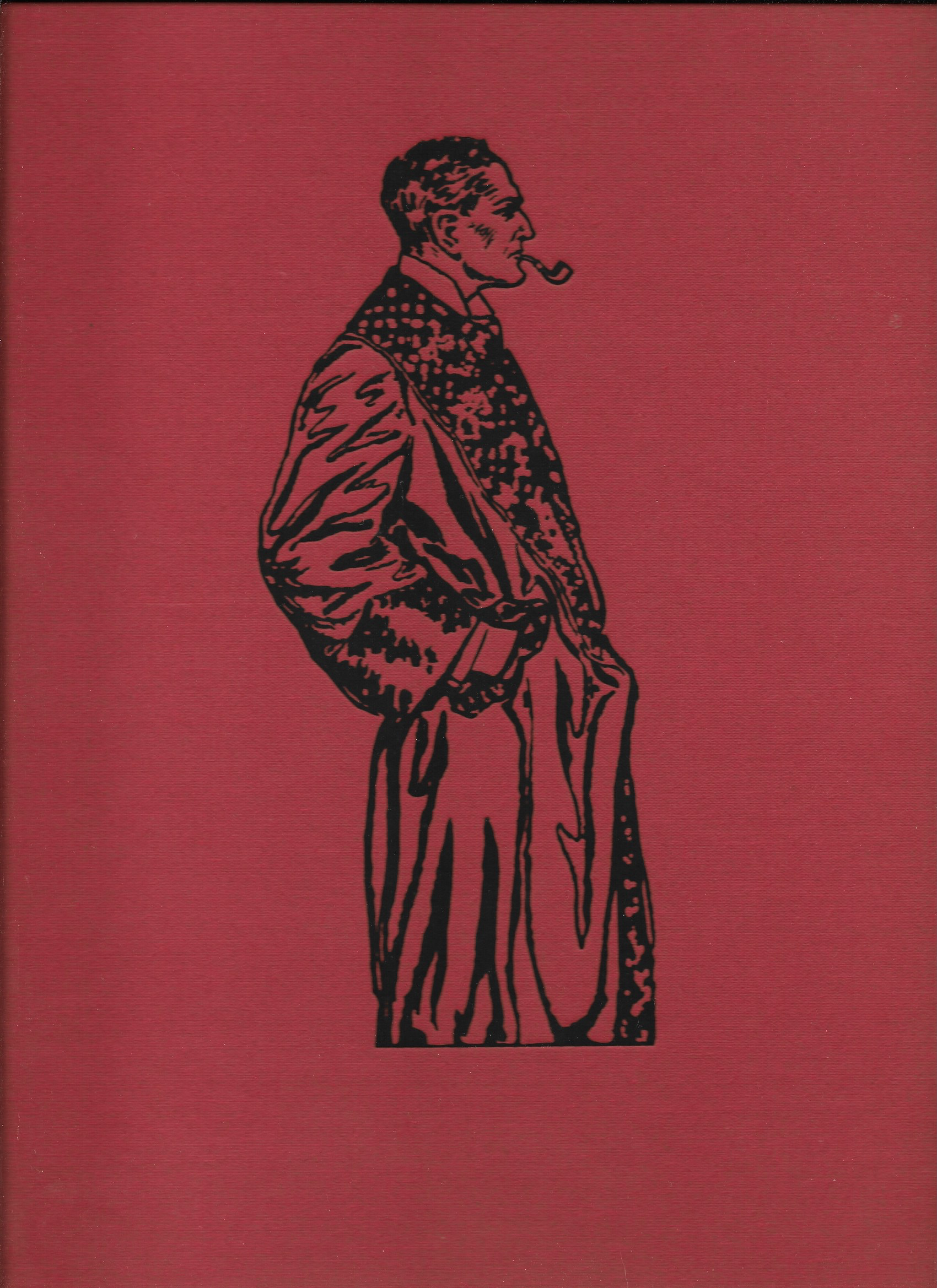
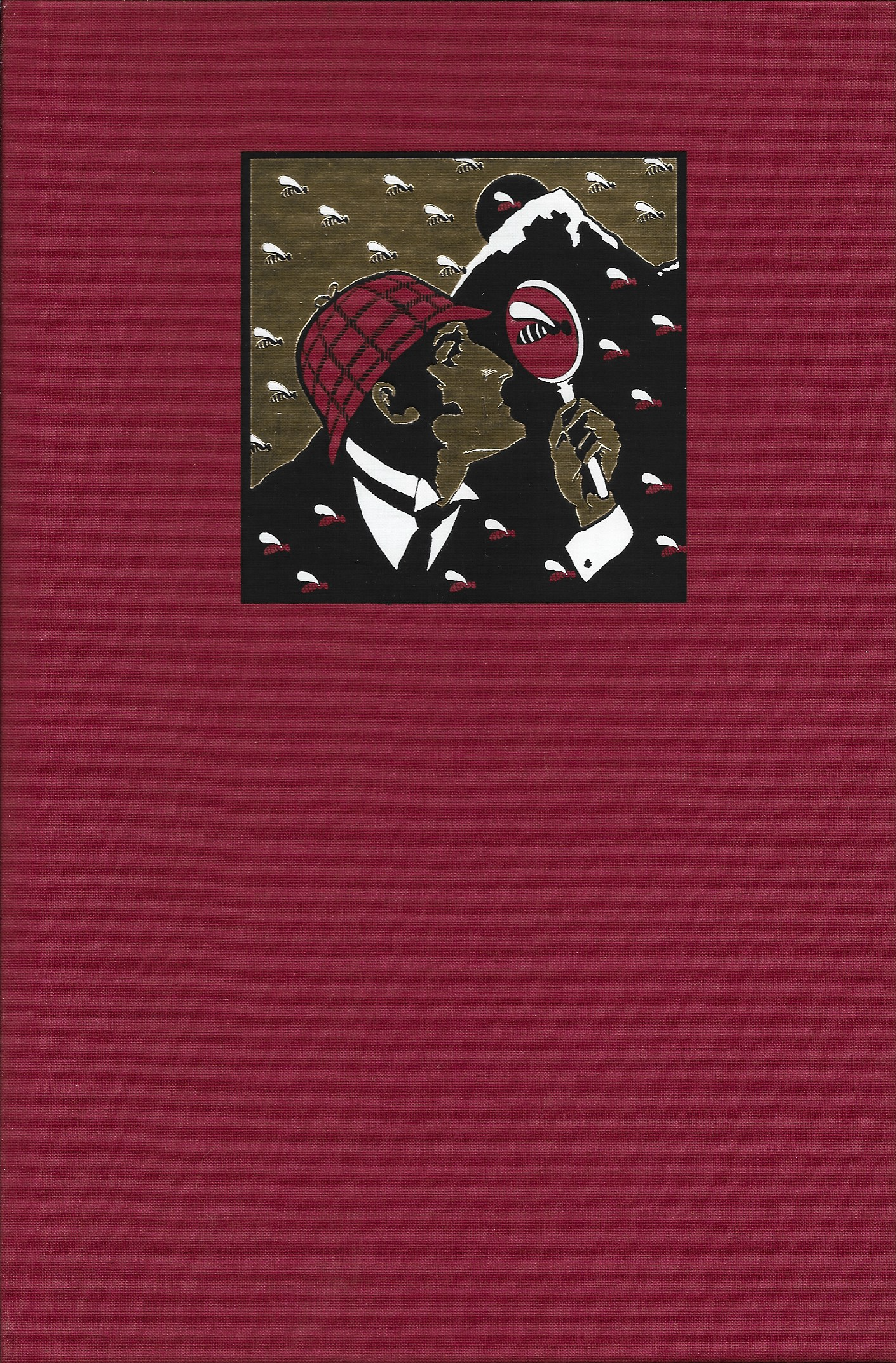
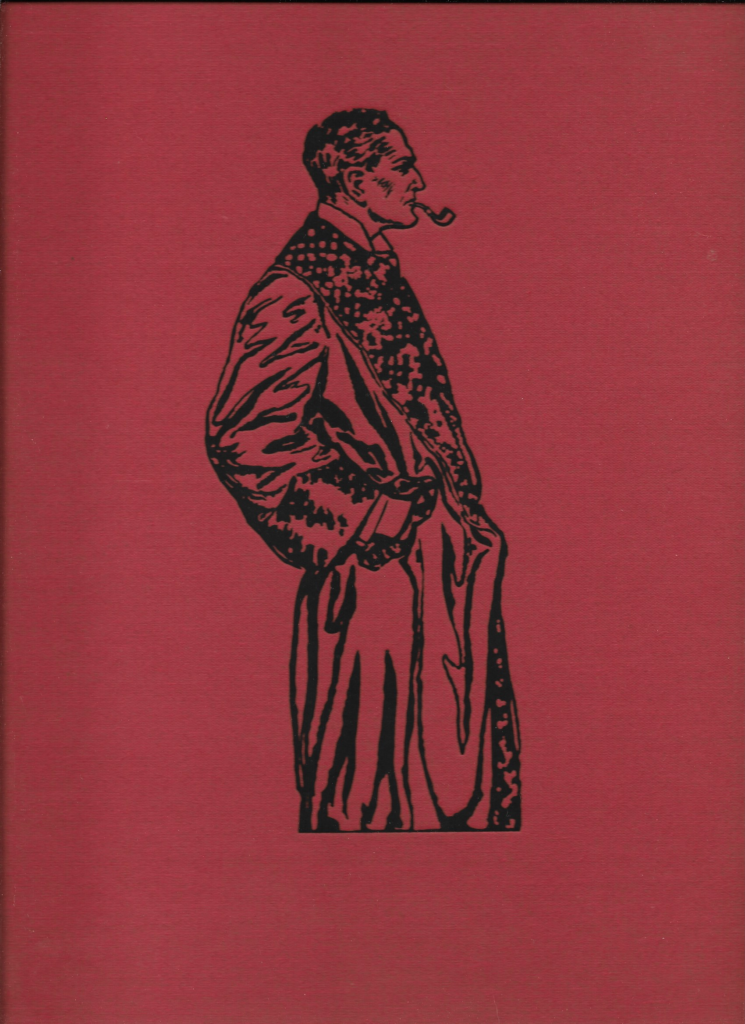
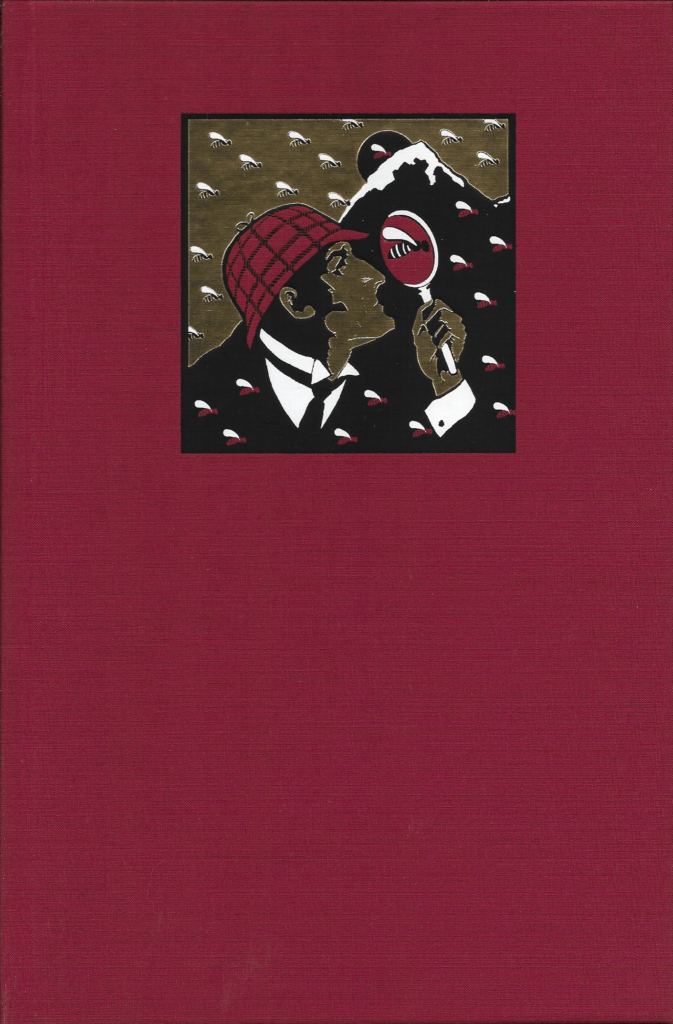
(Doyle, Arthur Conan) Miranker, Cathy and Glen S., curators. Sherlock Holmes in 221 Objects: From the Collection of Glenn S. Miranker. The Grolier Club, 2022. First edition hardback, reportedly one of only 500 copies, a Fine copy, sans dust jacket, as issued. A descriptive catalog, with pictures, of items exhibited from Miranker’s Sherlock Holmes collection, including not only rare first editions (including the only know first edition, first printing of The Adventures of Sherlock Holmes in dust jacket), but also Doyle letters, original art, movie posters, etc. A fascinating and extensive collection.
Dozois, Gardner (Michael Swanwick, interviewer). In His Own Words. Dragonstairs, 2022. First edition chapbook original, #56 of 60 numbered copies signed by Swanwick, a Fine copy. Condensed transcription of an interview Swanwick conducted with Gardner at the 2001 Capclave. Instantly out of print from the publisher.

Dozois, Gardner, editor. The Very Best of the Best. St. Martins, 2019. First edition hardback, a Fine- copy with slight bends at head and heel in a Fine- dust jacket with slight curl at head and heel. A best of best of collection.
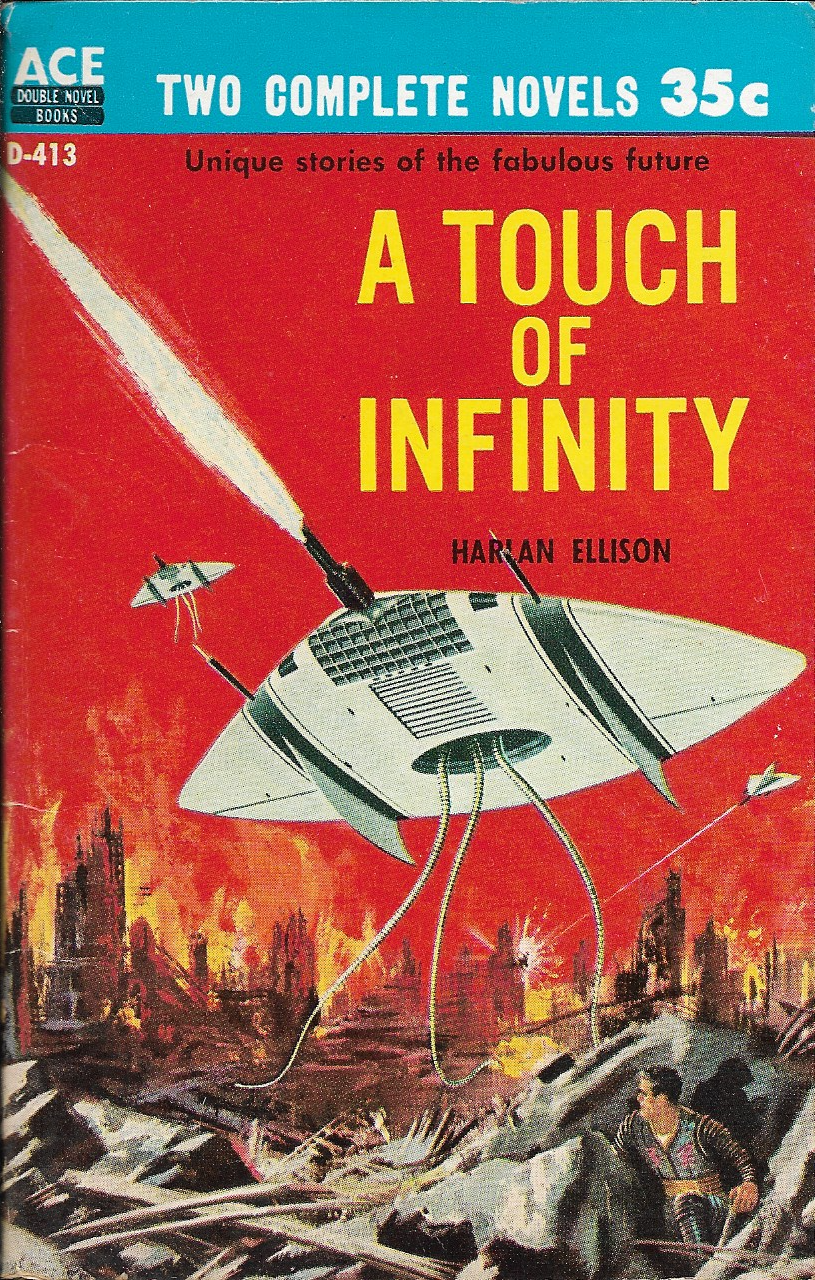
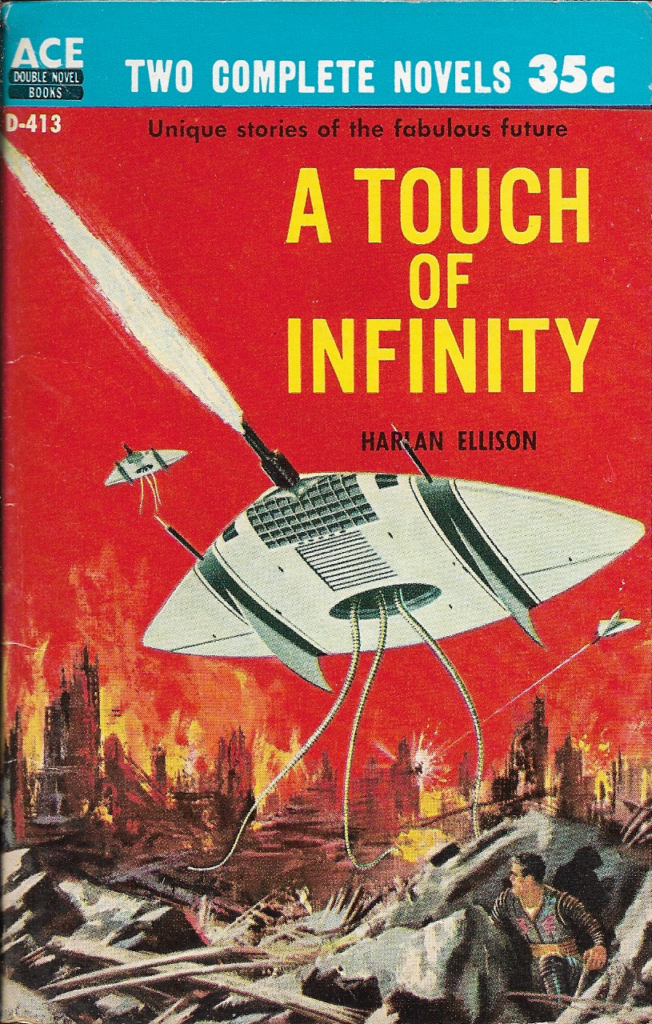
Ellison, Harlan. The Man With Nine Lives/A Touch of Infinity. Ace Books, 1960. First edition paperback original (35¢ on cover, as per Currey), a Near Fine- copy with wear at head and heel and the usual age-darkening to pages, signed twice by Ellison at each of the two title pages. The Man With Nine Lives is a novella and A Touch of Infinity is a short story collection. Quite an attractive copy, nice and square with quite bright covers, and better than usually found. Richmond, Fingerprints on the Sky, page 107-108. Currey, page 178. Bought off eBay for $44.95.
Farmer, Philip Jose. Flesh. Doubleday, 1968. First hardback edition and first revised edition, a Fine- copy with slight bumping at heel in a Near Fine dust jacket with slight age-toning to white dust jacket, a few tiny closed tears at top edge, and some small black marks at head that may have one been a price written there, signed by Farmer. Currey, page 184. Bought from the same notable UK bookseller as Dwellers in the Mirage for £52.

Farmer, Philip Jose. Dark is the Sun. Del Rey, 1979. First edition hardback, a Fine copy in a Fine dust jacket, signed by Farmer. Bought off eBay for $35.
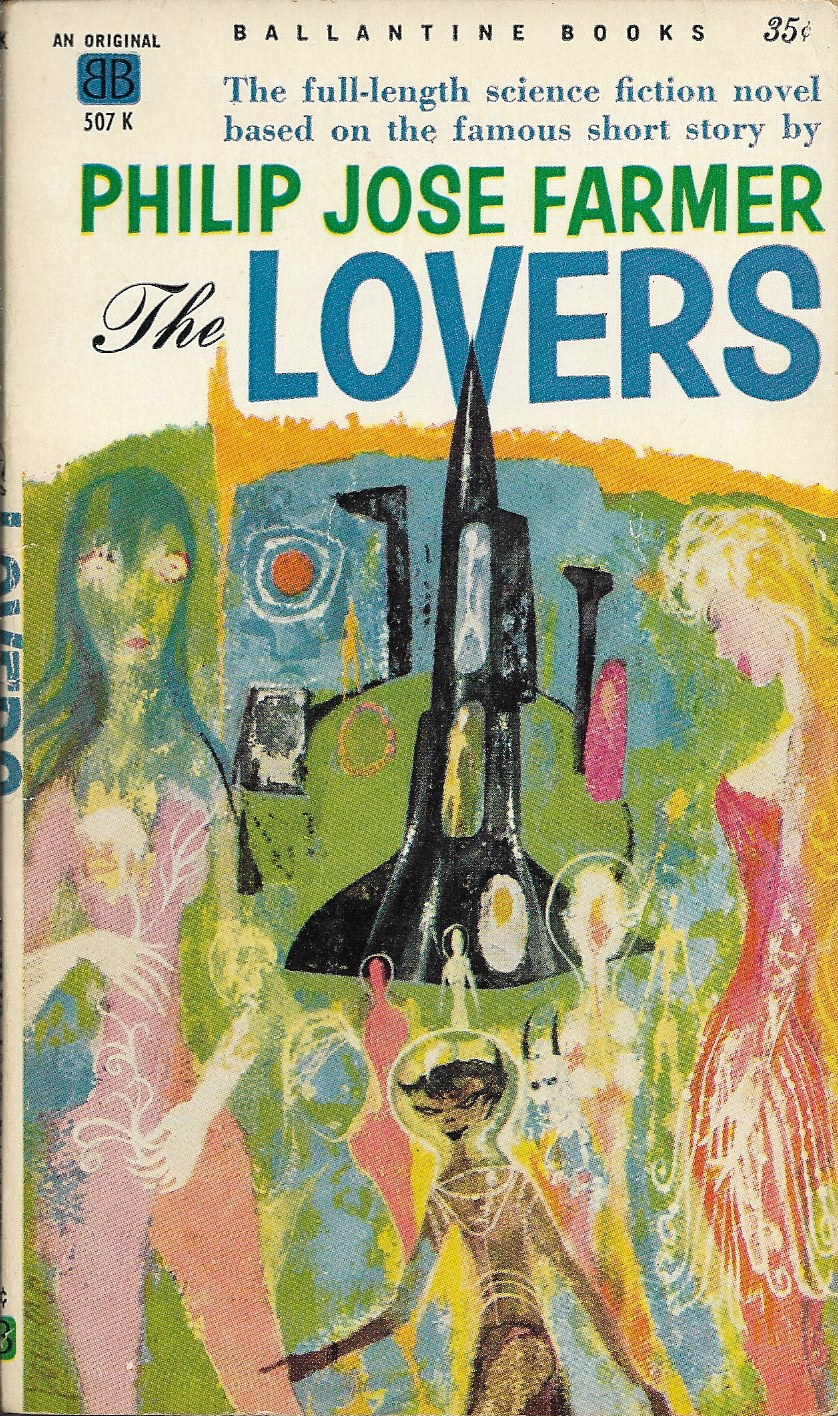
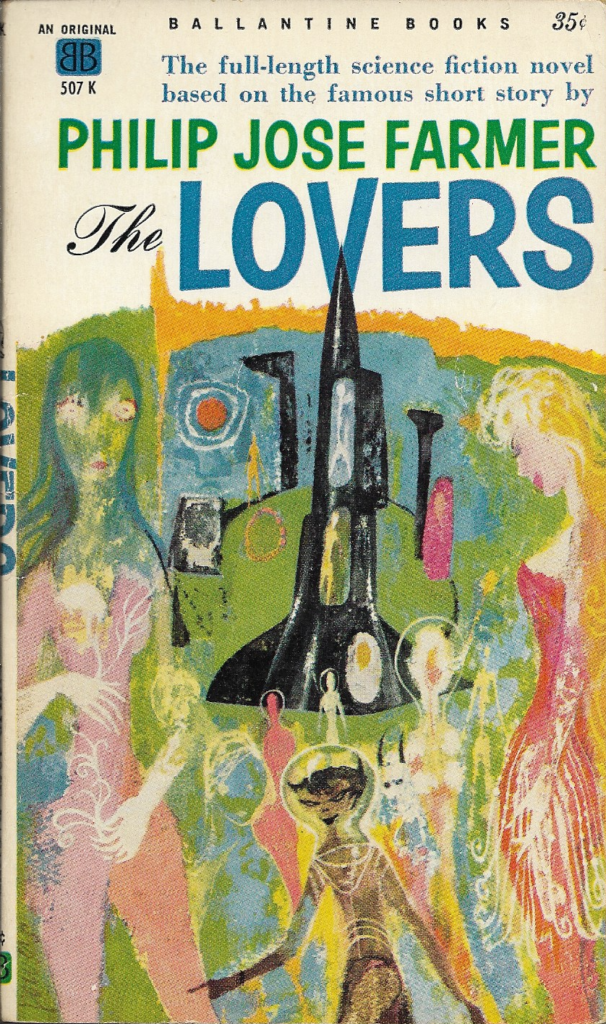
Farmer, Philip Jose. The Lovers. Ballantine Books, 1961. First edition paperback original (PBO), a Very Good+ copy with crease across bottom rear corner and slight spine lean, signed by Farmer. One of the first science fiction novels to deal frankly with sexual themes. Brizzi, The Work of Philip Jose Farmer, pages 18-24. Currey, page 185. Barron, Anatomy of Wonder 4, *3-69. Supplements a signed copy of the later hardback first edition. Won off eBay for $9.99.
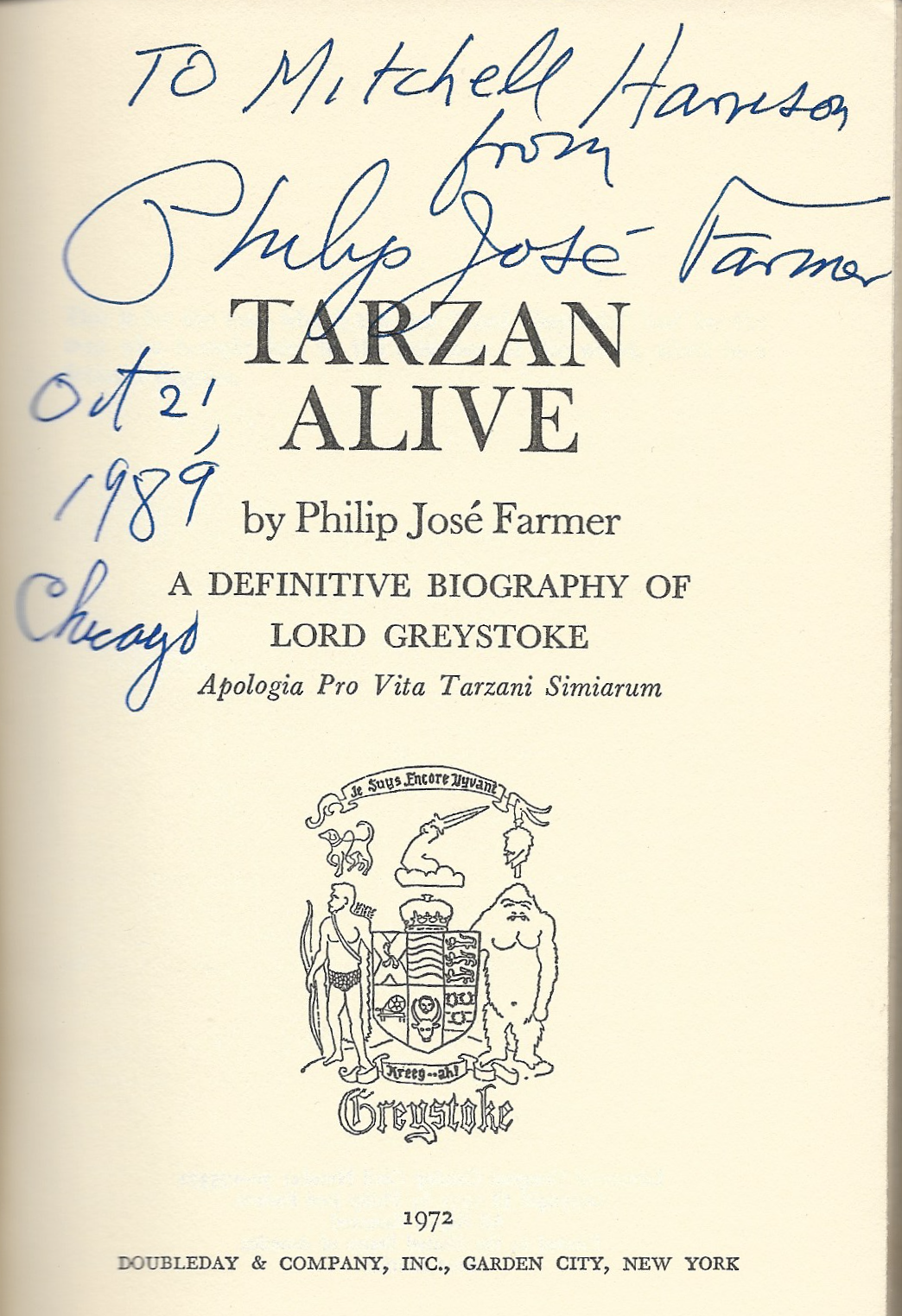
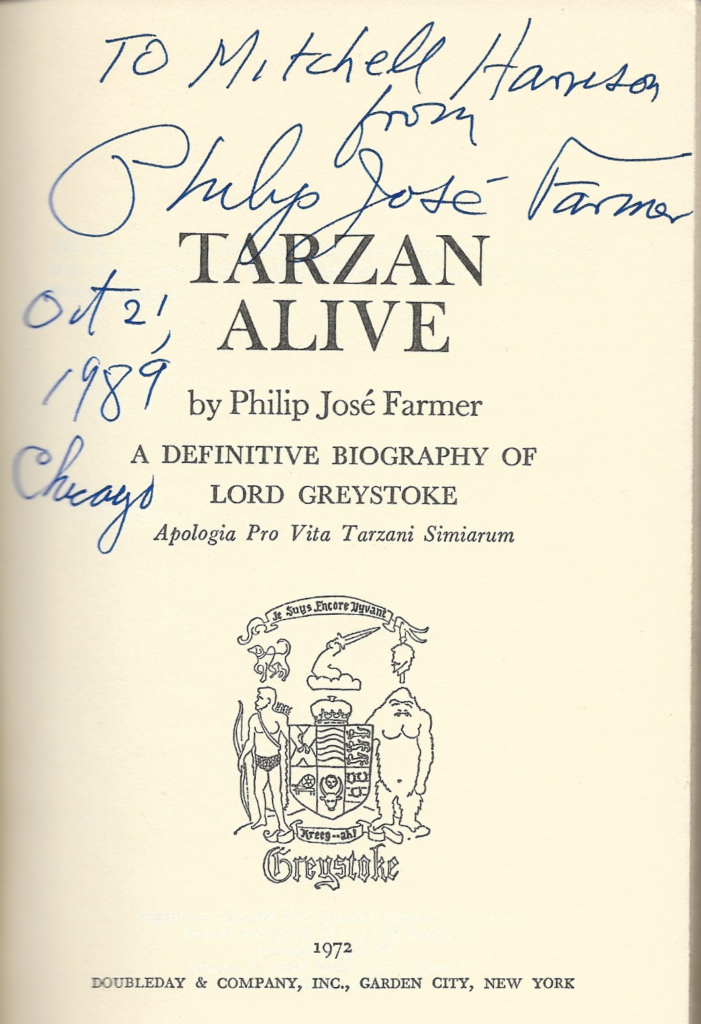
Farmer, Philip Jose. Tarzan Alive: A Definitive Biography of Lord Greystoke. Doubleday, 1972. First edition hardback, a Near Fine+ copy with bumping at head, heel and top front corner, in a Very Good+ dust jacket with several small closed tears (and associated creases) at heel, slight dust soiling to white portions of dust jacket, and a few other touches of wear, inscribed by Farmer: “To Mitchell Haneson/from/Philip Jose Farmer/Oct 21,/1989/Chicago.” Fictional biography of Tarzan, and a central text in Farmer’s “Wold Newton Universe,” which ties a vast array of fictional heroes, from Sherlock Holmes to Doc Savage, into one extended family. Brizzi, Philip Jose Farmer, page 72. Currey, page 185. Bought off eBay for $39.99. Replaces an unsigned copy.
Ford, Jeffrey. The Best of Jeffrey Ford. PS Publishing, 2020. First edition hardback, a PC copy of 100 signed, numbered copies, a Fine copy in a Fine dust jacket and a fine slipcase. Supplements a trade copy. Bought for £15 plus shipping.
Ford, Jeffrey. The Best of Jeffrey Ford. PS Publishing, 2020. First edition hardback, a Fine copy in a Fine dust jacket. 550+ page volume. Bought for £5. I have one copy of this available though Lame Excuse Books.
Frazier, Charles. Cold Mountain. Atlantic Monthly Press, 1997. First edition hardback, a Fine copy in a Fine- Mylar-protected dust jacket with faint 1/4″ scratch with John Berendt blurb sticker on it (as issued), in a Fine- after-market slipcase with one small bump to bottom rear corner. National Book Award winning Civil War novel that was the basis of the acclaimed 2003 movie of the same name. Bought from Half-Price Books for $30. I see these particular aftermarket slipcases sold on eBay, where they list for $85.

Gaiman, Neil (Gary Gianni, illustrator). The Case of Death and Honey. Arte Editions, 2022. First edition hardback, #254 of 500 numbered copies signed by Gianni (plus an additional 70 publisher’s copies), a Fine copy in a Fine slipcase, sans dust jacket, as issued. A very attractive book, stamped in gold and black on full red cloth binding, black and red printing, numerous black and white (and one color) illustrations from Gianni. A Sherlock Holmes story from Gaiman. There were numbered and lettered editions signed by Gaiman in different bindings that were already sold out by the time I found out about this book. Bought from the publisher at a thin discount. Note: The slipcase was extra, and is not included in every copy of this edition.
Gaiman, Neil. Trigger Warning. HarperCollins, 2015. First edition hardback, a Fine copy in a Fine- dust jacket with a tiny bit of crimping at head. Short story collection. Bought for $12.14
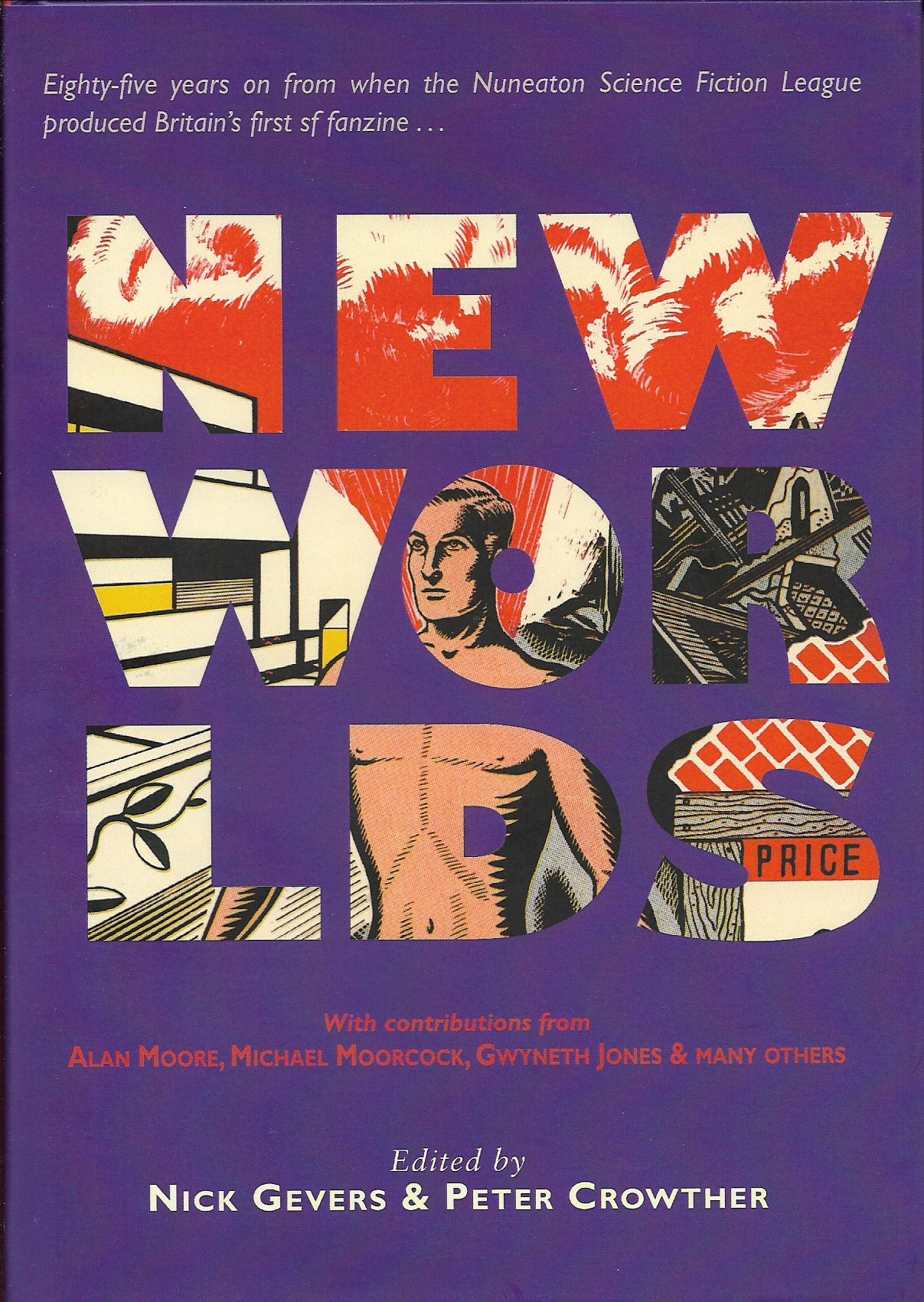
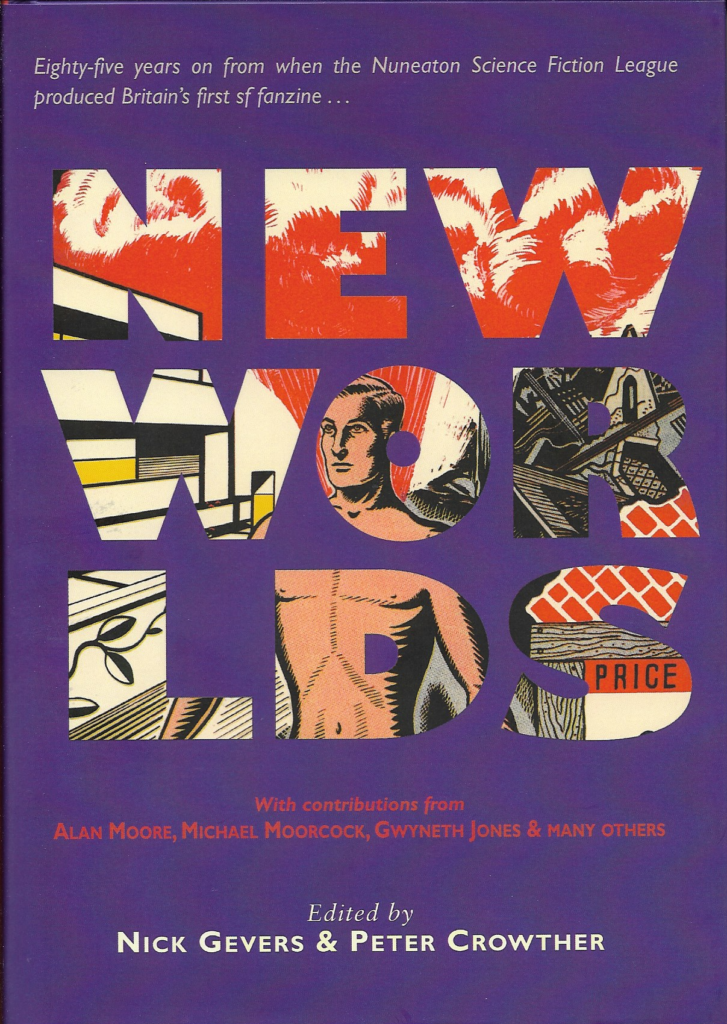
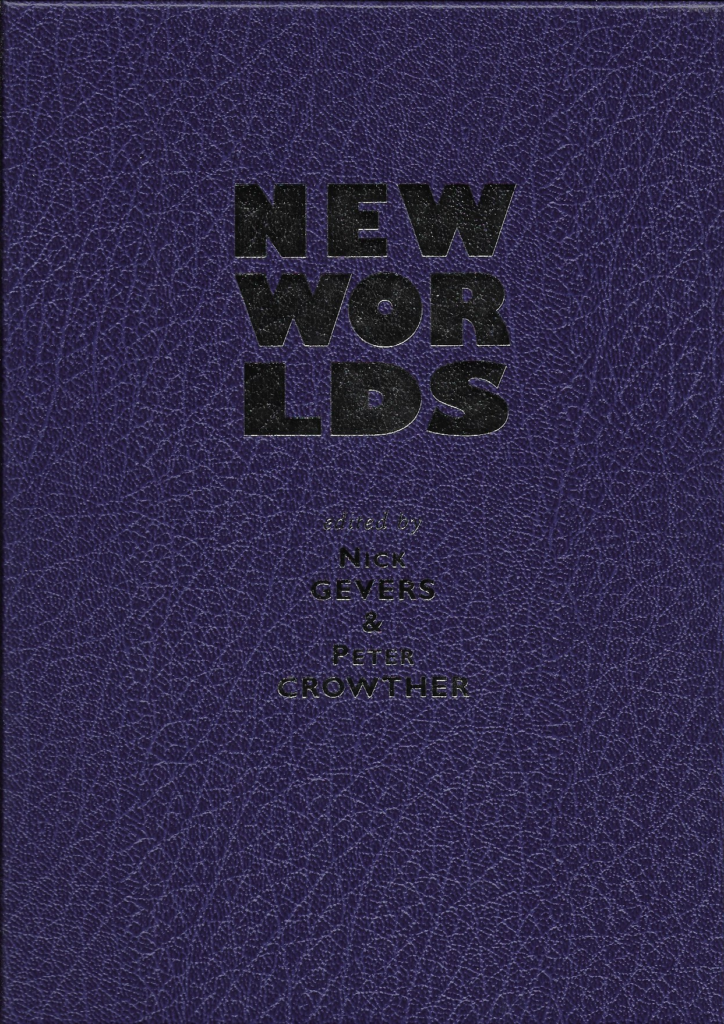
Gevers, Nick, and Peter Crowther, editors. New Worlds Issue #1. PS Publishing, 2021 (i.e., 2022). First edition hardback, #49 of 200 copies, a Fine copy in decorated boards and a Fine dust jacket, and a Fine embossed slipcase. Latest resurrection of this venerable UK fiction title, most famous for Michael Moorcock’s New Wave editorship in the 1960s, and Moorcock contributes a story (and signature) here, as do Alan Moore, Michael Swanwick, Ken MacLeod, James Lovegrove, Ian Watson, Ian R. MacLeod, etc. The trade paperback version came out last year, but this hardback edition is already out of print. Bought from the publisher at the usual discount.
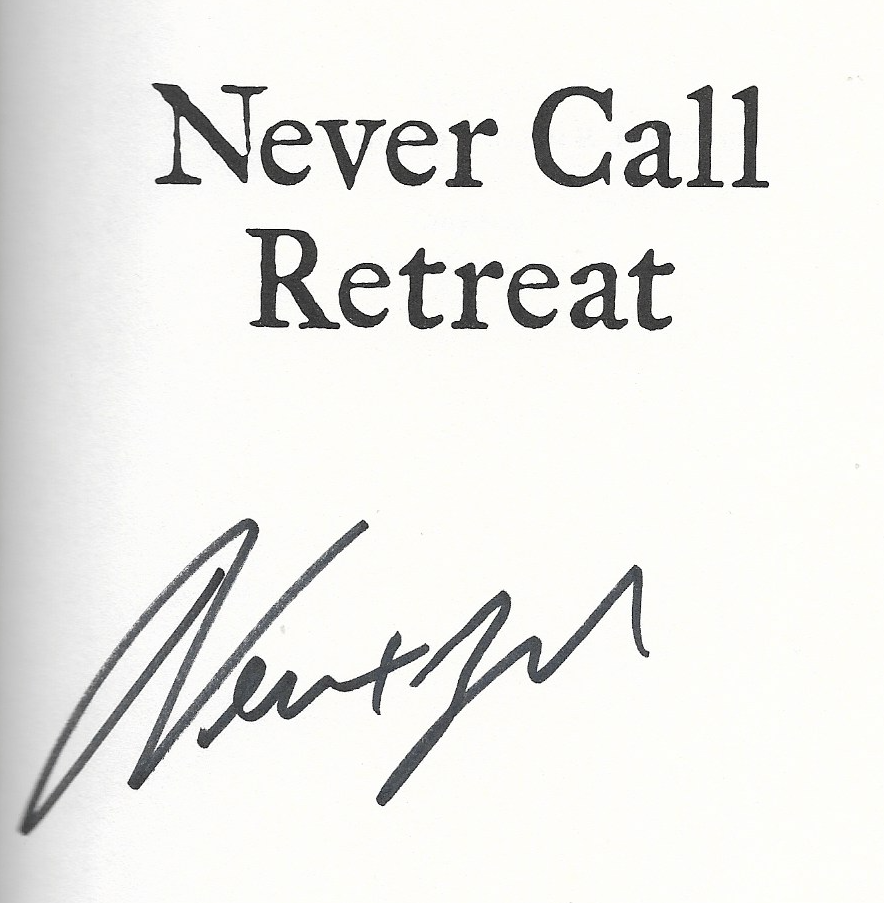
Gingrich, Newt and William R. Forstchen. Never Call Retreat: Lee and Grant: The Final Victory. St. Martins, 2005. First edition hardback, a Fine copy in a Fine dust jacket, signed by Gingrich. Bought from Half Price Books for $7.99.
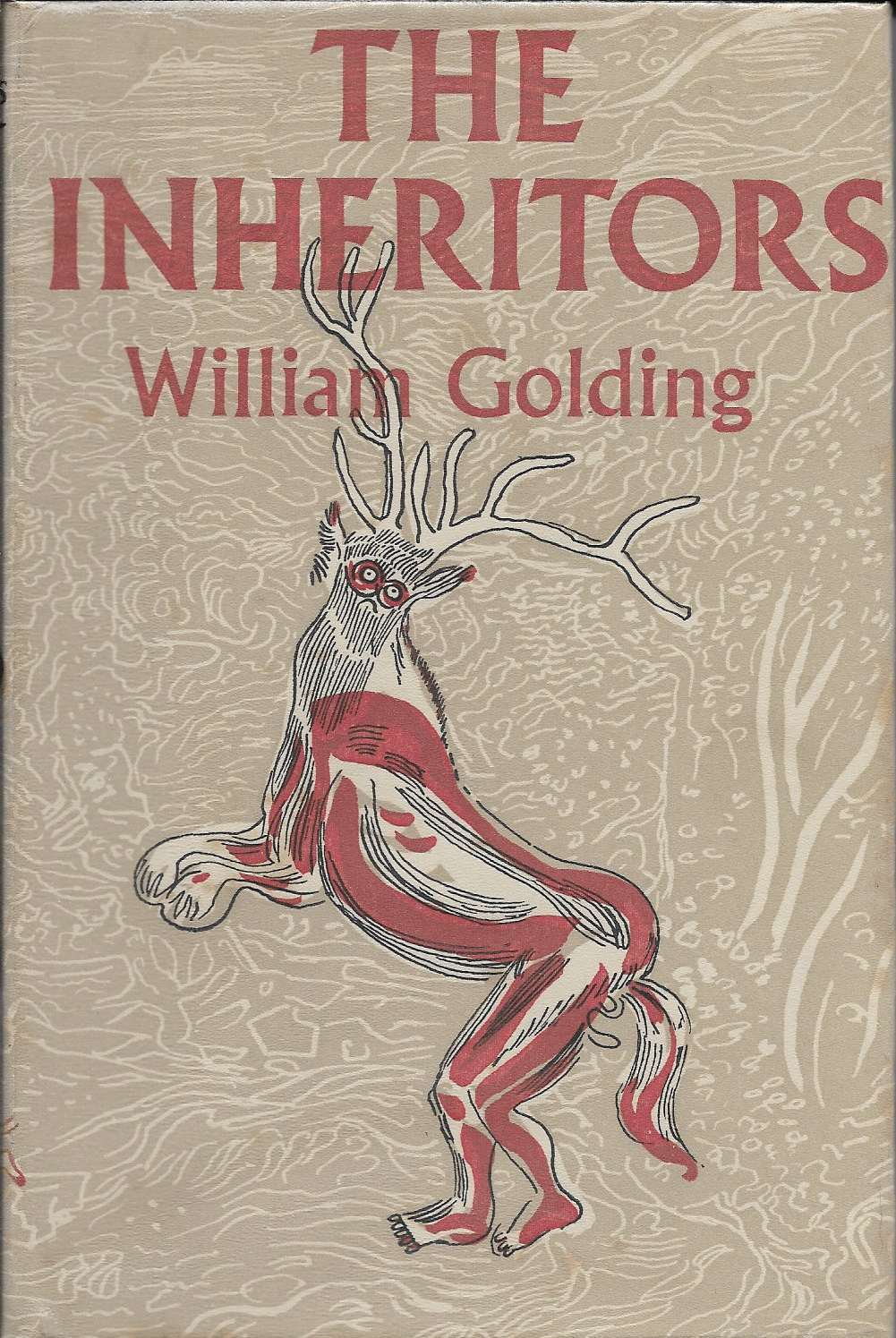
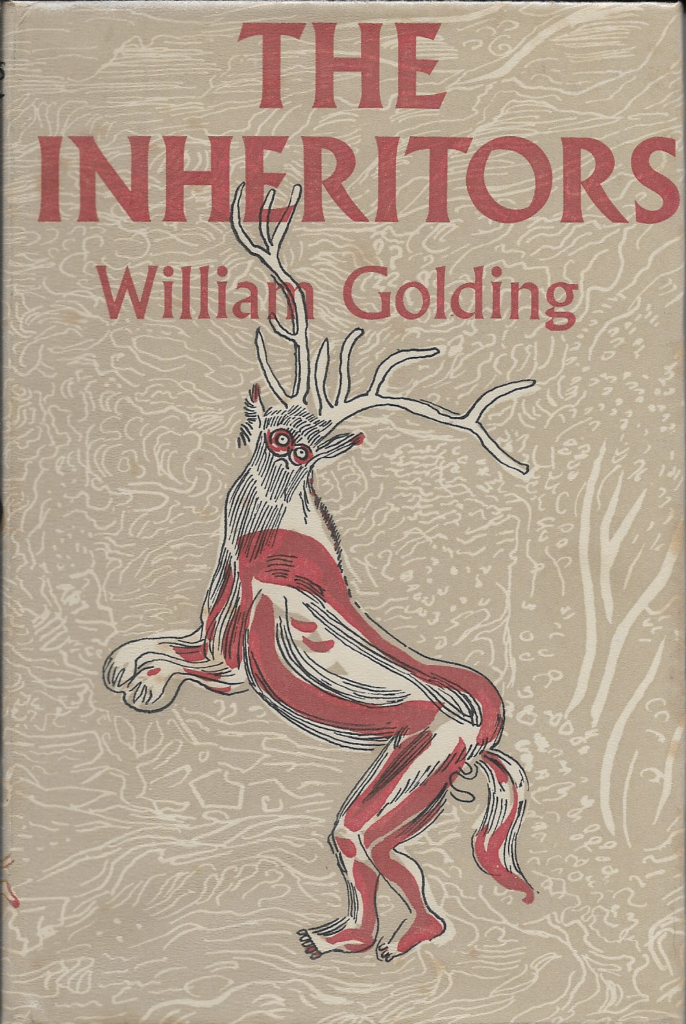
Golding, William. The Inheritors. Faber and Faber, 1955. First edition hardback, a Fine- copy with a bump at head in a Near Fine dust jacket with a few faint, tiny spots to top rear outer corner, slight spotting at very top and bottom of flaps, slight bump at head, and numerous small blind side spots. All in all a very nice copy. Novel of Homo Sapiens driving the last Neanderthals to extinction. Pringle, Science Fiction: The 100 Best Novels 19. Magill, Survey of Science Fiction Literature, pages 1036-1039. Bought from a fellow Biblio dealer for £179.80 (including shipping).
Harrison, Harry. The Man From P.I.G.. Avon/Camelot Original, 1968. First edition paperback original, a Near Fine copy with one spine crease and usual mild age-darkening of pages. Currey, page 225. Bought for $1.99.
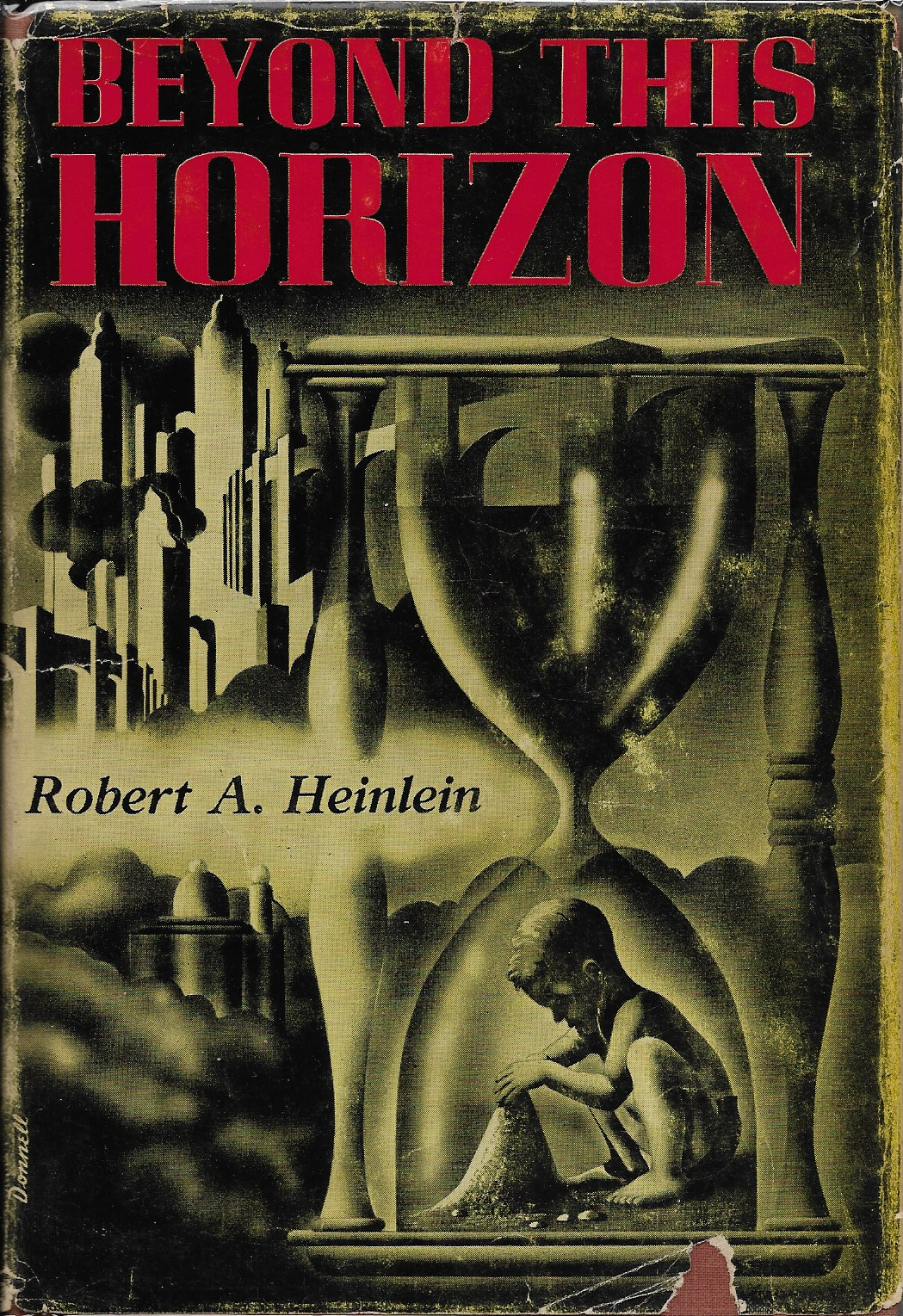
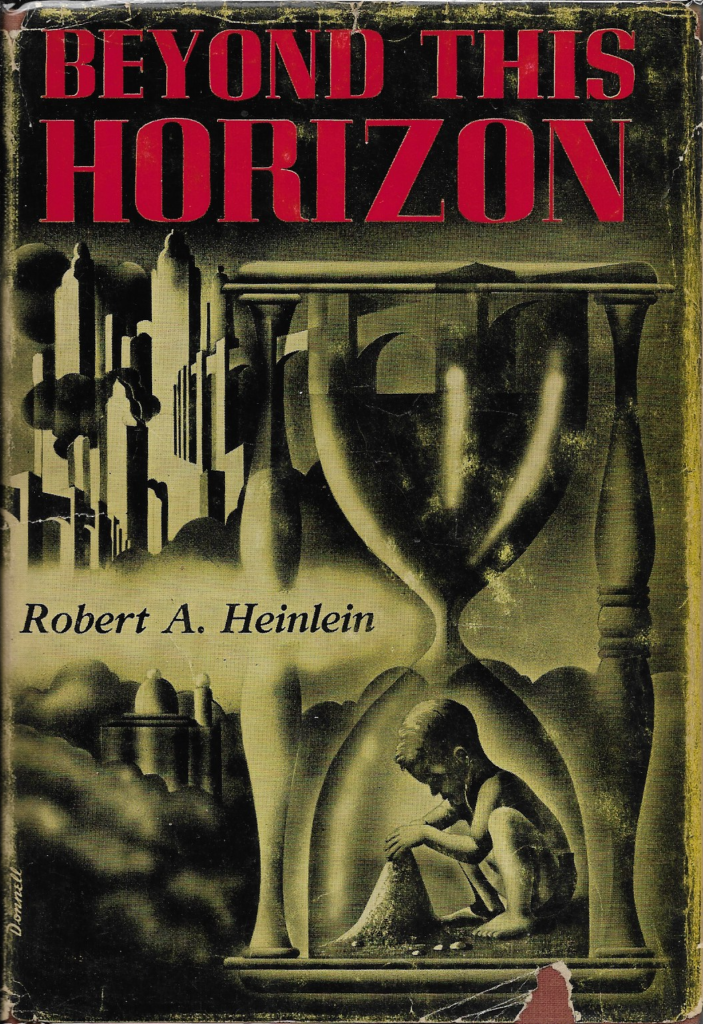
Heinlein, Robert A. Beyond This Horizon. Fantasy Press, 1948. First edition hardback, #413 of 500 signed, numbered subscriber copies (Currey State A), a Very Good copy with former owner George Price’s name and address on inside front cover and a quote from Hamlet (“There are more things in heaven and earth, Horatio, / Than are dreamt of in your philosophy.”) written on the front free endpaper in the same hand, with bumping at head and heel and a few faint spots of foxing to first few pages, in a Good+ dust jacket with 1/2″ chips to heel and bottom front cover, 1/4″ tackhead-sized chip to spine (affecting bottom of “O” in “HORIZON”), plus a few lesser chips, creases, rubs and general wear. Inscribed by Heinlein: “For George W. Price/All good wishes!/Robert A. Heinlein.” George W. Price ran Advent Publishers and participated in the 1959 Chicago Worldcon bid, and he seems to be still alive at age 93. Heinlein’s second novel. Currey, page 232. Chalker/Owings, page 158. Barron, Anatomy of Wonder 4, 3-84. Bought for £350 from a notable UK book dealer.
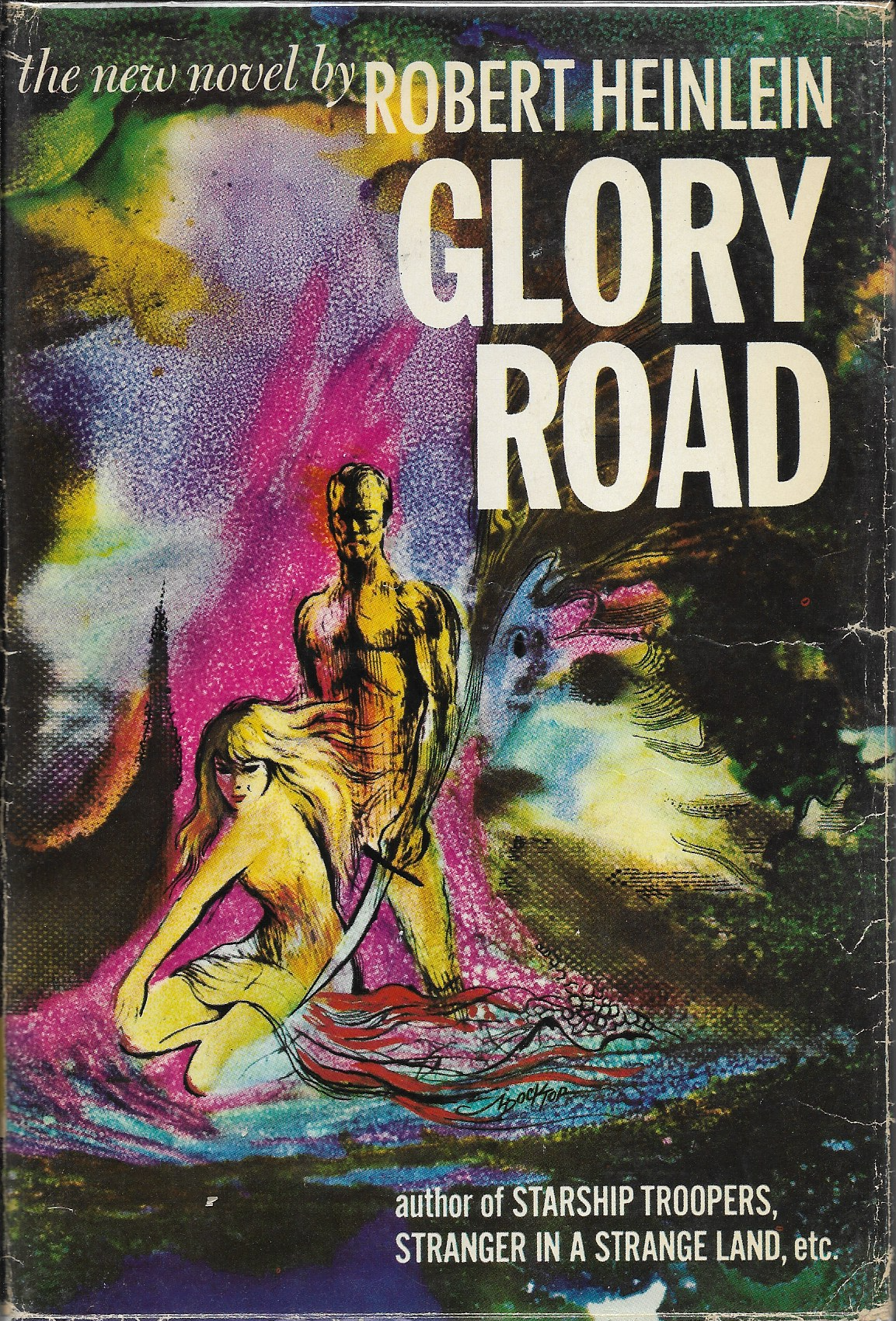
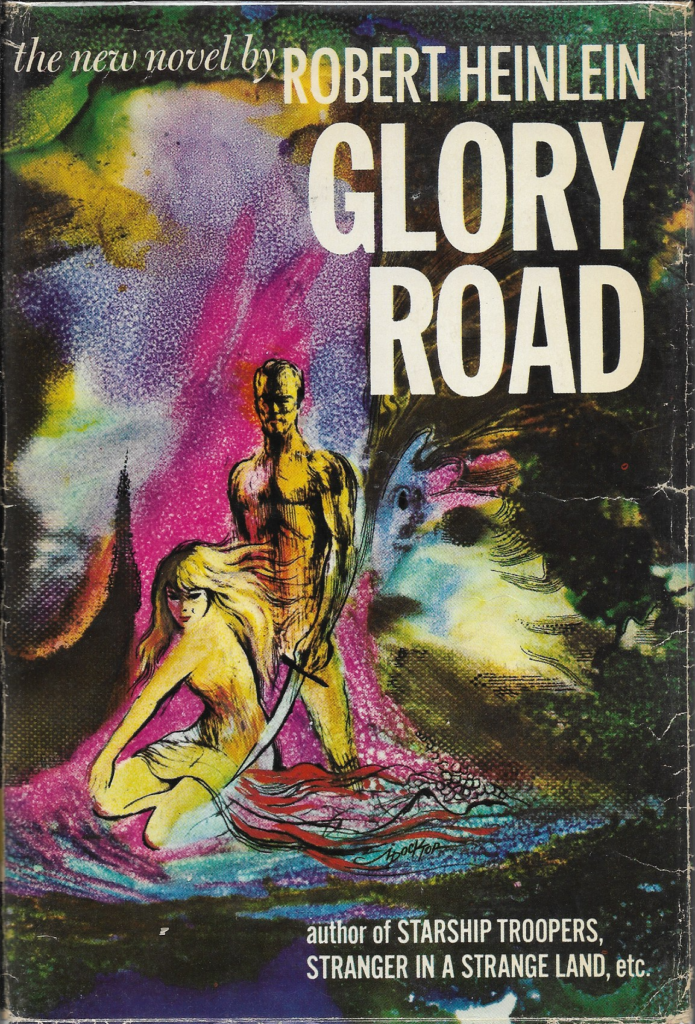
Heinlein, Robert A. Glory Road. Putnam, 1963. First edition hardback (no statement of printing on copyright page, as per Currey), an Ex-Library copy with front free endpaper excised, discard stamps, abrasion wear along bottom boards, light paste-ghosts to inside covers, reinforcement to front and rear gutters, etc.; call it a Good+ Ex-Lib copy in a Very Good+ dust jacket with 1/32″ strip of loss at very bottom of heel, slight wear and creasing at head and heel, trace of crease along front spine join, thin, closed 2″ tear/crack along spine to middle of back cover, slight wear at points, and the barest trace of those paste ghosts to blind side; actually a very presentable copy of the dust jacket. Replaces another Ex-Library copy (non-first) in my collection. Currey, page 232. Bought for $16 from a collector culling his collection.
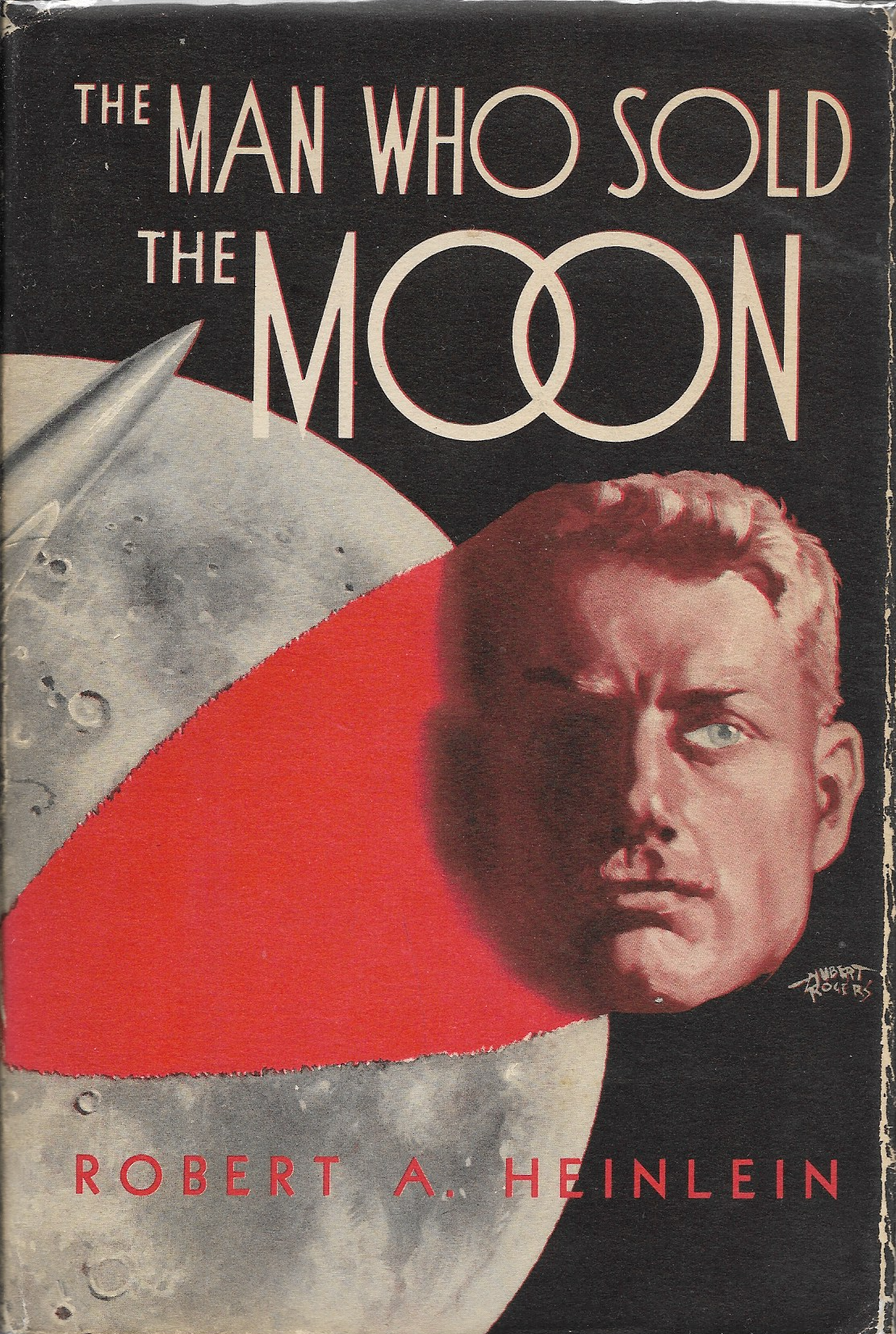
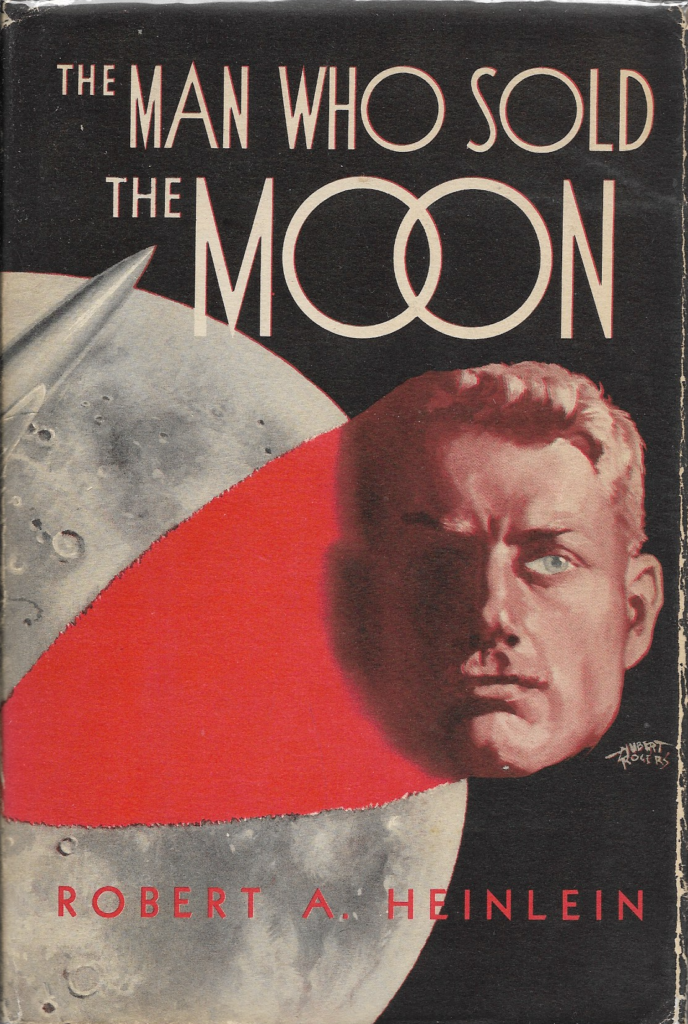
Heinlein, Robert A. The Man Who Sold The Moon. Shasta Publishers, 1950. First edition hardback, one of 250 copies signed by Heinlein, a Very Good copy with spine slightly concave at top, slight bumping at head and heel, slight rub ear to lettering at head and heel, points slightly bumping, and traces of wear to boards, with the “FUTURE HISTORY/1951-2600 A.D.” sticker added to front free endpaper and inside back cover (as issued), in a Very Good- dust jacket with 1/8″ loss across heel, 1/8″ ship at head points and associated creasing, 3/4″ abrasion (possibly a sticker pull) near bottom of spine, not affecting any lettering, moderate creasing along spine and flap folds, slight age darkening to spine, very slight darkening to rear cover and tops of flaps, and usual blind side foxing. A fairly nice copy that I’ll probably ended up swapping the better dust jacket on my trade copy with. Bought from a private seller for $500. Chalker/Owings, page 398. Kemp, The Anthem Series, page 162. Locke, A Spectrum of Fantasy, page 109. Currey, page 233.
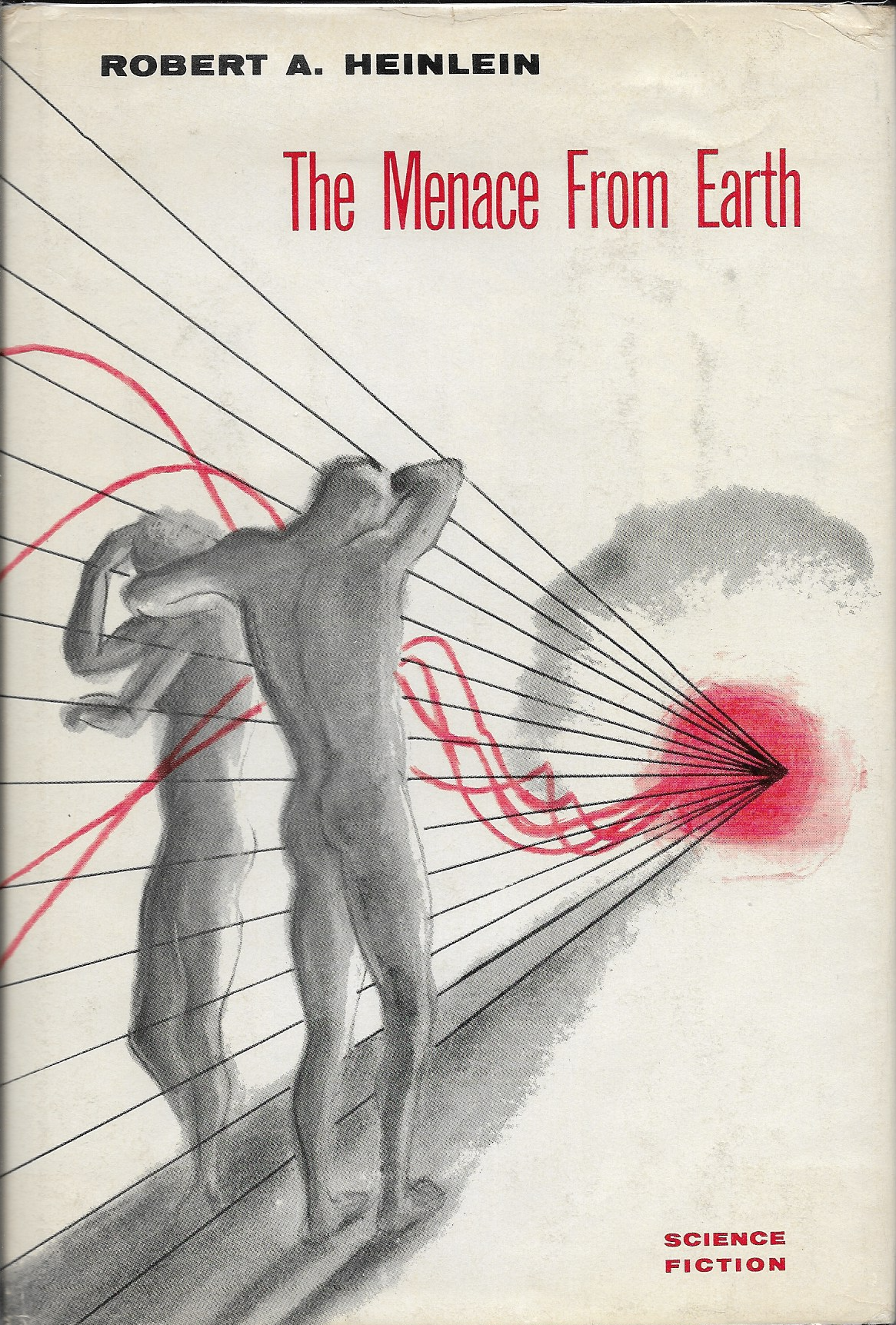
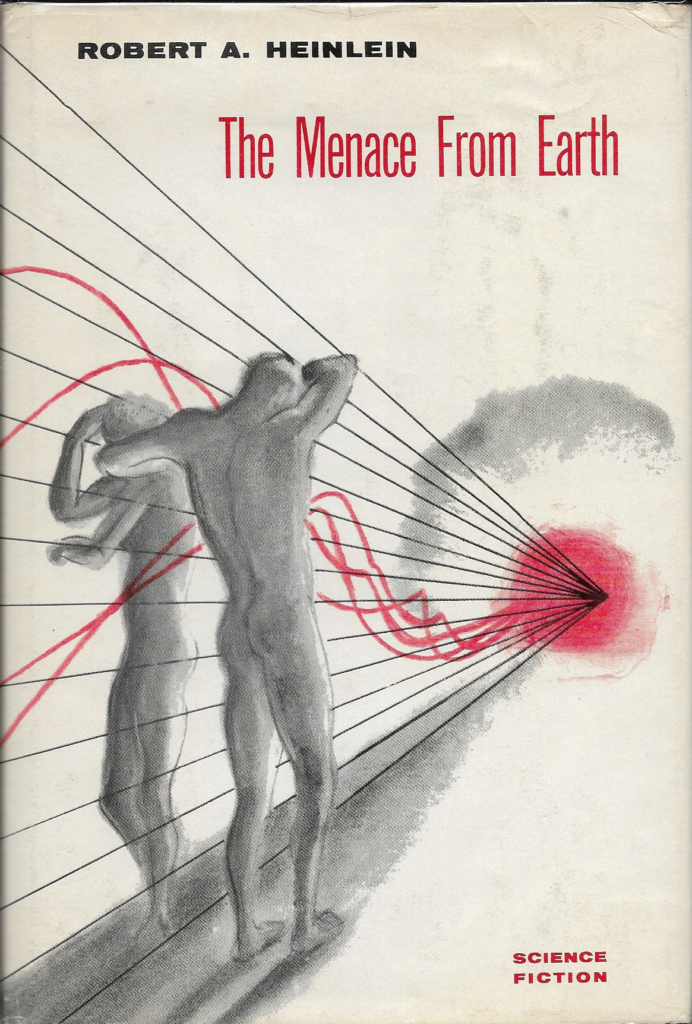
Heinlein, Robert A. The Menace From Earth. Gnome Press, 1959. First edition hardback, a Near Fine+ copy with slight bumping at head, heel and points (and far less than usual age darkening to the cheap later Gnome Press paper) in a Near Fine+ dust jacket with one 1/8″ closed tear and associated triangular crease to bottom rear dust jacket, very slight age darkening to spine, trace of edgewear to rear flap, and a few traces of dust soiling to white over, otherwise an extremely nice example of the dust jacket. Short story collection, including the classic “By His Bootstraps.” Currey, page 233. Locke, A Spectrum of Fantasy, page 109. Chalker/Owings, page 205. Kemp, The Anthem Series, page 278. Barron, Anatomy of Wonder 4, 3-87. ISFDB notes no price on dust jacket (as is the case here). Bought for £250 from a notable UK book dealer.
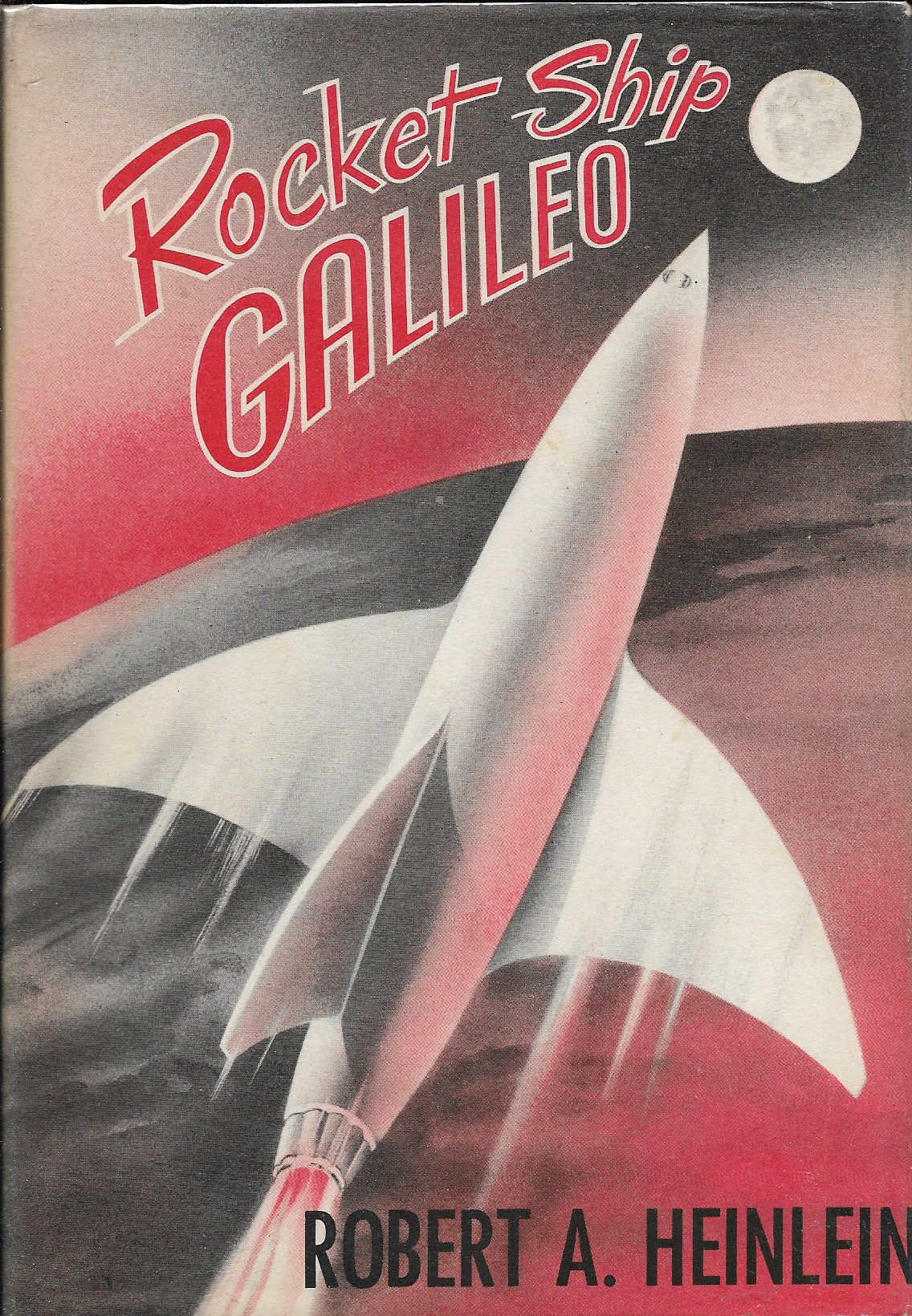
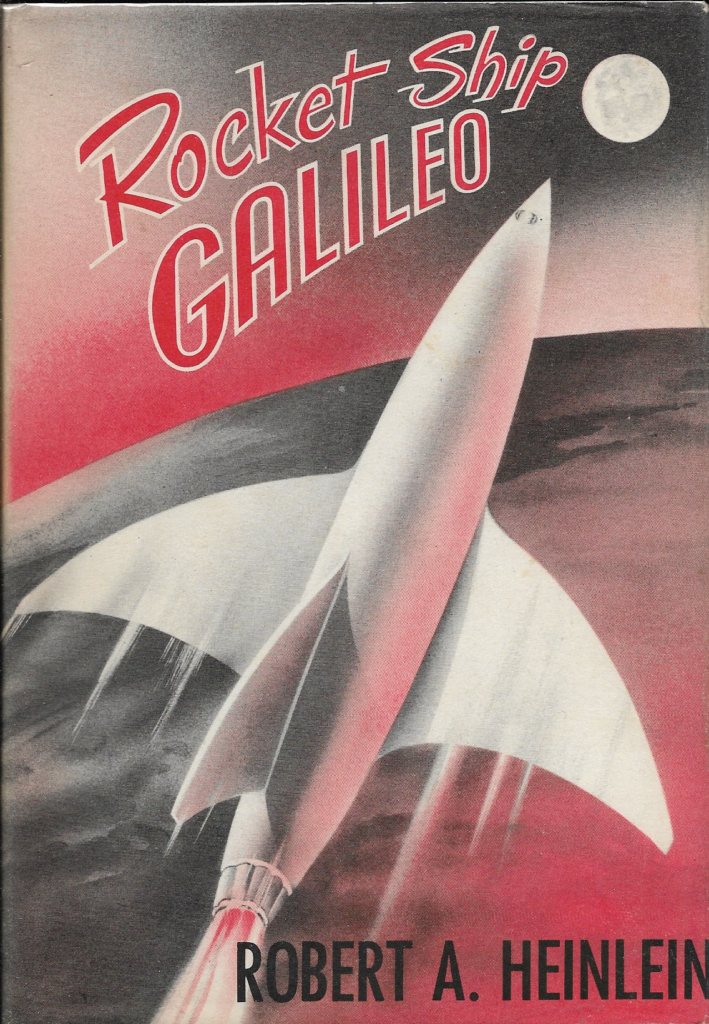
Heinlein, Robert A. Rocket Ship Galileo. Scribner’s, 1947. First edition hardback (Scribner’s seal and “A” printing code, as per Currey), a Near Fine copy with non-authorial inscription on FFE and mild blocks of foxing to inner covers and endpapers, in a Near Fine first state (unclipped $2.00 price) dust jacket with a pinhead-sized hole near heel and spine fading, and a tiny bit of wrinkling to bottom rear flap, otherwise a bright, vibrant example of the dust jacket. It’s a really attractive copy, and because the area of the hole and the board color are both dark, it doesn’t jump out at you. Currey, page 234. Locke, Spectrum of Fantasy, page 109 (he calls for “light yellow” endpapers, but these are really more of a light tan). Barron, Anatomy of Wonder 4, *5-62. Franklin, Robert A. Heinlein: America as Science Fiction, pages 75-76. Not in 333. Not in Magill’s Survey of Science Fiction Literature. Bought off a fellow Biblio dealer for $360.
Hill, Joe. The Fireman. Morrow, 2016. First edition hardback, a Fine copy in a Fine dust jacket. Supplements a later limited edition. Bought for $14.99 at Half Price Books.
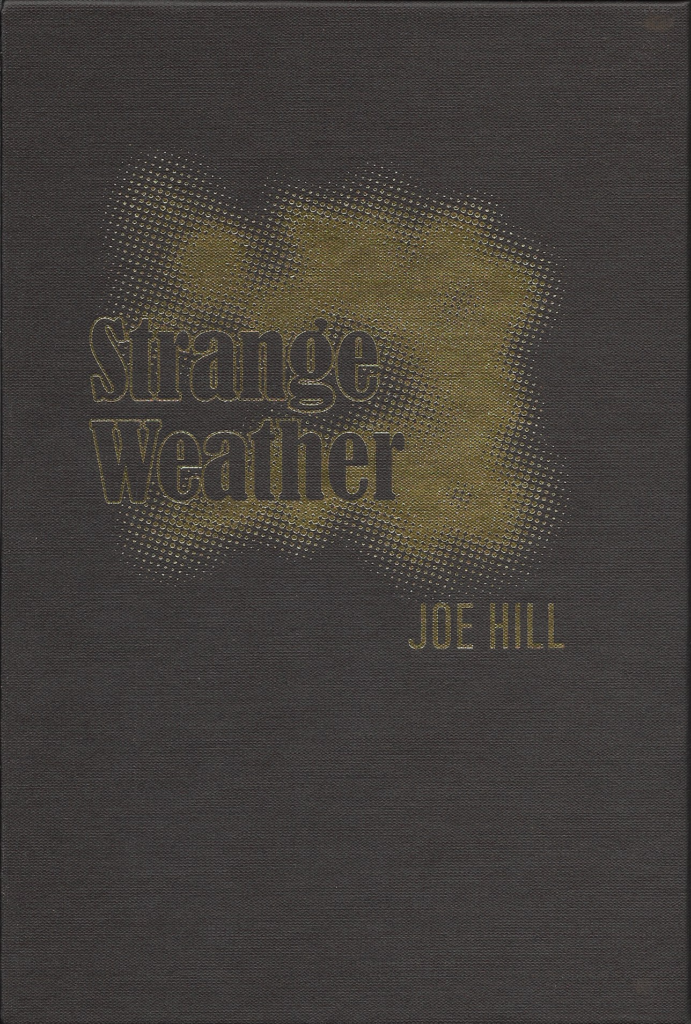
Hill, Joe. Strange Weather. William Morrow, 2017. First edition hardback, “Barnes & Noble Black Friday Signed Edition” as per the ISBN and copyright page (the first signed edition listed), one of an undetermined number with a signature page bound in (very similar to the one in Full Throttle), a Fine copy in a Fine dust jacket. Collection of four novellas. Bought for $40.05 from a fellow Biblio dealer.
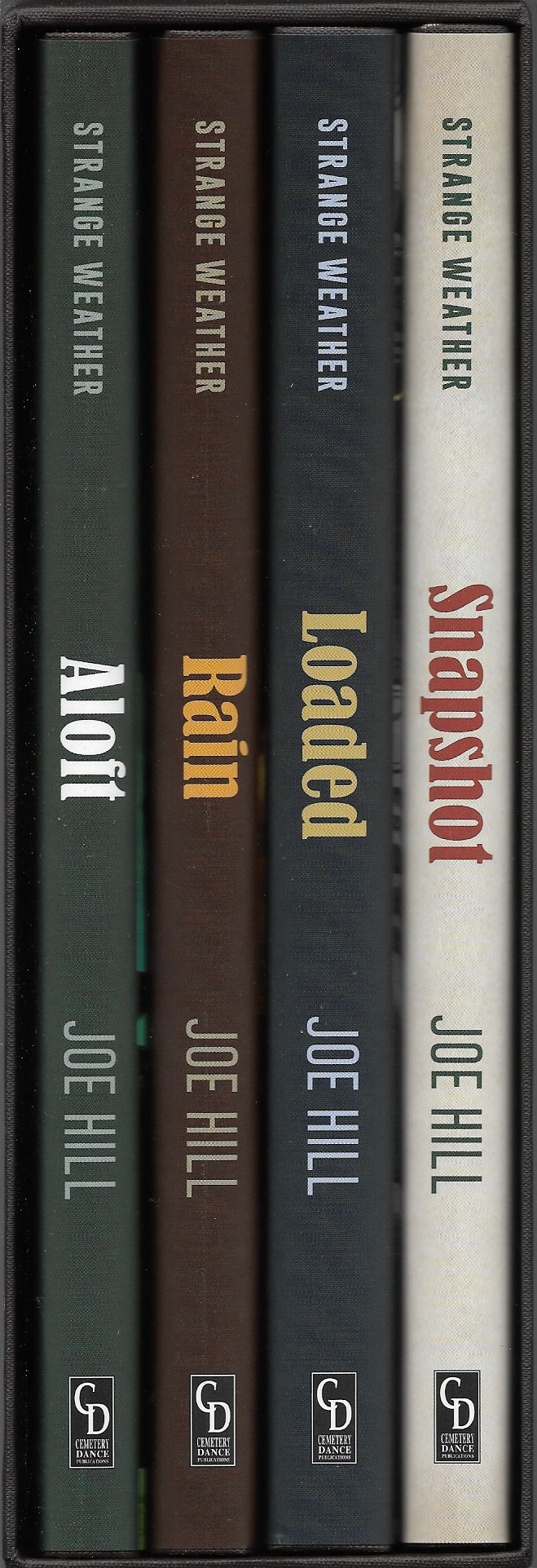
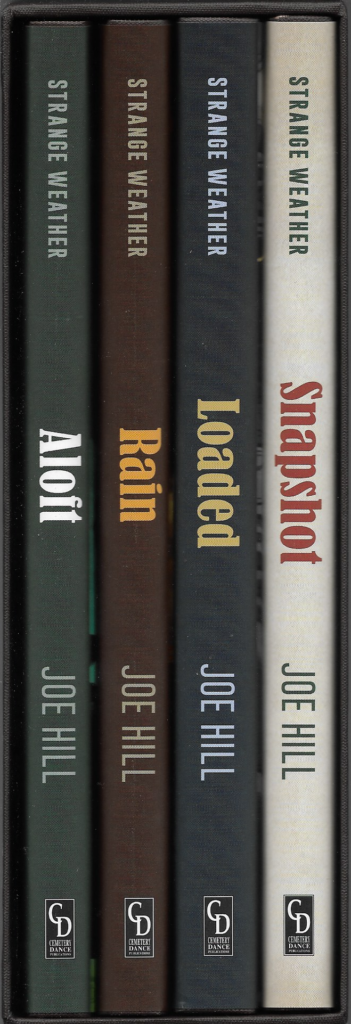
Hill, Joe. Strange Weather: Aloft, Rain, Loaded, and Snapshot. Cemetery Dance, 2022. First edition thus and first separate editions of all four individual titles, all of which were originally published in Hill’s 2017 Strange Weather novella collection, each volume one of 948 copies signed by the artist (Charles Paul Wilson III for Aloft, Renae De Luz and Ray Dillon for Rain, and Zach Howard for Loaded), and Snapshot being numbered 781 and signed by both Hill and artist Gabriel Rodriguez, all Fine copies in Fine dust jackets and a Fine slipcase. (There was also evidently a 52 copy lettered edition offered for $1,000 I haven’t seen.) An attractive production. Bought for cover price, and sold out five years before publication…
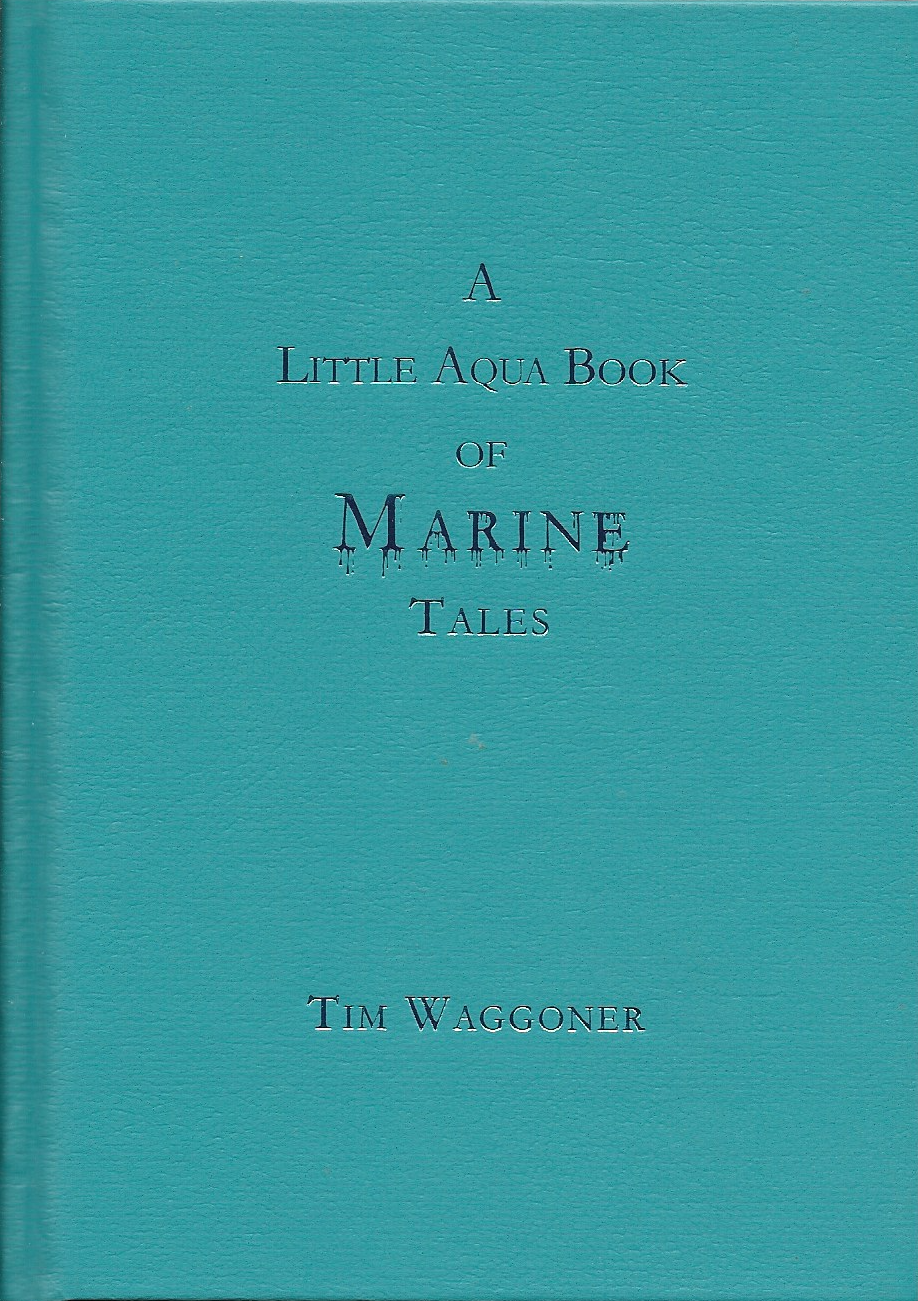
Hodgson, William Hope (Michael Bailey, editor). A Little Aquamarine Book of Agitated Water. Borderlands Press, 2022. First edition hardback, #462 of 500 copies signed by the editor, a Fine copy, sans dust jacket, as issued. Includes many (but by no means all) of Hodgson’s eerie stories and poems about the sea, something he really excelled in.

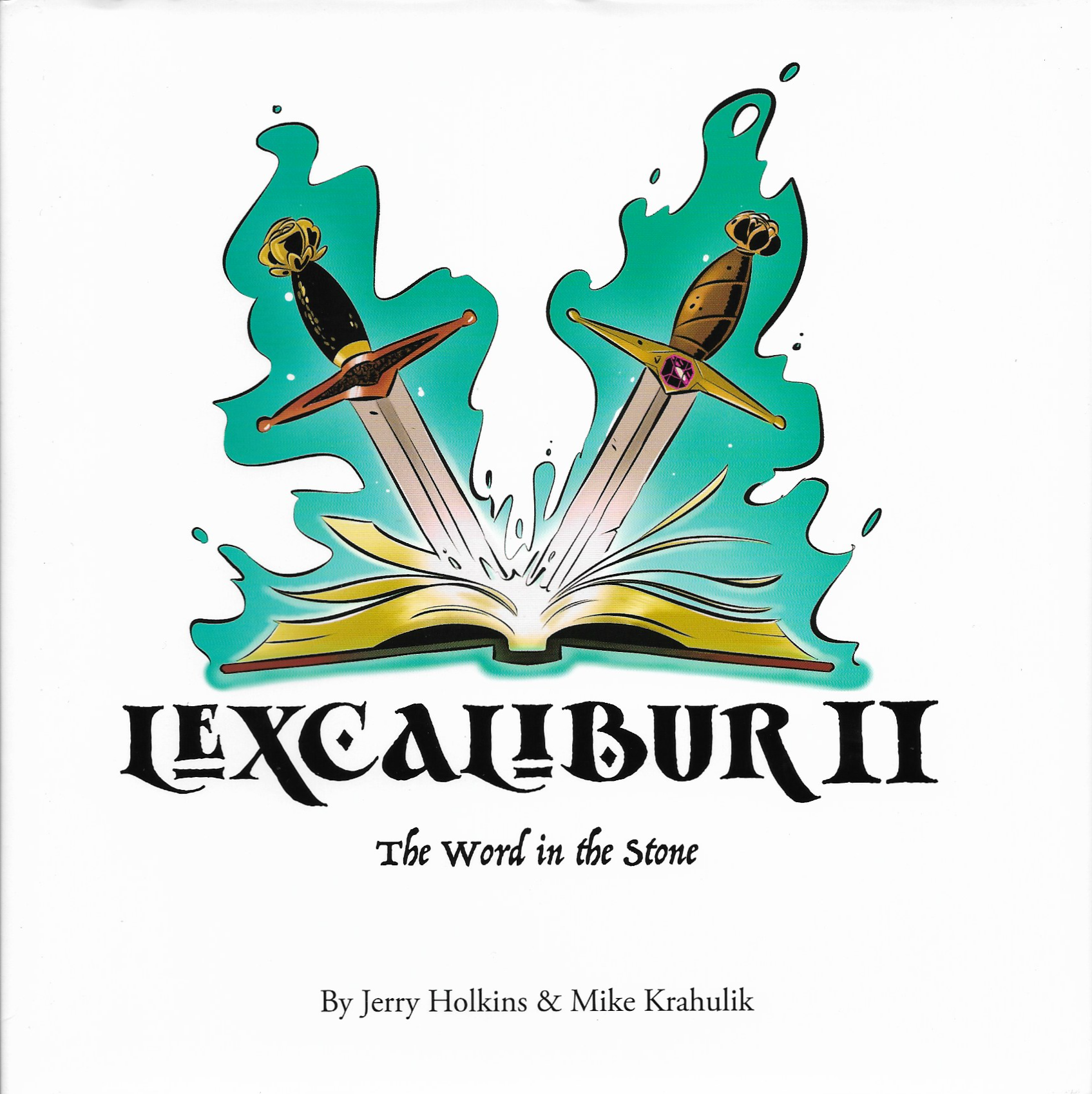
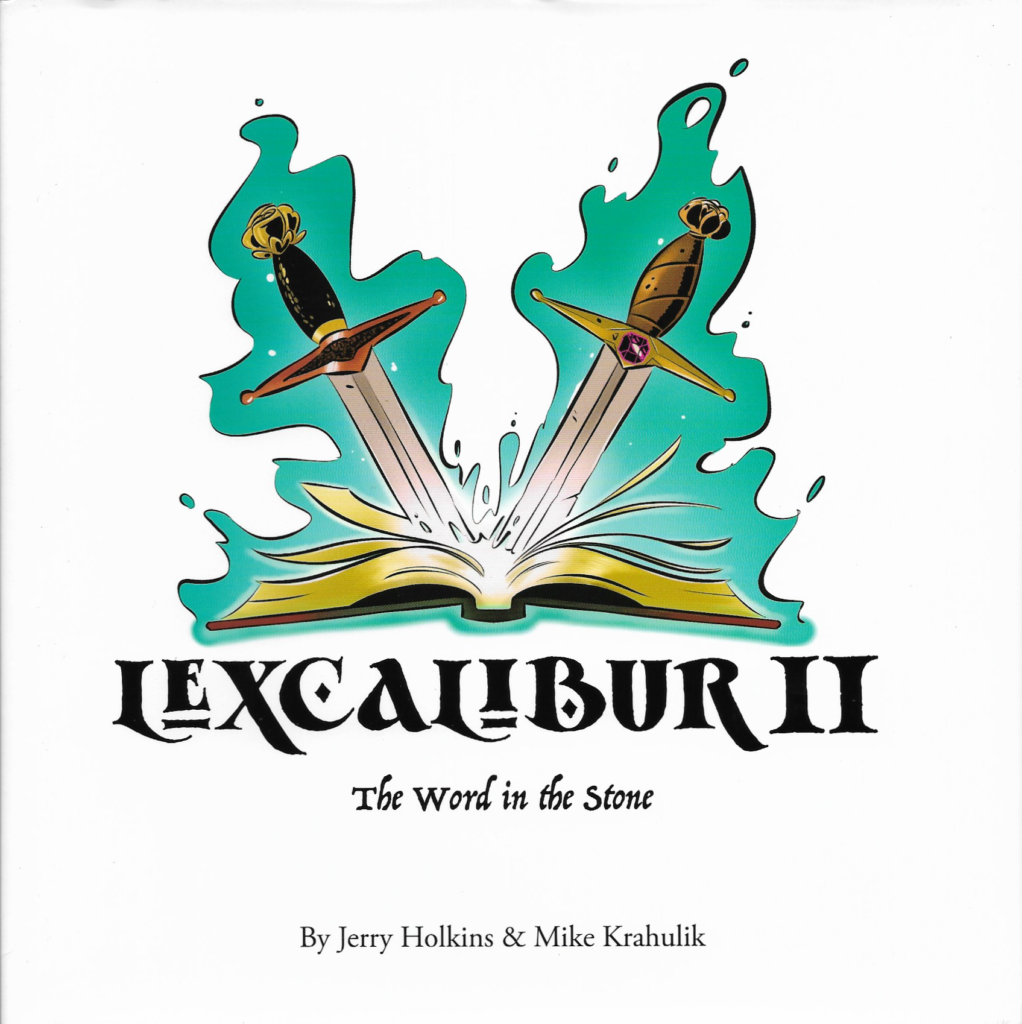
Holkins, Jerry and Mike Krahulik. Lexcalibur II: The Word in the Stone. Penny Arcade, 2021 (i.e., 2022). First edition hardback, a Fine copy in a Fine dust jacket. More fantasy-gaming themed humorous poetry, and sequel to the first Lexcalibur.
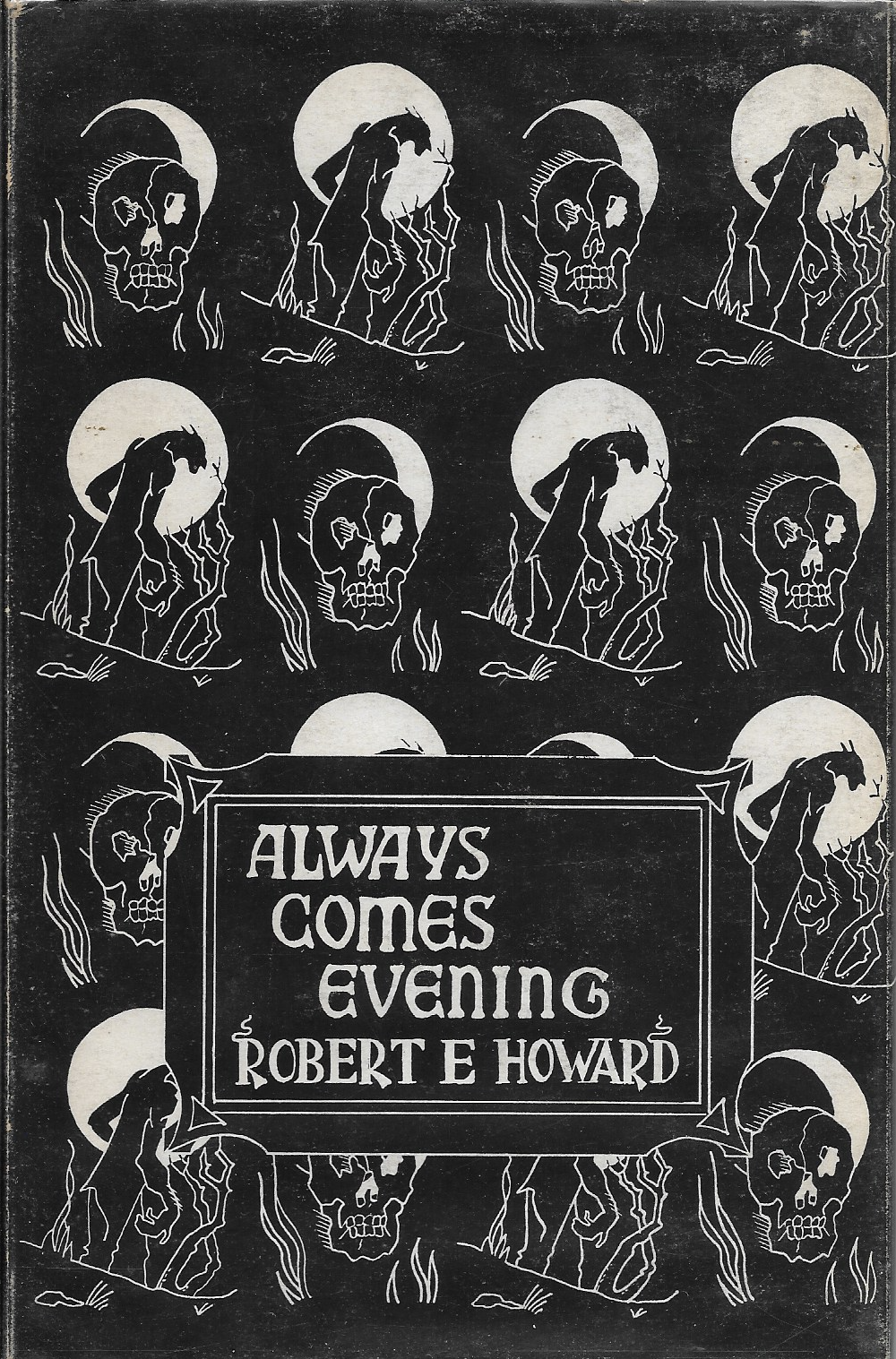
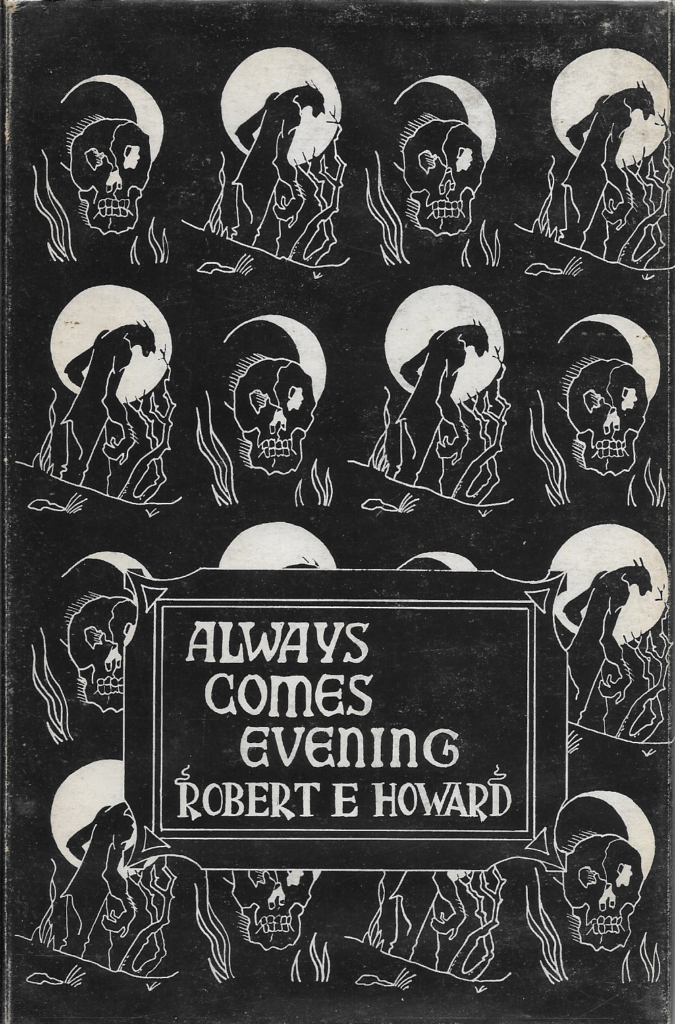
Howard, Robert E. Always Comes Evening. Arkham House, 1957. First edition hardback, a Fine- copy with an old bookstore sticker inside the front cover and just a trace of foxing to gutters, in a Near Fine, price-slipped dust jacket with slight dust soiling to rear cover and slight age-darkening to letters, and a few other touches of wear. “Another volume that must be called a landmark.” – S. T. Joshi, Sixty Years of Arkham House. Howard’s first poetry collection, the second of three Howard books published by Arkham House, compiled by Howard estate executor Glenn Lord. Derleth, Thirty Years of Arkham House, 50. Joshi, Sixty Years of Arkham House 50. Jaffrey, Horrors and Unpleasantries, 49. Nielsen, Arkham House Books 53. Nielsen also ranks it 9th for scarcity and 13th most valuable, though the latter is out of date, since it’s much pricier and harder to find that Skull-Face and Others these days. Bought off eBay for $650.
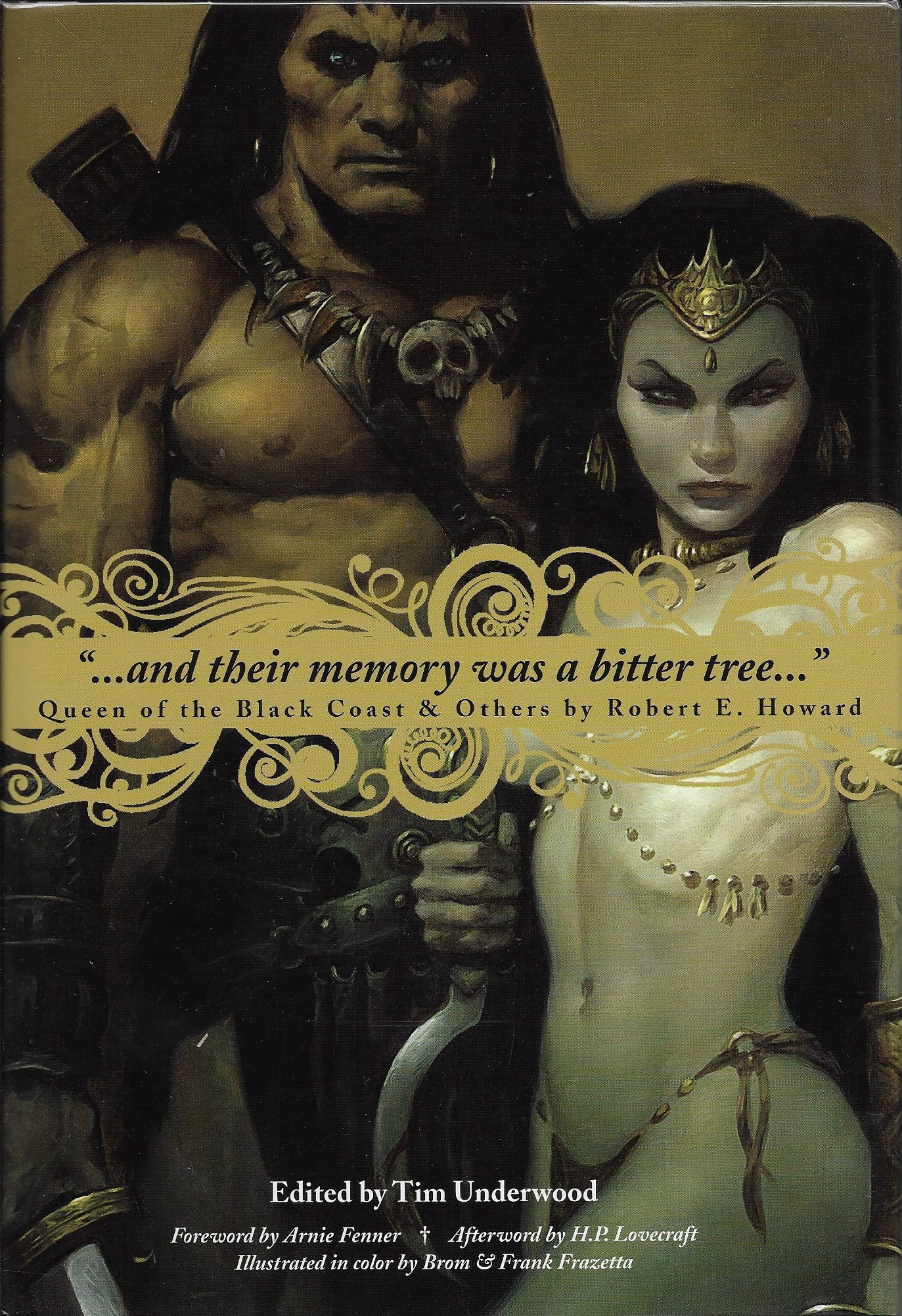
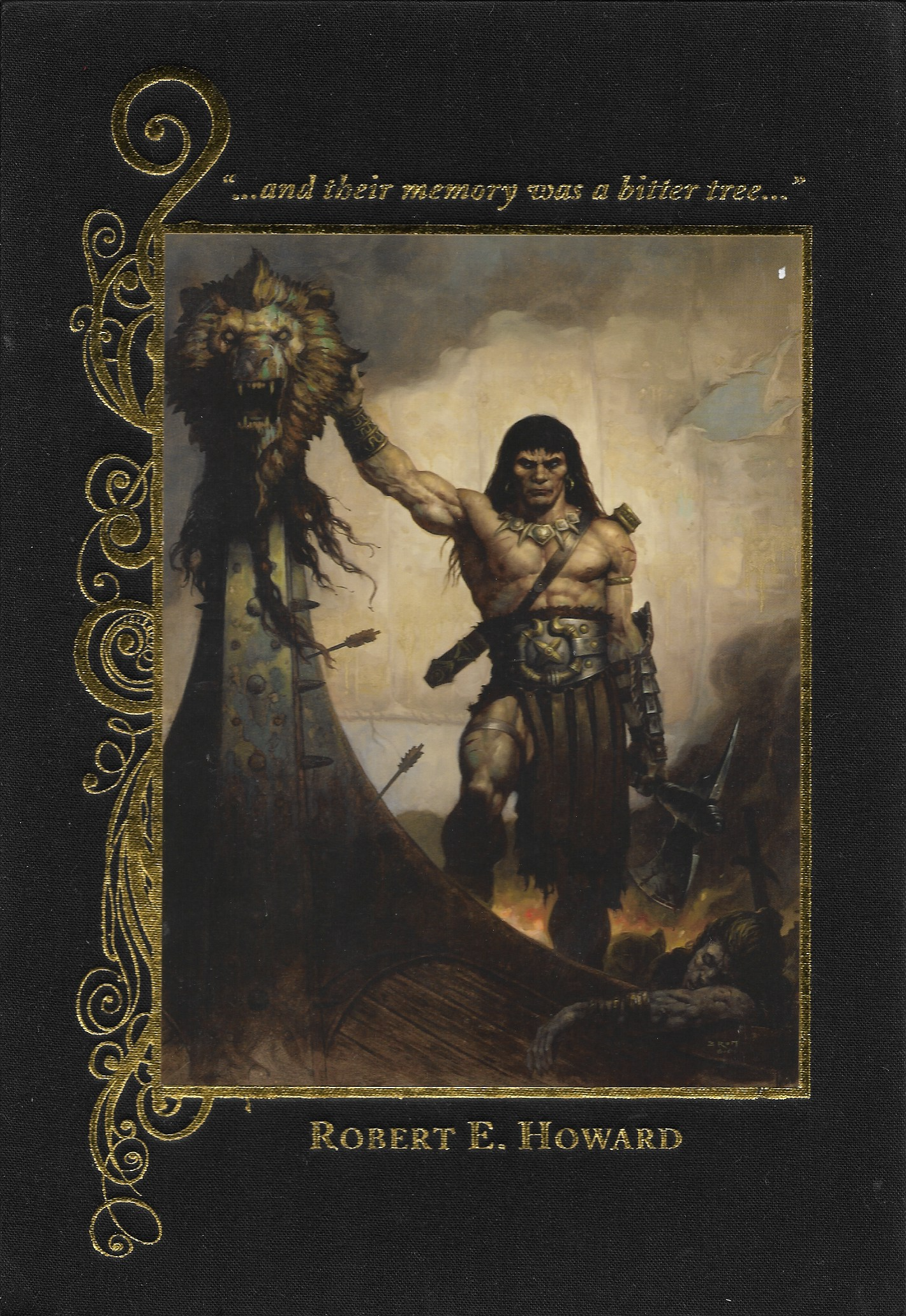
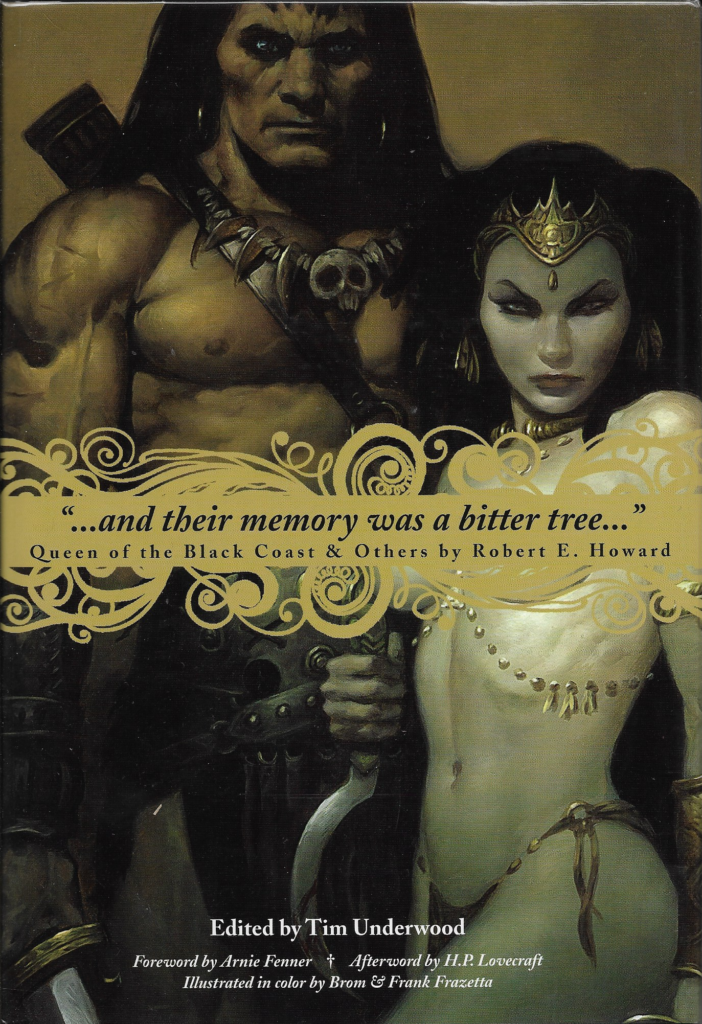
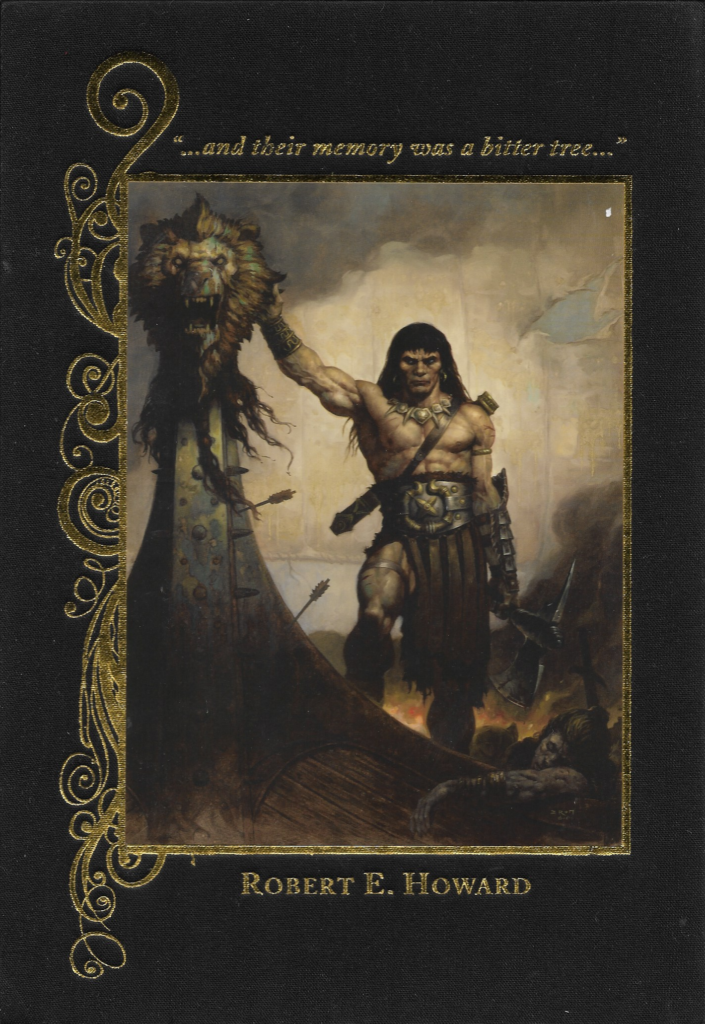
Howard, Robert E. (Tim Underwood, editor). “…and their memory was a bitter tree…”. BlackBart, 2008. First edition hardback, #45 of 500 copies signed by illustrator Brom, a Fine copy in a Fine dust jacket and a Fine slipcase. A volume lavishly illustrated in color by Brom and Frank Frazetta, with a preface by Arnie Fenner and an afterword by H. P. Lovecraft. Bought for $125. This appears to be the only book BlackBart ever did.
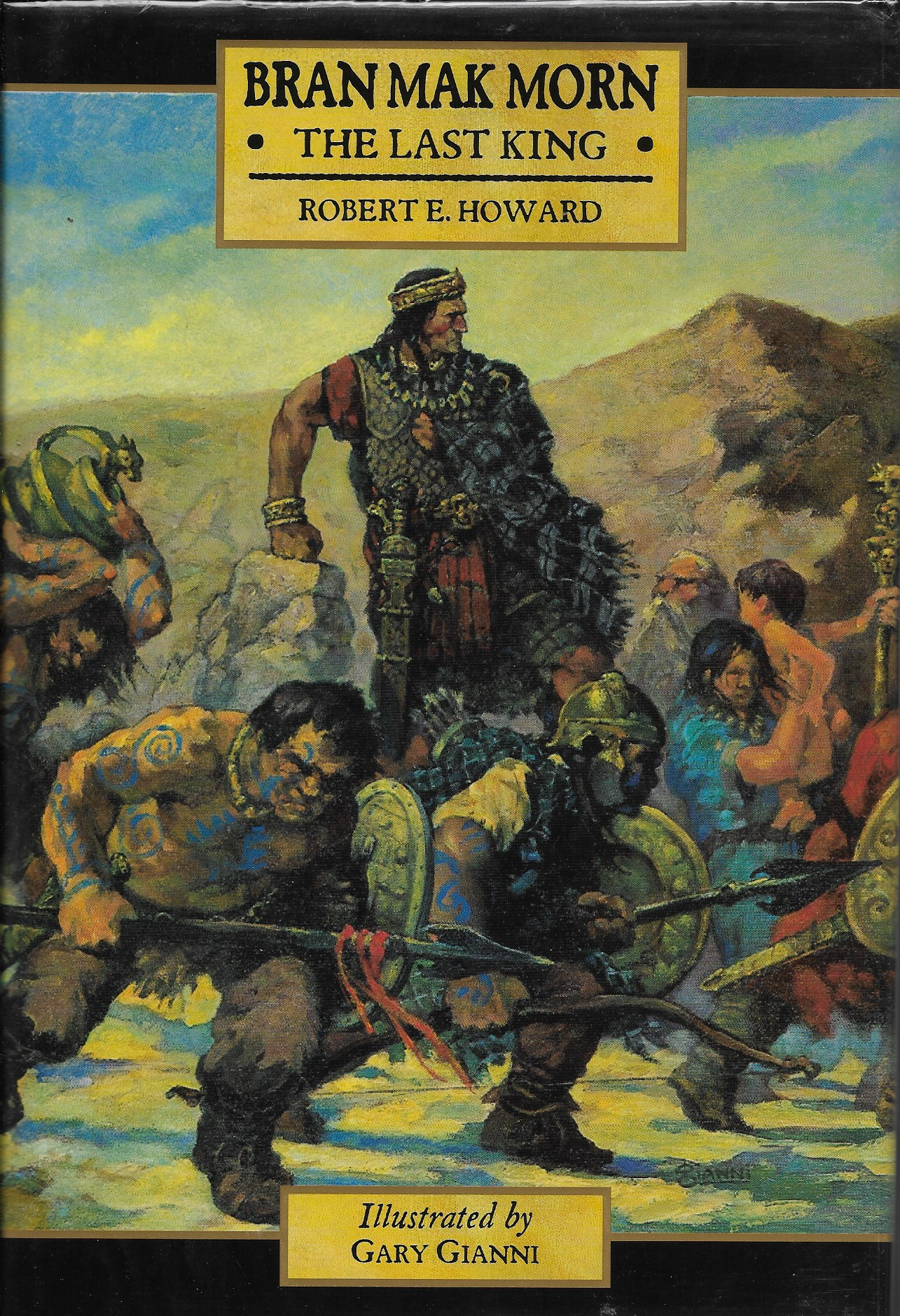
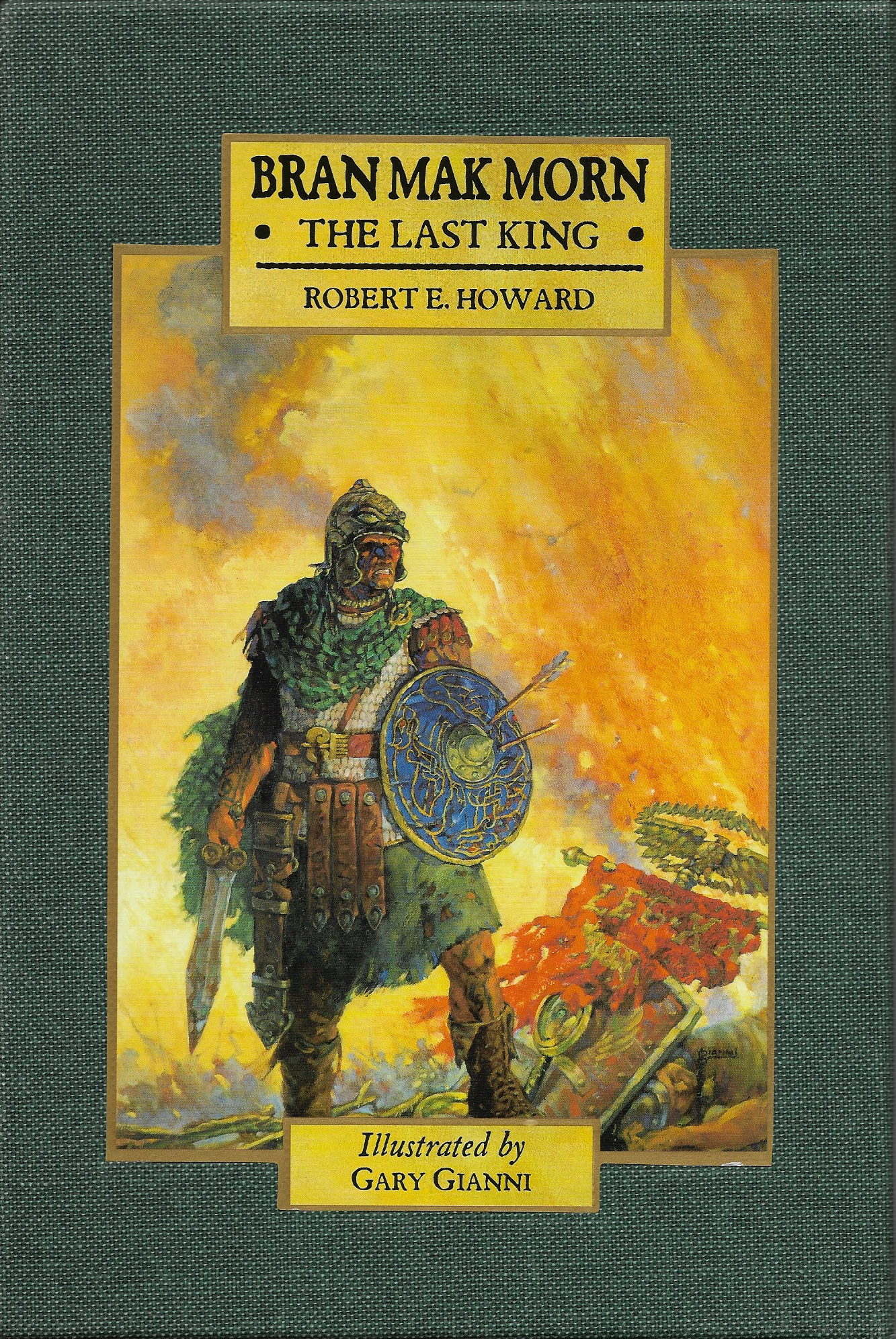
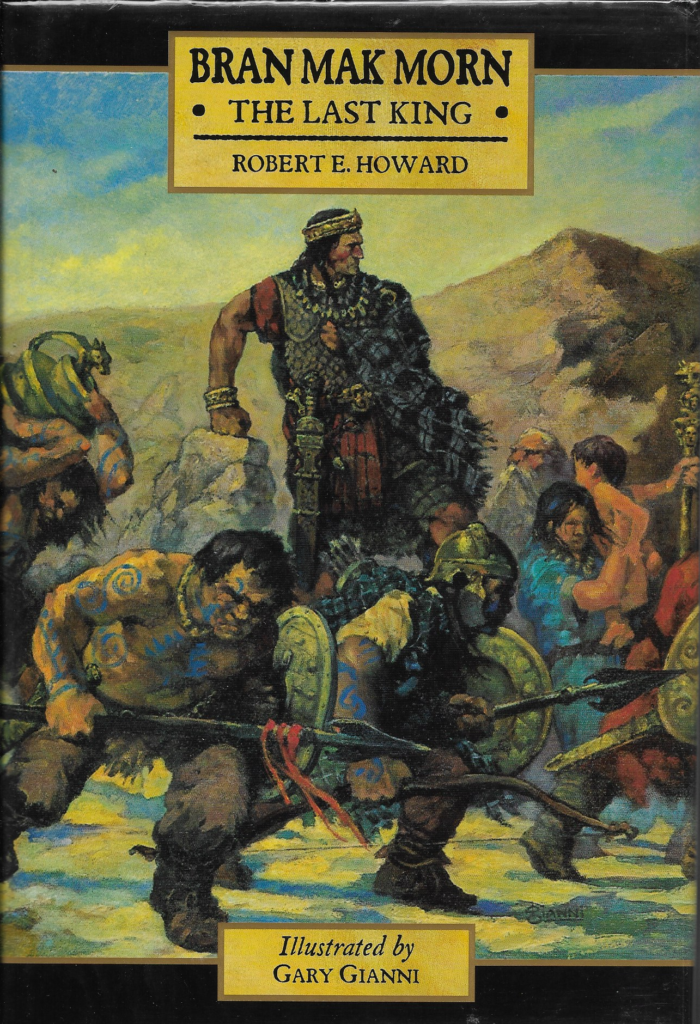
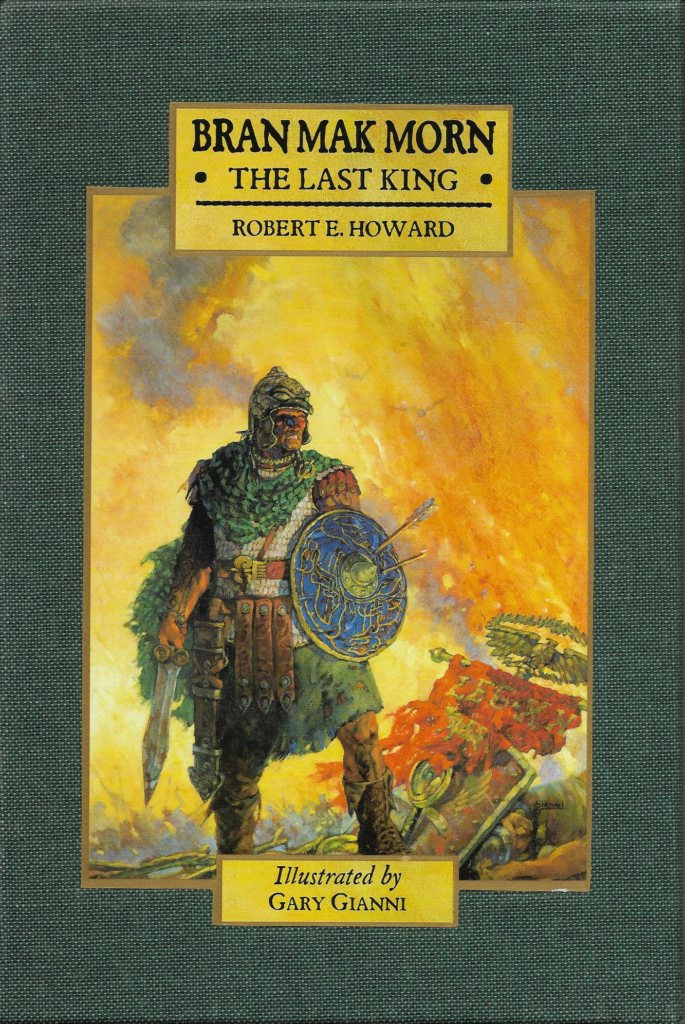
Howard, Robert E. Bran Mak Morn: The Last King. Wandering Star, 2005. First edition hardback, #634 of 850 numbered copies signed by illustrator Gary Gianni, a Fine copy in a Fine dust jacket and a Fine- slipcase with a trace of wear at points, with a CD containing a reading of “Worms of the Earth” laid in. This and the other Wandering Star books here have gilt top edges. Bought for $125.
Howard, Robert E. The Iron Man. Donald M. Grant, 1976. First edition hardback, a Near Fine copy with a 1/2″ high area of abrasion across bottom of front and back boards near spine (but not at the spine itself), in a Fine- dust jacket with slight touches of wear at points and elsewhere. Howard’s boxing stories. Obtained as a throw-in freebie on another order.
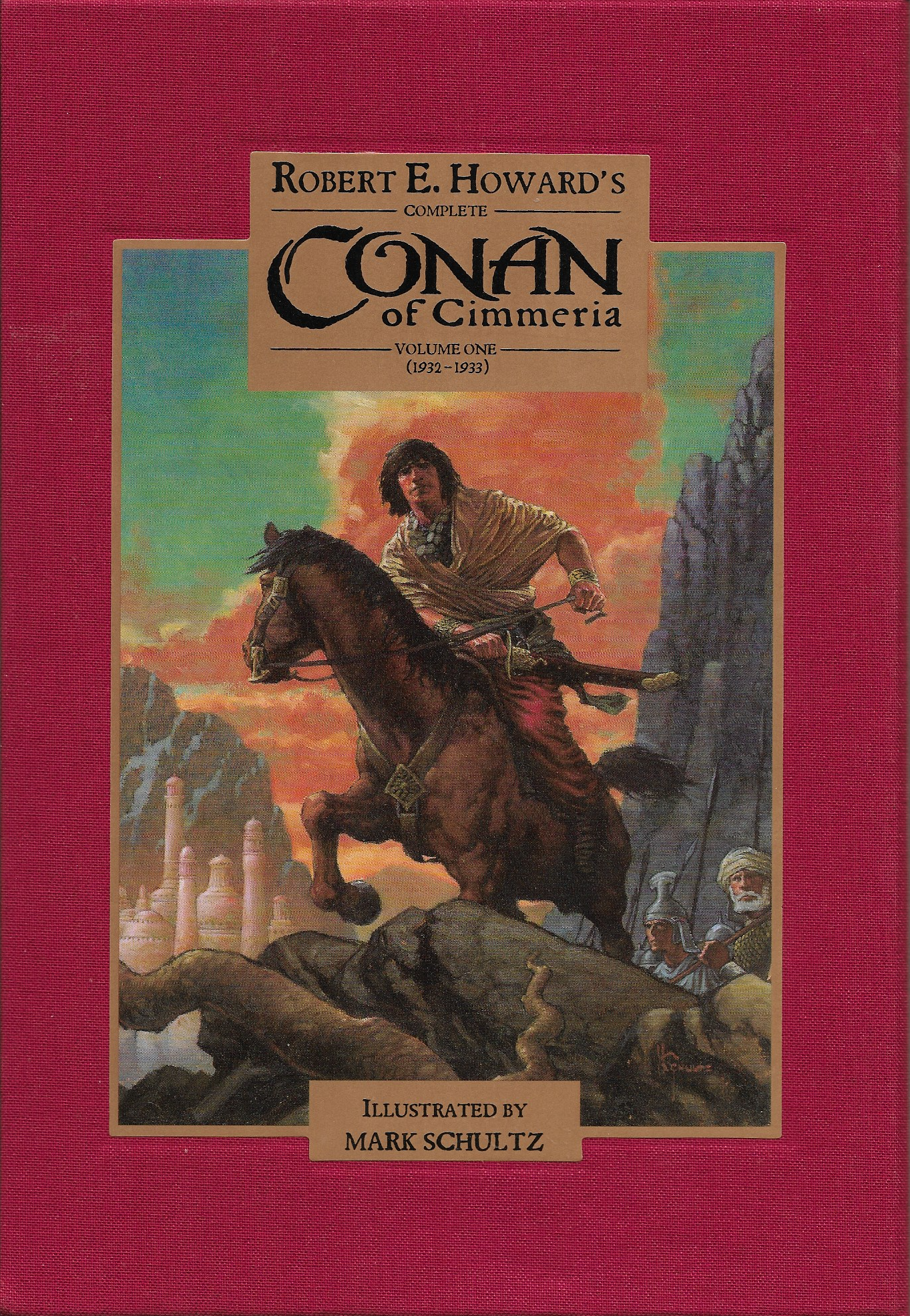
Howard, Robert E. Robert E. Howard’s Conan of Cimmeria: Volume One (1932-1933). Wandering Star, 2002. First edition hardback, #89 of 100A [sic] numbered slipcased copies signed by artist Mark Schultz, with eight pages of black and white sketches after page 348, a Fine copy in a Fine dust jacket and a Fine slipcase, bought still in shrinkwrap (taken out to verify the state). Bought for $300 (which is all of $30 more than original cover price 20 years ago, and the trade edition typically lists for more) from a private collector.
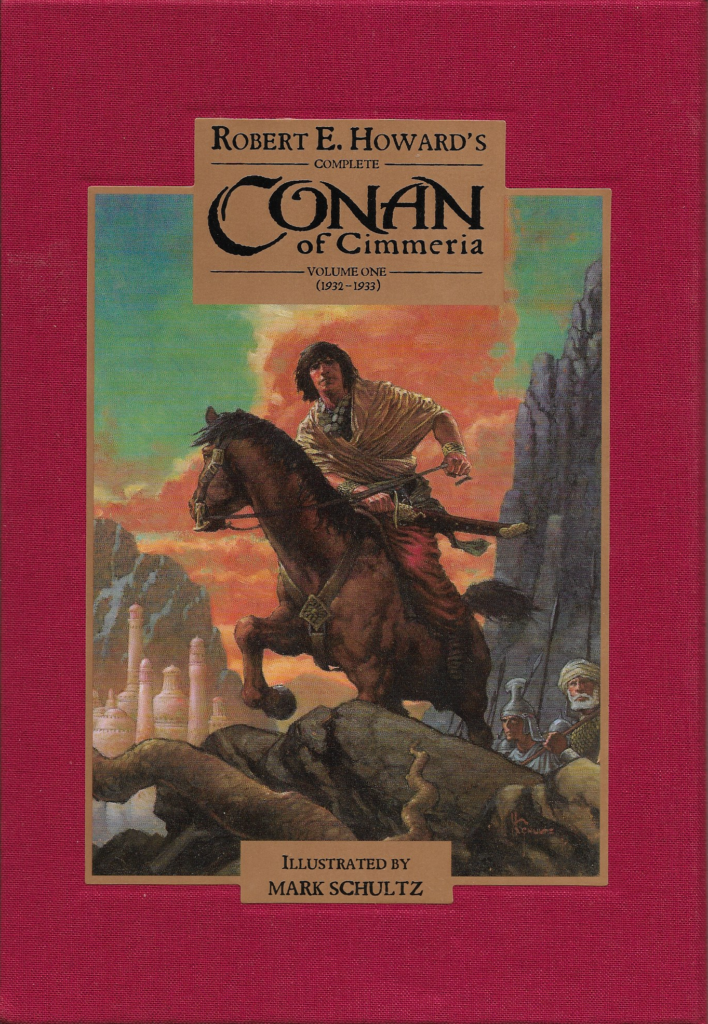
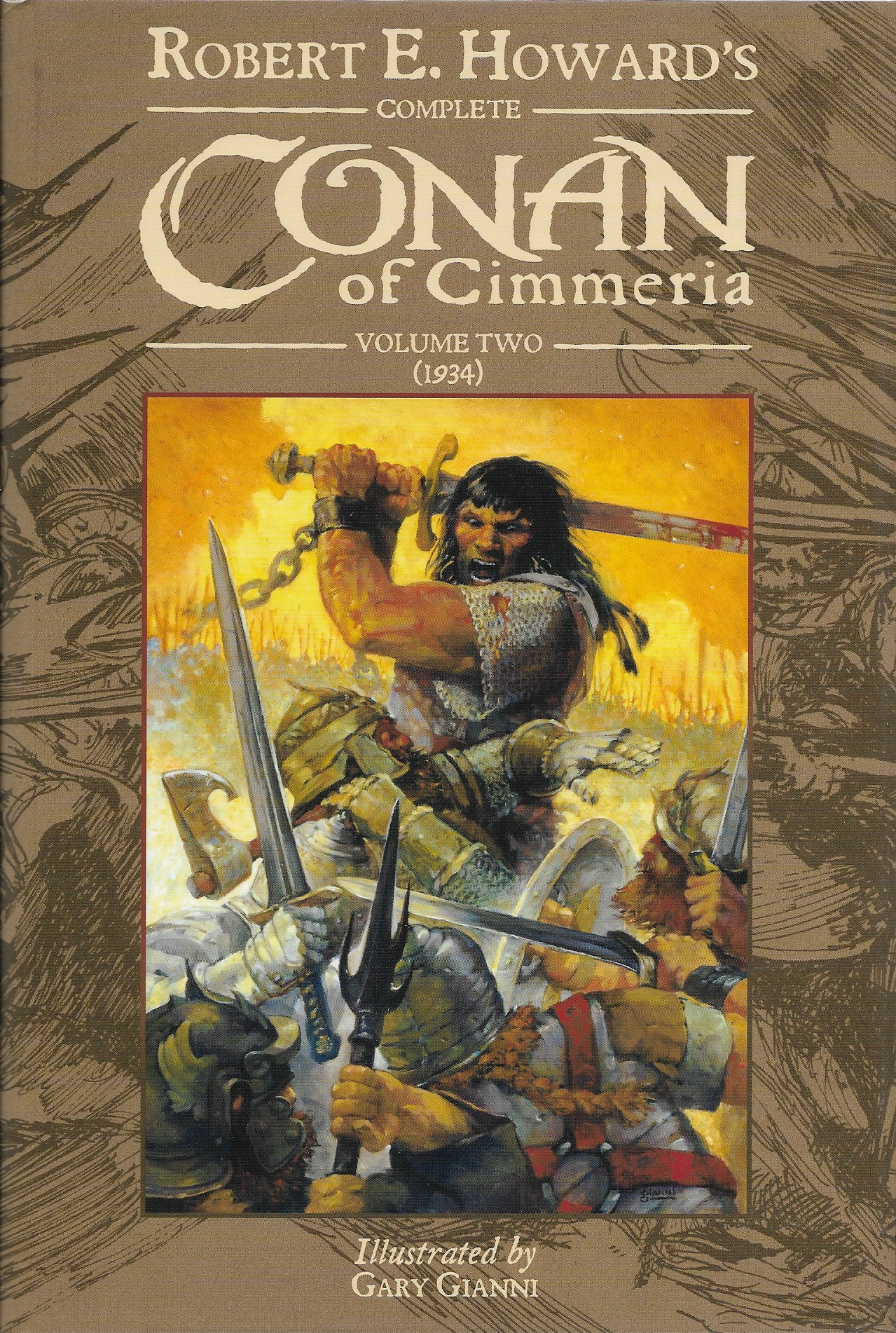
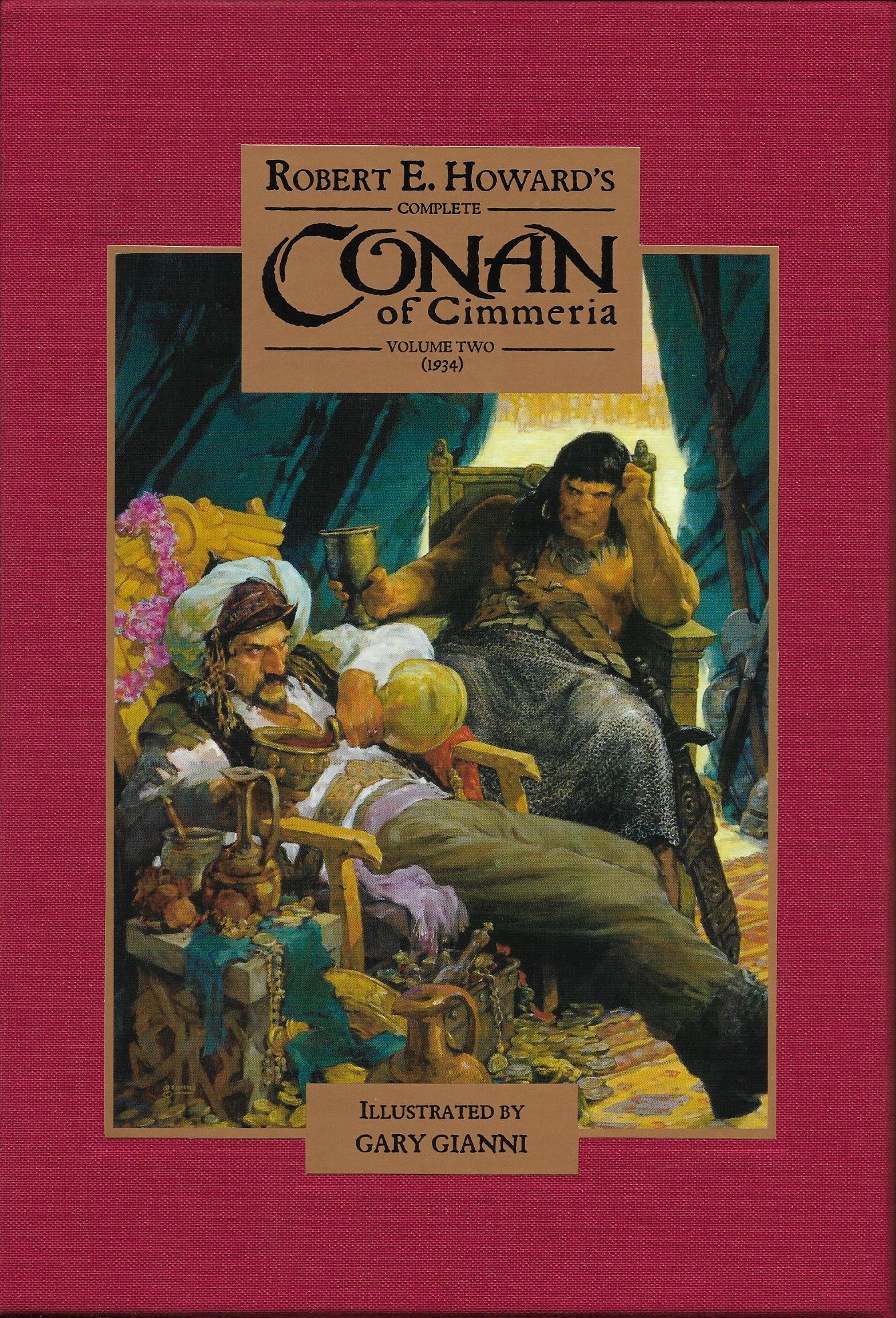
Howard, Robert E. Robert E. Howard’s Complete Conan of Cimmeria Volume Two (1934). Wandering Star, 2005. First edition hardback, #1462 of 1950 numbered copies signed by illustrator Gary Gianni, a Fine copy in a Fine dust jacket and a Fine slipcase, with flyer for volume 3 with limitation number laid in. Bought for $187.50.
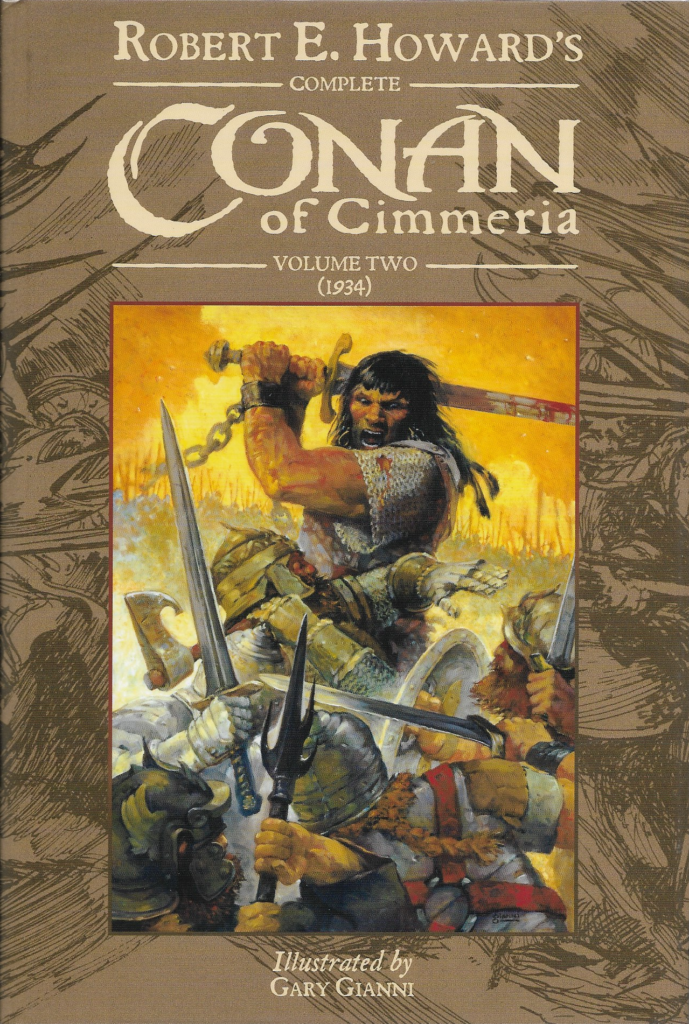
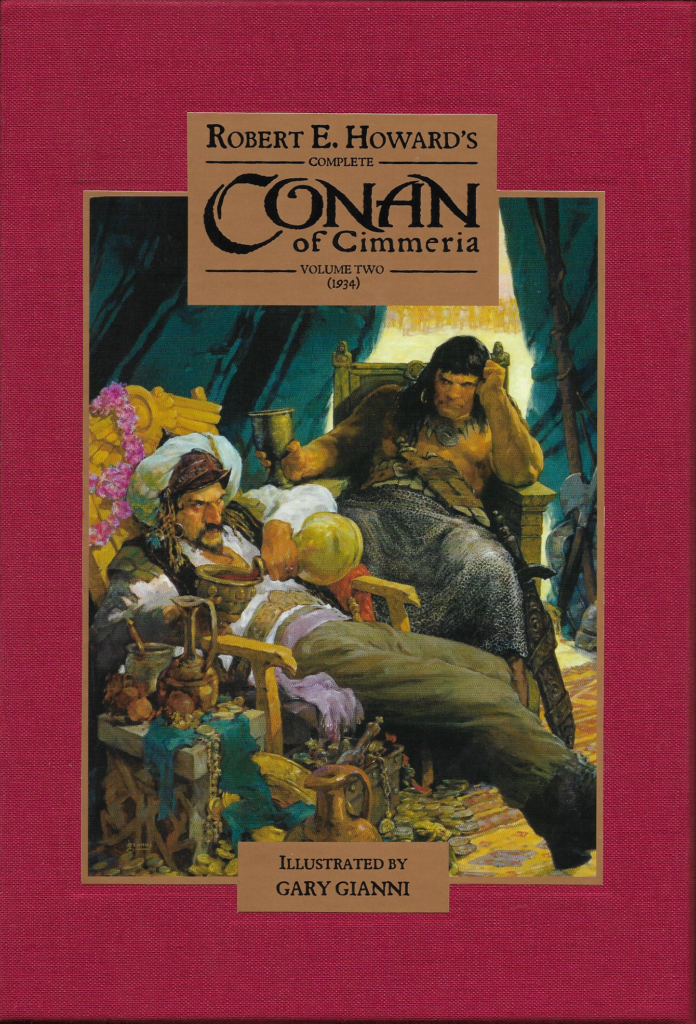
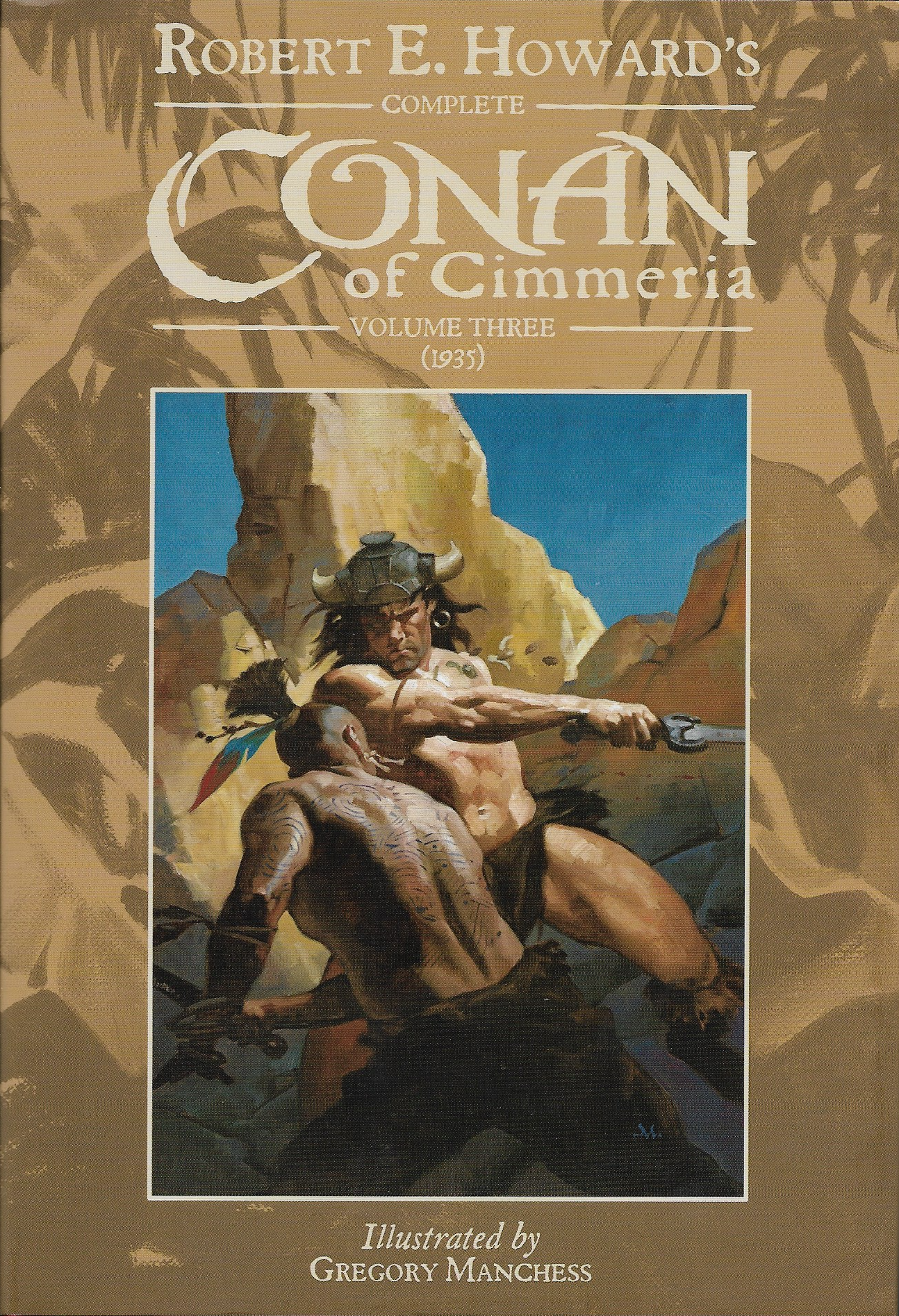
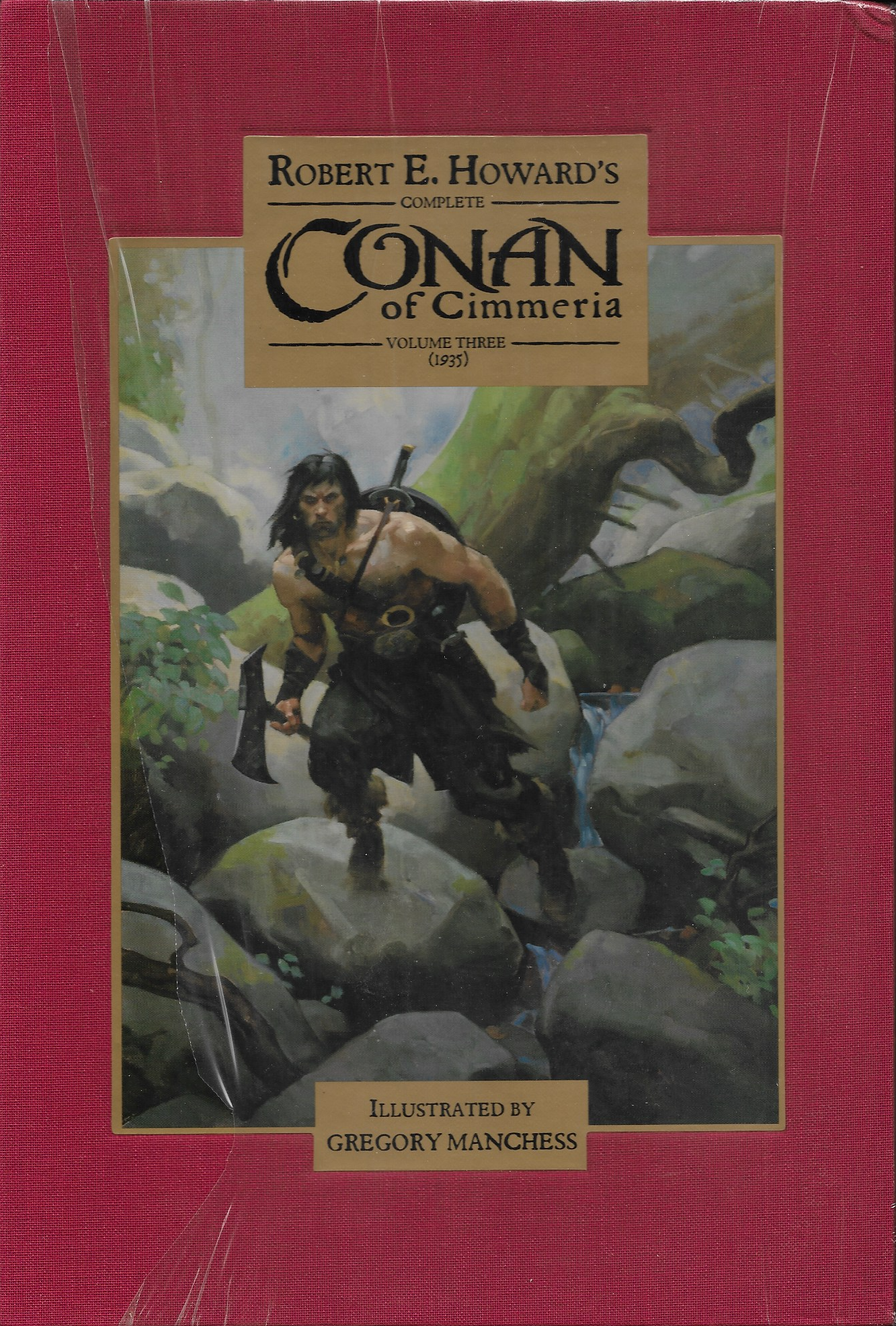
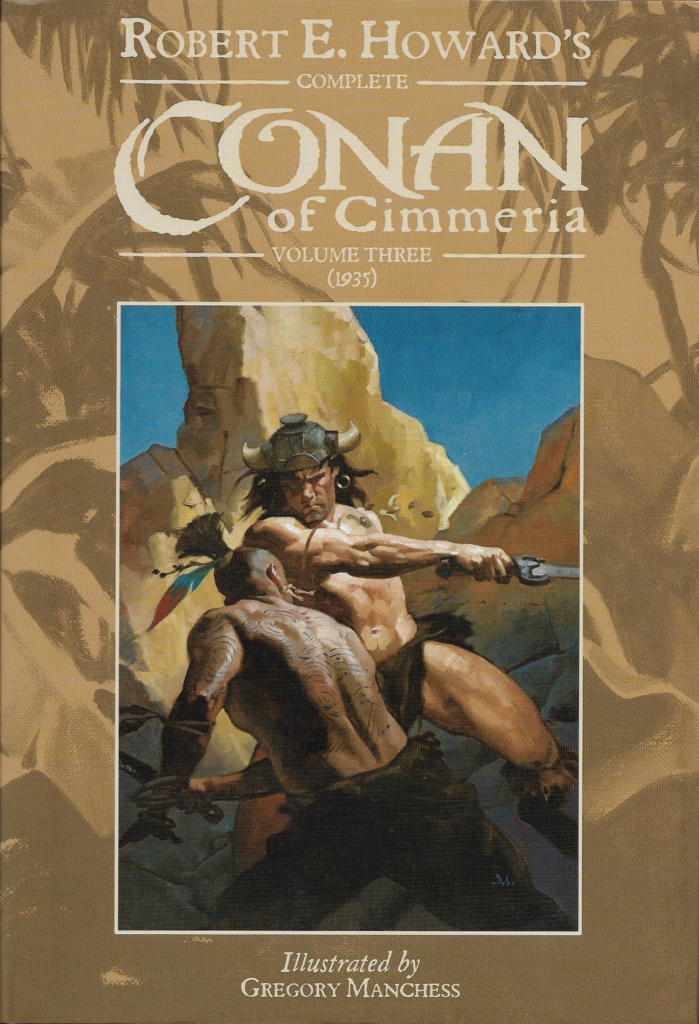
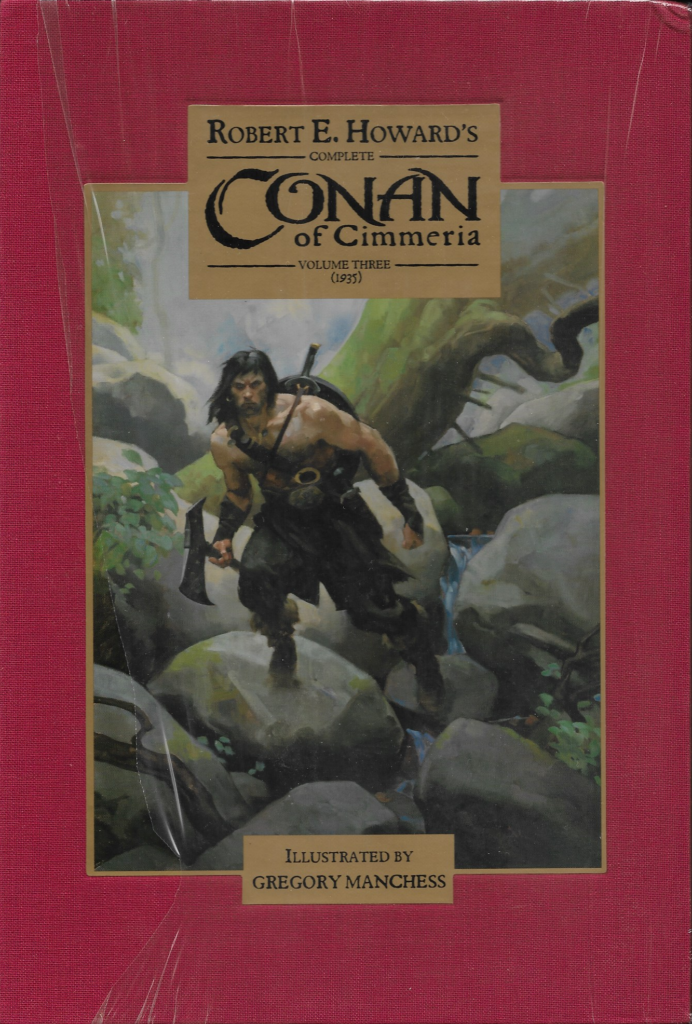
Howard, Robert E. Robert E. Howard’s Complete Conan of Cimmeria Volume Three (1935). Wandering Star, 2005. First edition hardback, 401 of 1000 numbered copies signed by illustrator Gregory Manchess. Bought for $175.
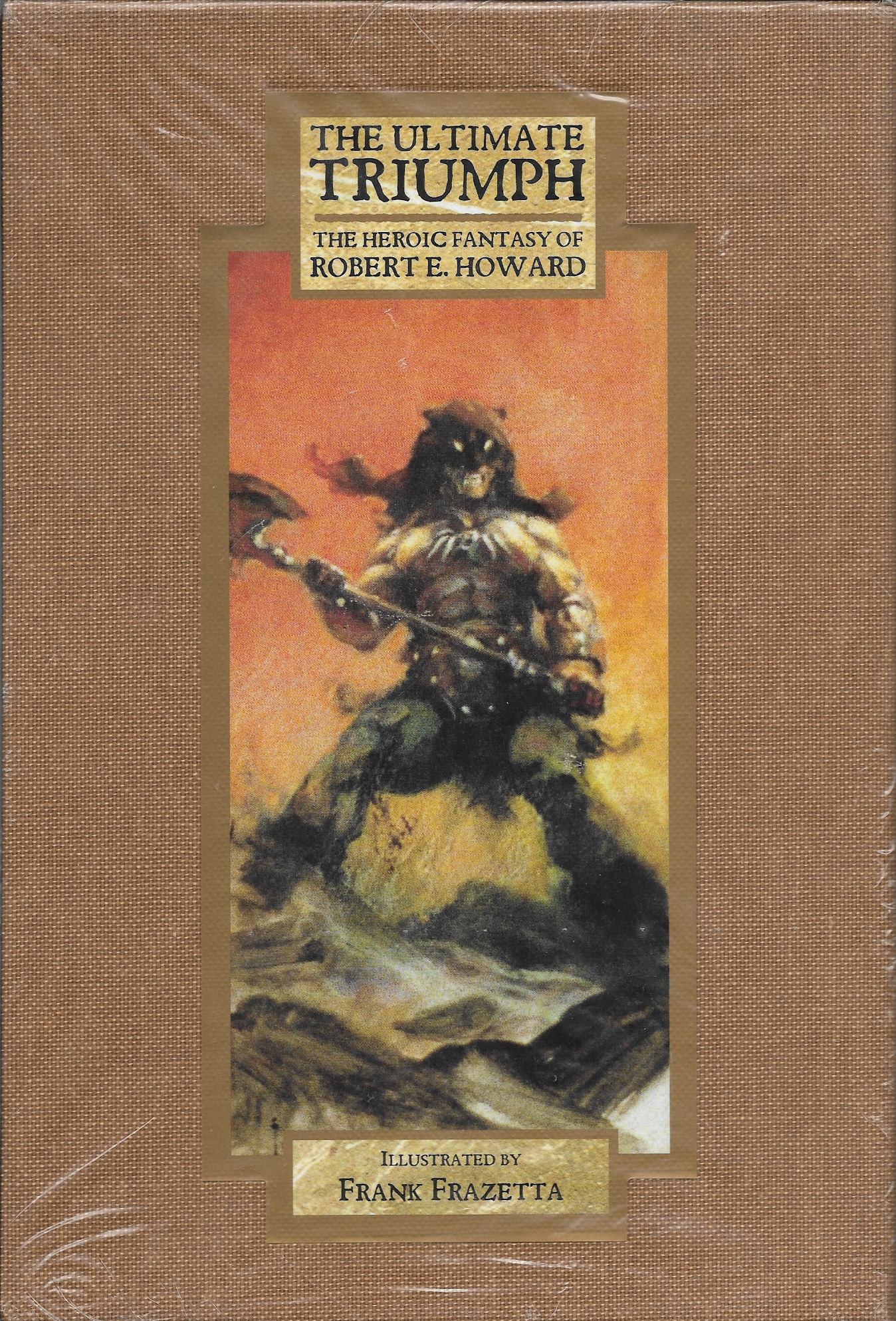
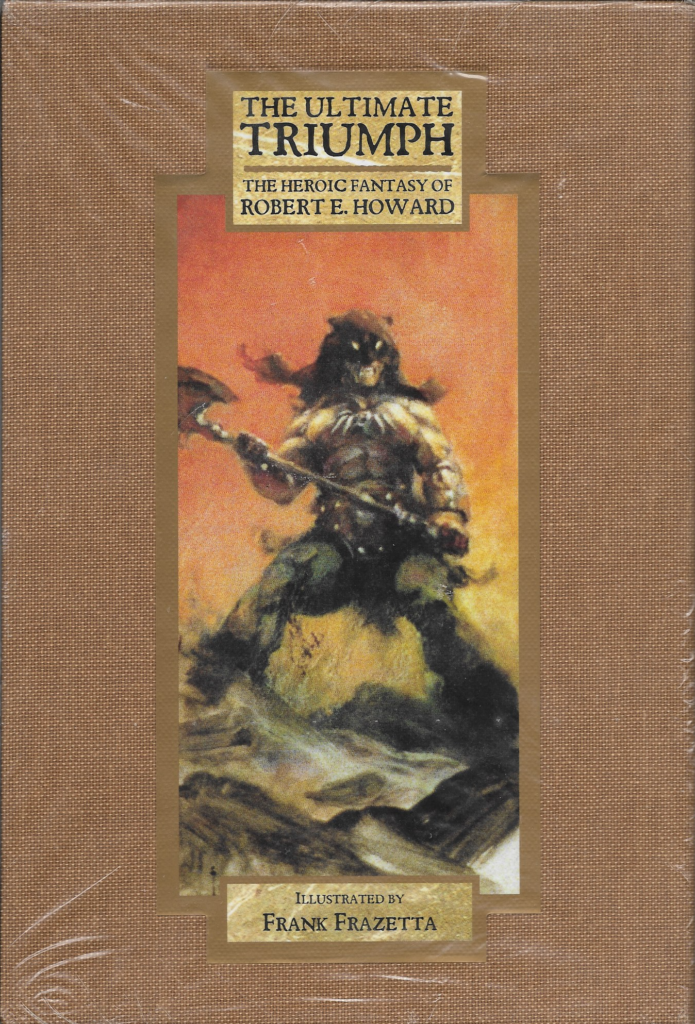
Howard, Robert E. The Ultimate Triumph: The Heroic Fantasy of Robert E Howard. Wandering Star, 1999. First edition hardback, #0507 of 1,500 slipcased copies, a Fine copy in a Fine dust jacket and a Fine slipcase, still in shrinkwrap, with limitation bookmark. Bought for $125 from a private collector.
(Howard, Robert E.) Joe R. Lansdale, Nathan Fox and Dave Stewart. Pigeons From Hell. Dark Horse, 2009. First edition graphic novel trade paperback original, a Fine copy, signed by Lansdale. Based on the Robert E. Howard novella. Bought for $10 from a private collector.
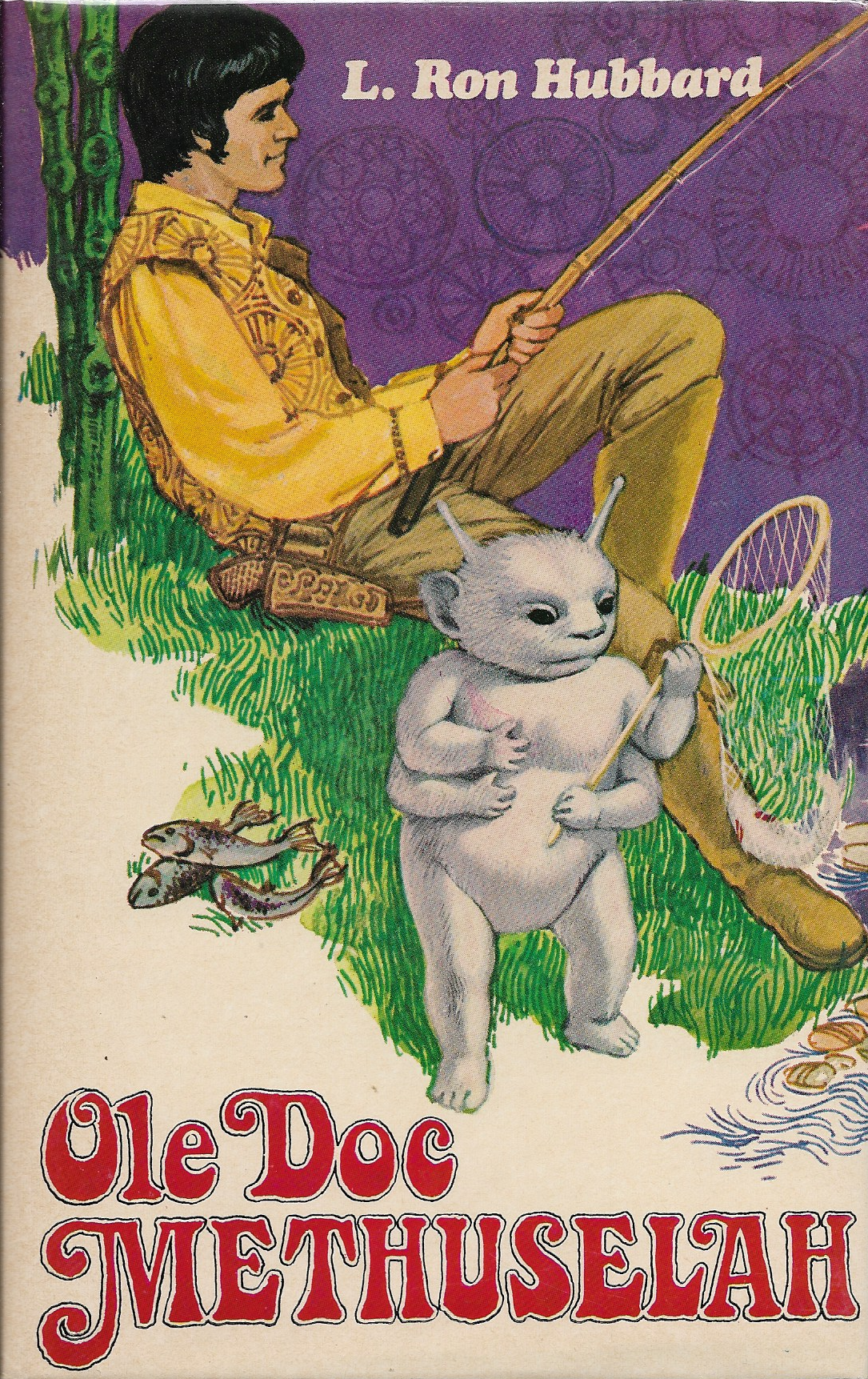
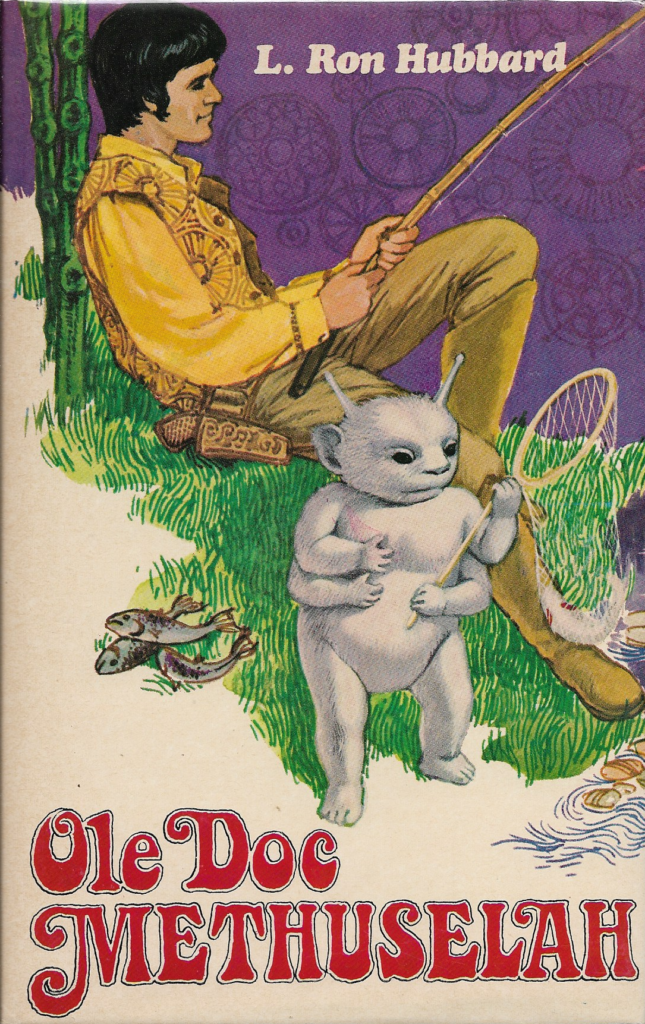
Hubbard, L. Ron. Ole Doc Methuselah. Theta Press, 1970. First edition hardback, a Fine copy in a Fine- dust jacket with age-darkening to white portions. Fixup novel of linked stories originally published 1946-1950. Strangely, there is no printing at all on the spine or cover of the book itself. Currey, page 256. Bought for $12 from Recycled Books.
Hughes, Matt. One More Kill. PS Publishing, 2018. First edition hardback, #22 of 100 signed, numbered copies, a Fine copy in a Fine dust jacket. Bought for £8 plus shipping. I will have one copy of this available in the next Lame Excuse Books catalog.

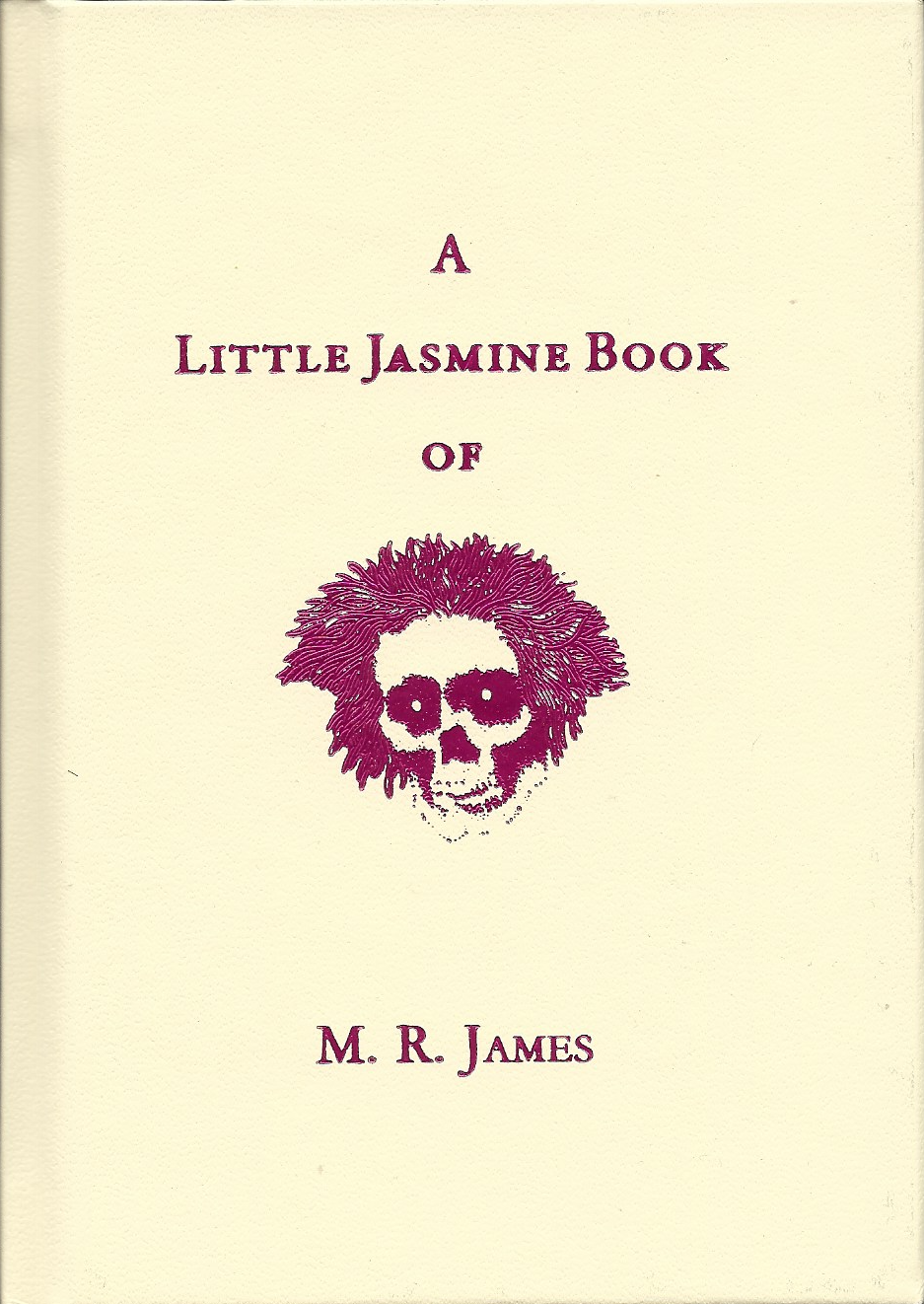
James, M. R. (edited and illustrated by Stephen R. Jones). A Little Jasmine Book of M. R. James. Borderlands Books, 2022. First edition hardback, #462 of 500 copies signed by Jones, a Fine copy, sans dust jacket, as issued. Six tales from the master of the ghost story, plus some nonfiction pieces from James, Jones and others, including a select bibliography.

Kelly, James Patrick. Think Like A Dinosaur. Golden Gryphon Press, 1997. First edition hardback, a Fine- copy with about 3/8″ slight abrasion or fade to the very top of the front cover, in a Fine- dust jacket with slight wrinkling at head and heel and slight edgewear at points and top of dust jacket, inscribed by Kelly: “To Katelein/Keep writing/+/:/Yr pal/Jim/ 4/19/98.” Short story collection. Supplements a perfect but unsigned copy. Bought for $11.49.
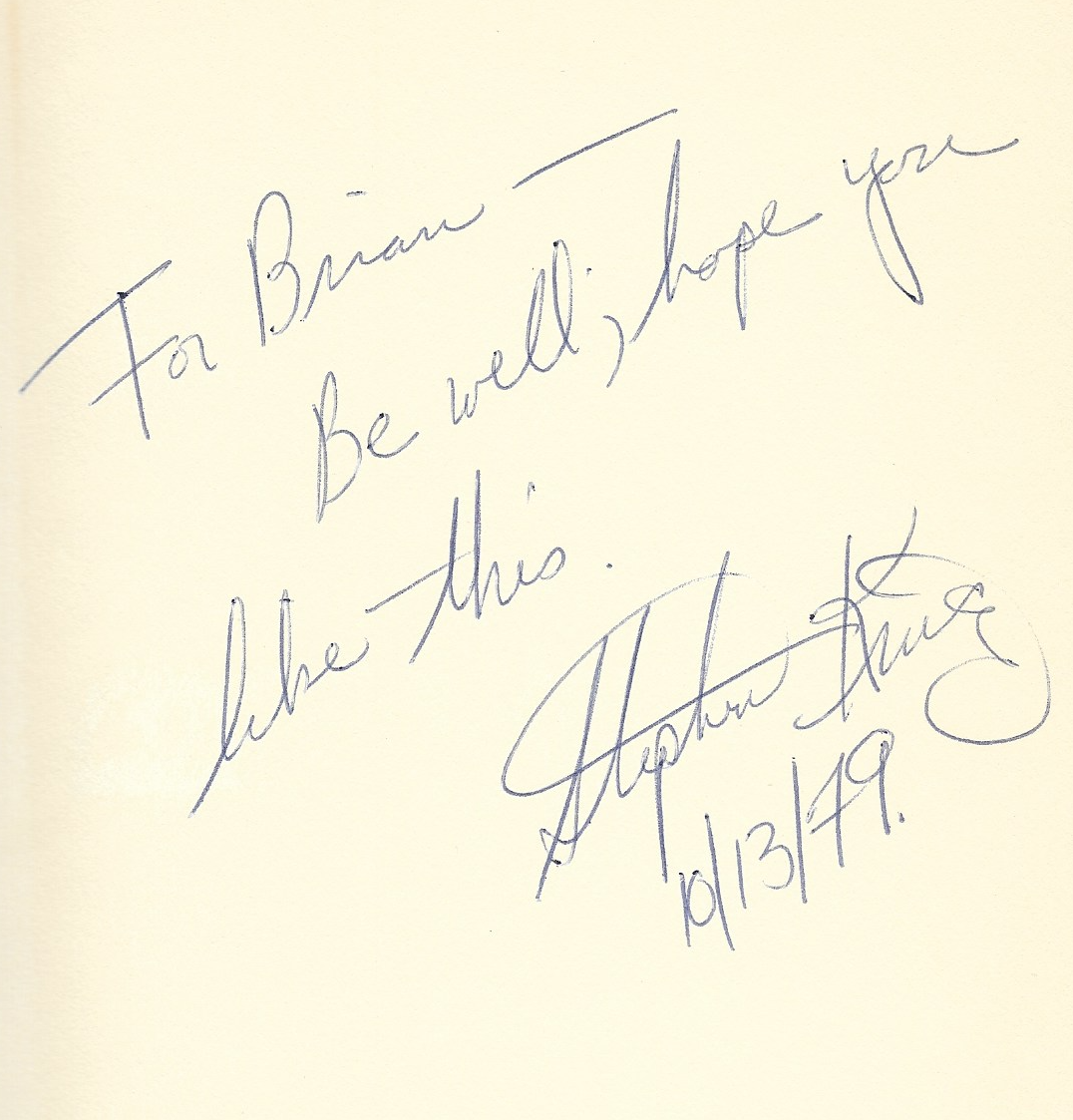
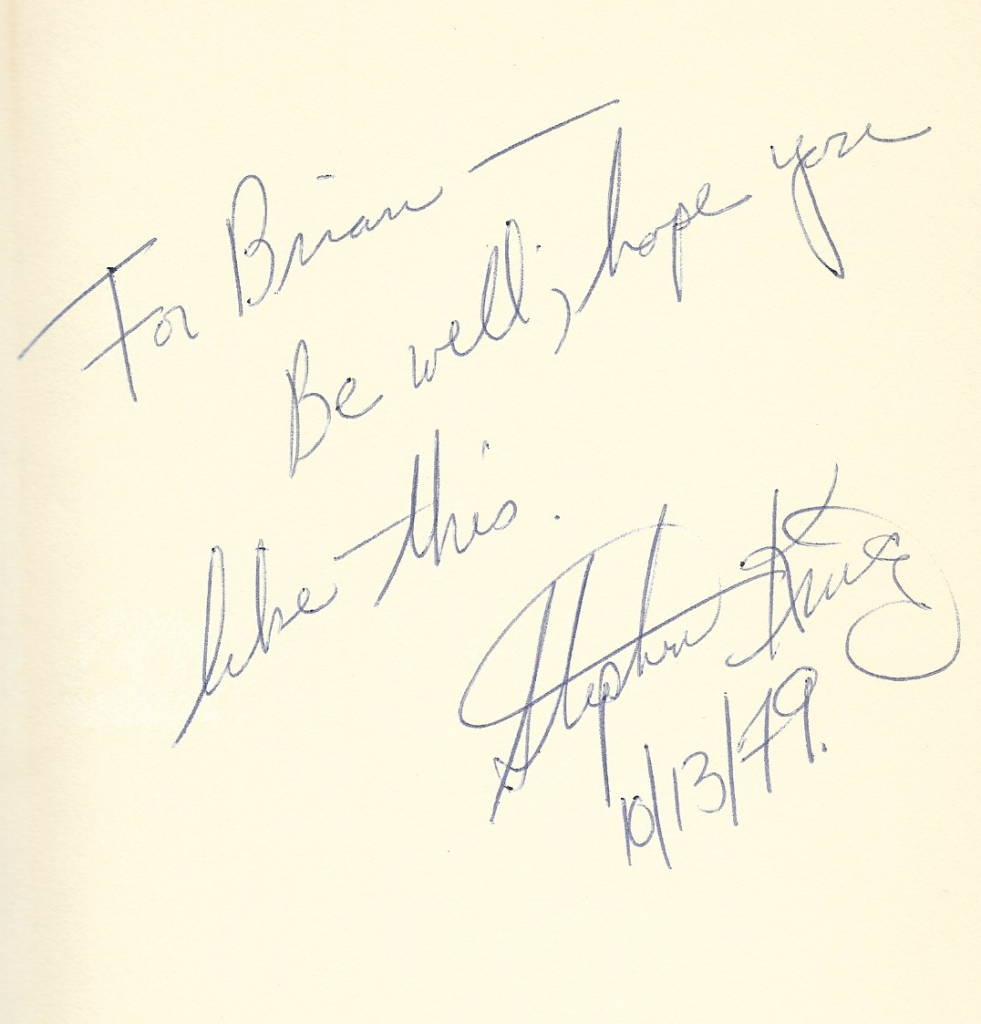
King, Stephen. The Dead Zone. Viking, 1979. First edition hardback (“First published in 1979 by the Viking Press” on the copyright page), a Fine copy in a Fine, first state (price of $11.95 and code 0879 on the bottom of the flap), Mylar-protected dust jacket, inscribed by King: “To Brian —/Be well, hope you/like this/Stephen King/10/13/79.”). King’s seventh novel, and the fifth under his own name. Collings, Horror Plumbed, A7. Spignesi, The Shape Under the Sheet, pages 241-247. Waiter/Golden/Wagner, Stephen King Universe (Cemetery Dance edition), pages 187-194. Bought for $240.

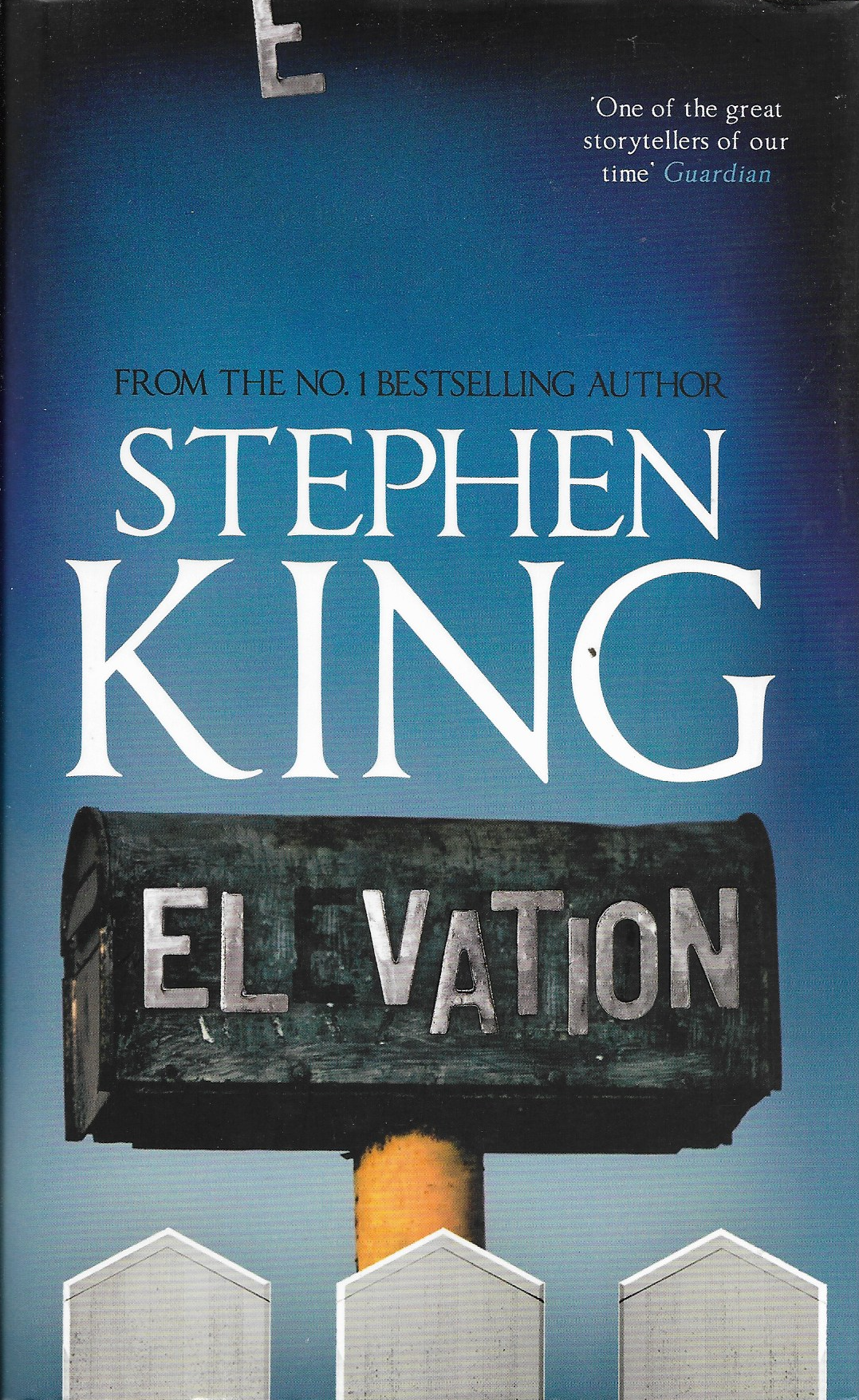
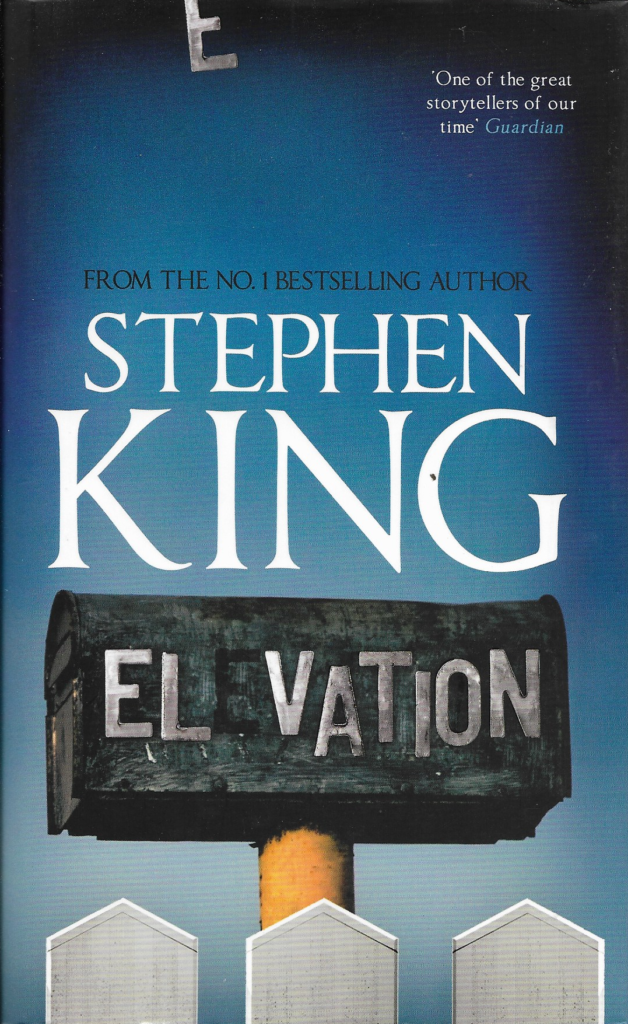
King, Stephen. Elevation. Hodder & Stoughton, 2018. First edition hardback (the UK and the US edition came out the same day, which means the UK should precede by several hours, if that matters), a Fine copy in a Fine- dust jacket with a tiny bit of surface wear. Castle Rock novella that looks like a cross between Thinner, Peyton Place and Up. Bought for $9.99 at Half Price Books.
King, Stephen. Gerald’s Game. Viking, 1992. First edition “preview edition,” one of 2,000 hardback copies with a handwritten note by King printed on the front free endpaper distributed at the 1992 American Booksellers Association convention, a Fine copy in a Fine printed and stapled cardboard slipcase, sans dust jacket, as issued. Collings, Horror Plumbed, A45. Waiter/Golden/Wagner, Stephen King Universe (Cemetery Dance edition), pages 285-290. Bought for $48.
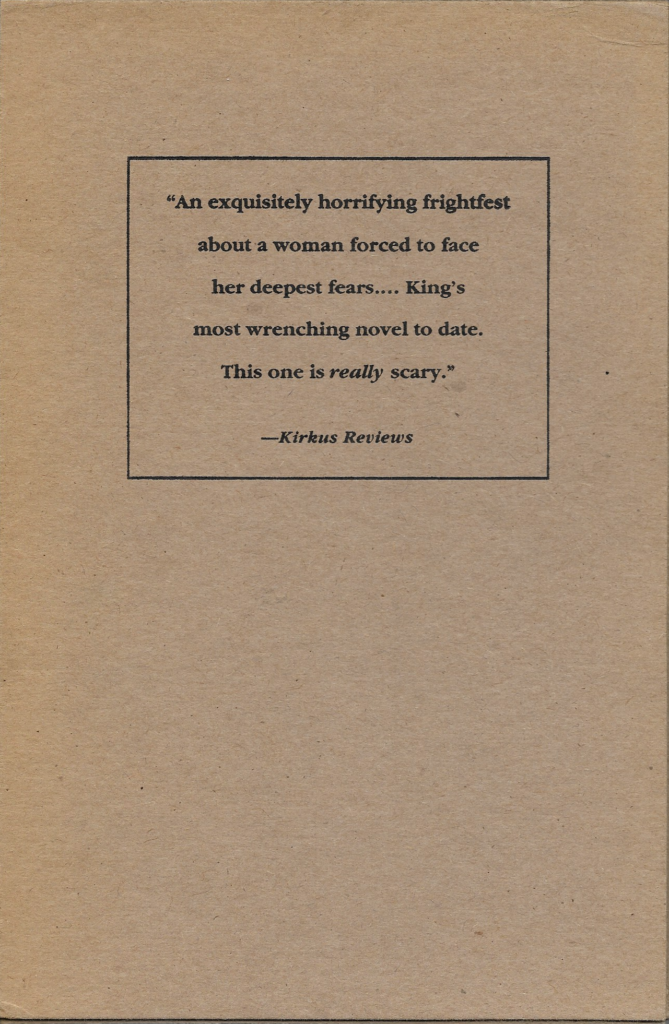
King, Stephen. Pet Sematary. Doubleday, 1983. First edition hardback, a Fine copy in a Fine dust jacket. Replaces a slightly less attractive copy. Collings, Horror Plumbed, A22. Spignesi, The Shape Under the Sheet, pages 301-304. Waiter/Golden/Wagner, Stephen King Universe (Cemetery Dance edition), pages 269-278. Bought for $15.
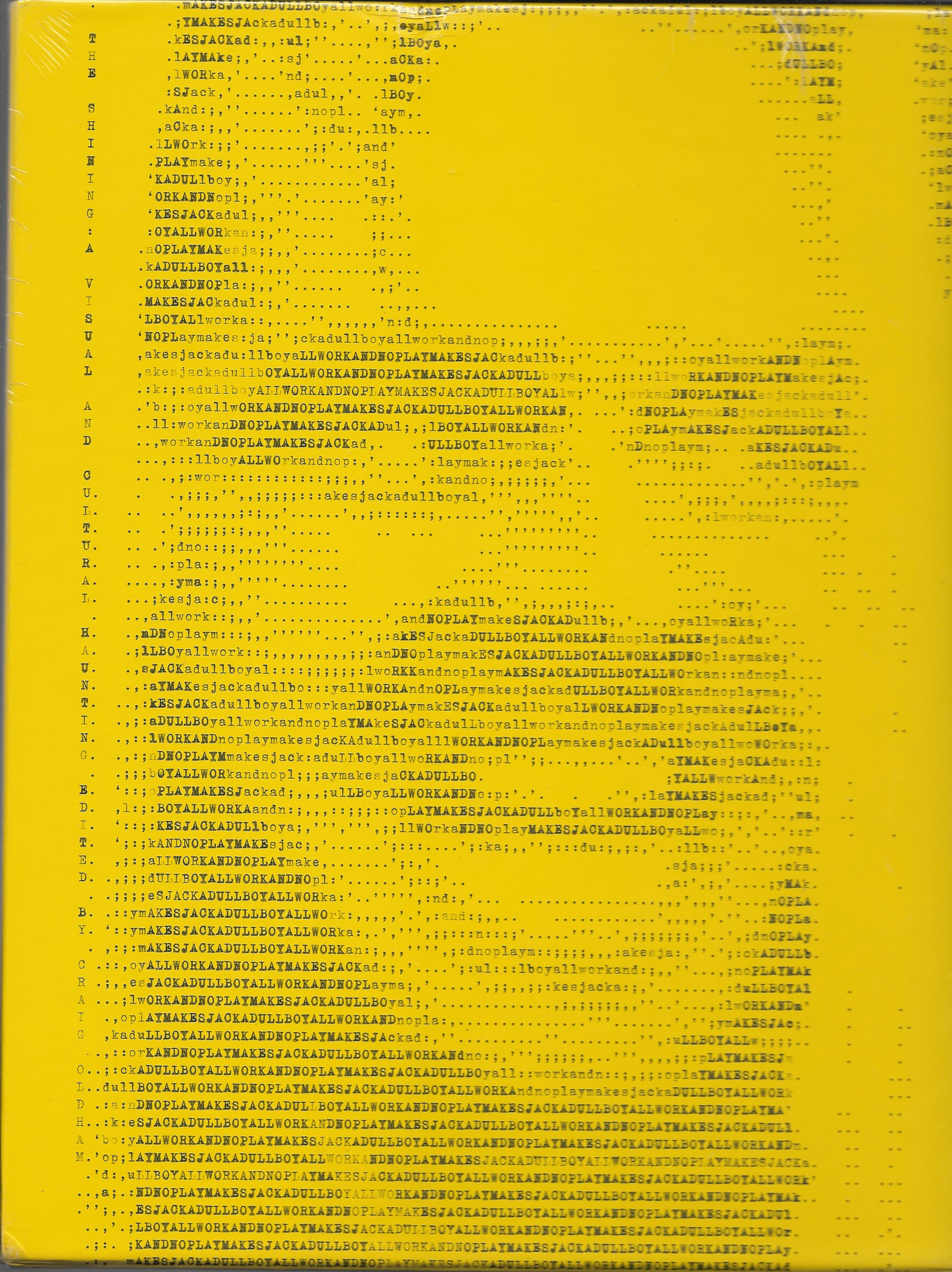
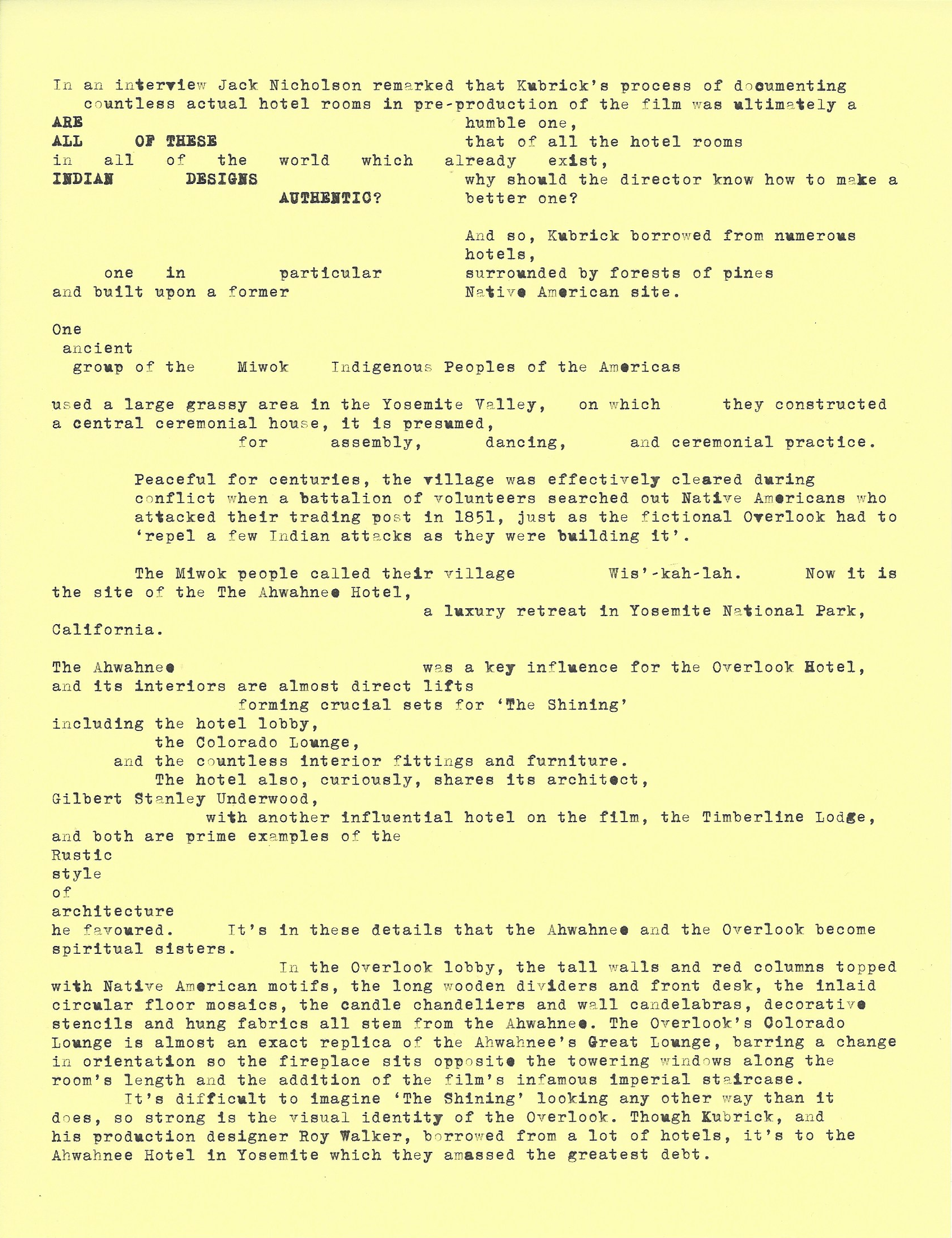
(King, Stephen and Stanley Kubrik) Oldham, Craig, editor. The Shining: A Visual and Cultural Haunting (Epiphany Edition). Rough Trade Books (via Kickstarter), 2022. First edition, printed pages and pamphlets loose in a decorated cardboard box, a Fine copy. It’s an elaborate production.
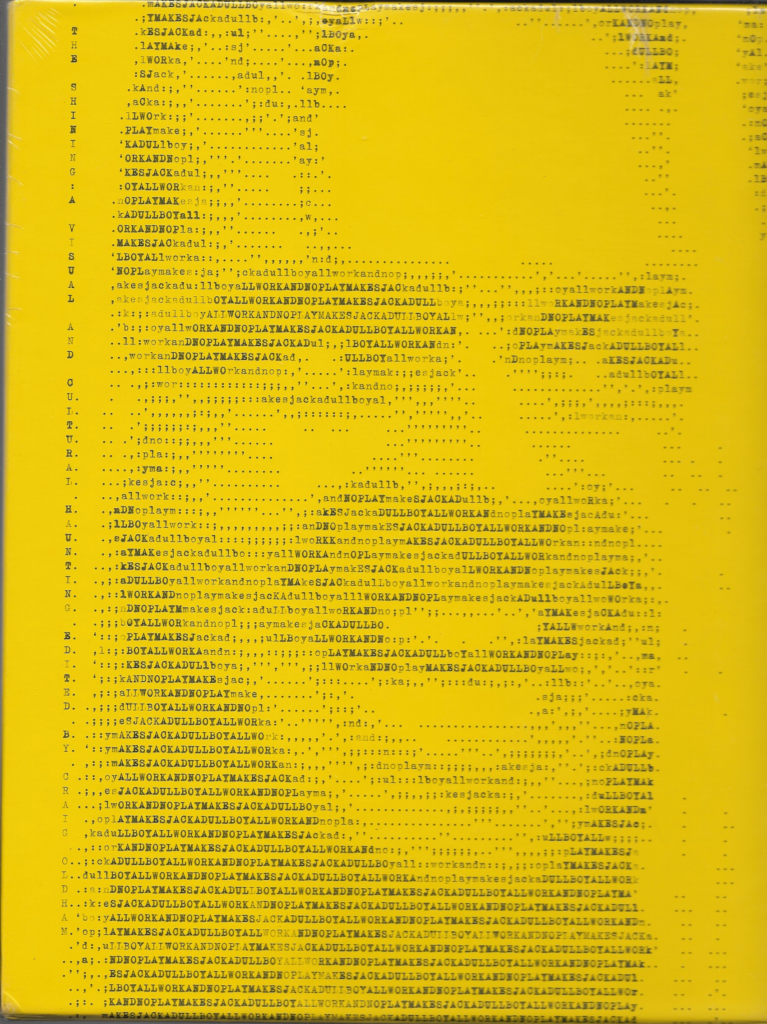
The loose sheets:
16 x typed replica sheets with All Work And No Play Makes Jack A Dull Boy as discovered by Wendy in the film.
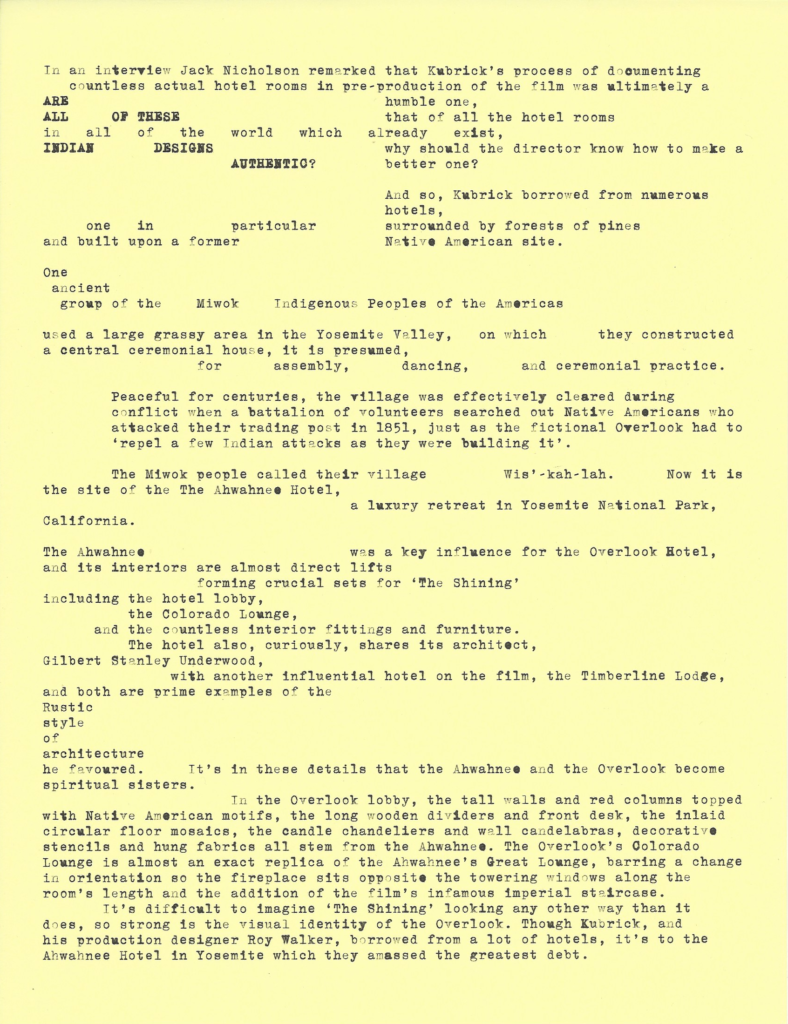
120 x one-page pieces analysing, exploring, and extrapolating the films ideas, themes, influences, contexts and critiques.
10 x original typewriter art portraits made using the same model of Adler typewriter used by Jack Torrance.
Some examples:


Plus “Contributor Booklets” (which are more like brochures):
9 x 8-page cultural contributor essays from a range of celebrated artists, musicians, authors, architects and curators designed to evoke the film’s intertitle cards.
Original and exclusive piece from actor Dan Lloyd (Danny Torrance), an extraordinarily rare opportunity to share memories, stories and insights from this usually private person, as well as the coup of a rare interview with Shelley Duvall (conducted by Ryan Obermeyer) shedding light on her performance and experience of the film.
Artist Gavin Turk examines myths, mirrors and mazes and looks at the film through art, whilst fashion designer Margaret Howell takes us through her iconic maroon jacket worn by Jack in the closing act of the film.
Artist and musician Cosey Fanni Tutti on sound and the unfolding domestic violence within the film. Architecture expert and writer John Grindrod on the role of The Overlook Hotel itself and the impact of such spaces on our behaviour.
Producer and Record Label head James Lavelle (UNKLE) tells of his enduring inspiration and love for Kubrick and his art whilst author Jen Calleja looks into Shelley Duvall, folklore and fairytales.
And BFI Curator and Author Michael Blyth cross-examines the character of Wendy as she appears in both the film and the original Stephen King novel.
3 x 16 page reproduced texts including essays from H.P. Lovecraft, Sigmund Freud, and a short story which was a key influence for Kubrick when developing the film.
H.P. Lovecraft — Supernatural Horror in Literature An extract from the seminal yet largely overlooked essay that significantly influenced decisions not to explain the horrors which unfold at The Overlook.
Stephen Crane — The Blue Hotel First serialised in 1898, the American author’s story was highlighted by Kubrick in interviews as similar to events unfolding in The Shining and offers an insight into the director’s read of the film.
Sigmund Freud — The Uncanny Diane Johnson (co-writer of The Shining) cited Freud’s influential 1919 essay “The Uncanny” as a key text in Kubrick’s research. Freud explores many ideas that are woven through the film: retracing steps, recurring numbers and motifs, and the significance of the double. We will re-publish an extract from the essay.
Koontz, Dean R. Odd Thomas. Bantam Books, 2003. First edition hardback, a Fine- copy in a Fine- dust jacket with slight bumping at head and heel, slight haze rubbing to reflective surfaces, and one small spot of blind-side staining at heel. Another book Scott Cupp recommended. Bought for $7.20.
Lake, Jay. Last Plane to Heaven. Tor, 2014. First edition hardback, a Fine copy in a Fine dust jacket. Short story collection. Foreword by Gene Wolfe. Bought for $7.19.
Lansdale, Joe R. Born For Trouble: The Further Adventures of Hap and Leonard. Tachyon Press, 2022. First edition trade paperback original, a Fine copy. Bought from the publisher at the usual discount. I have copies of this available through Lame Excuse Books.
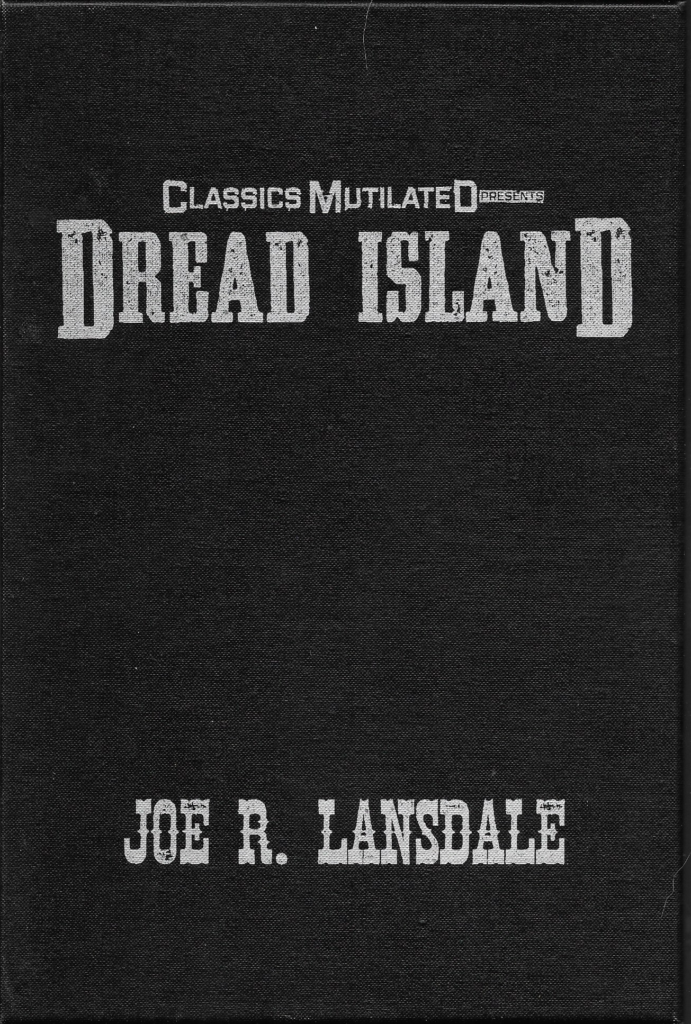
Lansdale, Joe R. Dread Island. IDW Publishers, 2010. First edition hardback, #60 of 100 signed, numbered copies, a Fine- copy with slight wear at head and small abrasion to bottom board edge, in a Fine- dust jacket with slight wear, in a Fine slipcase. Supplements a signed, non-slipcased copy. Bought off eBay as part of an under $100 lot. Isajanko, A039aii.
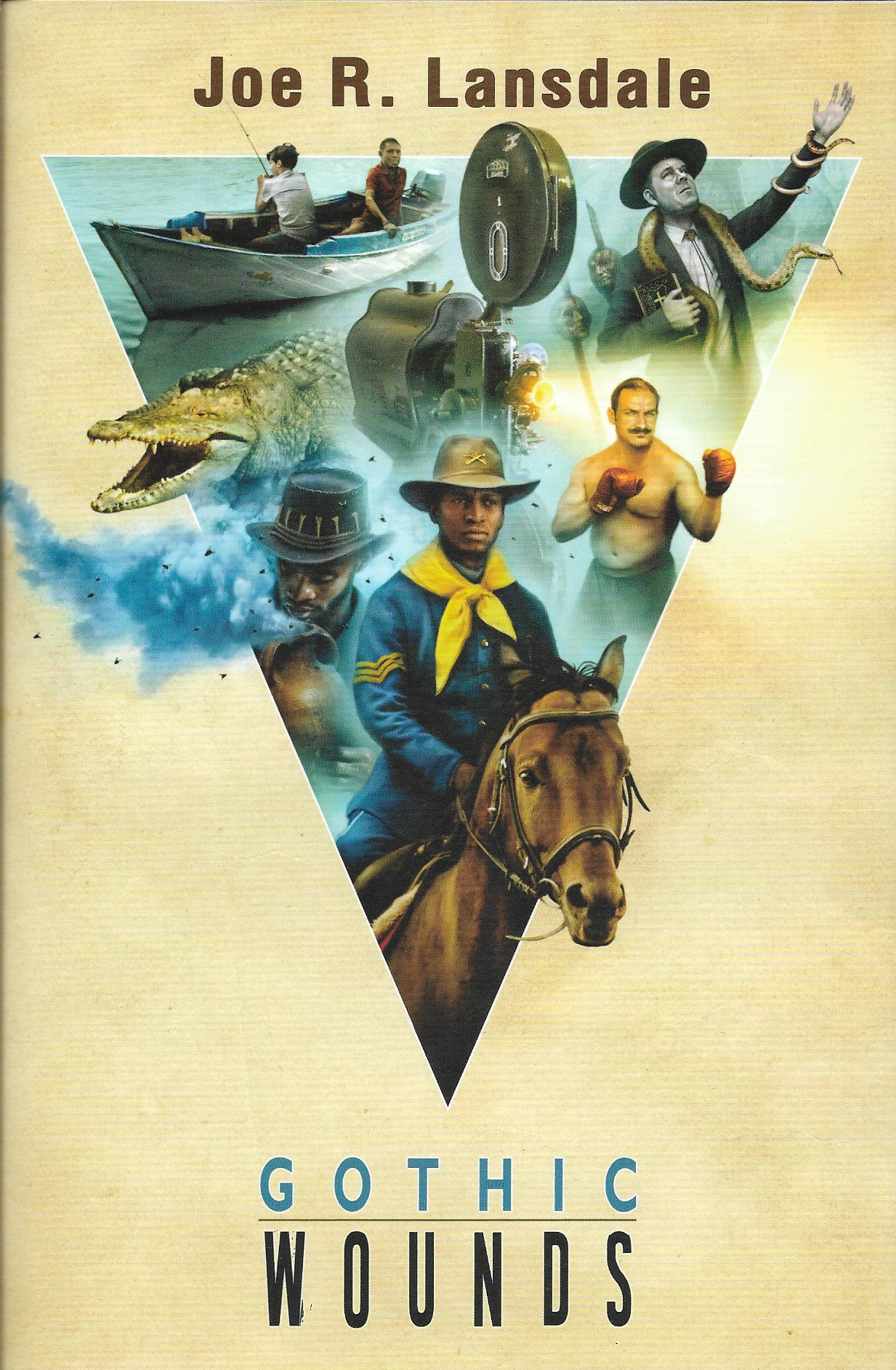
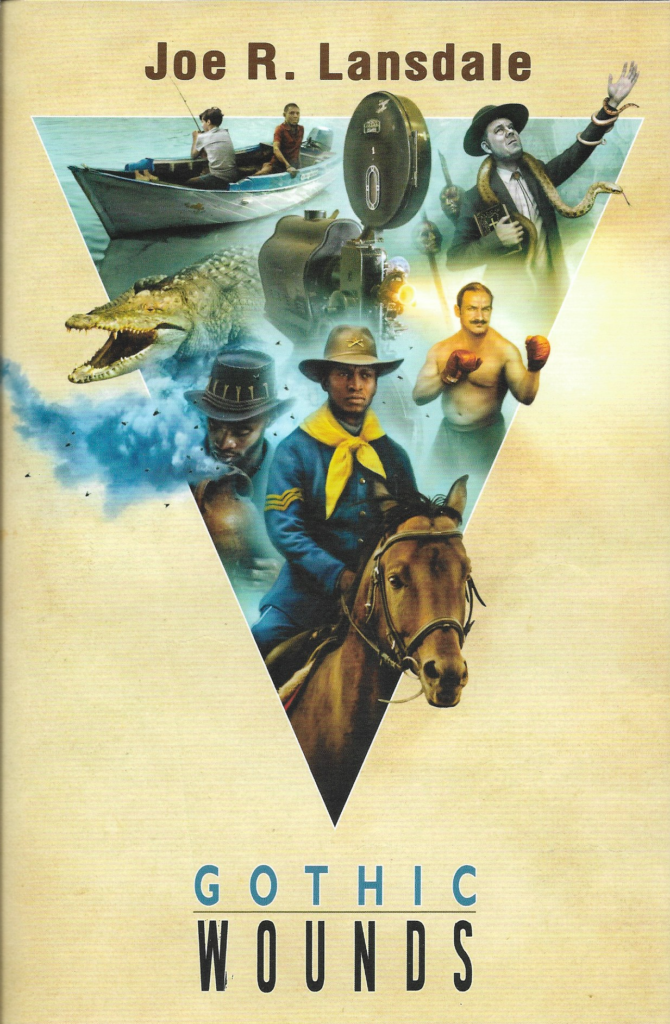
Lansdale, Joe R. Gothic Wounds. Short Scary Tales, 2022. First edition hardback, #101 of 550 signed, numbered copies, a Fine copy in a Fine dust jacket with tissue paper sealing sticker, shipping thanks card and SST business card laid in. The fourth in the Lansdale collected stories series. Bought from the publisher at the usual discount. I will have copies of this available in the next Lame Excuse Books catalog.
Lansdale, Joe R. The Magic Wagon. Borderlands Press, 1991. First limited edition hardback, #597 of 750 signed, numbered copies, a Fine copy in a Fine dust jacket and Fine slipcase. Supplements an inscribed copy of the true Double-D western hardback first, the UK hardback first, and the BookVoice signed/limited hardback edition. Bought off eBay for $43.
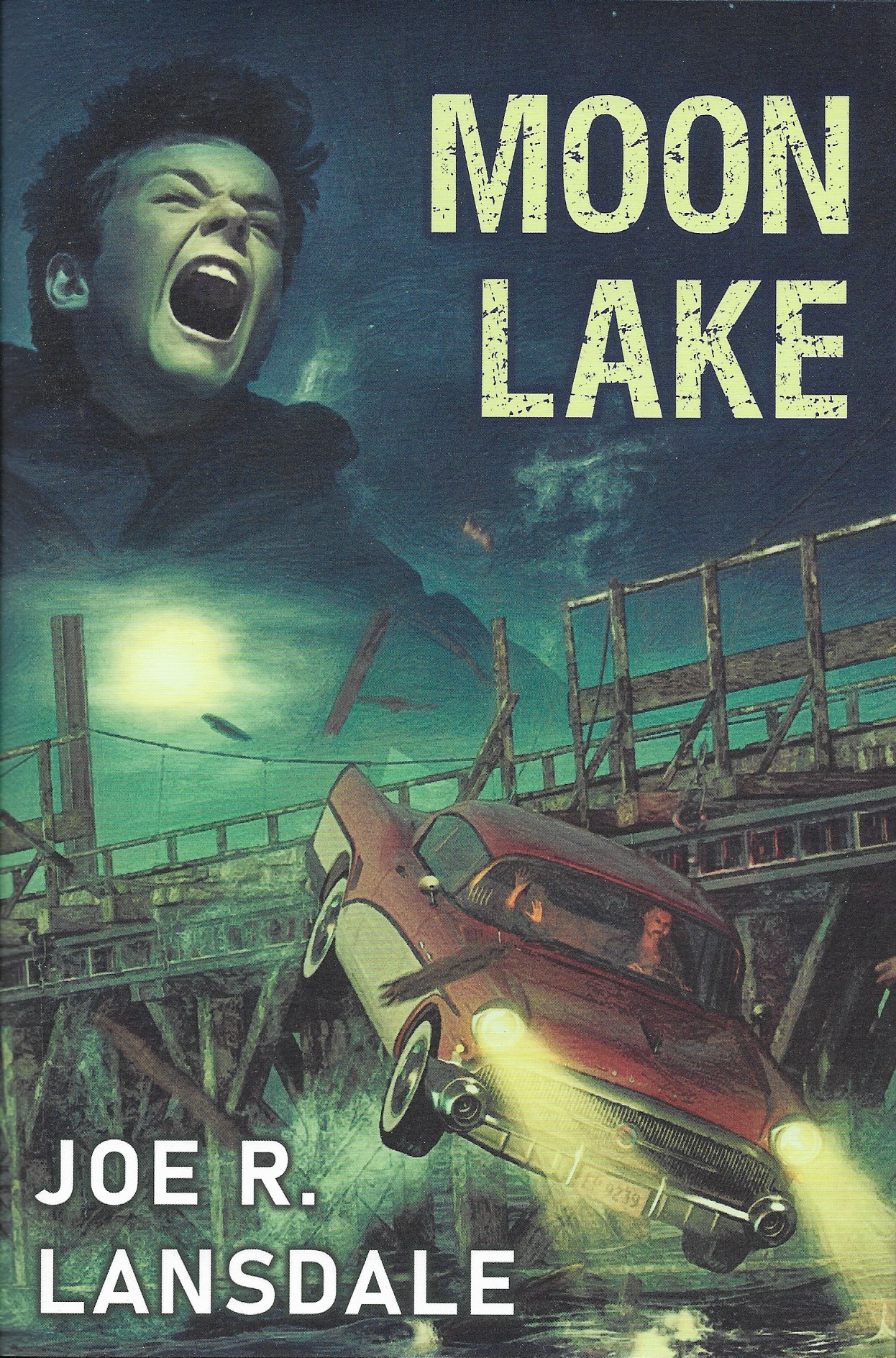
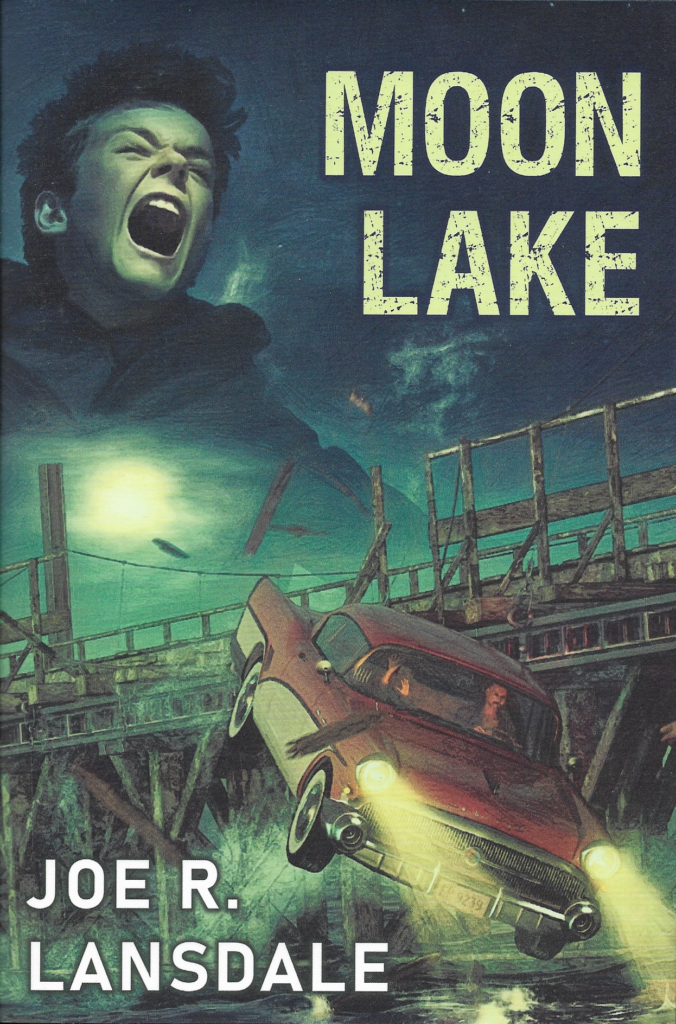
Lansdale, Joe R. Moon Lake. Short Scary Tales Publications (SST), 2022. First limited edition hardback, #101 of 500 signed, numbered copies (matching my other SST Lansdale limiteds), a Fine copy in a Fine dust jacket with business card, shipping card and tissue paper seal laid in.
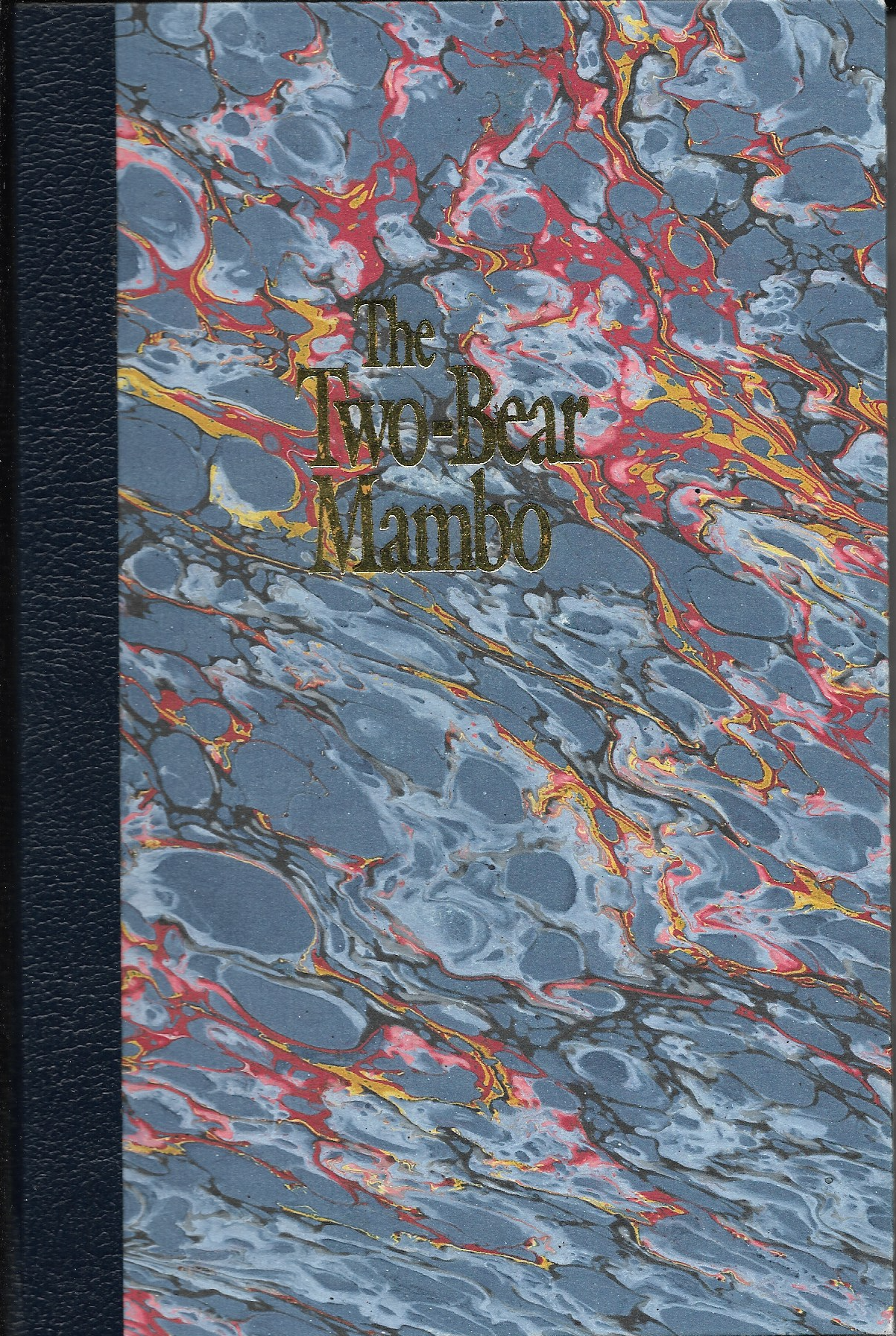
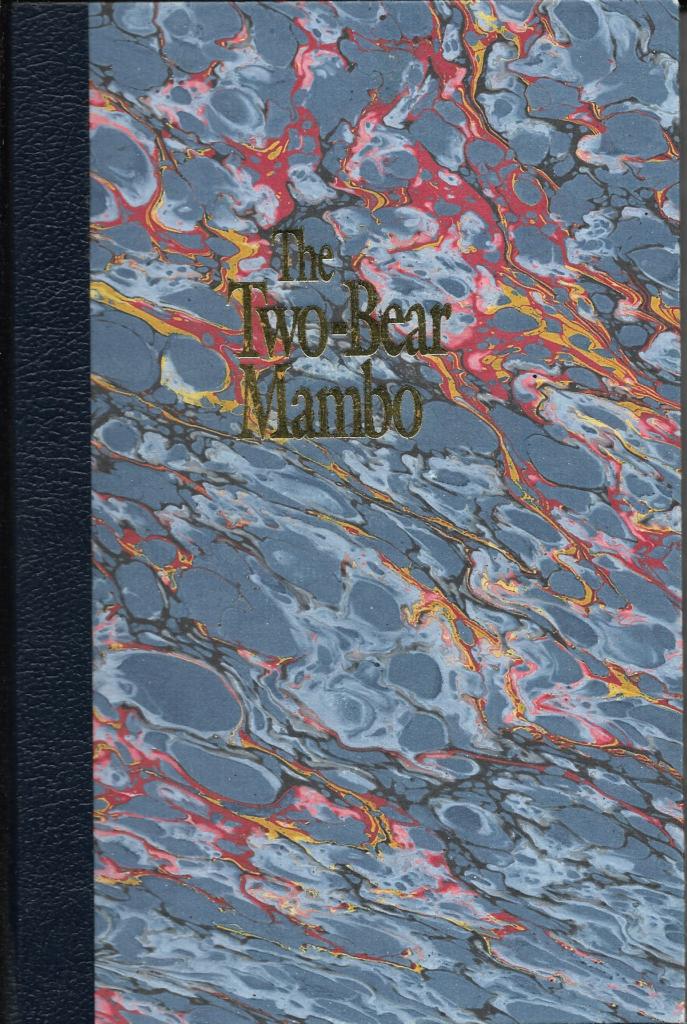
Lansdale, Joe R. The Two-Bear Mambo. James Cahill Publishing, 1995. First edition hardback, letter T of 26 lettered copies, a Fine copy, sans dust jacket (as issued), in a Fine slipcase. Supplements a copy of the regular Cahill limited edition, which is distinctly less attractive than this. I saw a picture of someone else’s copy of this and went “That’s pretty! I need to pick that up!” Isajanko, A017aii. Bought off a fellow dealer for $200.

Lansdale, Joe R. Radiant Apples. Subterranean Press, 2021. First edition hardback, #347 of 1,500 signed, numbered copies, a Fine copy in a Fine dust jacket. Deadwood Dick novella. Bought from the publisher at the usual discount. I have copies of this available through Lame Excuse Books.
Lansdale, Joe R. Zeppelins West. Subterranean Press, 2001. First edition hardback, #222 of 350 signed, numbered copies, a Fine copy in a Fine dust jacket and a Fine slipcase. This edition includes extra sketches at the back. Bought from a UK book dealer for £54.
Lansdale, Joe R. (with Timothy Truman and Sam Glanzman). Jonah Hex: Two Gun Mojo. DC Vertigo, 1994. First edition graphic novel (preceded by the individual comic issues), trade paperback format, a Fine copy. According to comics decoding, the “00111” code on the bar code on the back cover indicates issue 1, cover variant 1 (don’t think there were any others in this case), and first printing (the last 1). Bought off eBay for $9.99.
Lansdale, Joe R., and Timothy Truman. On the Far Side With Dead Folks. Avatar, 2004. First edition graphic novel trade paperback original, a Fine copy. Adapted from Lansdale’s “On the Far Side Of The Cadillac Desert With Dead Folks.” Bought for $10 from a private collector.
Lansdale, Joe R., editor. Retro Pulp Tales. Subterranean Press, 2006. First edition hardback, Letter J of 26 lettered copies, a Fine copy in a Fine dust jacket and a Fine slipcase, signed by all the contributors (Bill Crider, Kim Newman, etc.) to this pulp fiction anthology as well as Lansdale. Bought from a private collector for $250 plus shipping.

(Lansdale, Joe R.) Bubba Ho-Tep: Hail To The King Edition. DVD, 2007. First edition thus, a Limited Edition with the case wrapped in a miniature Elvis Presley jacket, a Near Fine+ copy, still sealed, with some peel from the black plastic at the top of the case that can probably be fixed once I open it up to watch or get Joe to sign. DVD of the movie starring Bruce Campbell and Ossie Davis, based on the Lansdale story, with a script by Lansdale and director Don Coscarelli. Bought off eBay for $15.

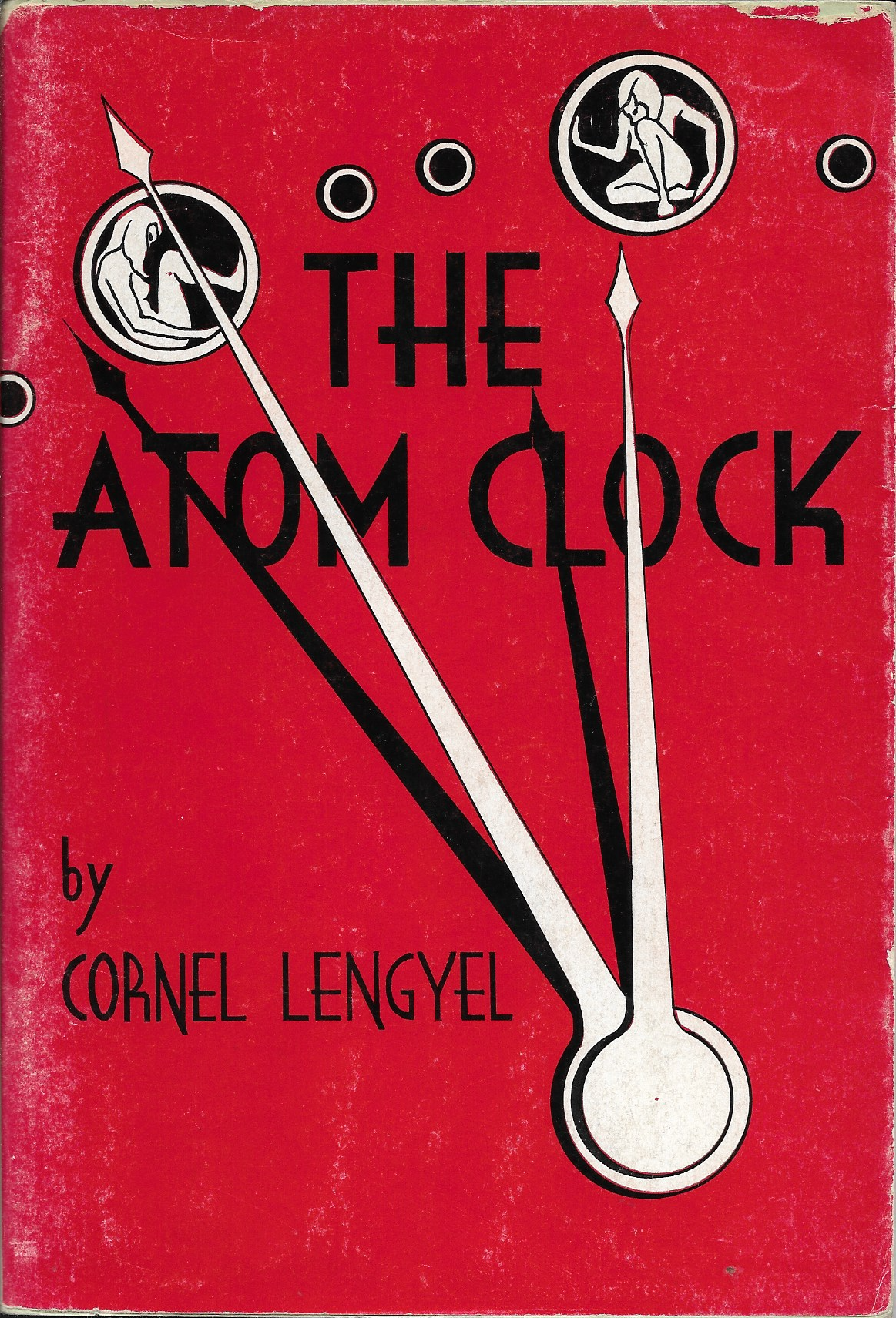
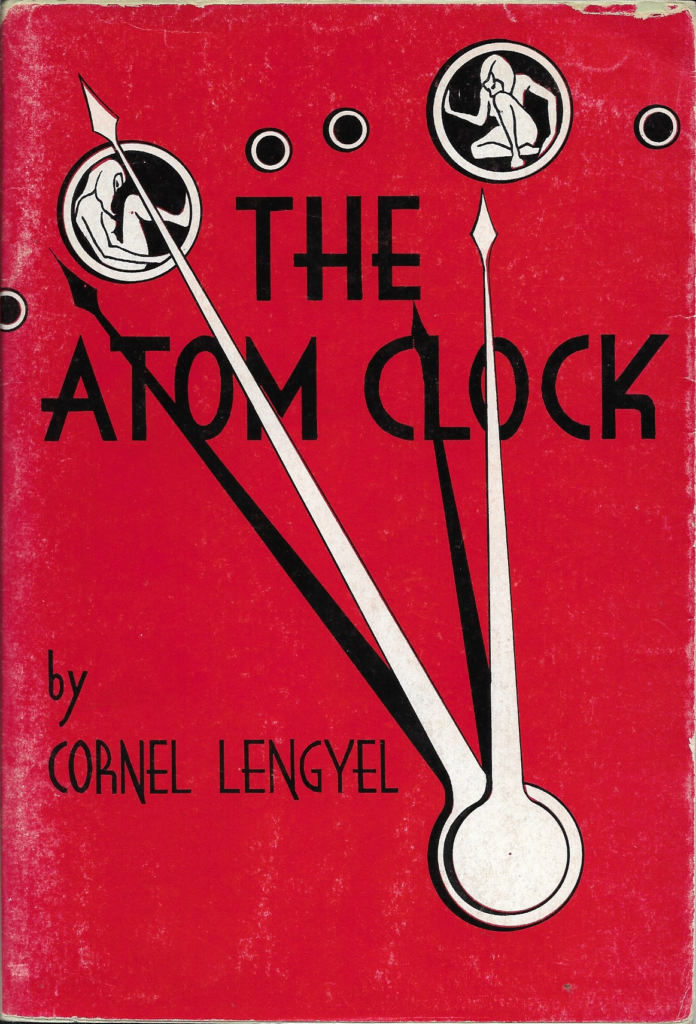
Lengyel, Cornel. The Atom Clock. Fantasy Publishing Company, Inc. (FPCI), 1951. First edition chapbook original, one of 750 copies (simultaneous with a 250 copy hardback run), a Near Fine copy with sticker pull at top right of title page, over which is a small inked price of $125, in a Very Good+ dust jacket with a shallow chip and associated small crease at top right of the front cover, a closed 1/16th triangular tear at top rear, slight rubbing to front cover, and slight dust soiling to white rear cover. Anti-atomic play. Won awards, but I’m sure the sentiment of the thing would strike me as naive and dated. Chalker & Owings (1991), page 179, where they note that the hardback is “almost never seen.” Kemp, The Anthem Series, pages 89-90. Bought off eBay for a $30 offer.
Lovecraft, H. P. (Peter Straub, editor). Tales. Library of America, 2005. First edition hardback (and First printing stated), a Fine copy in a Fine subscribers copy slipcase, sans dust jacket, as issued. Has just about every one of Lovecraft’s greatest hits. Bought off eBay for a Make Offer price of $15.

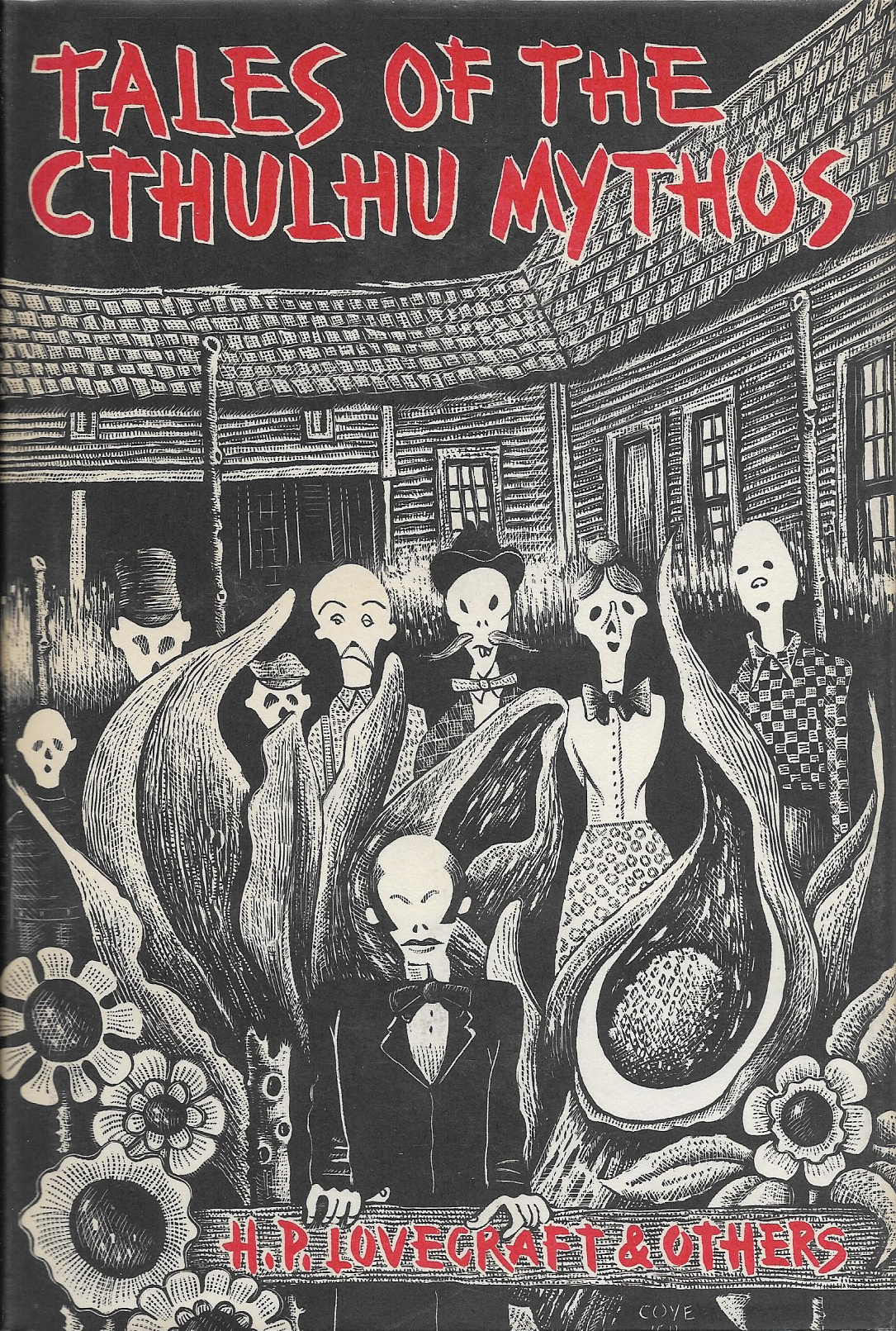
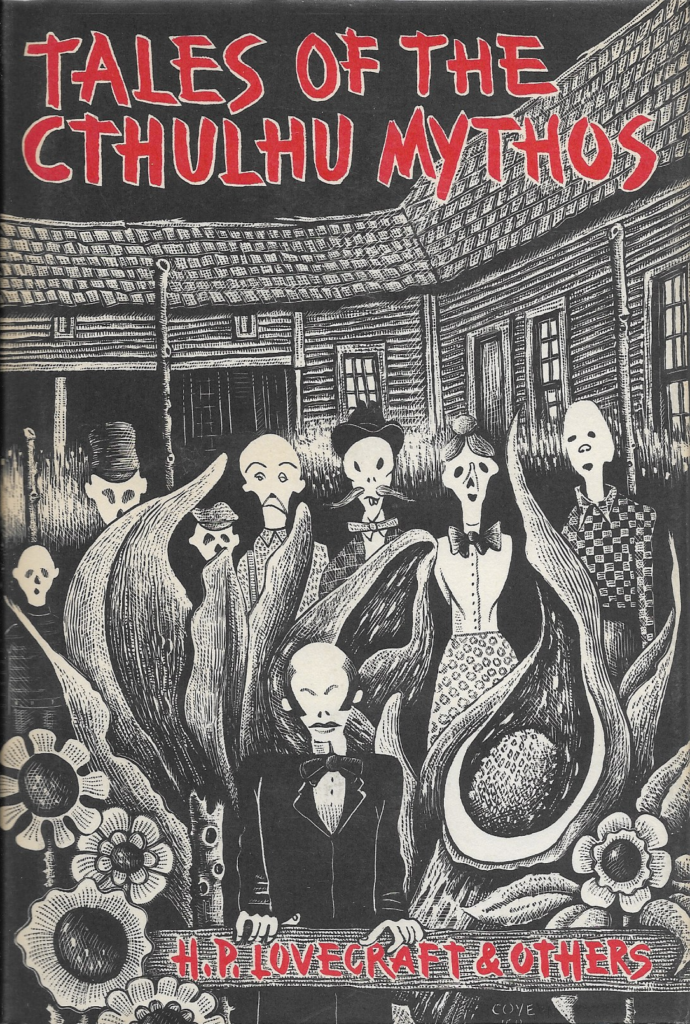
Lovecraft, H. P., etc. (collected by August Derleth). Tales of the Cthulhu Mythos. Arkham House, 1969. First edition hardback, a Fine copy in a Fine- dust jacket with just a trace of dust soiling to the rear panel. Beautiful copy. “A volume that has come to be regarded as the definitive anthology of tales utilizing the framework of the ‘Cthulhu Mythos’…” – Joshi, Sixty Years of Arkham House 102. Derleth, Thirty Years of Arkham House 97. Jaffery, Horrors and Unpleasantries 109. Nielsen, Arkham House Books 108.
(Lovecraft, H.P.) Derleth, August. Some Notes on H. P. Lovecraft. Arkham House, 1959. First edition chapbook original, a Very Good copy to which someone has attached a now-yellowing plastic protector, as well as attaching the bookplate of late antiquarian book dealer Franklin Victor Spellman to the inside front cover. Joshi, Sixty Years of Arkham House 55. Derleth, Thirty Years of Arkham House 55. Jaffery, Horrors and Unpleasantries 55. Nielsen, Arkham House Books 58. Joshi, Sixty Years of Arkham House (unnumbered item between 86 and 87 on page 84). Joshi, H.P. Lovecraft: A Comprehensive Bibliography, III.C.32. Tymn/Schlobin/Currey, A Research Guide to Science Fiction Studies, 284.
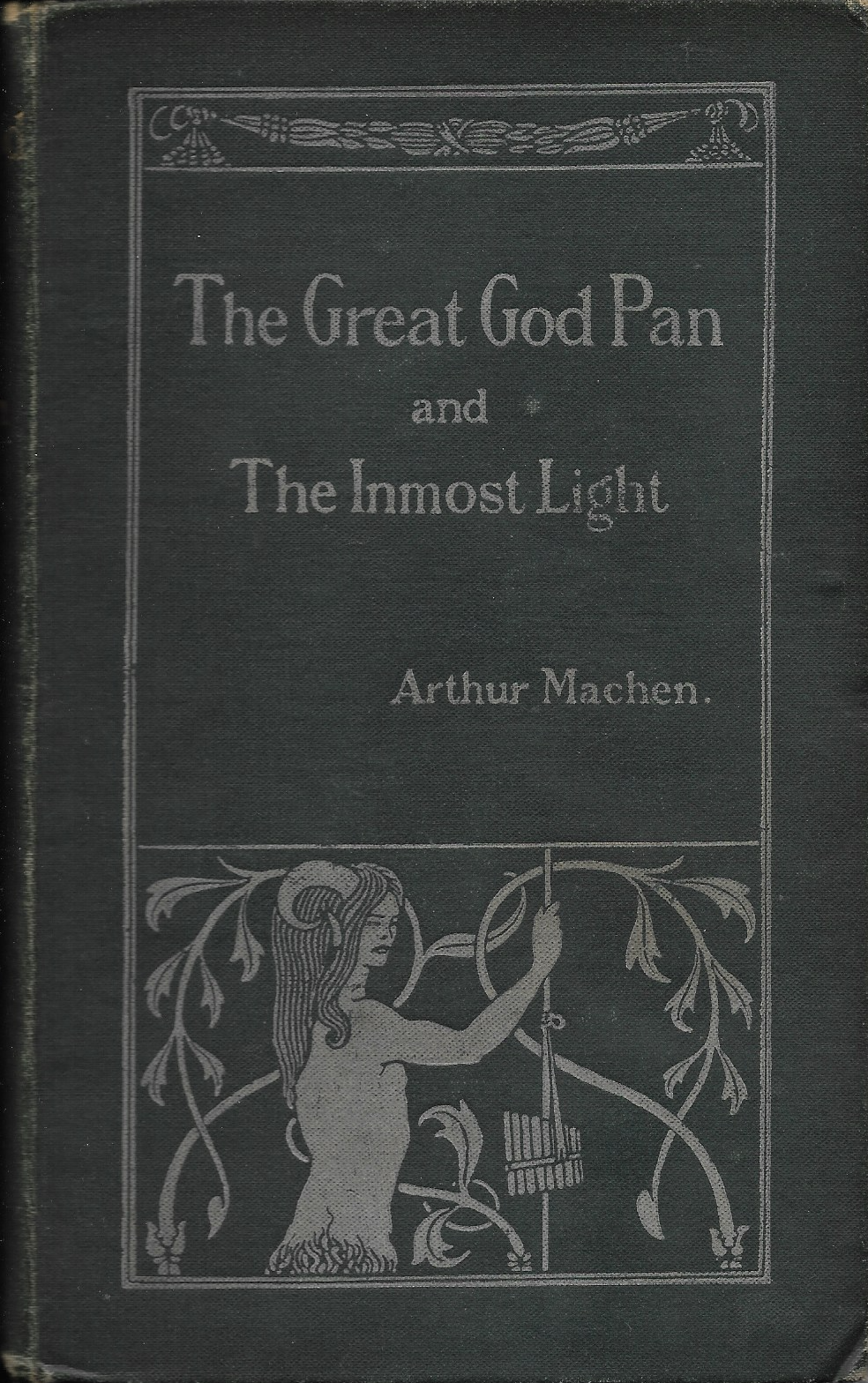
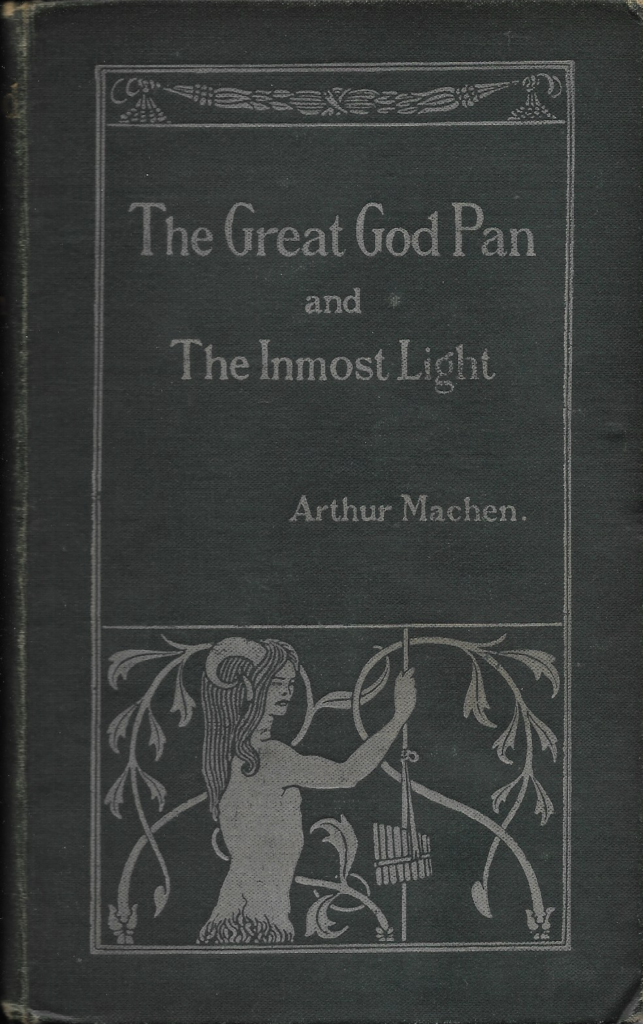
Machen, Arthur. The Great God Pan and The Inmost Light. John Lane, The Bodley head/Roberts Bros., 1895. Second edition, a Very Good copy with wear along spine edges, wear at head and heel, touches of wear at points, pencil scribbling on front free endpaper, a few stray words of pencil writing, former owner Bookplate of William H. Sahud and small bookstore label to inside front cover (plus foxing shadow of that label on FFE), front inner hinge just starting to crack, and age darkening to pages. This was a screw-up, as I missed the Second Edition statement, and didn’t know off the top of my head that the true first came out in 1894, not 1895. Denielson, Arthur Machen: A Bibliography page 21. Bleiler, Guide to Supernatural Fiction 1070. Bleiler, Checklist of Science-Fiction & Supernatural Fiction (1978), page 130. Bought for $240 at Recycled Books. (“This is one of those damn ‘learning opportunities,’ isn’t it?”)
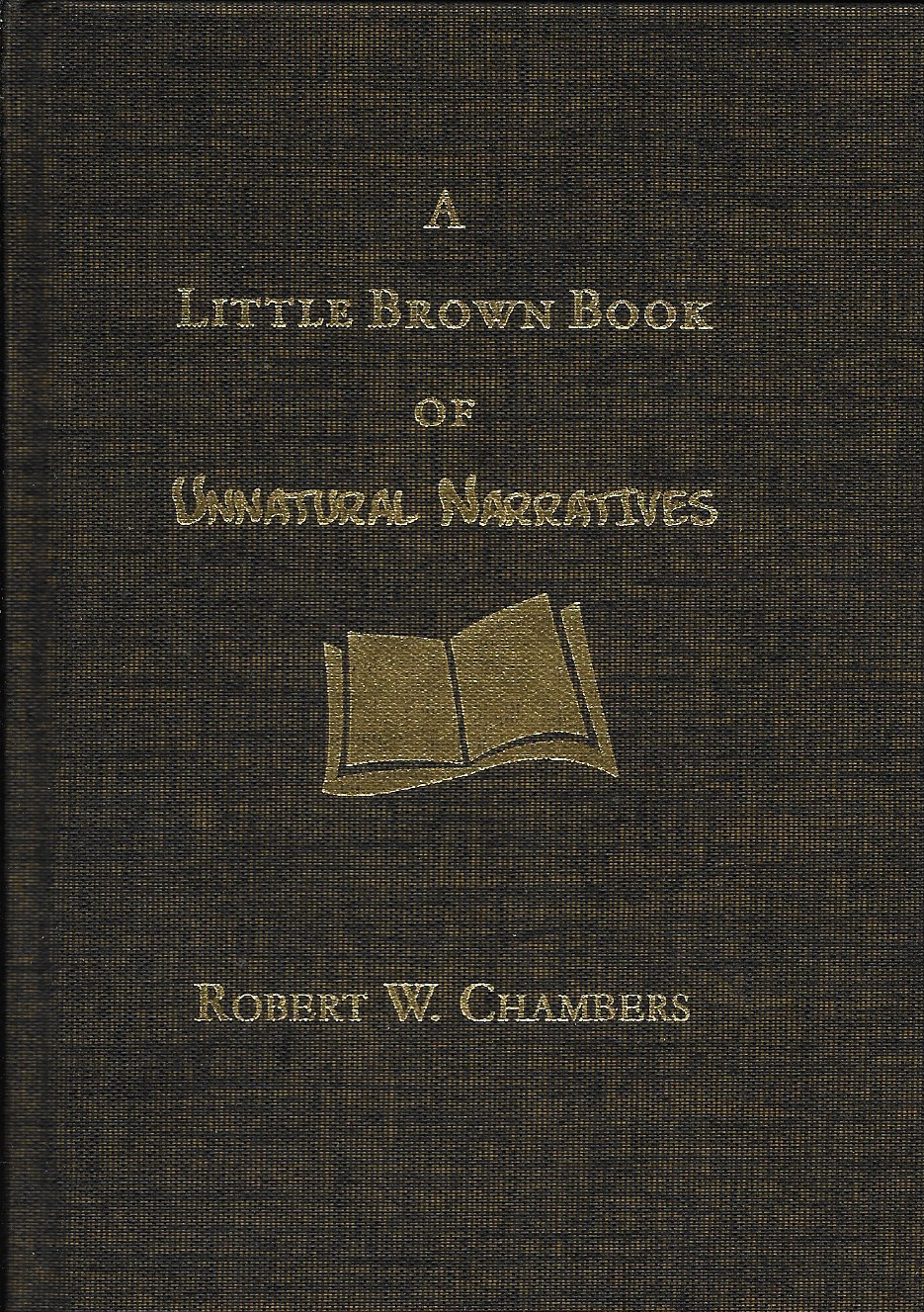
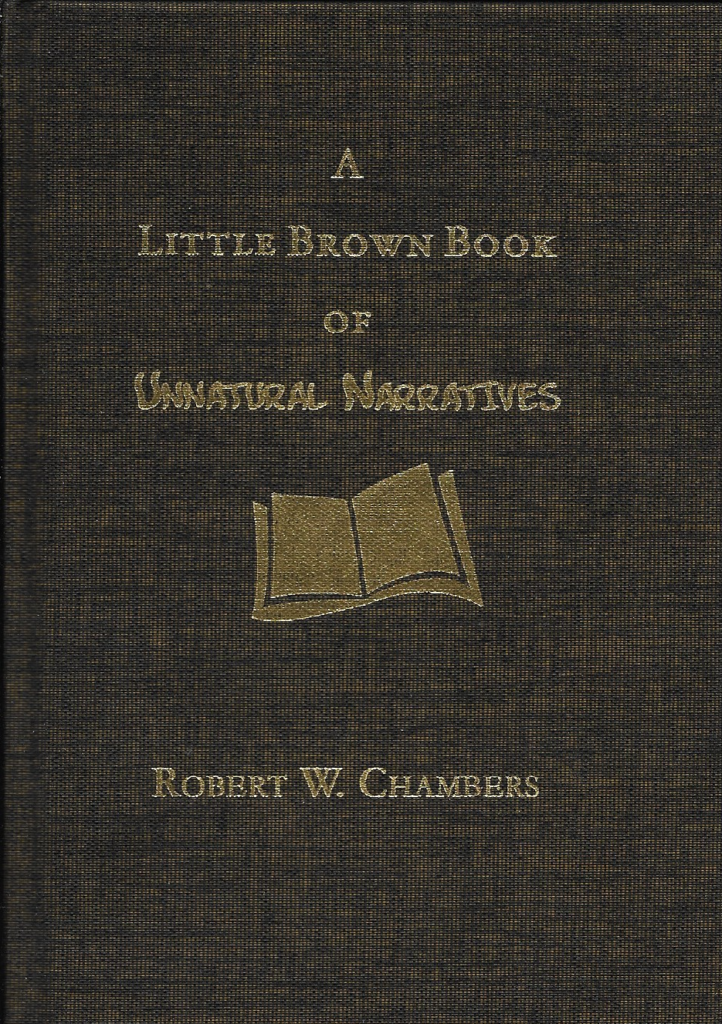
“Chambers, Robert W.” (i.e., Arthur Machen)(Bentley Little, editor). A Little Brown Book of Unnatural Narratives. Borderlands Press, 2022. First edition hardback, #462 of 500 copies signed by Little, a Fine copy, sans dust, as issued. Three stories (“The Inmost Light,” “The Shining Pyramid” and “The Novel of the White Powder”) all reprinted from previous Machen collections. Hilariously, Borderlands accidentally kept the author embossing for Chambers from the above volume on the cover design when they printed this Machen collection, which is probably the funniest mistake since “Karl Edward Wanger” on the first state dust jacket of Gods in Darkness. With inserted slip apologizing for the typo laid in. I’ll have a few copies of this available in the next Lame Excuse Books catalog.
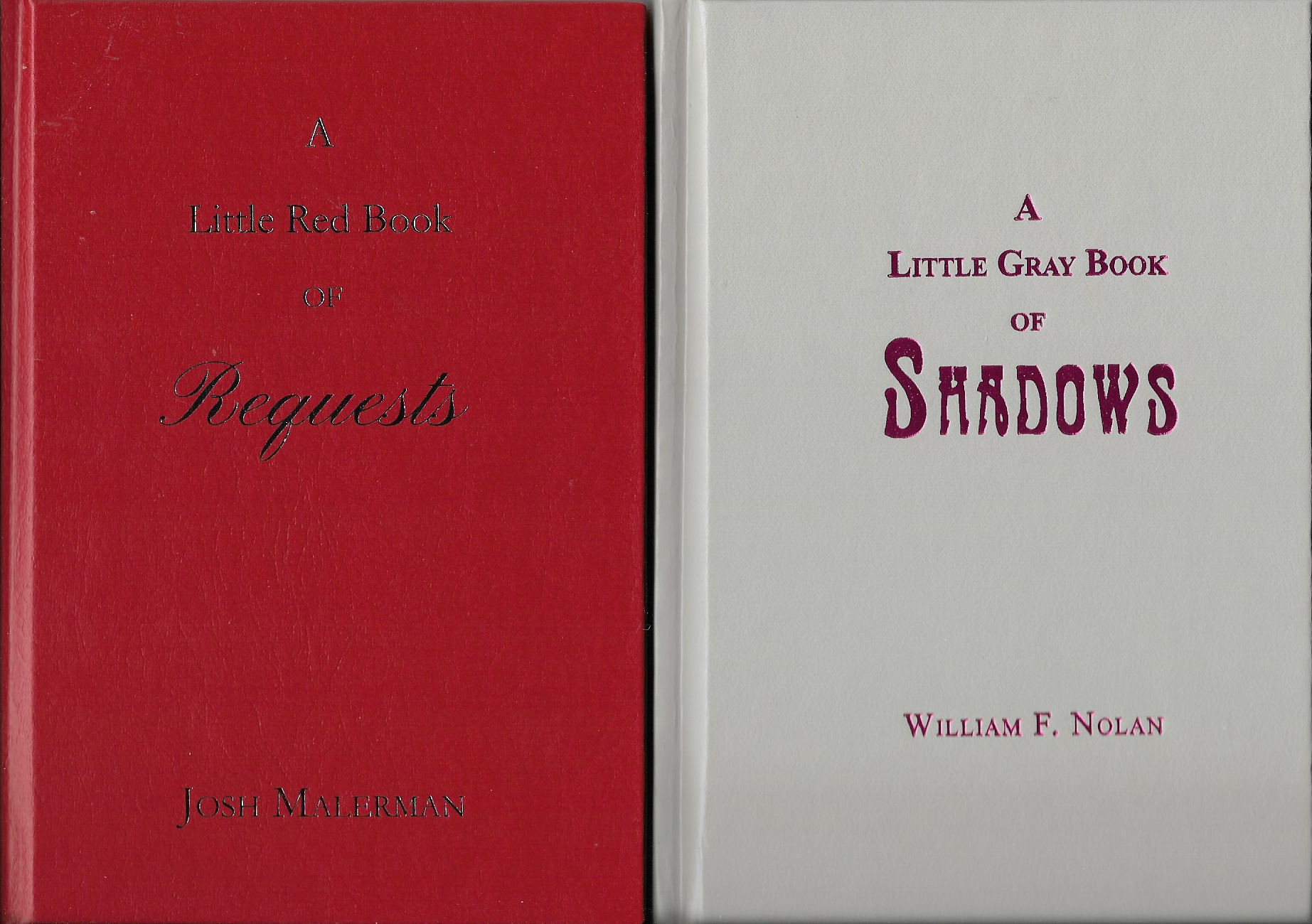
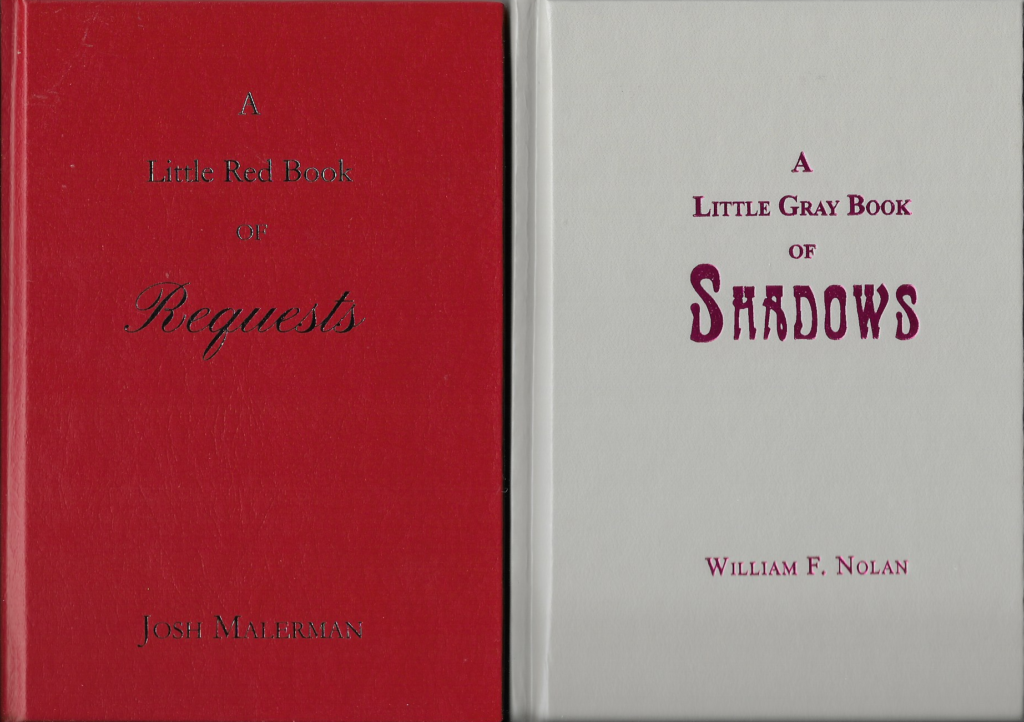
Malerman, Josh. A Little Red Book of Requests. Borderlands Press, 2019. First edition hardback, #290 of 500 signed copies, a Fine copy, sans dust jacket, as issued. This came out the year after the Bird Box movie, so I imagine it disappeared very quickly.
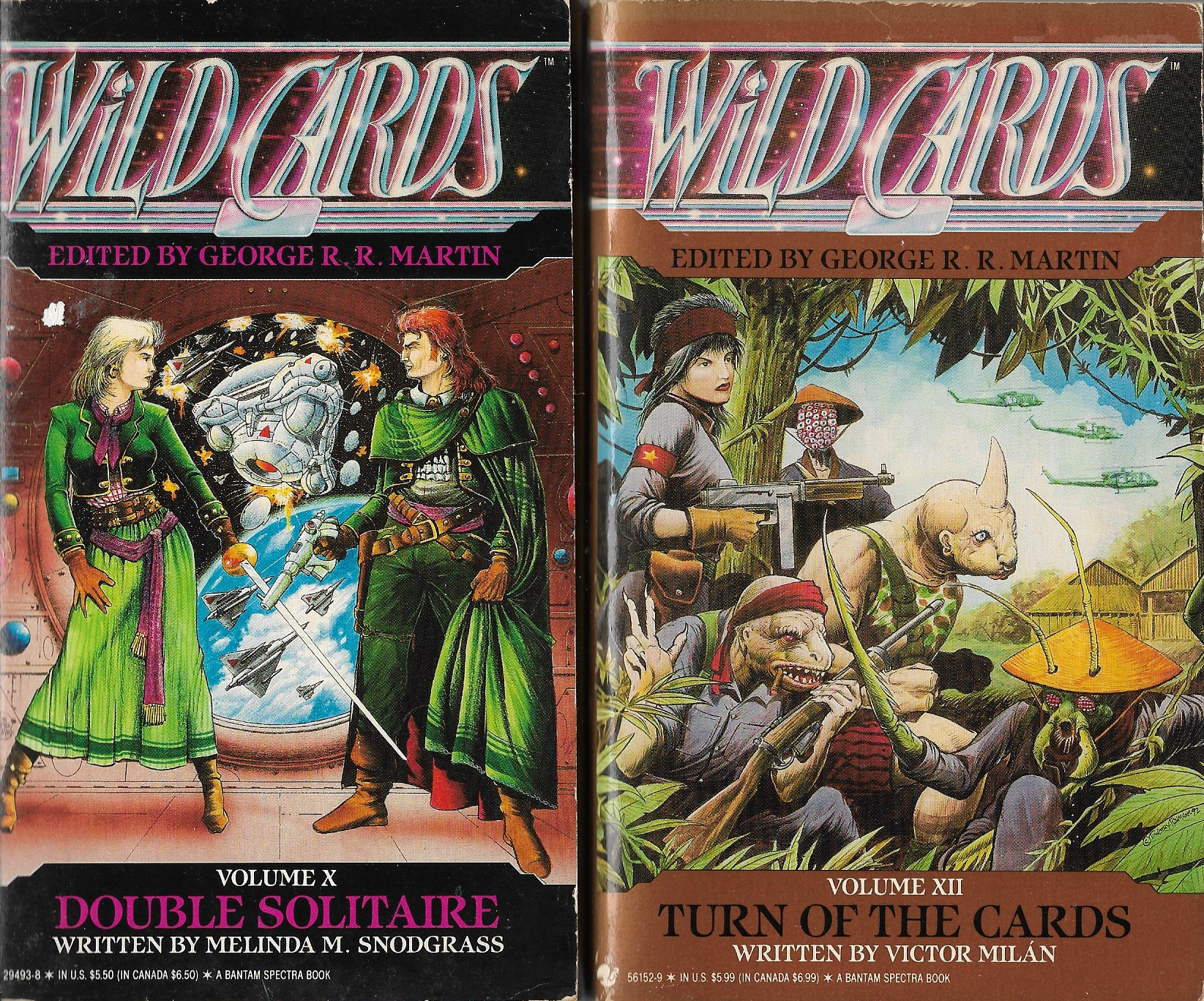
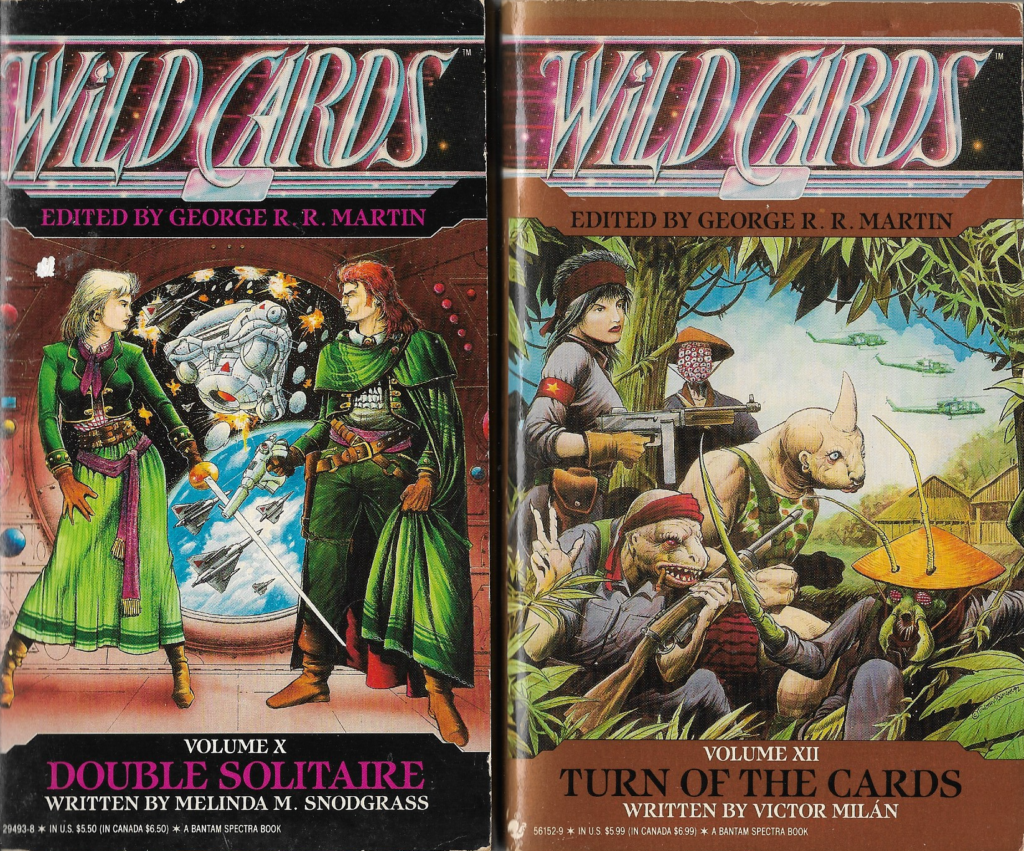
Martin, George R. R., editor, Melinda Snodgrass. Wild Cards X: Double Solitaire. Bantam Spectra, 1992. First edition paperback original, a Near Fine- copy with one light spine crease, edgewear, wear at points, and slight foxing to inside covers.
Martin, George R. R., editor, Victor Milan. Wild Cards XII: Turn of the Cards. Bantam Spectra, 1993. First edition paperback original, a Near Fine copy with mild spine creasing, a trace of edgewear and slight foxing to inside covers.
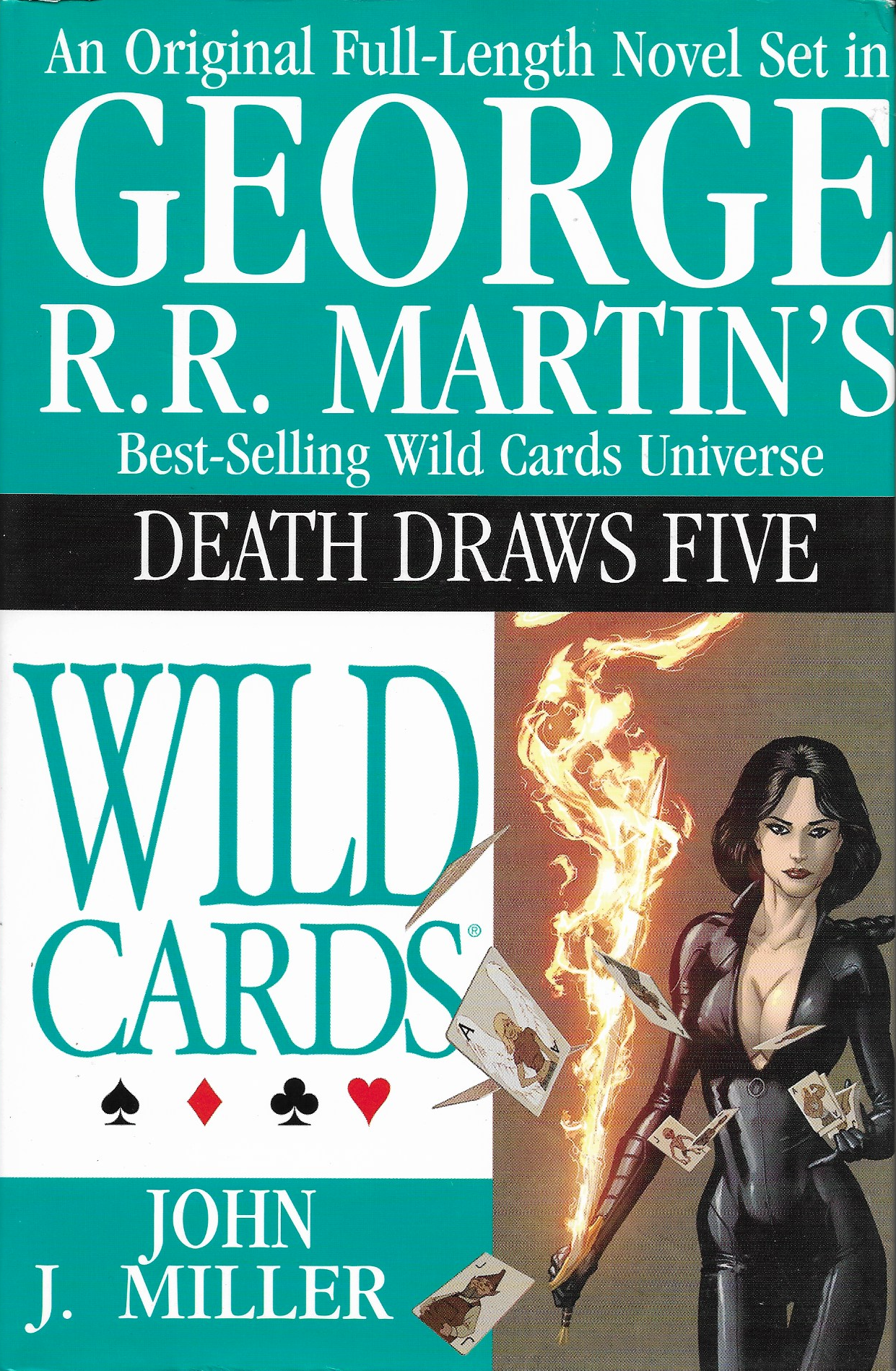
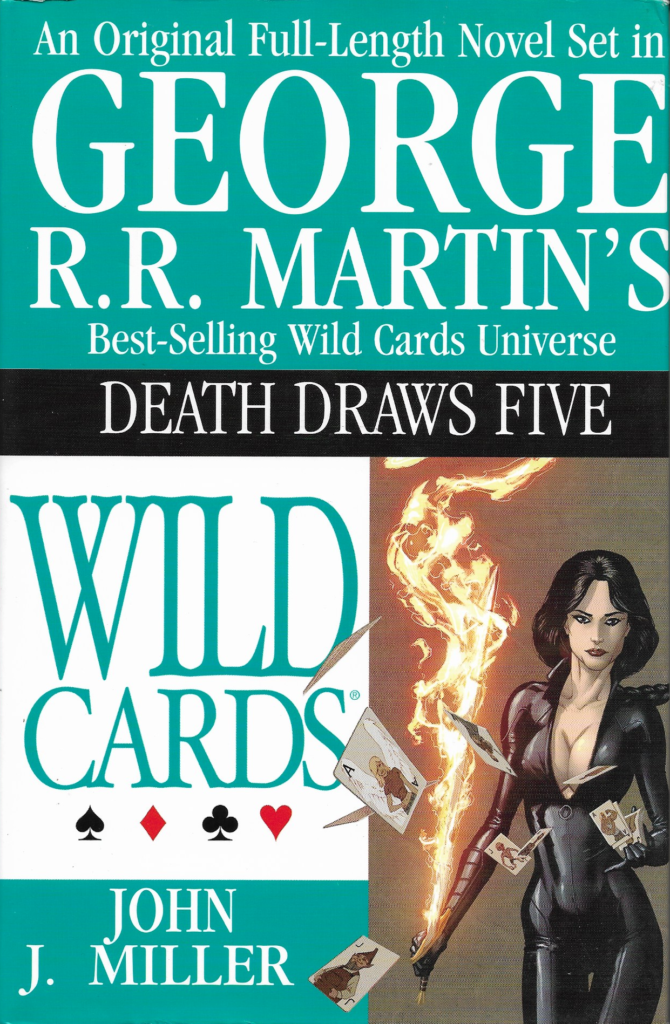
(George R. R. Martin, editor) Miller, John J. . Wild Cards: Death Draws Five. iBooks, 2006. First edition hardback, a Fine- copy with slight bumping at head and two small indents to bottom boards and slight bumping at top points in a Fine- dust jacket with slight bumping at head and top points. Solo Wild Card novel by Miller. At some con years back, Miller told me this was actually the rarest Wild Cards book. Precedes the Tor edition by 15 years. Bought from Half Price Books for $11.48.
Matheson, Richard. Purge Among Peanuts. Gauntlet Publications, 2001. First edition chapbook original, #20 of 500 signed, numbered copies, a Fine copy. Bought from the same dealer as The Parrot Who Met Papa for $22.50.

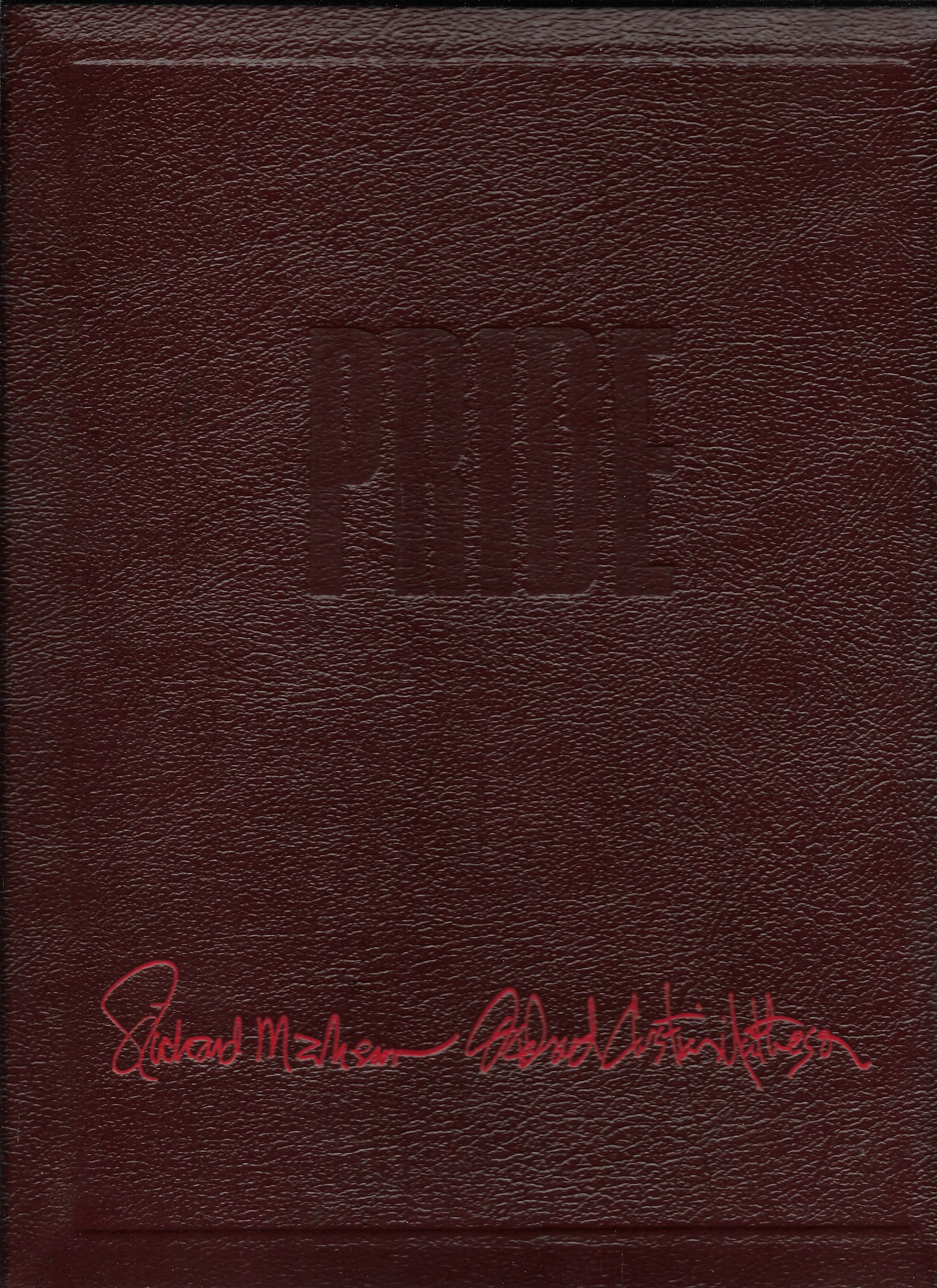
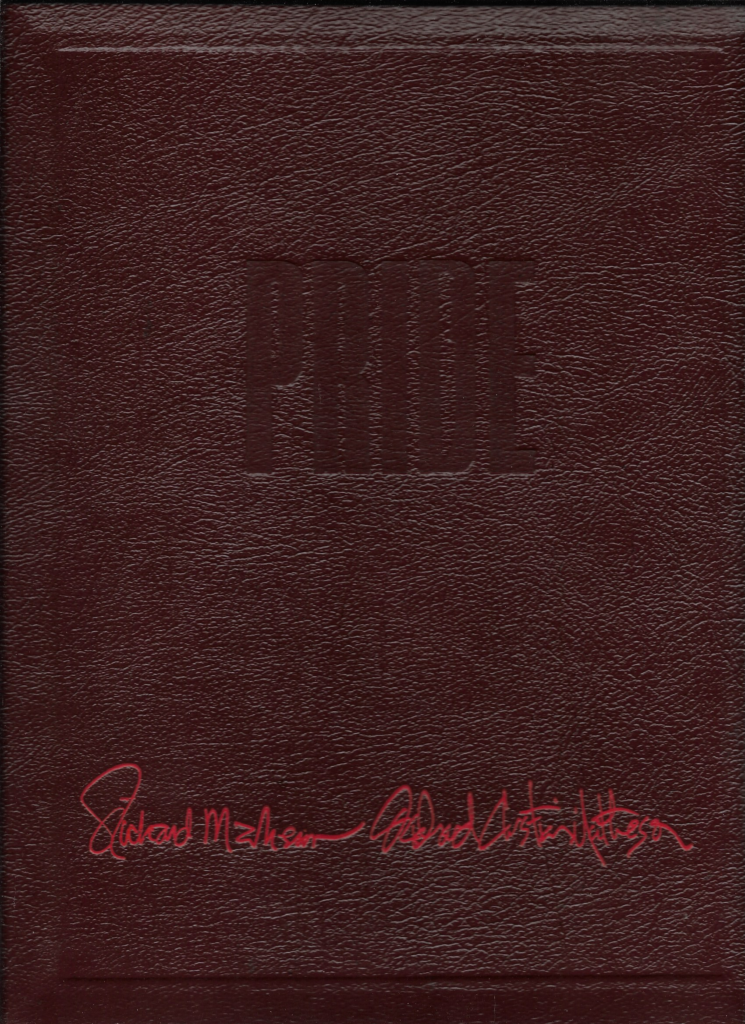
Matheson, Richard, and Richard Christian Matheson. Pride. Gauntlet Press, 2002. First edition hardback, letter R of 52 lettered copies, a Fine- copy with a slight outlines of the enclosed CD of the authors reading the story on the rear cover, and a Fine traycase with a manuscript page inserted on the inside lid, sans dust jacket, as issued. A somewhat elaborate production. Features iterative drafts of this collaborative father-and-son short story. Bought from a fellow Biblio dealer for $65.
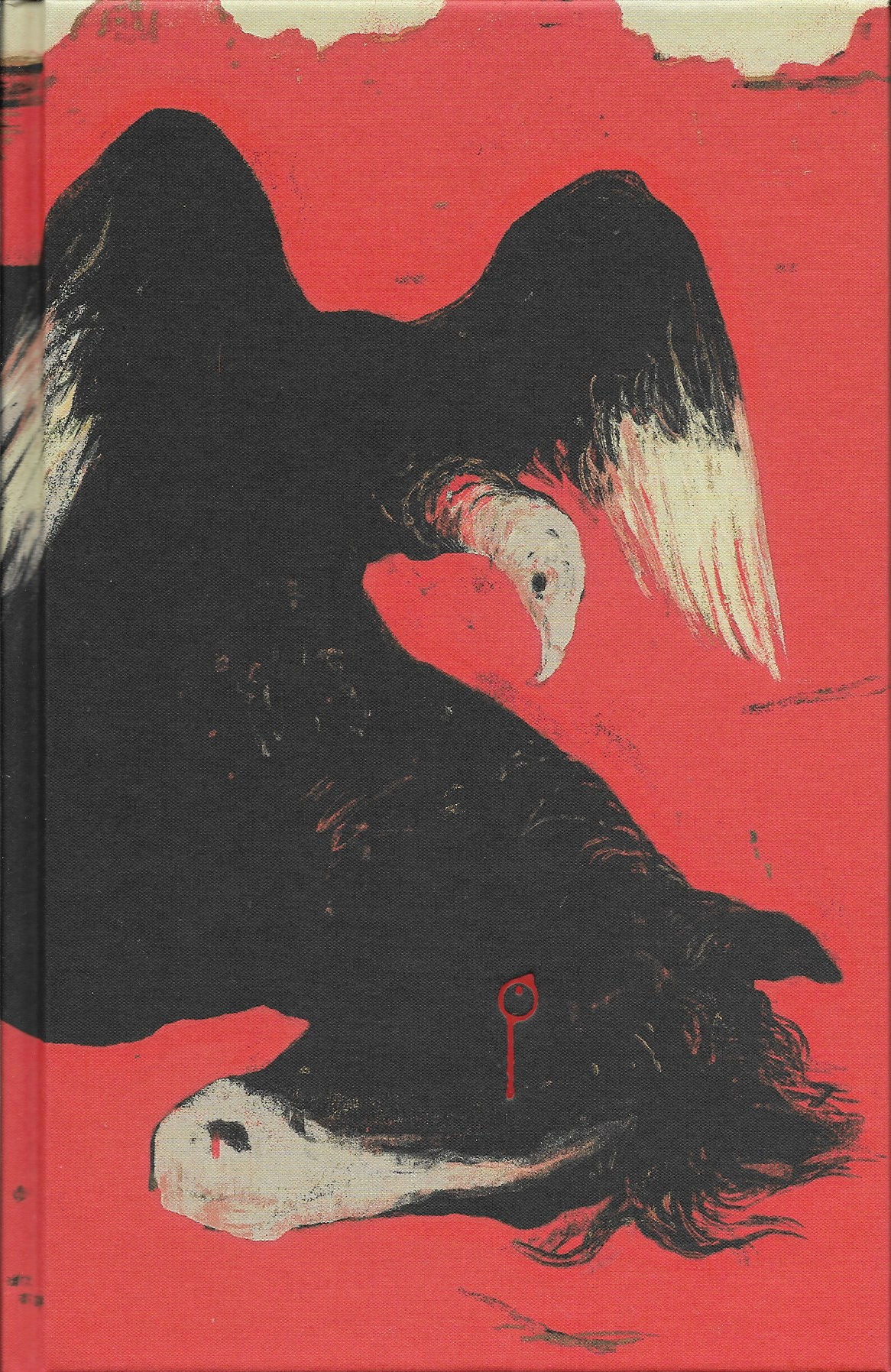
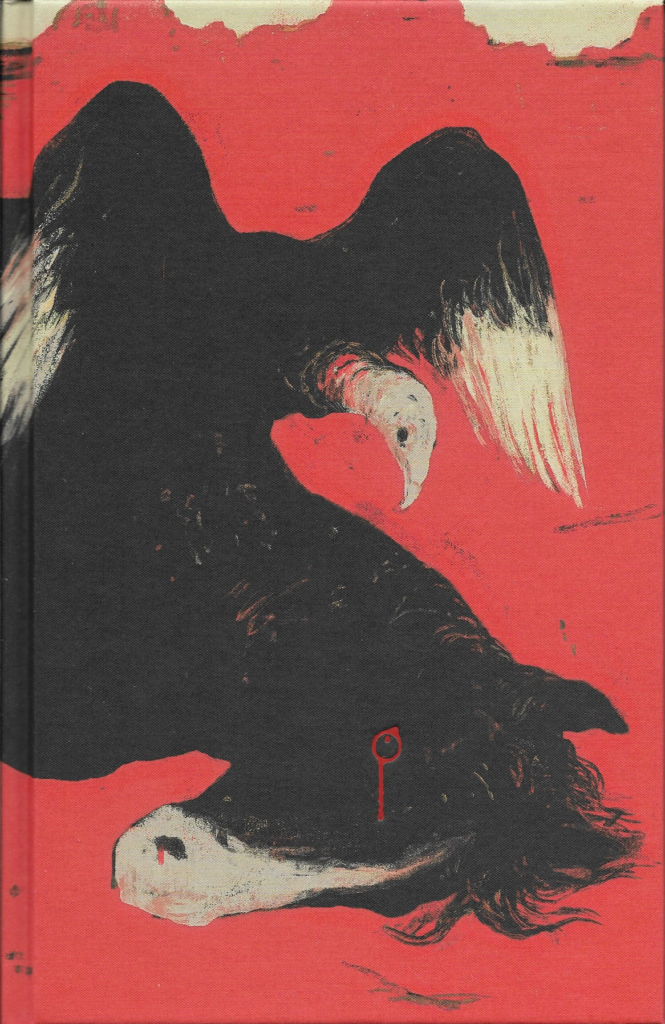
McCarthy, Cormac. Blood Meridian. Folio Society, 2022. First edition thus, an illustrated prestige reprint edition, a Fine copy in decorated boards, sans dust jacket, as issued, in Fine slipcase, with packed-by sip laid in. His celebrated ultra-violent western. While I was in the Dallas area, I saw two firsts of Blood Meridian at two different Half Price Books stores: one was $3,500, and the other was $4,000. So I may not be able to track down an affordable first of that any time soon. Bought from the Folio Society at cover price.
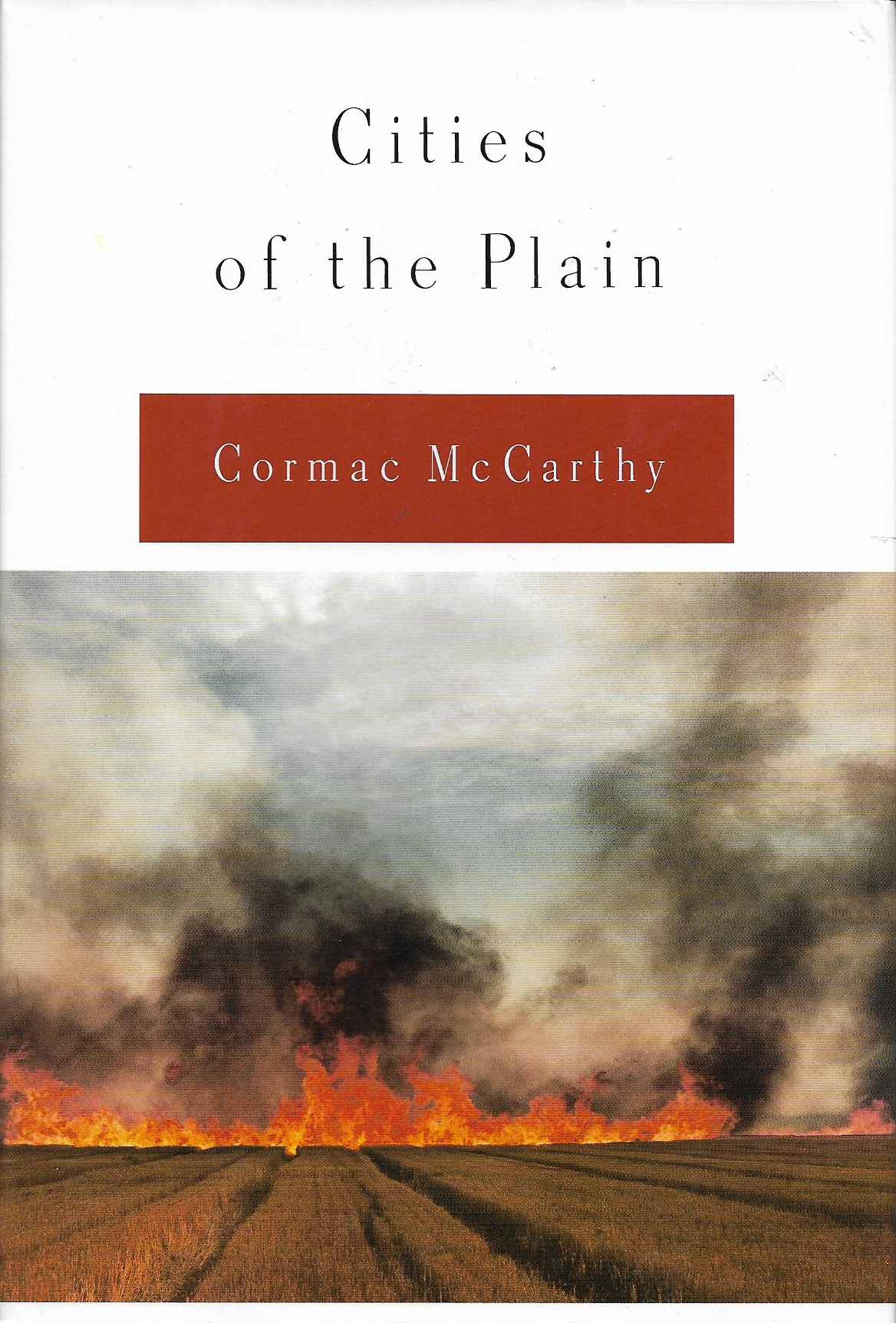
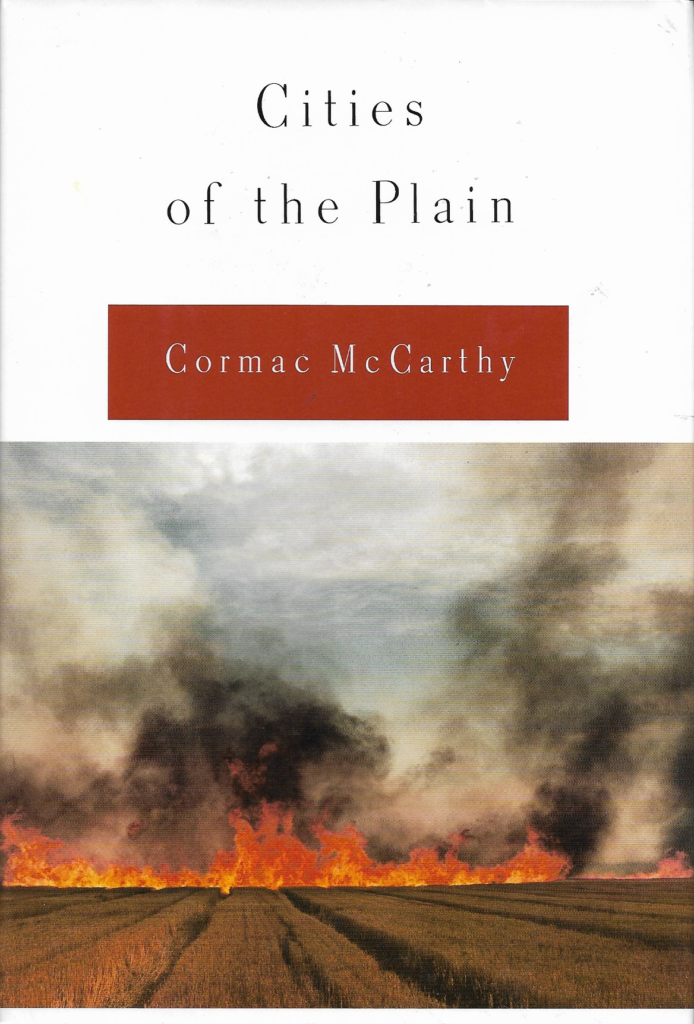
McCarthy, Cormac. Cities of the Plain. Knopf, 1998. First edition hardback, a Fine copy in a Fine dust jacket. The third book in the Border trilogy. Bought for $9.99
McCarthy, Cormac. The Passenger and Stella Maris. Knopf, 2022. Each is a stated first edition (though there was an earlier solo release of The Passenger with a different dust jacket; without a copy of that in hand I can’t tell if the two are otherwise identical, so either first edition thus or first edition in a second state dust jacket), each a Fine copy in a Fine dust jacket and a fine decorated slipcase. Stella Maris is “a tightly controlled coda, told entirely in dialogue” to The Passenger. Bought from Amazon for $45.45 for the pair.

McCrumb, Sharyn. Bimbos of the Death Sun. TSR, 1987. First edition paperback original (PBO), a Near Fine- copy with a dime-sized sticker pull on the top left front cover, foxing to inner covers, and touches of edgewear. Her acclaimed, Edgar-Award winning murder mystery set at a science fiction convention. Replaces a less attractive copy. Bought for $2.24.
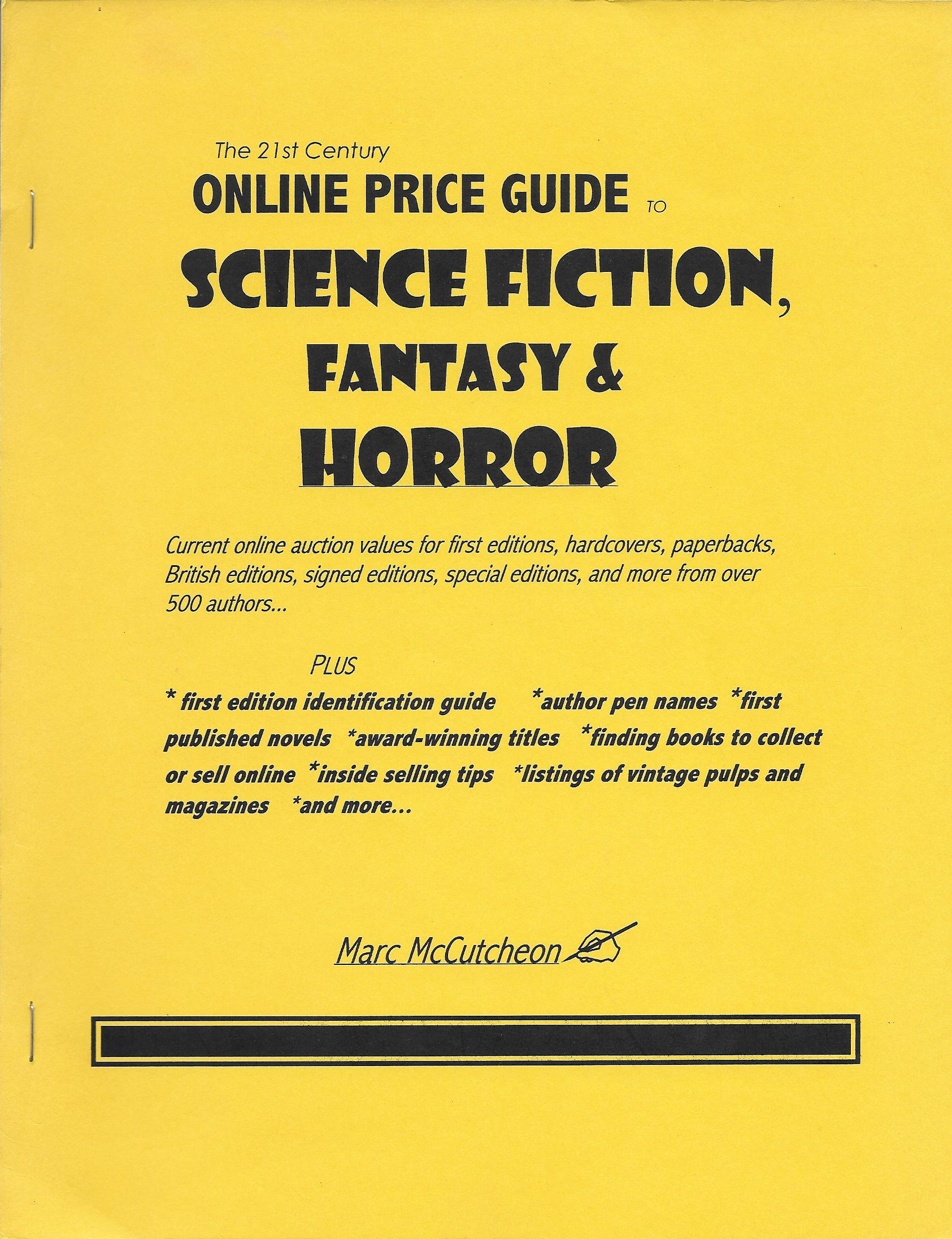
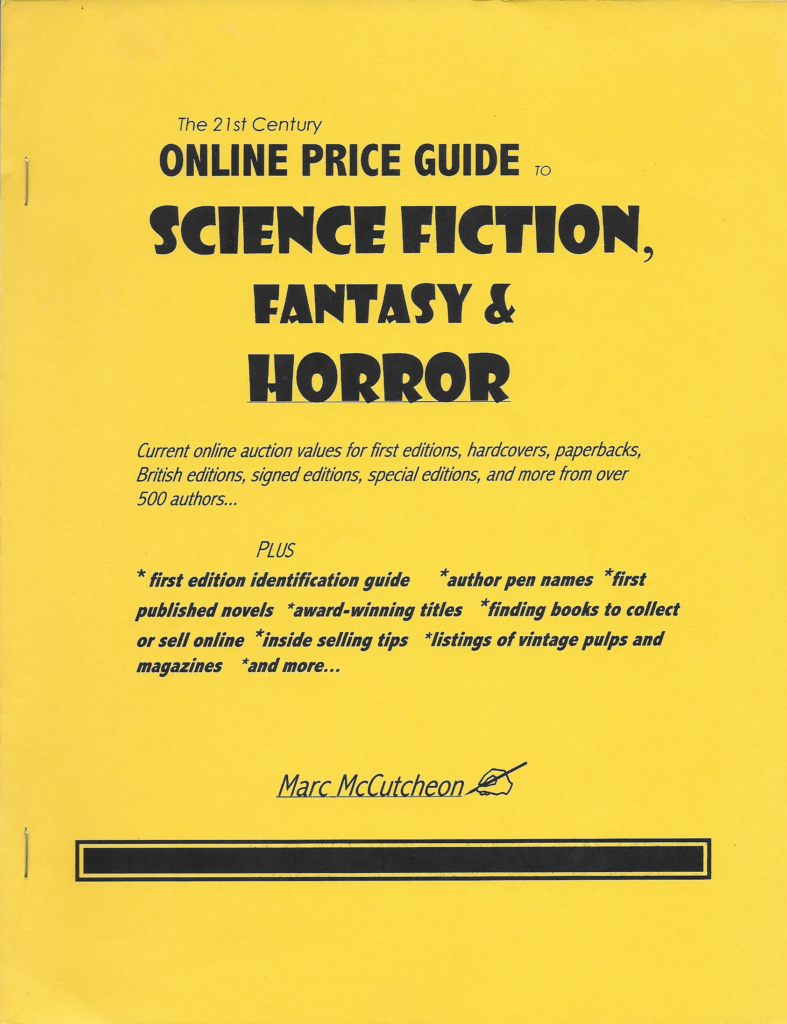
McCutheon, Marc. The Online Price Guide to Science Fiction, Fantasy & Horror. McCutheon, 2000. First edition trade paperback original (essentially just side-stapled 8 1/2″ x 11″ sheets), a Fine- copy with slight bend at top front corners. An odd self-published volume claiming to list online prices realized for a wide variety of SF/F/H books, and while the authors hit most of the biggest names, the selection is otherwise somewhat random and haphazard. Has some tidbits for things that are potentially useful, but fails to provide a lot of title-specific first edition point information (like the various dj states of Stephen King’s Salem’s Lot). I can see this being slightly useful for a real newbie the year it was published, but is of extremely dubious utility now. An oddity I bought cheap just because I had never heard of it and there was almost no information about it on the internet.
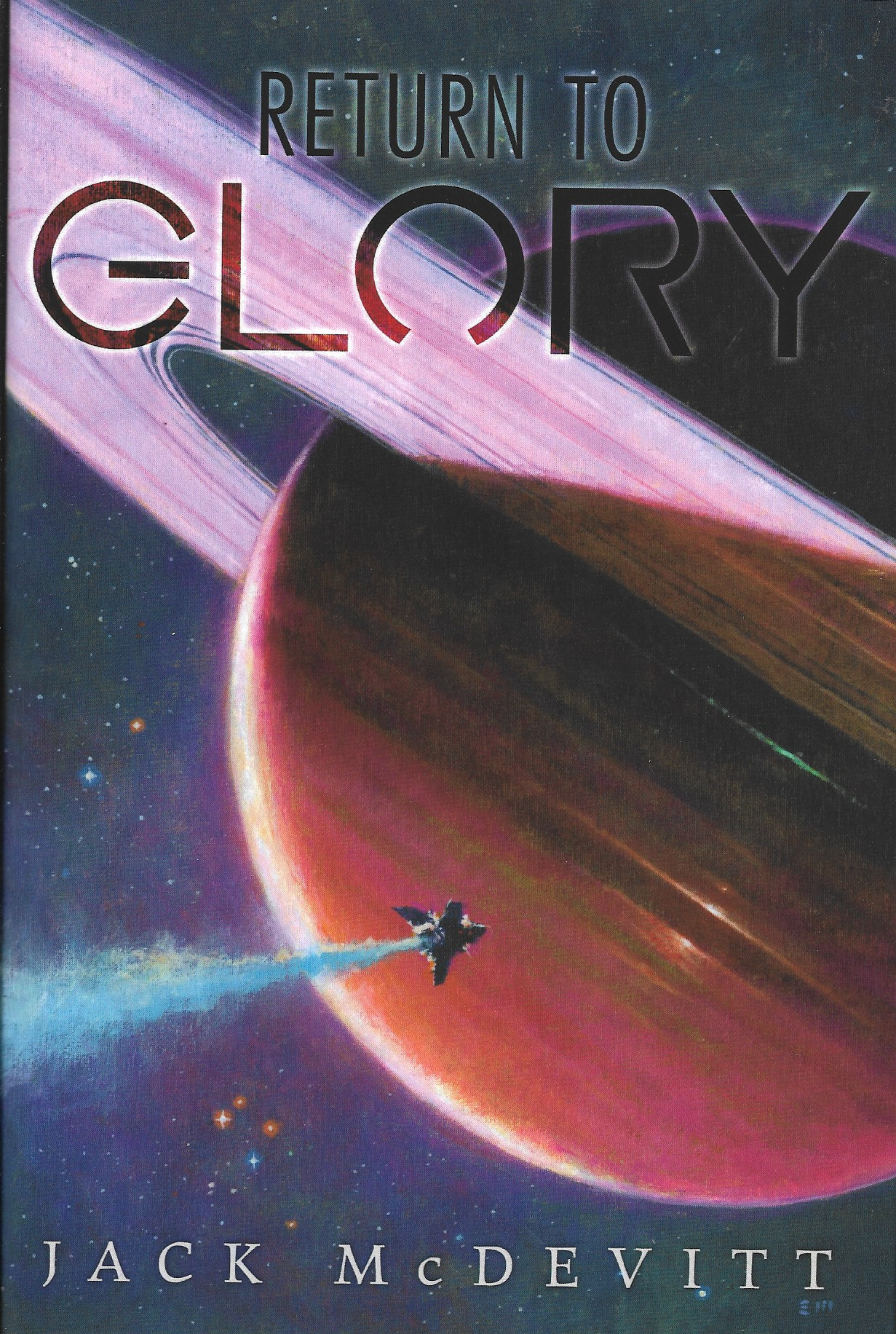
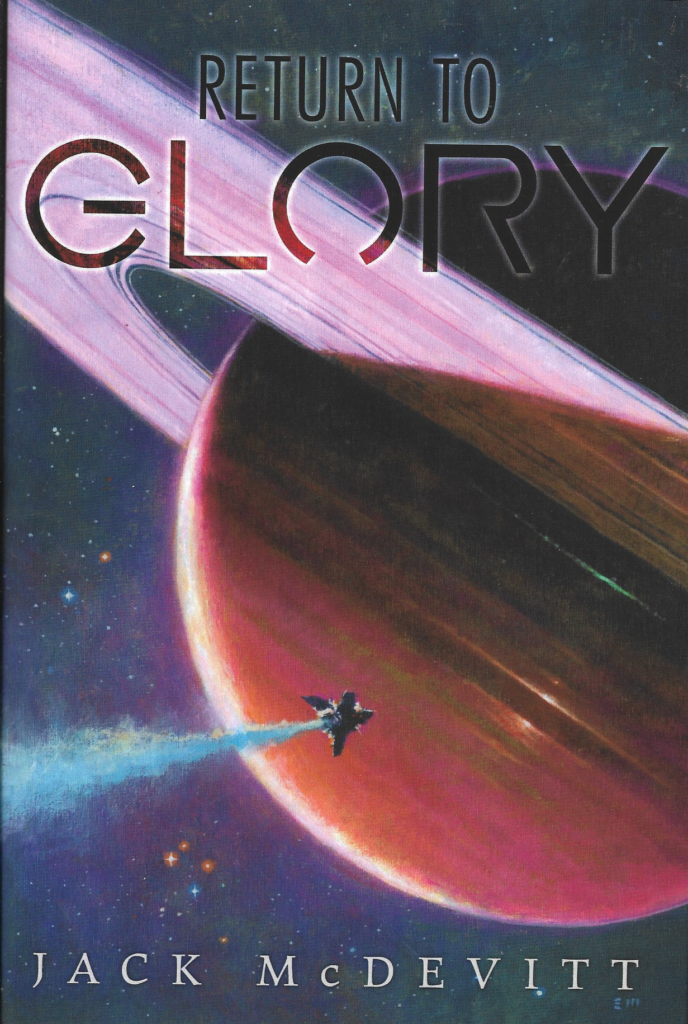
McDevitt, Jack. Return To Glory. Subterranean Press, 2022. First edition hardback, #448 of 1,000 signed, numbered copies, a Fine copy in a Fine dust jacket, with bookmark and Packed By slip laid in. This will be in the next Lame Excuse Books catalog.
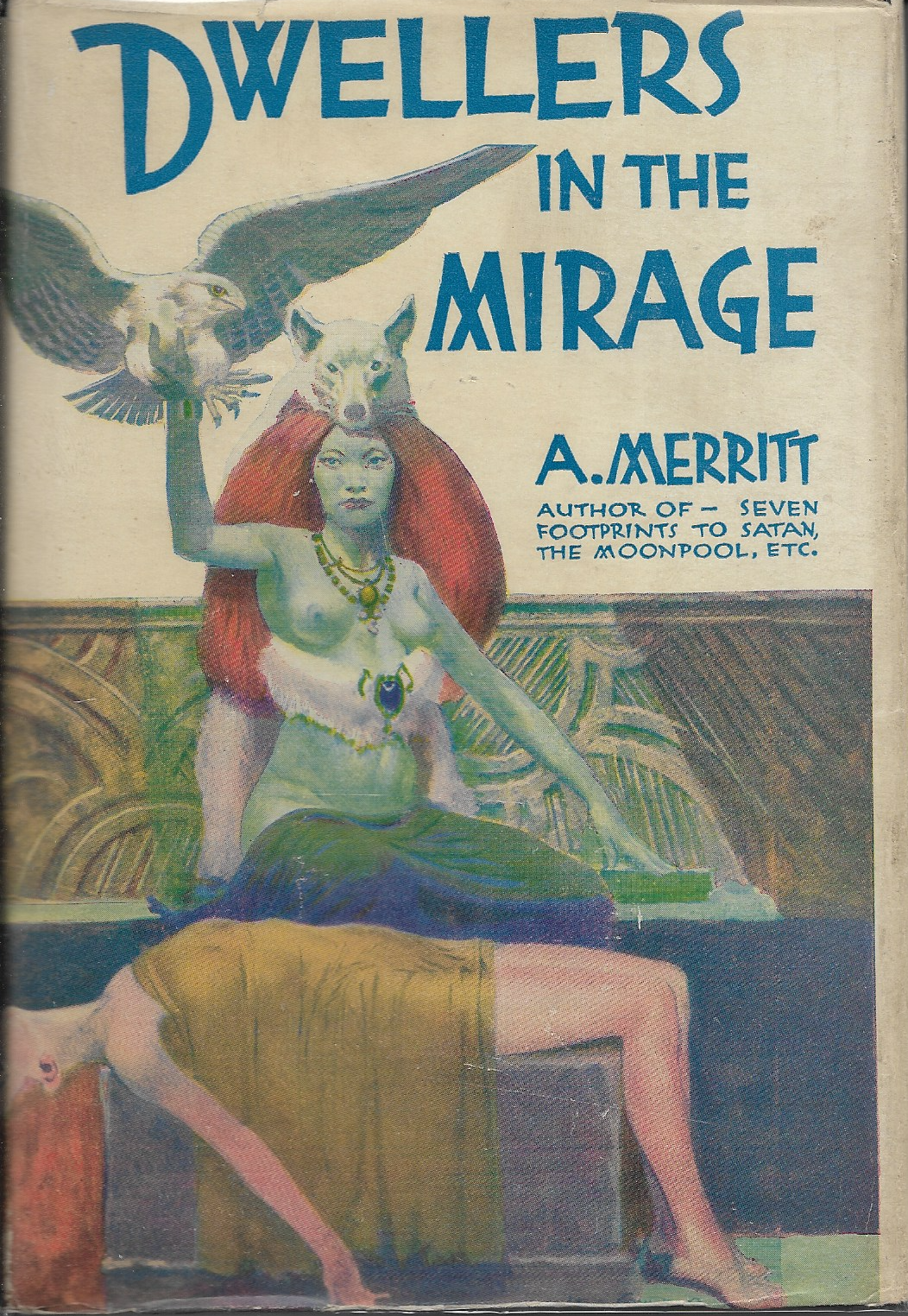
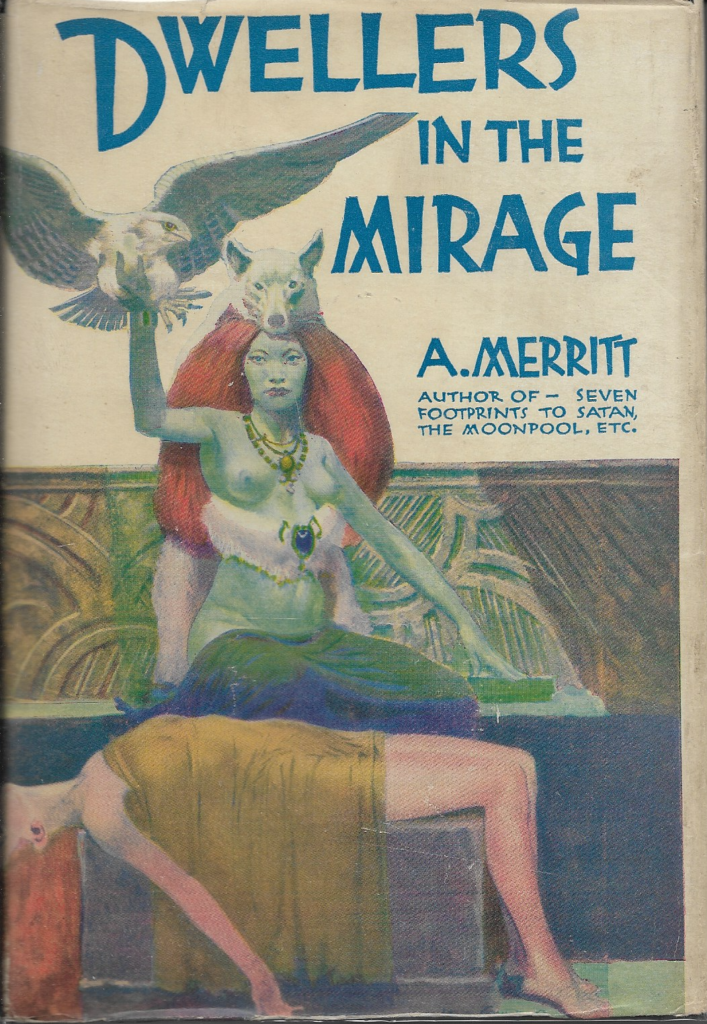
Merritt, A. Dwellers in the Mirage. Liverlight, 1932. First edition hardback (no statement of printing on copyright page, as per Currey), a Near Fine+ copy with slight foxing to inside covers from dust jacket flaps and just a tiny bit of bend at head and heel, with gilt embossing on spine entirely intact, in a Very Good+ dust jacket with shallow chipping at head, heel and points and modest dust staining to white dust jacket and a few touches of wear, otherwise intact and unclipped. A pretty nice copy of a classic inter-war fantasy novel in dust jacket. Cawthorn & Moorcock, Fantasy: The Hundred Best Books 44. Currey, page 365. Locke, A Spectrum of Fantasy, page 155. Teitler, By the World Forgot, 855. Barron, Fantasy Literature, *3-242. Bought for £240.
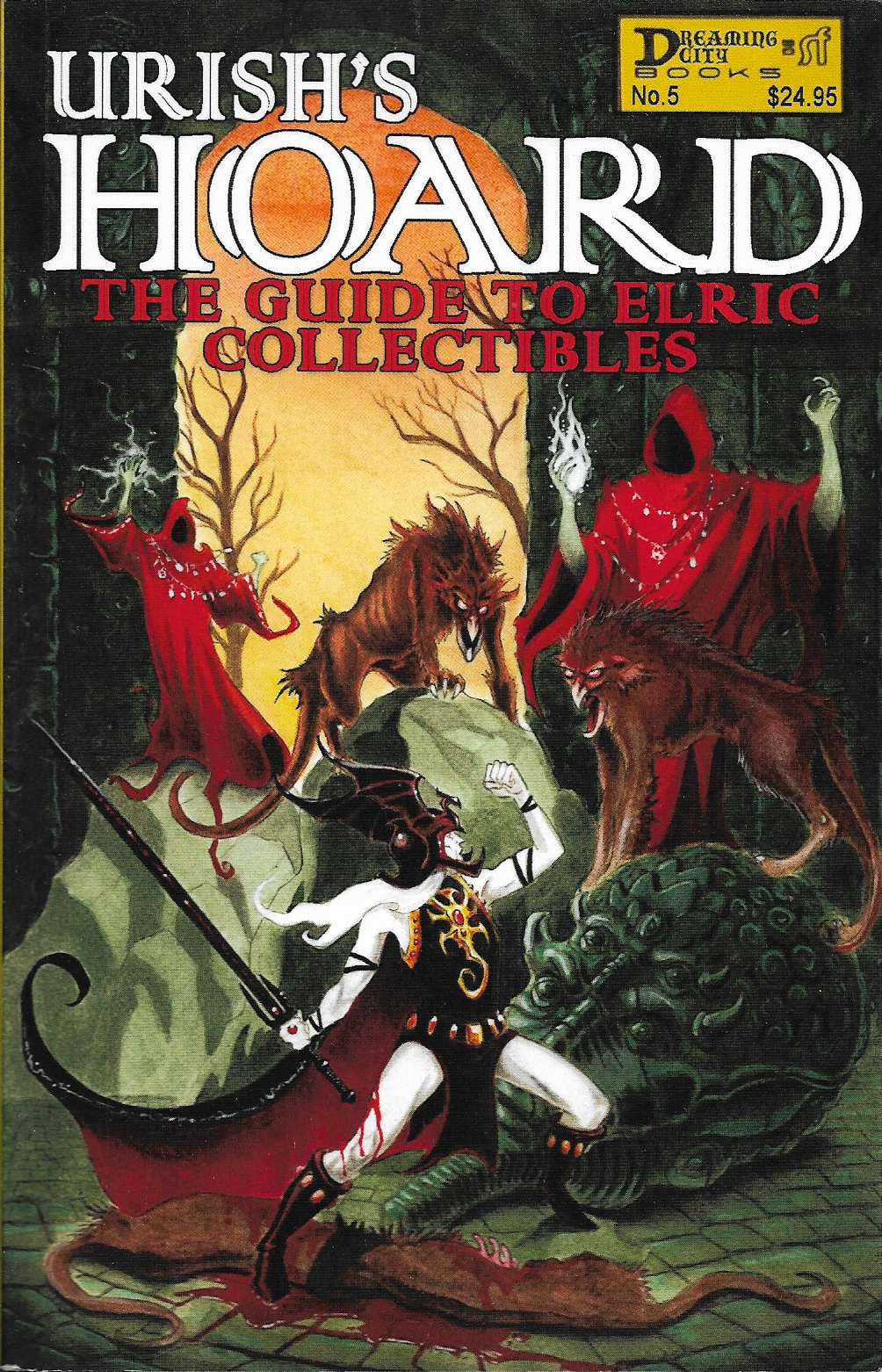
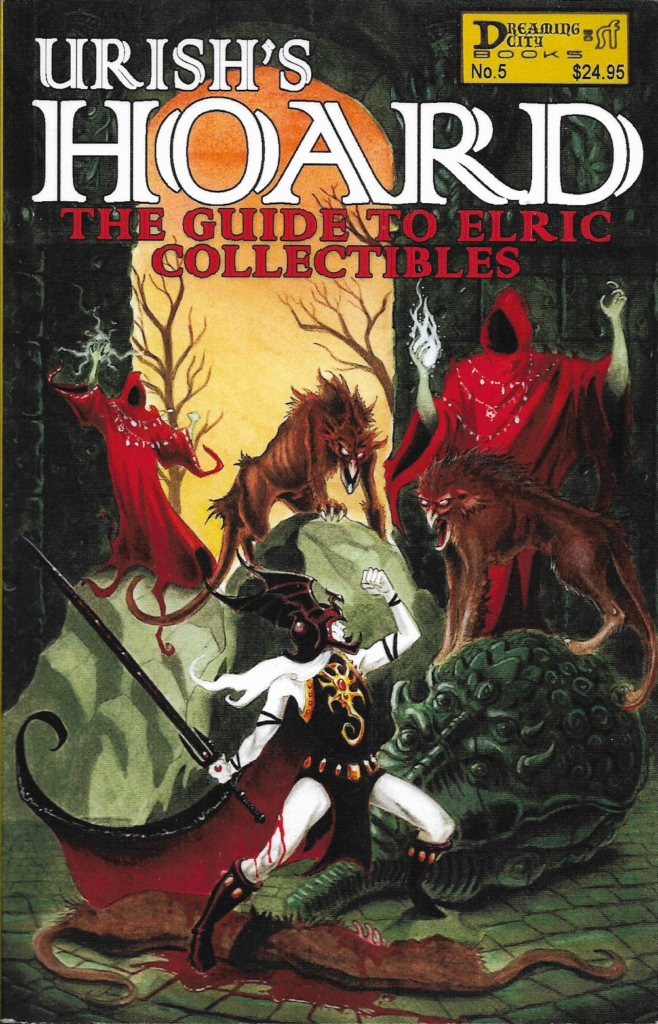
(Moorcock, Michael) Kirkland, James. Urish’s Hoard. Dreaming City Books, 2021. First edition? (no printing indicated, and it may well be a print-on-demand book) trade paperback original, a Fine copy. There was a Kickstarter for this back in early 2021, but after it was funded this was almost immediately available on Amazon, which is where I bought this. Though the first edition information can be had in more comprehensive forms elsewhere, there is a wealth of information on Elric comic book adaptations, art portfolios, music, games and RPG supplements, and even miniatures! There’s also a discussion of the foul-up behind the Melniboné Mythos section in the AD&D Deities and Demigods. I’d always thought TSR had done it without permission, but Mike had given his permission, not realizing that his agent had already sold RPG rights to Chaosium. Oops…
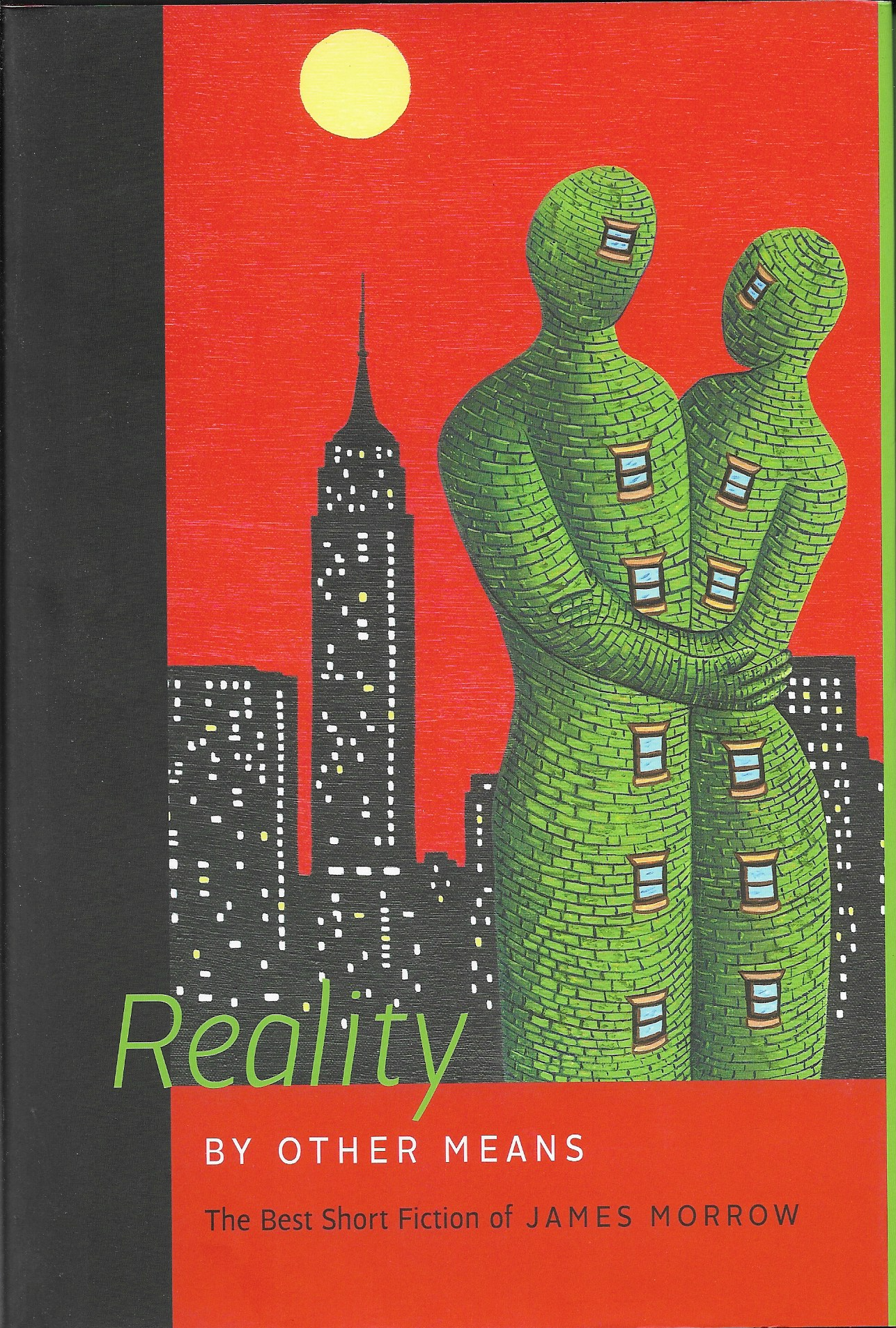
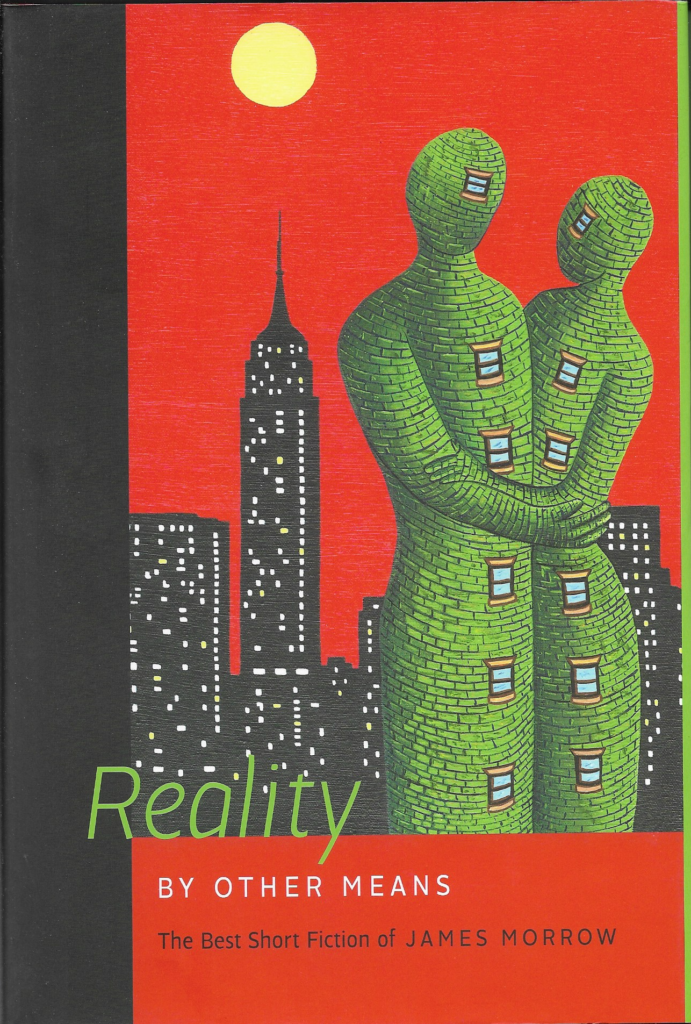
Morrow, James. Reality By Other Means: The Best Short Fiction of James Morrow. Wesleyan University Press, 2015. First edition hardback, a Fine copy in a Fine dust jacket. I’ll have one of these available in the next Lame Excuse Books catalog.
Nolan, William F. A Little Gray Book of Shadows. Borderlands Press, 2018. First edition hardback, #290 of 500 signed copies, a Fine copy, sans dust jacket, as issued.
Oldham, Craig, editor. They Live: A Visual and Cultural Awakening. Rough Trade Books, 2018. First edition (stated) trade paperback original, a Fine copy. A critical companion to the 1988 John Carpenter film. Bought as an add-in with the Shining box above.

O’Leary, Patrick. 51. Tachyon Press, 2022. First edition trade paperback original, a Fine copy. Roswell/Area 51 novel. Bought from the publisher at the usual discount. I have copies of this available through Lame Excuse Books.
Pohl, Frederik. Midas World. St. Martin’s, 1983. First edition hardback, a Fine- copy with the barest bit of bumping at head and heel, and a trace of fixing to inside covers, in a Very Good+ dust jacket with a 3/16th” chip at head, a 1″ closed triangular tear with associated nailhead-sized chip to upper front near spine (and small piece of blindside tape reinforcement), and a few pinpricks of abrasion along the spine, signed by Pohl. Over-graded by the seller as Fine/Fine, but I only paid $12 for it, and a copy with a better jacket to marry should be cheap.
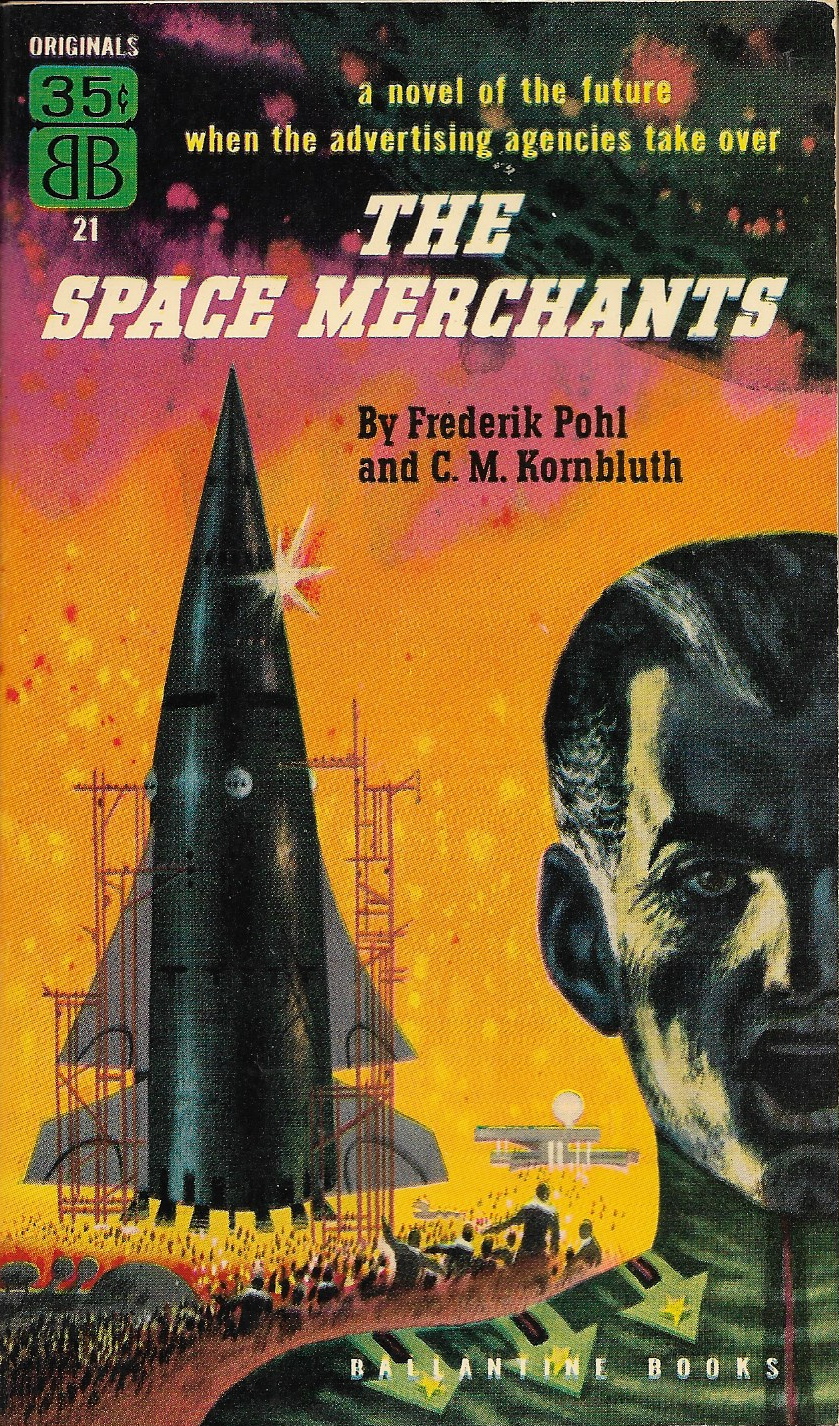
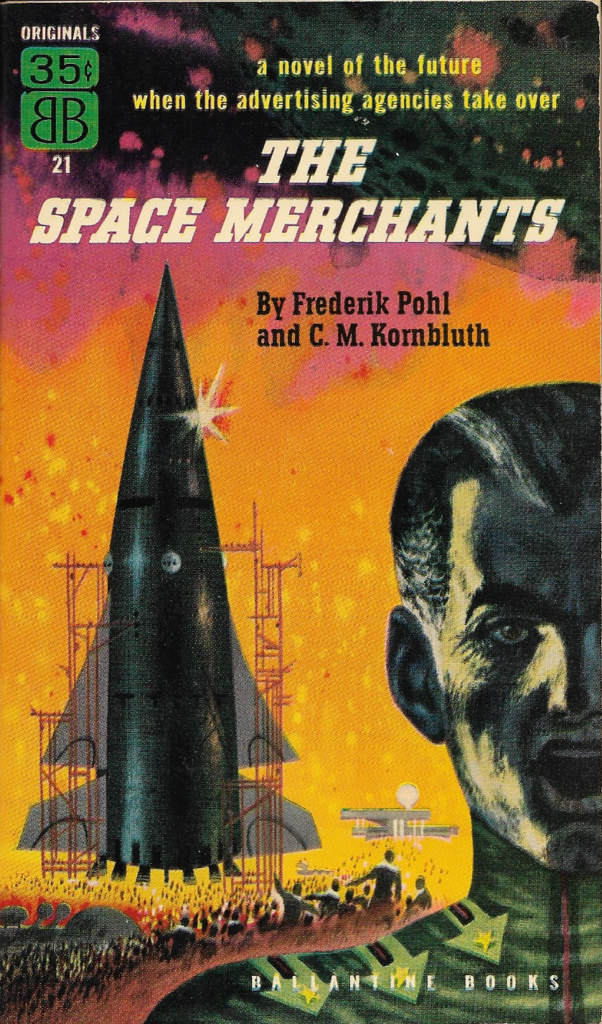
Pohl, Frederik, and C. M. Kornbluth. The Space Merchants. Ballantine Books, 1953. First edition paperback original (no statement of printing, and simultaneous with the hardback edition, as per Currey), a Fine- copy with a touch of edgewear at points, otherwise new and unread. Pringle, SF 100 12. Currey, pages 289 and 405. Barron, Anatomy of Wonder 4 *3-147. Magill, Survey of Science Fiction volume 5, pages 2127-2131. Supplements a hardback first inscribed to my by Pohl. Bought for $3 from Half Price Books.
Pohl, Frederik, and Jack Williamson. Starchild. Ballantine Books, 1965. First edition paperback original (“”First printing: November 1965″ and 50¢ price, as per Currey), a Fine- copy with just a trace of edgewear at head and heel and a tiny 3/16” non-breaking indention to front cover, otherwise tight, square and unread. Second book in the Starchild trilogy. Currey, pages 405 and 544. Supplements the SFBC Omnibus The Starchild Trilogy inscribed to me by Pohl and Williamson. Bought for $3 from Half Price Books.

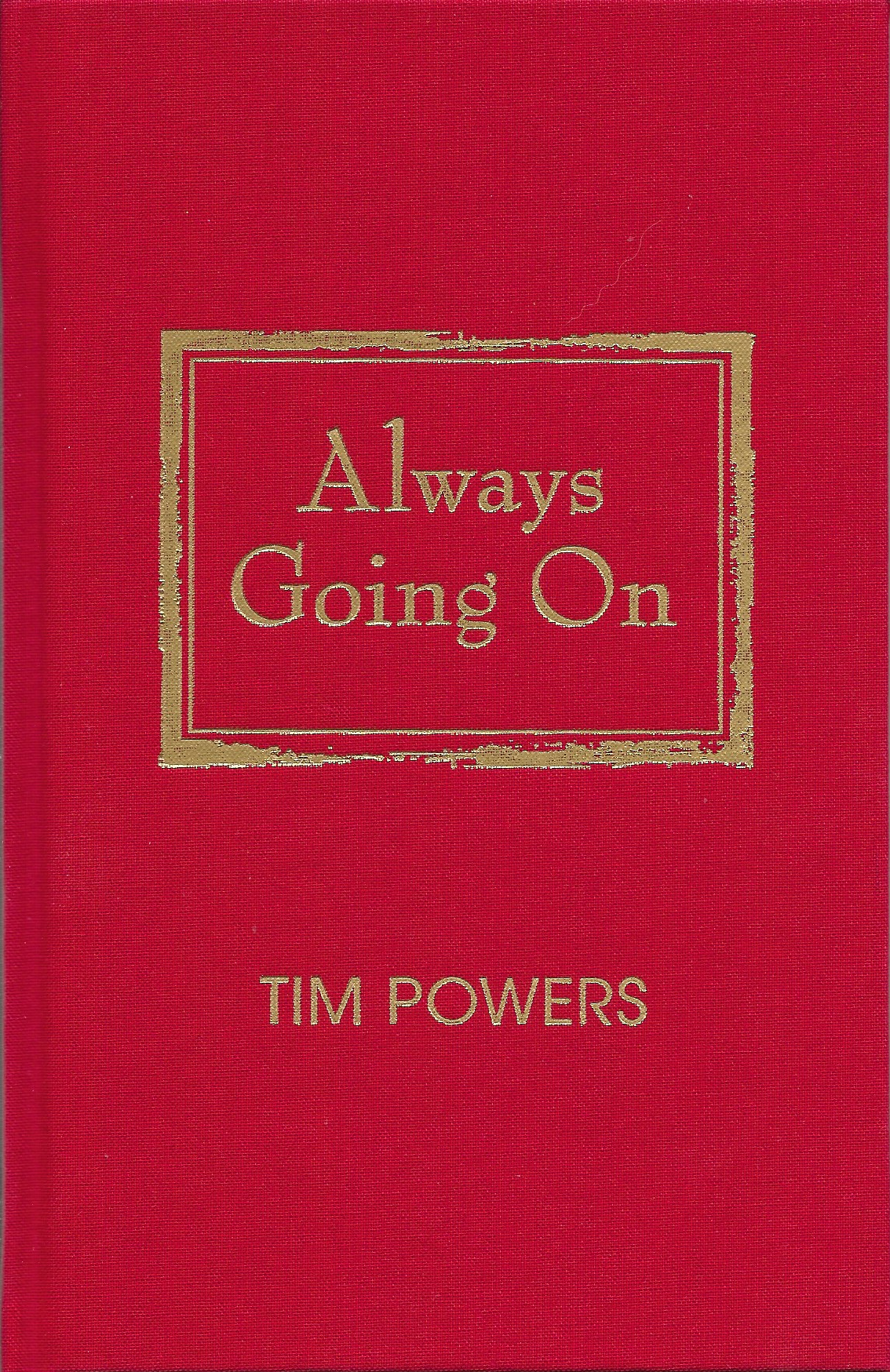
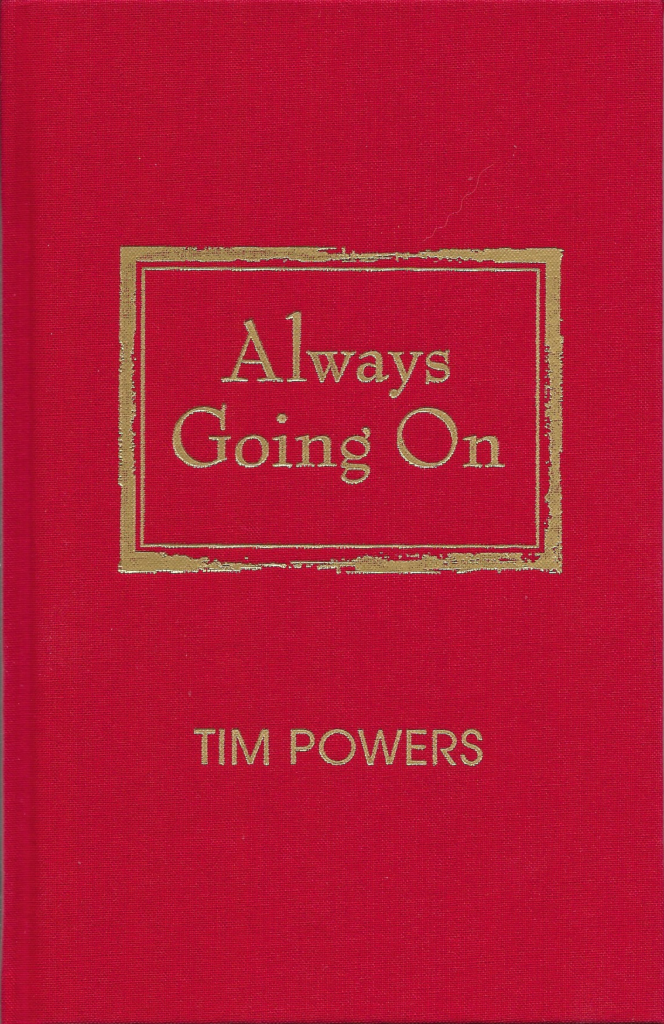
Powers, Tim. Always Going On. Subterranean Press, 2020. First edition hardback, #183 of 250 signed, numbered copies, a Fine copy, sans dust jacket, as issued, with Subterranean “packed by” slip laid in. Only available as a set with Subterranean: Tales of Dark Fantasy 3 (see below).
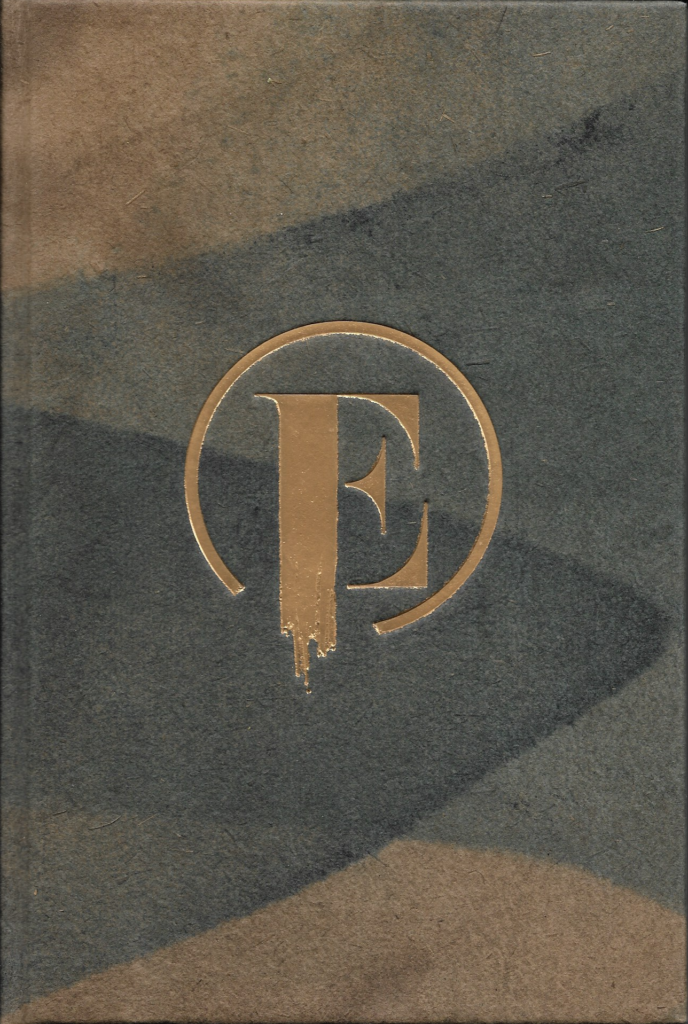
Powers, Tim. The Skies Discrowned. Charnel House, 2022. First edition hardback, #54 of 200 signed, numbered copies, a Fine copy, sans dust jacket, as issued. “Handbound in Indigo Night Cave Paper (Belgium Flax dyed with Indigo & Walnut). This Cave Paper was made by hand for this edition. Each one of a kind sheet sheet guaranties that each book is unique. Exquisitely printed on 80lb Mohawk Superfine.” Part of a uniform prestige edition that Charnel House is doing of all Powers’ books. I will have one copy of this available in the next Lame Excuse Books catalog.
Powers, Tim. Stolen Skies. Charnel House, 2022. First limited edition hardback, #54 of 150 signed, numbered copies, a Fine copy, sans dust jacket, as issued. The third in the trilogy started with Alternate Routes and Forced Perspectives. The usual beautiful Charnel House edition.
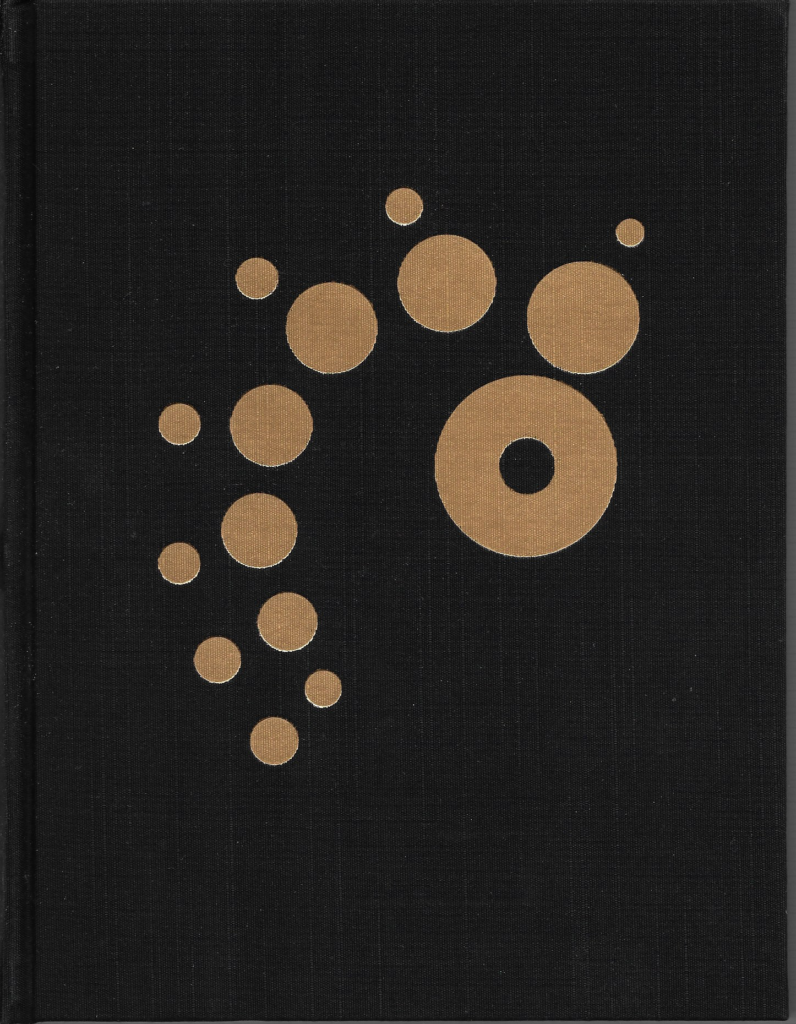
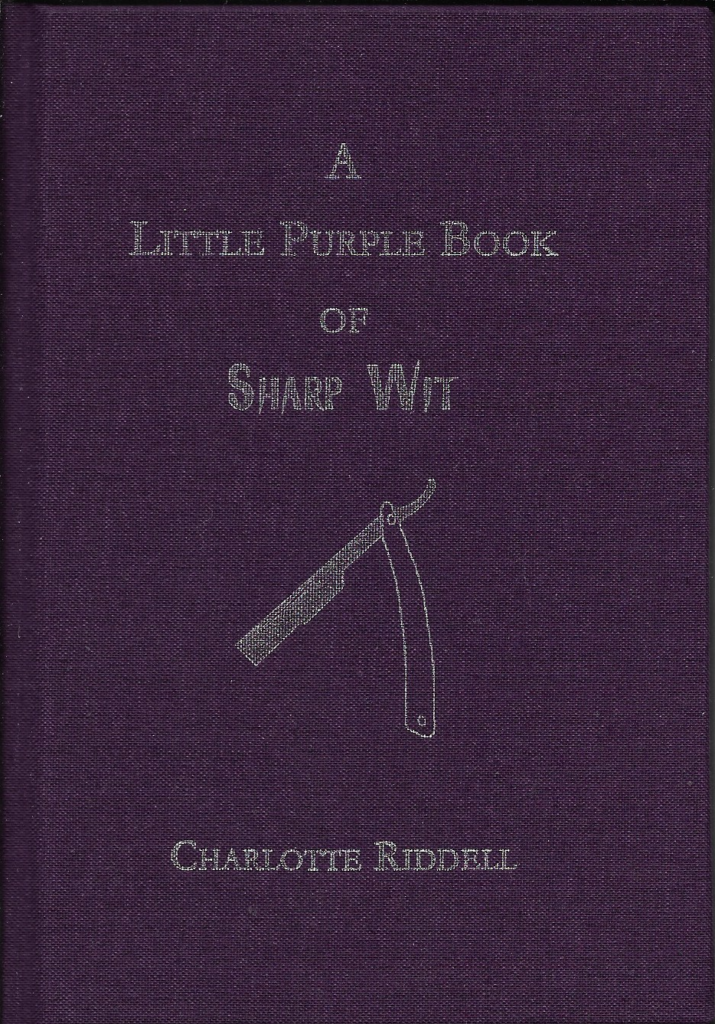
Riddell, Charlotte (AKA Mrs J. H. Riddell) (Meghan Arcuri, editor). A Little Purple Book of Sharp Wit. Borderlands Press, 2022. First edition hardback, #462 of 500 signed, numbered copies, a Fine copy, sans dust jacket, as issued. The latest in their reprints of 19th century authors series. Riddell was a prolific writer in her day, only a portion of which were ghost stories, four of which are collected here. It will be interesting to see if this volume sells for them, given that she’s no Robert W. Chambers when it comes to collectability.
Roy, Arundhati. The God of Small Things. Flamingo, 1997. First edition hardback, a Fine copy in a Fine dust jacket. Booker Prize winner. Bought for $7.99.
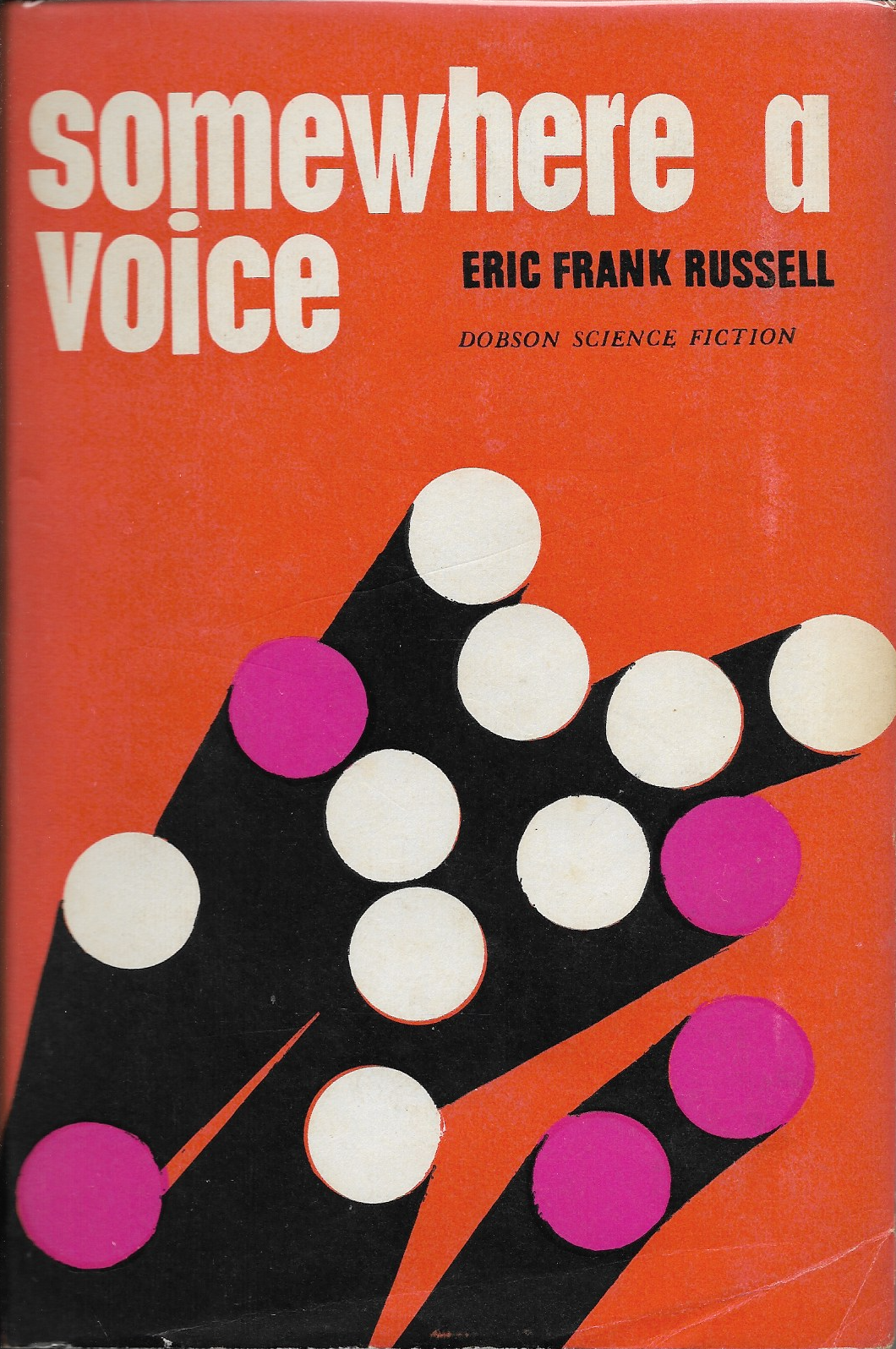
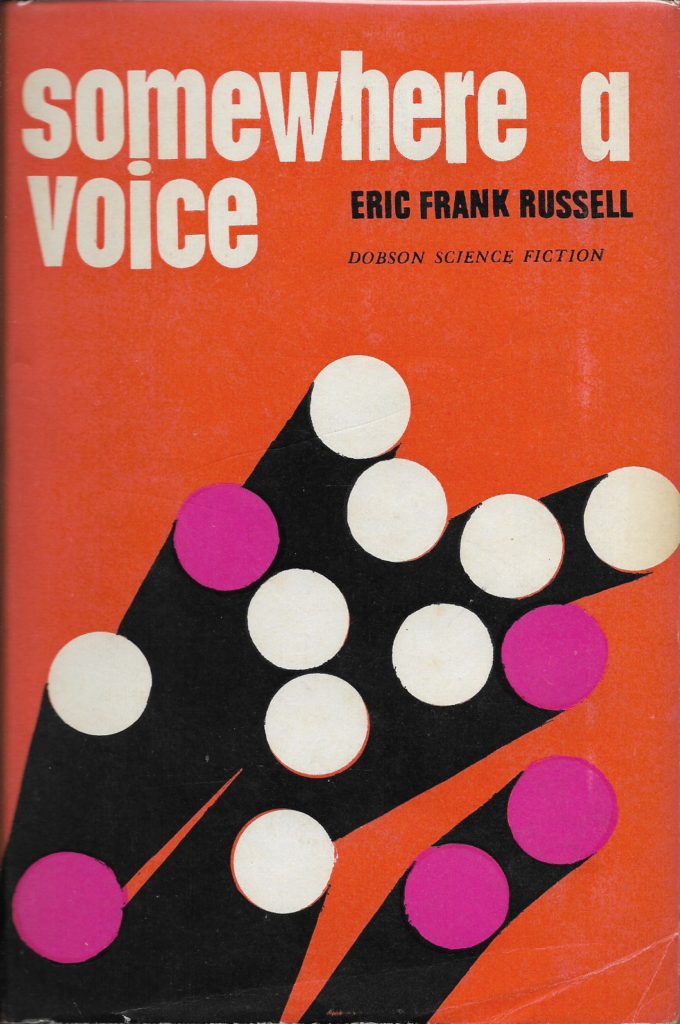
Russell, Eric Frank. Somewhere A Voice. Dennis Dobson, 1965. First edition hardback, a Fine- copy with a small Foyle’s stickler on inside front cover under flap in a Near Fine- dust jacket with a 3/4″ split to bottom of front fold (and faint associated crease to front), a nail-head sized semi-closed circular chip to rear spine join near head, slight age darkening to edges of white portion of jacket, a faint, intermittant line of rubbing near right front cover edge, and slight foxing to blind side of dust jacket spine, otherwise a fairly bright example of the dust jacket. Short story collection. Currey, page 424. Locke, Spectrum of Fantasy III, page 70. Bought from a notable UK book dealer for £32.
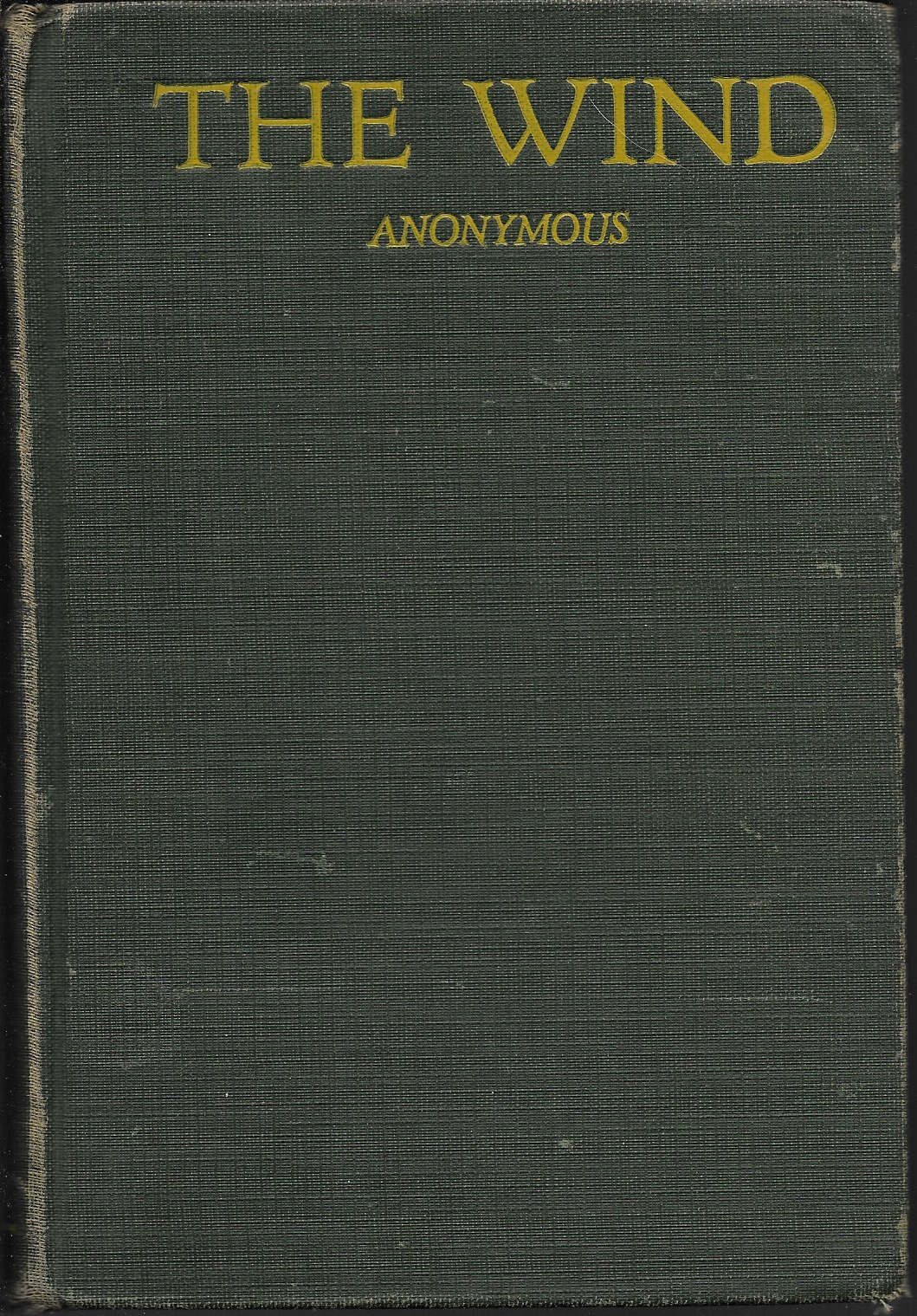
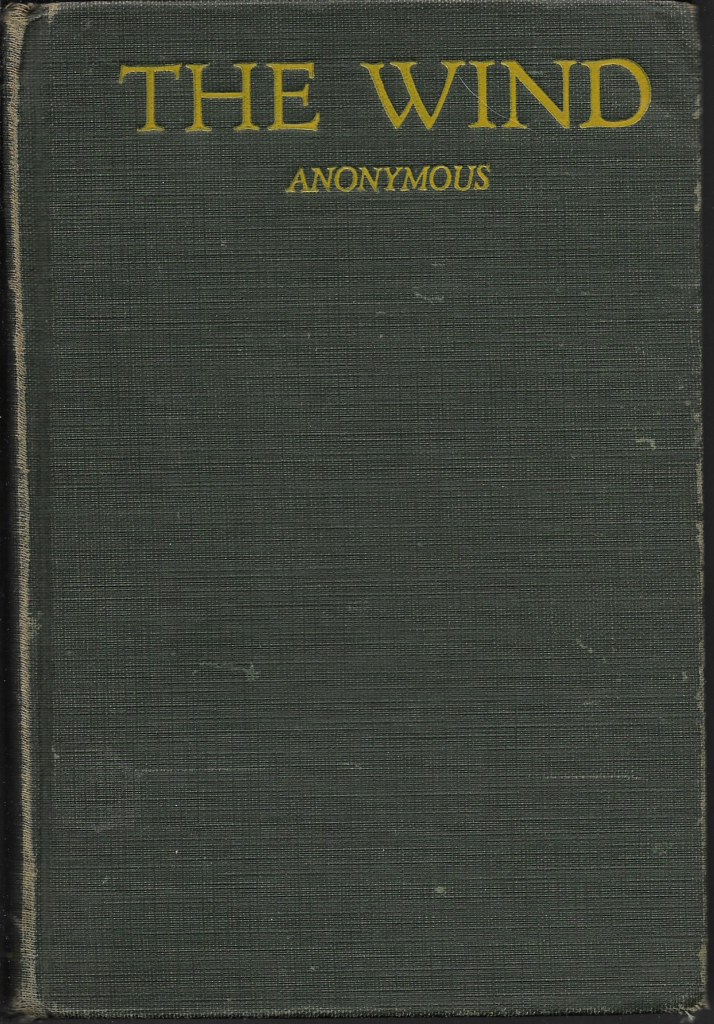
Scarborough, Dorothy (as Anonymous). The Wind. Harper & Brothers, 1925. First edition hardback, a Good+ copy with spine cracked, front hinge cracked, spots and abrasions to cover, slight fraying to head and heel, with small former owner plate for Violet Hayden Dowell (a Dallas author and art collector) on inside front cover, and a different ownership name written on FFE, along with “[Scarborough, Dorothy]. Tale of a women in west Texas driven insane by the incessant blowing of the wind. The novel was the basis of the 1928 film starring Lilian Gish. Bought for $36.
Schafer, William, editor. Subterranean: Tales of Dark Fantasy 3. Subterranean Press, 2020. First edition hardback, #183 of 250 numbered copies signed by all the contributors, a Fine copy in a Fine dust jacket, with Subterranean “packed by” slip laid in. Anthology with stories by Robert R. McCammon, Richard Kadrey, etc. Sold as a set with Tim Powers’ Always Going On (see above), bought as a set from Subterranean for $75, 50% off the original cover price. Now sold out from the publisher.
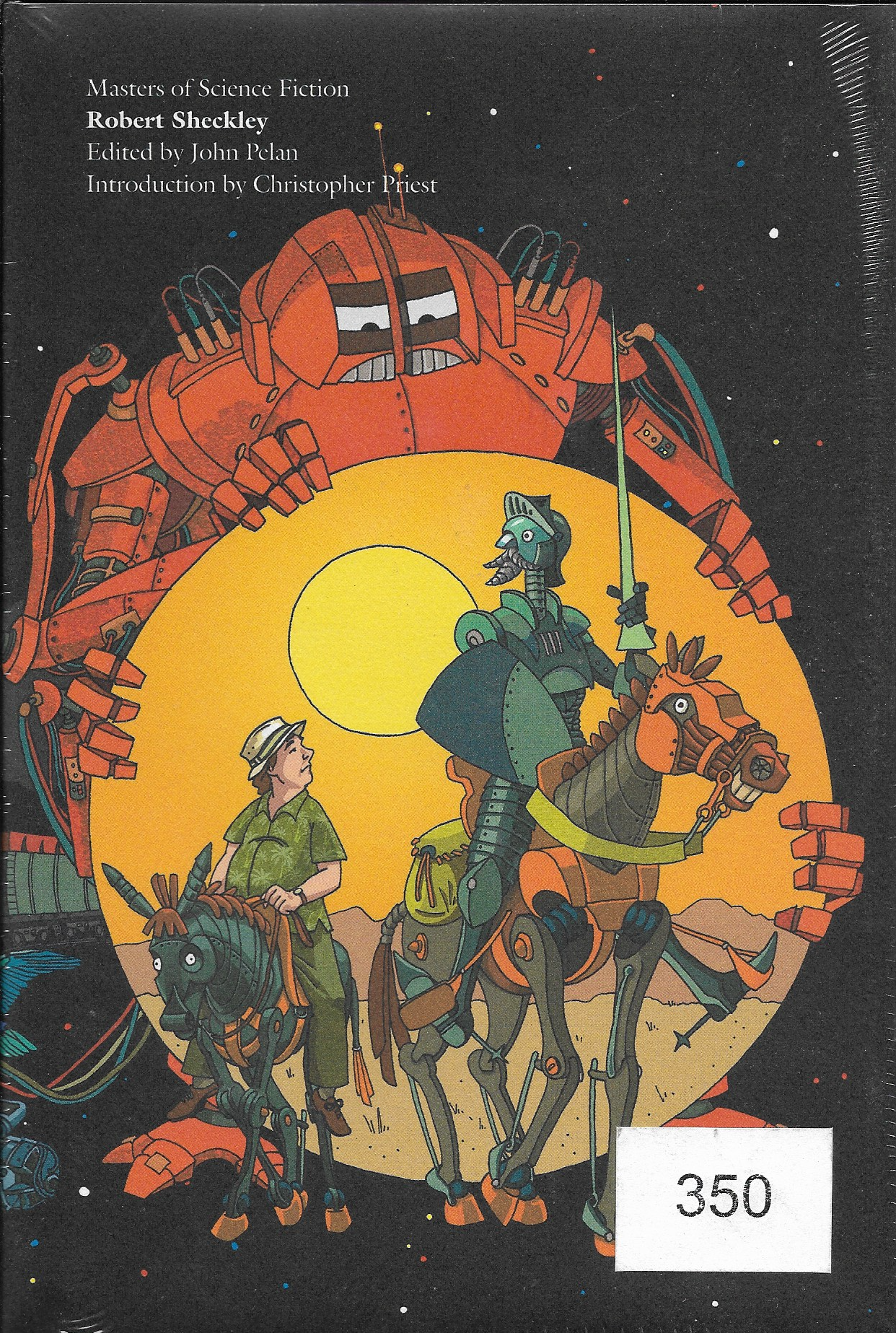
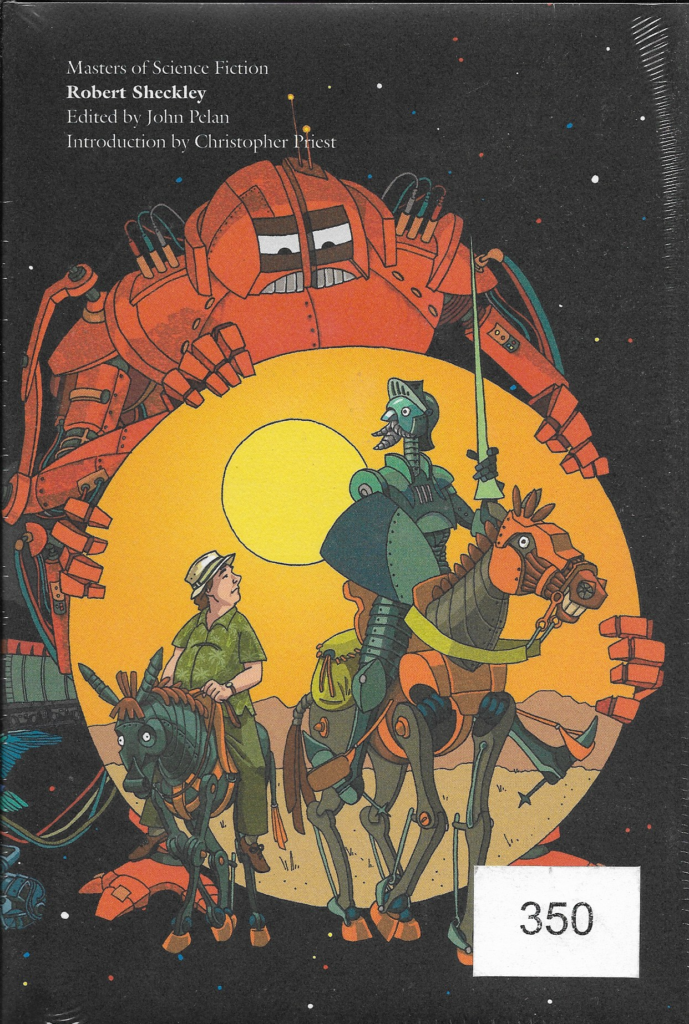
Sheckley, Robert. Masters of Science Fiction: Robert Sheckley. Centipede Press, 2022. First edition hardback, #350 of 500 signed, numbered copies, a Fine copy in a Fine dust jacket, still in publisher’s shrinkwrap. “Signed by Jim & Ruth Keegan, with facsimile signatures by Robert Sheckley, Christopher Priest, and John Pelan.” The signed edition is sold out from the publisher, but I’ll have a few copies in the next Lame Excuse Books catalog.
Shepard, Lucius (edited by Bill Sheehan). The Best of Lucius Shepard Volume 2. Subterranean Press, 2021. First edition hardback, a Fine copy in a Fine dust jacket, new and unread. Huge, 800+ page collection.

Shepard, Lucius (edited by Bill Sheehan). The Best of Lucius Shepard Volume 2. Subterranean Press, 2021 (seen 2022). First edition hardback, #160 of 200 numbered copies, a Fine copy in a Fine dust jacket, new and unread.
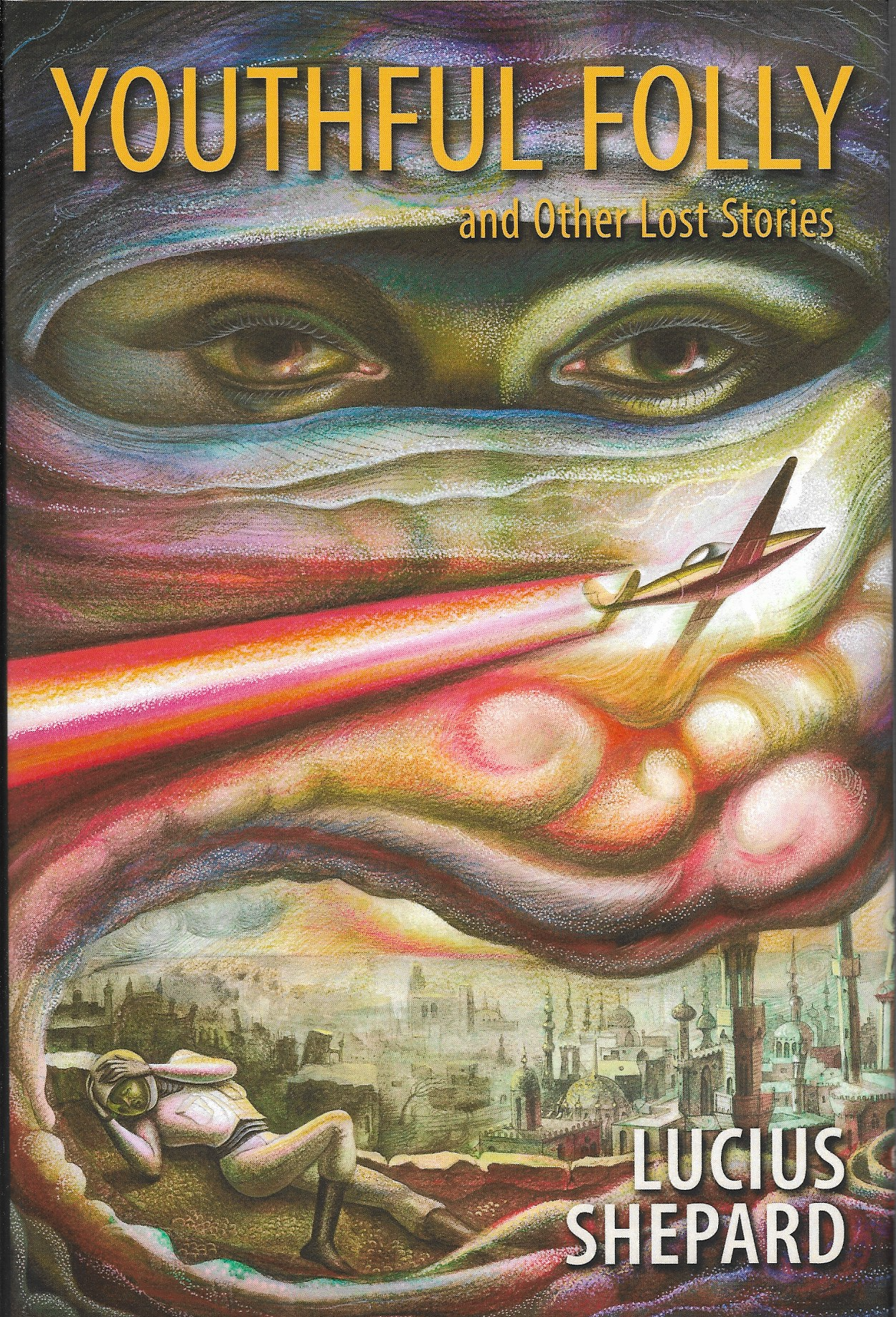
Shepard, Lucius. Youthful Folly and Other Lost Stories. Subterranean Press, 2021 (seen 2022). First edition hardback, #160 of 200 numbered copies, a Fine copy in a Fine dust jacket, new and unread. Companion volume “which contains an additional 400 pages of previously uncollected fiction,” only available with the limited edition, much like Skull City, the companion volume to the limited edition of the first The Best of Lucius Shepard volume. Alas, unlike that set, there’s no slipcase for the two books.
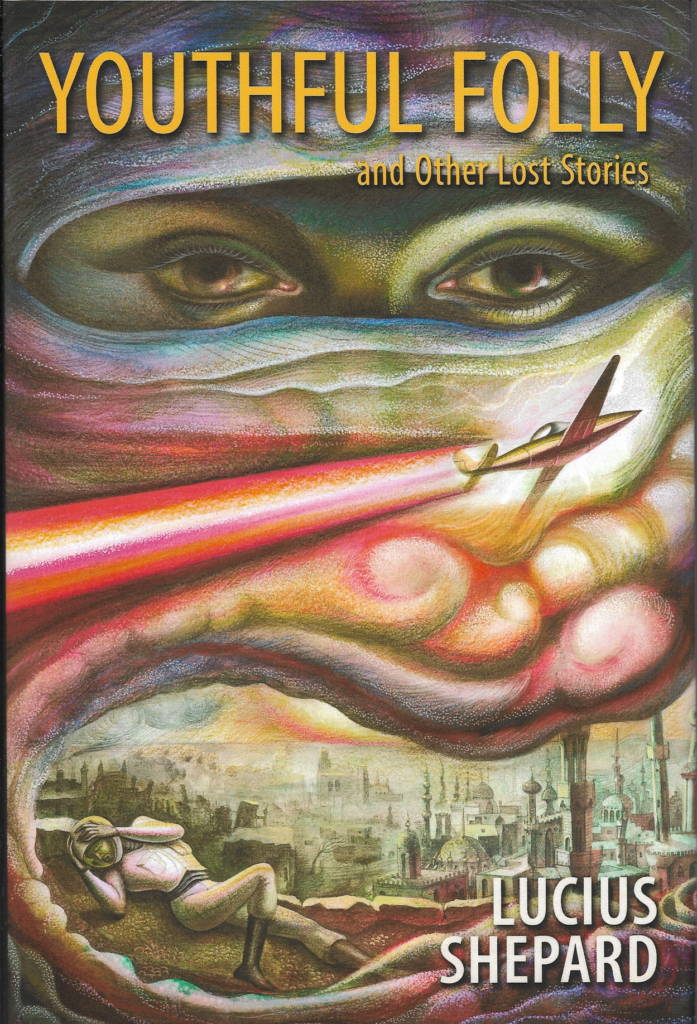
Sholly, Pete Von. The PS Book of Fantastic Fictioneers: A History of the Incredible (Volume One Ackerman to Jackson and Volume Two: James To Wood.). PS Publishing, 2019. First edition hardbacks, Fine copies in Fine (One) and Near Fine (Volume Two, due to a 1″ slit along the spine edge) dust jackets. Profusely illustrated non-fiction book set covering creators of the fantastic, from Edgar Allen Poe to Ray Bradbury to Jim Henson to Joel Hodgson. Bought for £20 for the set.
Silverberg, Robert. The Book of Skulls. Scribner’s, 1972. First edition hardback, a Fine copy in a Fine dust jacket, signed by Silverberg. Hugo and Nebula finalist. Replaces a slightly less Fine signed copy. Bought for $45.
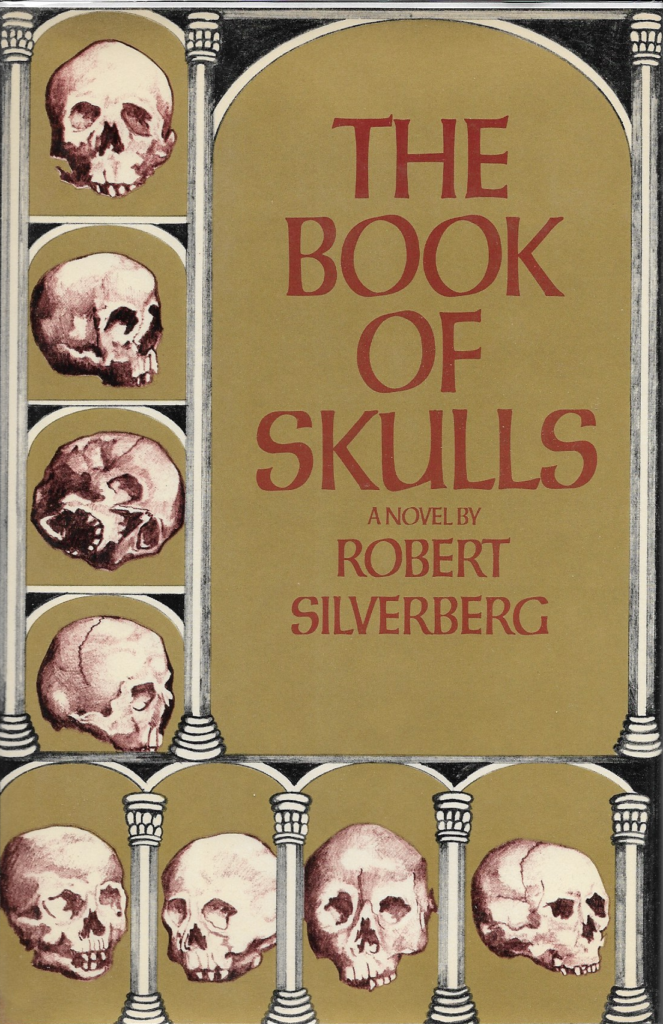
Silverberg, Robert. Among Strangers. Subterranean Press, 2022. First edition hardback, a Fine copy in a Fine dust jacket, new and unread. Massive, 760 page omnibus of three novels (Those Who Watch, The Man in the Maze, and Tom O’Bedlam), plus novelette “The Way to Spook City,” each dealing with aliens. I already have copies of this available through Lame Excuse Books.
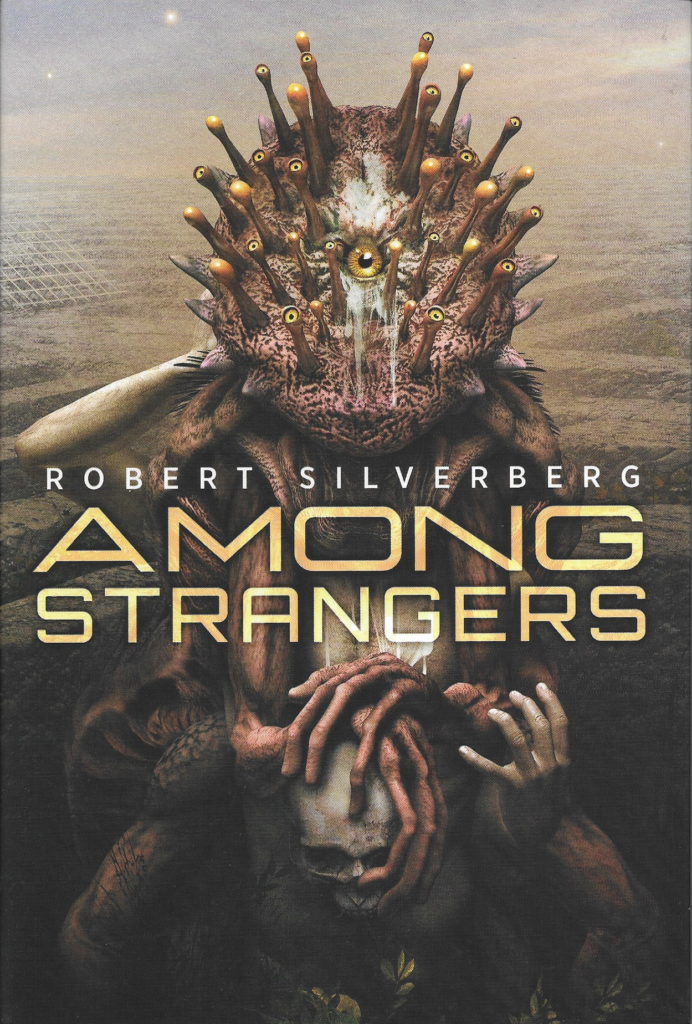
Smith, Clark Ashton. The Abominations of Yondo. Arkham House, 1960. First edition hardback, a Fine copy in a Fine dust jacket. Really an excellent copy. Joshi, Schultz & Connors, Clark Ashton Smith: A Comprehensive Bibliography, I.15.a. Joshi, Sixty Years of Arkham House 57. Derleth, Thirty Years of Arkham House 57. Jaffery, Horrors and Unpleasantries 57. Nielsen, Arkham House Books: A Collector’s Guide, 60. Currey, page 453. Locke, A Spectrum of Fantasy, page 200. Bleiler, The Guide to Supernatural Fiction 1487. Chalker/Owings, page 29. Bought as part of the Heritage lot.
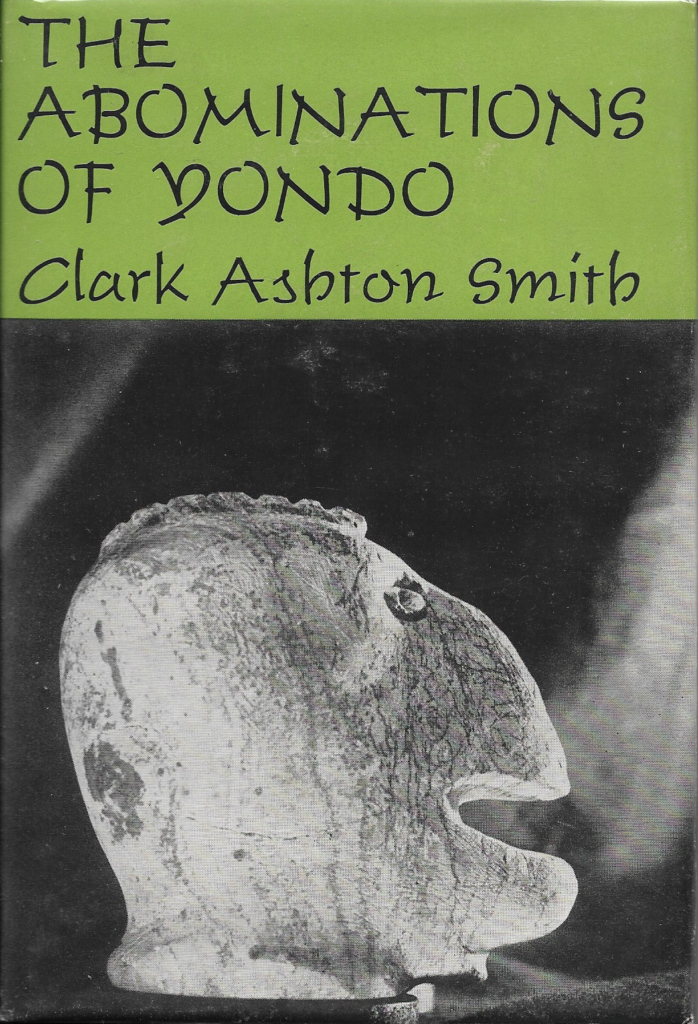
Smith, Clark Ashton. The Dark Chateau. Arkham House, 1951. First edition hardback, a Near Fine copy with slight crimping and a touch of wear at head, small embossed name at bottom of half-title page, moderate foxing to rear gutters, slight foxing to front gutters, and a thumbnail edge-like indention to the top of the first few pages, in a Near Fine- dust jacket with slight loss at points and age-darkening to white lettering on spine. Only 563 copies printed, one of the smaller Arkham House runs. Joshi, Schultz & Connors, Clark Ashton Smith: A Comprehensive Bibliography, I.13.a. Sidney-Fryer, Emperor of Dreams, page 27. Joshi, Sixty Years of Arkham House, 44. Derleth, Thirty Years of Arkham House, 44. Jaffrey, Horrors and Unpleasantries, 42. Nielsen, Arkham House Books, 46 (also ranked as the eighth scarcest Arkham House volume, and the ninth priciest). Bought from PBA Auctions for $406.25 plus shipping.
Smith, Clark Ashton. Genius Loci and other tales. Arkham House, 1948. First edition hardback, a Near Fine copy with small owners name in ink on front free endpaper, moderate rubbing to letters on spine, an slight bumping at head and heel, in a Very Good+ dust jacket with 2″ of moderate dampstaining along rear join at heel, a much fainter example of same along head join, age darkening to spine, and general wear. The third Arkham House collection of Smith stories. Joshi, Schultz & Connors, Clark Ashton Smith: A Comprehensive Bibliography, I.a.11. Joshi, Sixty Years of Arkham House 35. Derleth, Thirty Years of Arkham House 35. Jaffery, Horrors and Unpleasantries 35. Nielsen, Arkham House Books: A Collector’s Guide, 36. Currey, page 453. Locke, A Spectrum of Fantasy, page 200. Bleiler, The Guide to Supernatural Fiction 1486. Chalker/Owings, page 26. Kemp, The Anthem Series 35 (page 323). Bought as part of the Heritage lot.
Smith, Clark Ashton. Spells and Philtres. Arkham House, 1958. First edition hardback, a Fine- copy with slight bump to top front corner and the barest trace of foxing to inside covers, in a Fine- dust jacket with slight age darkening to white portions of jacket, a few traces of dust soiling, and a trace of rubbing along front spine join near heel and at points. A really attractive copy of Smith’s first poetry collection from Arkham House. Joshi, Schultz & Connors, Clark Ashton Smith: A Comprehensive Bibliography, Joshi, Sixty Years of Arkham House 51. Derleth, Thirty Years of Arkham House 51. Jaffery, Horrors and Unpleasantries 51. Nielsen, Arkham House Books: A Collector’s Guide, 54. Chalker/Owings, page 28. Bought from a notable UK dealer for £400.
Smith, Clark Ashton. The Star-Treader and other poems. A.M. Robinson/Philopolis Press, 1912. First edition hardback, a Fine- copy with start of a crease to top of spine and slight bumping at heel, in a Fine- dust jacket with one short stray pencil mark on front cover near spine, one small, faint teardrop stain affecting “r” in Star and hyphen, signed “Clark Ashton Smith/Auburn, Cal./Nov. 25th, 1912, with printed portrait of Smith laid in. (There is also a small stray pen-mark matching Clark’s fountain pen signature color to bottom inside front cover, which I don’t regard as a flaw.) By far the best of the three copies of this book I’ve handled, and replaces a less attractive copy. Smith’s first published book. Joshi, Schultz & Connors, Clark Ashton Smith: A Comprehensive Bibliography I.1.a. Bought as part of the Heritage lot.
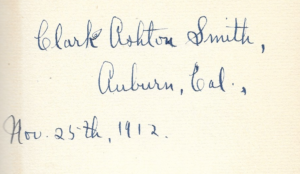
Smith, Cordwainer. Space Lords. Pyramid, 1965. First edition paperback original, a Fine copy save a trace of foxing to inside covers. Currey, page 315. Bought for $4.00.
Smith, Cordwainer. The Underpeople. Pyramid, 1968. First edition paperback original, a Near Fine copy with one faint spine crease, bookstore stamp to blurb page, and edgewear. Part two of Nostrilia. Currey, page 315. Pringle, SF 100 46 (for Nostrilia). Bought for $1.99 from Half Price Books.

Smith, E. E. “Doc”. The Galaxy Primes. Ace Books, 1965. First edition paperback original (no statement of printing and 40¢ price, as per Currey), a Fine copy save for a trace of foxing to inside covers, otherwise tight, square and unread. Lucchetti, Doc: First Galactic Roamer, pages 50-51 (“Never issued in hardback.”) Currey, page 456. Bought for $3 from Half Price Books.
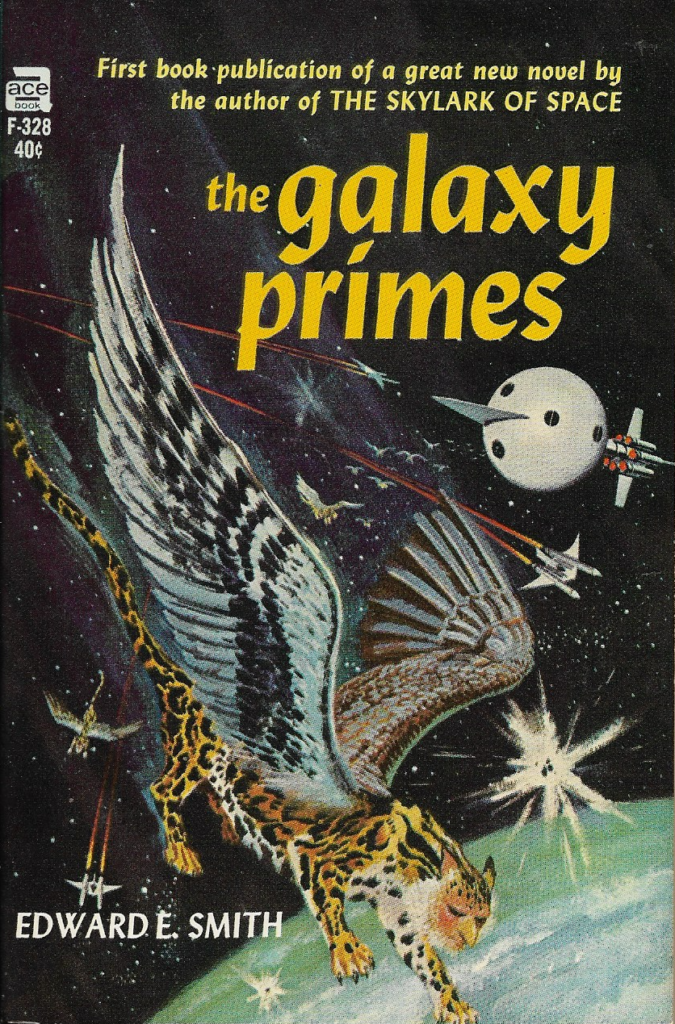
Smith, Michael Marshall. The Servants. Earthling Publications, 2007. First edition hardback, a Fine copy in a Fine- dust jacket with a small wrinkle to the bottom of the front flap. Precedes the UK and Eos editions. Bought from Half Price Books for $7.99.

Stephenson, Neal. The System of the World. William Morrow, 2004. First edition hardback, a Fine- copy with trace of crimping at head, a couple of small spots of dust staining to boards and a small bump along bottom front board, in a Fine- dust jacket with slight crimping at head and touch of crimping at points, inscribed by Stephenson: “To Harris,/Neal Stephenson.” Bought for $7.19.
Strand, Jeff. Clowns vs. Spiders. No Publisher, 2019 (2022). Print on demand trade paperback original, a Fine copy. I picked it up because of the ridiculous title, and because I have a weakness for giant spider novels. Bought for $9.99 at Half Price Books.

Stross, Charles. Empire Games. Tor, 2016. First edition hardback, a Fine- copy with bumping at head and heel in a Fine- dust jacket with bumping at head and heel. Merchant Princes novel. Bought from Half Price Books for $4.99.
Sturgeon, Theodore. Voyage to the Bottom of the Sea. Pyramid, 1961. First edition paperback original (“First printing, June 1961” on copyright page, as per Currey), a Near Fine copy with slight wear at points, slight edgewear, and usual slight foxing to inside covers and slight age darkening to pages, otherwise a nice, square copy, signed by Sturgeon. Novelization of the Irwin Allen film. Diskin, Theodore Sturgeon: a primary and secondary bibliography, A148. Currey, page 473. Replaces an unsigned copy. Bought off eBay for $25.
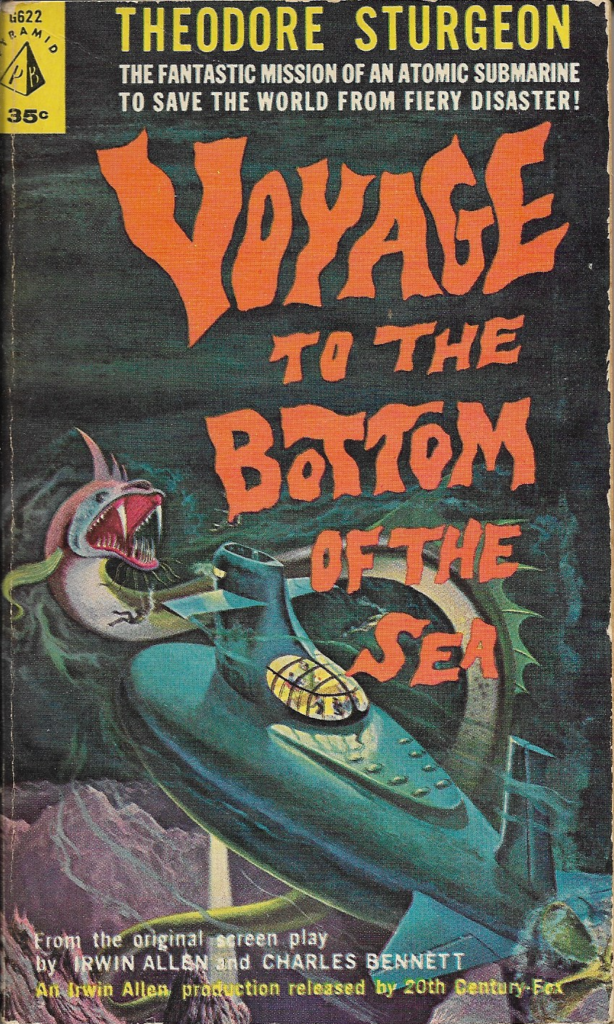
Swanwick, Michael. The Proceedings of the American Martini Institute: A Report of the American Martini Laboratory: The Once And Future Rye: The Whisky that Was America. Dragonstairs Press, 2022. First edition chapbook original, #20 of 80 signed copies, a Fine copy. A history of rye whisky in America, in the same vein as Swanwick’s The Evolution of the Martini. Ten more of these and he’ll have enough for a book! Bought from the publisher at the usual discount.
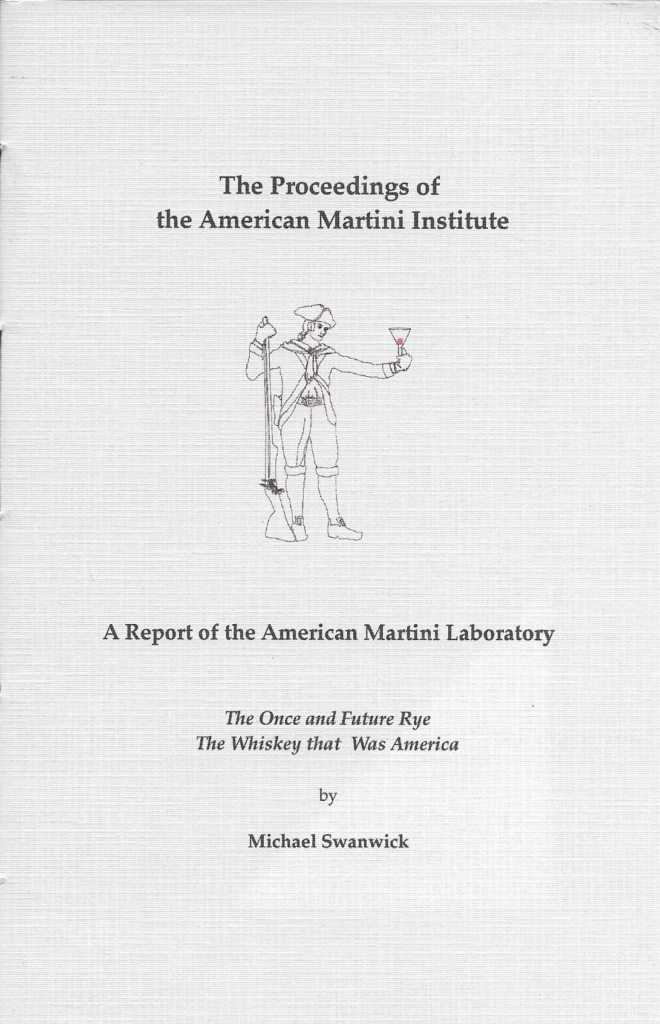
Swanwick, Michael. Fantasia Romantica. Dragonstairs Press, 2022. First edition chapbook original, #9 of 48 signed, numbered copies, a Fine copy. “Fantasia Romantica is Michael Swanwick’s witty take on the romantic lives of six fictional heroines. Was Rosie waiting when Sam Gamgee came home? And what was going on with Susan Pevensie?” Out of print almost instantly upon publication.

Swanwick, Michael. Solstice Veritas or The Christmas Cat and Other Memories. Dragonstairs Press, 2021. First edition chapbook original, #101 of 120 signed, numbered copies, a Fine copy. Printed last year, but only offered for sale this year. “A collection of eight, well, true stories, memories and musings on holidays past.” Bought from the publisher at the usual discount. I will have a few copies of this available in the next Lame Excuse Books catalog, currently in progress.
Tarantino, Quentin. Cinema Speculation. HarperCollins, 2022. First edition hardback, a Fine copy in a Fine dust jacket. Non-fiction book about the films Tarantino saw as a child in the 1970s, from Dirty Harry to Taxi Driver. Seems pretty interesting.

Tiptree, Jr. James. Up the Walls of the World. Berkley Putnam, 1978. First edition hardback (no statement of printing on copyright page, as per ISFDB), a Fine- copy with slight bending at head and a small ding to top front board, in a near Fine- dust jacket with a long crease along bottom front cover and associated 1/4″ closed tear. Tiptree’s only novel. Bought as part of a four book lot for $15.
Tartt, Donna. The Goldfinch. Little, brown and Company, 2013. First edition hardback, a Fine copy in a Near Fine- dust jacket with a few small abrasions to front cover (unfortunately, the uncoated dust jacket seems designed to degrade) and slight bumping at heel. Pulitzer Prize winner for fiction. Bought for $14.99.
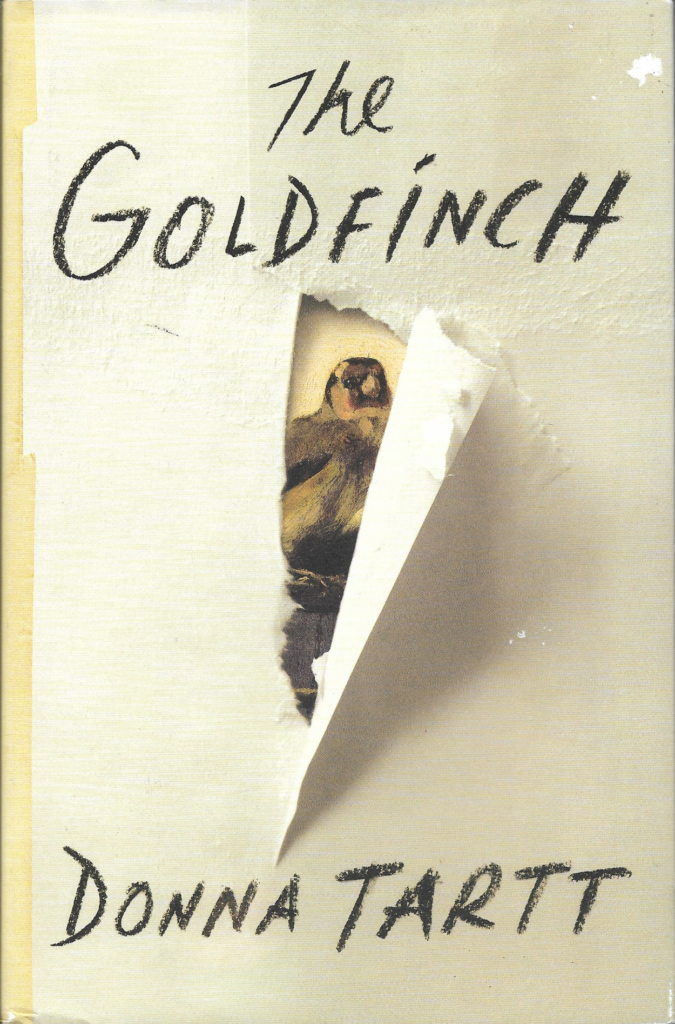
Tolkien, J.R.R. The Lord of the Rings Illustrated Deluxe Edition. William Morrow, 2021 (stated; actually published October 2022). First edition hardback thus, a Fine copy in a Fine slipcase (with a cutout for the eye of Sauron on the book itself), sans dust jacket, as issued, with oversized folding maps of Middle Earth and Gondor/Mordor, cardstock reprint of The King’s Letter (from Aragon to Samwise) in silver tengwar on one side with a en English translation on the other, “Leaves from the Book of Mazarbul” in a waxpaper envelope, and the rear shrinkwraped book description laid in. A sturdy, gilt-edged omnibus edition containing all three volumes, with Tolkien’s own artwork and Middle Earth language calligraphy as full page color plates.
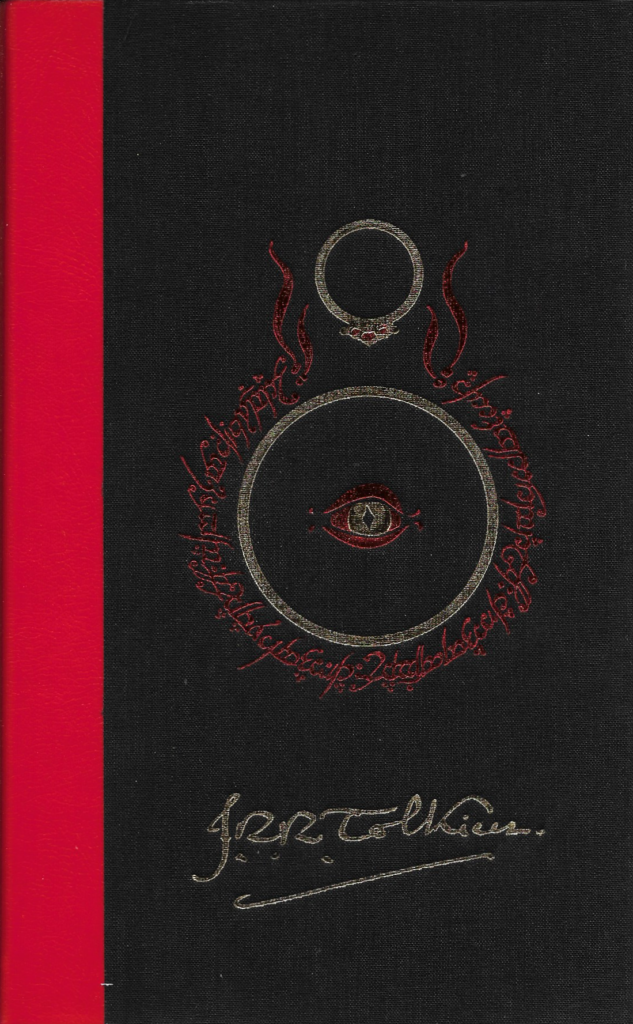

Even the box it ships to you is way too cool to throw away:
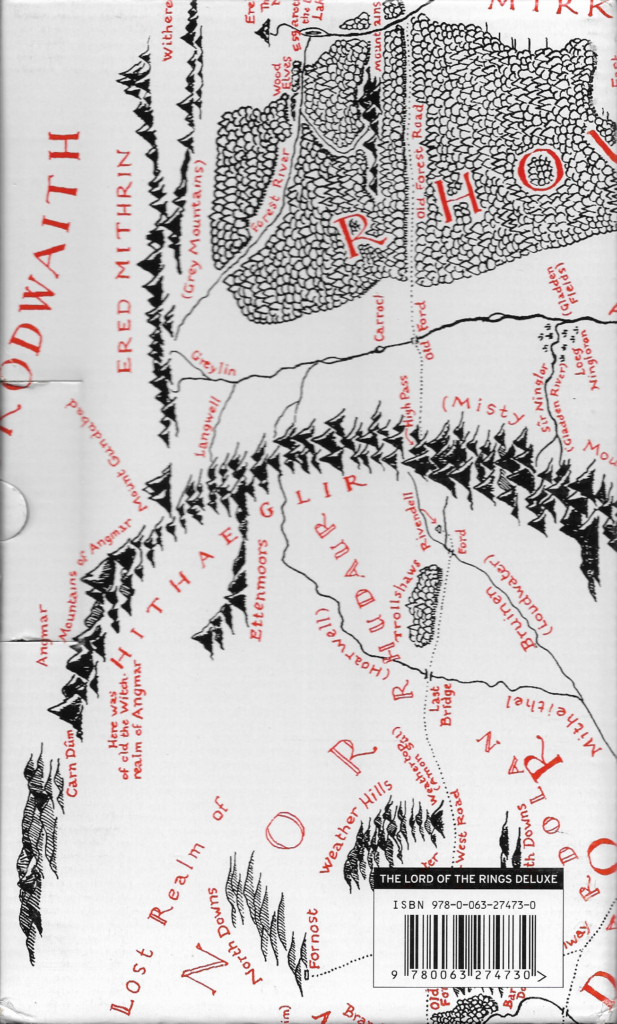
And the map pattern continues all the way around the box.
It’s a very attractive production, and if you’re interested in it, Amazon has now lowered the price to $140.01.
Treece, Henry. The Golden Strangers. The Bodley Head, 1956. First edition hardback, a Near Fine copy with neat previous owner’s name on inside front cover partially obscured by dj flap, one small bump to top front board edge, slight bend at head and heel and slight blunting of points, in a Near Fine dust jacket with slight dust staining to white rear cover, and slight wear at head, heel and points, with review slip laid in. A fantasy novel of the Celtic invasion of neolithic Britain. Cawthorn and Moorcock, Fantasy: The 100 Best Books 77. Bought from $42.12 plus shipping from a UK Biblio dealer.
Twain, Mark. Autobiography of Mark Twain Volume 2. University of California Press, 2013. First edition hardback, a Fine copy in a Fine, Mylar-covered dust jacket. The second massive volume in Twain’s anecdotal autobiography, the one he insisted not be published until 100 years after his death. Supplements a copy of Volume 1. Bought for $8.99.
Vance, Jack (Terry Dowling and Jonathan Strahan, editors). The Jack Vance Treasury. Subterranean Press, 2006. First edition hardback, a Fine copy in a Fine, Mylar-protected dust jacket, new and unread. When this was published, I managed to pick up the signed, limited edition (probably on sale), but not the regular trade edition. Out of print for over a decade, but bought from Camelot Books at the original cover price of $38.
Vance, Jack. The Kragen. Subterranean Press, 2007. First edition hardback, Letter Z of 26 lettered copies, a Fine copy in a Fine dust jacket and a Fine traycase. Supplements a copy of the signed, numbered edition. Bought off eBay for $295.95.
Vance, Jack. The Last Castle. Underwood/Miller, 1980. First hardback edition, number 121 of 200 numbered copies signed by Vance and illustrator Alicia Austin, a Fine copy in a Near Fine+ just jacket with one tiny 1/32″ chip to top of inner rear flap and a trace of wear at points, with additional signature card by Austin laid in. Oversized, lavishly illustrated version of this fine Vance novella. Hewett, A31d. Cunningham, 45bBought off eBay for $51.
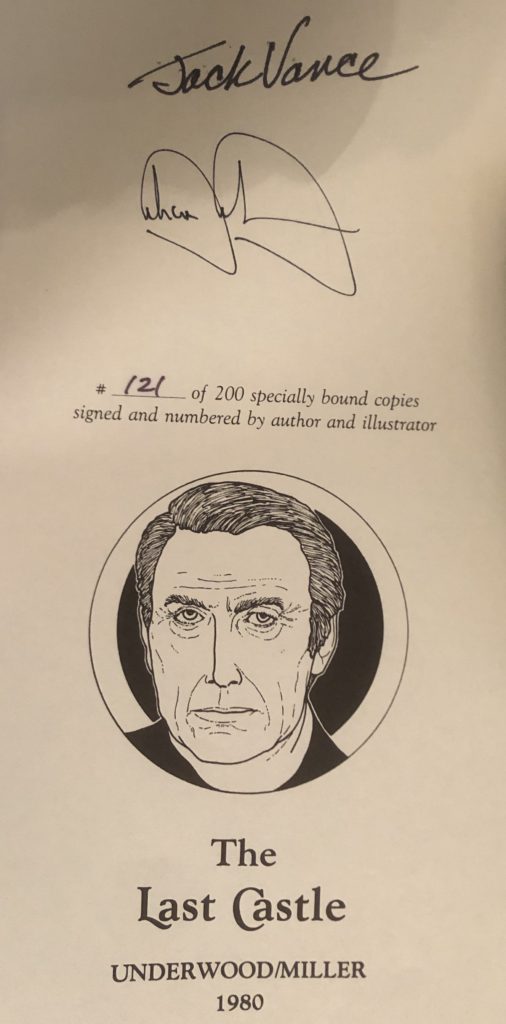
Vance, Jack. Showboat World. Pyramid, 1975. First edition paperback original (“March 1975” on copyright page and $1.25 cover price, as per Currey), a Near Fine+ copy with one slight spine wrinkle near heel, a few very small, very faint phantom crease on rear cover, and two very faint parallel printing lines across teaser page (looks like an artifact of the printing process). I read this last year and it’s still great fun. Hewett A47a. Cunningham 71a. Currey, page 500. Bought for $2.99 from Half Price Books.
Vance, Jack. The Star King. Berkley Medallion, 1964. First edition paperback original, a near Fine copy with wrinkle along spine join, slight bumping at head, heel and bottom front corner, slight small creases to outer top corners, trace of age darkening and soiling to white cover, and slight foxing to inside covers, signed by Vance, with color laser-printed picture of Vance signing laid in. The first Demon Princes novel, shortened to Star King for many subsequent editions. Hewett, A15a. Cunningham, 76a. Bought off eBay for $15.50.
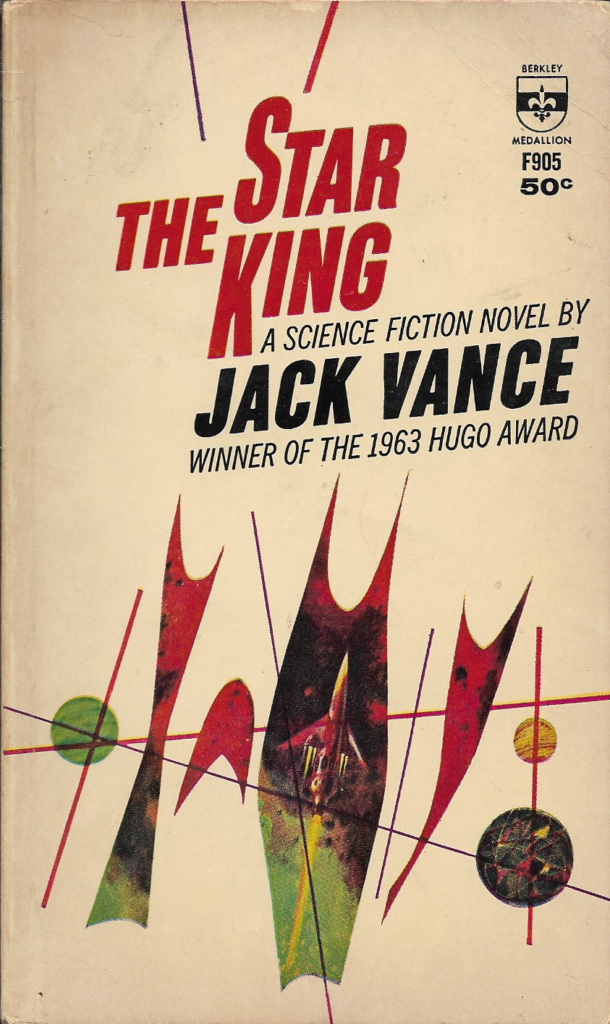
Vance, Jack. When The Five Moons Rise. Underwood Miller, 1992. First edition hardback, #245 of 300 signed, numbered copies, a Fine copy in a Fine dust jacket and a Fine slipcase. Short story collection. Hewett A86. Cunningham, 83a. Showed up on eBay with a Buy It Now price of $50, easily $100 below what they usually go for, so naturally I jumped on it.
van Vogt, A. E. The Weapon Makers. Hadley Publishers, 1947. First edition hardback, a Near Fine copy with wear at head and heel, trace of rubbing to spine, and some dime-sized spots of foxing to inside covers, in a Very Good dust jacket with long wrinkles across back cover, shallow loss at points, spine quite faded, and a few additional touches of wear, inscribed by the author: “To/Fred C. Brown/best wishes,good luck/and cheerio. A. E. van Vogt.” Hadley was one of the earliest SF specialty publishers, and I now have three of their four books (including Campbell’s The Mightiest Machine and L. Ron Hubbard’s Final Blackout, but lacking E.E. “Doc” Smith’s The Skylark of Space, as it was a reprint of the Buffalo Book Company true first edition (which I have)). Currey, page 496. 333, page 65. Locke, Spectrum of Fantasy, page 217. Chalker Owings, page 231. Kemp, The Anthem Series, page 345-346. Bought for £112.50.
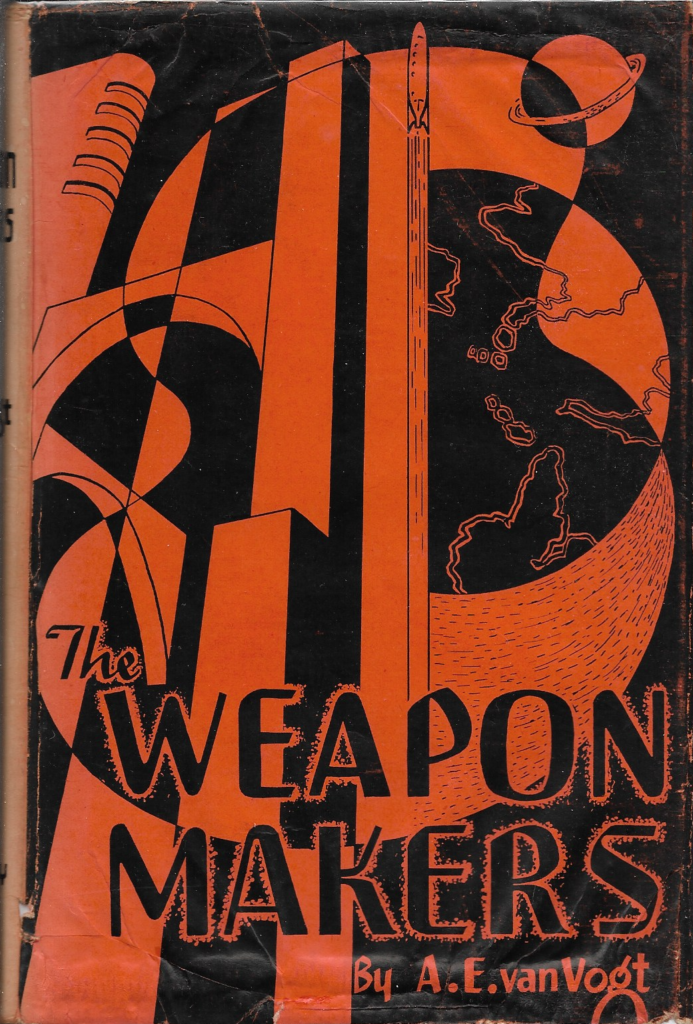
Waggoner, Tim. A Little Aqua Book of Marine Tales. Borderlands Press, 2018. First edition hardback, #290 of 500 signed copies, a Fine copy, sans dust jacket, as issued.
Waldrop, Howard. Strange Monsters of the Recent Past. Ace, 1991. First edition paperback original thus, adding A Dozen Tough Jobs to the contents of All About Strange Monsters of the Recent Past, a Fine copy, now inscribed to me by Waldrop. I’ve had a lot of copies of this over the years, but since I already had All About Strange Monsters of the Recent Past and A Dozen Tough Jobs, I never added a copy to my own library until now. Bought for $3 from Half Price Books.
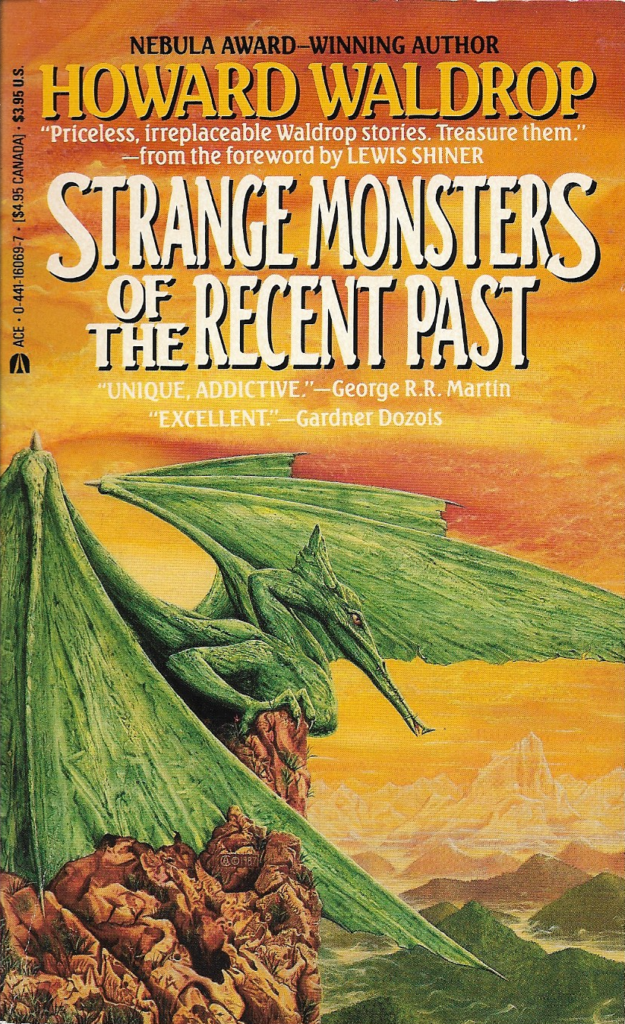
Watts, Peter. Blindsight. Centipede Press, 2020. First limited edition hardback, #177 of 300 signed, numbered copies, a Fine copy in a Fine dust jacket. Watts Hugo-Award nominated novel about a mission sent to examine an alien probe in the Kupier Belt. Supplements a copy of the Tor true first edition.
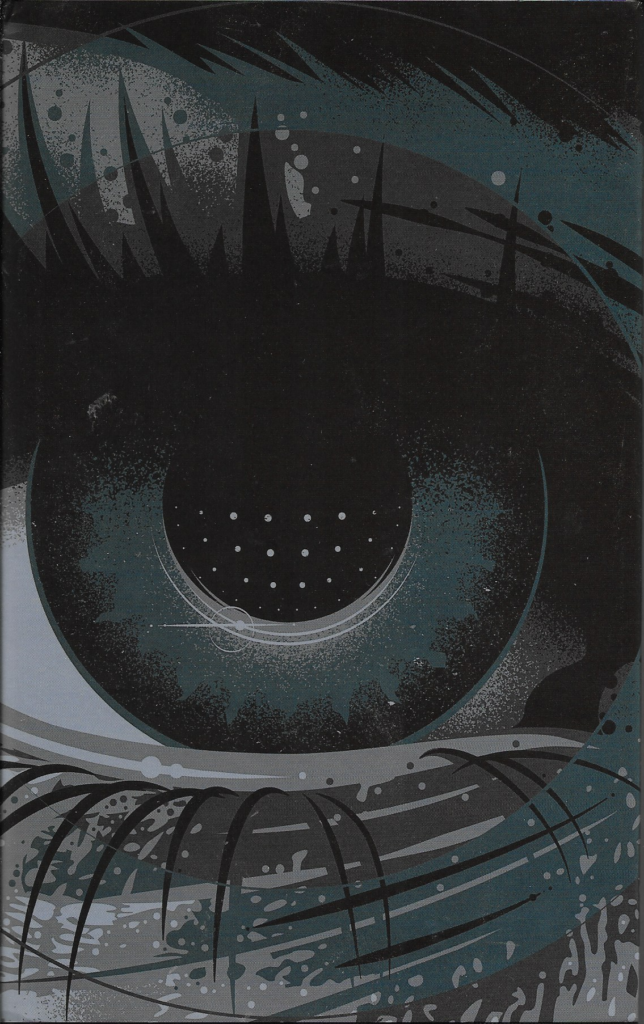
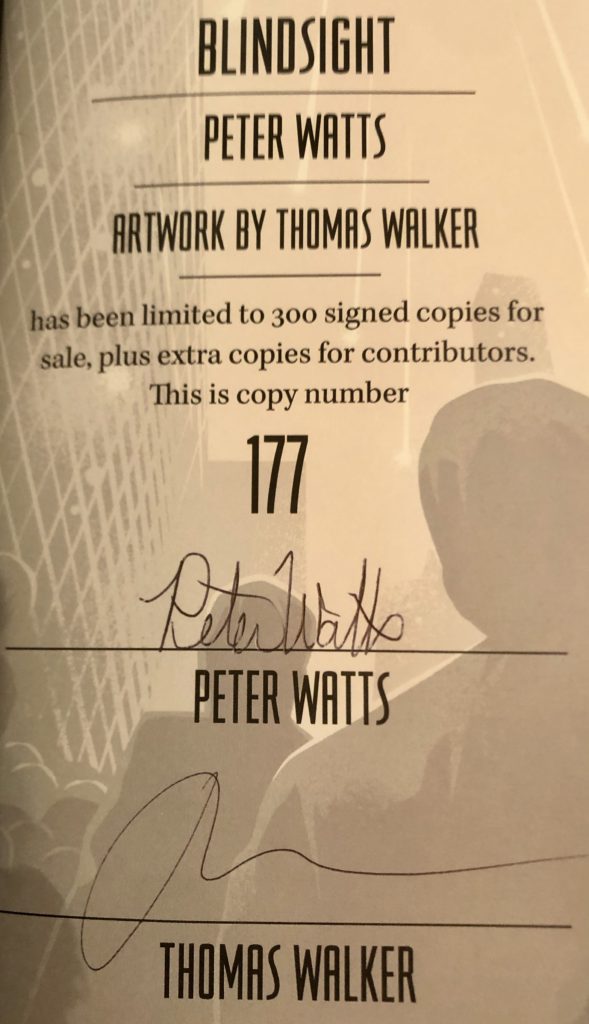
Watts, Peter. Echopraxia. Centipede Press, 2020. First limited edition hardback, #177 of 300 signed, numbered copies, a Fine copy in a Fine dust jacket. Sequel to Blindsight that I haven’t read yet. Sets of these went out of print shortly after their announcement, and seems to be pretty close to Unobtanium on the secondary market. Bought for $400 with Blindsight from a private collector.
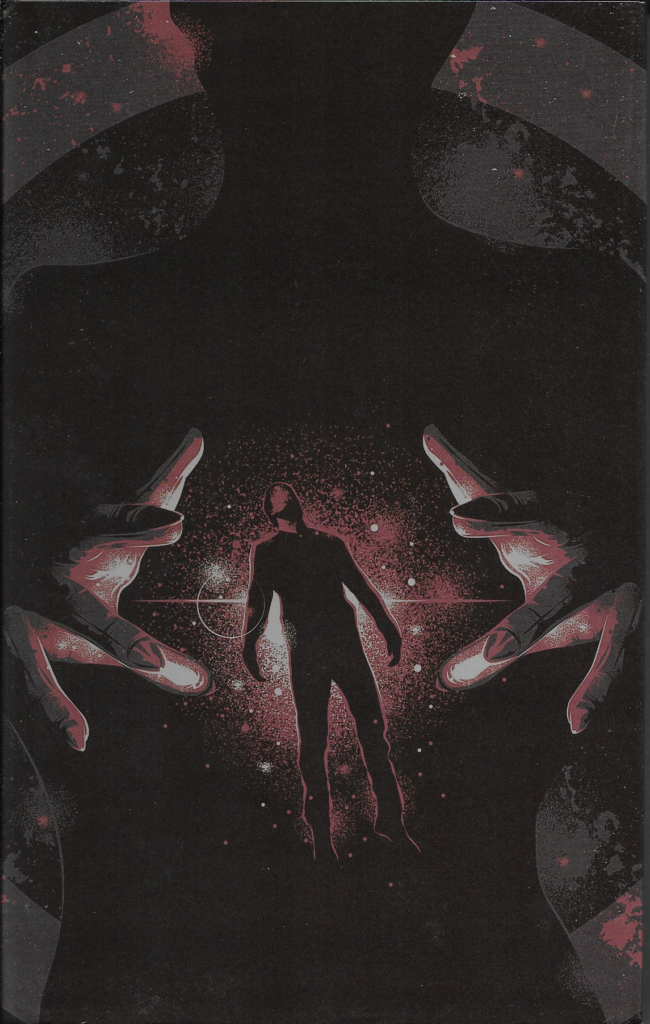
Weinstein, Sol. Loxfinger: A Thrilling Adventure of Hebrew Secret Agent Oy-Oy-7. Pocket books, 1965. First edition trade paperback original, a Very Good copy with two quarter-sized sticker pulls on front cover, the top one affecting the letters “ER” at the end of the title. The first in a series of Jewish James Bond parodies, published during a boom for Bond parodies. Weinstein was evidently a gag writer for several well-known comedians in the 1960s. This looks so silly that ever since I saw this title in a book catalog some quarter century ago, I’ve wanted to own a copy, and $5 seems like a fair price to pay. But I should probably read Goldfinger first to really appreciate it…
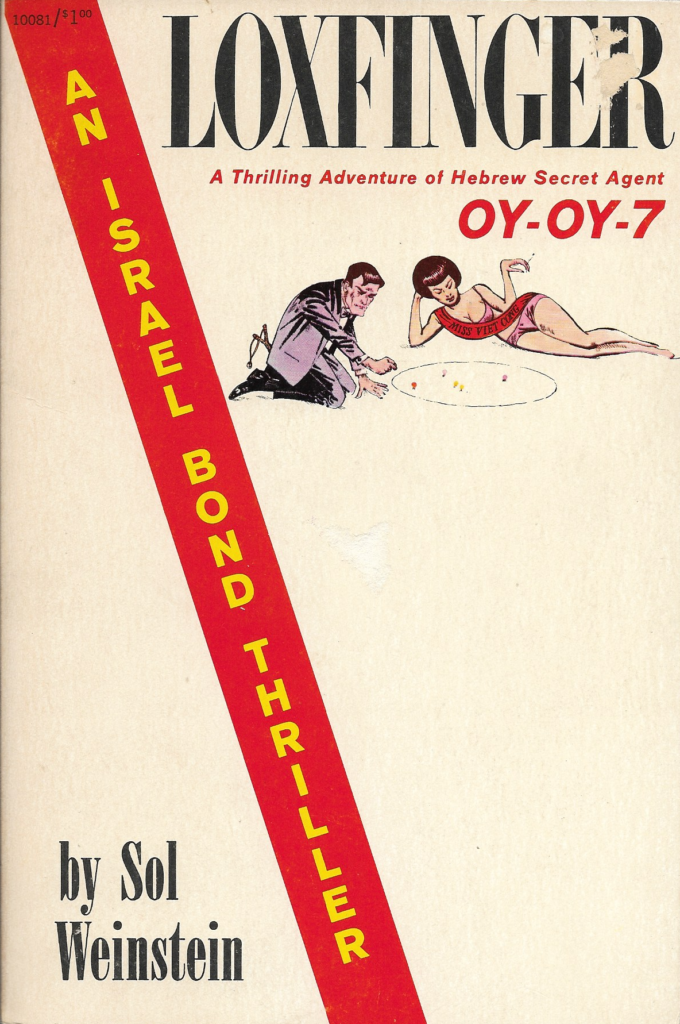
Wellman, Manly Wade. The Haunts of Drowning Creek. Holiday House, 1951. First edition hardback, a Good only copy with cracked front and rear inner hinges, a 1/4″ triangular board loss at heel, pocket removal, former owner’s name on inside front cover, bumped corners, and general spotting and wear. Reading copy only, but this is possibly the hardest Wellman Young Adult novel to find. Bought off eBay for $15 as part of a two book Wellman lot.
Wellman, Manly Wade. Jamestown Adventure. Ives Washburn, 1967. First edition hardback, an Ex-Library copy with usual stamps, checkout card, discard stamp, dust jacket taped to boards, sticker to spine and bottom price clipped (top price intact). (There was also an Uncle Sam sticker (presumably to indicate historical fiction) on the old-style Plasti-Kleer protector that has left a ghost image on the dust jacket through the protector.) Young adult historical novel. Currey, page 513. Bought from an online dealer for $2.83.
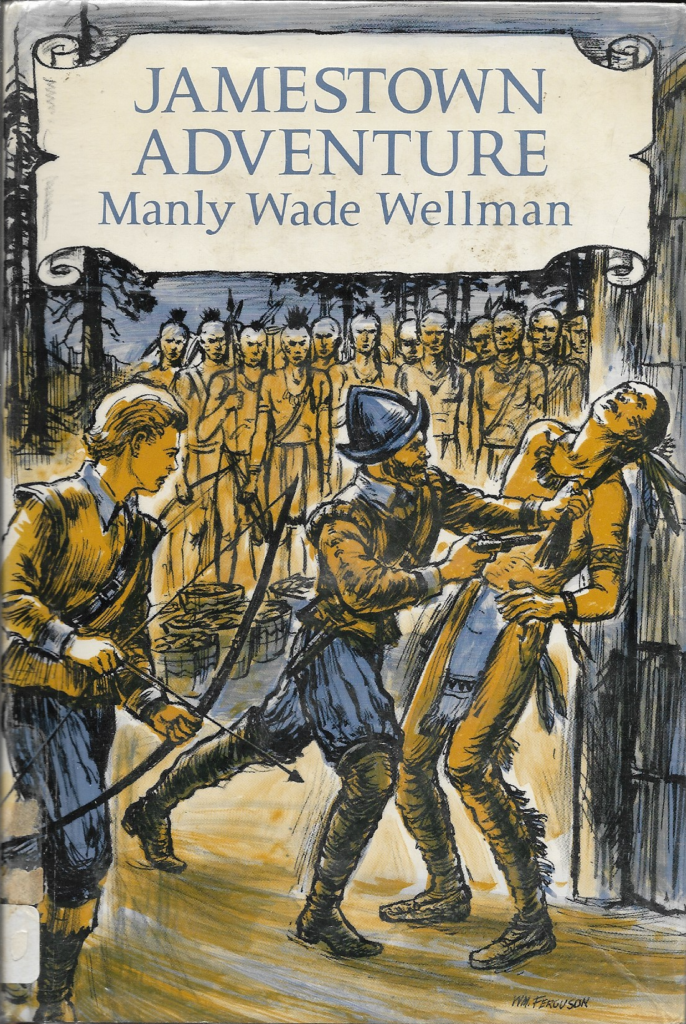
Wellman, Manly Wade. The Specter of Bear Paw Gap. Ives Washburn, 1966. First edition hardback, a Near Fine copy in decorated boards with parallel bumps to top and non-authorial inscription to FFE, in a Near Fine- dust jacket with clipped top price (bottom price intact), several small closed tears at top and bottom (including two with associated triangular creases), slight rubbing along folds, and gold “Guaranteed Binding” on bottom front cover extending across spine (possibly as issued). Young adult historical novel, the second in the Bear Paw Gap between The Mystery of Bear Paw Gap and Battle at Bear Paw Gap, both of which I already owned. Currey, page 514.
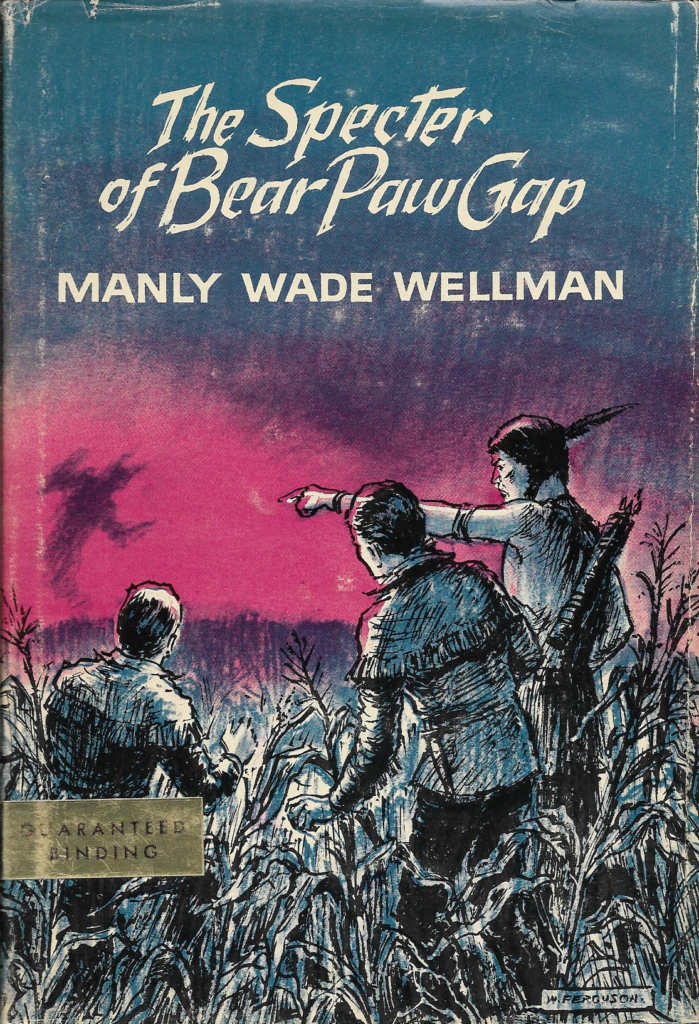
Wells, H. G. The Island of Dr. Moreau. Suntup Editions, 2021. First edition hardback thus, one of 1,000 copies signed by artists Benz & Chang, a Fine copy in a Fine dust jacket and a Fine slipcase, with bookmark for the title laid in. (For a list of the additional material included, see here.) Originally offered at $130 and sold out. Bought off eBay for $90.

Wells, Stuart W., III. The Science Fiction Heroic Fantasy Author index. Purple Unicorn books, 1978. First edition trade paperback original (simultaneous with a hardback edition), a Very Good+ copy with 1/2″ tear at bottom of front spine-join, with light soiling along spine. A reference listing of genre books that was (like Marshall B. Tymn’s American Fantasy and Science Fiction: Toward a Bibliography of Works Published in the United States, 1949—1973) born obsolete, already superseded by far more comprehensive reference works published the same year.
Wilson, F. Paul. Sims Book 5: Thy Brother’s Keeper. Cemetery Dance, 2010. First edition hardback, letter R of 26 lettered copies, a Fine copy in a Fine dust jacket and a Fine traycase. Bought from a notable UK dealer for £52.60.
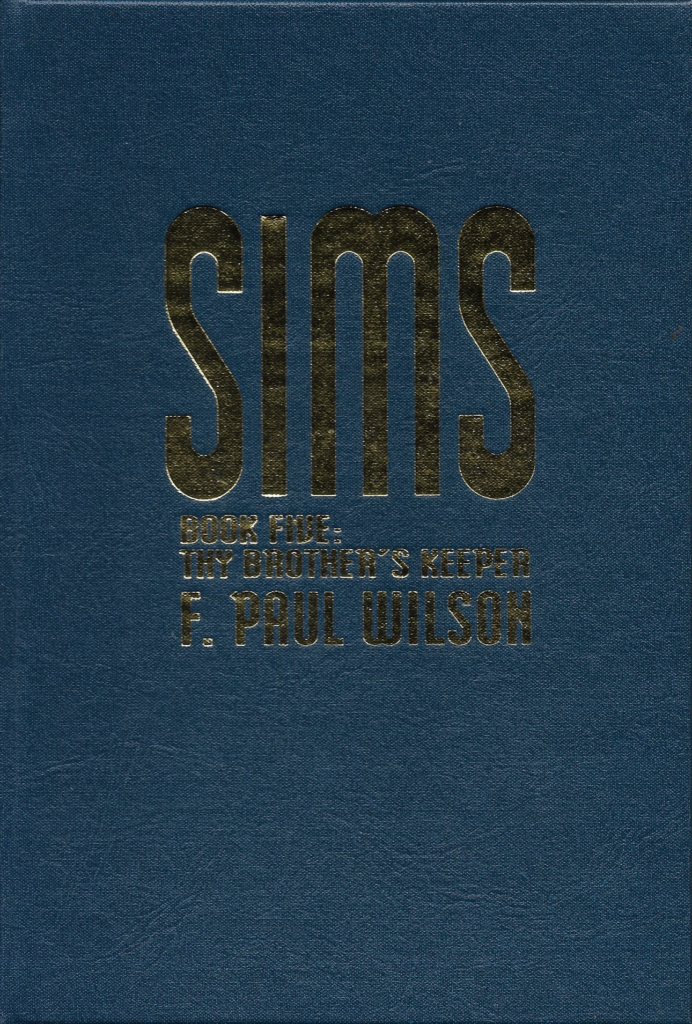
Williamson, Jack. The Silicon Dagger. Tor, 1999. First edition hardback, a Fine copy in a Fine dust jacket, inscribed by Williamson: “For/Vicky/Foreman/Jack Williamson/3-2-2000.” Jack’s second-to-last novel. Hauptmann, The Work of Jack Williamson, A78 (still forthcoming at the time). Won off eBay for $5.
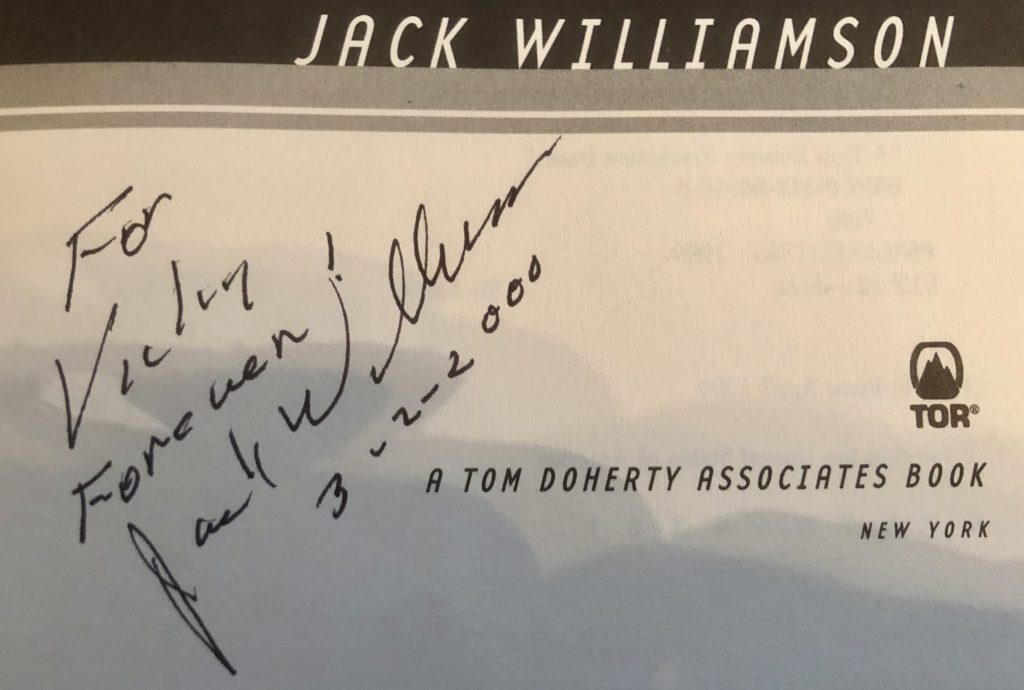
(Gene Wolfe) Andre-Driussi, Michael. A Chapter Guide for the Long Sun & the Short Sun. Sirius Fiction, 2022. First edition POD hardcover, a Fine copy in decorated boards, sans dust jacket, as issued. Just what it says, a chapter-by-chapter summary of The Book of the Long Sun and The Book of the Long Sun and The Book of the Short Sun, including lists of characters and unusual terms that show up in each chapter.

(Gene Wolfe) Andre-Driussi, Michael. Gene Wolfe’s The Book of the New Sun: A Chapter Guide. Sirius Fiction, 2019 (2022). First edition POD hardcover, a Fine copy in decorated boards, sans dust jacket, as issued. Same as the above, but for The Book of the New Sun.

(Gene Wolfe) Andre-Driussi, Michael. Gene Wolfe: 14 Articles. Sirius Fiction, 2016 (2022). First edition POD trade paperback original, a Fine copy. Various essays on Wolfe’s work.
Wright, Lyle H. American Fiction 1774 – 1850: A Contribution Toward a Bibliography. The Huntington Library, 1969. Second Revised Edition, a Fine- copy with slight bend at head and heel in a Near Fine dust jacket with two 1/4″ closed tears to front, a slight age darkening to spine, and a trace of dust soiling to rear. Wright compiled two more volumes that go up through 1900, which I intend to pick up as targets of opportunity. Bought online for $5; a good deal for the price, but I was miffed that the eBay seller mailed it without any padding whatsoever, just in wrapping paper. This is not acceptable.
Pellegrino, Charles, and George Zebrowski. The Killing Star. AvoNova, 1995. First edition hardback, a Fine copy in a Fine dust jacket, signed by Zebrowksi. Supplements a paperback edition inscribed to me by Zebrowski I received for Nebula consideration. Bought for $9.
Tags:Avram Davidson, Books, Clark Ashton Smith, Fantasy, H. P. Lovecraft, Horror, Joe Hill, Joe R. Lansdale, Manly Wade Wellman, Michael Chabon, Michael Swanwick, Neil Gaiman, Philip Jose Farmer, Philip K. Dick, Ray Bradbury, Robert A. Heinlein, Robert E. Howard, Robert Silverberg, Science Fiction, Stephen King, Tim Powers
Posted in Books, Fantasy, Horror, Science Fiction | No Comments »
Tuesday, February 14th, 2023
Two PS Publishing Books that came in late last year.
Ford, Jeffrey. The Best of Jeffrey Ford. PS Publishing, 2020. First edition hardback, a PC copy of 100 signed, numbered copies, a Fine copy in a Fine dust jacket and a fine slipcase. Supplements a trade copy. Bought for £15 plus shipping.
Hughes, Matt. One More Kill. PS Publishing, 2018. First edition hardback, #22 of 100 signed, numbered copies, a Fine copy in a Fine dust jacket. Bought for £8 plus shipping. I will have one copy of this available in the next Lame Excuse Books catalog.
Tags:Books, Fantasy, Jeffrey Ford, Matthew Hughes, PS Publishing, Science Fiction, small press publishers
Posted in Books, Fantasy, Science Fiction | No Comments »
Friday, February 10th, 2023
Two new books that came in from Subterranean Press late in 2022, both bought from the publisher at the usual discount.
McDevitt, Jack. Return To Glory. Subterranean Press, 2022. First edition hardback, #448 of 1,000 signed, numbered copies, a Fine copy in a Fine dust jacket, with bookmark and Packed By slip laid in. This will be in the next Lame Excuse Books catalog.
Silverberg, Robert. Among Strangers. Subterranean Press, 2022. First edition hardback, a Fine copy in a Fine dust jacket, new and unread. Massive, 760 page omnibus of three novels (Those Who Watch, The Man in the Maze, and Tom O’Bedlam), plus novelette “The Way to Spook City,” each dealing with aliens. I already have copies of this available through Lame Excuse Books.
Tags:Books, Jack McDevitt, Robert Silverberg, Science Fiction, small press publishers, Subterranean Press
Posted in Books, Science Fiction | No Comments »
Monday, February 6th, 2023
Finishing up recorded the Metroplex PBO buys. All of these came from Half-Price Books.
Pohl, Frederik, and C. M. Kornbluth. The Space Merchants. Ballantine Books, 1953. First edition paperback original (no statement of printing, and simultaneous with the hardback edition, as per Currey), a Fine- copy with a touch of edgewear at points, otherwise new and unread. Pringle, SF 100 12. Currey, pages 289 and 405. Barron, Anatomy of Wonder 4 *3-147. Magill, Survey of Science Fiction volume 5, pages 2127-2131. Supplements a hardback first inscribed to my by Pohl. Bought for $3.
Pohl, Frederik, and Jack Williamson. Starchild. Ballantine Books, 1965. First edition paperback original (“”First printing: November 1965″ and 50¢ price, as per Currey), a Fine- copy with just a trace of edgewear at head and heel and a tiny 3/16” non-breaking indention to front cover, otherwise tight, square and unread. Second book in the Starchild trilogy. Currey, pages 405 and 544. Supplements the SFBC Omnibus The Starchild Trilogy inscribed to me by Pohl and Williamson. Bought for $3.
Smith, Cordwainer. Space Lords. Pyramid, 1965. First edition paperback original, a Fine copy save a trace of foxing to inside covers. Currey, page 315. Bought for $4.00.
Smith, Cordwainer. The Underpeople. Pyramid, 1968. First edition paperback original, a Near Fine copy with one faint spine crease, bookstore stamp to blurb page, and edgewear. Part two of Nostrilia. Currey, page 315. Pringle, SF 100 46 (for Nostrilia). Bought for $1.99.
Smith, E. E. “Doc”. The Galaxy Primes. Ace Books, 1965. First edition paperback original (no statement of printing and 40¢ price, as per Currey), a Fine copy save for a trace of foxing to inside covers, otherwise tight, square and unread. Lucchetti, Doc: First Galactic Roamer, pages 50-51 (“Never issued in hardback.”) Currey, page 456. Bought for $3.
Vance, Jack. Showboat World. Pyramid, 1975. First edition paperback original (“March 1975” on copyright page and $1.25 cover price, as per Currey), a Near Fine+ copy with one slight spine wrinkle near heel, a few very small, very faint phantom crease on rear cover, and two very faint parallel printing lines across teaser page (looks like an artifact of the printing process). I read this last year and it’s still great fun. Hewett A47a. Cunningham 71a. Currey, page 500. Bought for $2.99.
Waldrop, Howard. Strange Monsters of the Recent Past. Ace, 1991. First edition paperback original thus, adding A Dozen Tough Jobs to the contents of All About Strange Monsters of the Recent Past, a Fine copy, now inscribed to me by Waldrop. I’ve had a lot of copies of this over the years, but since I already had All About Strange Monsters of the Recent Past and A Dozen Tough Jobs, I never added a copy to my own library until now. Bought for $3.
Tags:Books, C. M. Kornbluth, Cordwainer Smith, E. E. "Doc" Smith, Fantasy, Frederik Pohl, Howard Waldrop, Jack Vance, Jack Williamson, PBO, Science Fiction
Posted in Books, Fantasy, Science Fiction | No Comments »
Thursday, January 26th, 2023
More Metroplex PBO purchases.
Martin, George R. R., editor, Melinda Snodgrass. Wild Cards X: Double Solitaire. Bantam Spectra, 1992. First edition paperback original, a Near Fine- copy with one light spine crease, edgewear, wear at points, and slight foxing to inside covers.
Martin, George R. R., editor, Victor Milan. Wild Cards XII: Turn of the Cards. Bantam Spectra, 1993. First edition paperback original, a Near Fine copy with mild spine creasing, a trace of edgewear and slight foxing to inside covers.
The only one of the original Wild Cards PBOs I lack now is Wild Cards VIII: One-Eyed Jacks. I have the rest (including the three Bean PBOs), the first three of which are signed by most of the contributors. I also have the one iBooks title and most of the Tor hardbacks, as well as the first five SFBC hardbacks of the first series.
Tags:Books, George R. R. Martin, Melinda Snodgrass, Science Fiction, superheroes, Victor Milan, Wild Cards
Posted in Books, Science Fiction | No Comments »