Posts Tagged ‘Poul Anderson’
Monday, July 7th, 2014
Here’s all the books I added to my professional science fiction library over the first half of the year. All these are Fine first edition hardbacks in Fine dust jackets unless otherwise noted.
Allston, Aaron. Doc Sidhe. Baen, 1995. First edition paperback original, Very Good with multiple spine creases and spine lean. Signed and dated 5/25/01 by Allston. His Doc Savage homage. Found at a Half Price Book for half cover price a couple of months after he died.
(Anderson, Poul) Gardner Dozois and Greg Bear, editors. Multiverse: Exploring Poul Anderson’s Worlds. Subterranean Press, 2014. First edition hardback, one of 250 signed, numbered copies, a Fine copy in a Fine dust jacket and Fine slipcase, new and unread. Poul Anderson tribute anthology, including stories using his characters and settings.
(Anderson, Poul) Gardner Dozois and Greg Bear, editors. Multiverse: Exploring Poul Anderson’s Worlds. Subterranean Press, 2014. One of 1,500 copies trade copies.
(Ballard, J. G.) Baxter, John. The Inner Man: The Life of J. G. Ballard. Weidenfield & Nicolson, 2011. First edition hardback, a Fine copy in a Fine dust jacket. Critical biography.
(Bester, Alfred) Wendell, Carolyn. Alfred Bester: Starmont Reader Guide 6. Starmont House, 1982. First edition hardback, a Fine copy- copy with slight rubbing, sans dust jacket, as issued. Signed by Wendell.
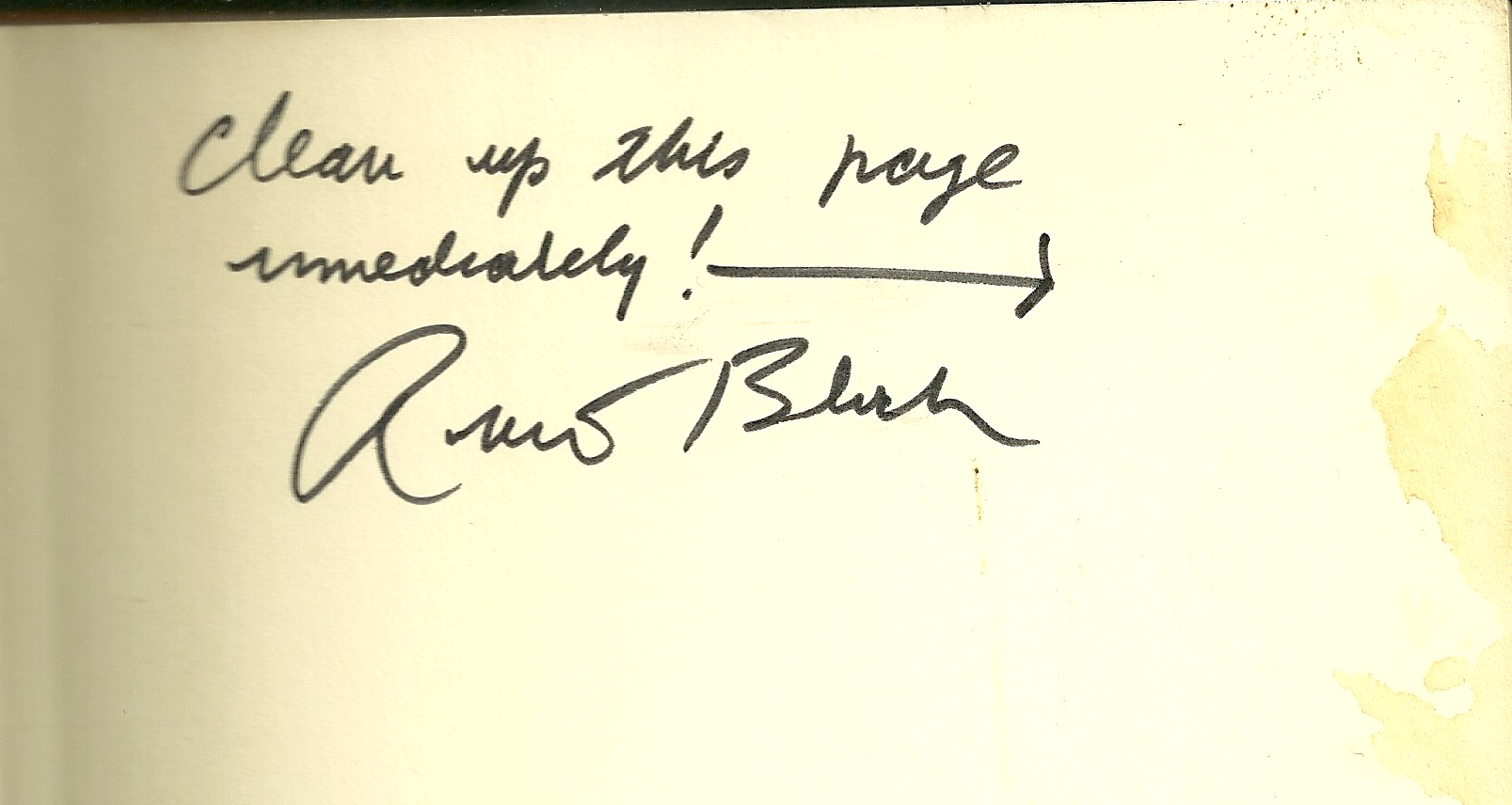
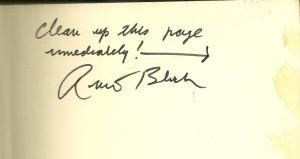
Bloch, Robert. American Gothic. Simon and Schuster, 1974. First edition hardback, a Near Fine copy with a couple of large, faint light brownish stains on front free endpaper and one much smaller one on the rear free endpaper, in a Fine dust jacket. Inscribed by Bloch, who actually mentions the stain: “Clean up this page/immediately! ——->/ Robert Bloch” (with the arrow pointing toward one of the stains). Replaces an unsigned ex-library copy in my collection. Price paid: $30.00.
Borst, Ronald V. Graven Images. Grove Press, 1992. First edition hardback, a Fine copy in a Fine dust jacket. Oversized art book reprinting science fiction, fantasy and horror movie posters, production art, etc., from Borst’s own extensive collection. Signed by Ray Bradbury, who provided the introduction to the chapter on the 1930s. Amount paid: $26.24. This is actually not hard to find signed by Bradbury, but it usually goes for about twice that.
Bradbury, Ray. Bradbury Speaks: Too Soon from the Cave, Too Far From the Stars. William Morrow, 2005. First edition hardback, a Fine copy in a Fine- dust jacket with a tiny bit of spine-join haze rubbing. Signed by Bradbury: “MARK!/Ray/Bradbury”. Collection of essays.
(Bradbury, Ray). Nolan, William F. and Martin H. Greenberg, editors. The Bradbury Chronicles: Stores in Honor of Ray Bradbury. Roc, 1991. First edition hardback, a Fine copy in a Fine- dust jacket with a tiny bit of wrinkling at head. Signed by Bradbury. Anthology.
Burroughs, William S. Interzone. Viking, 1989. First edition hardback, a Fine- copy in a Fine- dust jacket with traces of wear and slight dust soiling along spine join. Shoaf, Collecting William S. Burroughs in Print, 60.
Card, Orson Scott. The Folk of the Fringe. Phantasia Press, 1988. First edition hardback, #140 of 400 signed numbered copies, a Fine copy in a Fine dust jacket and Fine slipcase, new and unread. Supplements a trade copy. Bought for $10. (Original list price was $75.)
De Camp, L. Sprague and Fletcher Pratt. Wall of Serpents. Avalon, 1960. First edition hardback, a Near Fine copy with some bending at head and heel in a Very Good+ dust jacket, with crimping and rubbing at head and heel and slight dust staining to back cover. Signed by De Camp. Currey (1979), page 135. Supplements an unsigned copy. Bought for $17.50
(Clement, Hal) Hassler, Donald M. Hal Clement: Starmont Reader Guide 11. Starmont House, 1982. First edition hardback, a Fine copy- copy with slight rubbing, sans dust jacket, as issued. Signed by Hassler.
Coover, Robert. A Child Again. McSweeney’s, 2005. First edition hardback, a Fine copy in decorated boards, sans dust jacket (as issued), still in shrinkwrap with cards attached. Bought at Half Price Books for $6.99.
(Delany, Samuel R.) Weedman, Jane Branham. Samuel R. Delany: Starmont Reader Guide 10. Starmont House, 1982. First edition hardback, a Fine copy- copy with slight rubbing, sans dust jacket, as issued. Signed by Delany: “Samuel R. Delany/Madison/2006”.
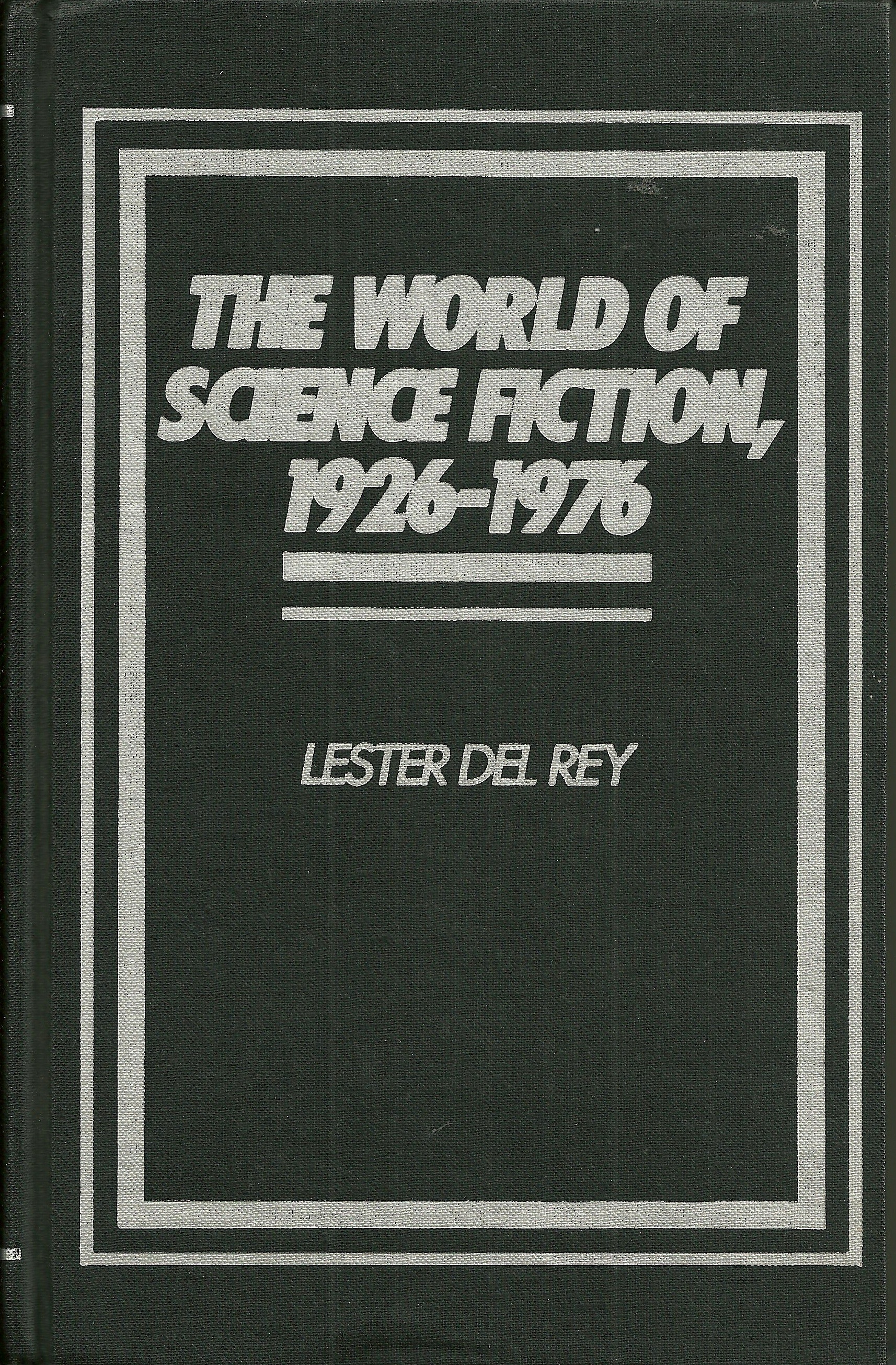
Del Rey, Lester. The World of Science Fiction, 1926-1976: The History of a Subculture. Garland, 1980. First edition hardback, a Fine- copy with slight crimping at head and heel, sans dust jacket, as issued. A history of science fiction fandom by someone who witnessed it.

Denton, Brad. Sergeant Chip and Other Novellas. Subterranean Press, 2014. First edition hardback, one of 750 signed, numbered copies, a Fine copy in a Fine dust jacket, new and unread.
Diaz, Junot. The Brief Wonderful Life of Oscar Wao. Inscribed by the author: “To Lance/Oscar Wao.”
Ellison, Harlan. Flintlock. Charnel House, 2013 (actually 2014). First edition hardback, #55 of 274 signed and numbered copies, a Fine copy in decorated boards, sans dust jacket, as issued. Unproduced screenplay for James Coburn’s Derek Flint character.

Farmer, Philip Jose. The Dark Heart of Time: A Tarzan Novel. Del Rey, 1999. First edition paperback original, a Fine copy, new and unread. Evidently this is pretty hard to find…
Farmer, Philip Jose. River of Eternity. Phantasia Press, 1983. First edition hardback, #81 of 500 signed, numbered copies, a Fine copy in a Fine dust jacket and slipcase, new and unread.
(Farmer, Philip Jose) Brizzi, Mary T. Philip Jose Farmer: Starmont Reader Guide 3. Starmont House, 1980. First edition hardback, a Fine copy- copy with slight rubbing, sans dust jacket, as issued.
Gaiman, Neil (illustrated by Eddie Campbell). The Truth is a Cave in the Black Mountains. Morrow, 2014. First edition hardback, a Fine copy in decorated boards, sans dust jacket, as issued. Illustrated story.
(Gilliam, Terry) McCabe, Bob. Terry Gilliam, The Brothers Grimm, and other cautionary tales of Hollywood. First edition hardback, a Fine- copy with what appears to be “delamination” of otherwise shiny area at base of the spine, in decorated boards, sans dust jacket, as issued. Book on the making of the Terry Gilliam film The Brothers Grimm.
(Haldeman, Joe) Gordon, Joan. Joe Haldeman: Starmont Reader Guide 4. Starmont House, 1980. First edition hardback, a Fine copy- copy with slight rubbing, sans dust jacket, as issued. Signed by Haldeman (and also an unreadable signature that I take to be either Gordon’s or the cover artist).
Howard, Robert E. and Richard A. Lupoff. The Return of Skull Face Fax Collector’s Editions, 1977. Lupoff’s expansion of an unfinished Howard manuscript.
Griffith, Nicola. Hild. Farrar, Straus & Giroux, 2013.
(Heinlein, Robert A.) Thorner, J. Lincoln. A Guide Through the Worlds of Robert A. Heinlein. Gryphon Books, 1989. First edition trade paperback chapbook original, a Fine- copy with touches of wear along the spine. 48 pages critical guide, including a small bibliography of reference works in the back.

Lafferty, R. A. The Man Who Made Models: The Collected Short Fiction Volume 1 Centipede Press, 2014. First edition hardback, one of 300 copies signed by Michael Swanwick, John Pelan, and cover artist Jacob McMurray, a Fine copy in a Fine dust jacket.
Lansdale, Joe R. The Ape Man’s Brother. Subterranean Press, 2014.
Lansdale, Joe R. The Drive-In: The Bus Tour. Subterranean Press, 2005. First edition hardback, #223 of 350 signed, numbered copies, a Fine copy in a Fine dust jacket and slipcase, new and unread. Supplements a signed trade edition.
Lansdale, Joe R. Hot in December. Dark Regions Press, 2013 (though I don’t believe it was released until 2014). First edition hardback, one of 300 signed, numbered copies, a Fine copy in a Fine dust jacket, new and unread.
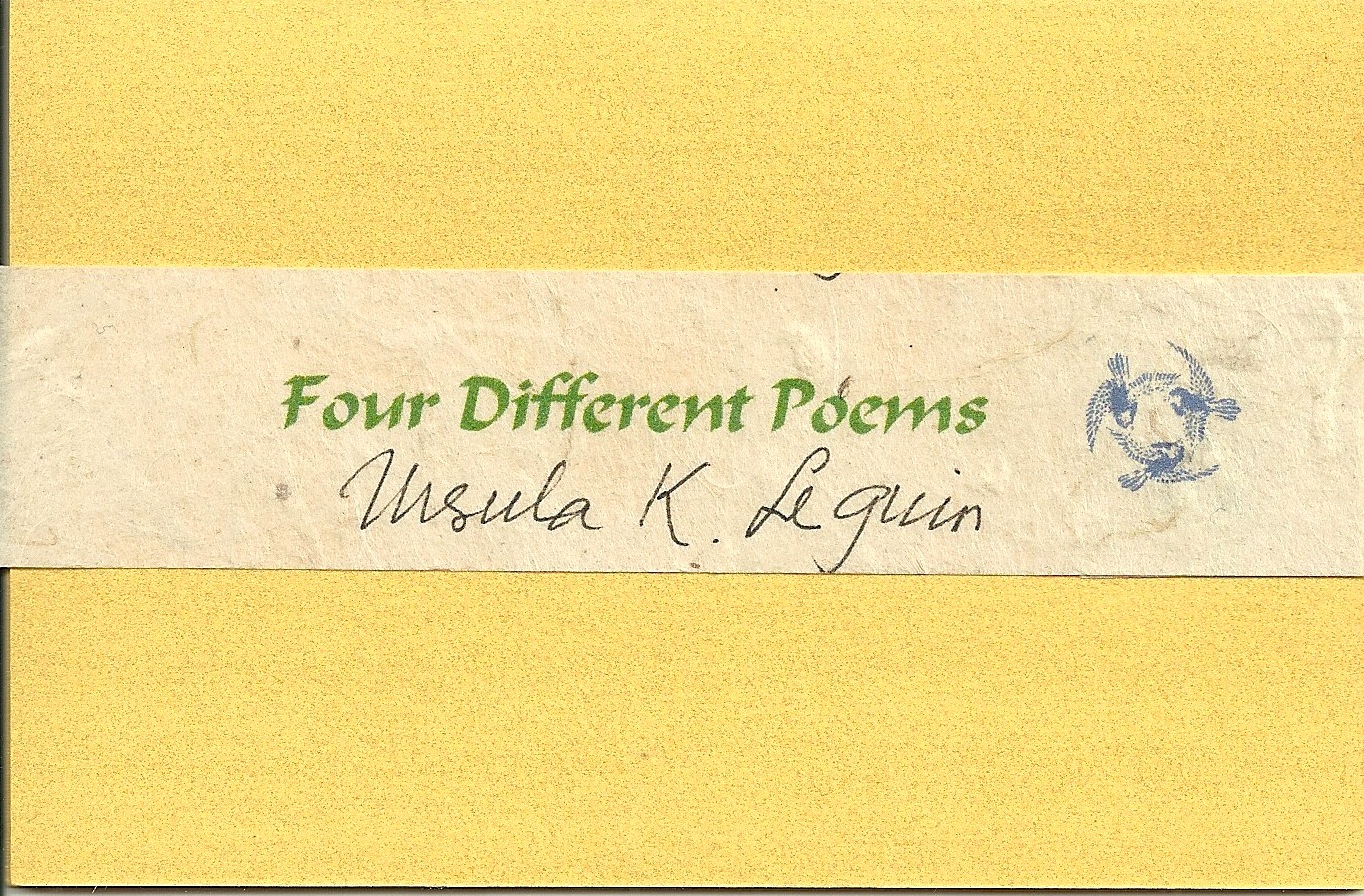
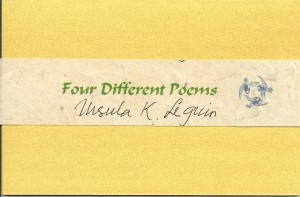
Le Guin, Ursula K. Four Different Poems. Longhouse, 2007. First edition chapbook original, a 3″x5″ card with an accordion foldout attached and a title band signed by Le Guin wrapped around, one of only 24 signed copies, a Fine copy. An odd item with a very small limitation. Bought for $20 off the Internet.
Leiber, Fritz. Gummitch and Friends. Donald M. Grant, 1992. First edition hardback, #237 of 1000 signed, numbered copies (though not signed by Leiber, who died before the book was finished), a Fine copy in a Fine dust jacket and slipcase, new and unread. Contains both Leiber’s cat stories, as well as memorial appreciations of Leiber by Stephen King, Robert Bloch, etc. bound at the front of the volume. Also, for some reason, an unsigned limitation number plate for the Grant edition of Stephen King and Peter Straub’s The Black House is also laid in.
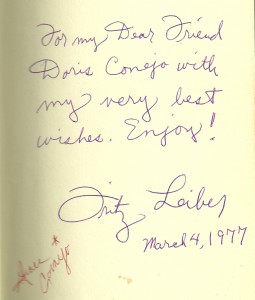
Leiber, Fritz. Our Lady of Darkness. Berkley Putnam, 1977. First edition hardback (no statement of printing on copyright page, as per Currey), a Near Fine copy with slight dust staining and wear to bottom boards and small white abrasion to bottom rear boards, in a Near Fine, price-clipped dust jacket. Inscribed by Leiber in purple ink: “For my Dear Friend/Doris Cornejo with/my very best/wishes. Enjoy!/Fritz Leiber/March 4, 1977”. At the bottom of the name Grace Cornejo has been written in red ink, possibly by a different hand. Supplements an unsigned copy (also, alas, with an imperfect dust jacket) in my library. Price paid: $33.74.
Ligotti, Thomas. The Spectral Link. Subterranean Press, 2014. First edition hardback, #333 of 400 signed, numbered copies, a Fine copy in a Fine dust jacket, new and unread.
Ligotti, Thomas. The Spectral Link. Subterranean Press, 2014. Trade edition.
Lovecraft, H.P. (S.T. Joshi and David E. Schultz, editors. O Fortunate Floridian: H.P. Lovecraft’s Letters to R. H. Barlow. University of Tampa Press, 2007. First edition hardback (stated), a Fine copy in a Fine dust jacket, new and unread.
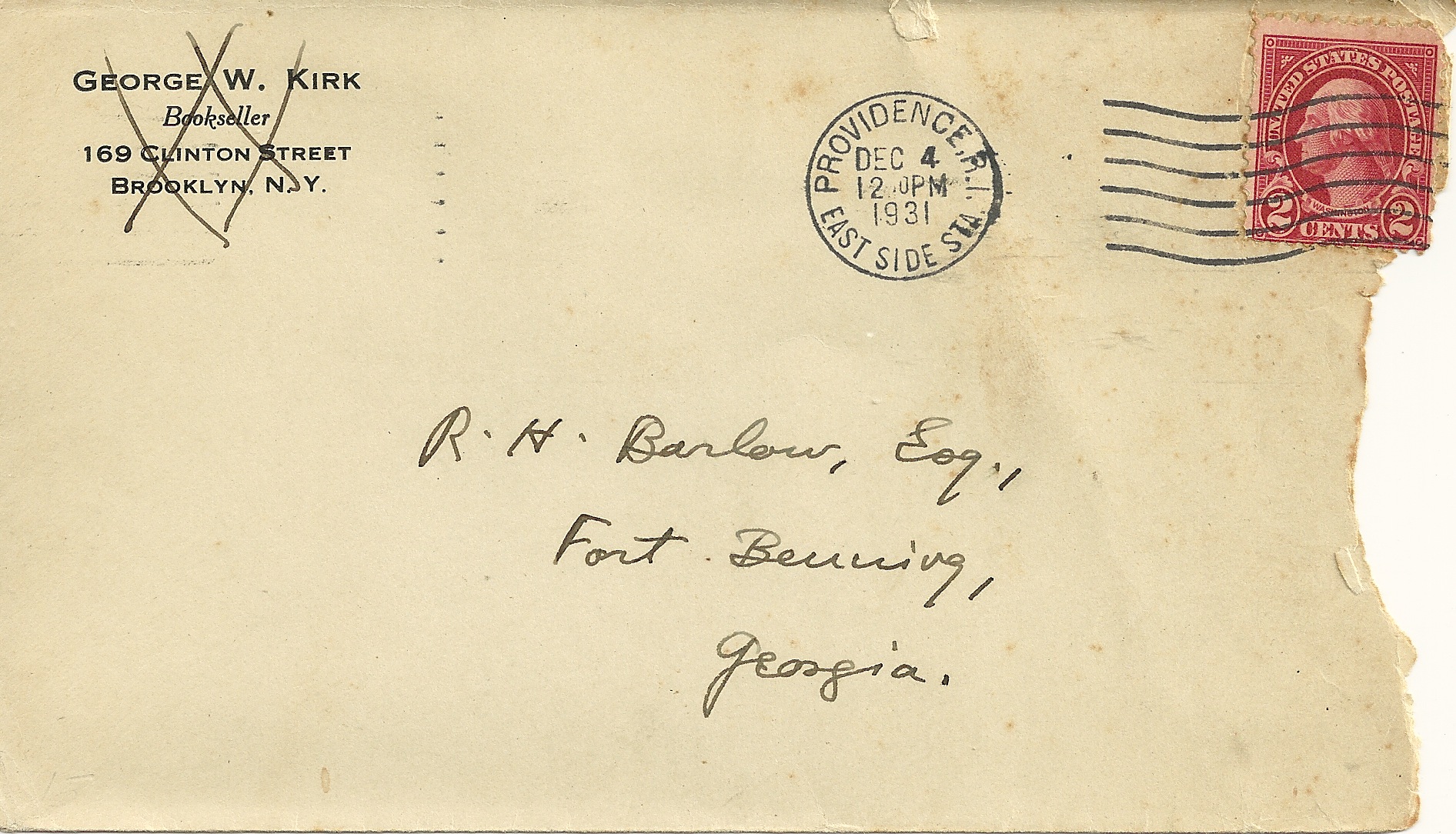
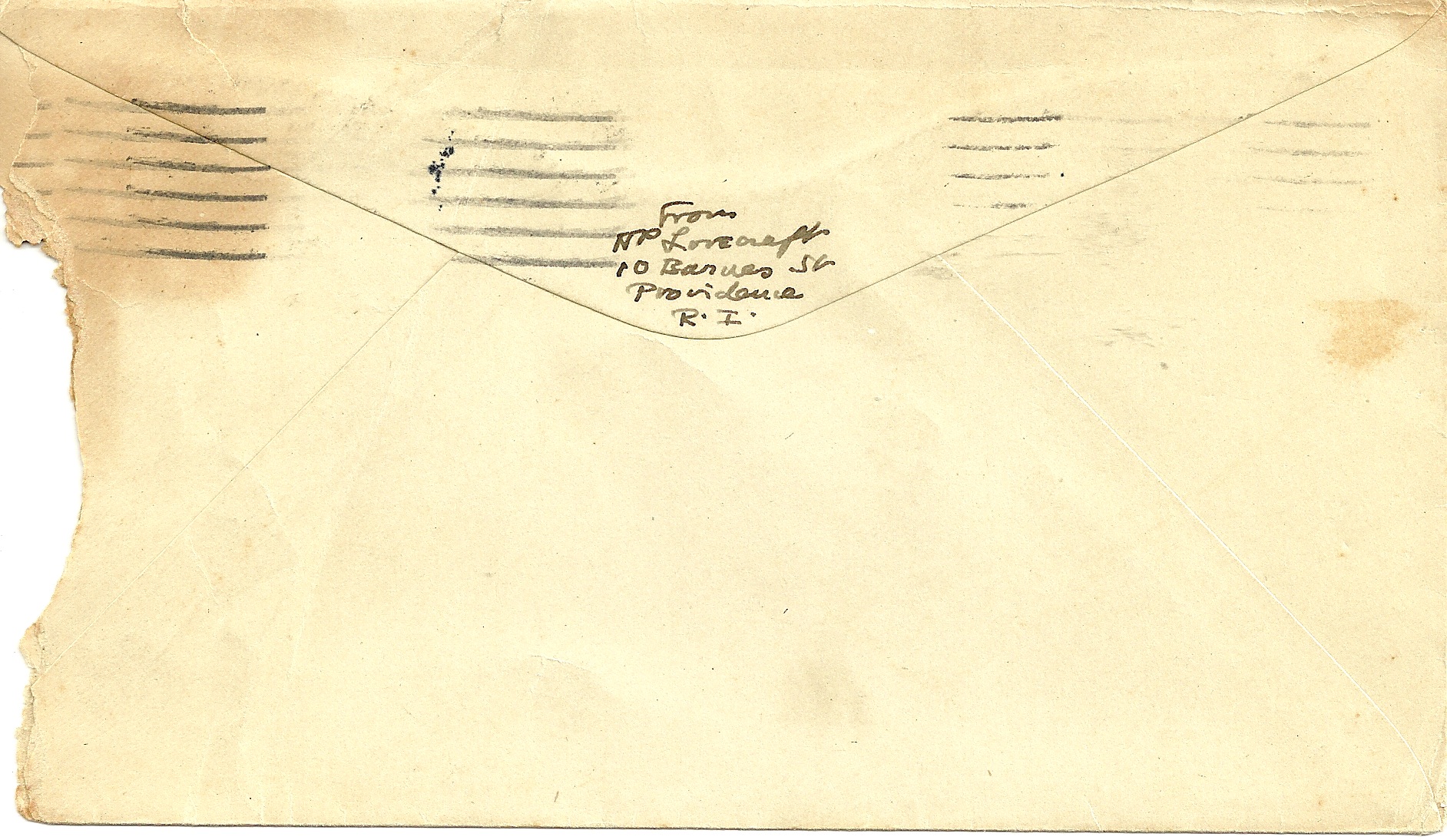
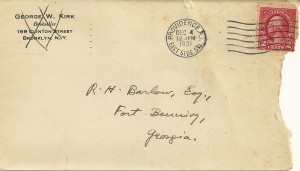
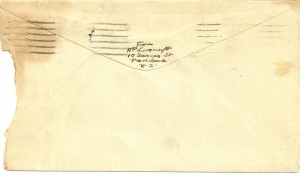
Lovecraft, H. P. Envelope Addressed to Robert Barlow, with Lovecraft’s return address on the back, in Lovecraft’s own handwriting. Postmarked December 4, 1931. Bought for $328 off eBay. More details here.
MacDonald, John D. The Girl, The Gold Watch, & Everything. Robert Hale, 1974. First hardback edition, a near Fine+ copy with a ex-ownership plate inside the front cover, in a Fine dust jacket. Pringle, Modern Fantasy 100 26. Locke, A Spectrum of Fantasy, page 146.

Matheson, Richard. Matheson on Matheson: A Conversation With Dennis Etchison. Bad Moon Books, 2013 (actually 2014). First edition hardback, #22 of 100 copies signed by Etchison and Richard Christian Matheson, a Fine copy in decorated boards, sans dust jacket, as issued.
Matheson, Richard. 7 Steps To Midnight. Tor Forge, 1993.
Moskowitz, Sam. The Immortal Storm. The Atlanta Science Fiction Organization Press, 1954. First hardback edition, a very good+ copy with slight rubbing to spine ends, slight bump at top rear board, and slight crimping at head and heel, in very good dust jacket with shallow chipping at head, heel and top front, and slight age-darkening to white areas. His acclaimed book on the early history of science fiction fandom. This is the first hardback edition, having been preceded by a mimeographed edition. Currey (1979), page 380. Chalker/Ownings (1991), page 51. Interestingly, Currey and Chalker/Ownings disagree on the print run, with Currey citing 1000 copies printed, but Chalker/Owings saying only 500. Bought for $36 off a major SF book dealer.

(Moskowitz, Sam) The Sam Moskowitz Collection of Science Fiction b/w Comic Books and Comic Art. Southbys, 1999. First edition oversized trade paperback original, Fine. Auction catalog for the Sam Moskowitz’s science fiction collection held June 29, 1999 (plus a collection of rare comics sold the next day).
Pohl, Frederik. The Early Pohl. Doubleday, 1976. First edition hardback, a Near Fine copy with remainder speckling at heel in a Fine dust jacket. Inscribed by Pohl: “To Fred—/Cordially/Fred Pohl/(No relative!)/Fred Pohl/198-” Bought for $10.
(Pohl, Frederik) Clareson, Thomas D. Frederik Pohl: Starmont Reader Guide 39. Starmont House, 1987. First edition hardback, a Fine copy- copy with slight rubbing, sans dust jacket, as issued. Signed by Pohl.
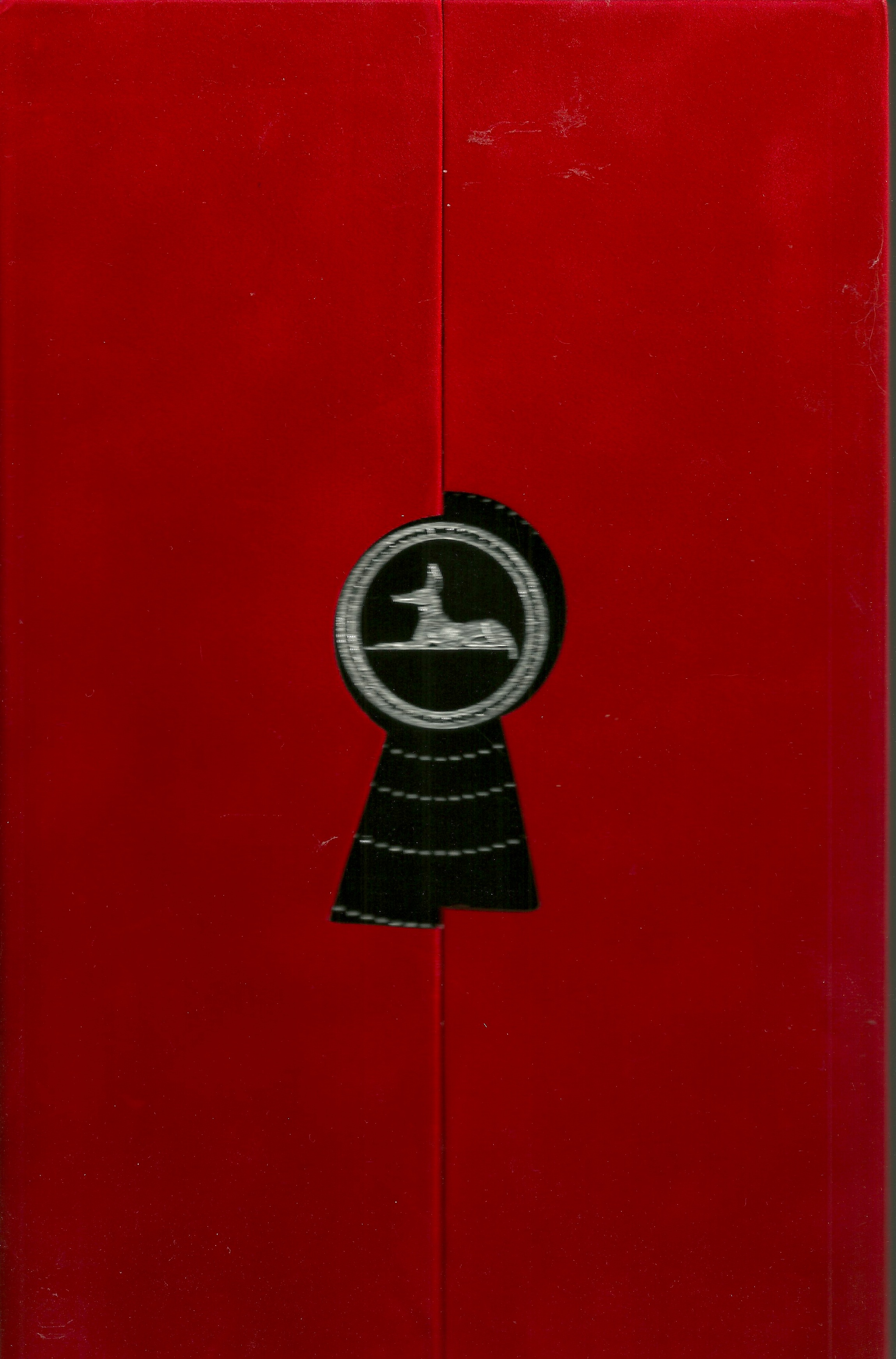
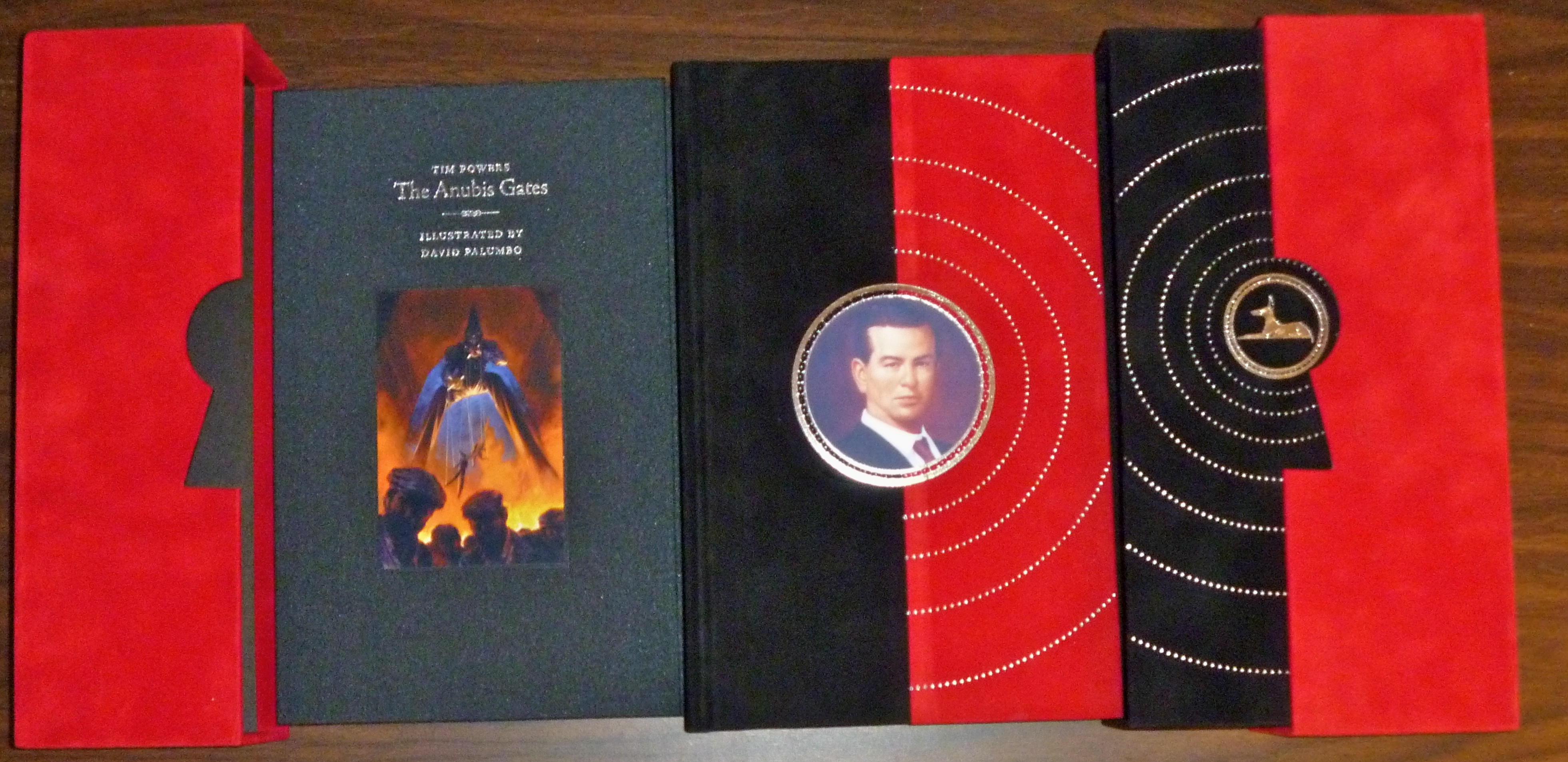
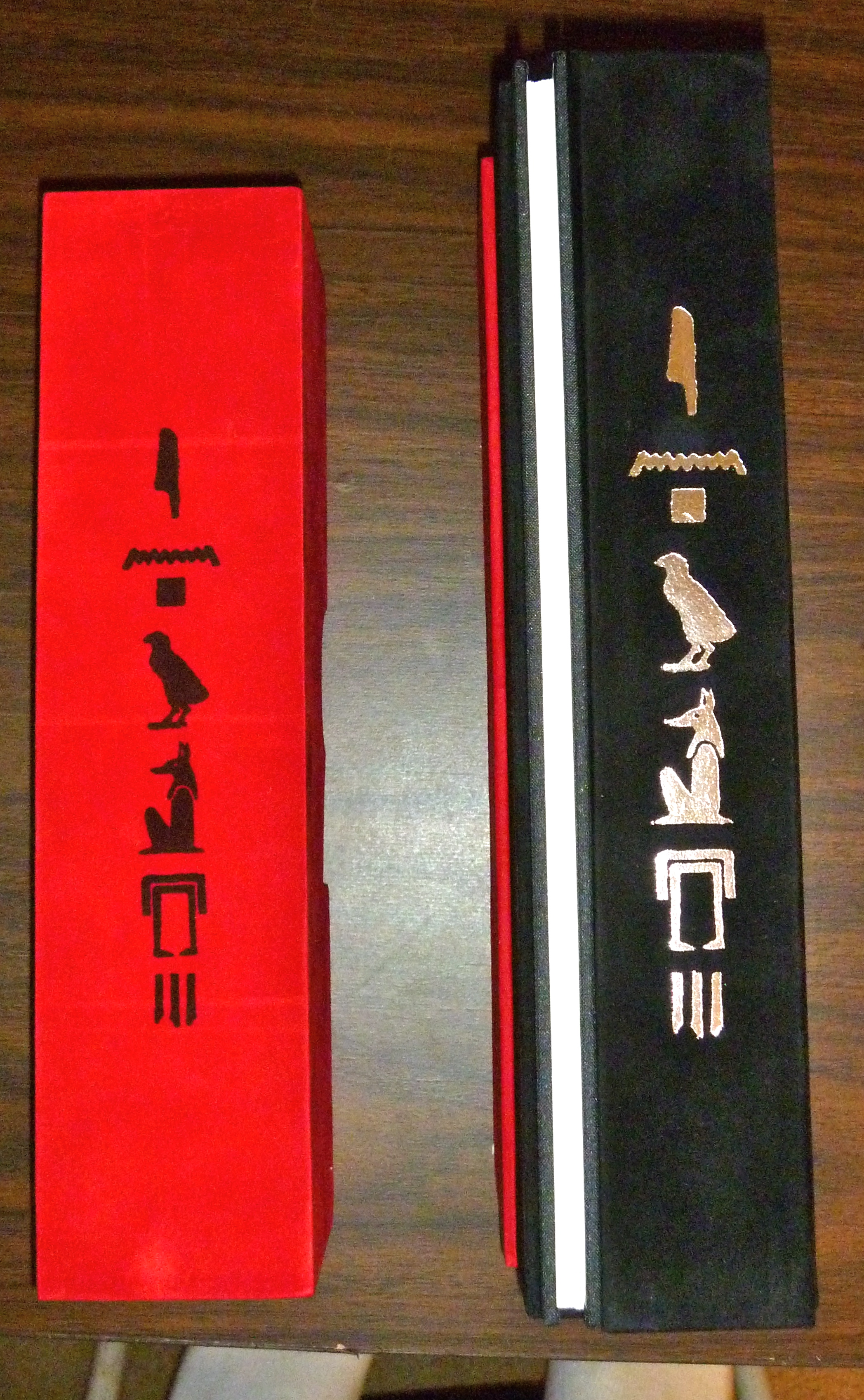
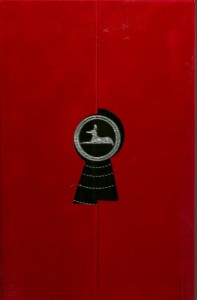
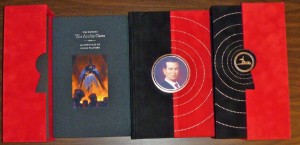
Powers, Tim. The Anubis Gates. Centipede Press, 2014. First edition hardback thus, a Fine copy save two flaws (the slipcase keyhole cutout is about 1/4″ misaligned between the two halves, and it lacks the signature page) bound in decorated red and black velvet with a lenticular image embedded in the front cover, in a Fine slipcase. The thing is ginormous, resting in a 2-half red velvet slipcase which houses the book and an accordion portfolio of the color art plates in the book, and includes an appendix of deleted scenes from the original manuscript and a fold-out map of 1810 London.

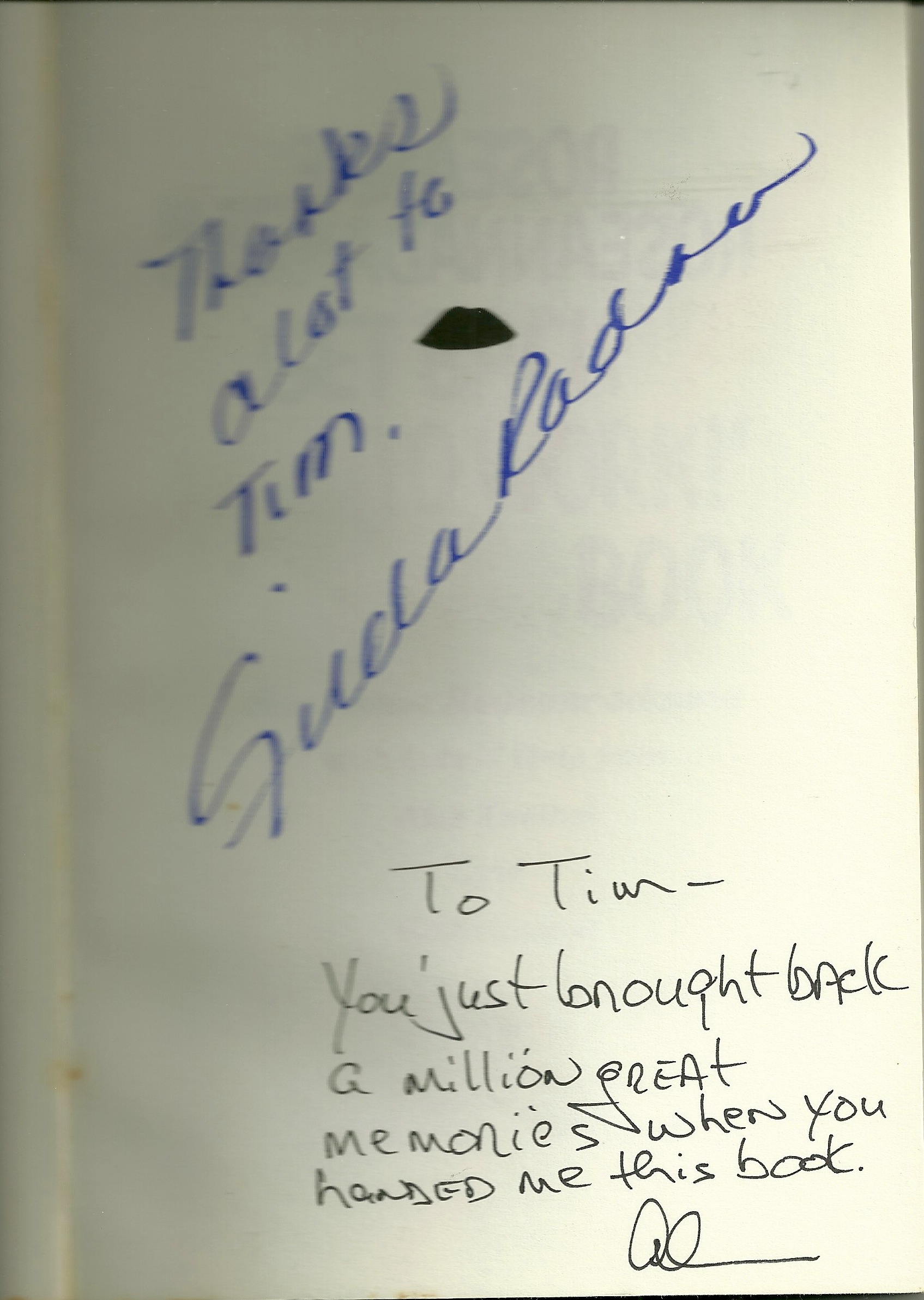
Radner, Gilda and Alan Zweibel. Roseanne Roseannadanna’s Hey, Get Back to Work! Book. Long Shadow Books, 1983. First edition trade paperback original, a Near Fine copy with a few small sports to page block edges. Inscribed by Radner and Zweibel: “Thanks/a lot to/Tim/Gilda Radner” and “”To Tim-/You just brought back/a million great/memories when you/handed me this book./Al”

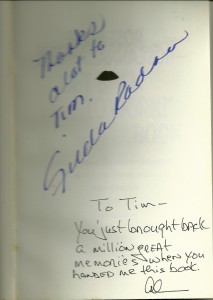
Bought in a lot with:
(Radner, Gilda) Zweibel, Alan. Bunny Bunny: Gilda Radner: A Sort of Love Story. Villard Books, 1994. First edition hardback, a Near Fine copy with a clipped price. Early Saturday Night Live writer’s memoir of working with Radner. Bought for $40.49 for the pair.
Resnick, Mike. Adventures. Signet, 1985. First edition paperback original (PBO), Near Fine with interior stamps.
Reynolds, Mack. Looking Backward From the Year 2000. Elmsfield Press, 1973. First edition hardback, a Fine copy in a Fine dust jacket. Pringle, SF 100 70. Currey (1979), page 417.
Roberts, Keith. The Passing of the Dragons. Signet, 1977. First edition paperback original (PBO), Near Fine with light yellow line at head and traces of wear. Short story collection. Currey (1979), page 419. Short story collection. Bought from Half Price Books for 49¢.
Shea, Michael. The Mines of Behemoth. Baen Books, 1997. First edition paperback original, a Fine copy, new and unread. Signed by Shea. Price paid: $4.49.
 Shepard, Lucius. The Jaguar Hunter. Kerosina, 1988. First edition hardback thus (contents differ from the Arkham House edition), #128 of 250 signed numbered copies, a Fine copy in a Fine dust jacket and Fine slipcase, new and unread. Supplements a signed copy of the Arkham House first edition. Bought for $22.50. (Originally issued at £40.00.)
Shepard, Lucius. Life During Wartime. Bantam Books, 1987. Uncorrected proof, trade paperback format, of the trade paperback original, a Fine- copy with the title and author written on the spine in ballpoint pen, with a proof of the cover laid in. Signed by Shepard. I have the UK first hardback edition, but I never picked up the TPO when it came out because I had already read most of the stories that make it up in Asimov’s…
Shepard, Lucius. The Scalehunter’s Beautiful Daughter. Mark V. Ziesing, 1988. First edition hardback, a #104 of 300 signed numbered copies, a Fine copy in a Fine dust jacket, new and unread. Supplements a signed trade copy. Bought for $10.
Shirley, John. Demons. Del Rey, 2002. Novel-length expansion of the earlier novella (which I also have). Bought for $7 at the Austin book show.
Silverberg, Robert. Thebes of the Hundred Gates. Axolotl Press/Pulphouse, 1991. First edition hardback, a #78 of 300 signed numbered hardbacks, a Fine copy in a Fine dust jacket, new and unread. Supplements a signed trade copy. Bought for $10. Pulphouse wildly overpriced a number of titles, including this one, but $10 (down from the initial list price of $35) seems about right…
(Silverberg, Robert) Gardner Dozois and William Schafer, editors. The Book of Silverberg: Stories in Honor of Robert Silverberg. Subterranean Press, 2014. First edition hardback, #165 of 250 signed, numbered copies, signed by all contributors except the late Kage Baker, a Fine copy in a Fine dust jacket, new and unread. Tribute anthology.
(Silverberg, Robert) Gardner Dozois and William Schafer, editors. The Book of Silverberg: Stories in Honor of Robert Silverberg. Subterranean Press, 2014. trade edition.
(Silverberg, Robert) Clareson, Thomas D. Robert Silverberg: Starmont Reader Guide 18. Starmont House, 1983. Second Printing hardback, a Fine copy- copy with slight rubbing, sans dust jacket, as issued. Signed by Silverberg.
Simmons, Dan. Prayers to Broken Stones. Dark Harvest, 1990. First edition hardback, #329 of 500 signed numbered copies, a Fine copy in a Fine dust jacket and Fine slipcase, new and unread. Supplements a signed trade copy. Bought for $37.50. (Originally issued at $75.)
Smith, Edward E., PhD. The Skylark of Space. Buffalo Book Company, 1946. First edition hardback, a VG+ copy with slight bumping at head, heel and corners and faint dust staining at heel, in a VG- dust jacket missing a small 1/4″ triangular chip from center of dj spine, plus about 1/4″ of chipping loss at head and heel, and slight overall rubbing, otherwise intact with $3.00 price on flap. The very first of Doc Smith’s famous space operas. Currey (1979), page 457. Chalker/Owings (1991), page 78. One of two books done by the Buffalo Book Company (the other of which, John Taine’s The Time Stream, I picked up in December). Bought for $237 from Heritage Auctions.
Shepard, Lucius. The Jaguar Hunter. Kerosina, 1988. First edition hardback thus (contents differ from the Arkham House edition), #128 of 250 signed numbered copies, a Fine copy in a Fine dust jacket and Fine slipcase, new and unread. Supplements a signed copy of the Arkham House first edition. Bought for $22.50. (Originally issued at £40.00.)
Shepard, Lucius. Life During Wartime. Bantam Books, 1987. Uncorrected proof, trade paperback format, of the trade paperback original, a Fine- copy with the title and author written on the spine in ballpoint pen, with a proof of the cover laid in. Signed by Shepard. I have the UK first hardback edition, but I never picked up the TPO when it came out because I had already read most of the stories that make it up in Asimov’s…
Shepard, Lucius. The Scalehunter’s Beautiful Daughter. Mark V. Ziesing, 1988. First edition hardback, a #104 of 300 signed numbered copies, a Fine copy in a Fine dust jacket, new and unread. Supplements a signed trade copy. Bought for $10.
Shirley, John. Demons. Del Rey, 2002. Novel-length expansion of the earlier novella (which I also have). Bought for $7 at the Austin book show.
Silverberg, Robert. Thebes of the Hundred Gates. Axolotl Press/Pulphouse, 1991. First edition hardback, a #78 of 300 signed numbered hardbacks, a Fine copy in a Fine dust jacket, new and unread. Supplements a signed trade copy. Bought for $10. Pulphouse wildly overpriced a number of titles, including this one, but $10 (down from the initial list price of $35) seems about right…
(Silverberg, Robert) Gardner Dozois and William Schafer, editors. The Book of Silverberg: Stories in Honor of Robert Silverberg. Subterranean Press, 2014. First edition hardback, #165 of 250 signed, numbered copies, signed by all contributors except the late Kage Baker, a Fine copy in a Fine dust jacket, new and unread. Tribute anthology.
(Silverberg, Robert) Gardner Dozois and William Schafer, editors. The Book of Silverberg: Stories in Honor of Robert Silverberg. Subterranean Press, 2014. trade edition.
(Silverberg, Robert) Clareson, Thomas D. Robert Silverberg: Starmont Reader Guide 18. Starmont House, 1983. Second Printing hardback, a Fine copy- copy with slight rubbing, sans dust jacket, as issued. Signed by Silverberg.
Simmons, Dan. Prayers to Broken Stones. Dark Harvest, 1990. First edition hardback, #329 of 500 signed numbered copies, a Fine copy in a Fine dust jacket and Fine slipcase, new and unread. Supplements a signed trade copy. Bought for $37.50. (Originally issued at $75.)
Smith, Edward E., PhD. The Skylark of Space. Buffalo Book Company, 1946. First edition hardback, a VG+ copy with slight bumping at head, heel and corners and faint dust staining at heel, in a VG- dust jacket missing a small 1/4″ triangular chip from center of dj spine, plus about 1/4″ of chipping loss at head and heel, and slight overall rubbing, otherwise intact with $3.00 price on flap. The very first of Doc Smith’s famous space operas. Currey (1979), page 457. Chalker/Owings (1991), page 78. One of two books done by the Buffalo Book Company (the other of which, John Taine’s The Time Stream, I picked up in December). Bought for $237 from Heritage Auctions.

Stephenson, Neal. In the Beginning was the Command Line. Avon Books, 1999. First edition trade paperback original, a Fine copy. Long essay on the history of computing, the Internet, and cyber culture.
Straub, Peter. Mrs. God. Donald M. Grant, 1990. First edition hardback, #179 of 600 signed, numbered copies, a Fine copy, sans dust jacket (as issued) in a Fine slipcase, new and unread.
(Tiptree, Jr., James) Siegel, Mark. James Tiptree, Jr.: Starmont Reader Guide 22. Starmont House, 1986. First edition hardback, a Fine copy- copy with slight rubbing, sans dust jacket, as issued.
Vance Jack. Araminta Station. Tor, 1988. First U.S. trade hardback, a Fine- copy with pinhole cracks to front gutter in a Fine- dust jacket with slight dust soiling to rear cover. First book in the Caldwell Chronicles. Signed by Vance. Hewett, A79c.
Vance Jack. Ecce and Old Earth Tor, 1991. First trade hardback, a Fine copy in a Near Fine dust jacket with crinkling and wrinkles along extremities. Second book in the Caldwell Chronicles. Signed by Vance. Hewett, A84b.
Vance Jack. Throy. Tor, 1992. First trade hardback, a Fine copy in a Fine dust jacket. Third book in the Caldwell Chronicles. Signed by Vance. Hewett, A85b. Price for all three Caldwell volumes: $52.49.
Vance Jack. The Five Gold Bands. Underwood/Miller, 1993. First hardback edition and first edition thus, originally published in pulp paperback as The Space Pirate, a Near Fine copy with small orangeish spots to all three page block edges, in a Fine dust jacket. Signed by Vance. Hewett, A2k. Price: $37.49.
Vane, Jack. Galactic Effectuator. Underwood/Miller, 1980. First edition hardback, one of 800 trade copies, a Fine- copy with slight spotting at head in a Fine dust jacket. Signed by Vance. Hewett, A63. Chalker/Owings (1991), page 432. Price: $26.24.
Vance, Jack, and Tony Russell Wayman. The Last Castle b/w World of the Sleeper. Ace Books, 1967. First edition paperback original (H-21 and 60¢ on cover, as per Currey and Hewett), a Very Good+ copy with long faint crease on the Russell side and slight overall wear. Signed by Vance. Hewett, A30. Currey (1979), page 499. Price: $8.99.
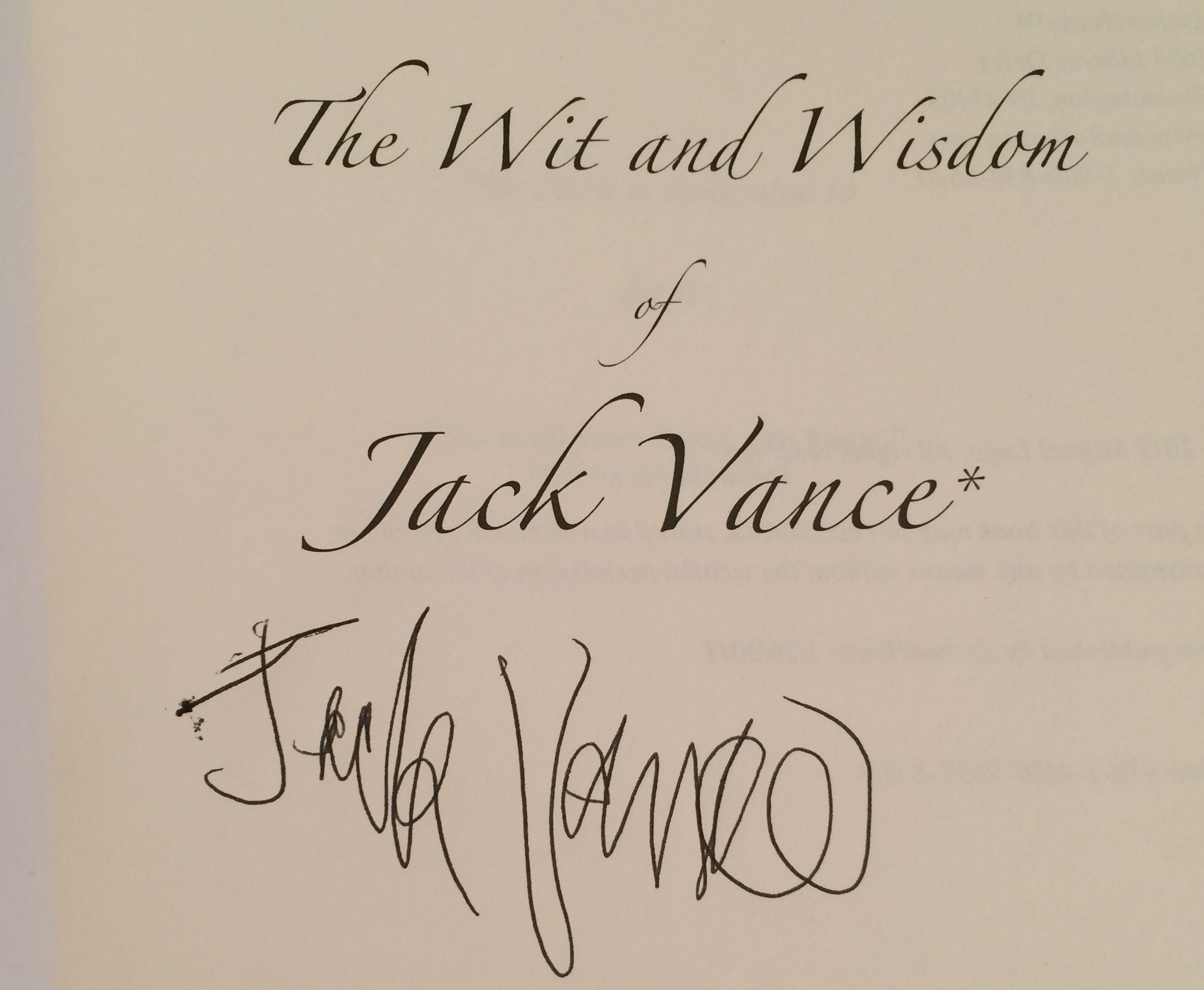
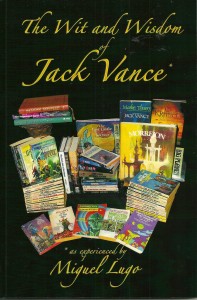
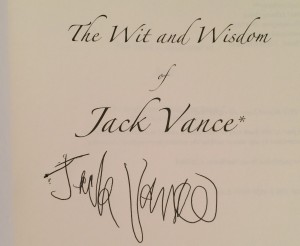
Vance, Jack (edited by Miguel Lugo). The Wit and Wisdom of Jack Vance. AuthorHouse, 2011. First edition trade paperback (POD) original, a Fine copy. Selection of excerpts from Vance’s works. Signed by Vance (though the signature (see below) is very shaky, as Vance was pretty much completely blind by the time this book came out). I was unaware of this before I saw the listing for it, and I can’t imagine that Vance signed terribly many. Price: $29.99.
Vance, Jack. Minding the Stars: The Early Jack Vance Volume Four. Subterranean Press, 2014. First edition hardback, a Fine copy in a Fine dust jacket, new and unread.
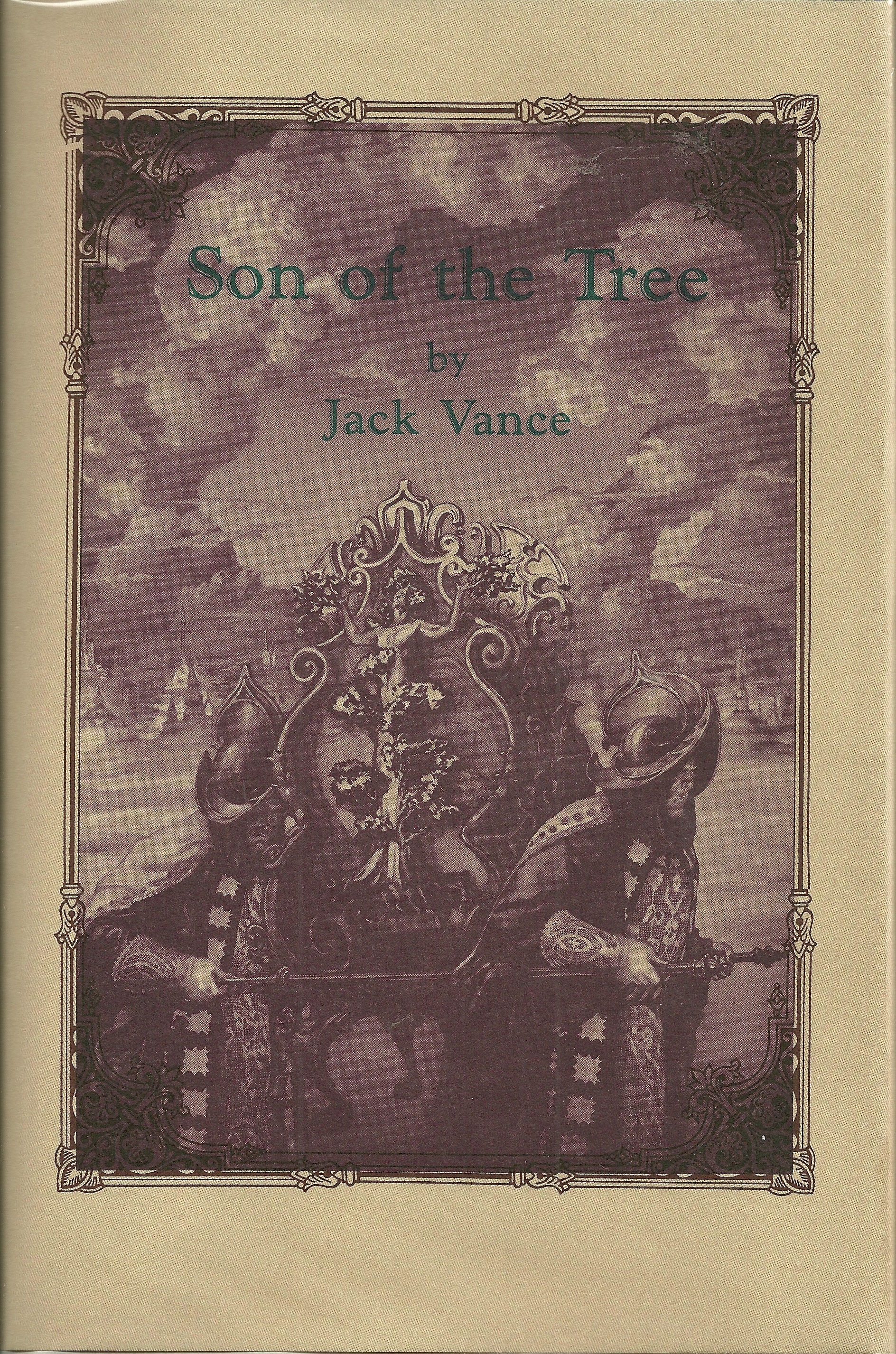
Vance, Jack. Son of the Tree. Underwood/Miller, 1983. First hardback edition, #183 of 200 signed, numbered copies, a Fine copy in a Fine- dust jacket with just a tiny bit of wrinkling at head and heel. Hewett, A13g.

Vance Jack. Vandals of the Void. John C. Winston, 1953. First edition hardback, Very Good- with a two inch split to outer back spine join and dust soiling to page edges, lacking the dust jacket. Signed by Vance. Hewett, A3. Currey (1979), page 501. Price: $29.99.
(Wolfe, Gene) Borski, Robert. Solar Labyrinth: Exploring Gene Wolfe’s BOOK OF THE NEW SUN. iUniverse, 2004. First edition hardback (no additional printings listed, though I believe iUniverse is a POD outfit), a Fine copy in a Fine dust jacket. Critical guide to Wolfe’s Book of the New Sun. Supplements a trade paperback edition in my library. Bought for $20 off an Internet bookseller.
Wolheim, Elizabeth (Betsy), and Sheila Gilbert, editors. DAW 30th Anniversary Box Set (including 30th Anniversary DAW Science Fiction and 30th Anniversary DAW Fantasy). DAW, 2002. First edition hardbacks, Fine leatherbound copies with gilt endpapers, #312 of 350 sets so produced, in a Fine slipcase, sans dust jackets, as issued. (I have not been able to determine if the leather binding state is simultaneous with the trade editions or not.) Signed by editor Sheila E. Gilbert and contributors Michael Shea, Tad Williams, C.S. Friedman, Melanie Rawn, Mercedes Lackey, Larry Dixon, Kate Elliott, and Irene Radford. This set was originally offered at $125 (though copies can now be found on Amazon for considerably less). The sets were not, as far as I can tell, offered in a signed state; these were signed independently by the contributors. Price paid: $59.99.
Zelazny, Roger. A Rose for Ecclesiastes. Rupert Hart-Davis, 1969. First edition thus and first hardback edition, a Fine copy in a Fine- dust jacket with very slight spine fading. First hardback edition of Four For Tomorrow. Levack, 17b. Kovacs, V11c/V20. Zelazny’s first short story collection.

Tags:Books, Centipede Press, Fantasy, First Edition, Frederik Pohl, Fritz Leiber, Gardner Dozois, Garland Press, Gene Wolfe, Greg Bear, Horror, Jack Vance, Joe R. Lansdale, Lucius Shepard, Neil Gaiman, Phantasia Press, Philip Jose Farmer, Poul Anderson, Ray Bradbury, reference works, Richard Matheson, Robert A. Heinlein, Robert Silverberg, Sam Moskowitz, Science Fiction, signed, Subterranean Press, Ursula K. Le Guin
Posted in Books, Fantasy, Horror, pics, Science Fiction | No Comments »
Tuesday, February 12th, 2013
No particular theme, just a few books fellow science fiction bibliophiles might find of interest.
Anderson, Poul. Homebrew. NESFA Press, 1976. First edition hardback, one of 500 copies signed by Anderson (Currey B, no priority), a Fine- copy with slight bumping at head and heel in a Fine- dust jacket with a tiny bit of dust patterning to rear dust jacket. Currey (1978), pages 10-11. Three short stories plus miscellany.

Asimov, Isaac and Theodosius Dobzhansky. The Genetic Effects of Radiation. U.S. Atomic Energy Commission, 1966. Presumed first edition chapbook (no additional printings listed), a Near Fine copy with slight dust soiling and age darkening to covers, and phantom crease to bottom corner. Non-fiction pamphlet. Marjorie M. Miller, Asimov: A Checklist, page 48.

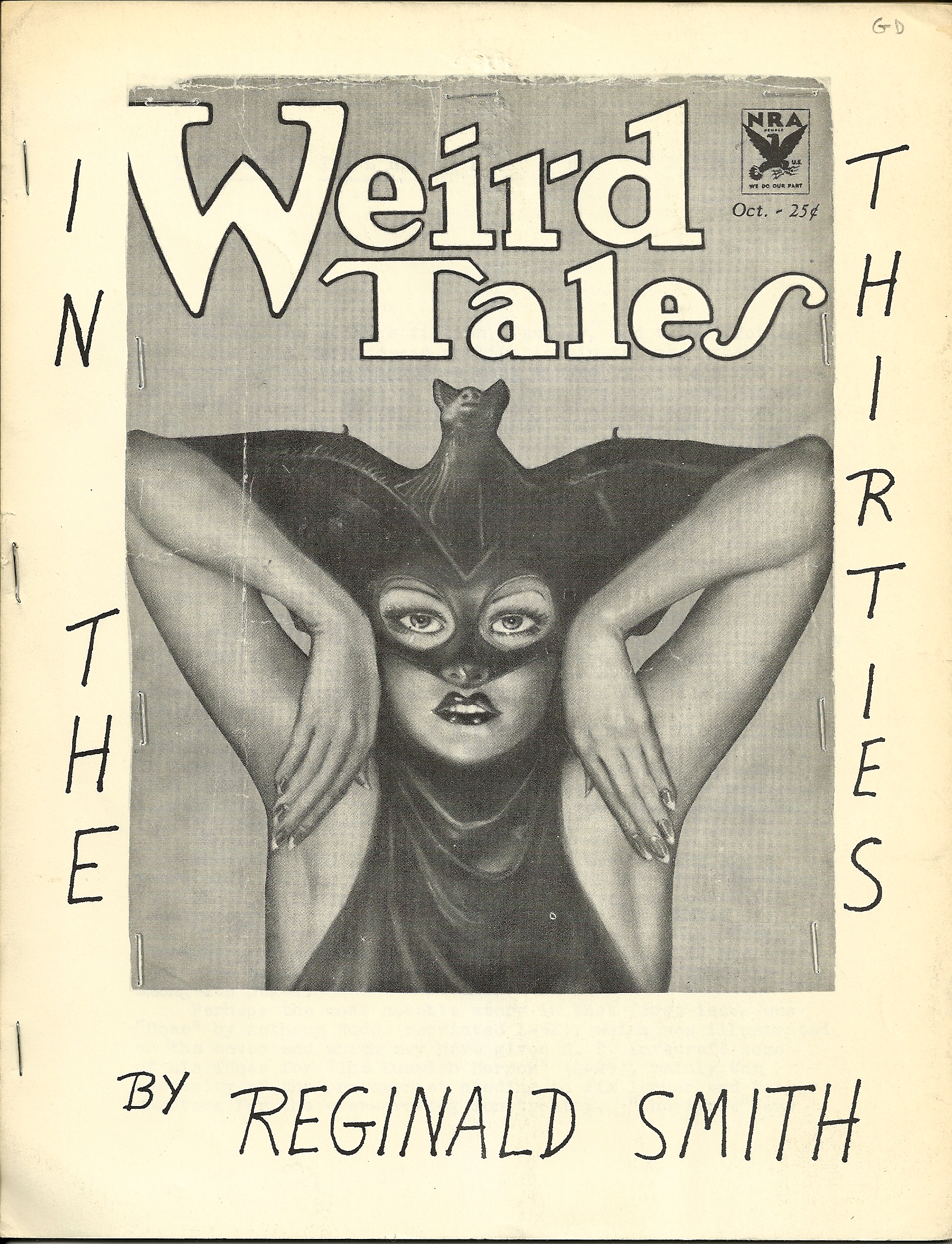
Smith, Reginald. Weird Tales in the Thirties. Self published, no date (but 1966). First edition, 8 1/2″ x 11″ side-stapled, mimeographed from typewritten copy, Near Fine- copy with small abrasion at top front, and slight bend to front and rear self-covers. Long essay about the magazine. Joshi, H. P. Lovecraft: An Annotated Bibliography, III-D-574.

Vance, Jack. Strange Notions with The Dark Ocean. Underwood/Miller, 1985. First edition hardbacks, number 47 of 500 signed (Strange Notions only, as issued), numbered sets in slipcase, Fine, sans dust jackets, as issued. Mystery novels. Hewett, A75 and A76.

Zelazny, Roger. Damnation Alley. Putnam, 1969. First edition hardback, a Fine copy in a Fine- dust jacket with just a tiny bit of edgewear along top front. Levack, 9a. Currey (1978), page 570.

Tags:Books, First Edition, Jack Vance, pics, Poul Anderson, Roger Zelazny, Science Fiction, Weird Tales
Posted in Books, pics, Science Fiction | 1 Comment »
Friday, September 2nd, 2011
Various issues have kept me remarkably busy the last few days, so it may take a little while to get my blogging back up to speed. In particular, I wanted to do a brief roundup of some of the books I bought at the Reno Worldcon.
This year’s Worldcon had a better dealer’s room than Denver in 2008 (the last Worldcon I went to), and there were many rare and tempting items there (including not one, but two copies of the first edition of William Timlin’s The Ship That Sailed to Mars, as well as a fine signed first edition of Alfred Bester’s Tiger Tiger listed for $2,500, and which sold for a bit less) which, alas, they wanted more for than I was willing to spend.
But here are a few items I was able to add to my collection:
Serviss, Garrett P. Edison’s Conquest of Mars. Carcosa House, 1947. First edition hardback, one of 1,500 copies, a Fine copy in one of only 500 (or fewer) dust jackets distributed with the book, a Near Fine example of dj with just a few traces of edgewear and slight age-darkening to the spine. The dust jacket is rarely found, and even more seldom found in such excellent condition.

The dust jacket art itself is perhaps the finest ever drawn by an eight-year old…
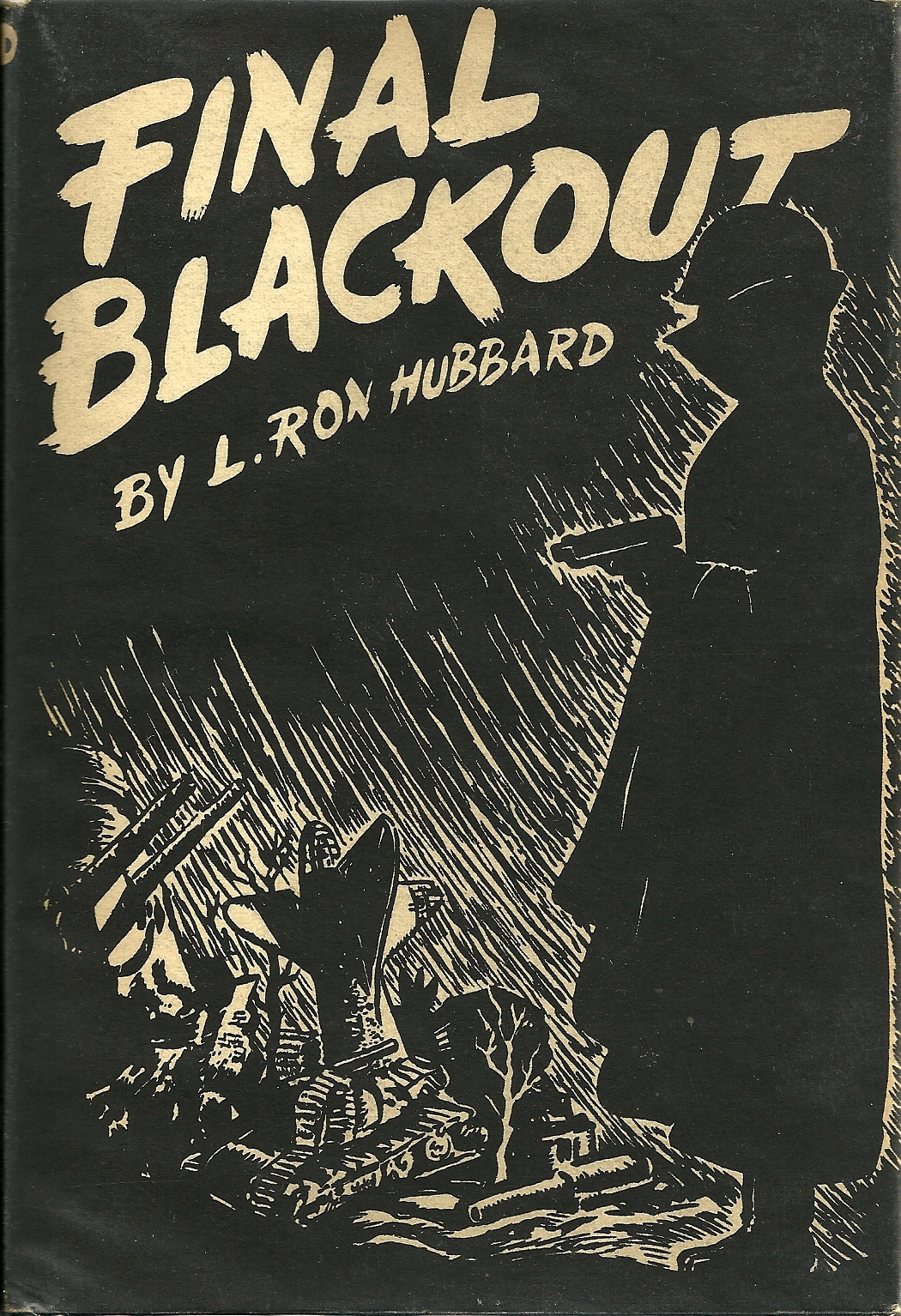
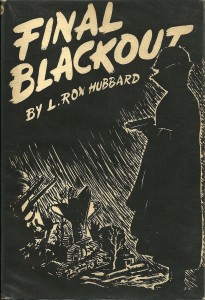
Hubbard, L. Ron. Final Blackout. Hadley Publishing, 1948. First edition hardback, a Fine copy in a Near Fine+ dust jacket with slight age darkening to white portions of cover. I’m not a big fan of Hubbard (or his church), but this and Fear are reportedly among his best works, and I am less familiar with his output than almost any other Golden Age author. Plus it puts me closer to having a complete collection of Hadley Publishing, an important early SF specialty press.
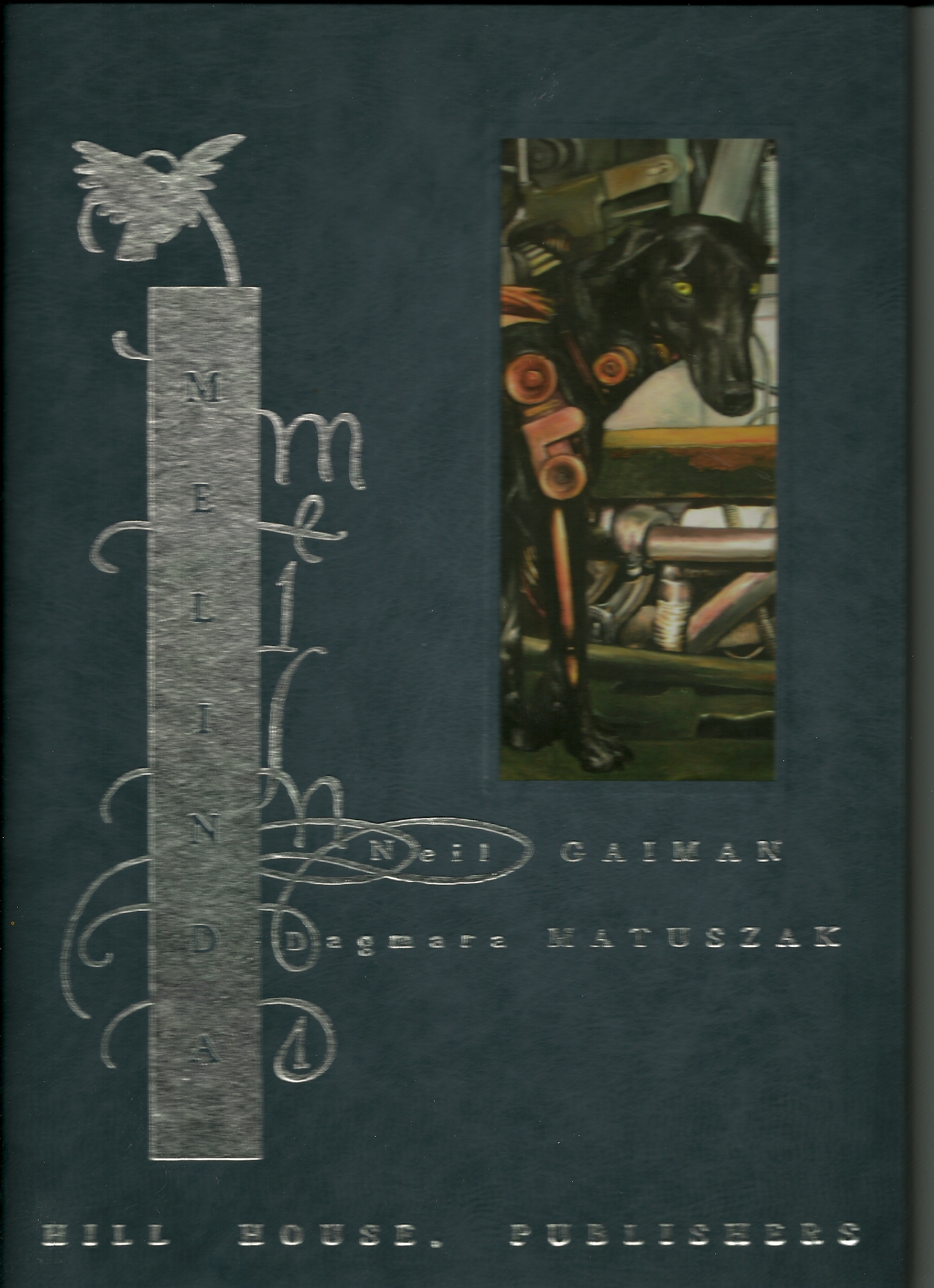
Gaiman, Neil. Melinda. Hill House, 2004. First edition graphic novel, one of 1,500 signed copies, Fine, sans dust jacket, as issued. Wanted this when it came out, but not enough to pay the $250 or so Hill House was asking for it, especially considering how slender it is. But the $50 I picked it up for was just right…

Anderson, Poul. Fire Time. Doubleday, 1974. First edition hardback, a Fine copy in a Near Fine dust jacket with edgewear. Not a difficult or valuable title, except this copy was inscribed by Anderson to Charles N. Brown, which I thought made it worth a good bit more than the $15 the Locus folks were asking for it.
Diaz, Junot. The Brief Wondrous Life of Oscar Wao. Riverhead Books, 2007. First edition hardback, a Fine copy in a Fine dust jacket. Been looking for a copy at various Half Price Books and not finding one, so I was happy to pick this up from Scott and Willie.
Farmer, Philip Jose. The Keeper of the Secrets. Severn House, 1985. First edition hardback, a Fine copy in a Fine- dust jacket with a tiny bit of haze rubbing to the rear cover. First hardback edition of The Mad Goblin.
Farmer, Philip Jose. Love Song. Brandon House, 1970. First edition paperback original, a Near Fine- copy, with slight cover wear and ownership stamps and stickers for Diana Ann Barbour. My best find at the convention wasn’t even a purchase; Barbour had specified that her library was to be given away, and when I spotted this green spine among the stacks of Philip Jose Farmer paperbacks being set out, I snagged it. (I left behind two of the Essex House paperbacks they were putting out, because it doesn’t pay to be piggish.) The only copy of the PBO online lists for $850. That’s too high, but $200-400 is probably realistic.

Moorcock, Michael. The Sleeping Sorceress. New English Library, 1971. First edition hardback, a Fine copy in a Near Fine+ dust jacket with color loss along inner flaps edges (possibly a printing flaw). First hardback edition of The Vanishing Tower.
Moorcock, Michael. The Runestaff. White Lion, 1974. First edition hardback, a Fine- copy with just a tiny bit of wear in a Fine dust jacket. First hardback edition.
Shute, Nevil. On the Beach. Heinemann, 1957. First edition hardback, a near Fine plus copy with dust staining to top page blocks and touches of wear to boards at heel, in a Near Fine dust jacket, with slight edgewear at head and heel and a few very short, closed tears.
Tags:Alfred Bester, Book Collecting, Books, Diana Ann Barbour, Fantasy, First Edition, Garrett P. Serviss, Hadley Publishing, L. Ron Hubbard, Michael Moorcock, Neil Gaiman, Nevil Shute, Philip Jose Farmer, Poul Anderson, Reno, Science Fiction, Worldcon
Posted in Books, Science Fiction | 3 Comments »
Tuesday, November 30th, 2010
You may remember this post on how a lot of science fiction was showing up in the public domain at Project Gutenberg (which was picked up by SF Signal, Io9, etc.).
Well, Greg Bear and Astrid Anderson Bear, his wife and daughter of Poul Anderson (whose works were among those put up by Project Gutenberg), are saying that Project Gutenberg screwed up:
After conducting legal research on the LEXIS database of legal cases, decisions, and precedents, we have demonstrated conclusively that PG was making incorrect determinations regarding public domain status in many, many works that originally appeared in magazine form. The Poul Anderson estate has been able to get one work, “The Escape”, that PG had firmly declared to be public domain, removed from their site. PG’s original reasoning was that since the magazine it appeared in had never actually filed for copyright, the work was unprotected. “The Escape”, printed in 1953, was the first half of Anderson’s well-known novel BRAINWAVE, which was published and properly copyrighted the following year.
However, even if ‘The Escape” had not been published as a novel, it would have remained under copyright protection until 1981 (28 years) and been eligible for copyright renewal. Authors of that era, and Anderson in particular, were very aware of the need to renew copyrights, and typically meticulously kept their copyright protections up to date. Copyright law for works created more recently is much easier: life plus 70 years. (Sonny Bono Copyright Term Extension Act, 1998).
(snip)
In general, Project Gutenberg is doing a tremendous service by making available texts that have truly long since fallen out of copyright, but they are clearly overstepping their original mandate. They are not merely exploiting orphan works, but practicing a wholesale kidnapping of works that are under copyright protection. Authors and estates need to aggressively take back what belongs to them.
I would imagine that Project Gutenberg may very well be hearing not only from the estates of Philip K. Dick and Leigh Brackett, but from lawyers for the still-very-much alive Frederik Pohl, Norman Spinrad and Jack Vance…
Tags:Frederik Pohl, Greg Bear, Jack Vance, Leigh Brackett, Norman Spinrad, Philip K. Dick, Poul Anderson, Project Gutenberg, Science Fiction
Posted in Books, Fantasy, Science Fiction | 39 Comments »
Thursday, November 11th, 2010
Take a look at this list of new science fiction put up at Project Gutenberg. Lots of familiar (and fairly recent) names there: Philip K. Dick, Mark Clifton, Leigh Brackett, Poul Anderson, Norman Spinrad, Frederik Pohl, and Jack Vance. And the last three of those are still alive.
It would be interesting to know how these slipped into the public domain. Did the original magazines where they appeared use work-for-hire contracts, or did the authors forget to file the copyright renewal?
Edited to add: Wrong link, fixed now.
Edited to add 2: Really, really fixed now. This time for sure!
Tags:Frederik Pohl, Jack Vance, Leigh Brackett, Mark Clifton, Norman Spinrad, Philip K. Dick, Poul Anderson, Project Gutenberg
Posted in Books, Science Fiction | 12 Comments »