Asobi Seksu covering a Jesus and Mary Chain song? Yeah, that’s shoegaze enough for me.
It also faintly reminds me of Asobi Seksu’s own “Nefy & Girly.”
Asobi Seksu covering a Jesus and Mary Chain song? Yeah, that’s shoegaze enough for me.
It also faintly reminds me of Asobi Seksu’s own “Nefy & Girly.”
I was looking for more songs by the band Hypomanie when I stumbled across this song by French Canadian band MilanKu. It’s a bit more in the post-rock/depressive metal continuum than pure Shoegaze, but, I think, close enough.
The Love God?
Director Nat Hiken
Writer Nat Hiken
Starring Don Knotts, Anne Francis, Edmond O’Brien, James Gregory, Herb Voland, Maureen Arthur, Maggie Mancuso and B.S. Pully
The concept of The Love God? is as amusing as it is absurd: Don Knotts not only as an unwilling Hugh Heffner, but also as an unaware object of unbridled feminine lust. (If Don Knotts as sex symbol seems beyond the realm of possibility, consider that in 1969, his separated at birth twin was precisely that.) Knotts plays his usual nervous-nebbish-with-a-heart-of-gold character, and the movie plays out very similar to his more famous works, save for the suggestive nature of the material. And it is only suggestive; it’s about the cleanest film you could ever make about a dirty magazine.
Part of the charm of the film is how it’s both strangely out of time and exactly of it’s time. You couldn’t have made a family movie about a dirty magazine too much earlier than 1969 because it would have been too risque to get greenlight by Hollywood. And you couldn’t have gotten it made too much latter, because the Sexual Revolution quickly become so sacred that no one in Hollywood would have been willing to make such ruthless fun of it, or have an ending that rejected it for the wholesome joys of marriage. One of the film’s funniest running gags is the “hip” fashion atrocities they foist onto our blithe protagonist, which obviously couldn’t have come from any era but the late 1960s. By contrast, the “swinging” signature song “Mr. Peacock” would have been considered too old-fashioned for the 1950s, much less the era of Jimi Hendrix and The Rolling Stones. Also, the characters are mostly stock types that could have appeared in most of Knotts’ other films. For a film that came out the same year as Midnight Cowboy and Easy Rider, it has all the edge of a bowling ball.
The movie starts in court (with a technically interesting multi-camera, multiple-window view of the scene along with the credits, and possibly the first use of it on film), with an oddly sentimental pornographer Osborn Tremaine (his wife is the proud covergirl of all his issues) getting a slap on the wrist from the judge on obscenity charges, only to have his precious 4th-class mailing yanked moments later. Shortly thereafter he’s driving through the sticks when he discovers that Abner Peacock’s (Knott) namesake bird-lover magazine The Peacock is on the verge of liquidation. Tremaine quickly rescues the magazine (and its fourth-class mailing permit) and sends Abner off on wild bird chase to South America. When he gets back, he discovers that Tremaine has remade the The Peacock into a porno mag, and Abner (still listed as the publisher) is under indictment as public enemy number one.
Abandoned by all but his innocent sweetheart Rose Ellen (Maggie Mancuso, playing wholesome, loyal, and very dim), Abner is about to put his head in a noose (literally; a pretty dark touch for a Knotts film) when two ACLU types show up at his door promising to pay for his defense and hire the best attorney money can buy to support free speech.
At the obscenity trial, the Attorney General (Herb Voland) condemns Abner with delicious gusto:
I have another duty, a higher duty to perform. And that is to protect you, your children, the very morality of our nation, from the smut and moral corruption spewed forth like garbage from the lecherous, vile, lewd and licentious mind of this filthy, little degenerate! Look at his face. It is the face of a smut monger. Look at his body: thin, wasted away by the dissipation and debauchery of a life of unspeakable orgies and depravity!…He says he’s innocent. And he does look innocent…until you look into his eyes. They’re the eyes of a man obsessed by sex, eyes that mock our sacred institutions; “bedroom eyes,” they called them in a bygone day. They’re the eyes of a man whose lust knows no bounds, who lives but for corrupting others to a life of carnal pleasures and lewd designs. A man whose erotic desires and libertine practices are used to titillate the unsuspecting, who regards women as his playthings and would stoop to any depths to satisfy his pornographic tastes. The Marquis de Sade would have regarded Abner Peacock as a peer in his search for lechery. We can have a clean America, but only when we remove this sex-ridden smut peddler from the society he is bent upon destroying.
Then his own attorney, played by James Gregory (Angela Lansbury’s husband/patsy in The Manchurian Candidate and Barney Miller‘s inspector Lugar, along with a hundred other supporting roles) gets up and, ahem, defends him:
Your Honor, ladies and gentlemen, I have sat here and heard my client, Abner Peacock, called “a filthy, obscene degenerate; a sex-ridden, lascivious defiler of virtue whose lust knows no bounds, whose publications have plumbed the depths of degradation, and are a reflection of his own sex-obsessed mind.” We’re not going to argue about that. We can see that Abner Peacock is everything the Attorney General has told you he is. It is the unsavory creatures like Abner Peacock who test the strength of our Constitution, which, like our Rock of Gibraltar, has withstood challenge after challenge in protecting our freedom of the press through the years. Now, ladies and gentlemen, are we to stand idly by and allow the first crack to be made in this rock because of this dirty little pornographer? This is a dirty case and a dirty little man. It is with disgust to the point of nausea that I find myself sitting next to this filthy little degenerate! But when I see this filthy degenerate’s Constitutional rights being threatened, then I must take this filthy little degenerate into my arms, clasp him to my breast and fight for this filthy little degenerate’s Constitutional rights and liberty with my very life!
You just don’t see enough people called “filthy little degenerates” these days.
Naturally Abner is acquitted.
With all the publicity, Tremaine knows he has a goldmine on his hands, but can’t raise the money to do the huge print run required to capitalize on it. This necessitates a visit to mobster “Icepick Charlie,” who’s mad for sophistication and self improvement (he has a tutor in to teach a new word every day). Charlie not only wants to underwrite the most sophisticated dirty mag in existence, he thinks he should be the publisher. He hires up-and-coming powerhouse journalist Lisa LaMonica (Anne Francis, still incredibly hot 13 years after Forbidden Planet) to edit The Peacock. She agrees, but on one condition: Abner has to stay on as figurehead, since the trial has made him the lust object of the nation’s id.
Abner just wants to clear his name, and assert that he’s just a clean, wholesome guy, but everyone from his lawyers to the magazine backers insist he must stay on for the sake free speech, and set him up in a penthouse (outfitted in the finest Late Bordello Red Velvet fashion) with french maids and his own “Peacock Pets.” Despite his wholesome nature, Abner (like all Knotts characters) isn’t exactly the the strongest-willed of men, and soon finds that a guy could really get used to the Hef lifestyle…
One of the high points for modern viewers of the film is the stunning array of “hip” outfits Peacock sports. Like this:
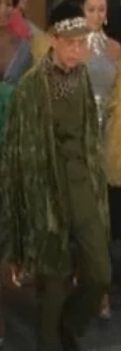
Or this:
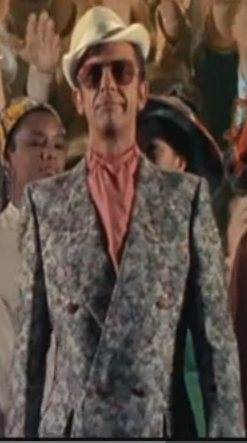
Or even this:
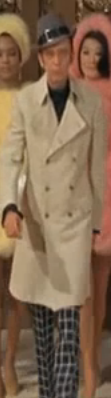
And this is so far over the top, it’s almost awesome:

The running joke, of course, is that Abner, far from being a filthy degenerate, is still pure as the driven snow, and spends his spare time teaching his Pets bird calls. Despite the supposedly risque nature of the material, The Love God? plays out like Knotts other star vehicles from the period: nebbish elevated through fluke to exalted status, fall flat on his face, suffers abject humiliation, is abandoned by his friends, triumphs through combination of honesty, good-natured perseverance and a bit of luck, and gets the girl in the end. It works well not only because Knotts was a master of the type (as his five Emmys for Barney Fife attest), but because no matter how grandiose his pretensions or painful his embarrassment at falling woefully short of them, he never loses the audience’s sympathy. Orwell famously noted that “any life when viewed from the inside is simply a series of defeats,” and Knotts’ characters not only garner more than their fair share, but also stand in for our own. The gulf between his character’s self-image and reality may be vaster than our own, but we’ve all suffered social faux pauxs. We’re willing to enjoy his abject humiliations because we know, in the end, he’ll overcome them; pathos rather than bathos.
Also, like Knotts’ other starring vehicles of the period, The Love God? is pretty funny. Lisa falls for Abner despite the obvious absurdity (“He’s a big square! (pause) Just like the one my mother married.”), and Icepick Charlie falls for her, setting up one of the stranger love triangles in cinema history (or love quadrilateral, counting Rose Ellen). There are pieces that don’t quite work (the birdcall song refrain bit falls a bit flat), but most do. Like many of Knotts’ other films (or a Shakespeare comedy) it ends with a wedding.
In this clip, British comedian Stephen Fry observes that American comedians like to be the triumphant trickster, while British comedians like to play the mournful failure.
And, as a broad generalization, fair enough. But this quick and dirty bifurcation ignores not only the many straight man/fall guy comedic pairings on both sides of the Atlantic (Laurel and Hardy, Abbott and Costello, Cook and Moore), it ignores Knotts’ entire career as the quintessential victim.
The movie was written and directed by longtime TV writer Nat Hiken, who died before his debut film was released. That’s a shame, as it’s really well-written, smoothly executed comedy of much the same pace and style of other comedic films of the era (How to Succeed in Business Without Really Trying comes to mind).
I missed the chance to see Joe Bob Briggs introduce a showing of The Love God? at the Alamo Downtown, mainly because it’s a hassle to get downtown by 7 PM these days.
You can get The Love God? as part of the Don Knotts Reluctant Hero 4-pack, which also includes The Ghost & Mr. Chicken, The Reluctant Astronaut and The Shakiest Gun In The West. That’s a lot of Knotts for your buck…
Dwight and I saw this at the same time, and he has a review up as well.
Here’s a trailer for the forthcoming film Big Ass Spider:
It’s every bit as good as you would expect a trailer for a film called Big Ass Spider to be.
I’m pretty sure the intro at the beginning of the clip was timed just right to make the bikini volleyball scene show up as the default YouTube image…
No particular theme, just a few books fellow science fiction bibliophiles might find of interest.
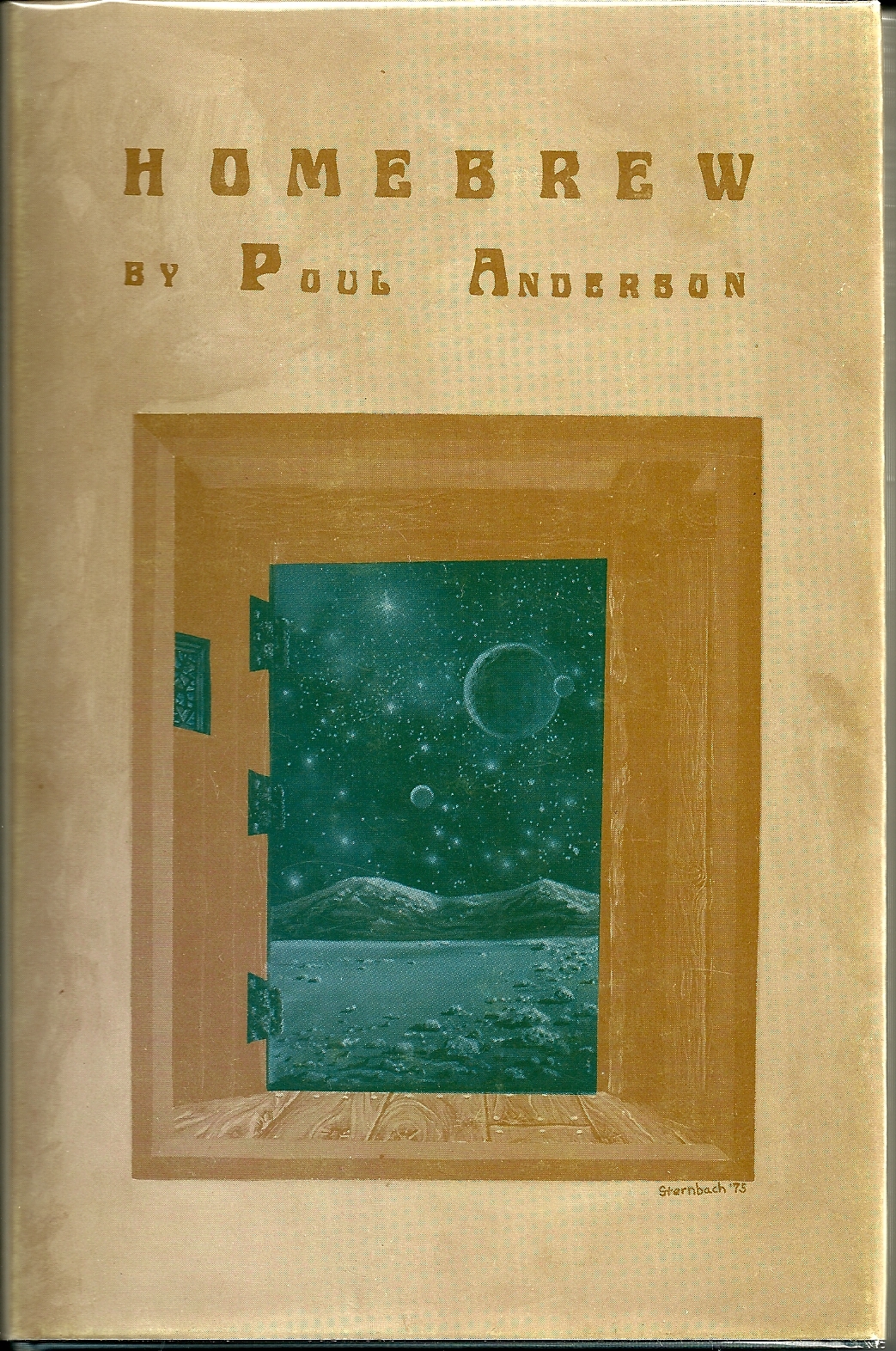
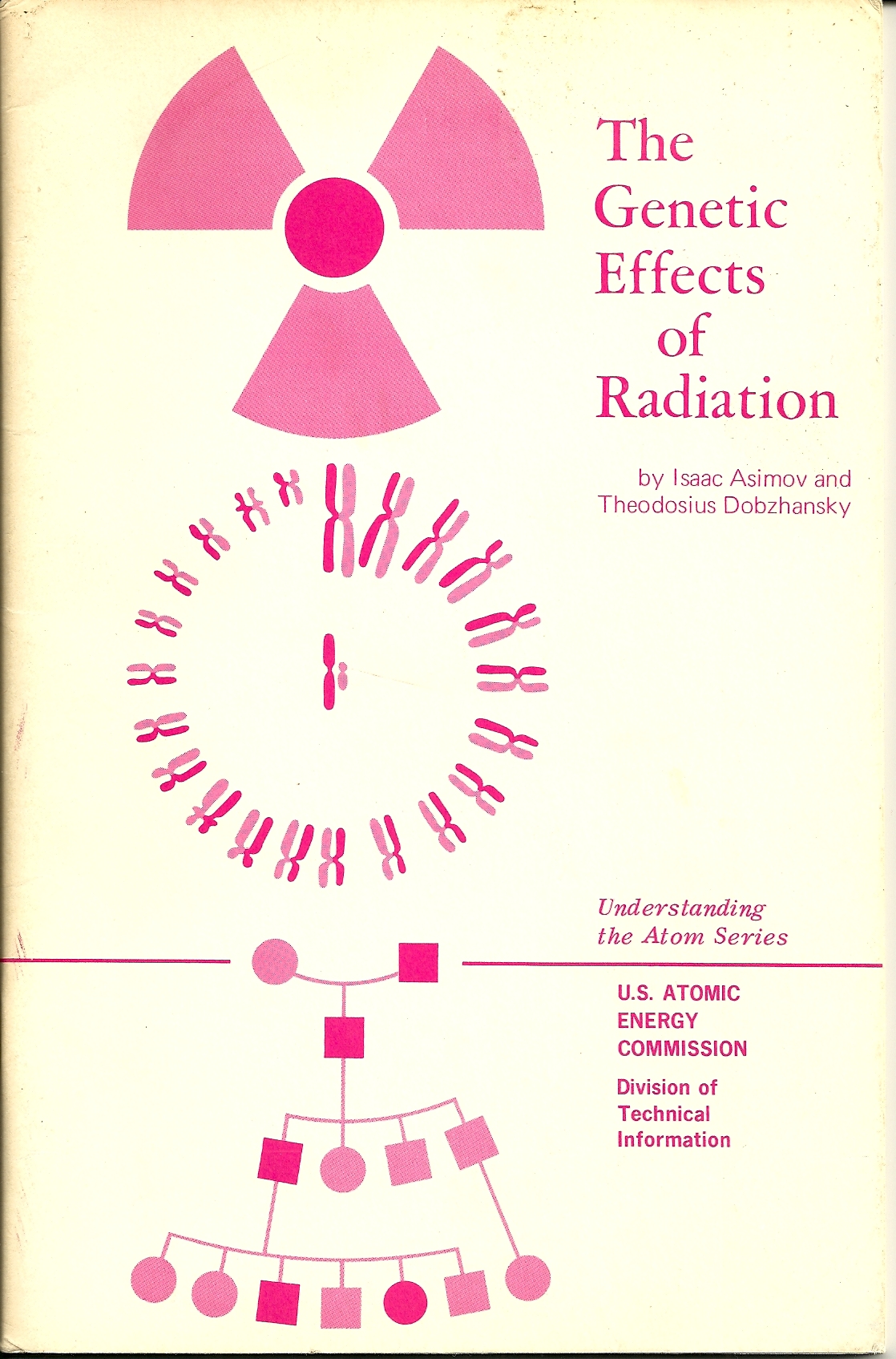
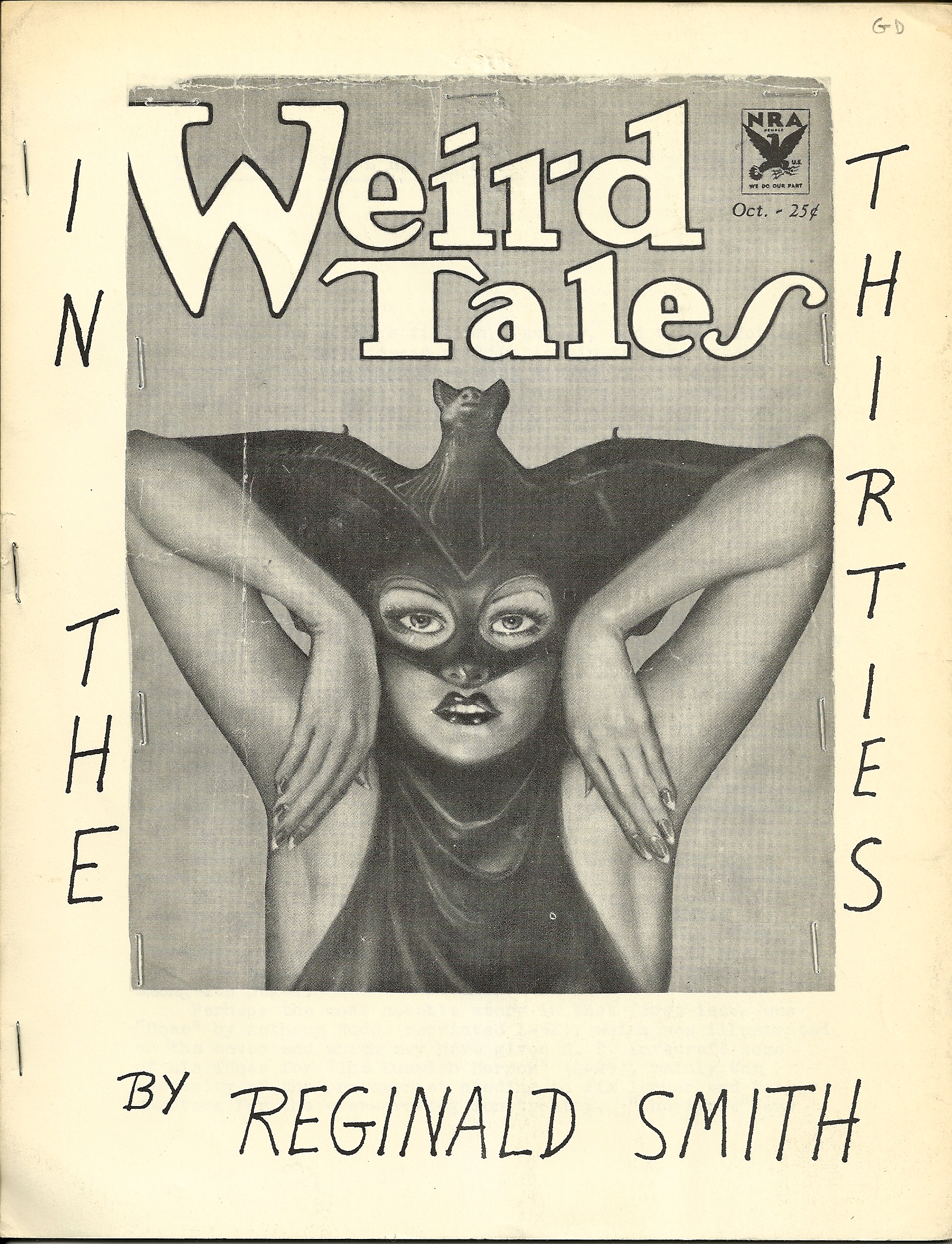

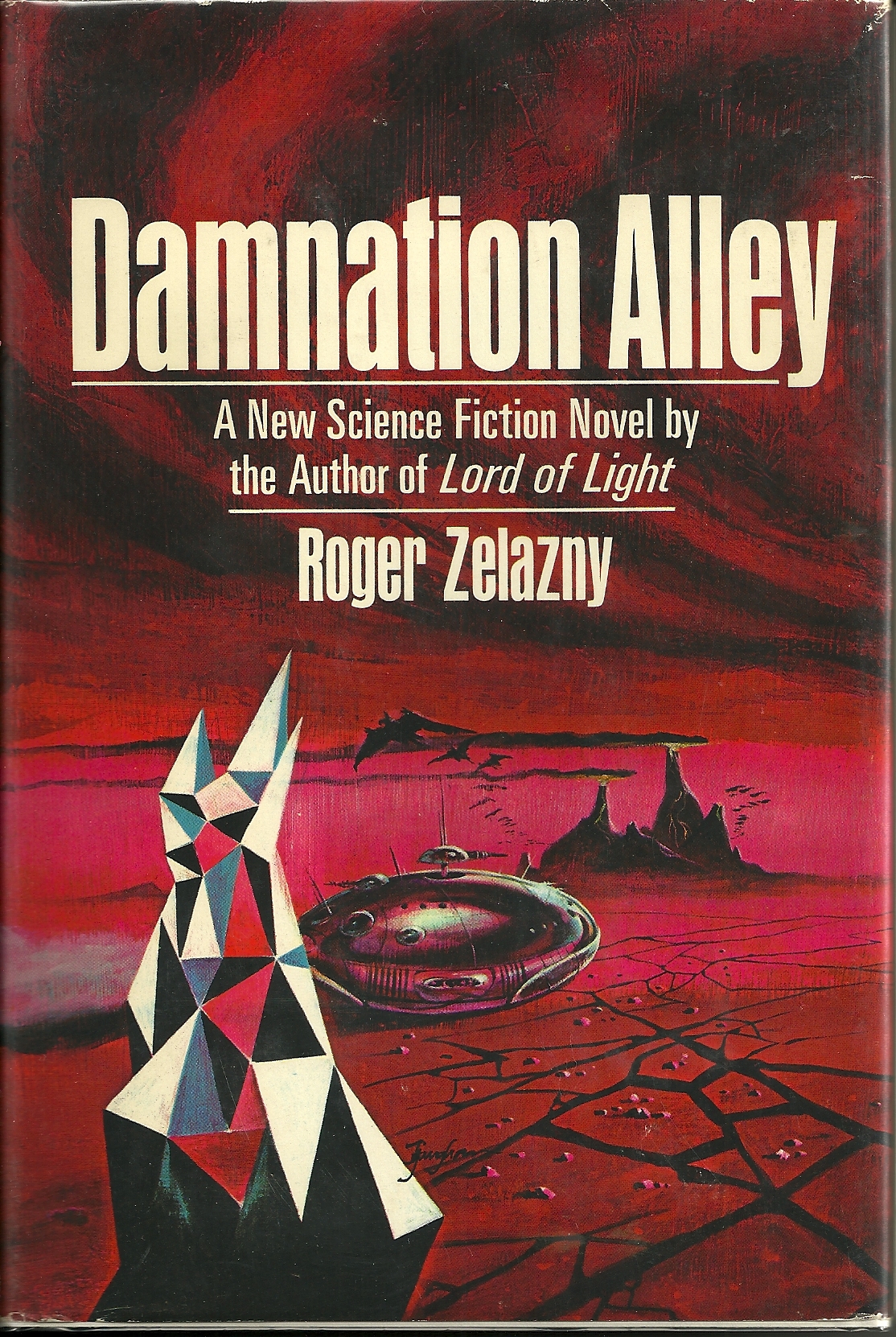
Here’s the pleasant, verging on ambient “Winter Breath” by Italian band Murnau.
I’m guessing they’re named after the German film director.
I’m surprised that neither Dwight nor Murray Newman picked up on this one. Lonnie Blevins, a former investigator at the Harris County District Attorney’s Office, has been charged with stealing over $140,000 worth of vintage comic books. The comic books were purportedly taken from evidence seized from Anthony Chiofalo, a lawyer accused of embezzling more than $9 million from a client. Chiofalo’s own lawyer says it’s possible more than $1 million worth of collectables was taken from his client.
When Blevins (allegedly) tried to sell them for about half their value at a Chicago comics convention the dealer became suspicious. To allay their suspicions, Blevins “let them photograph his Texas driver’s license and showed his badge proving he was an investigator with the Harris County District Attorney’s Office.”
It didn’t take Sherlock Holmes to crack this case. I could actually see this working if he was very careful and only sold one or two titles at various shows or shops, maybe mixed in with a few lesser titles he purchased. (I’d be interested in hearing some of the titles he allegedly tried to fence.) But trying to sell a whole bunch of valuable comics all at once? Yeah, that’s going to raise some flags.
More on Chiofalo’s collection, which included “a baseball signed by Babe Ruth, a first edition Playboy and the first ever Batman comic book, worth about $900,000…a boxing robe worn by Muhammad Ali, a signed first edition of Mario Puzo’s novel, The Godfather, and a baseball helmet signed by Pete Rose.”
(Hat tip: Doug Potter’s Facebook page.)
Any year is a good year to read Gene Wolfe, but it seems that right now we’re in a Gene Wolfe Year, or even a Gene Wolfe Sesquiennial, which started with his induction into the Chicago Literary Hall of Fame and continued with him being named Nebula Grandmaster.
Then Michael Andre-Driussi (the author of Lexicon Urthus and other useful Wolfe critical works) published this:
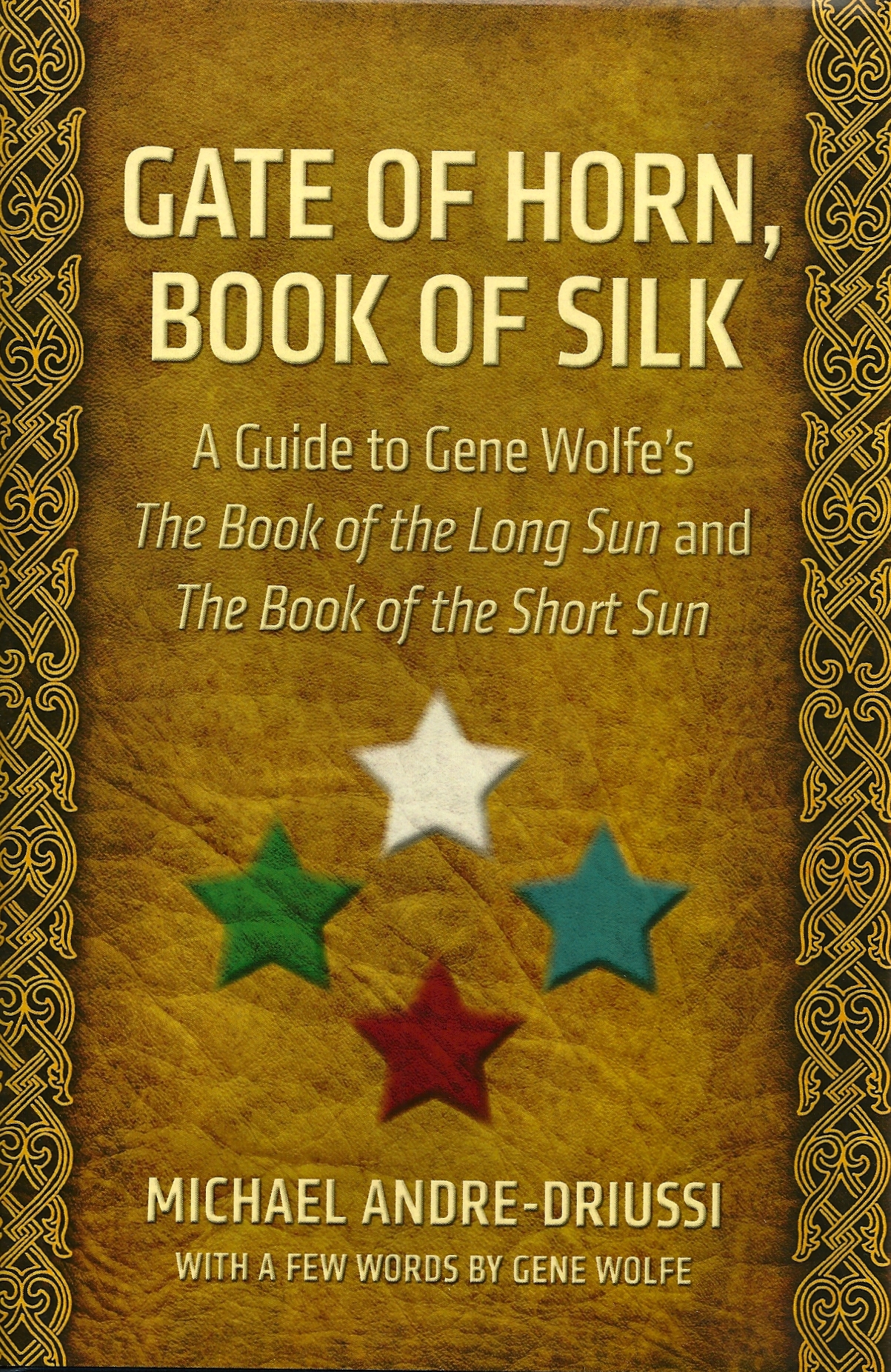
And sent me a review copy, which I hope to get to shortly. I also have copies of Gate of Horn, Book of Silk for sale through Lame Excuse Books; just drop me a line if you want one.
And this just arrived in the mail:
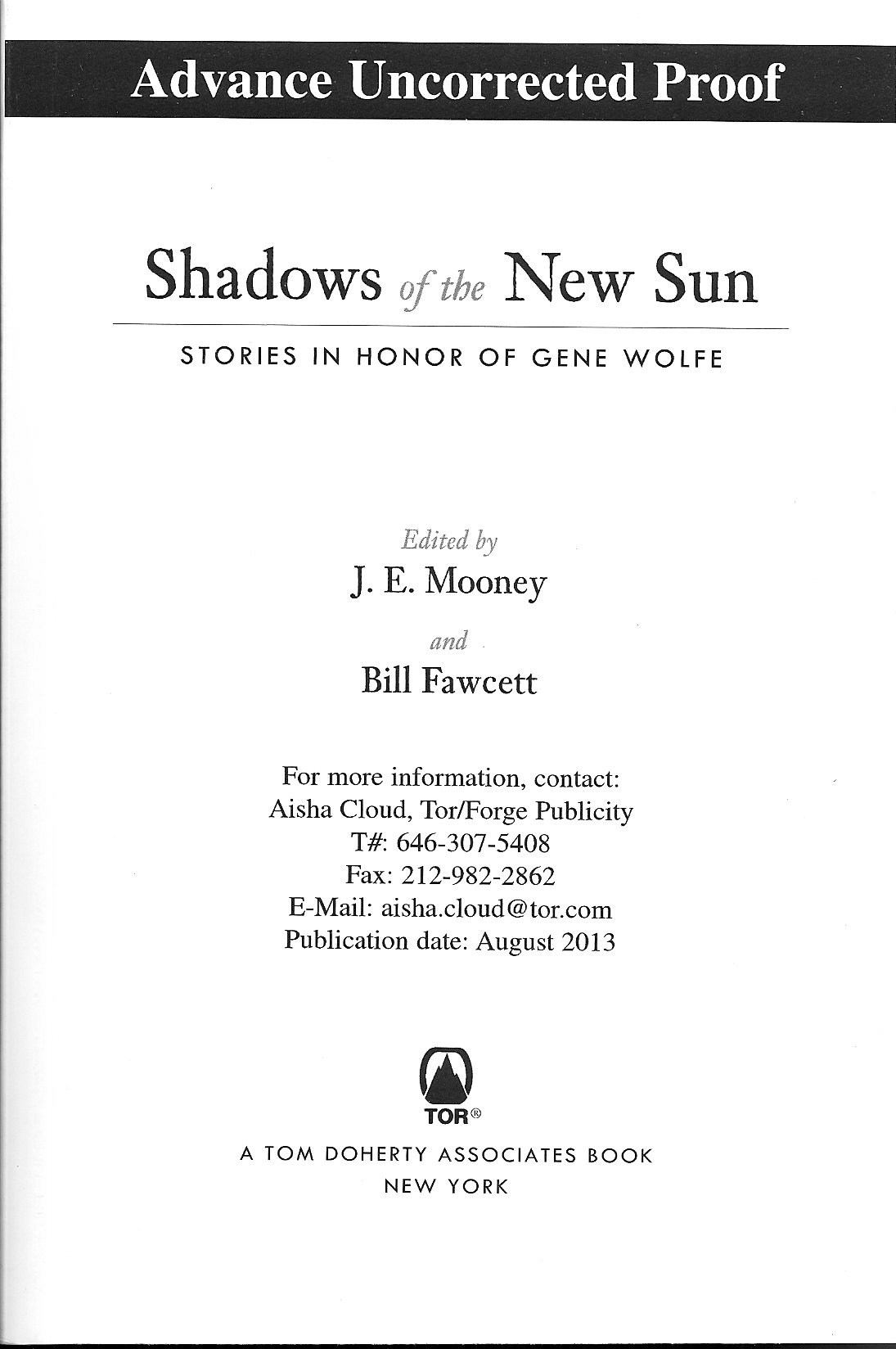
That’s Shadows of the New Sun: Stories in Honor of Gene Wolfe, edited by Bill Fawcett and J.E. Mooney, which is due out in August. Complete contents here.
We’ll see if I can’t review both of those here in the coming months.
Ironically, I’m actually reading another Wolfe-related book with the same title right now: Peter Wright’s Shadows of the New Sun: Wolfe on Writing/Writers on Wolfe, which includes the interview I did with him for Nova Express. When I had lunch with him at the Chicago Worldcon, Gene said even he didn’t have a copy of the Wright book.
Hopefully Gene will be able to come to the San Antonio Worldcon. He said he was going to try to make it.
I don’t know much about Skywave beyond what’s on their MySpace page, which mentioned they’re from Fredericksburg, Virginia. With that deeply uninformative introduction out of the way, here’s the deeply reverb-drenched “Nothing Left to Say” off their album Synthstatic.
Missed this when it came out last year, but this Daily Mail piece on the ruin of the Bulgarian Communist Party headquarters has some awesome pictures of very science fictional ruins.

Reminds me of those equally science fictional Yugoslavian Communist monuments. Monuments to an illusionary future by regimes that ignored their overwhelming, oppressive failure in the present.