Another signed, limited Dragonstairs Press signed Swanwick chapbook.
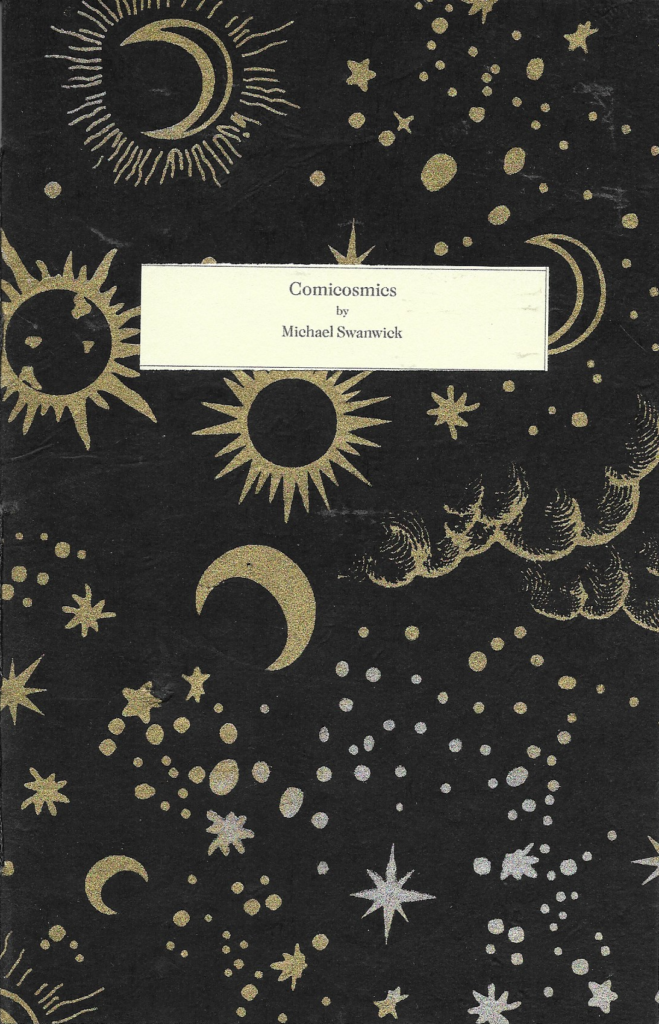
Swanwick, Michael. Comicosmics. Dragonstairs Press, 2024. First edition chapbook original, #42 of 50 signed, numbered copies, a Fine copy. Short shorts in the manner of Italo Calvino. I should have one unspoken for copy available in the next Lame Excuse Books catalog.
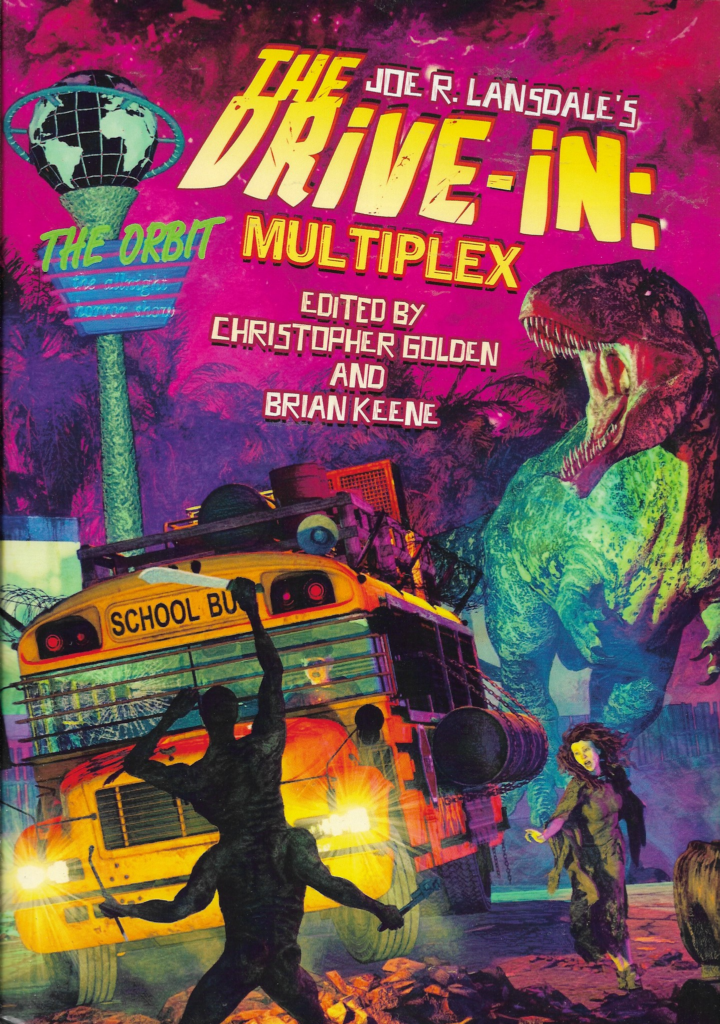
(Lansdale, Joe R.) Christopher Golden and Brian Keene, editors. Joe R Lansdale’s The Drive-In: Multiplex Thunderstorm Books, 2024. First hardback edition, #230 of 350 signed, numbered copies, a Fine copy in a Fine dust jacket. Preceded by the Pandi Press trade paperback original. Original anthology set in Lansdale’s Drive-In universe, including stories by Joe & Kasey Lansdale, Josh Malerman, David J. Schow, Nancy Collins, Gary Braunbeck, Owen King, etc. Bought from the publisher at the usual discount.
This is now sold out from the publisher, but I will have copies of this available in the next Lame Excuse Books catalog, and I still have copies of Joe and Kasey Lansdale’s Dark Kin from the same publisher, which is also sold out, still available at cover price.
When Mysterious Press first announced this book, I thought to myself “That’s nice, but not $150 nice.” Fortunately they had a 45th Anniversary sale that put it in my price range.
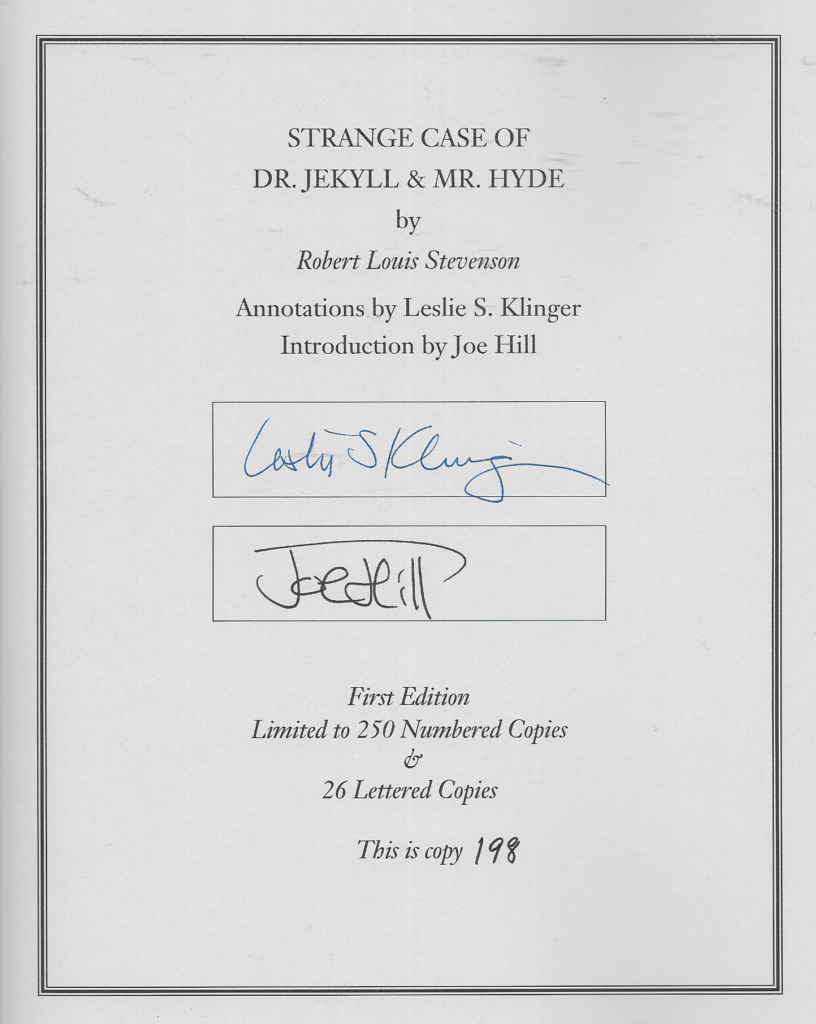
Stevenson, Robert Louis (Joe Hill) . The New Annotated Strange Case of Dr. Jekyll and Mr. Hyde. The Mysterious Press, 2022. First edition hardback, #198 of 250 numbered copies signed by annotator Leslie S. Klinger and introduction author Joe Hill, a Fine copy in quarter-leather and marbled boards and Mylar protector, sans dust jacket, as issued. Profusely illustrated and annotated edition of the classic novel. Bought for $45, marked down from the original price of $150.
Title: Godzilla x Kong: The New Empire
Director: Adam Wingard
Writers: Terry Rossio, Simon Barrett, Jeremy Slater, Adam Wingard (story)
Starring: Rebecca Hall, Brian Tyree Henry, Brian Tyree Henry, Dan Stevens, Kaylee Hottle, Alex Ferns, Fala Chen, Rachel House IMDB entry
Like the previous entry in the series, Godzilla x Kong: The New Empire works because it understands what people going to a Godzilla films do and don’t want to see: monsters fighting, not people bickering.
You know that part of the Pitch Meeting video for Godzilla vs. Kong where the writer goes “Giant monkey punches giant lizard!” and the producer immediately stops worrying about logic?
Yeah, I’m that guy.
The movie starts with Dr. Ilene Andrews (Rebecca Hall, sporting Jamie Lee Curtis’ hairstyle) mystified by signals detected in their hollow earth station that also seem to be giving her adopted deaf monster-whisperer Iwi daughter Jia (Kaylee Hottle) visions. In the Hollow Earth, Kong is suffering from loneliness and a infected tooth, and comes up to the surface to have it replaced (!) by kaiju veterinarian (!!) Trapper (Dan Stevens). Meanwhile, Godzilla rises from his slumbers, slays titan Scylla (sort of a giant crab thing) in Rome, and then levels a nuclear power plant to feed on the radiation and power up for…something.
So Kong goes back to the Hollow Earth, followed by all the human characters in the above paragraph, plus conspiracy theory podcaster Bernie Hayes (Brian Tyree Henry, who, like Hall and Hottle, is reprising his role from Godzilla vs. Kong). Naturally, things go wrong for them and their redshirt gravity ship pilot. Meanwhile, Kong is lured by a mini-Kong to locate a tribe of giant primates ruled over by the cruel Scar King, with the assistance of his own enslaved titan Shimo, a cross between Stegosaurus and a D&D ice dragon, complete with the latter’s freeze breath.
Naturally, Kong goes up against the Scar King, and naturally, it being the first big Kong fight, he loses, because it turns out that Scar King is a better tool user than he is.
All of this, of course, sets up a tag team Kong and Godzilla vs. Scar King and Shimo fight at the climax.
The Monsterverse approach has evolved to “You will completely suspend all your disbelief, and in exchange we promise to overawe you with wonders.” Which solves the long-running problem with Godzilla movies, in that you never really care about the human characters. By minimizing their screen time to the bare minimum to move the plot forward in favor of more kaiju battles, this results in a quicker sprint past various plot improbabilities. (A kaiju dentist! A giant exoskeleton arm for Kong we just had lying around the hollow earth!)
To those who complain that the plot improbabilities in Godzilla x Kong: The New Empire are way too improbable, I would like to remind them that, merely by buying a ticket, viewers have already accepted the existence of a hollow earth and a high-speed subterranean tunnel between Pensacola and Hong Kong that was evidently built in less than a decade by private funds without anyone finding out that was on display in the first Godzilla vs. Kong. Compared to that, a giant Kong exoskeleton lying around in a convenient location is rounding error.
Also, to those that further complain the Monsterverse is too silly compared to the original Toho movies, I say: Remember this?
Or this?
Can you make a Godzilla film where the human characters don’t suck? It’s possible. The original Gojira and Godzilla, Mothra and King Ghidorah: Giant Monsters All-Out Attack I have not seen Godzilla Minus One (the timing just didn’t work out for it’s short run here), which Critical Drinker and others have indicated does a much better job on the human story front.
But instead of human drama, you get more kaiju fights, giant crystal energy pyramids, and a flaming cavern right out of a D&D supplement.
It’s a fair trade.
As a bonus, here’s the Pitch Meeting video for this one.
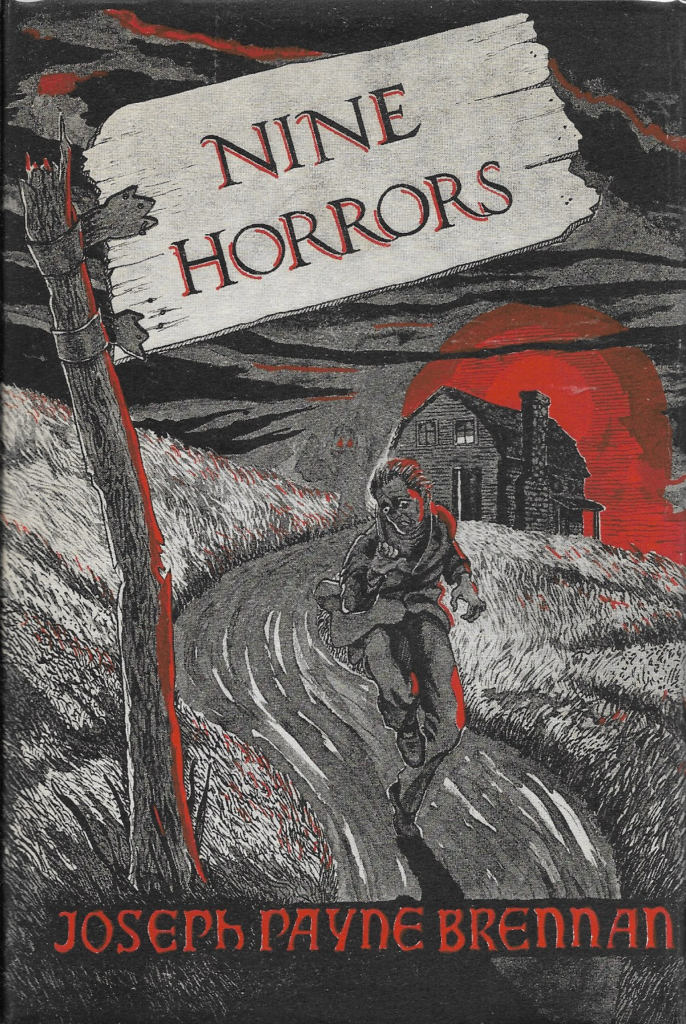
Brennan, Joseph Payne. Nine Horrors and a Dream. Arkham House, 1958. First edition hardback, a Fine copy in a Fine Mylar-protected dust jacket. Short story collection, and a good one. Jones & Newman, Horror 100 Best Books 56. Derleth, Thirty Years of Arkham House 53. Joshi, Sixty Years of Arkham House 53. Jaffrey, Horrors and Unpleasantries 53. Nielsen, Arkham House Books: A Collector’s Guide 56. Bleiler, The Guide to Supernatural Fiction 273. Barron, Horror Literature: A Reader’s Guide 4-54. Replaces a slightly less attractive copy.
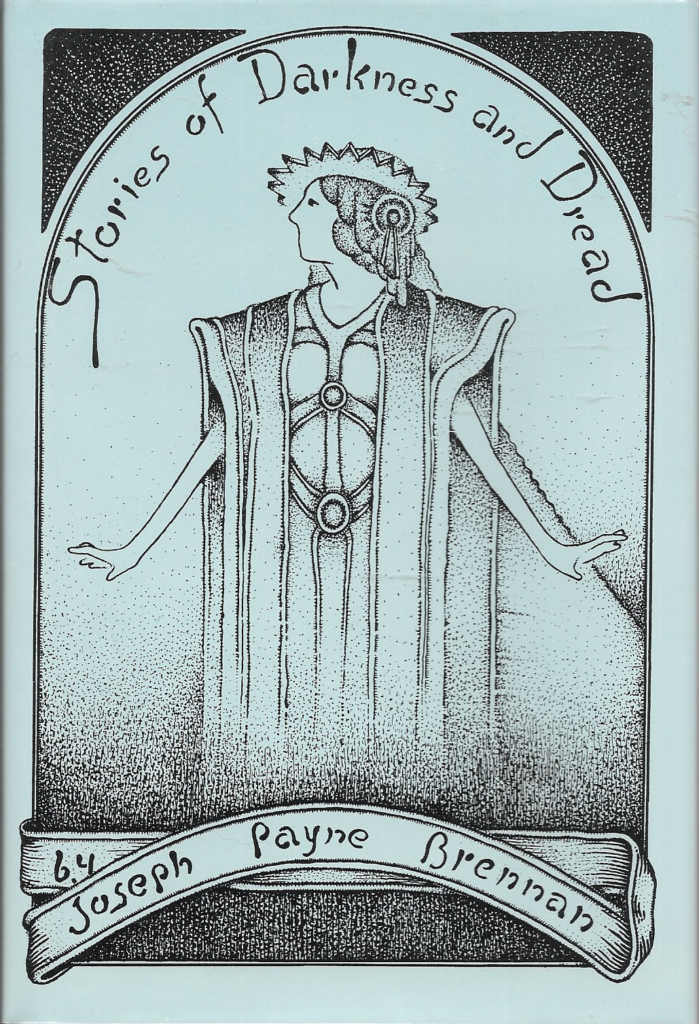
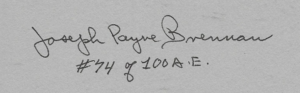
Brennan, Joseph Payne. Stories of Darkness and Dread. Arkham House, 1973. First edition hardback, #74 of 100 copies signed and numbered by the author, a Fine copy in a Fine Mylar-protected dust jacket. Joshi, Sixty Years of Arkham House 123. Jaffrey, Horrors and Unpleasantries 126. Nielsen, Arkham House Books: A Collector’s Guide 129. Strangely, none of the Arkham house references mention this post-publication “limited” edition, one of a handful of Arkhams done this way (Greg Bear’s The Wind from a Burning Woman and Lucius Shepard’s The Ends of the Earth are two others). Supplements an unsigned copy.
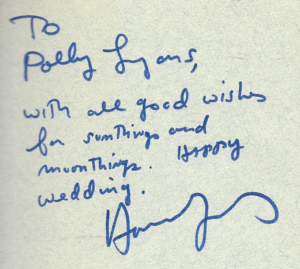
Jacobs, Harvey. The Egg of the Glak and Other Stories. Harper & Row, 1969. First edition hardback, a Near Fine+ copy with slight bumping at head, heel, and top rear point, in a Very Good dust jacket I’ll replacing with the better dust jacket on my existing copy, inscribed by Jacobs: “To Polly Lyons,/with all good wishes/for sunthings and/moonthings. Happy/wedding./Harvey Jacobs.” The signature seems to match other online examples of Jacobs signature. Replaces an existing copy. Bought for $13.50.
Martin, George R. R., editor. Texas Hold-Em: A Wild Cards Novel. Tor, 2018. First edition hardback, a Fine copy in a Fine dust jacket. Bought for $8.99. I have the first twelve Wild Card Bantam PBOs (the first three signed by a significant number of contributors), the three Baen PBOs, the first six SFBC hardback reprints of the Bantam PBOs, the two iBooks hardback firsts, and a goodly number (but not all) of the Tor hardback firsts. So I need the Tor firsts of Busted Flush, Suicide Kings, High Stakes, Low Chicago, Knave Over Queens, Three Kings, Joker Moon, Full House, Pairing Up and Sleeper Straddle.
Another Half Price Books haul, with three signed copies of literary writer who dabbles in genre work. I spot-check the literary firsts, and my eyes were drawn to the Mylar dust jacket protectors on these, which made me check to see if they were signed. They were.
Oates, Joyce Carol. American Appetites. Dutton, 1989. First edition hardback, a Fine copy in a Near Fine, Mylar-protected dust jacket with a 1/16″ chip at front heel join and a trace of wear at points, signed by Oates. Bought for $7.19.
Oates, Joyce Carol. Man Crazy. Virago Press (UK), 1998. First UK hardback edition (the Dutton precedes), a Fine copy in a Fine, Mylar-protected dust jacket, signed and dated (“3 Sept. 1998”) by Oates. Though the Dutton precedes, signed copies of this UK edition comps out slightly higher, and one signed copy online has the same “3 Sept. 1998” signed date. Maybe she did a UK signing that day. Bought for $13.50.
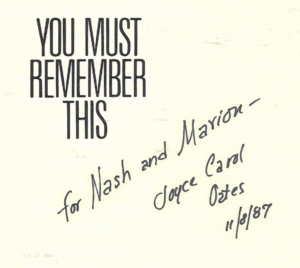
Oates, Joyce Carol. You Must Remember This. Dutton, 1987. First edition hardback, a Fine- copy with dust print to outer page block, in a Fine, Mylar-protected dust jacket, inscribed by Oates: “for Nash and Marrion/Joyce Carol/Oates/11/8/87.” Bought for $6.74.
Honestly, I was a bit ambivalent about picking these up. I’ve liked some of Oates short stories when they appeared in various Ellen Datlow anthologies, but I wasn’t wild about Zombie, the only Oates novel I’ve read, as she failed to convince me she had gotten into the mindspace of a Jeffrey Dahmer-esque serial killer. Also, while I got these for a bit less than they list for online, she’s something of a pill on the market. There’s a ton of signed Oates firsts online, at or below cover price.
But before I had no signed Oates firsts, and now I have three.
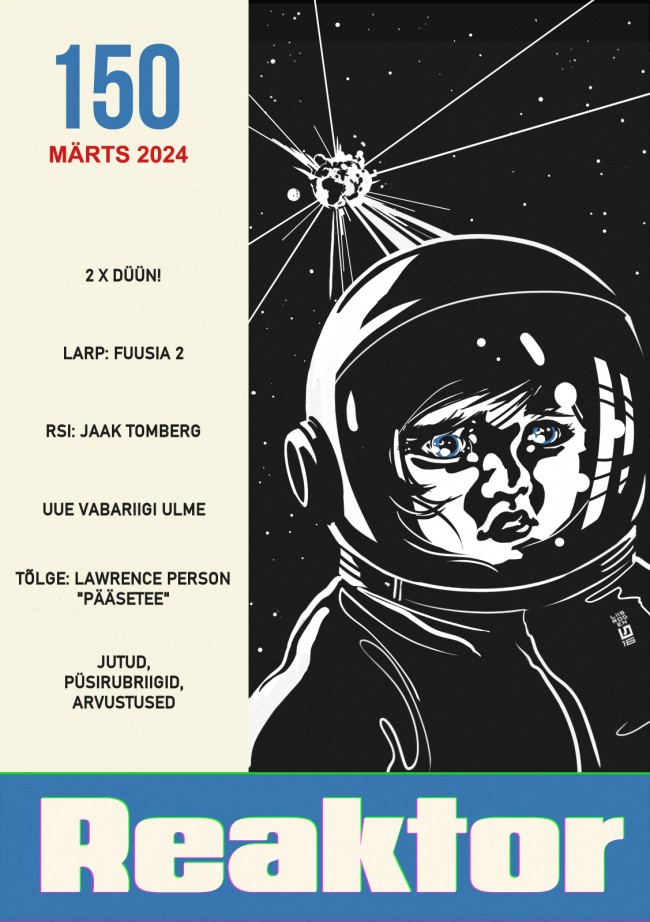
My story “Salvation” had been translated and published in Estonia as “Pääsetee” in Reaktor 150, March 2024.
Since “Crucifixion Variations” was translated and published Lithuanian, now all I need is to have a story translated into Latvian for the Baltic States Trifecta.
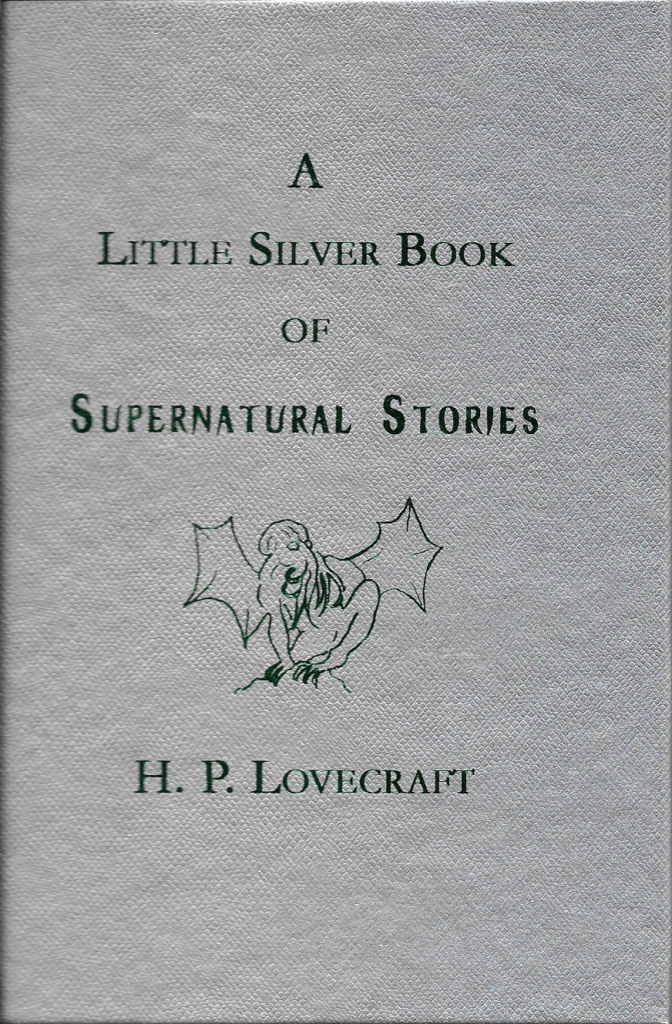
Lovecraft, H. P. (S.T. Joshi, editor) A Little Silver Book of Supernatural Stories. Borderlands Press, 2024. First edition hardback, #463 of 500 copies signed by Joshi, a Fine copy, sans dust jacket, as issued. Sampler of Lovecraft stories, including “Dagon,” “Nyarlathotep,” and “The Call of Cthulhu.”