Here are a few performers who are interested in appearing on MST3K next season:
JACK BLACK, the brilliant comic actor and musician, star of everything from the Kung Fu Panda films to the wonderful School of Rock… though to some people, of course, he’s better known as one-half of Tenacious D. So, I don’t wanna tell you anything about what I’m planning for his character… but I think it would be a lot of fun to have him perform a song.
JOEL MCHALE, who I first knew as the hilariously dry host of The Soup, and who has been expanding his acting career into television (as the star of Community) and film (the Ted movies). I met Joel at a friend’s wedding last year, and we became fast friends. He’s a really nice guy, so even though he’s in demand for big-time revivals like The X-Files, he says he’s up for joining us too!
BILL HADER, the incredible changeling/actor/impressionist who has appeared in everything from SNL to Cloudy with a Chance of Meatballs to Trainwreck. I’ve always been amazed by Bill’s talents, and was finally introduced to him backstage at SNL by a mutual friend.
NEIL PATRICK HARRIS is a true renaissance man whose career spans film, TV, the broadway stage and the internet, where he appeared opposite our own Felicia Day in Dr. Horrible’s Sing-Along Blog. Funny enough, though, I actually met Neil through mutual friends at the Los Angeles Magic History Conference, where we geeked out on magic together. Also, I’m honored to point out that Neil has always been a MSTie. In fact, he was included in first MST documentary – This is MST3K – all the way back in his Doogie Howser days!
JERRY SEINFELD, my long time friend, and of course, one of our most brilliant stand-up comedians. Jerry was also the co-creator of Seinfeld, and the creator and host of my favorite concept for a talk show, Comedians in Cars Getting Coffee. You know, I’ve known this guy for over thirty years. I actually remember him from when he only had one car.
Plus Mark Hamill. And (from yesterday’s email) the guys behind the designs for Pee-wee’s Playhouse and Adventure Time.
A lot of those guys have extremely popular and active fanbases, so this could very well put them over the $5.5 million/12 episode mark.
Or so say their latest email. The Kickstarter total shows $4,163,213 (as of right this instant). Maybe the Kickstarter site doesn’t include the “add-ons.”
Anyway, you only have until Friday night to back this Kickstarter and have them produce a full 12 episodes, so go ahead and cough it up if you haven’t already…
I’m happy to see that the Bring Back Mystery Science Theater 3000 Kickstarter has hit $3.3 million, meaning they’ll produce at least six episodes.
At $4.4 million they’ll make nine episodes, but at this point $5.5 million (twelve episodes) is looking like it might be a stretch.
Also Patton Oswalt is joining the cast as TV’s Son of TV’s Frank, a move I’m pretty “meh” on (though I can see the physical resemblance between Frank Conniff and Oswalt).
Sunday I saw Kung Fury, the crowd-funded parody of every cheesy 80s cop show, science fiction movie, and fighting video game, rolled into one absurdist package.
It has everything you could ever ask for in a short film featuring a kung fu cop traveling back in time to stop Hitler, including dinosaurs, Tron-era grid computer graphics, obviously fake video compositing, and a soundtrack that sounds like it was composed by Giorgio Moroder after a 72-hour Jolt Cola binge.
The Bring Back Mystery Science Theater 3000 Kickstarter has hit their $2 million goal, which means it’s funded and they’ll do at least three new episodes.
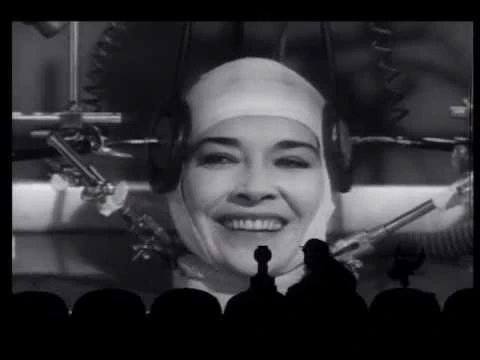
Everybody Smile!
And they still have 25 days to go! Now let’s hope they make it all they way to their 12 episode $5.5 million stretch goal…
Here’s Lantern, a very cool historical research tool that searches “1.3 million pages of digitized books and magazines from the histories of film, broadcasting, and recorded sound.”
How extensive is it? I did a search for Tod Browning and turned up a whopping 2346 pages that reference him.
If you’re doing any research on the early history of film, it’s a real treasure trove.
It’s one thing for there to be a legal battle over the rights for a good movie, but it’s quite another when the battle is over Manos: The Hands of Fate, one of the worst films of all time. (Note: That article is up on Playboy.com, so it might be blocked at your place of work.)
In 2011, a collector of film prints uncovered the original negative of Manos and embarked on an inexplicable project to restore the film with all the white-glove attention archivists give to Hollywood classics. His efforts would incur the wrath of a mysterious man with a fake New Zealand accent named Rupert, as well as Joe Warren, Hal Warren’s embittered son, who intends to preserve the Manos legacy at all costs.
Hal Warren’s son comes off as more than a bit of a jerk. “I’m the director’s son! I’m entitled to a cut even if the work is out of copyright!”
The Lego Movie: A whole lot better than you had any right to expect it to be.
Coherence: Eh. Ends better than it begins, but shallow California Yuppies sort of spoil the quantum mechanical creepiness.
Also, congratulations to whoever cut the trailer for The Frame: You’ve managed to craft a trailer so stylistically annoying that I never want to see the movie just to spite you…
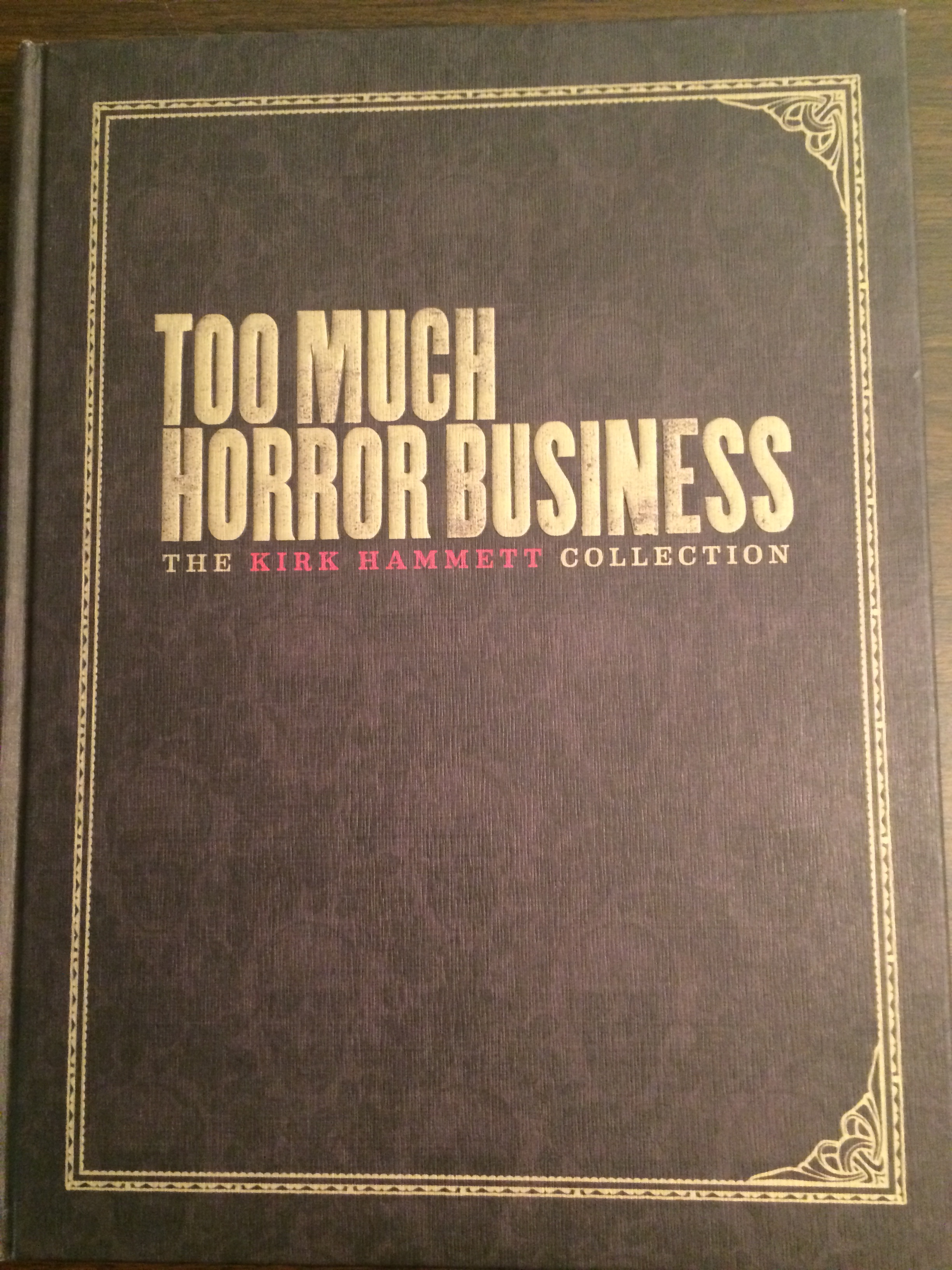
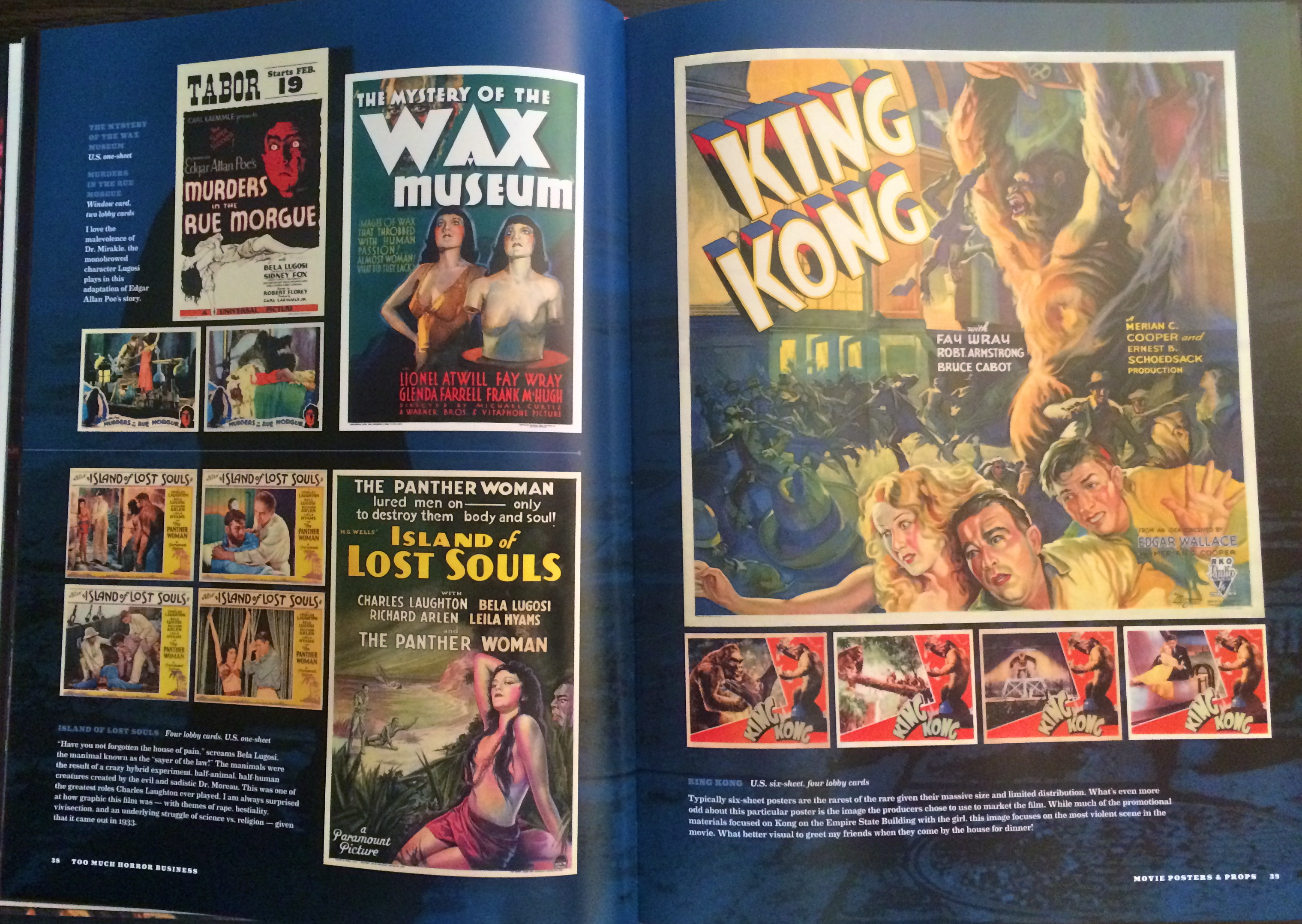
Metallica guitarist Kirk Hammett is one of the world’s premiere collectors of horror movie posters and memorabilia (toys, games, masks, etc.). After reading about the Hammett collection in Heritage Auction’s Intelligent Collector magazine, I’d been interested in the book documenting it, so I picked one up from the Cold Tonnage 40% off sale.
Hammett, Kirk. Too Much Horror Business. Abrams, 2012. First edition oversized hardback, a Fine- copy with wear at points, sans dust jacket, as issued. (Note: The wear on the front cover lettering is faux-wear, as you can tell from the same faux-wear on the title and half-title page.) Hammett has a truly amazing poster collection, possibly on par with that of Robert V. Borst (documented in Graven Images), whose range of collection included more science fiction and fantasy than Hammett. Bought for £12 marked down from £20.
Here’s a video on the book and Hammett’s collection: