ABE Books Doesn’t Know Dick

March 14th, 2010

I stopped dealing books on ABE Books eight years ago because it was obvious they wanted to nickle-and-dime dealers to death, as well as force us to sign up for third party re-sale programs that were previously voluntary. Plus the people in charge didn’t strike me as the smartest knives in the toolbox.

Speaking of ABE stupidity, over at SF Signal I noticed this link to an ABE article on the most valuable first editions of Philip K. Dick. Below some boilerplate on Philip K. Dick’s life (generally accurate, but nothing anyone couldn’t have written by skimming Wikipedia or Clute & Nichols) there’s a list of “Top 15 Most Collectible Philip K. Dick titles sold on AbeBooks”. The problem is, anyone with a knowledge of Philip K. Dick first editions who looks at the pictures accompanying those fifteen titles can tell the people who put them up didn’t have a freaking clue, as many don’t match the edition they’re illustrating:

  1. The picture accompanying Do Androids Dream of Electric Sheep? is not the Doubleday first edition of 1968 described, but a later UK edition. An example of the real dust jacket for the first edition (albeit an Ex-Library copy) from my own collection is shown below.
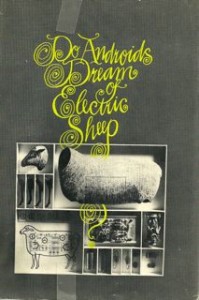
  2. The picture accompanying the listing for a UK Gollancz edition signed by Dick could not have been the edition Dick signed, since it is part of the Gollancz Masterworks editions published about two decades after Dick’s death. FWIW, my copy of the true Putnum first edition is shown below.

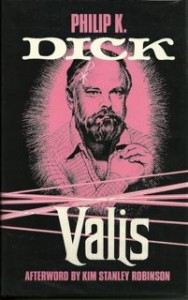
  3. The edition of Valis shown in the image is not that of the Kerosina Press lettered hardback edition, but the more recent trade paperback reprint. (I have a copy of the slipcased numbered edition signed by Kim Stanley Robinson, but not one of the lettered copies with the Dick signature tipped in.) A scan of the cover of the Kerosina edition is shown below.
  4. The copy of Dr. Bloodmoney shown is not the Gregg Press hardback described, but the true paperback original (PBO) edition mentioned in passing. (All a scan would show is the usual Gregg Press plain green cloth.)
  5. The copy of The Collected Stories of Philip K. Dick shown is not one of the 1/100 deluxe editions with Dick’s signature tipped in, but rather the regular unsigned edition (which is also the edition I have).
  6. The picture of Solar Lottery shown is not the Gregg Press (first US hardback) edition described, but the PBO. (Again, all a scan would show is the usual Gregg Press plain green cloth.)
  7. The copy of Confessions of a Crap Artist shown is not the Entwhistle hardback described, but one of the trade paperback editions (I own the hardback first, a scan of which is shown below, but I don’t own the paperback, so I can’t tell from sight whether this is one of the essentially simultaneous first edition in wrappers, or the second printing.)

So, out of fifteen books, seven have the wrong picture. That’s pretty piss-poor for an article on collectible books. Then again, ABE frequently does things in a piss-poor manner. Anyone with any familiarity with Dick first editions would have spotted the discrepancies between the text and pictures right away.

And when I said “generally accurate,” there is a significant error in describing why Dick’s works are so valuable:

Because of his relative obscurity throughout much of his life, most of Dick’s works received modest initial print runs. As a result, signed copies of those titles remain very scarce, making Dick one of the most collectible names in modern science fiction.

No, Dick’s early PBOs had runs in the hundreds of thousands (as did most SF paperbacks of that era), and the print run for Dick’s hardback books from mainstream SF publishers, while modest by the standards of bestsellers, were not any smaller than the runs companies like Doubleday did for their other SF writers. Signed Dick books are particularly valuable because he didn’t go to a lot of conventions or do terribly many signings. Also, many of his works published as paperback originals had later small hardback print runs from either small press or UK publishing houses, but they were not initial print runs, they were later editions for the collector or library markets, and they were done not because Dick was obscure, but because he was quite popular among SF readers.

For more reliable information of Dick first editions, I would direct you to L.W. Currey’s Science Fiction and Fantasy Authors: A Bibliography of First Printings of Their Fiction and Daniel J. Levack’s PKD: A Philip K. Dick Bibliography.

For the record, of the 15 Dick titles they list, I have the first hardback editions of 12 of them (though not in the signed states that made many of the copies listed in the ABE piece so pricey); I lack Flow My Tears, The Policeman Said, the Gregg Press Dr. Bloodmoney and the Rich & Cowen World of Chance, which was the first hardback edition of Solar Lottery. I do, however, have a copy of the Cape first hardback edition of The Penultimate Truth, which is rarer than about half the books on their list…

Updated 3/17/10: At least someone at ABE seems to have been paying attention, as many of the wrong images have now been replaced, and the text I singled out as erroneous has been rewritten.

Dan Simmons Signing Followup (With Pics)

March 13th, 2010

I’ve been meaning to post about the Dan Simmons signing last Tuesday, but it’s been a busy week.

I hadn’t seen Simmons since he came through to sign at Adventures in Crime and Space for (IIRC) The Crook Factory. At the time I did an interview with him for Nova Express, except that I cleverly left the mini-cassette recorder in voice-activated mode, which meant what did get recorded was fragmentary and essentially useless, and Simmons couldn’t fill in the gaps because he was hospitalized for a while. One of the Great Lost Nova Express Interviews.

The BookPeople signing was reasonably well-attended, with about 35-40 people there (less than for Neal Stephenson or Michael Chabon, but more than for Jonathan Carroll). Fred Duarte and Derek Johnson were the only attendees I recognized.

Simmons read from his new book Black Hills, which features an Indian absorbing the ghost of the newly-slain Custer at the Little Bighorn, and later working on Mt. Rushmore. He said one of the reasons he wrote it because he wanted to explore the Genius Loci of a singe place.

Various bits from the QA session after the reading, quoted from memory and therefore no doubt horribly inaccurate:

  • On jumping between viewpoint characters: “I don’t like to run down the work of other writers, but I read a book whose title rhymes with The Bablinchi Toad, and the viewpoint jumps around horribly to every single character, even minor ones! A messenger enters the scene, and the writer even jumps into his head!”
  • He spent two weeks researching which way the World’s Fair carousel wheel rotated to write a scene, only to have one of his blog readers uncover engineering design schematics that showed it rotated both ways.
  • His next book will be a dystopian novel called Flashback, set in a future where everyone’s prediction of America going to hell (“left-wing and right-wing”) come true, featuring a drug that let’s people relive any portion of their lives for a rate of $1 for 1 minute. He said it will be SF, but not marketed as SF, so as to reach the widest possible audience.

      I also have a few signed Simmons first editions over on the Lame Excuse Books page.

Random Surrealist Picture of the Day

March 11th, 2010

Stolen from Fark. As usual.

Books Read: John Scalzi’s The God Engines

March 10th, 2010

John Scalzi
The God Engines
Subterranean Press, 2009 (stated; actually not received until 2010)

This novella starts off with a great opening line: “It was time to whip the God.” From there it posits a universe in which humanity’s God has conquered other gods and bound them to servitude, including providing a means of FTL travel. It’s a solid story that moves swiftly, but by the end I thought the setup was a little too simple to be entirely convincing.

Though this is out of print from Subterranean Press (I think the trade is up to third printings now), I still have first printings of both the trade and signed/limited editions for sale via Lame Excuse Books.

Howard Waldrop and I’s Review of Alice in Wonderland

March 9th, 2010

Now up over at Locus Online.

In Which I Fail to Review Gene Wolfe’s The Sorcerer’s House

March 8th, 2010

Gene Wolfe
The Sorcerer’s House
Tor, 2010. $24.99

So, once again I’m faced with the problem of how to review a Gene Wolfe book. This is much akin to explaining to radio listeners what a great dancer Fred Astaire is: For those who have seen him, such an explanation is unnecessary; for those who haven’t, such an explanation is impossible. (“Aw man, you should have seen that move! It was totally graceful! Trust me…”) I’ve managed (somewhat) the feat before, having reviewed The Knight in The New York Review of Science Fiction.

Such it is with The Sorcerer’s House. I started a standard review, with a standard plot description (educated man just out of prison mysteriously given deed to house he was squatting in), discussed Wolfe’s literary experimentation (the book is told in epistolary format), and generally tried to jump through the usual hoops of a book review. Then after about three paragraphs, I read what I had written, and went “Damn, this is awful! If I had never heard of Gene Wolfe, this review certainly wouldn’t inspire me to pick it up!”

So: You should read The Sorcerer’s House, because it’s very good, it’s tricky, and it’s better than An Evil Guest. It’s got a fox woman, antique dueling pistols, an impossibly old samurai sword, a trapped vampire, werewolves, and a house that just seems to get bigger as it goes along, and, strangely, it all works.

But most of all you should read it because it’s Gene Wolfe.

Oh, it also has a scene where the protagonist tells his newly incarcerated twin brother that he shouldn’t go on about how excellent to food was, since he knows prison food is bad. And then he spends the next page or so describing what he ate.

Filed Under “Nightmare Fuel” On TV Tropes

March 5th, 2010

I can’t possibly imagine why…

And Alice in Wonderland opens today, and Easter is just around the corner, so it is topical…

Avoiding the Obvious

March 4th, 2010

Every now and then I come across an article that, for whatever reason, defies my usual snarky, dry-humored approach. Such is this case with this five-year old article talking about how Huey Lewis and The News have a very significant following among the clinically retarded. In this case it defies that approach because: A.) Too easy, B.) I have no strong feelings (positive or negative) about Huey Lewis, who has always struck me as very competent craftsmen of a type of music I have no particular affinity or antipathy toward, C.) It’s actually a pretty interesting article, and D.) Making fun of the retarded just makes you look like a dick.

Peter Gabriel’s Scratch My Back May Suck…

March 3rd, 2010

…but Paul Simon’s cover of “Biko” is pretty good:

And Stephen Merritt (who Neil Gaiman is big on) at least makes a credible effort on “Not One of Us”:

Dan Simmons Signing at BookPeople, Tuesday, March 2, 7 PM

March 2nd, 2010

Yes, that’s today. Signing his new book Black Hills. Only found out recently myself, and have been too busy to put up a link…