Time for another roundup of what additions I’ve made to my library of science fiction first editions. This is what I’ve picked up in the last six months. All are Fine/Fine hardback first editions unless otherwise noted.
Baker, Kage. The Best of Kage Baker. Subterranean Press, 2012.
Baxter, Stephen. Last and First Contacts. Newcon Press, 2012. One of 150 signed, numbered copies.
Beagle, Peter S. The Rhinoceros Who Quoted Nietzsche and other odd acquaintances. Tachyon Publications, 1997. First edition hardback, one of 100 signed, numbered copies (and only 126 hardbacks total).
Bear, Elizabeth. ad eternum. Subterranean Press, 2012. First edition hardback, one of 250 signed, numbered copies with the chapbook Underground.
Bear, Greg. Hull Zero Three. Orbit, 2010.
Bishop, Michael. The Door Gunner and Other Perilous Flights of Fancy. Subterranean Press, 2012. One of 250 signed, numbered copies.
Black, Pansy E. The Valley of the Great Ray. Stellar Publishing Corporation, 1930. First edition chapbook original, VG, with punch holes and usual page browning. More information on the Stellar Science Fiction series books here.
Bloch, Robert. Yours Truly, Jack the Ripper. Subterranean Press, 2012. First edition thus, collecting all Bloch’s Jack the Ripper-related material.
Bourne, Frank/Long, Amelia Reynolds. The Thought Stealer (Bourne) and The Mechanical Man (Long). Stellar Publishing Corporation, 1930. First edition chapbook original, VG, with punch holes and usual page browning.
Brackett, Leigh. Shannach: The Last Farewell to Mars. Haffner Press, 2012.
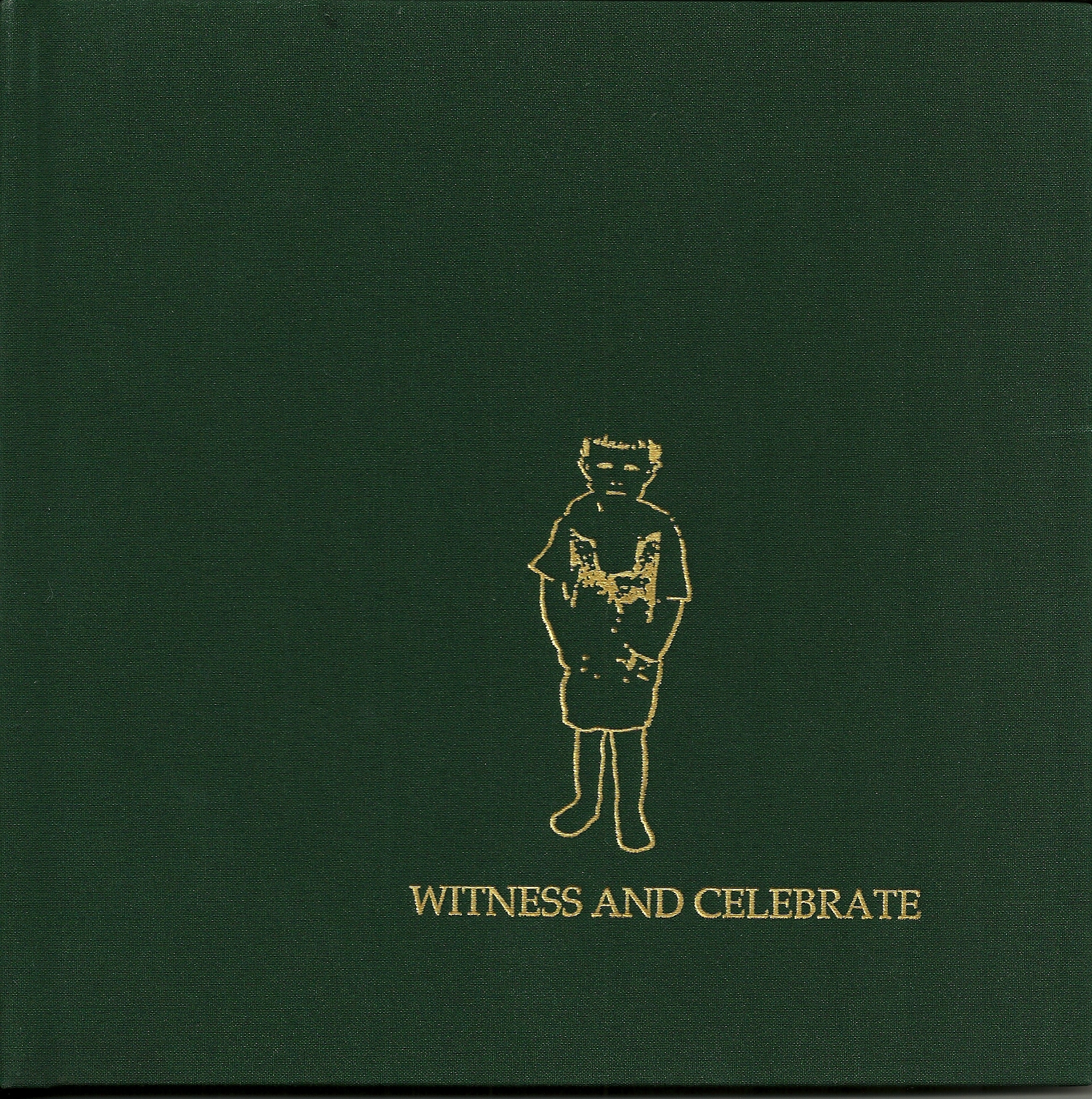
Bradbury, Ray. Witness and Celebration. Lord John Press, 2000. First edition hardback, Fine, sans dust jacket, as issued. Signed by Bradbury.
Bradley, Jack. The Torch of Ra. Stellar Publishing Corporation, no date (1930). First edition chapbook original, VG, with punch holes and usual page browning.
Brown, Chris, and Eduardo Jimenez Mayo, editors. Three Messages and a Warning: Contemporary Mexican Short Stories of the Fantastic. Small Beer Press, 2012. First edition trade paperback original, a Fine copy, inscribed to me by Brown and contributors Bernardo Fernandez and Pepe Rojo. More information here.
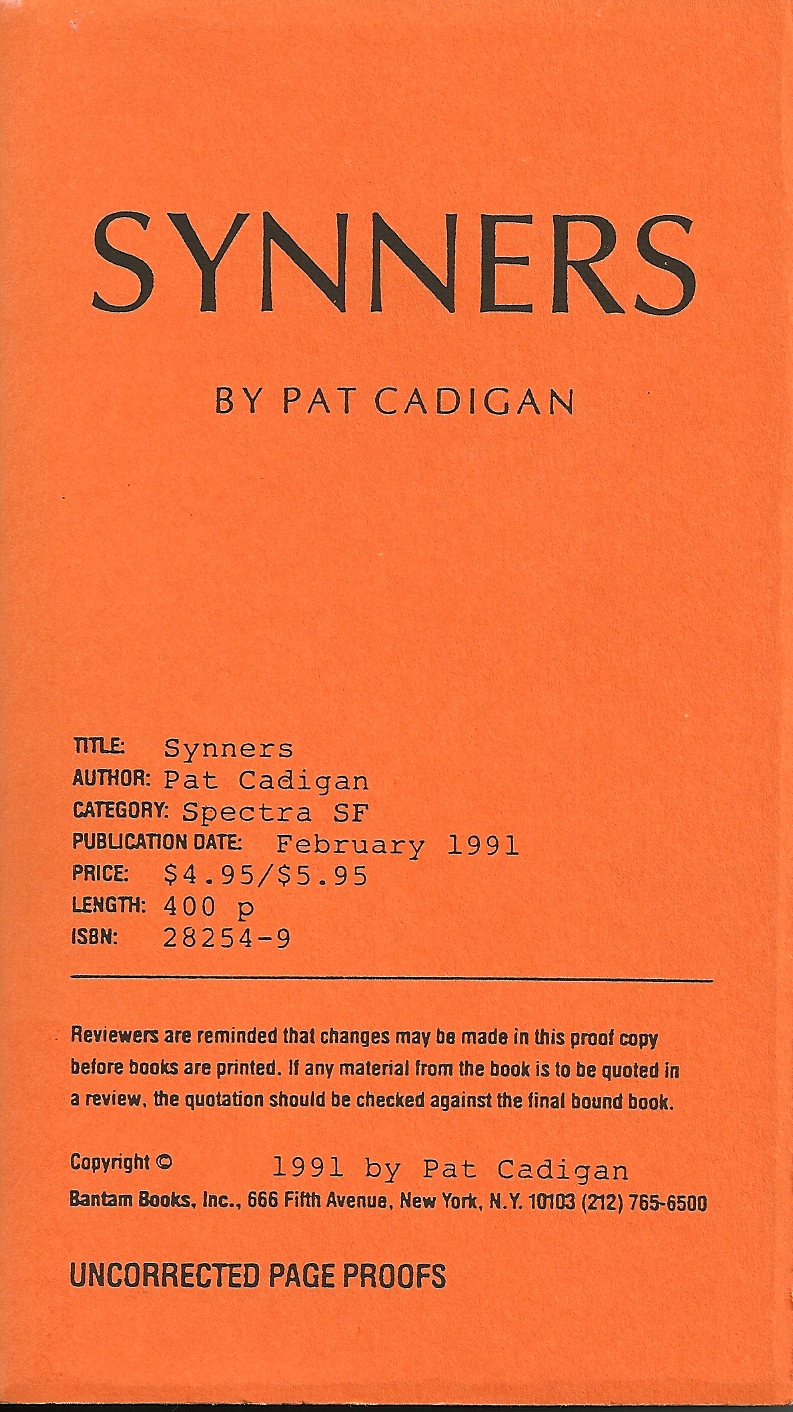
Cadigan, Pat. Synners. Bantam Books, 1991. First edition uncorrected proof, mass market paperback trim size, of a paperback first edition, a Fine copy, signed by Cadigan. Bought for $5 from Half Price Books.
Cline, Ernest. Ready Player One. Crown Publishers, 2011.
Colladay, Morrison. When the Moon Fell. Stellar Publishing Corporation, 1929. First edition chapbook original, VG, with punch holes and usual page browning.
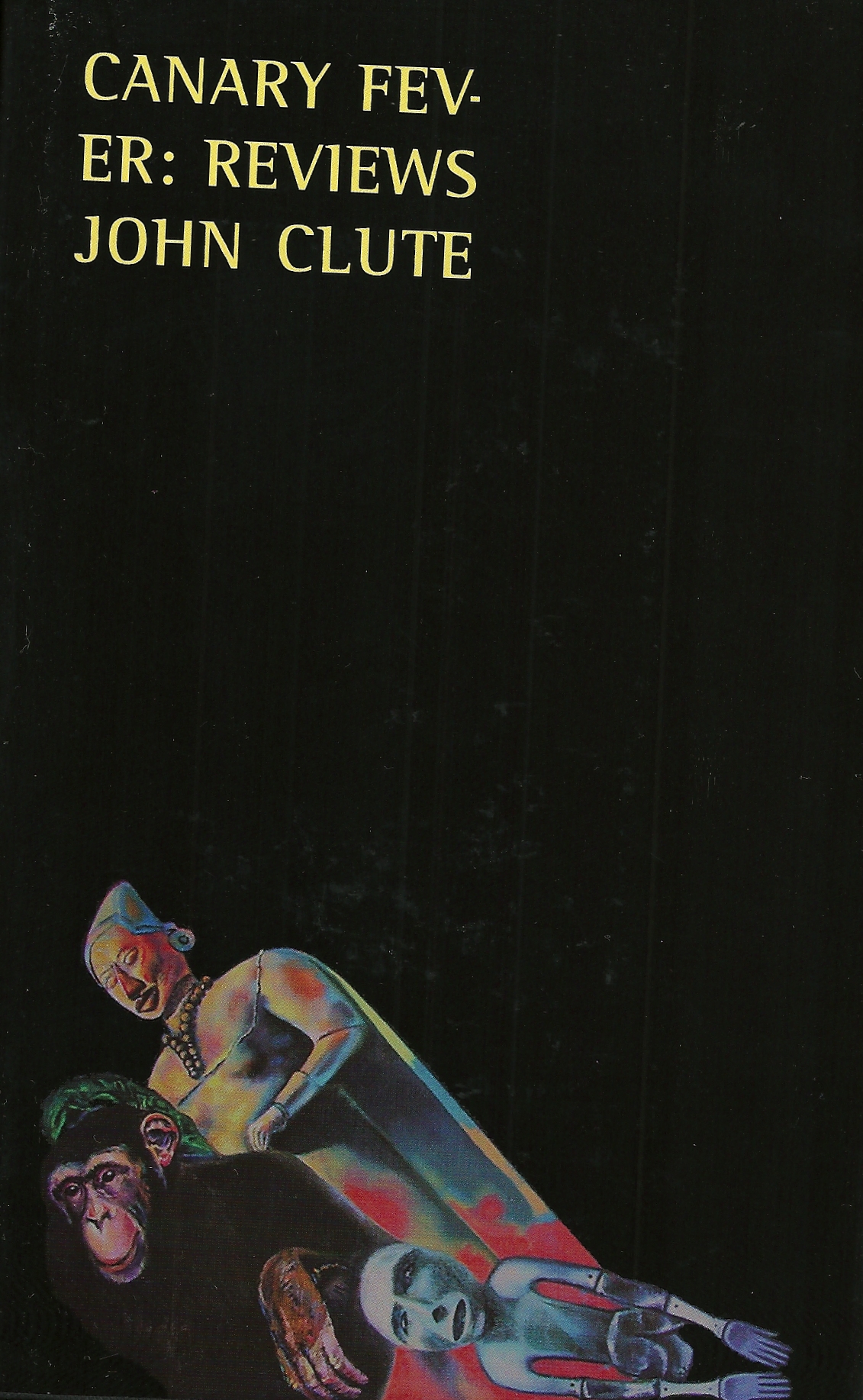
Clute, John. Canary Fever. Beccon Publications, 2009. First edition hardback, one of only 40 (!) hardback copies signed by Clute, a Fine copy in a Fine dust jacket. Non-fiction.
Dick, Phillip K. The Complete Stories of Philip K. Dick Volume 2: Adjustment Team. Subterranean Press, 2011.
Dick, Philip K. Counter Clock World. White Lion, 1977. First hardback edition, an Ex-Library copy, otherwise VG/VG. Complete details here.
Duncan. Andy. The Pottawatomie Giant and Other Stories. PS Publishing, 2012. Fine in decorated boards, sans dust jacket, as issued.
Eberle, Merab/Mitchell, Milton. The Thought Translator (Eberle) and The Creation (Mitchell). Stellar Publishing Corporation, 1930. First edition chapbook original, VG, with punch holes and usual page browning.
Farmer, Philip Jose (and Christopher Paul Carey). Gods of Opar: Tales of Lost Khokarsa. Subterranean Press, 2012. One of 250 signed, numbered copies.
Farrar, Clyde/Sharp, D.D.The Life Vapor (Farrar) and Thirty Miles Down. Stellar Publishing Corporation, no date (1930). First edition chapbook original, VG-, with punch holes and usual page browning, slight staining to top back corner near spine, and initials to very bottom of cover.
Gaiman, Neil. Rhyme Maidens. Biting Dog Press, 2012. Folio edition of first edition broadsheet. Details here.
Gaiman, Neil. Rhyme Maidens. Biting Dog Press, 2012. First edition broadsheet. Trade edition (though still signed by Gaiman).
Higginson, H. W. The Elixir. Stellar Publishing Corporation, 1930. First edition chapbook original, VG, with punch holes and usual page browning.
(Howard, Robert E.) de Camp, L. Sprague and George Scithers, editors. The Conan Swordbook. Mirage Press, 1969. First edition hardback, a Fine copy in a Fine -dust jacket, with a few pinpricks of wear.
Hughes, Matthew. The Yellow Cabochon. PS Publishing, 2012. One of only 100 signed copies.
Hughes, Matthew. The Yellow Cabochon. PS Publishing, 2012. Trade edition.
Kennedy, Leigh. Wind Angels. PS Publishing, 2011. First edition hardback in decorated boards, Fine, sans dj, as issued.
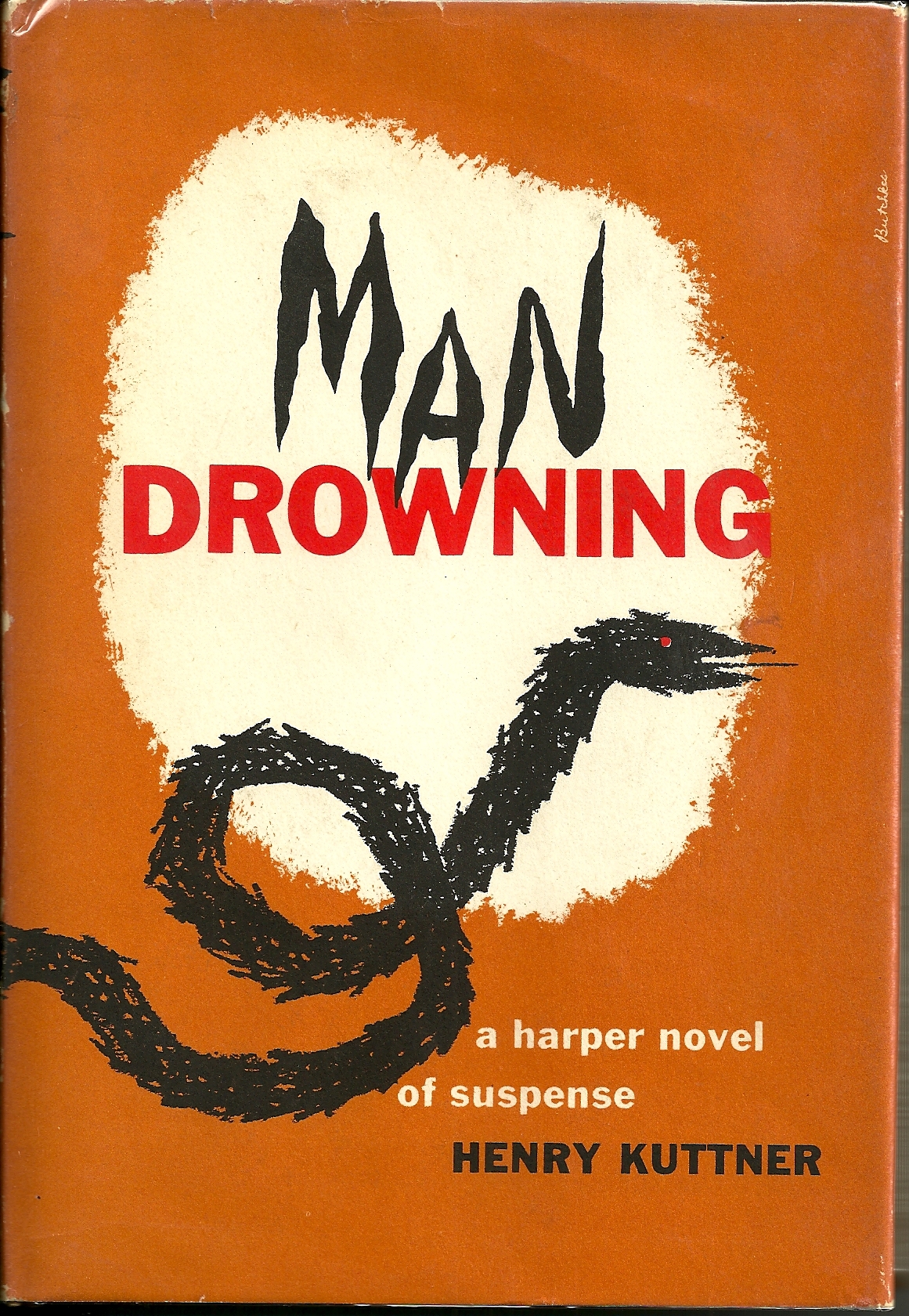
Kuttner, Henry. Man Drowning. Harper & Brothers, 1952. Near Fine copy with slight spine creasing at top and bottom in a Near Fine+ dust jacket with slight edgewear at head and heel, one phantom crease on top front pane, and short, thin indention line on rear cover.
Kuttner, Henry. Thunder in the Void. Haffner Press, 2012.
Lansdale, Joe R. Act of Love. Subterranean Press, 2012. One of 200 signed, numbered slipcased copies. First edition hardback thus, with a new novelette, “A Bone Dead Sadness,” and interview with Lansdale not included in any previous edition.
Lansdale, Joe R. Act of Love. Subterranean Press, 2012. Trade edition.
Lansdale, Joe R. and John l. Lansdale. Shadows West. Subterranean Press, 2012. One of 500 signed, numbered copies.
Lee, Tanith. Electric Forest. DAW, 1979. Paperback original, a Fine- copy with edgewear.
Lindholm, Megan, and Robin Hobb. The Inheritance & Other Stories. Subterranean Press, 2012. One of 1,000 numbered copies signed by “both” authors (actually, Robin Hobb is just Megan Lindholm’s pseudonym).
Lorraine, Lilith. The Brain of the Planet. Stellar Publishing Corporation, 1929. First edition chapbook original, VG-, with punch holes and usual page browning, and a few stray black marks to cover.
Lovercraft, H. P. (edited by S. T. Joshi and Marc A. Michaud). Uncollected Prose and Poetry. Necronomicon Press, 1978. First edition side-stapled chapbook, a Near Fine- copy with uneven darkening along spine and top far edge.
Michelmore, Reg. An Adventure in Venus. Stellar Publishing Corporation, 1929. First edition chapbook original, VG, with punch holes and usual page browning.
Moon, Elizabeth. Phases. Baen, 1997. Paperback original, a Fine- copy with just a touch of wear.
Powers, Tim. The Bible Repairman and Other Stories. Subterranean Press, 2012. One of 500 signed, numbered copies.
Reed, Robert. Eater-of-Bone and other novellas. PS Publishing, 2002. First edition hardback, Fine in decorated boards, sans dust jacket, as issued.
Reynolds, Alastair. Blue Remembered Earth. Gollancz, 2012.
Sarath, Patrice. Gordath Wood. Ace, 2008. Paperback original, a Fine- copy with a tiny bit of wear to points.
Scalzi, John. 24 Frames Into the Future. NESFA Press, 2012. One of 150 signed, numbered, slipcased copies. Non-fiction.
Scalzi, John. 24 Frames Into the Future. NESFA Press, 2012. Trade edition. Non-fiction.
Schroeder, Karl. Lady of Mazes. Tor, 2005.
Shepard, Lucius. The Dragon Griaule. Subterranean Press, 2012.
Silverberg, Robert. The Collected Stories of Robert Silverberg Volume Six: Multiples 1983-1987. Subterranean Press, 2012.
Stone, Leslie F. When the Sun Went Out. Stellar Publishing Corporation, 1929. First edition chapbook original, VG, with punch holes and usual page browning.
Straub, Peter. The Ballad of Ballard and Sandrine. Subterranean Press, 2012.
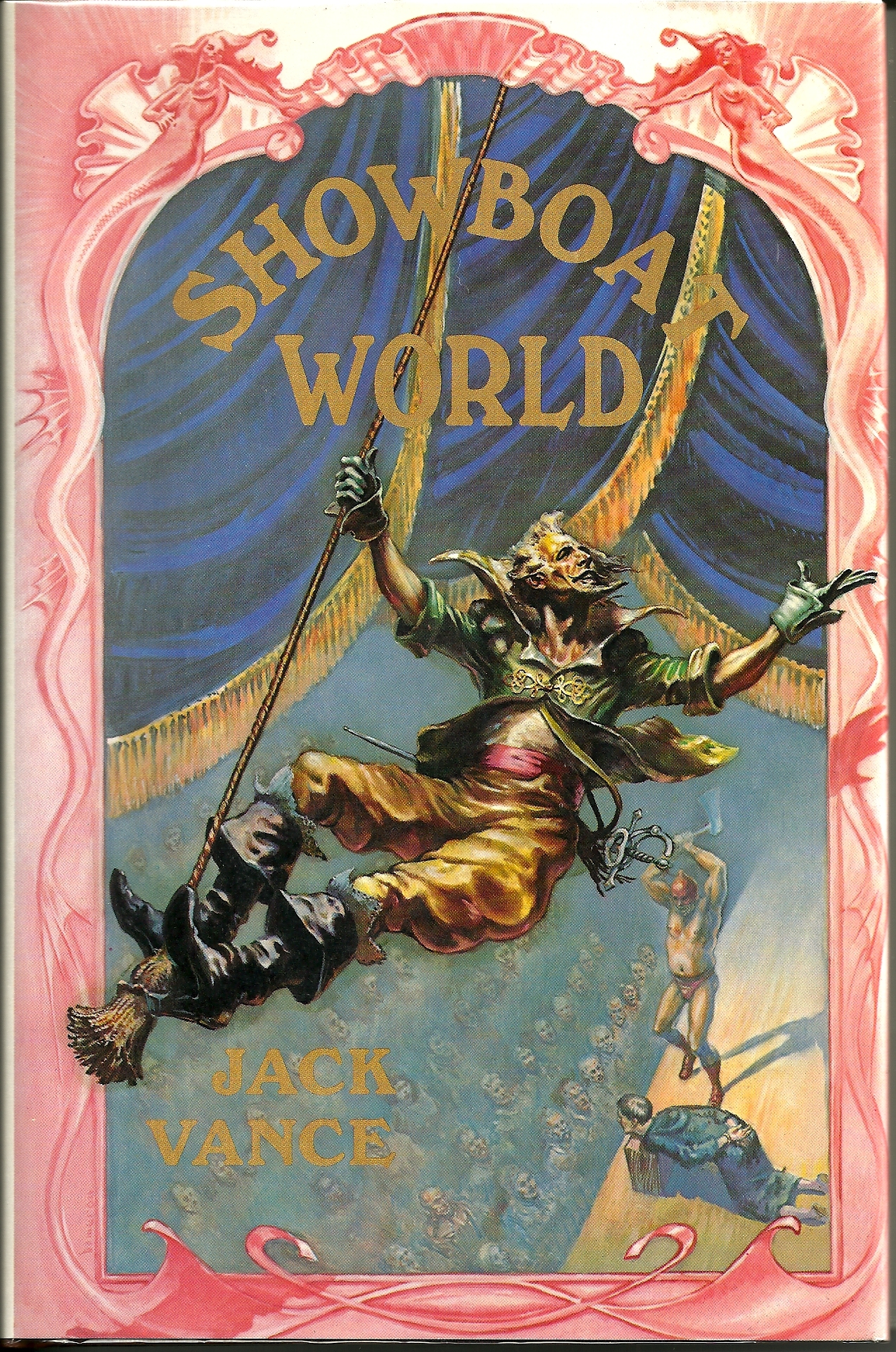
Vance, Jack. The Magnificent Showboats of the Lower Vissel River, Lune XXIII, Big Planet (AKA Showboat World). Underwood Miller, 1983. First hardback edition, one of 200 signed, numbered copies, a Fine copy in a Fine dust jacket. The longer title is Vance’s original title, and appears only on the book cover and title page of this edition (but not the dust jacket), and on volume 19 of the Vance Integral Edition.
Wagner, Karl Edward. Where the Summer Ends: The Best Horror Stories of Karl Edward Wagner Volume One. Centipede Press, 2012. One of 500 hardback copies.
Wagner, Karl Edward. A Walk on the Wild Side: The Best Horror Stories of Karl Edward Wagner Volume Two. Centipede Press, 2012. One of 500 hardback copies.
Wellman, Manly Wade. The Invading Asteroid. Stellar Publishing Corporation, 1932. First edition chapbook original, a Near Fine copy with usual page browning.
Wellman, Manly Wade. Napoleon of the West: The Aaron Burr Conspiracy. Washburn, 1970. A Fine- copy with slight crimping at head and heel in a Near Fine- dust jacket with spine fading and a trace of soiling to rear cover.
Willis, Connie. All About Emily. Subterranean Press, 2012. One of 400 signed, numbered copies bound in leather.
Yu, Charles. How to Live Safely in a Science Fictional Universe. Pantheon, 2010.
Bradbury was one of the few unquestioned giants of the field. Personally, if I hadn’t read The Illustrated Man at an early age, I may never have become a science fiction writer. I corresponded with him a tiny bit, and once I got a phone call from him (in response to a letter) talking about meeting in person at the Anaheim Worldcon in 2006. Alas, my flight flew out before his one appearance at the convention, so I never got a chance to meet him face-to-face.
I recently got in the Folio edition of Neil Gaiman’s Rhyme Maidens broadsheet just published by Biting Dog Press. It’s unbelievably huge; in fact, it’s slightly taller than the Centipede Press A Lovecraft Retrospective: Artists Inspired by H. P. L. book. There were only fifty of them made. This is about the point where it stops being a book and starts being a fetish object.
Here’s a shot of the folio slipcase sitting next to the Subterranean Press edition of M is for Magic (which I still have copies of available for sale) for the sake of size comparison.
And here it is spread open:
It looks slightly blurry because it was shipped with tissue paper across both panels to protect it. It’s the same poem, in different colors and with a different illustration, on each page.
This edition sold out from the publisher.
I’m going to have one copy of Folio edition for my next Lame Excuse Books catalog, along with one copy of the regular broadsheet.
At his best, Henry Kuttner was one of top SF/F writers of the Golden Age.
The Dark World is not Henry Kuttner at his best.
Essentially I only picked this up because it had been a while since I read any Kuttner, and this paperback original fit nicely in my bag on my trip to Stavanger. Even though this shows up on the Cawthorn and Moorcock Fantasy 100 list, and Roger Zelazny cites it as an influence on the Amber books, it’s a very uneven (and sometimes overwritten) parallel world fantasy. Protagonist Edward Bond has returned home after a plane crash and long period of jungle convalescence in World War II. He finds himself drawn from his house to a “need fire” by people claiming to need his help in another world. Traveling to the world with them, he discovers he’s actually Ganelon, one of the leaders of The Coven, who ruled the dark world of the title, and who has been bonded to Llyr, a powerful being who demands sacrifice. Ganelon had been exchanged for Bond (his doppelganger on earth) by the magic of his enemies, but whose memories of the dark world are still incomplete. After his fellow Coven members secretly dress him in the robes of sacrifice, he decides that some adjustment of loyalties is in order…
Despite it’s brevity (The Dark World clocks in at 126 pages), modern readers are likely to have problems with this. For one thing, the prose occasionally takes florid flights that betray its pulp-era origins. (“Medea and Edeyrn and Matholoch! The names of the three beat like muffled drums in my brain.”) Exclamation points are freely dispensed, frequently in one-word sentences. (“Llyr! the though of it-of him-crystallized that decision in my mind.”) In the world of post-Lord of the Rings fantasy, the Dark World seems both underdeveloped and under-populated, and the semi-scientific mutant explanation is unconvincing.
It’s not awful; the story moves along at a steady clip. There are also a few points of formal novelty. It was probably rare to have a novel told from the viewpoint of the bad guy, and who remained the bad guy, pretty much all of the novel. Also, the scene where Edward Bond and Ganelon face off against each other in some sort of nether corridor between the worlds makes you wonder if Don Ingalls, the screenwriter for the Star Trek episode “The Alternative Factor,” read The Dark World, given the obvious parallels.
if you haven’t read any Kuttner, this is not the one to start with.
In the Before Time, the Long Long Ago (i.e., before I started this blog), I would ask The Vast Wisdom of Usenet (i.e. rec.arts.sf.written) what books I should read this year. Now that I have the blog, I’m posting the question here.
Below are 100 books (or a few more, counting multiple titles by a single author) of fiction I’m considering reading in 2012. With a few exceptions (like forthcoming books), they’re pretty much all books I already own in first editions. Most likely I’ll get to considerably less than 100. The first few are books I’ll probably get to (or are already reading), whereas the rest are a little vaguer (and in alphabetical order by author). That’s where you come in. Tell me which of the books below I should or shouldn’t read, and why. If a book’s not on the list, it’s probably because I’ve already read it, or have no interest in it, won’t get to it this year, etc., so save your electrons instead of suggesting alternates (there are plenty of other places for that). And if I list Book #2 in a linear series, rest assured I’ve already read Book #1.
I don’t promise I’ll read all the highest rated works, but those most highly praised are considerably more likely to be added to the reading stack, which is what’s happened the previous years I’ve done this.
Michael Shea: The Color Out of Time (read)
Jack Vance: The Killing Machine (read)
Stina Leicht: Of Blood & Honey (reading)
Joe R. Lansdale: Hyenas
Joe Dominici: Bringing Back the Dead
China Mieville: Embassytown
Robert Jackson Bennett: Company Man
Vernor Vinge: The Children of the Sky
Philip K. Dick: Clans of the Alphane Moon
Michael Moorcock: The War Hound and the World’s Pain
Greg Egan: Crystal Nights
Peter Ackroyd: Hawksmoor
Paolo Bacigalupi: The Windup Girl
Iain Banks: Against a Dark Background or Matter
John Barnes: Kaleidoscope Century or One for the Morning Glory
Stephen Baxter: Traces or Mayflower II
Peter S. Beagle: A Fine and Private Place
Greg Bear: The City at the End of Time or Hull Zero Three
Leigh Brackett: The Best of Leigh Brackett or The Long Tomorrow
David Brin: Dr. Pak’s Preschool
Tobias Buckell: Sly Mongoose or Tides from the New World
Octavia Butler: Fledgeling
Jack Cady: The Night We Buried Road Dog
Ramsey Campbell: Creatures of the Pool
Michael Chabon: The Amazing Adventures of Kavalier and Clay
John Christopher: No Blade of Grass
Susanna Clarke: Ladies of Grace Adieu
Hal Clement: Iceworld
Avram Davidson: The Adventures of Dr. Esterhauzy or Limekiller
L. Sprague de Camp: A Gun for Dinosaur
Bradley Denton: Laughin’ Boy
Junot Diaz: The Brief Wondrous Life of Oscar Wao
Paul Di Filippo: Lost Pages or A Princess of the Linear Jungle
George Alec Effinger: What Entropy Means to Me
Harlan Ellison: Deathbird Stories
Greg Egan: Crystals Nights or Zendegi
John M. Ford: The Dragon Waiting
Neil Gaiman: Fragile Things or The Graveyard Book
Hinko Gotleib: The Key to the Great Gate
John Gardner: Freddy’s Book or The Wreckage of Agathon
Ray Garton: Night Life or Nids
Jane Gaskell: The Serpent
Joe Haldeman: The Accidental Time Machine
Peter F. Hamilton: Mindstar Rising
Robert E. Howard: The Coming of Conan
Nalo Hopkinson: Brown Girl in the Ring or The Salt Roads
Shirley Jackson: We Have Always Lived in the Castle or The Lottery
K. W. Jeter: Noir or Dark Seeker
Ha Jin: Waiting
James Patrick Kelly: Strange But Not a Stranger
Stephen King: Dark Tower IV: Wizard and Glass or The Colorado Kid
Russell Kirk: The Surly Sullen Bell (and yes, I’ve read the 2 Arkham House collections)
Henry Kuttner and/or C. L. Moore: The Dark World or Black God’s Shadow or No Boundaries
R. A. Lafferty: Archipelago, Aurelia, or The 13th Voyage of Sinbad
Fritz Leiber: Night’s Black Agents
Jonathan Lethem: Motherless Brooklyn
Thomas Ligotti: Grimscribe, Noctuary, or The Shadow at the Bottom of the World
Ian MacLeod: Breathmoss and Other Exhalations
Ken MacLeod: Giant Lizards from Another Star or The Execution Channel
Gregory Maguire: Wicked
Barry Malzberg: Hervoit’s World
Richard Matheson: Duel
Maureen McHugh: Mothers and Other Monsters
Sean McMullen: The Miocene Arrow
Ward Moore: Bring the Jubilee
Richard Morgan: Woken Furies
Pat Murphy: The Falling Woman
John Myers Myers: Silverlock
William F. Nolan: Things Beyond Midnight or Wild Galaxy
Naomi Novik: Black Powder War
Chad Oliver: The Shores of Another Sea or The Winds of Time
Susan Palwick: The Fate of Mice
H. Beam Piper: Lord Kalvan of Otherwhen
Tim Powers: Three Days to Never or Pilot Light
Fletcher Pratt: The Well of the Unicorn
Mike Resnick: Paradise or Kilimanjaro
Alastair Reynolds: Redemption Ark
Rudy Rucker: Master of Time & Space or The Secret of Life or White Light
Matt Ruff: Fool on the Hill
Salman Rushdie: Midnight’s Children
Joanna Russ: The Female Man
John Scalzi: The Lost Colony
Karl Schroeder: Permanence or Lady of Mazes
Michael Shaara: The Herald or The Killer Angels
Lucius Shepard: Floater or Aztechs or Viator
Lewis Shiner: The Edges of Things or Black and White
Dan Simmons: The Terror or Hard as Nails
Robert Sladek: Roderick
Neal Stephenson: Zodiac or The Big U
Charles Stross: The Apocalypse Codex (forthcoming)
Theodore Sturgeon: Microcosmic God: The Complete Stories of Theodore Sturgeon Volume 2
Steph Swainston: The Year of Our War
Thomas Burnett Swann: The Day of the Minotaur
Manly Wade Wellman: The Sleuth Patrol or The Last Mammoth
Martha Wells: The Element of Fire
John Whitbourne: To Build Jerusalem or Binscomb Tales
I don’t have a love/hate relationship with The New York Review of Science Fiction, but I do have a “Love/Meh” relationship with it. I’ve been a subscriber lo these many years, and have contributed the occasional piece. But frequently much of it will either strike me as the sort of close-reading, semiotic, postmodern academic grab fanny (“The Anvil of Dissonance: Contextualizing the Other in the Early Work of Joanna Russ”) that I tried to stay away from back when I was publishing Nova Express, or subjects that, while theoretically worthy of study, I would get so little out of that I see no point in spending the time to read (“The Evolution of the French Vampire Novel: 1867—1894”).
But every now and then they publish something absolutely vital to my interests.
This month it was Andrew Ferguson’s piece on unpublished R. A. Lafferty works, which is much more extensive than either the list in The SF Book of Lists or anywhere online. I knew about the unpublished In a Green Tree volumes and a few others, but there’s lots of stuff I’ve never heard of, including the novels:
Loup Garou, a werewolf mystery
Civil Blood, an anti-communist novel
Antonio Vescovo, a very early novel described as “a cross between Rabelais and The Lives of the Saints” (!)
Dark Shines, about gifted children and an evil protagonist, and
When All the World Was Young, a plague novel in which everyone over the age of 10 is killed.
And there’s a huge list of unpublished stories, poems and essays as well. All of which I’ll no doubt end up buying when it comes out.