Posts Tagged ‘Books’

Books Read: Joe R. Lansdale’s Vanilla Ride

Monday, March 15th, 2010

Joe R. Lansdale
Vanilla Ride
Random House, 2009, $24.95

It had been nearly a decade since the last Hap & Leonard novel, so it was good to catch up with them again. The last one, Captains Outrageous, occasionally suffered from having too many people on stage at the same time, which is why it was a good thing that Leonard’s boyfriend remained off-stage for this one. Hap and Leonard retrieve their old friend Marvin Hanson’s daughter from the clutches of a drug-dealer, only to have the Dixie Mafia come down on their heads. A pretty hefty body count ensues. I would rank this in about the middle of the Hap & Leonard novels, not as good as Mucho Mojo or The Two-Bear Mambo, but as good or better than the rest. (And just in case you didn’t know, I have a ton of Lansdale (most of it signed) over on the Lame Excuse Books page.)

ABE Books Doesn’t Know Dick

Sunday, March 14th, 2010

I stopped dealing books on ABE Books eight years ago because it was obvious they wanted to nickle-and-dime dealers to death, as well as force us to sign up for third party re-sale programs that were previously voluntary. Plus the people in charge didn’t strike me as the smartest knives in the toolbox.

Speaking of ABE stupidity, over at SF Signal I noticed this link to an ABE article on the most valuable first editions of Philip K. Dick. Below some boilerplate on Philip K. Dick’s life (generally accurate, but nothing anyone couldn’t have written by skimming Wikipedia or Clute & Nichols) there’s a list of “Top 15 Most Collectible Philip K. Dick titles sold on AbeBooks”. The problem is, anyone with a knowledge of Philip K. Dick first editions who looks at the pictures accompanying those fifteen titles can tell the people who put them up didn’t have a freaking clue, as many don’t match the edition they’re illustrating:

  1. The picture accompanying Do Androids Dream of Electric Sheep? is not the Doubleday first edition of 1968 described, but a later UK edition. An example of the real dust jacket for the first edition (albeit an Ex-Library copy) from my own collection is shown below.

  2. The picture accompanying the listing for a UK Gollancz edition signed by Dick could not have been the edition Dick signed, since it is part of the Gollancz Masterworks editions published about two decades after Dick’s death. FWIW, my copy of the true Putnum first edition is shown below.

  3. The edition of Valis shown in the image is not that of the Kerosina Press lettered hardback edition, but the more recent trade paperback reprint. (I have a copy of the slipcased numbered edition signed by Kim Stanley Robinson, but not one of the lettered copies with the Dick signature tipped in.) A scan of the cover of the Kerosina edition is shown below.

  4. The copy of Dr. Bloodmoney shown is not the Gregg Press hardback described, but the true paperback original (PBO) edition mentioned in passing. (All a scan would show is the usual Gregg Press plain green cloth.)
  5. The copy of The Collected Stories of Philip K. Dick shown is not one of the 1/100 deluxe editions with Dick’s signature tipped in, but rather the regular unsigned edition (which is also the edition I have).
  6. The picture of Solar Lottery shown is not the Gregg Press (first US hardback) edition described, but the PBO. (Again, all a scan would show is the usual Gregg Press plain green cloth.)
  7. The copy of Confessions of a Crap Artist shown is not the Entwhistle hardback described, but one of the trade paperback editions (I own the hardback first, a scan of which is shown below, but I don’t own the paperback, so I can’t tell from sight whether this is one of the essentially simultaneous first edition in wrappers, or the second printing.)

So, out of fifteen books, seven have the wrong picture. That’s pretty piss-poor for an article on collectible books. Then again, ABE frequently does things in a piss-poor manner. Anyone with any familiarity with Dick first editions would have spotted the discrepancies between the text and pictures right away.

And when I said “generally accurate,” there is a significant error in describing why Dick’s works are so valuable:

Because of his relative obscurity throughout much of his life, most of Dick’s works received modest initial print runs. As a result, signed copies of those titles remain very scarce, making Dick one of the most collectible names in modern science fiction.

No, Dick’s early PBOs had runs in the hundreds of thousands (as did most SF paperbacks of that era), and the print run for Dick’s hardback books from mainstream SF publishers, while modest by the standards of bestsellers, were not any smaller than the runs companies like Doubleday did for their other SF writers. Signed Dick books are particularly valuable because he didn’t go to a lot of conventions or do terribly many signings. Also, many of his works published as paperback originals had later small hardback print runs from either small press or UK publishing houses, but they were not initial print runs, they were later editions for the collector or library markets, and they were done not because Dick was obscure, but because he was quite popular among SF readers.

For more reliable information of Dick first editions, I would direct you to L.W. Currey’s Science Fiction and Fantasy Authors: A Bibliography of First Printings of Their Fiction and Daniel J. Levack’s PKD: A Philip K. Dick Bibliography.

For the record, of the 15 Dick titles they list, I have the first hardback editions of 12 of them (though not in the signed states that made many of the copies listed in the ABE piece so pricey); I lack Flow My Tears, The Policeman Said, the Gregg Press Dr. Bloodmoney and the Rich & Cowen World of Chance, which was the first hardback edition of Solar Lottery. I do, however, have a copy of the Cape first hardback edition of The Penultimate Truth, which is rarer than about half the books on their list…

Updated 3/17/10: At least someone at ABE seems to have been paying attention, as many of the wrong images have now been replaced, and the text I singled out as erroneous has been rewritten.

Dan Simmons Signing Followup (With Pics)

Saturday, March 13th, 2010

I’ve been meaning to post about the Dan Simmons signing last Tuesday, but it’s been a busy week.

I hadn’t seen Simmons since he came through to sign at Adventures in Crime and Space for (IIRC) The Crook Factory. At the time I did an interview with him for Nova Express, except that I cleverly left the mini-cassette recorder in voice-activated mode, which meant what did get recorded was fragmentary and essentially useless, and Simmons couldn’t fill in the gaps because he was hospitalized for a while. One of the Great Lost Nova Express Interviews.

The BookPeople signing was reasonably well-attended, with about 35-40 people there (less than for Neal Stephenson or Michael Chabon, but more than for Jonathan Carroll). Fred Duarte and Derek Johnson were the only attendees I recognized.

Simmons read from his new book Black Hills, which features an Indian absorbing the ghost of the newly-slain Custer at the Little Bighorn, and later working on Mt. Rushmore. He said one of the reasons he wrote it because he wanted to explore the Genius Loci of a singe place.

Various bits from the QA session after the reading, quoted from memory and therefore no doubt horribly inaccurate:

  • On jumping between viewpoint characters: “I don’t like to run down the work of other writers, but I read a book whose title rhymes with The Bablinchi Toad, and the viewpoint jumps around horribly to every single character, even minor ones! A messenger enters the scene, and the writer even jumps into his head!”
  • He spent two weeks researching which way the World’s Fair carousel wheel rotated to write a scene, only to have one of his blog readers uncover engineering design schematics that showed it rotated both ways.
  • His next book will be a dystopian novel called Flashback, set in a future where everyone’s prediction of America going to hell (“left-wing and right-wing”) come true, featuring a drug that let’s people relive any portion of their lives for a rate of $1 for 1 minute. He said it will be SF, but not marketed as SF, so as to reach the widest possible audience.

      I also have a few signed Simmons first editions over on the Lame Excuse Books page.

Books Read: John Scalzi’s The God Engines

Wednesday, March 10th, 2010

John Scalzi
The God Engines
Subterranean Press, 2009 (stated; actually not received until 2010)

This novella starts off with a great opening line: “It was time to whip the God.” From there it posits a universe in which humanity’s God has conquered other gods and bound them to servitude, including providing a means of FTL travel. It’s a solid story that moves swiftly, but by the end I thought the setup was a little too simple to be entirely convincing.

Though this is out of print from Subterranean Press (I think the trade is up to third printings now), I still have first printings of both the trade and signed/limited editions for sale via Lame Excuse Books.

In Which I Fail to Review Gene Wolfe’s The Sorcerer’s House

Monday, March 8th, 2010

Gene Wolfe
The Sorcerer’s House
Tor, 2010. $24.99

So, once again I’m faced with the problem of how to review a Gene Wolfe book. This is much akin to explaining to radio listeners what a great dancer Fred Astaire is: For those who have seen him, such an explanation is unnecessary; for those who haven’t, such an explanation is impossible. (“Aw man, you should have seen that move! It was totally graceful! Trust me…”) I’ve managed (somewhat) the feat before, having reviewed The Knight in The New York Review of Science Fiction.

Such it is with The Sorcerer’s House. I started a standard review, with a standard plot description (educated man just out of prison mysteriously given deed to house he was squatting in), discussed Wolfe’s literary experimentation (the book is told in epistolary format), and generally tried to jump through the usual hoops of a book review. Then after about three paragraphs, I read what I had written, and went “Damn, this is awful! If I had never heard of Gene Wolfe, this review certainly wouldn’t inspire me to pick it up!”

So: You should read The Sorcerer’s House, because it’s very good, it’s tricky, and it’s better than An Evil Guest. It’s got a fox woman, antique dueling pistols, an impossibly old samurai sword, a trapped vampire, werewolves, and a house that just seems to get bigger as it goes along, and, strangely, it all works.

But most of all you should read it because it’s Gene Wolfe.

Oh, it also has a scene where the protagonist tells his newly incarcerated twin brother that he shouldn’t go on about how excellent to food was, since he knows prison food is bad. And then he spends the next page or so describing what he ate.

Dan Simmons Signing at BookPeople, Tuesday, March 2, 7 PM

Tuesday, March 2nd, 2010

Yes, that’s today. Signing his new book Black Hills. Only found out recently myself, and have been too busy to put up a link…

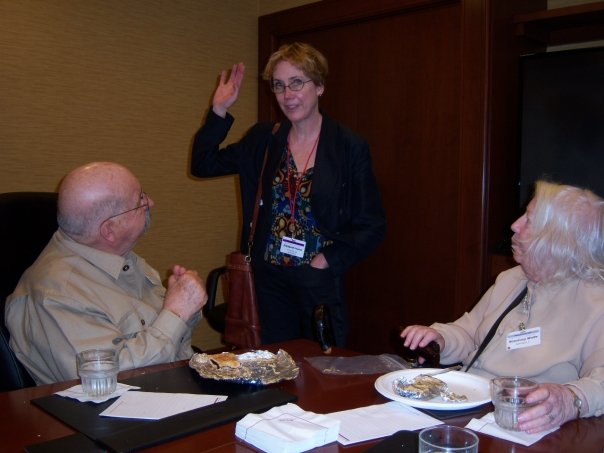
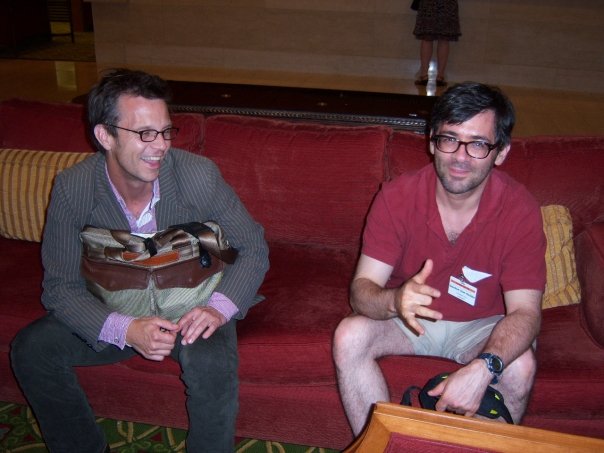
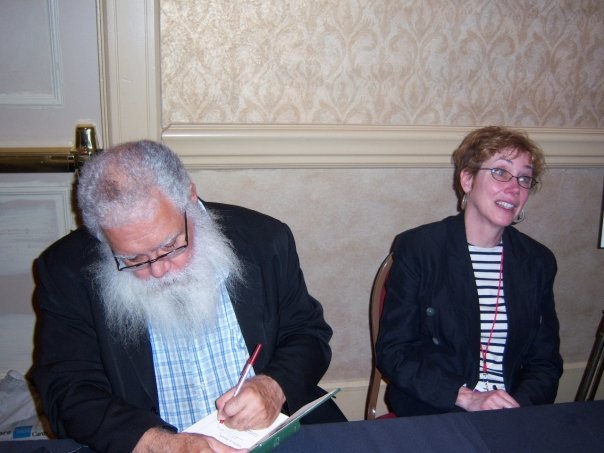
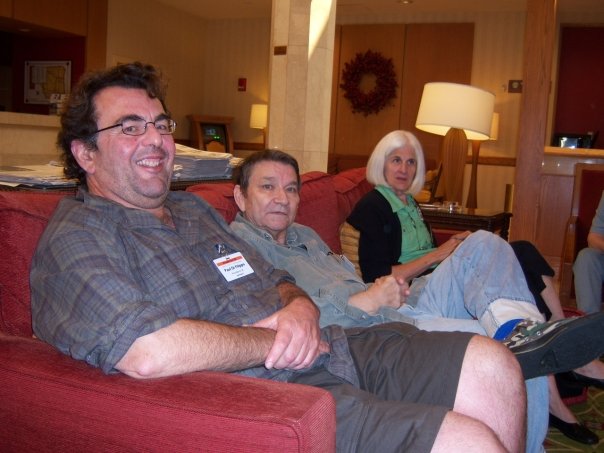
Pictures from the 2009 Readercon

Sunday, February 28th, 2010

I put these up on my Facebook account back before I had the blog, but I suspect many non-Facebook people would like a look at them as well.

RCon2009 Gene Wolfe Rosemary Liz

Gene Wolfe, Liz Hand, Rosemary Wolfe

RCon2009 Chris Gordon

Chris Nakashima-Brown, Gordon Van Gelder

RCon2009 Chip Liz

Chip Delany, Liz Hand

RCon2009 Paul Howard

Paul Di Filippo, Howard Waldrop, Jeri Bishop.

RCon2009 Straub Crowley

Peter Straub, John Crowley

RCon2009 Clute GaryWolfe

Gary K. Wolfe, John Clute

What Should I Read in 2010?

Monday, February 8th, 2010

In the Before Time, the Long Long Ago (i.e., before I started this blog), I would ask The Vast Wisdom of Usenet (i.e. rec.arts.sf.written) what books I should read this year. Now that I have the blog, I’m posting the question here.

Below are 100 books (or a more, counting multiple titles by a single author) of fiction I’m considering reading in 2010. With a few exceptions (like forthcoming books), they’re all books I already own in first editions. Most likely I’ll get to considerably less than 100. The first few are books I’ll probably get to (or have already read), whereas the rest are a little vaguer (and in alphabetical order by author). That’s where you come in. Tell me which of the books below I should or shouldn’t read, and why. If a book’s not on the list, it’s probably because I’ve already read it, or have no interest in it, won’t get to it this year, etc., so save your electrons instead of suggesting alternates (there are plenty of other places for that). And if I list Book #2 in a linear series, rest assured I’ve already read Book #1.

I don’t promise I’ll read all the highest rated works, but those most highly praised are considerably more likely to be added to the reading stack, which is what’s happened the previous years I’ve done this.

  • Gene Wolfe: The Sorceror’s House
  • John Scalzi: The God Engines
  • Joe R. Lansdale: Vanilla Ride
  • China Mieville: King Rat
  • Steven R. Boyett: Elegy Beach
  • Joe Hill: 20th Century Ghosts
  • Philip K. Dick: Collected Stories Volume II or Radio Free Albemuth
  • Michael Moorcock:The War Hound and the World’s Pain or The Final Programme
  • Greg Egan: Crystal Nights
  • Peter Ackroyd: Hawksmoor
  • J. G. Ballard: Crystal World
  • Iain Banks: Against a Dark Background or Matter
  • John Barnes: Kaleidoscope Century or Mother of Storms
  • Stephen Baxter: Traces or Mayflower II
  • Peter S. Beagle: A Fine and Private Place
  • Greg Bear: The City at the End of Time
  • Poppy Z. Brite: Plastic Jesus
  • Tobias Buckell: Sly Mongoose
  • Octavia Butler: Fledgeling
  • Jack Cady: The Night We Buried Road Dog
  • Michael Chabon: The Amazing Adventures of Kavalier and Clay
  • John Christopher: No Blade of Grass
  • Susanna Clarke: Ladies of Grace Adieu
  • Hal Clement: Iceworld
  • Avram Davidson: The Adventures of Dr. Esterhauzy or Limekiller
  • L. Sprague de Camp: A Gun for Dinosaur
  • Bradley Denton: Laughin’ Boy
  • Paul Di Filippo: Lost Pages or Fractal Paisleys
  • George Alec Effinger: What Entropy Means to Me
  • Harlan Ellison: Deathbird Stories
  • John M. Ford: The Dragon Waiting
  • Neil Gaiman: Fragile Things or The Graveyard Book
  • John Gardner: Freddy’s Book or The Wreckage of Agathon
  • Ray Garton: Night Life or Nids
  • Jane Gaskell: The Serpent
  • Joe Haldeman: The Accidental Time Machine
  • Peter F. Hamilton: Mindstar Rising
  • Robert E. Howard: Conan the Barbarian
  • Nalo Hopkinson: Brown Girl in the Ring or The Salt Roads
  • Shirley Jackson: We Have Always Lived in the Castle or The Lottery
  • M. R. James: More Ghost Stories Of An Antiquary
  • K. W. Jeter: Noir or Dark Seeker
  • Ha Jin: Waiting
  • James Patrick Kelly: Strange But Not a Stranger
  • Stephen King: Dark Tower IV: Wizard and Glass or The Colorado Kid
  • Russell Kirk: The Surly Sullen Bell (and yes, I’ve read the 2 Arkham House collections)
  • Henry Kuttner and/or C. L. Moore: Mutant, Fury, Black God’s Shadow or No Boundaries
  • R. A. Lafferty: Archipelago or The 13th Voyage of Sinbad
  • Fritz Leiber: Night’s Black Agents
  • Stanislaw Lem: Solaris
  • Jonathan Lethem: Motherless Brooklyn
  • Thomas Ligotti: Grimscribe, Noctuary, or The Shadow at the Bottom of the World
  • Ian MacLeod: Breathmoss and Other Exhalations
  • Ken MacLeod: Giant Lizards from Another Star or The Execution Channel
  • Gregory Maguire: Wicked
  • Barry Malzberg: Hervoit’s World
  • Richard Matheson: Duel or What Dreams May Come
  • Ian MacDonald: River of Gods
  • Maureen McHugh: Mission Child or Nekropolis
  • Sean McMullen: The Miocene Arrow
  • Larry McMurtry: Lonesome Dove
  • Ward Moore: Bring the Jubilee
  • Pat Murphy: The Falling Woman
  • John Myers Myers: Silverlock
  • William F. Nolan: Things Beyond Midnight or Wild Galaxy
  • Naomi Novik: Throne of Jade
  • Patrick O’Leary: Other Voices, Other Rooms
  • Chad Oliver: The Shores of Another Sea or The Winds of Time
  • Susan Palwick: The Fate of Mice
  • H. Beam Piper: Lord Kalvan of Otherwhen
  • Tim Powers: Three Days to Never or Pilot Light
  • Alastair Reynolds: Redemption Ark
  • Rudy Rucker: Master of Time & Space or The Secret of Life or White Light
  • Matt Ruff: Fool on the Hill
  • Salman Rushdie: Midnight’s Children
  • Joanna Russ: The Female Man
  • Karl Schroeder: Permanence or Lady of Mazes
  • David J. Schow: Crypt Orchids
  • Michael Shaara: The Herald or The Killer Angels
  • Michael Shea: A Quest for Simbilis
  • Lucius Shepard: Floater or Aztechs or Viator
  • Lewis Shiner: The Edges of Things or Black and White
  • Dan Simmons: The Terror or Hard as Nails
  • Robert Sladek: Roderick
  • Neal Stephenson: Zodiac or The Big U
  • Charles Stross: The Fuller Memorandum (forthcoming)
  • Theodore Sturgeon: Microcosmic God: The Complete Stories of Theodore Sturgeon Volume 2
  • Steph Swainston: The Year of Our War
  • Thomas Burnett Swann: The Day of the Minotaur
  • Karl Edward Wagner: Darkness Weaves
  • Howard Waldrop: The Moone World (forthcoming)
  • Manly Wade Wellman: The Sleuth Patrol, The Last Mammoth or Fastest on the River
  • Martha Wells: The Element of Fire
  • John Whitbourne: To Build Jerusalem or Binscomb Tales
  • Liz Williams: The Demon and the City
  • Jack Williamson and James E. Gunn: Star Bridge
  • Connie Willis: To Say Nothing of the Dog
  • Jack Vance: Star King, The Languages of Pao, or Ports of Call
  • Roger Zelazny: Wilderness or DonnerJack

J. D. Salinger, RIP

Sunday, January 31st, 2010

Reclusive author J. D. Salinger dead at 91. (I don’t usually link to The New York Times, for a variety of reasons, but they’ve got a pretty hefty obit on him.) I started this essay the day he died, but it’s taken me a few days to get down my thoughts.

Salinger was a talented writer who wrote one novel that annoyed the living shit out of me. I hated The Catcher in the Rye, and more specifically, hated Holden Caulfield with a livid and unrestrained passion. Never before has a single fictional character so infuriated me. “Oh woe is me, let me whine about my miserable, privileged, upper class New York City life.” He’s a phony who hates phonies. Got it. Doesn’t mean I want to spend some 180 pages living inside that fucking asshole’s head. True, I read it far too late (mid 20s) to be grabbed by the teen angst angle, but I suspected I would have longed to punch him until he got over himself even in my teens.

So, more than a decade after I read Catcher in the Rye, some of my friends started getting into Anime, one of them being Ghost in the Shell: Stand Alone Complex, which references Salinger out the yin yang, especially the story “The Laughing Man.” (I think that link is to some Hungarian pirate site, if the moral implications of stealing a few pennies from his estate that way rather than by buying a cheap used paperback worries you.) And you know what? That’s a pretty swell story.

Over the next few years, I read all the stories in Nine Stories, and several others are pretty good as well. “A Perfect Day for Bananafish” is probably the one most people have read, and justifiably so. “For Esmé – with Love and Squalor” is a bit obvious, but it works. The protagonist of “De Daumier-Smith’s Blue Period” is just as big a phony as Holden Caulfield, but knows he’s a phony, which makes all the difference in the world.

And then you read something like “Uncle Wiggily in Connecticut,” (“I was a nice girl, wasn’t I?” No, no you weren’t.) and you realize that Salinger probably not only hated Holden Caulfield more than I did, but probably more than anyone else ever could.

In a way, his reclusive existence after Catcher is like the Great American Success Story, Misanthrope’s Version: Write the Great American Novel, build an estate way the hell out in the sticks, live off the royalties the remainder of your life and say “Fuck you” to the rest of the world. (I could have done without the Wacky Religion of the Week myself, but hey, it wasn’t my life.) He didn’t owe nobody nuthin’, and didn’t care what anyone else thought. Good for him.

I never got around to reading his other published books, sparse though their number was. Now that he’s dead, I wouldn’t be surprised to see his heirs start raking in the dough for getting all his unpublished and uncollected work into print just as fast as the checks can clear. Maybe he has a novel in that safe that won’t annoy the hell out of me.

And speaking of GitS:SAC, someone posted this nifty animated Laughing Man logo on the Fark thread about Salinger’s death, so I’m going to put it here:

New Lame Excuse Books Catalog Now Available

Friday, January 29th, 2010

Just sent out to regular customers last night, with lots of tasty first editions by Roger Zelazny, Jack Vance, Joe R. Lansdale, Stephen King, etc. Email me at lperson1@austin.rr.com if you would like to receive a copy.

And of course, there’s the main webpage, but I haven’t updated it with the new titles yet.