Though previously announced, it’s nice to see that the long-awaited third edition of The Encyclopedia of Science Fiction is now online.
It also includes a very nice entry on Nova Express.
Though previously announced, it’s nice to see that the long-awaited third edition of The Encyclopedia of Science Fiction is now online.
It also includes a very nice entry on Nova Express.
I’m in the process of putting together a new Lame Excuse Books catalog I hope to be able to send out via email next week. if you’re not already on my mailing list and want to receive a copy, drop me a line.
I managed to pick up two notable Richard Matheson first editions in the last month or so:


Every year or two, Heritage Auctions in Dallas conducts a big auction of a major science fiction book collection. In 2007, it was the Ventura Collection.

The Ventura Collection auction was very successful, and since it occurred right before the advent of The Great Recession, many of the prices achieved in that auction have not since been equaled. (It may also be the first auction catalog Heritage mass-mailed to prospective SF collectors; I had not received any before then.)
In 2008, it was The Robert and Diane Yaspan collection, which included a vast array of SF firsts as well as several SF manuscripts and a few select non-SF firsts, such as many firsts by mystery writer Earle Stanley Gardener.

Later in 2008 was the auction of The Frank Collection, which was mainly SF art, but included a number of notable SF first editions as well.

The just completed auction of the Jerry Weist collection was of the same caliber. There was some original art and pulp magazines in the collection, but the bulk of it was collectible SF/F/H first editions. The auction realized more than $1 million (though a significant fraction of that was for the artworks).

I’m going to talk about some of the more interesting items sold, and how the prices realized compared to comparable copies of the same firsts in previous years. I’ll also mention when I have a copy of the first edition discussed in my own library.
A few general observations:
To me, far and away the most interesting and desirable item was one of only five copies of Stanley G. Weinbaum’s Dawn of Flame to have the unsigned introduction by Amazing editor Ray Palmer. Weinbaum’s widow evidently objected to the introduction, which is why only five copies were so produced. Even the 245 copy Currey B state (with Lawrence Keating’s introduction replacing Palmer’s) is rare enough, and the book is widely considered the first true SF small press book. I don’t believe I’d seen a copy of the Palmer state for sale before, but I think one was sold when the Sam Moskowitz collection was auctioned off (they didn’t send me a catalog). Moreover, this particular copy once belonged to legendary collector and fan Forrest J. Ackerman, and was inscribed by him to Weist. Counting the buyer’s premium (a little shy of 20%, and which I’m going to include for all the other prices listed here), it went for $9,560.00; it wouldn’t have surprised me to see it go for twice that much.
There were some other SF collecting “holy grails” sold there:
From Holy Grails we move on to books that are merely Really Freaking Expensive. There are usually a few copies of these bumping around on Bookfinder.com, albeit with a comma in the price.
One of the most puzzling results of the auction was a signed first of Curt Siomdak’s Skyport was initially reported going for a stunning $8,611.17. That’s only about $8,500 more than it’s worth. But now when you go to the auction page for the item itself, it shows a far saner $101.58. I’m assuming there was some sort of glitch.
Slightly less puzzling was a signed, Near Fine copy of L. Sprague de Camp’s The Wheels of If (which has one of Hannes Bok’s most famous dust jacket illustrations) went for $717, which is a good bit more than it usually goes for; Lloyd Currey has a comparable-to-better signed copy online right now for $150. Before this I had the impression de Camp was out of fashion among collectors (and thus I have been able to pick up a number of signed copies of his work pretty cheap). I suspect this is an outlier.
Although I bid on several items, I only won one: an Ex-Library first of the UK David Bruce & Watson (first hardback) edition of Richard Matheson’s The Shrinking Man for $95.60. Fine copies go for over a grand.
Other science fiction book collecting topics (and glimpses into my own bibliomania) you might find of interest:
Various issues have kept me remarkably busy the last few days, so it may take a little while to get my blogging back up to speed. In particular, I wanted to do a brief roundup of some of the books I bought at the Reno Worldcon.
This year’s Worldcon had a better dealer’s room than Denver in 2008 (the last Worldcon I went to), and there were many rare and tempting items there (including not one, but two copies of the first edition of William Timlin’s The Ship That Sailed to Mars, as well as a fine signed first edition of Alfred Bester’s Tiger Tiger listed for $2,500, and which sold for a bit less) which, alas, they wanted more for than I was willing to spend.
But here are a few items I was able to add to my collection:

The dust jacket art itself is perhaps the finest ever drawn by an eight-year old…
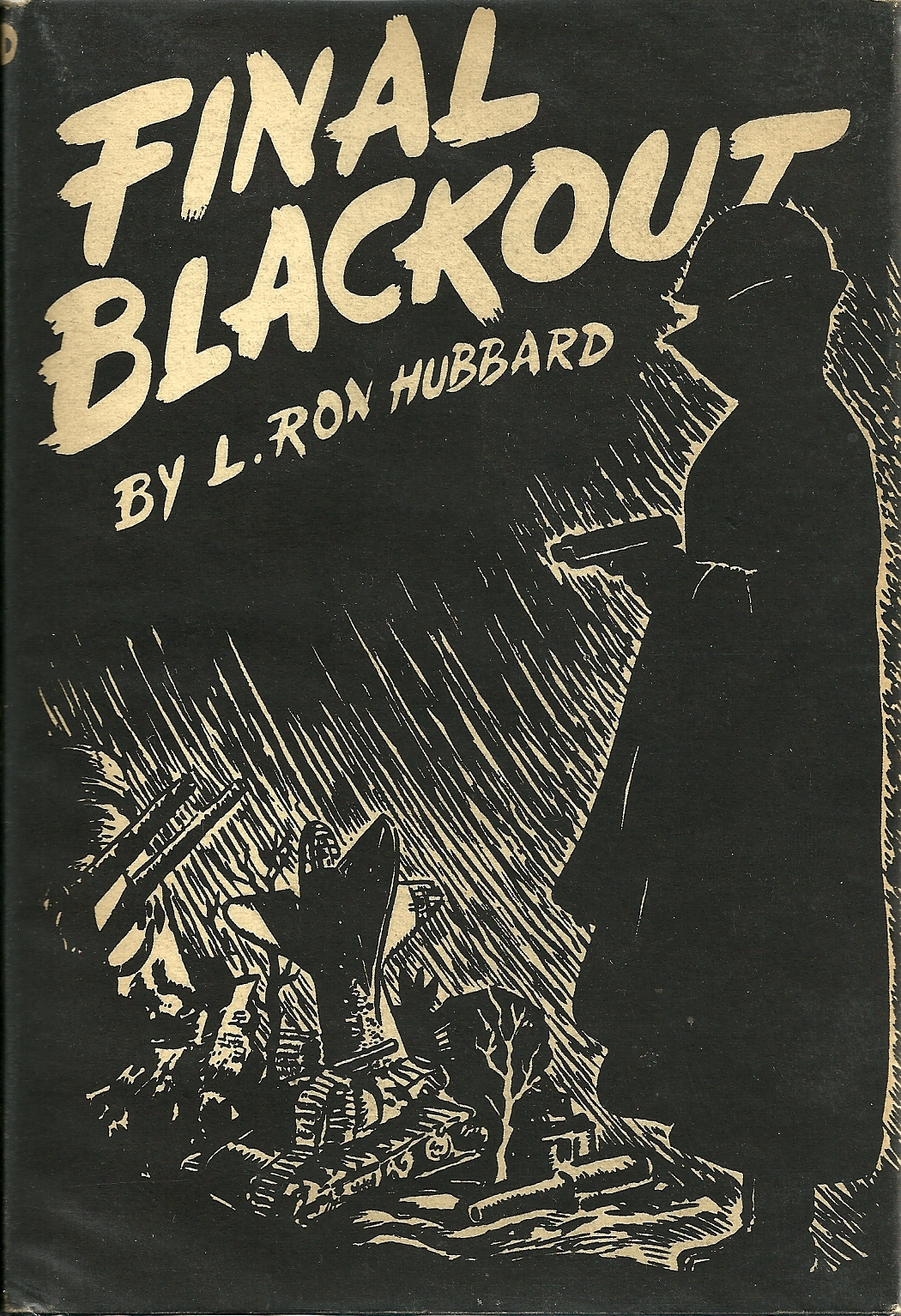
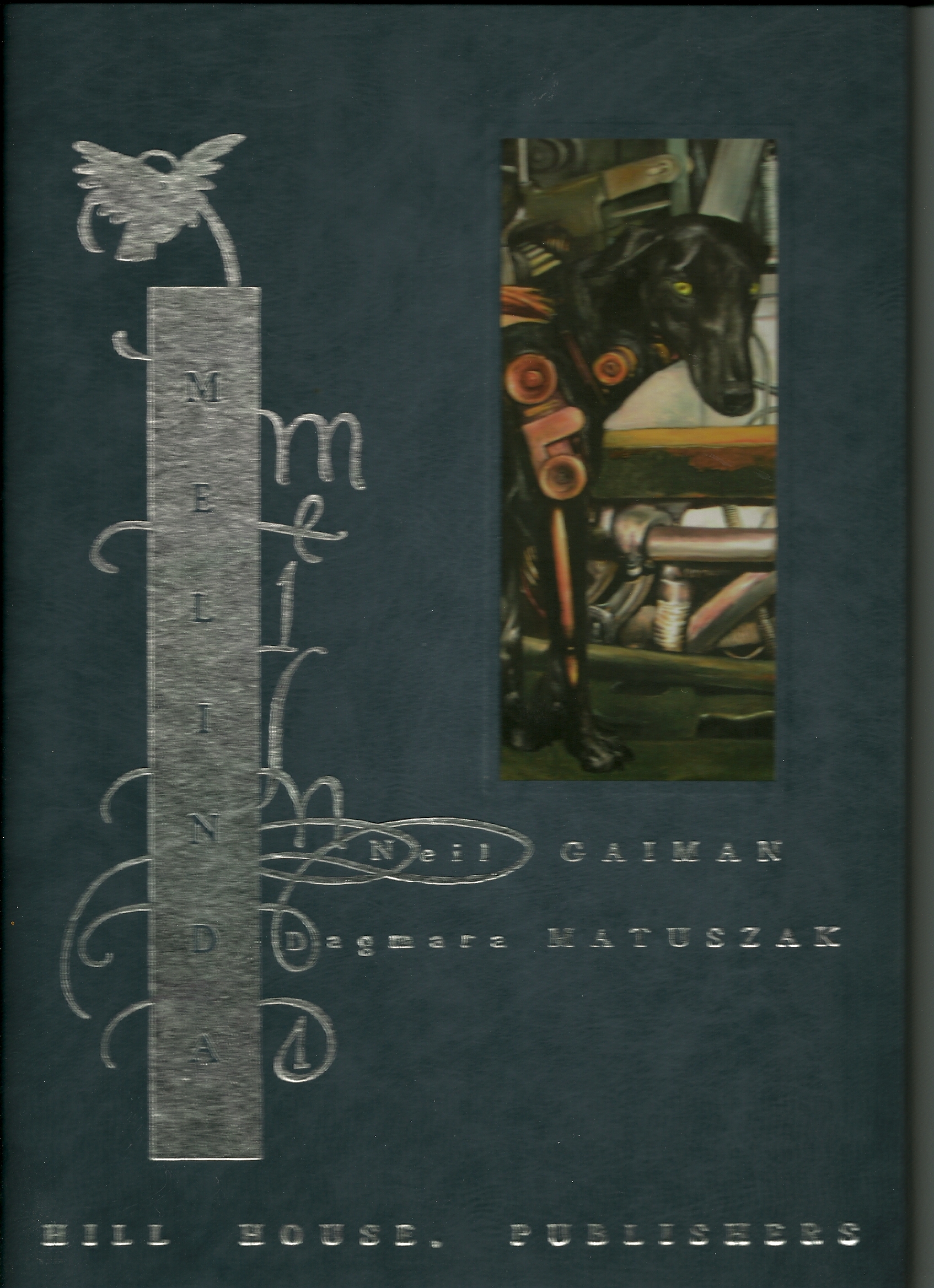
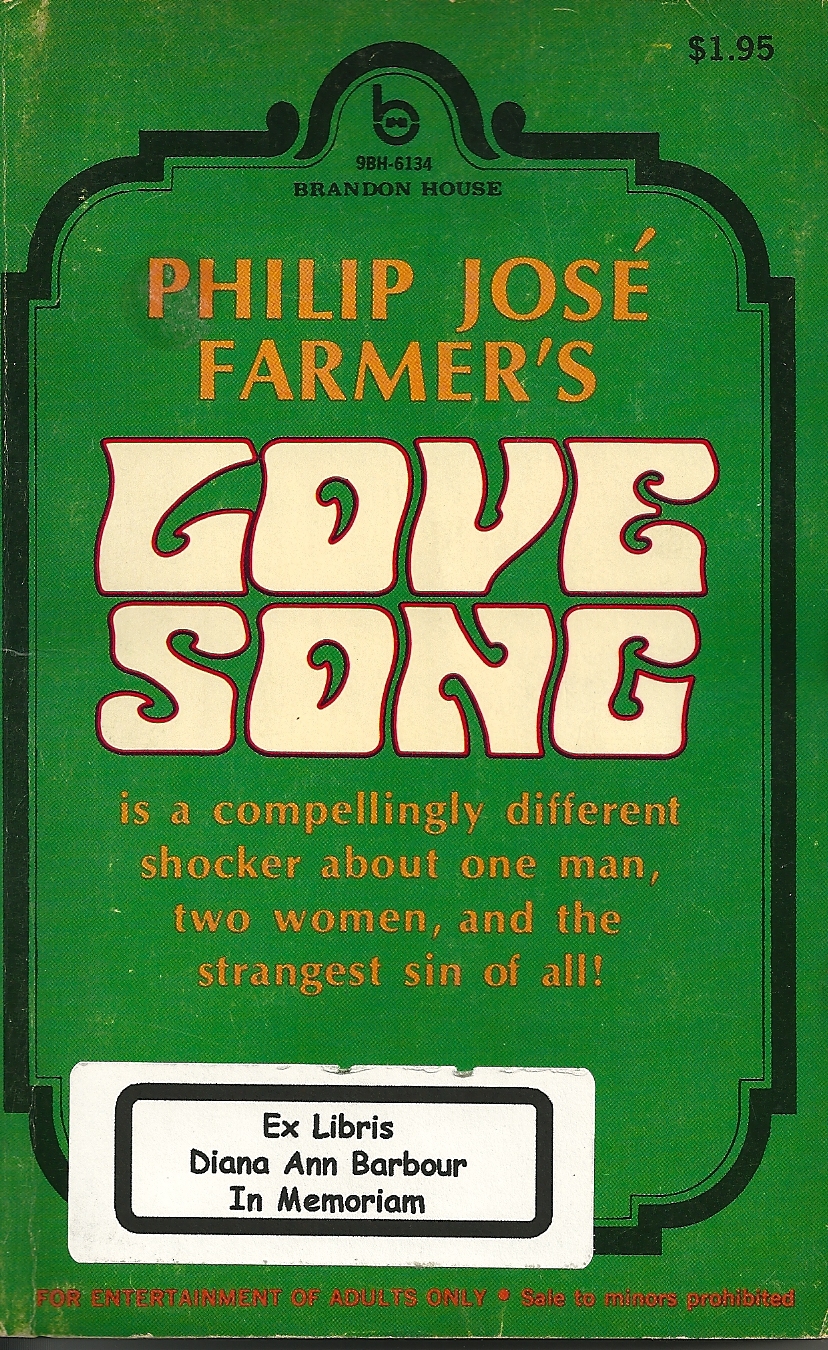
He was born August 28, 1916.
By way of celebration, if you haven’t already seen it, here’s someone else’s Jack Vance collection. Remember to pick your jaw up off the floor before you leave.
One of my favorite authors is Gene Wolfe (which you might have noticed before), so naturally I’ve tried to collect all his books. This includes all his chapbooks, some of which can be quite difficult to find.
Among his hardest to find are the ones he did for Cheap Street. Over the years I have picked up four of the five pure chapbooks done by them (as well as the two hardback books, Empires of Flowers and Foliage and Bibliomen), but frequently I would have trouble remembering which of them I have, a difficulty not aided by rather bland exteriors of the chapbooks themselves and the fact that all came in a standard Cheap Street envelope when I bought them, none of which revealed what was inside.
So, for both the sake of Gene Wolfe collectors, and to jog my own memory, I’ve scanned the title pages of each of the ones I have (click to embiggen):


Or, to list them in order of publication:
I think I paid in the $35-$40 range for each of those.
Chalker and Owings says that seven copies of each of the above were done as leather-bound hardbacks. Not only do I not have those, I don’t think I’ve ever seen any of them offered for sale.
As far as I can tell, I’m only missing two Wolfe chapbooks now:
I’ll have to add those to the want list.
I think I have a first edition hardback of every other Gene Wolfe book.
More about Cheap Street here.
I may have mentioned that I have a large library. I started out collecting first edition hardbacks of “hypermodern” (which in my case meant “post-Neuromancer“) science fiction (with some fantasy and horror works and authors thrown in for good measure), and once I had collected everything I wanted there, I started going after every important post-World War II SF work, toward which I’m making significant progress. Hence this list of books I’m still looking for.
By and large, I don’t buy later printings, copies without dust jackets, copies with price-clipped dust jackets (unless all copies of the true first edition were released that way), copies with facsimile dust jackets, or overly crummy copies. Most of the books I buy are in Fine/Fine condition, but that relaxes a bit the older (and pricier) books become. I have picked up Ex-Library copies in dust jacket when the better copies of the true first can’t be found under a grand. I also only buy first state bindings and dust jackets, unless there’s no priority, or the true first state is insanely rare (such as with Stanley G. Weinbaum’s Dawn of Flame).
With that in mind, I compiled a list of first editions on my want list, so here’s a significant portion of that list (omitting things available relatively cheap, or hideously expensive), listed alphabetically by author. I also put down all the Manly Wade Wellman and Jack Vance books I was looking for, since I have so many I was having a hard time keeping track of what I had and what I was still missing.
If you have nice copies any of the above, and if you’re willing to sell it to me considerably cheaper than can be found on Bookfinder.com, drop me an email at lawrenceperson@gmail.com and I’ll consider it.
A swell review, in comic form, of Gene Wolfe’s Home Fires
It has a lot in common with my own review.
(Hat tip: James Wynn.)
One more Heinlein first edition to add to the others:
Heinlein, Robert A. Podkayne of Mars. Putnam, 1963. First edition hardback (no statement of printing, as per Currey, $3.50 price on dust jacket), a Fine copy in a Near Fine dust jacket with slight wear at extremities, as well as a 3″ long faint, irregular, non-breaking crease on front cover (so faint you can’t even see it on the embiggened scan).

The last of the Heinlein juveniles, and surprisingly hard to find these days, Replaces an ex-library copy.